Climate for Station: Hay River a, Northwest Territories, Canada
Loading live weather...
Climate Analysis & Overview
Hay River's climate is experiencing a warming trend, especially in recent years, with more evenly distributed precipitation. These changes align with Canada's climate goals to monitor and adapt to evolving weather patterns.
Subarctic Climate Dynamics
Hay River, located at 60.8333°N, 115.7833°W, is nestled in the South Slave Region of Canada's Northwest Territories. Characterised by a subarctic climate, this area experiences long, cold winters and brief, mild summers. The region's geography, including its proximity to the Great Slave Lake, influences its climatic conditions by moderating temperature extremes and affecting precipitation patterns.
Temperature Trends: A Warming Narrative
Over the past decade, Hay River has seen a notable warming trend. High temperatures have increased by 0.77°C (1.39°F), while low temperatures have risen by 0.42°C (0.76°F). These figures are more pronounced than the all-time trends, which show a rise of 0.42°C (0.76°F) for highs and 0.32°C (0.58°F) for lows. This suggests that recent years have accelerated the warming process, a critical point for understanding regional climate dynamics.
Precipitation Patterns: A Shift Towards Even Distribution
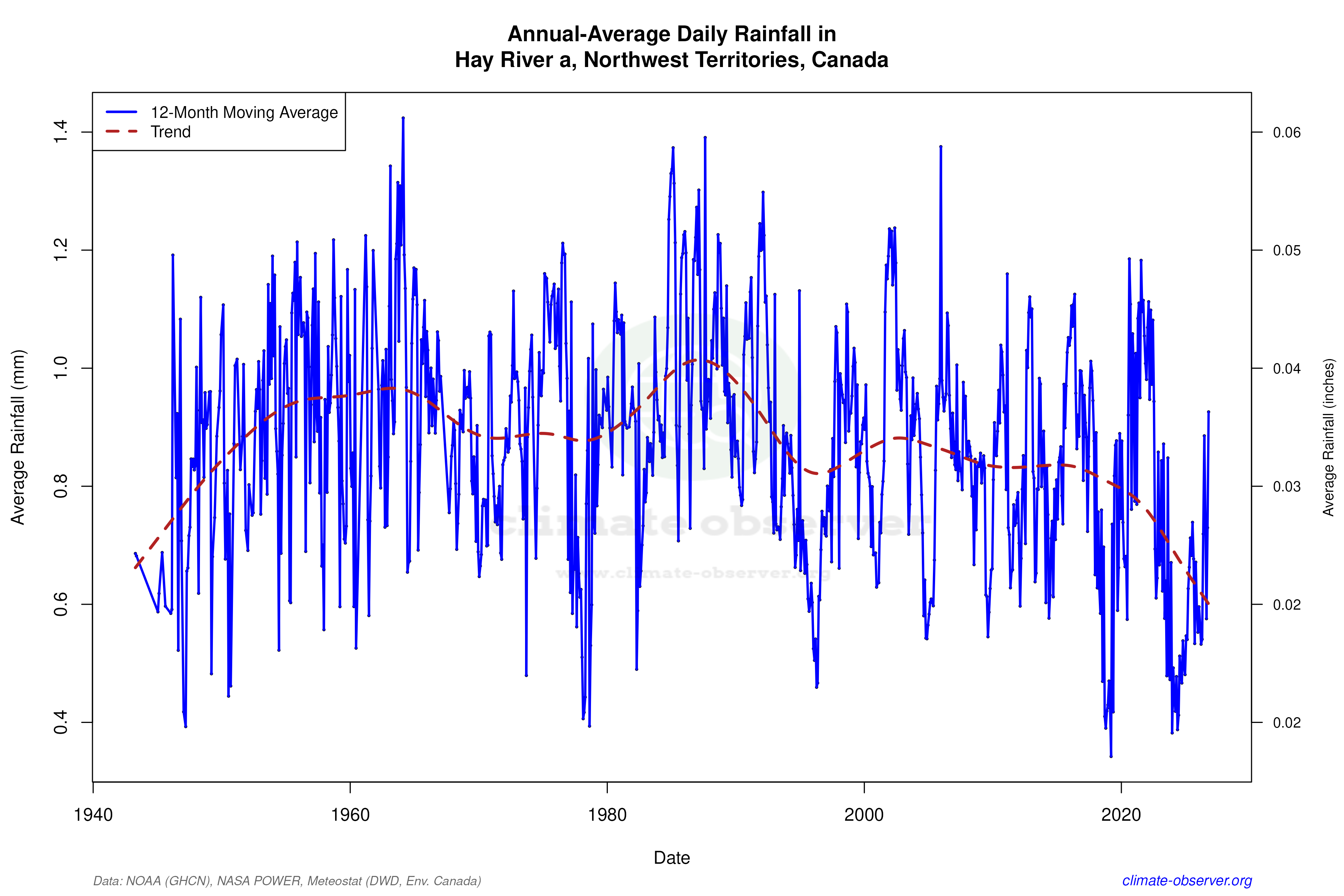
The Precipitation Concentration Index (PCI) provides insights into how rainfall is distributed over time. Hay River's PCI has decreased from a baseline of 12.7 to a current value of 10.9, indicating a shift towards more evenly distributed precipitation events. This change suggests that rainfall is less concentrated in intense bursts, which could have implications for water resource management and agricultural practices in the area.
Record Extremes: Temperature Benchmarks
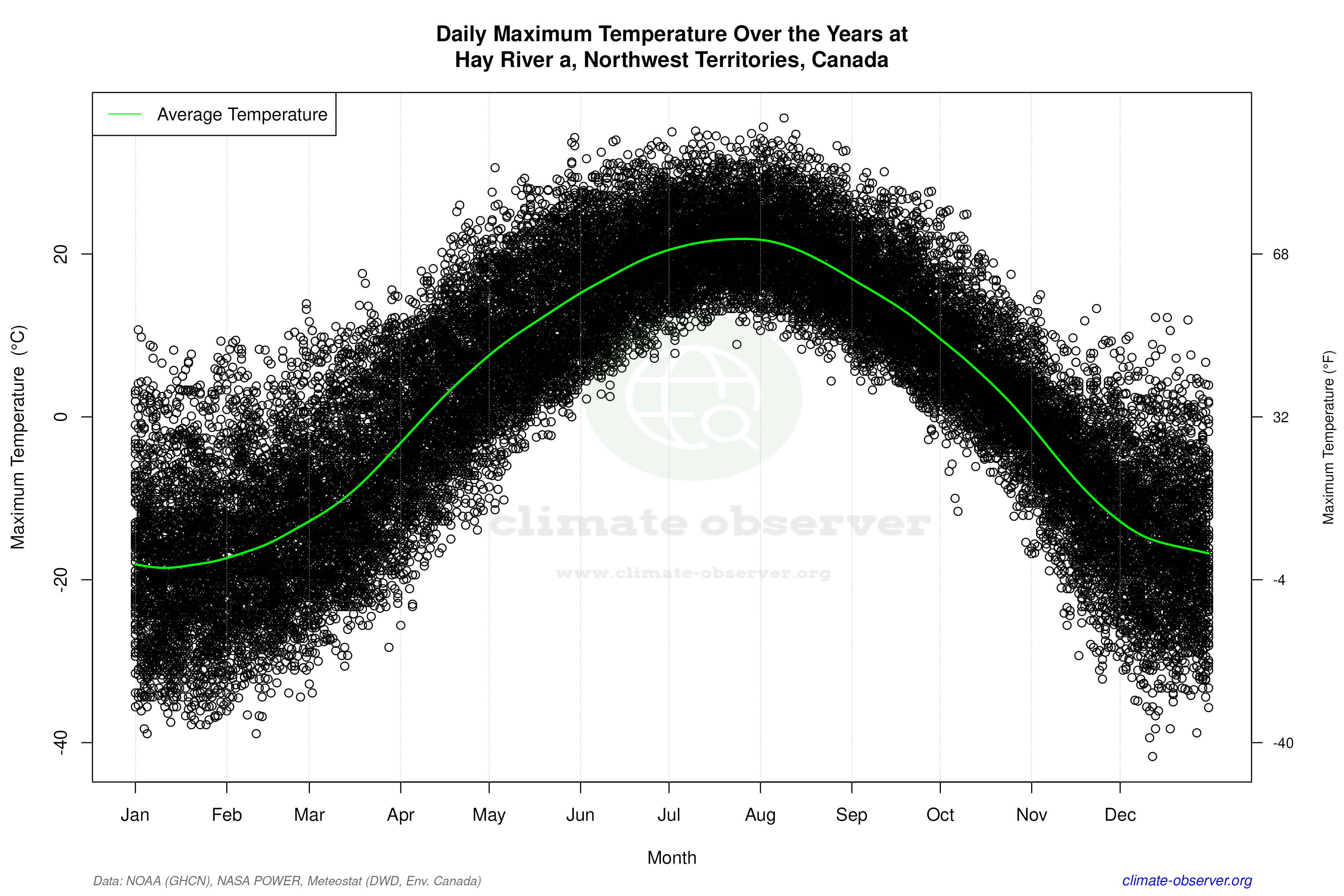
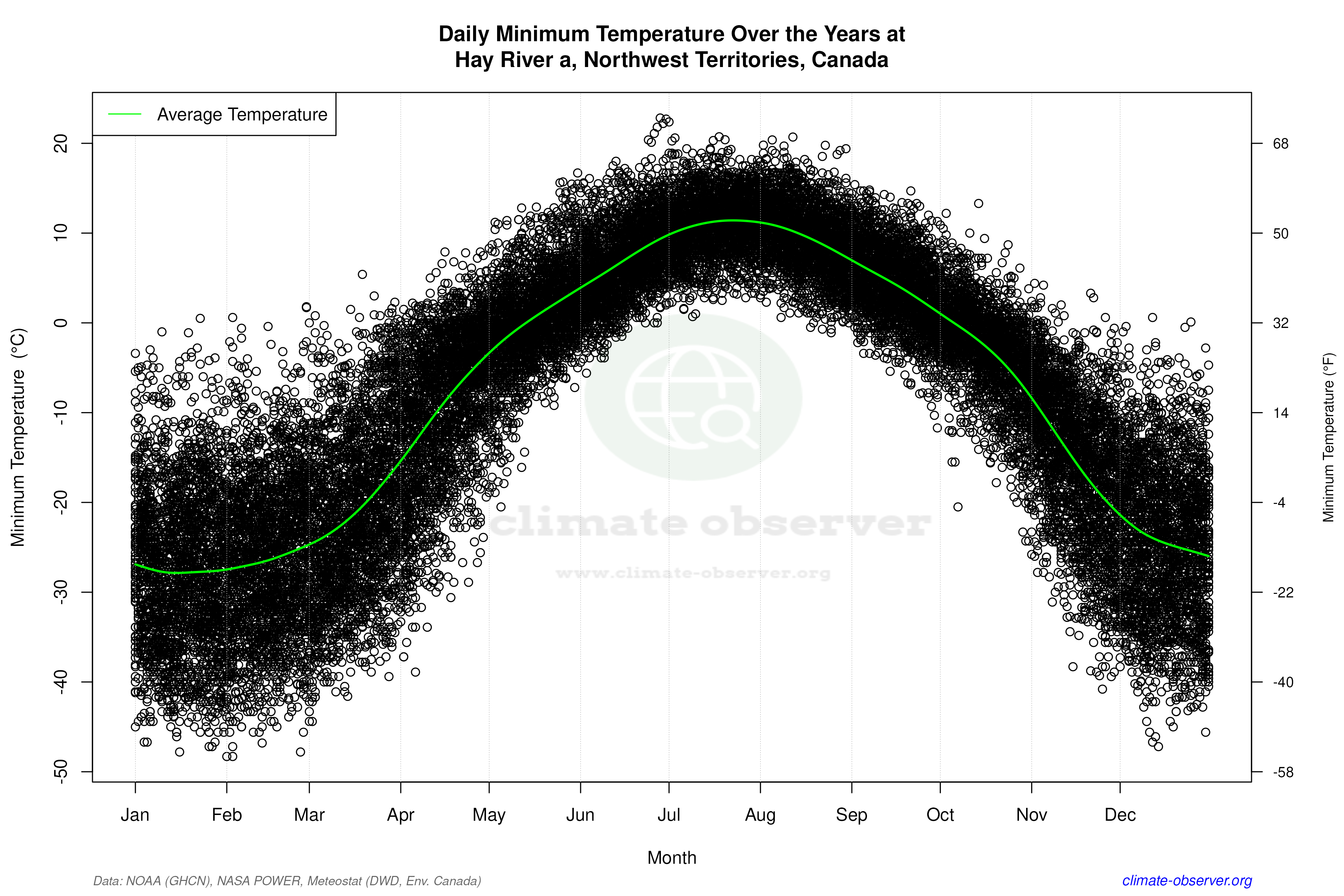
The historical temperature records for Hay River highlight the extremes of its subarctic climate. The highest recorded temperature is 36.7°C (98.1°F), while the lowest is a frigid -48.3°C (-54.9°F). These extremes underscore the significant variability that can occur in this region, presenting challenges and opportunities for adaptation strategies.
Regional Climate Goals and Implications
Canada's commitment to addressing climate change includes monitoring and adapting to these evolving patterns. The warming trends and changes in precipitation distribution in Hay River align with broader national objectives to enhance resilience to climate impacts. Understanding these localised changes helps inform regional planning and policy-making, ensuring that communities are prepared for future climatic shifts.
Station Statistics
10-Year Trend
High: +0.30 °F/decade
Low: +0.23 °F/decade
Rain: -0.009 in/decade
25-Year Trend
High: +1.15 °F/decade
Low: -0.32 °F/decade
Rain: -0.004 in/decade
50-Year Trend
High: +0.87 °F/decade
Low: +0.45 °F/decade
Rain: -0.002 in/decade
All-Time Trend
High: +0.33 °F/decade
Low: +0.25 °F/decade
Rain: -0.001 in/decade
Percentage Above-Average Days
Last 12 Months: 52.3%
This Year: 60.1%
Precipitation Concentration Index (PCI) ℹ️
Last 12 Months: 11.7
Historical Average: 13.4
Percentile Rank of Last 12 Months ℹ️
High: 61st percentile
Low: 59th percentile
Rain: 13th percentile
Change in Variance ℹ️
High: +0.7%
Low: -1.0%
Intraday: +5.2%
Data Coverage
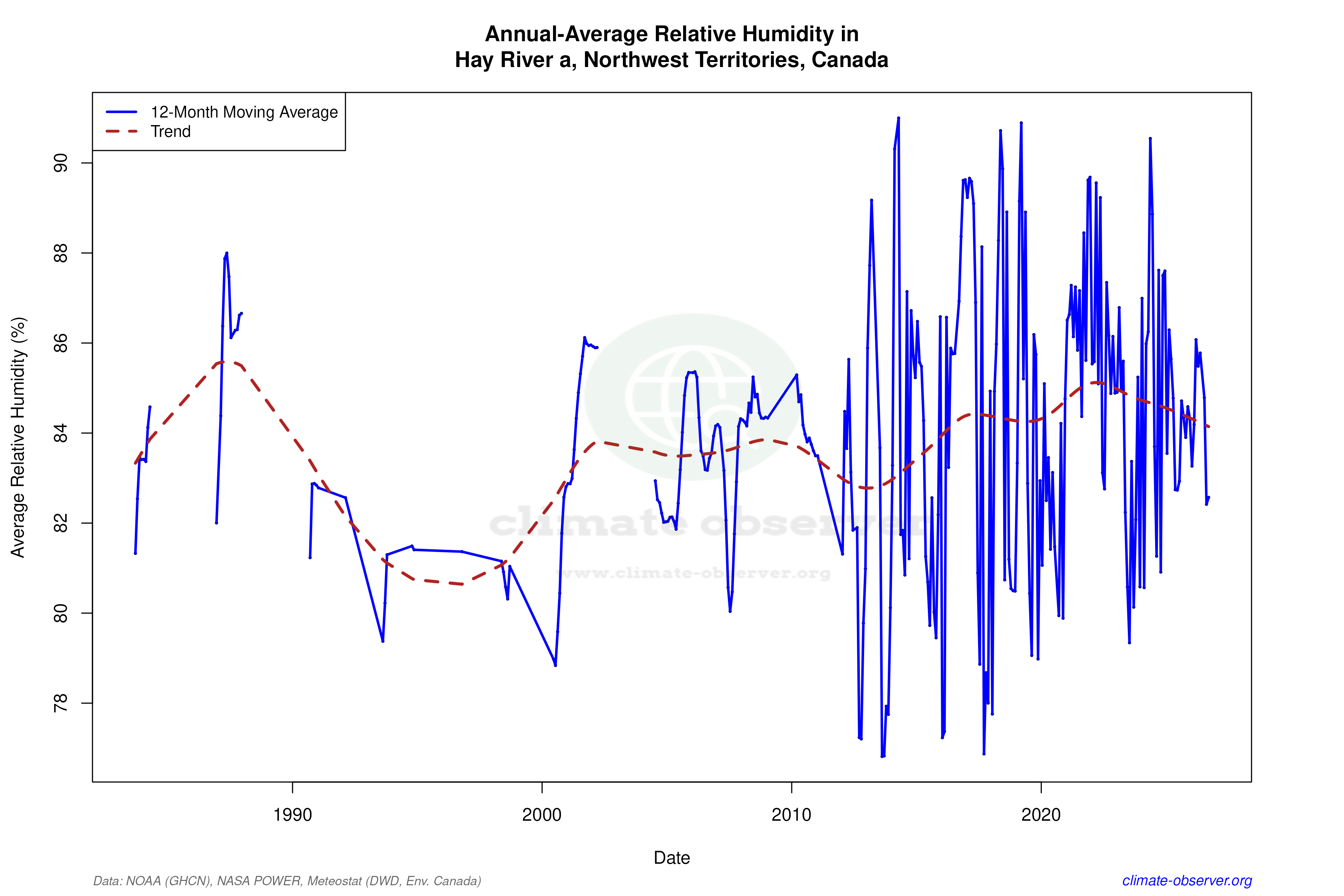
90.5%
First Year of Data
1946
Station Location
Historical Weather Records
| Max High | Avg High | Min High | Max Avg | Avg Avg | Min Avg | Max Low | Avg Low | Min Low | Max Precipitation | Avg Precipitation | Max Snow | Avg Snow | |
|---|---|---|---|---|---|---|---|---|---|---|---|---|---|
| Record | 98.06 °F | — | -43.06 °F | 81.86 °F | — | -47.20 °F | 73.08 °F | — | -54.94 °F | 2.34 in | — | 18.74 in | — |
| January | 51.26 °F | -0.86 °F | -38.02 °F | 44.78 °F | -6.31 °F | -44.30 °F | 32.90 °F | -17.78 °F | -54.04 °F | 0.64 in | 0.02 in | 7.72 in | 0.27 in |
| February | 57.02 °F | 4.53 °F | -38.02 °F | 44.96 °F | -4.07 °F | -46.48 °F | 35.24 °F | -15.08 °F | -54.94 °F | 1.24 in | 0.02 in | 12.40 in | 0.25 in |
| March | 63.68 °F | 16.31 °F | -29.02 °F | 48.74 °F | 6.49 °F | -31.72 °F | 41.72 °F | -5.87 °F | -47.92 °F | 0.57 in | 0.02 in | 7.24 in | 0.21 in |
| April | 78.80 °F | 35.93 °F | -14.08 °F | 58.82 °F | 26.35 °F | -16.06 °F | 46.22 °F | 15.36 °F | -38.02 °F | 1.12 in | 0.02 in | 11.18 in | 0.15 in |
| May | 93.74 °F | 52.61 °F | 11.48 °F | 73.94 °F | 42.67 °F | 6.98 °F | 62.06 °F | 32.82 °F | -4.90 °F | 1.66 in | 0.03 in | 7.09 in | 0.05 in |
| June | 93.20 °F | 64.46 °F | 35.96 °F | 79.45 °F | 55.03 °F | 34.16 °F | 73.08 °F | 44.38 °F | 21.92 °F | 2.34 in | 0.04 in | 1.18 in | 0.00 in |
| July | 95.18 °F | 70.52 °F | 46.04 °F | 79.56 °F | 61.66 °F | 45.50 °F | 72.28 °F | 51.77 °F | 33.26 °F | 2.05 in | 0.06 in | 0.00 in | 0.00 in |
| August | 98.06 °F | 68.00 °F | 39.92 °F | 81.86 °F | 59.04 °F | 40.10 °F | 69.26 °F | 49.19 °F | 30.02 °F | 1.74 in | 0.06 in | 0.00 in | 0.00 in |
| September | 86.18 °F | 56.45 °F | 26.96 °F | 69.62 °F | 48.55 °F | 22.28 °F | 59.72 °F | 39.61 °F | 10.94 °F | 2.00 in | 0.05 in | 4.80 in | 0.02 in |
| October | 77.72 °F | 40.62 °F | 2.30 °F | 64.22 °F | 34.11 °F | -5.08 °F | 55.94 °F | 26.99 °F | -11.74 °F | 1.45 in | 0.04 in | 14.49 in | 0.24 in |
| November | 59.00 °F | 18.95 °F | -25.96 °F | 46.22 °F | 12.42 °F | -35.32 °F | 39.92 °F | 4.79 °F | -41.44 °F | 1.38 in | 0.04 in | 18.74 in | 0.46 in |
| December | 53.96 °F | 4.41 °F | -43.06 °F | 43.16 °F | -2.52 °F | -47.20 °F | 33.08 °F | -11.65 °F | -52.96 °F | 0.82 in | 0.02 in | 8.90 in | 0.29 in |
Data Visualisations
Remove WatermarksCurrent Year Climate Trends vs Historical
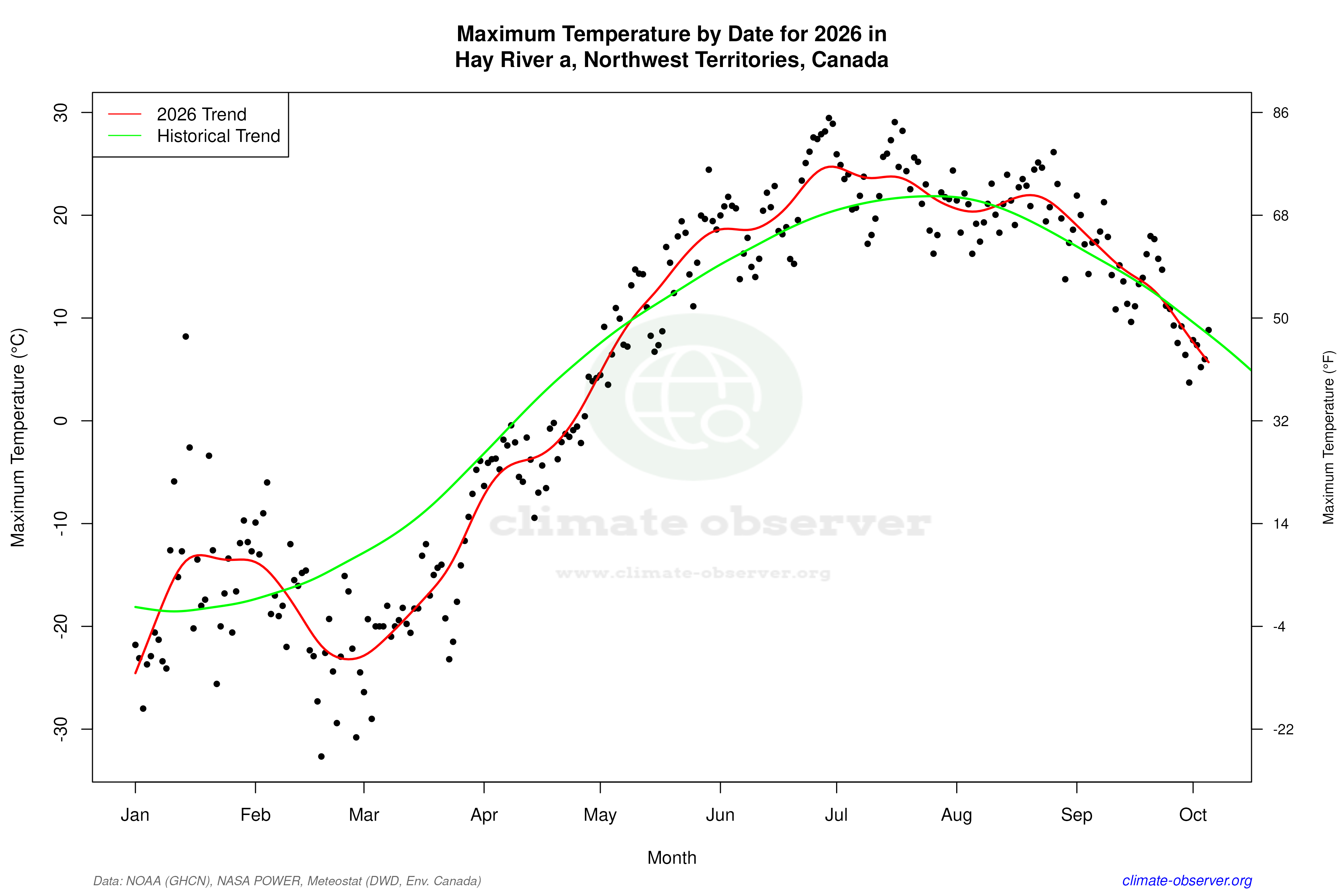
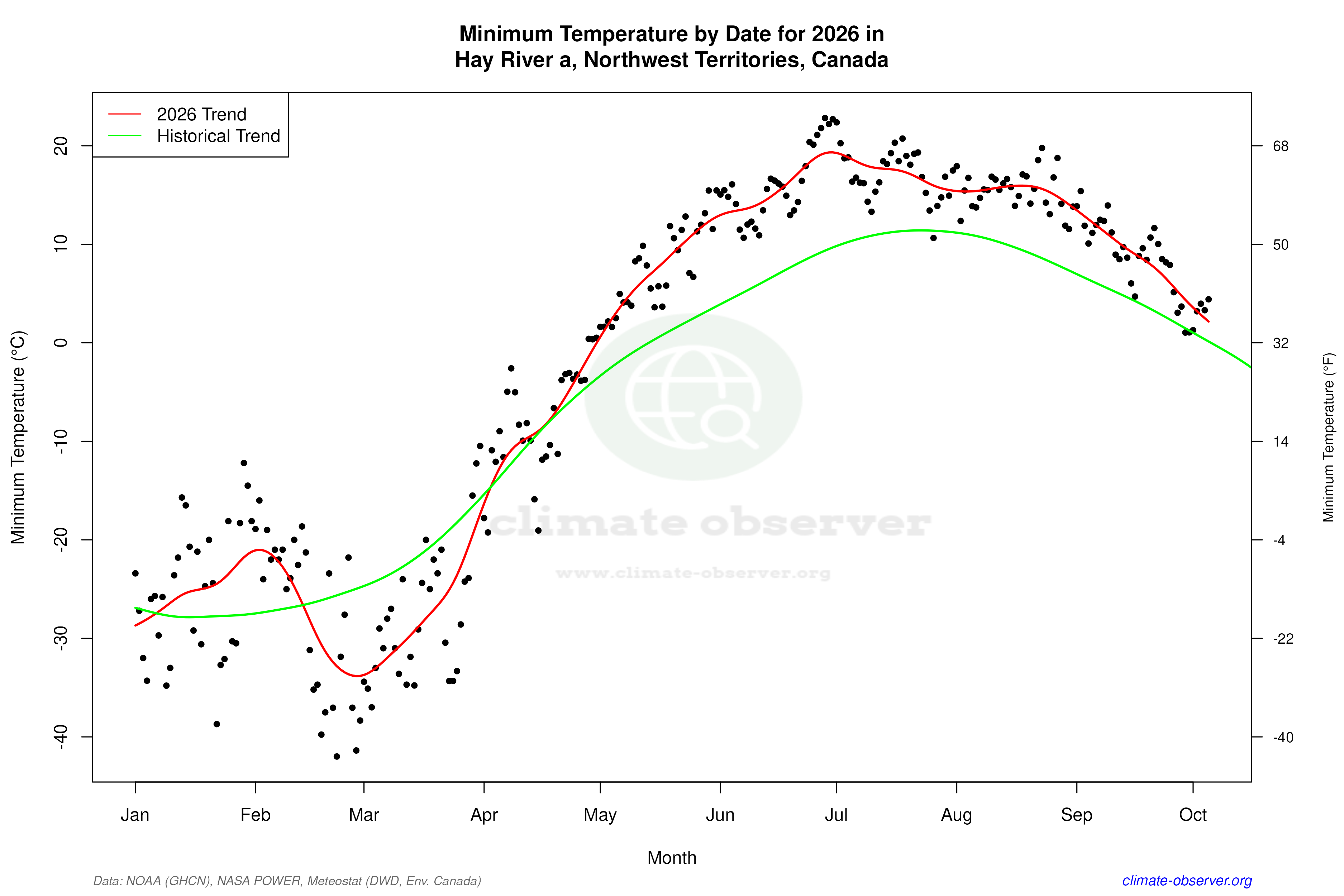
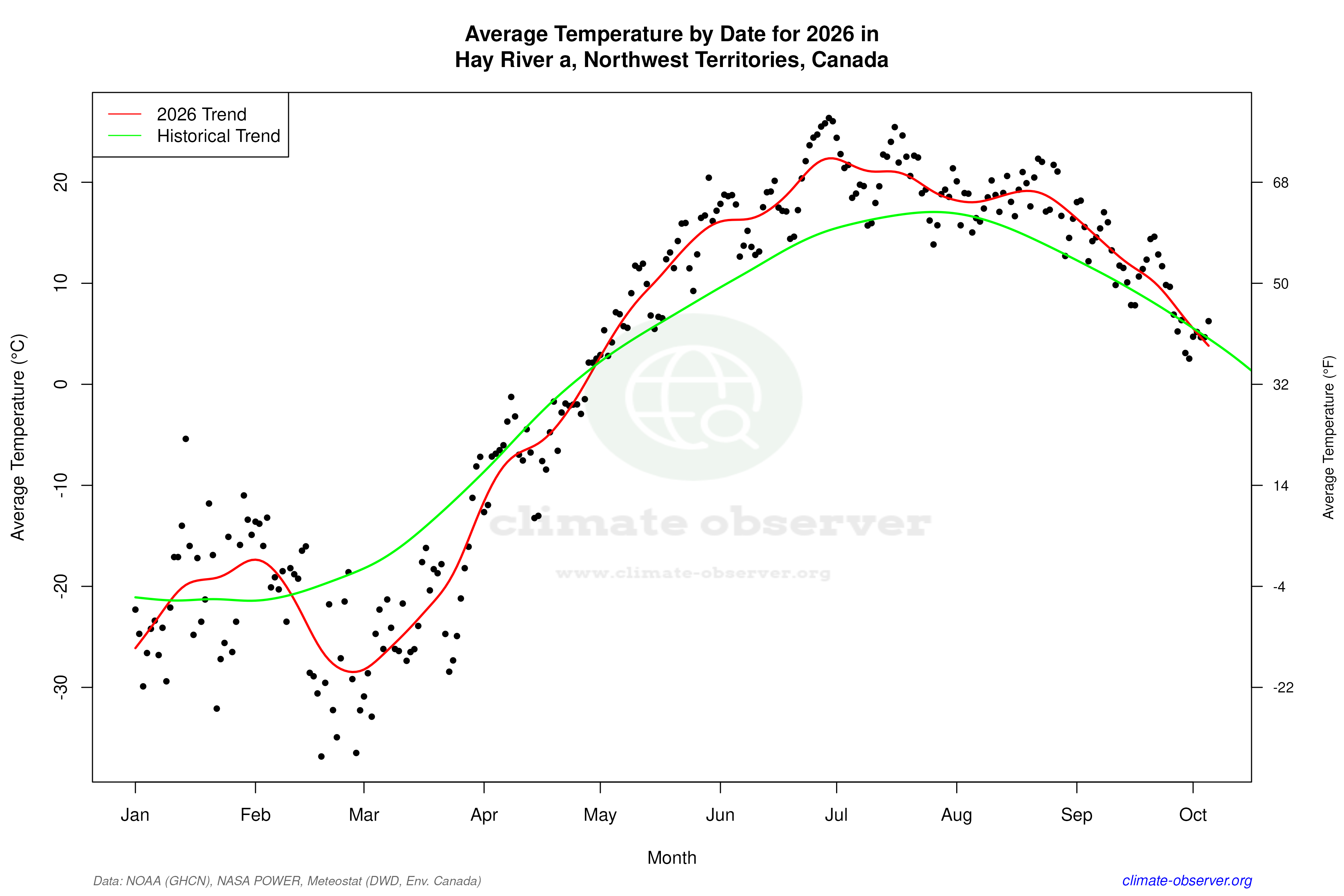
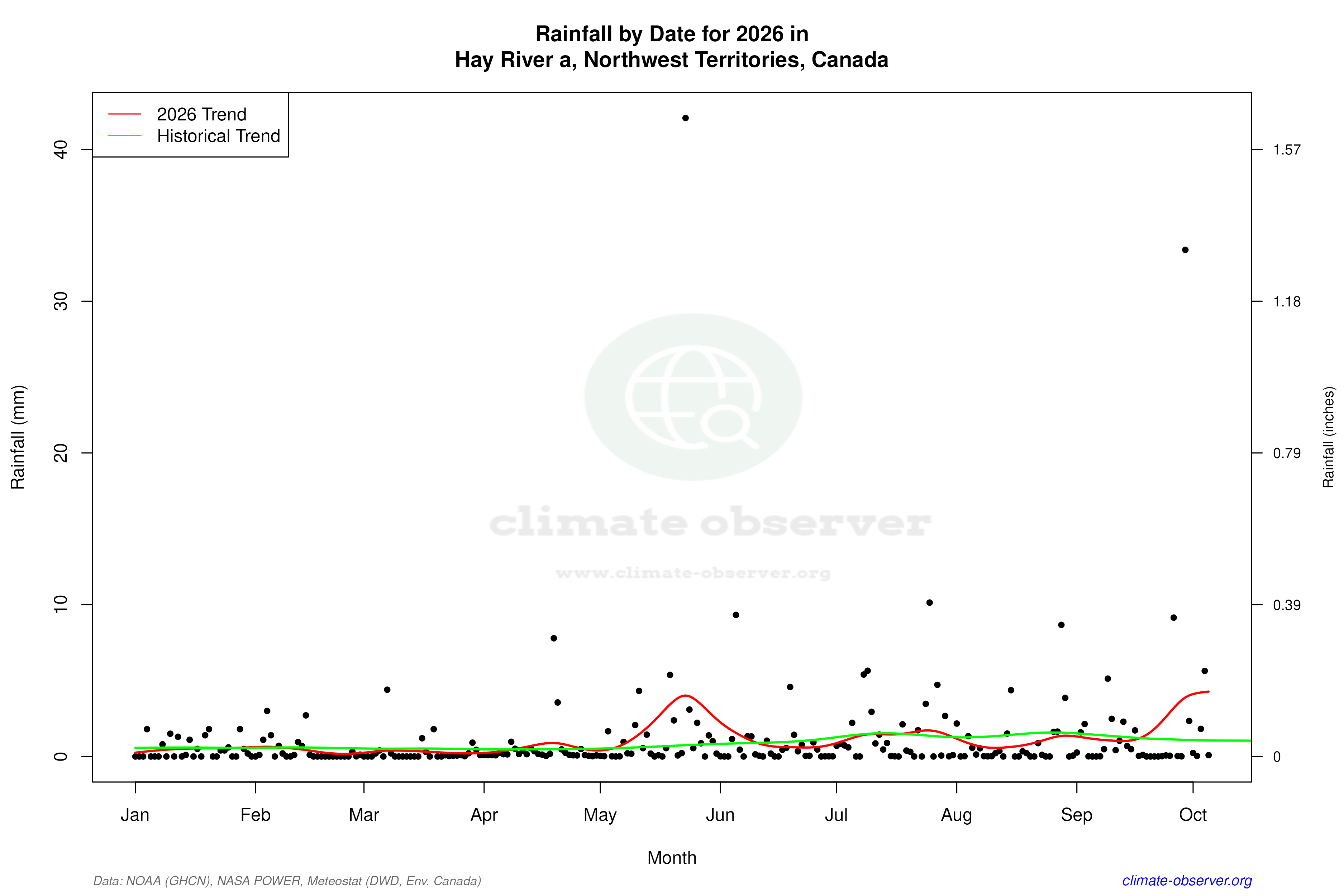
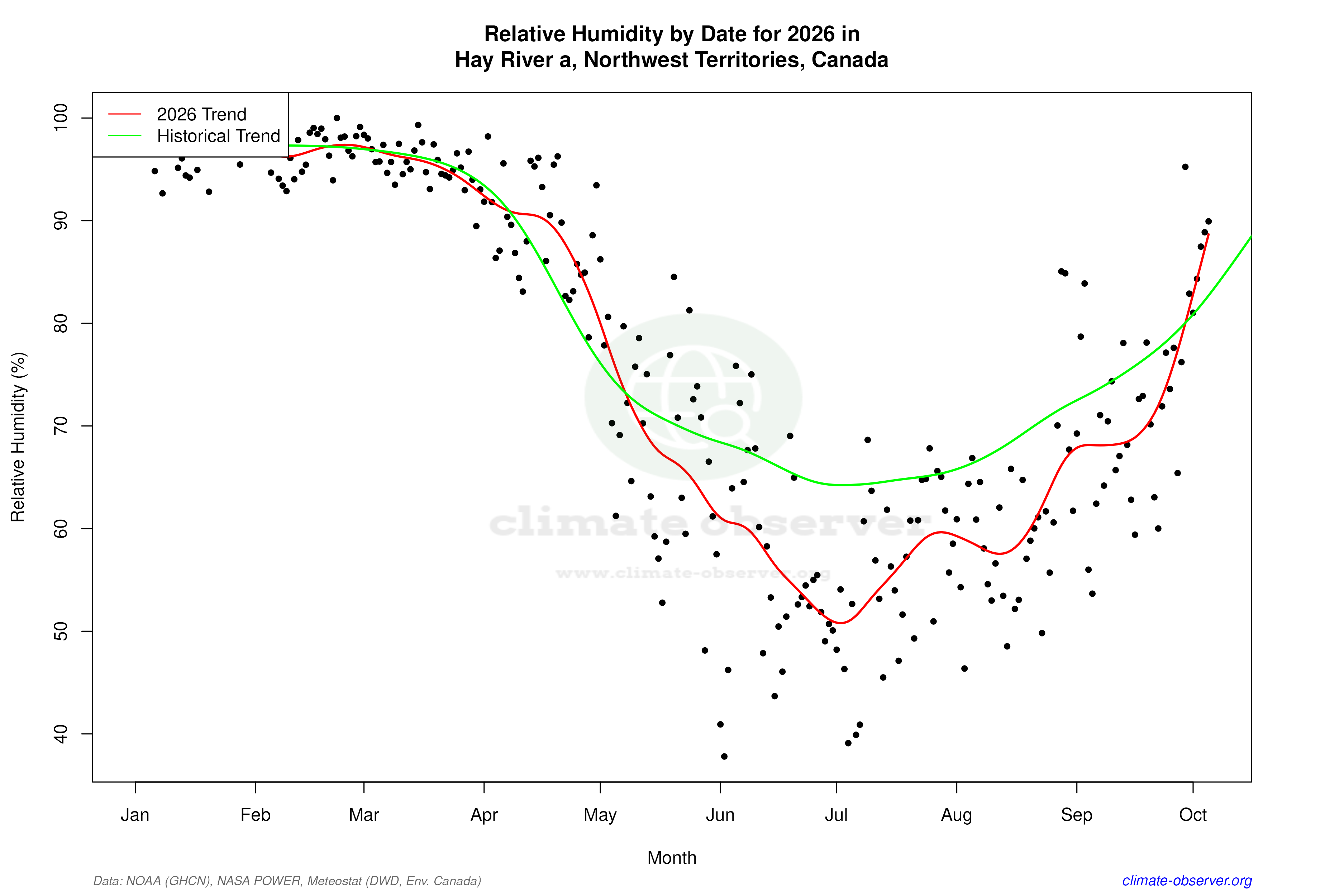

Max Temperature this Year | 1 of 6
Climate 12-Month Moving Averages
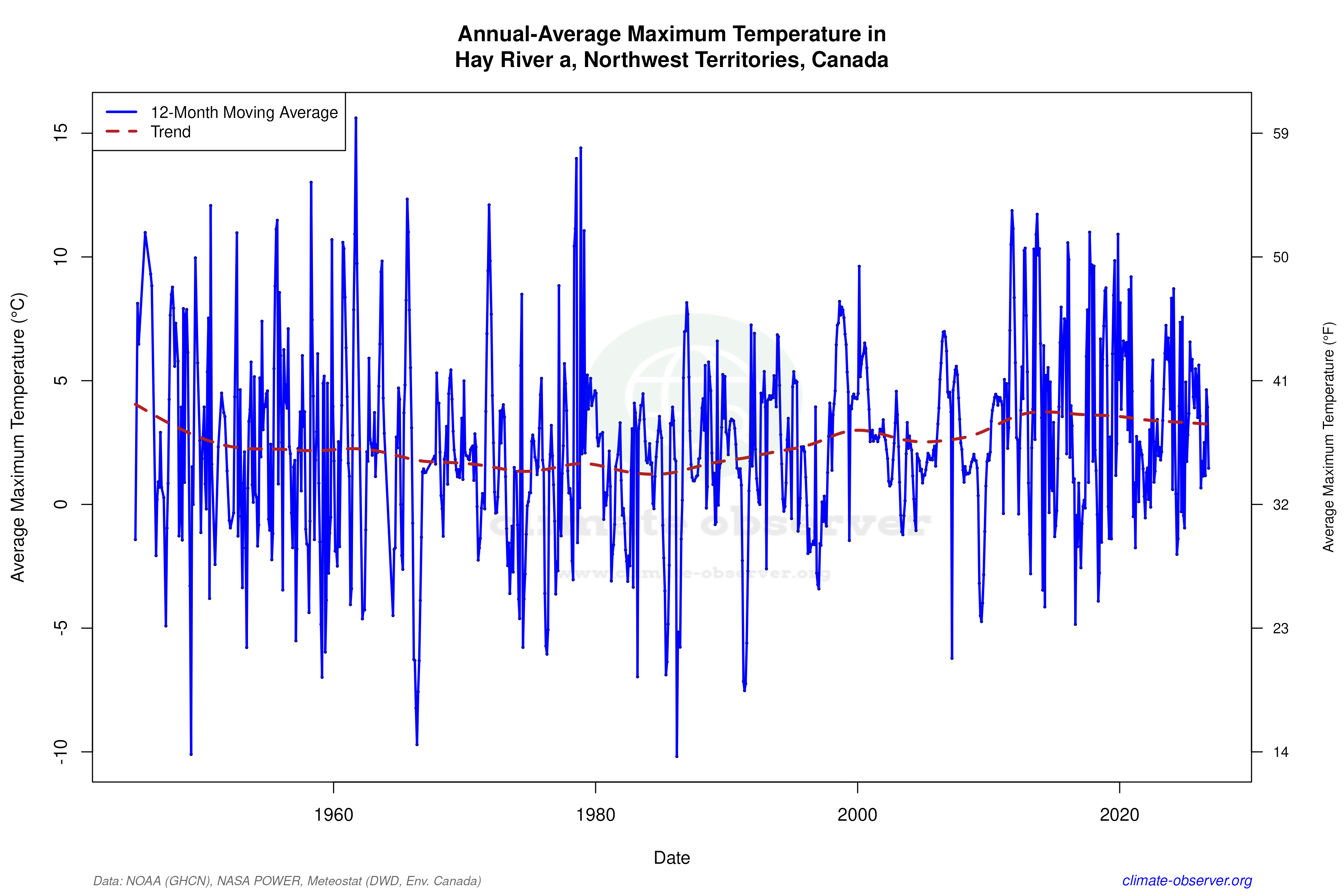
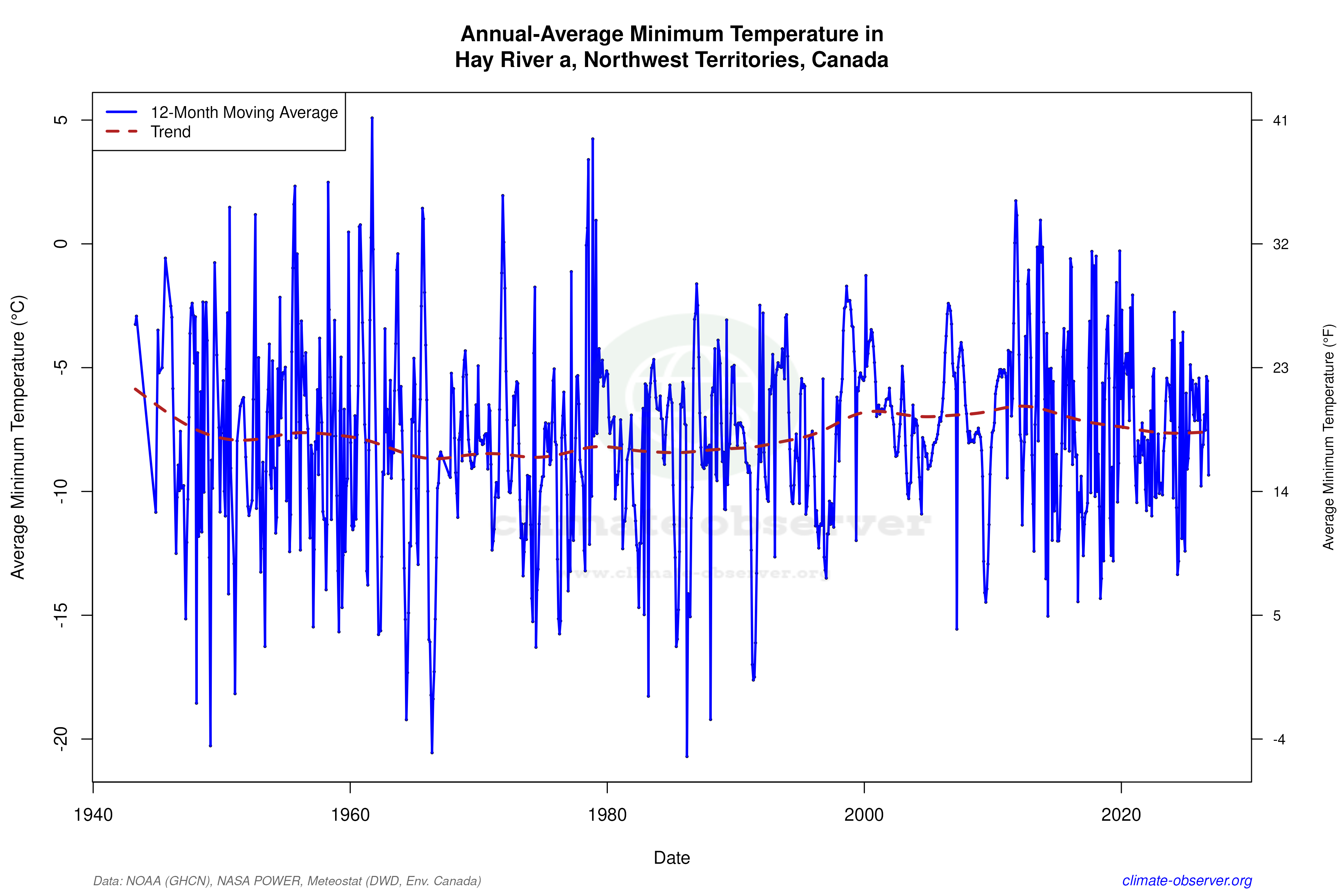
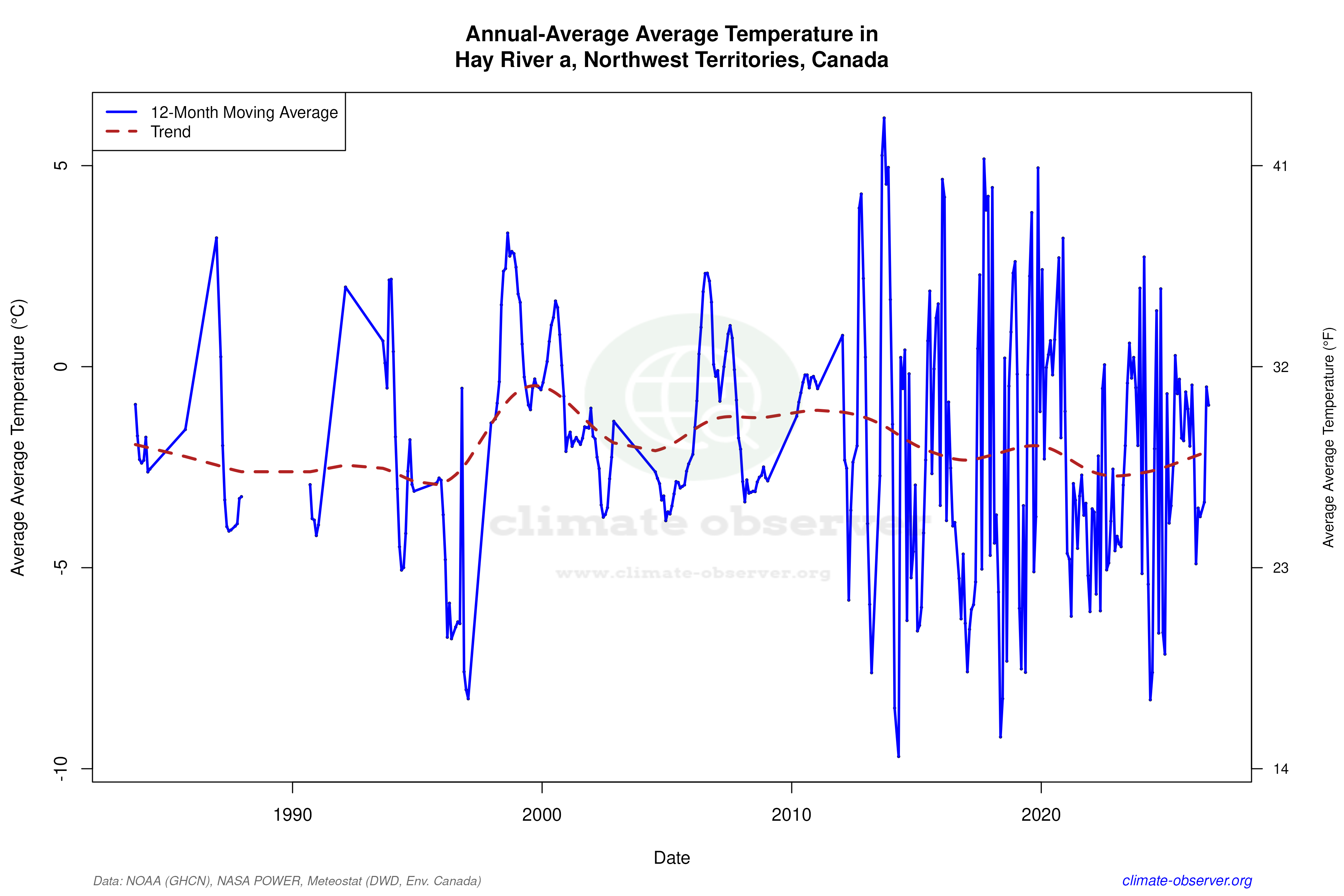

Max Temperature 12-Month MA | 1 of 6
Daily Data Points and Averages Throughout the Year
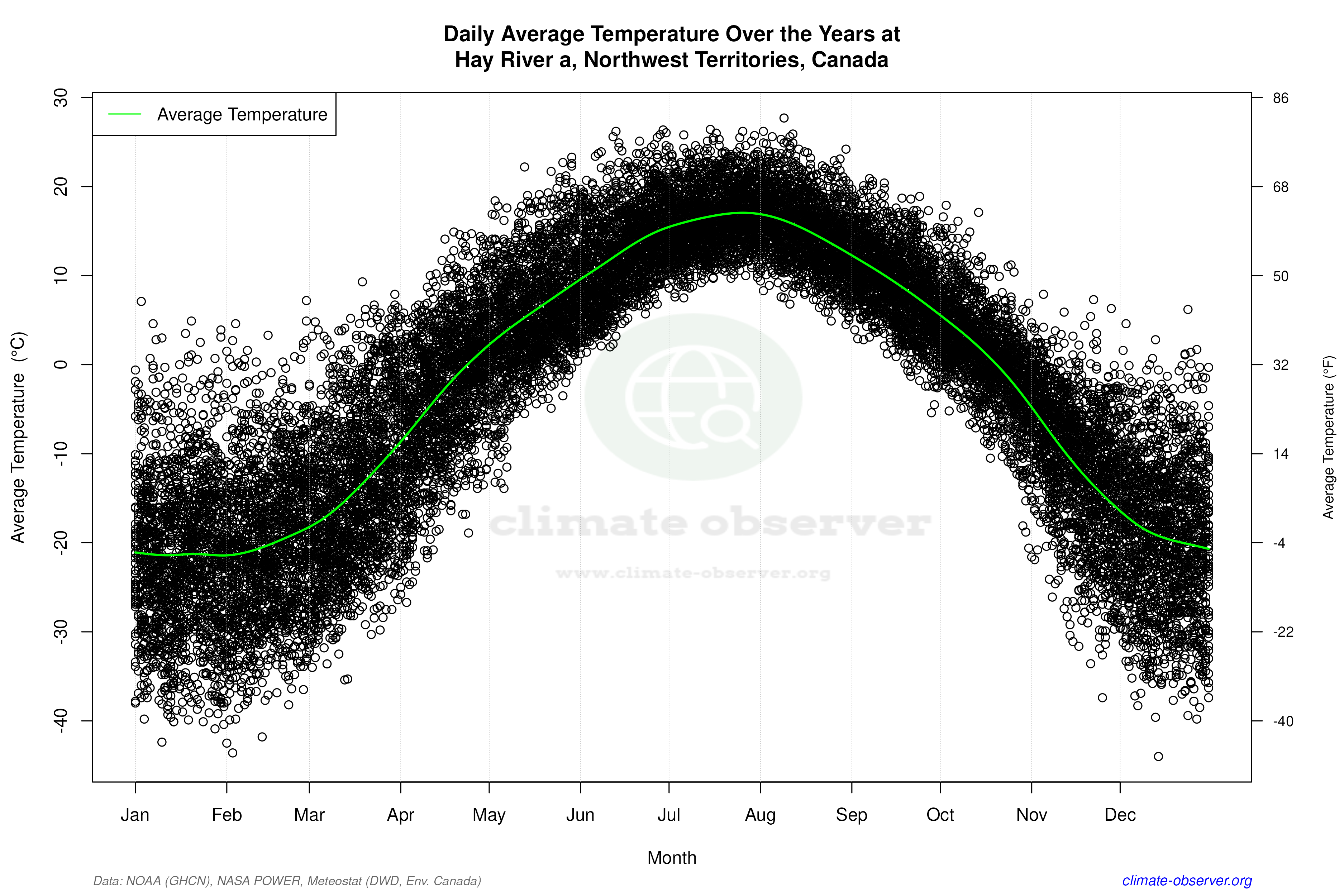
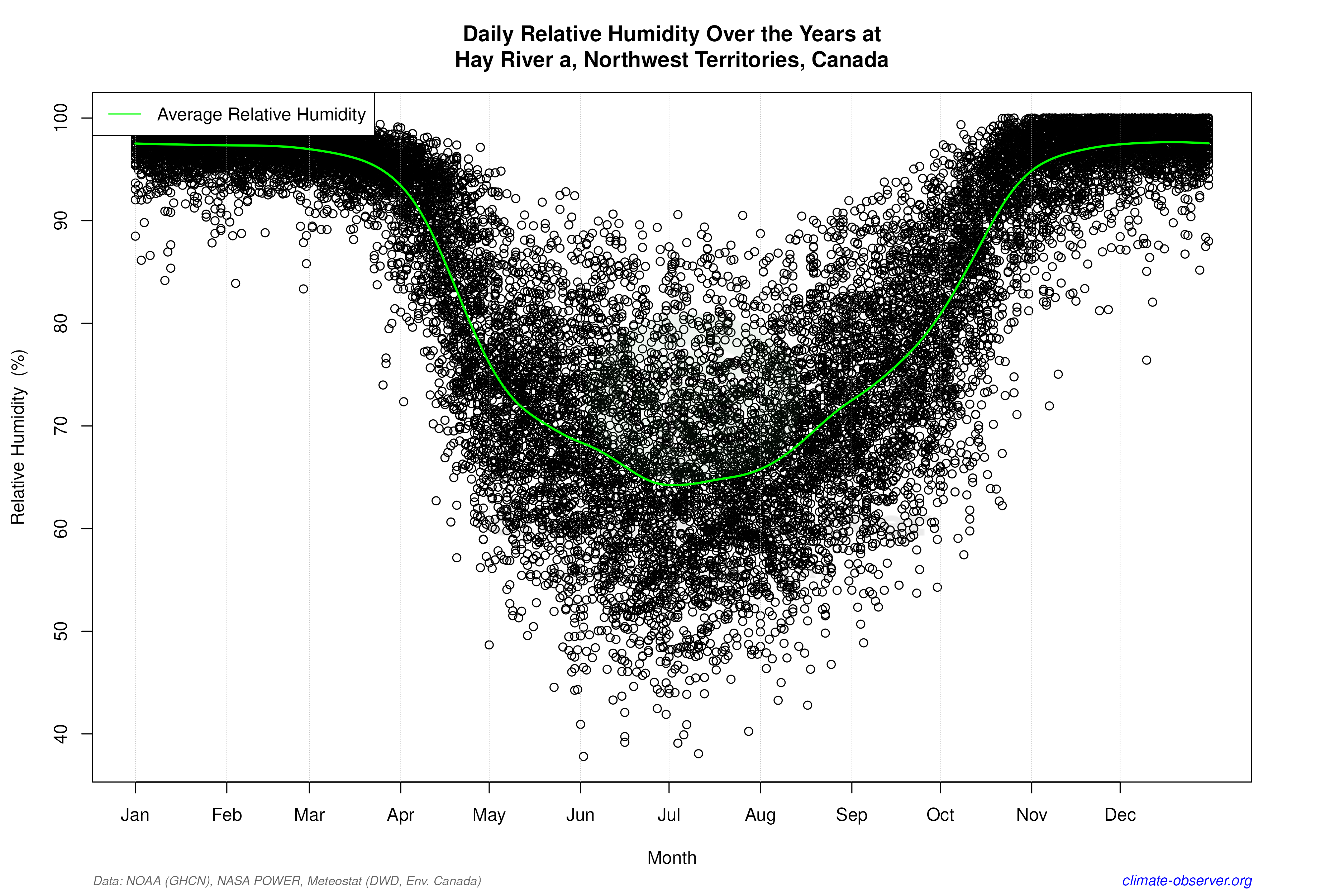

Average Max Temperature Throughout Year | 1 of 5


