Climate for Station: Indian Head Cda, Saskatchewan, Canada
Loading live weather...
Climate Analysis & Overview
Indian Head, situated in the heart of Saskatchewan, is experiencing nuanced climate trends with a slight long-term warming of lows and a marginal increase in precipitation concentration. The area faces a complex interplay of cooling highs over the last decade against a backdrop of gradual warming lows.
Continental Climate Dynamics
Indian Head, located in the Canadian prairies, falls under the Dfb category of the Köppen climate classification, characterised by warm summers and cold, snowy winters. The region's flat terrain, with its expansive agricultural fields, allows for significant temperature variations. Over the past decade, the area has experienced a cooling trend in high temperatures, with a decrease of 0.37°C (0.67°F). This contrasts with the all-time data, which shows a slight warming trend in highs of 0.10°C (0.18°F). The juxtaposition of these trends highlights the region's dynamic thermal oscillations.
Subtle Shifts in Low Temperature Trends
The low temperatures in Indian Head present a different narrative. Over the last ten years, there has been a slight warming trend, with lows rising by 0.15°C (0.27°F). This aligns with the all-time trend, which also indicates a warming of lows by 0.16°C (0.29°F). These changes suggest a gradual moderation of winter cold, potentially impacting local ecosystems and agricultural cycles.
Precipitation Patterns and Concentration
The Precipitation Concentration Index (PCI) for Indian Head has seen a marginal increase from a baseline of 14.00 to a current value of 15.36. This indicates that precipitation events are becoming slightly more concentrated, meaning rainfall is occurring in fewer, more intense events. While not yet at a level considered highly concentrated, this shift could affect water management and soil erosion in the region.
Extreme Temperature Records
Indian Head has recorded extreme temperatures, with a maximum of 42.8°C (109.0°F) and a minimum of -46.7°C (-52.1°F). These extremes underscore the region's susceptibility to significant temperature fluctuations, a hallmark of its continental climate. Such records are crucial for understanding the potential impacts of climate variability on local infrastructure and agriculture.
Regional Climate Initiatives
In light of these trends, Canadian regional climate goals aim to mitigate the impacts of climate change through sustainable agricultural practices and improved water management. Recent weather events, such as intense summer heatwaves, have underscored the importance of these initiatives. As Indian Head continues to navigate its evolving climate landscape, these efforts will be pivotal in ensuring resilience and adaptability for the community.
Station Statistics
10-Year Trend
High: +2.99 °F/decade
Low: +3.92 °F/decade
Rain: +0.019 in/decade
25-Year Trend
High: +0.11 °F/decade
Low: -0.01 °F/decade
Rain: -0.001 in/decade
50-Year Trend
High: -0.08 °F/decade
Low: -0.39 °F/decade
Rain: -0.002 in/decade
All-Time Trend
High: +0.19 °F/decade
Low: +0.27 °F/decade
Rain: -0.000 in/decade
Percentage Above-Average Days
Last 12 Months: 52.6%
This Year: 48.1%
Precipitation Concentration Index (PCI) ℹ️
Last 12 Months: 18.5
Historical Average: 14.3
Percentile Rank of Last 12 Months ℹ️
High: 67th percentile
Low: 70th percentile
Rain: 85th percentile
Change in Variance ℹ️
High: -2.8%
Low: -8.5%
Intraday: -4.5%
Data Coverage
80.0%
First Year of Data
1907
Station Location
Historical Weather Records
| Max High | Avg High | Min High | Max Avg | Avg Avg | Min Avg | Max Low | Avg Low | Min Low | Max Precipitation | Avg Precipitation | Max Snow | Avg Snow | |
|---|---|---|---|---|---|---|---|---|---|---|---|---|---|
| Record | 109.04 °F | — | -32.98 °F | 85.32 °F | — | -37.53 °F | 73.40 °F | — | -52.06 °F | 6.60 in | — | 17.99 in | — |
| January | 49.82 °F | 11.82 °F | -32.98 °F | 40.46 °F | 5.88 °F | -37.53 °F | 35.60 °F | -7.43 °F | -50.08 °F | 0.80 in | 0.02 in | 8.50 in | 0.25 in |
| February | 57.02 °F | 16.12 °F | -32.98 °F | 38.98 °F | 8.90 °F | -36.17 °F | 35.96 °F | -3.86 °F | -52.06 °F | 0.80 in | 0.02 in | 7.99 in | 0.23 in |
| March | 75.92 °F | 28.68 °F | -17.86 °F | 51.80 °F | 22.46 °F | -27.58 °F | 42.08 °F | 8.60 °F | -47.92 °F | 1.40 in | 0.03 in | 14.02 in | 0.25 in |
| April | 91.94 °F | 49.23 °F | 3.92 °F | 68.90 °F | 38.15 °F | 1.58 °F | 53.96 °F | 26.07 °F | -14.08 °F | 2.01 in | 0.03 in | 15.98 in | 0.13 in |
| May | 100.40 °F | 64.11 °F | 28.94 °F | 78.26 °F | 51.72 °F | 22.64 °F | 71.60 °F | 37.65 °F | 5.00 °F | 2.28 in | 0.06 in | 17.99 in | 0.04 in |
| June | 105.08 °F | 71.85 °F | 35.06 °F | 85.32 °F | 60.95 °F | 39.92 °F | 73.40 °F | 47.69 °F | 24.08 °F | 6.60 in | 0.11 in | 5.51 in | 0.00 in |
| July | 109.04 °F | 77.81 °F | 51.98 °F | 83.16 °F | 65.48 °F | 47.84 °F | 73.22 °F | 52.08 °F | 30.92 °F | 4.26 in | 0.07 in | 0.00 in | 0.00 in |
| August | 104.54 °F | 76.14 °F | 42.08 °F | 84.25 °F | 64.08 °F | 44.26 °F | 71.96 °F | 49.50 °F | 26.96 °F | 2.80 in | 0.07 in | 0.00 in | 0.00 in |
| September | 98.06 °F | 65.39 °F | 30.02 °F | 77.00 °F | 54.01 °F | 26.96 °F | 71.06 °F | 39.99 °F | 8.06 °F | 2.83 in | 0.05 in | 8.50 in | 0.03 in |
| October | 89.60 °F | 51.49 °F | 10.40 °F | 68.72 °F | 39.45 °F | 8.78 °F | 64.04 °F | 28.83 °F | -11.02 °F | 5.53 in | 0.03 in | 14.02 in | 0.09 in |
| November | 73.04 °F | 31.09 °F | -20.02 °F | 53.96 °F | 23.06 °F | -17.14 °F | 42.98 °F | 13.24 °F | -38.02 °F | 1.20 in | 0.03 in | 12.01 in | 0.23 in |
| December | 57.92 °F | 17.53 °F | -32.98 °F | 38.84 °F | 9.17 °F | -35.82 °F | 35.96 °F | -0.64 °F | -42.70 °F | 1.10 in | 0.03 in | 10.98 in | 0.27 in |
Data Visualisations
Remove WatermarksCurrent Year Climate Trends vs Historical
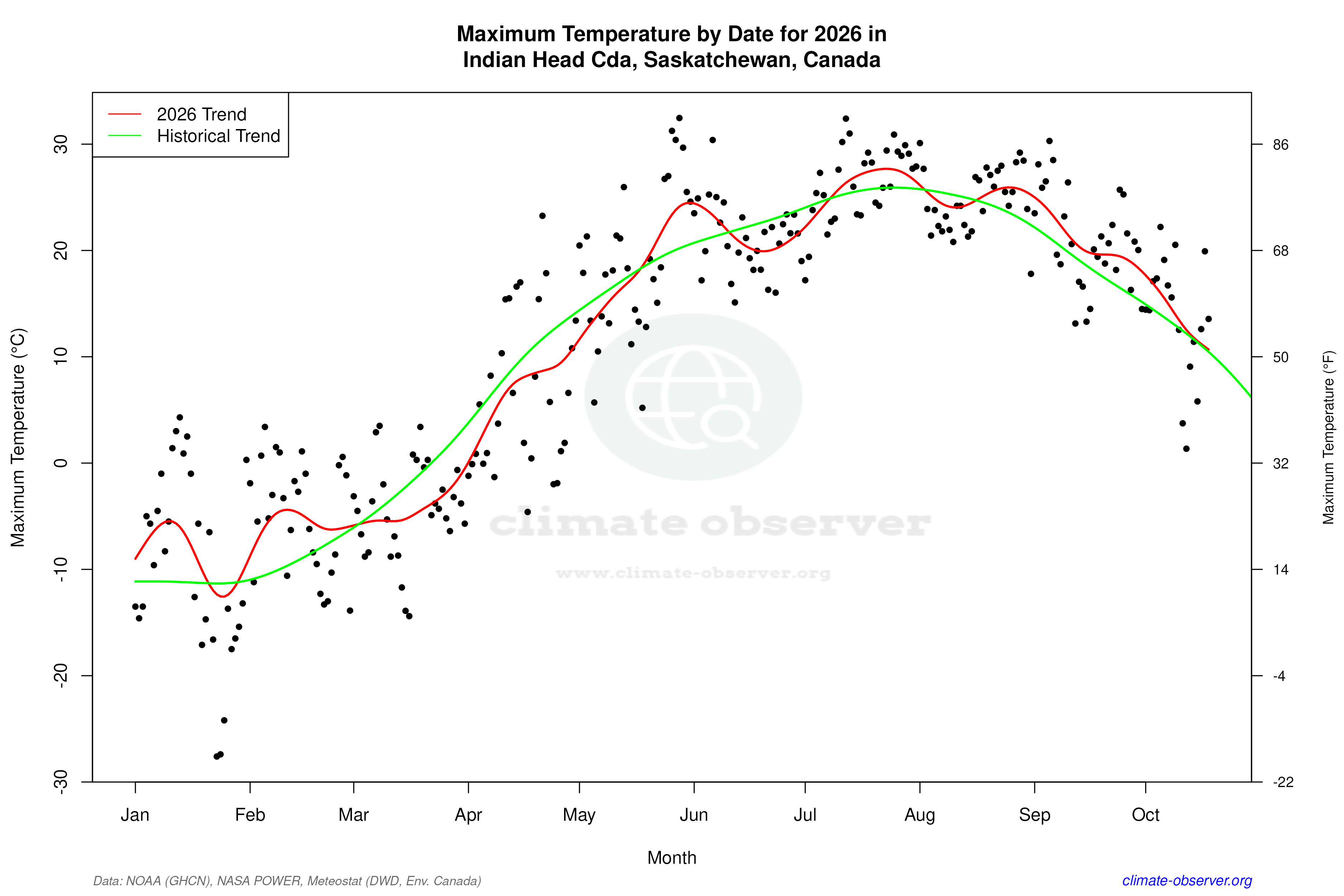
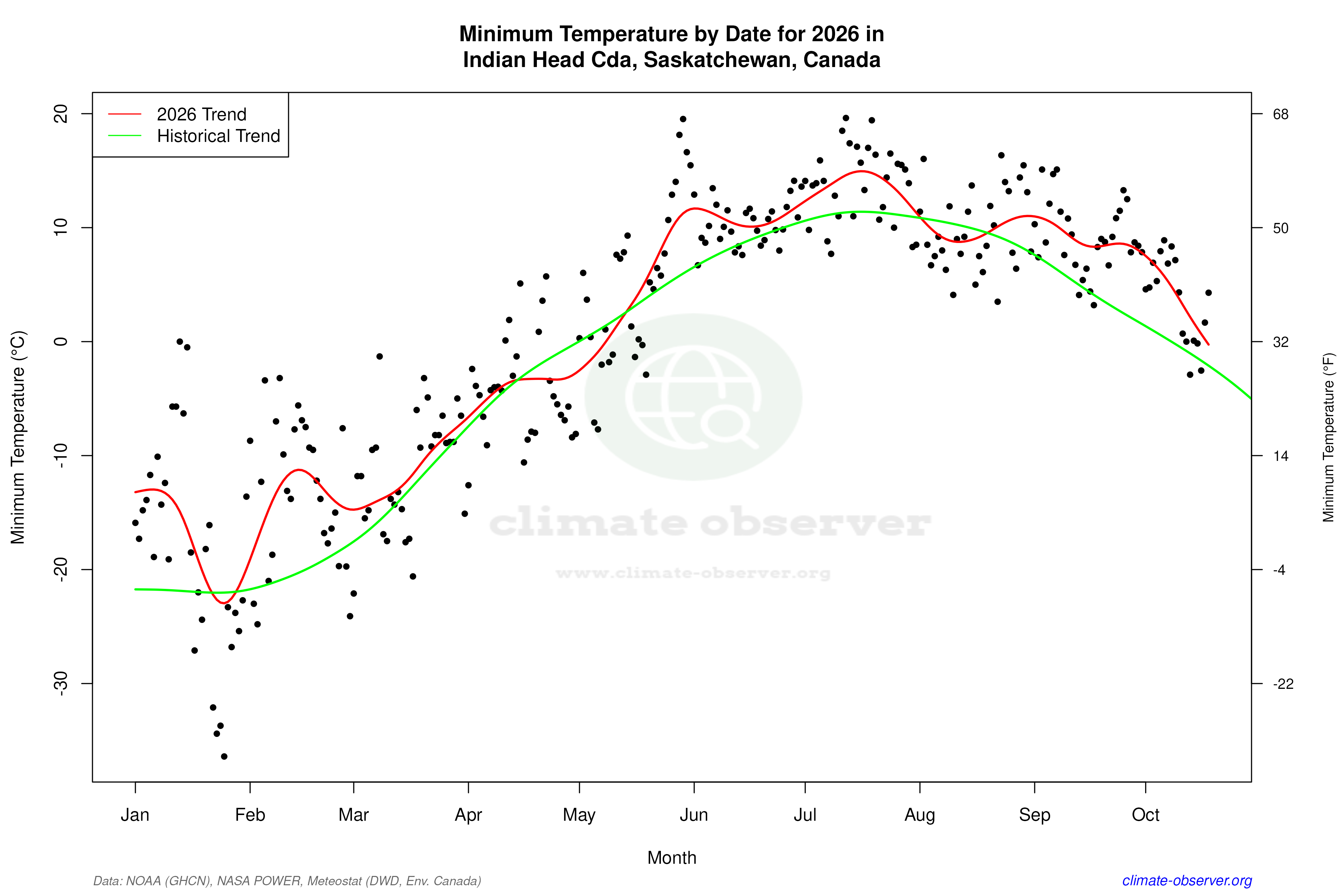
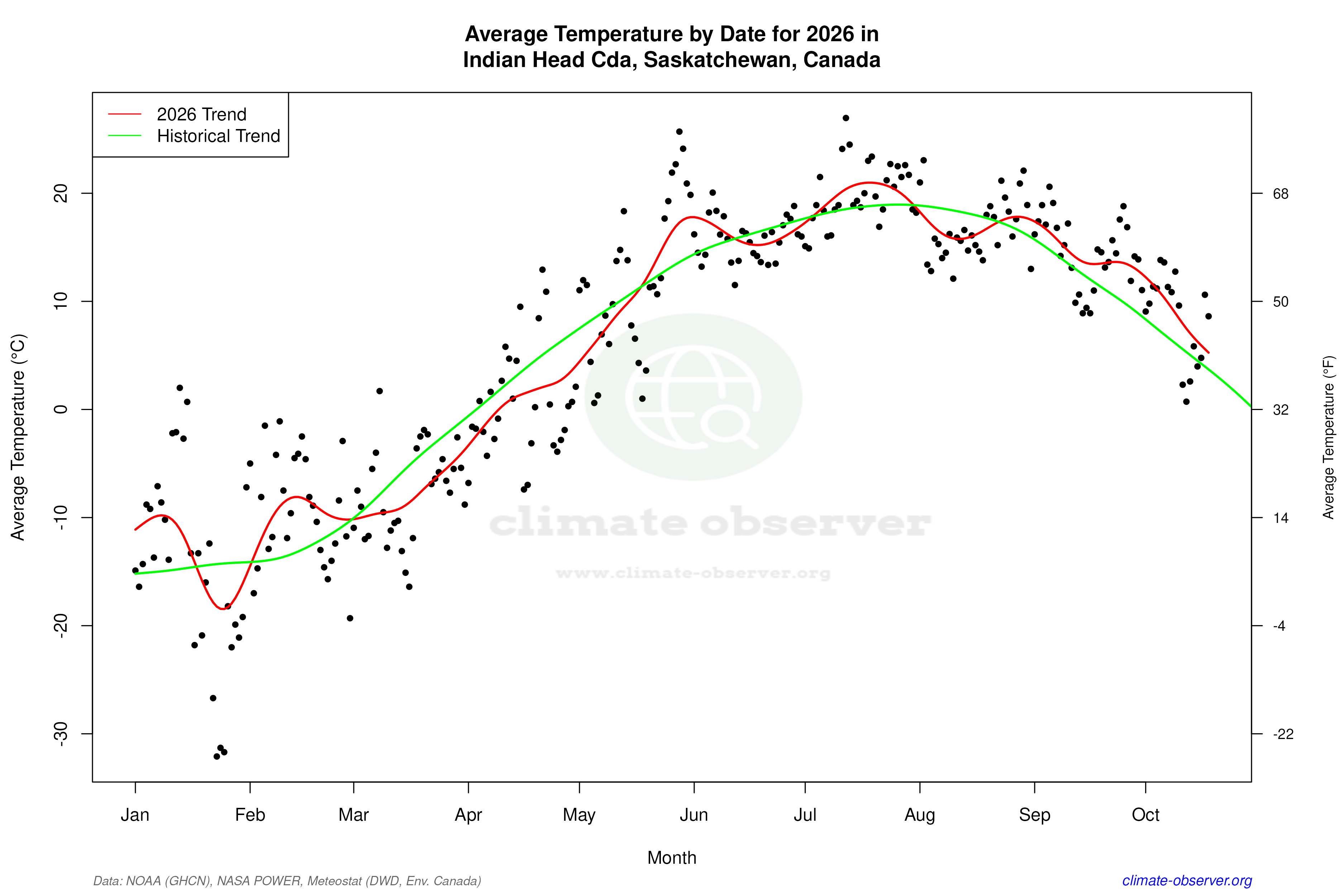
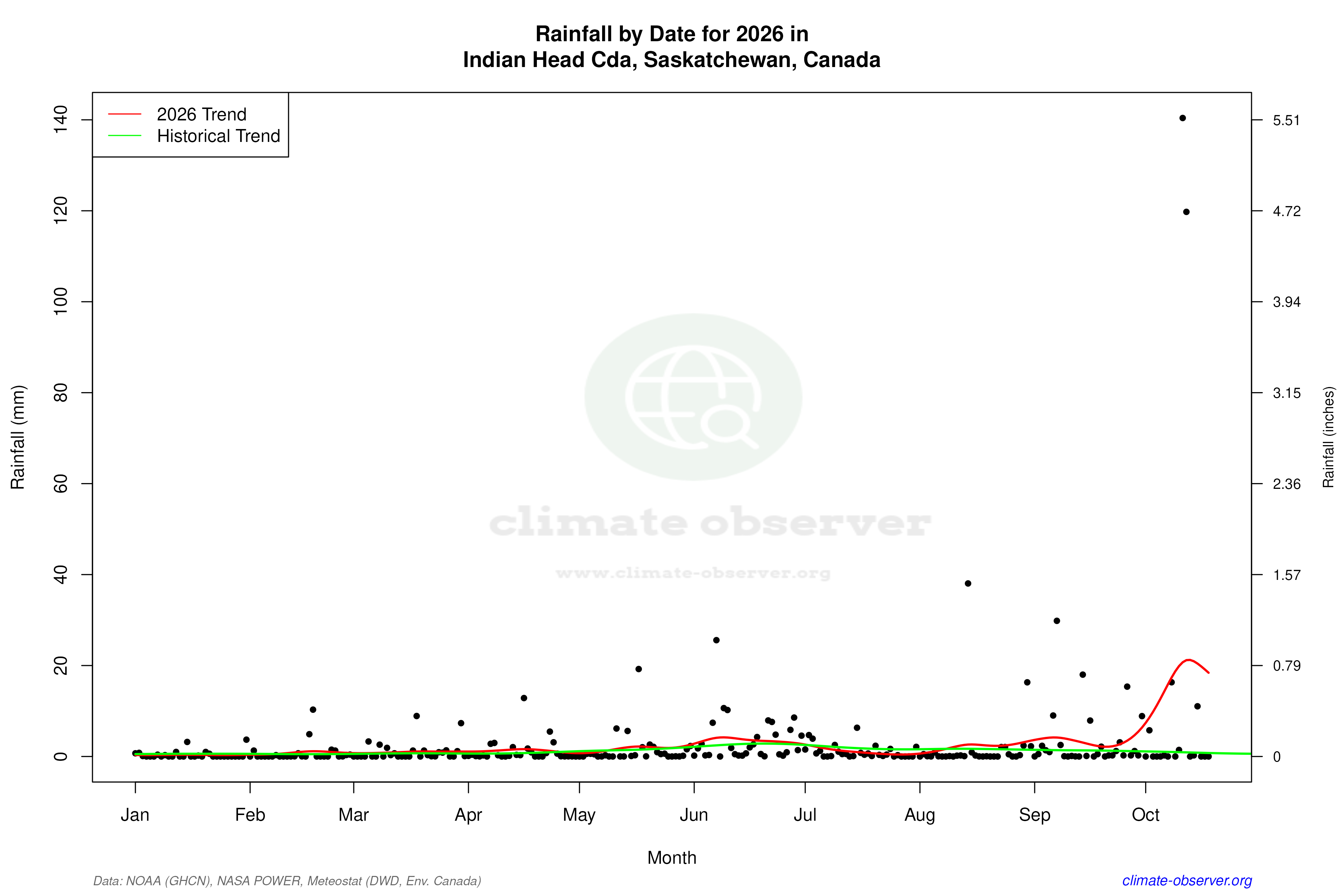
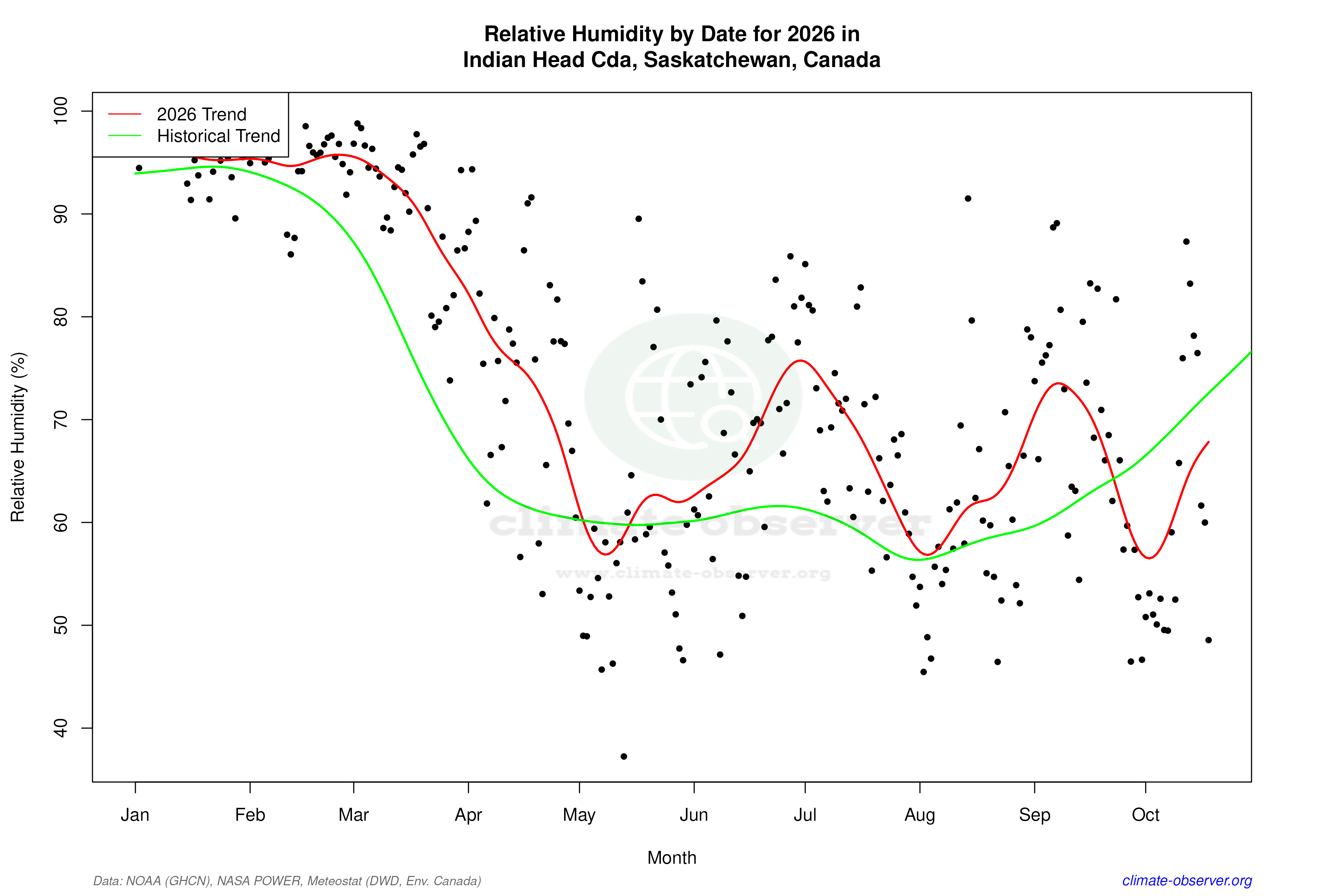

Max Temperature this Year | 1 of 6
Climate 12-Month Moving Averages
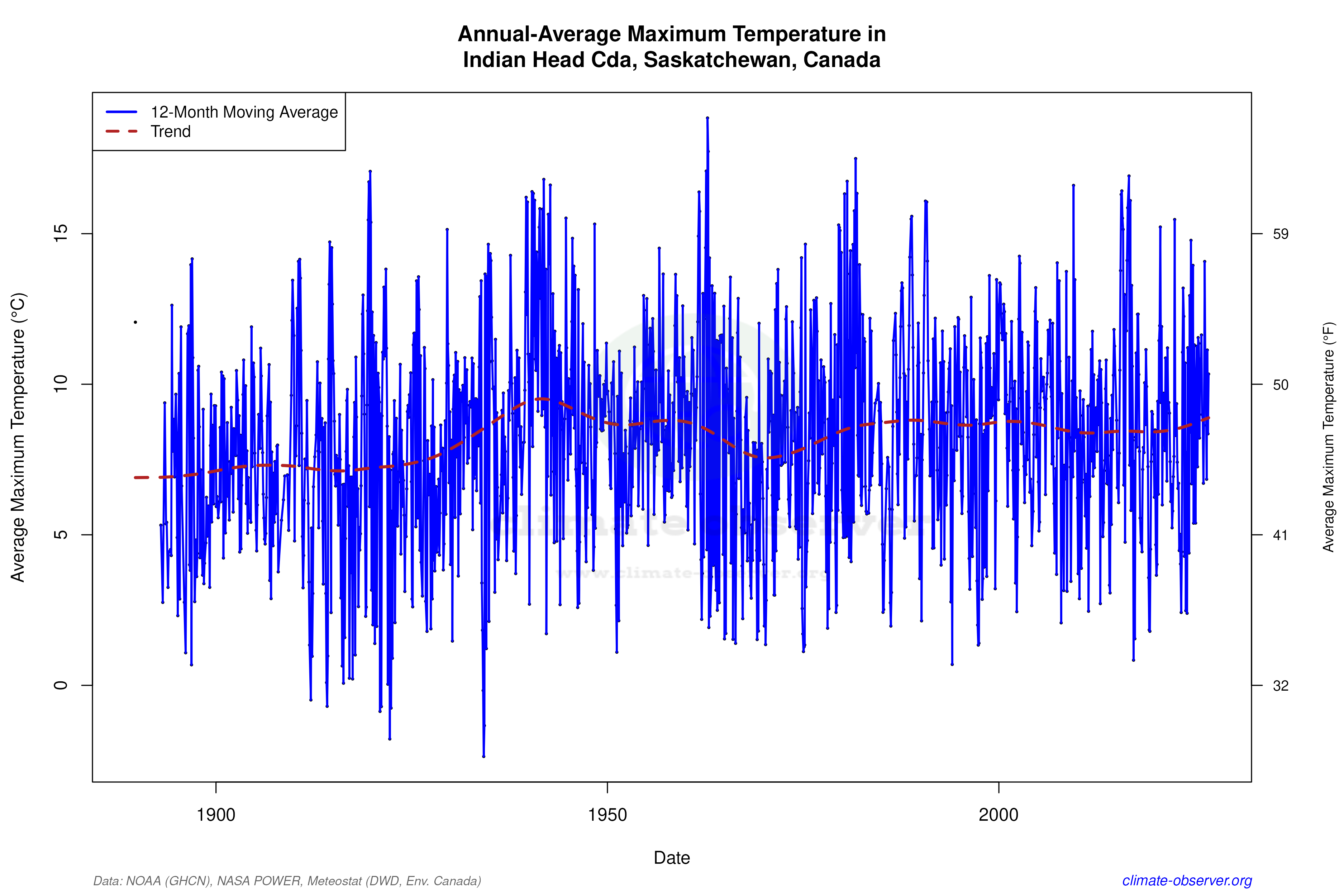
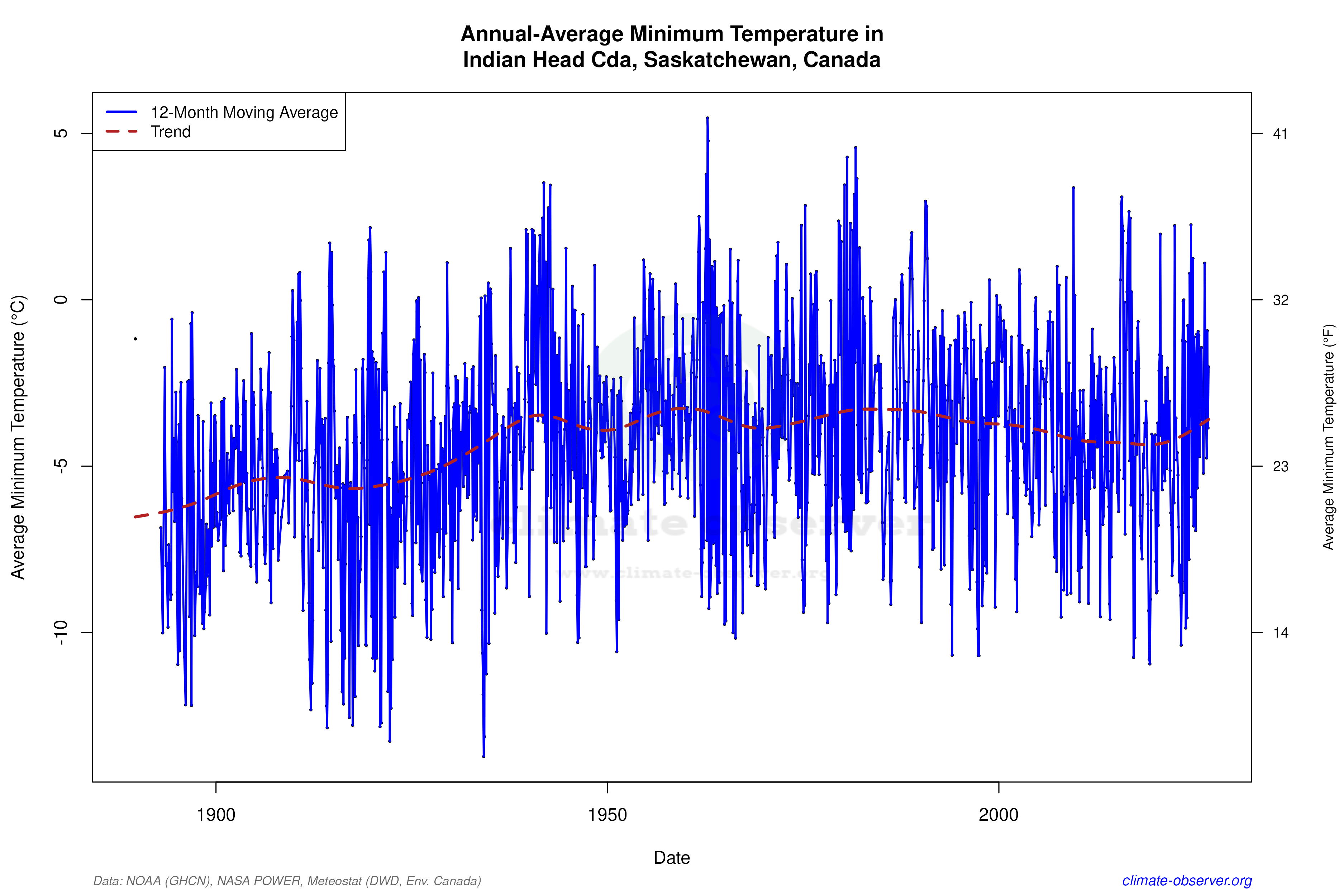
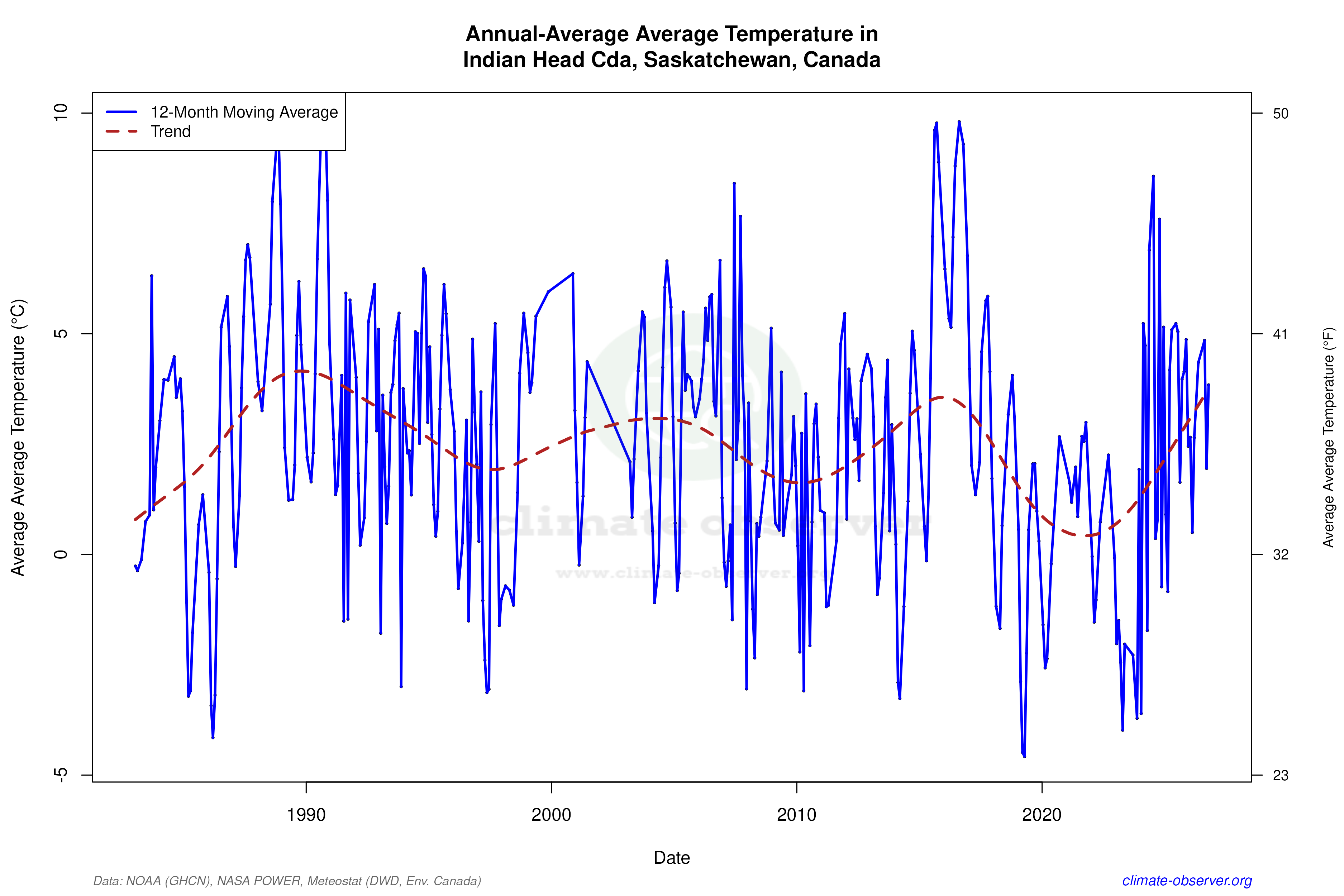
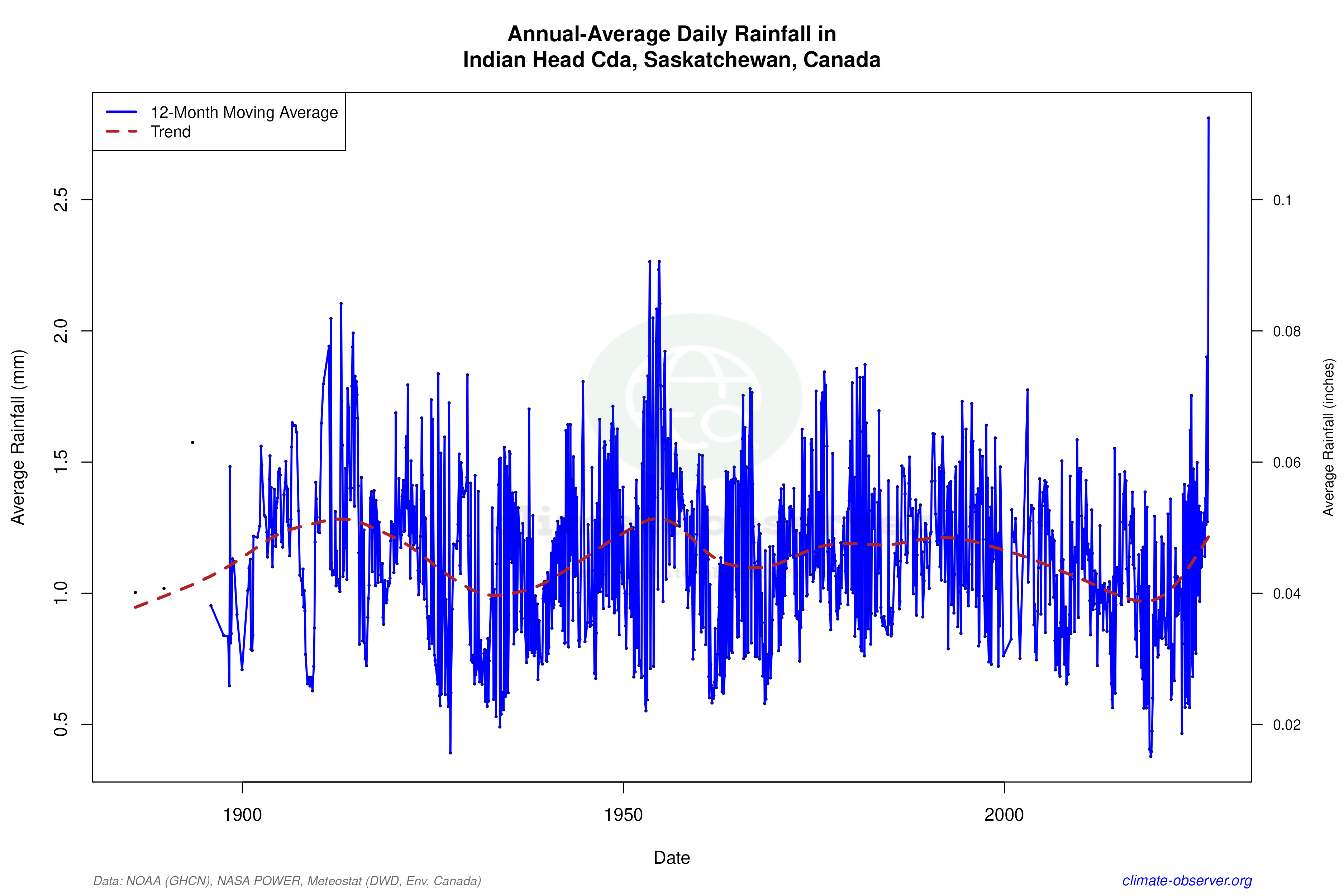
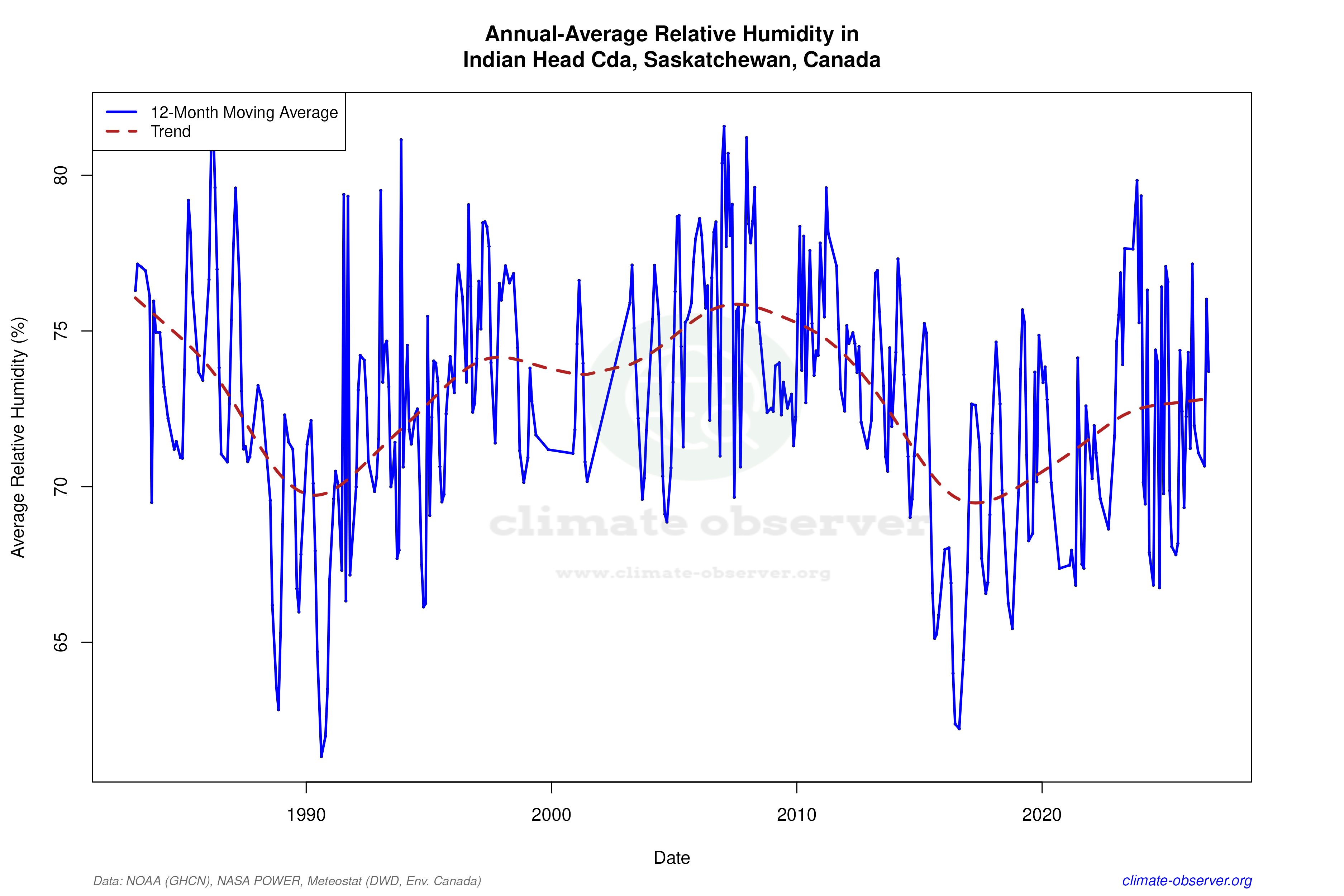

Max Temperature 12-Month MA | 1 of 6
Daily Data Points and Averages Throughout the Year
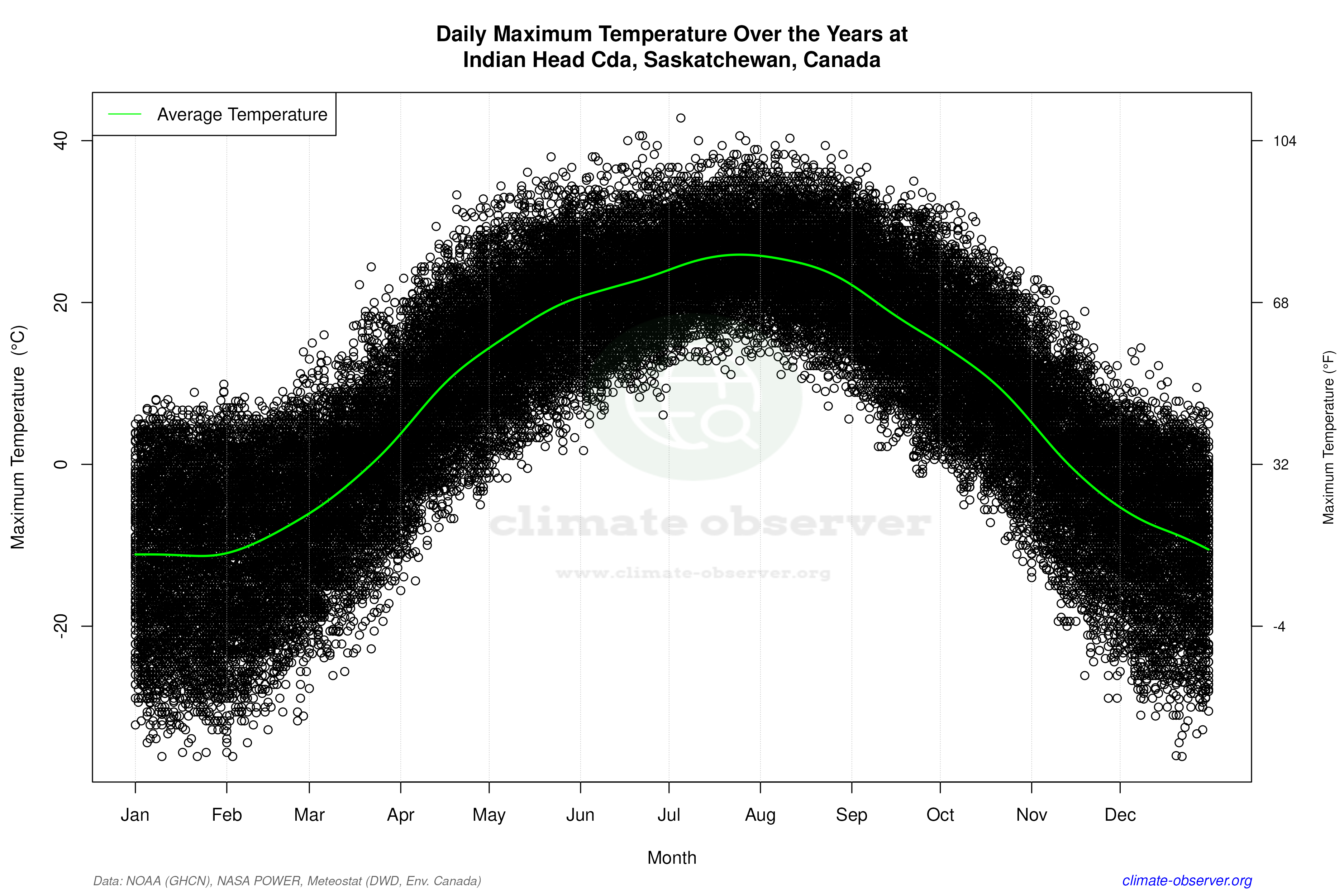
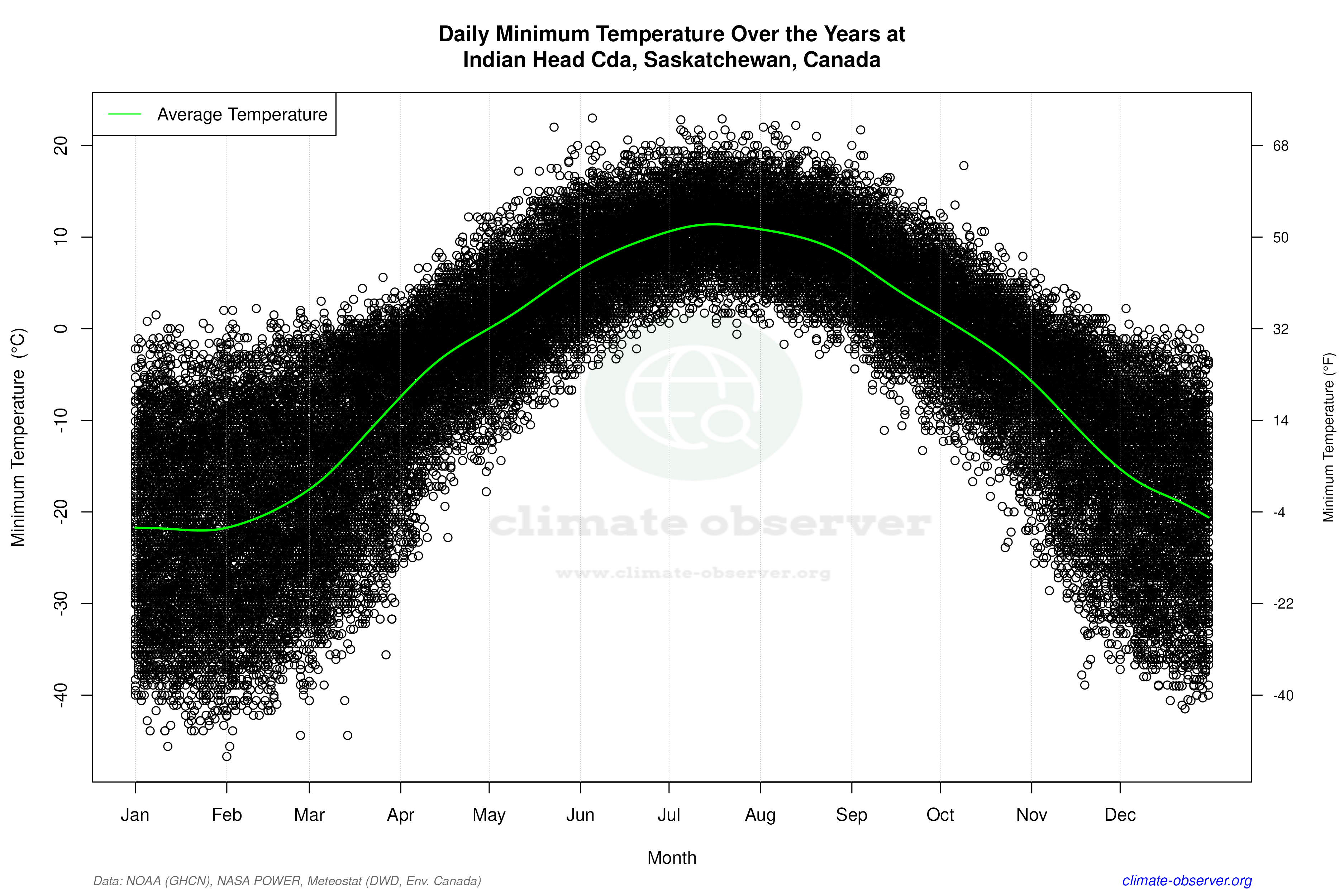
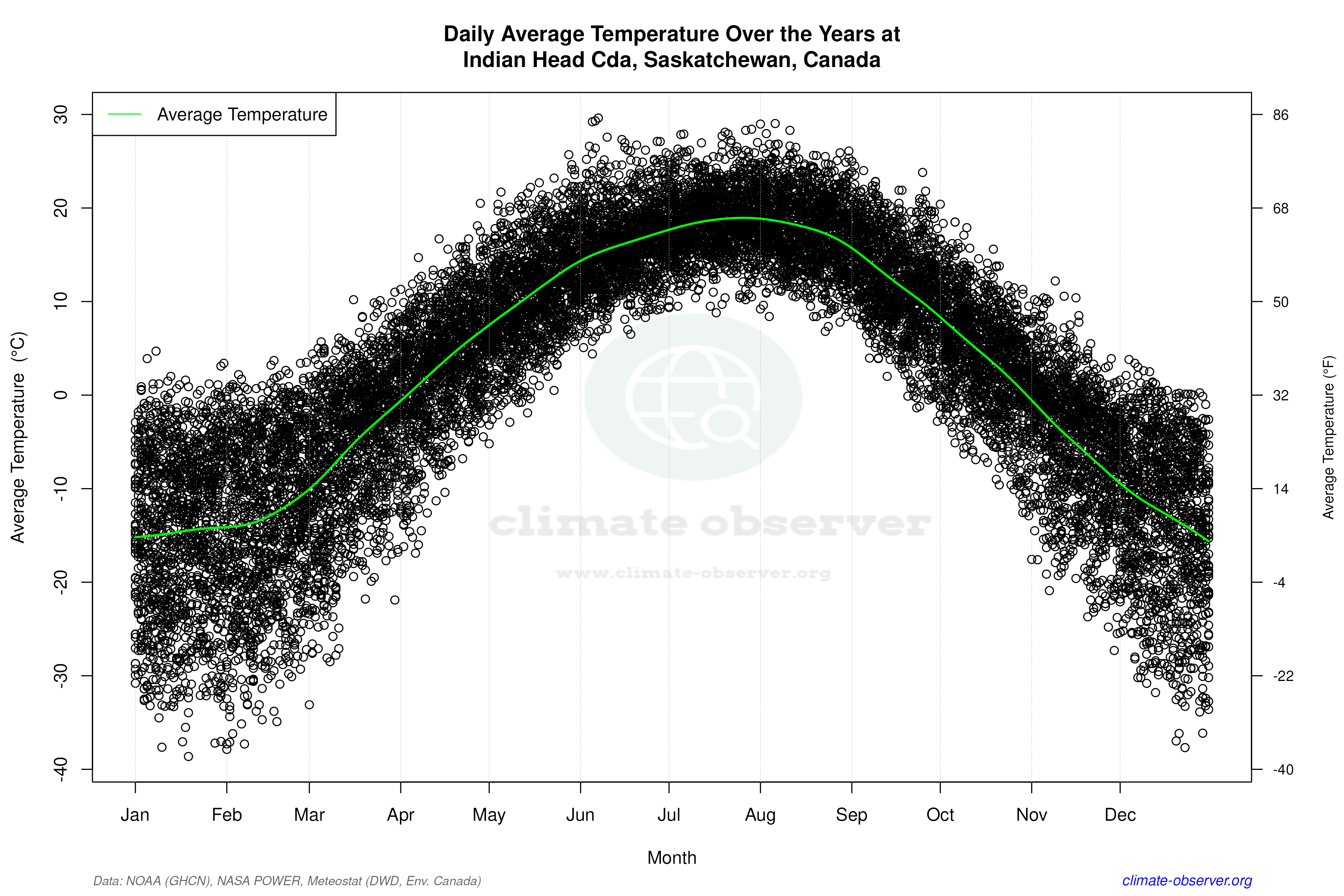
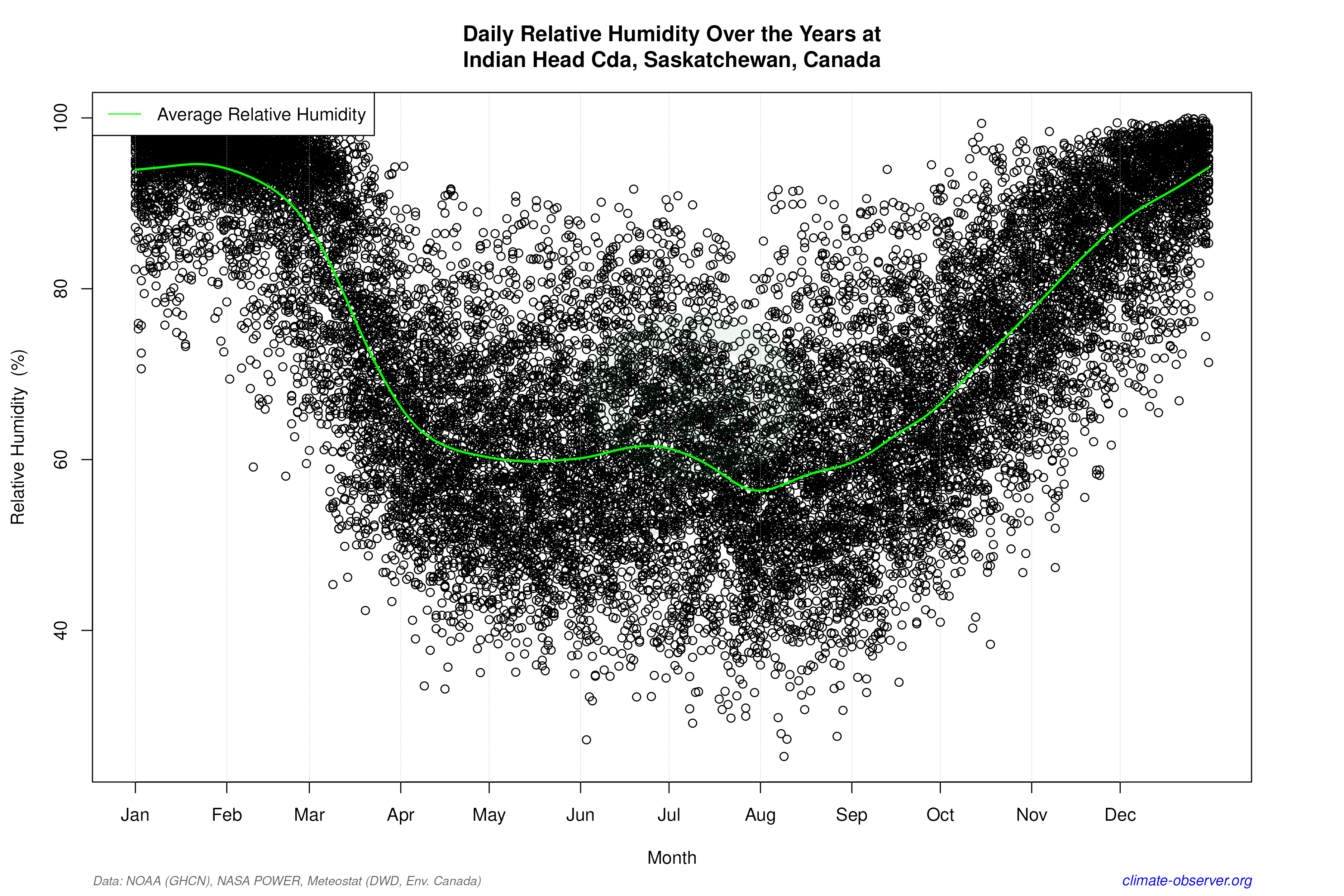

Average Max Temperature Throughout Year | 1 of 5


