Climate for Station: Sarh, Moyen-Chari, Chad
Loading live weather...
Climate Analysis & Overview
Sarh, located in the heart of Chad, is experiencing a nuanced climate narrative. While long-term trends indicate a slight warming, recent data suggest a cooling in high temperatures. Precipitation patterns are becoming more concentrated, hinting at potential challenges for local agriculture and water management.
Köppen Climate Context
Sarh is classified under the Köppen climate system as having a tropical savanna climate, characterised by distinct wet and dry seasons. This classification is influenced by its geographical position near the Chari River, which plays a critical role in local weather patterns and agriculture. The river's proximity provides a moderating effect on temperatures but also contributes to the area's vulnerability to concentrated rainfall events.
Temperature Trends: A Mixed Picture
Examining the temperature trends reveals a complex story. Over the long term, Sarh has experienced a slight warming, with all-time high temperatures rising by 0.14°C (0.25°F) and lows by 0.17°C (0.31°F). However, the past decade presents a different narrative, with high temperatures showing a cooling trend of -0.18°C (-0.32°F), while low temperatures have continued to rise by 0.12°C (0.22°F). This divergence suggests a potential shift in diurnal temperature ranges, which could affect local ecosystems and human comfort.
Precipitation Patterns: Increasing Concentration
The Precipitation Concentration Index (PCI) for Sarh has increased from a baseline of 21.3 to a current value of 22.9. This indicates a more concentrated pattern of rainfall, where precipitation is occurring in fewer, more intense events. Such a shift can lead to challenges in water resource management, as well as increased risks of flooding and soil erosion during the rainy season. The PCI values, both above 20, highlight the highly concentrated nature of rainfall in this region.
Record Extremes: Temperature Benchmarks
Sarh's climate extremes are marked by a record high of 48.0°C (118.4°F) and a record low of 7.0°C (44.6°F). These extremes underscore the variability and potential severity of weather conditions in the region. Such temperature records are critical for understanding the limits of local climate resilience and for planning adaptive strategies in agriculture and infrastructure.
Regional Climate Goals and Implications
Chad's regional climate goals focus on adaptation and resilience, particularly in the face of increasing climate variability. The trends observed in Sarh, including the cooling of high temperatures and the concentration of precipitation, align with broader regional challenges. These climate dynamics necessitate targeted strategies to manage water resources effectively and to bolster agricultural productivity in the face of changing weather patterns.
Station Statistics
10-Year Trend
High: +0.07 °F/decade
Low: +0.63 °F/decade
Rain: -0.042 in/decade
25-Year Trend
High: -0.08 °F/decade
Low: -0.07 °F/decade
Rain: -0.002 in/decade
50-Year Trend
High: +0.64 °F/decade
Low: +0.15 °F/decade
Rain: +0.001 in/decade
All-Time Trend
High: +0.27 °F/decade
Low: +0.31 °F/decade
Rain: +0.000 in/decade
Percentage Above-Average Days
Last 12 Months: 71.0%
This Year: 79.1%
Precipitation Concentration Index (PCI) ℹ️
Last 12 Months: 16.8
Historical Average: 19.5
Percentile Rank of Last 12 Months ℹ️
High: 92nd percentile
Low: 95th percentile
Rain: 11th percentile
Change in Variance ℹ️
High: -2.5%
Low: +2.0%
Intraday: -1.2%
Data Coverage
87.1%
First Year of Data
1959
Station Location
Historical Weather Records
| Max High | Avg High | Min High | Max Avg | Avg Avg | Min Avg | Max Low | Avg Low | Min Low | Max Precipitation | Avg Precipitation | Max Snow | Avg Snow | |
|---|---|---|---|---|---|---|---|---|---|---|---|---|---|
| Record | 118.40 °F | — | 71.78 °F | 103.64 °F | — | 60.44 °F | 88.21 °F | — | 44.60 °F | 6.05 in | — | — | — |
| January | 107.92 °F | 97.39 °F | 80.60 °F | 98.06 °F | 80.51 °F | 60.44 °F | 82.26 °F | 62.71 °F | 44.60 °F | 0.31 in | 0.00 in | — | — |
| February | 111.27 °F | 101.42 °F | 85.82 °F | 103.28 °F | 85.36 °F | 71.06 °F | 84.15 °F | 67.45 °F | 49.10 °F | 0.81 in | 0.00 in | — | — |
| March | 118.40 °F | 103.50 °F | 84.97 °F | 103.64 °F | 89.99 °F | 75.74 °F | 86.95 °F | 74.45 °F | 59.36 °F | 1.46 in | 0.01 in | — | — |
| April | 113.31 °F | 101.76 °F | 80.60 °F | 101.12 °F | 90.37 °F | 73.58 °F | 88.21 °F | 77.48 °F | 60.80 °F | 2.91 in | 0.05 in | — | — |
| May | 112.21 °F | 97.05 °F | 73.40 °F | 99.86 °F | 86.73 °F | 72.14 °F | 87.96 °F | 75.97 °F | 56.30 °F | 3.58 in | 0.12 in | — | — |
| June | 106.36 °F | 91.70 °F | 75.20 °F | 94.10 °F | 82.33 °F | 70.70 °F | 82.35 °F | 72.99 °F | 55.40 °F | 5.94 in | 0.21 in | — | — |
| July | 109.40 °F | 87.15 °F | 72.68 °F | 90.14 °F | 79.05 °F | 63.32 °F | 78.80 °F | 71.38 °F | 60.44 °F | 5.28 in | 0.30 in | — | — |
| August | 101.30 °F | 86.04 °F | 72.86 °F | 87.62 °F | 78.26 °F | 70.16 °F | 76.82 °F | 70.96 °F | 61.70 °F | 6.05 in | 0.35 in | — | — |
| September | 98.60 °F | 87.83 °F | 71.78 °F | 87.98 °F | 79.17 °F | 71.24 °F | 77.00 °F | 71.03 °F | 59.00 °F | 5.19 in | 0.26 in | — | — |
| October | 103.10 °F | 90.78 °F | 76.10 °F | 90.86 °F | 80.80 °F | 69.08 °F | 77.00 °F | 71.38 °F | 62.06 °F | 3.39 in | 0.11 in | — | — |
| November | 105.08 °F | 95.12 °F | 77.45 °F | 95.36 °F | 81.27 °F | 68.32 °F | 78.80 °F | 67.12 °F | 50.00 °F | 1.81 in | 0.01 in | — | — |
| December | 104.90 °F | 96.33 °F | 82.94 °F | 94.82 °F | 79.83 °F | 64.04 °F | 79.11 °F | 62.82 °F | 50.00 °F | 0.12 in | 0.00 in | — | — |
Data Visualisations
Remove WatermarksCurrent Year Climate Trends vs Historical
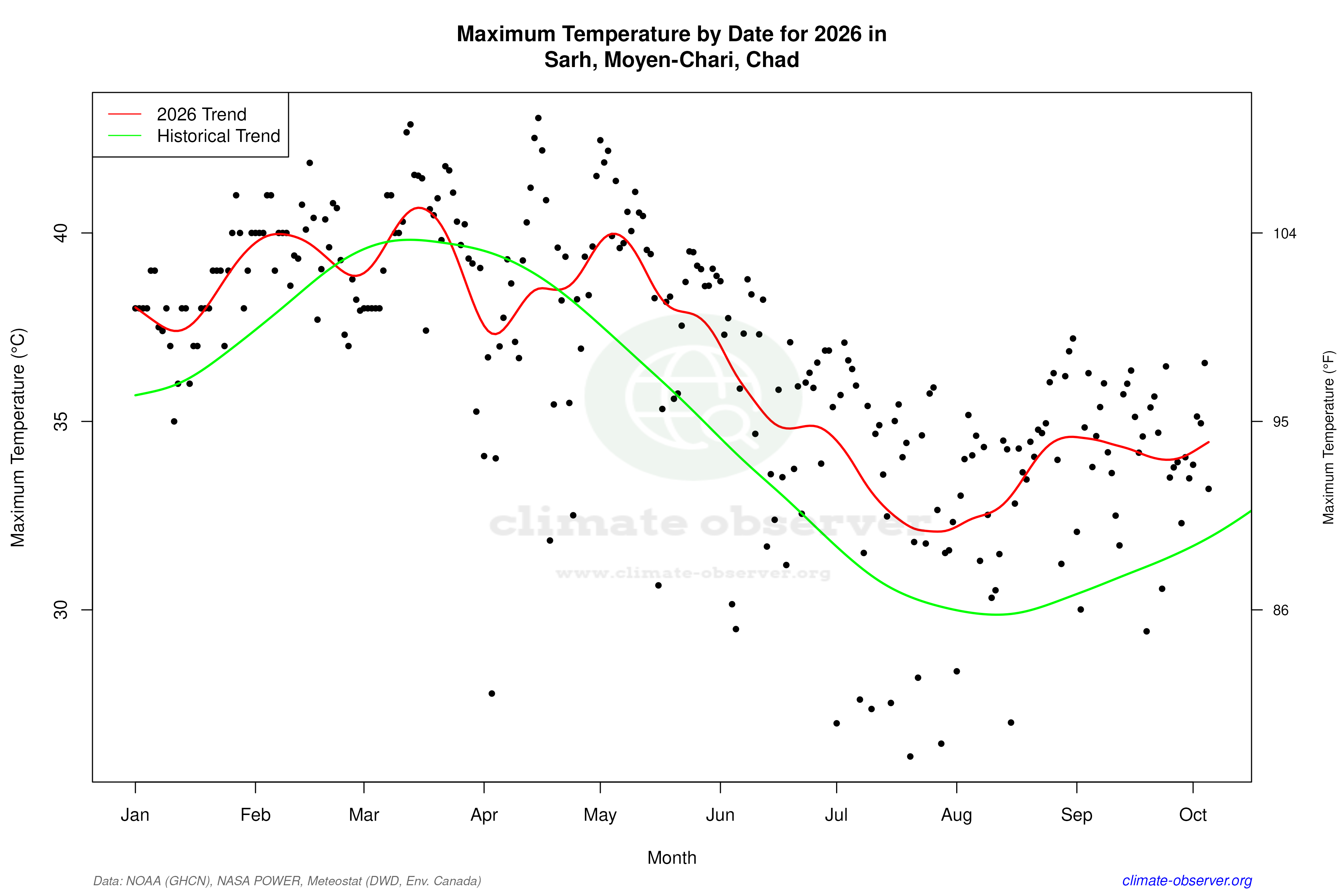
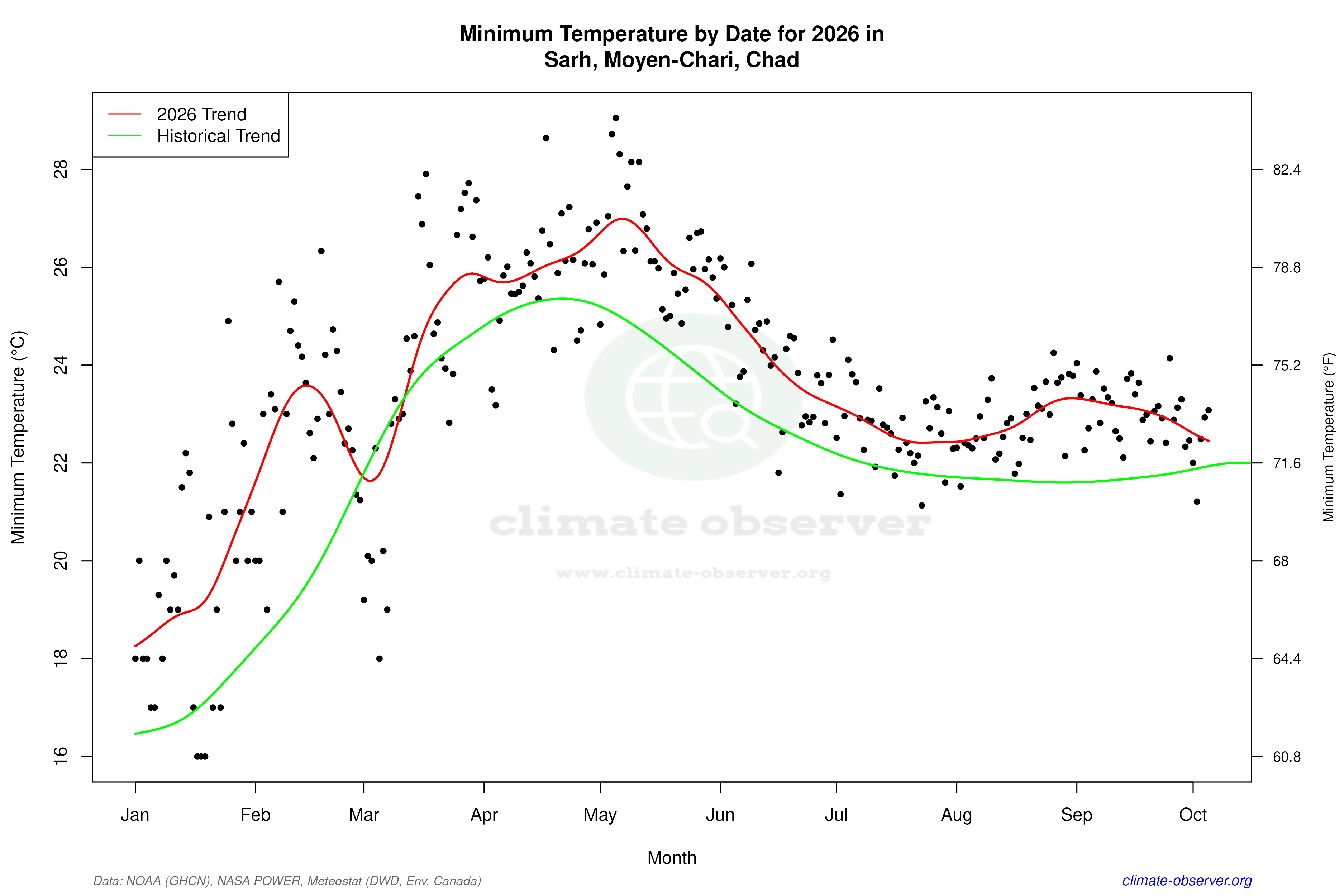
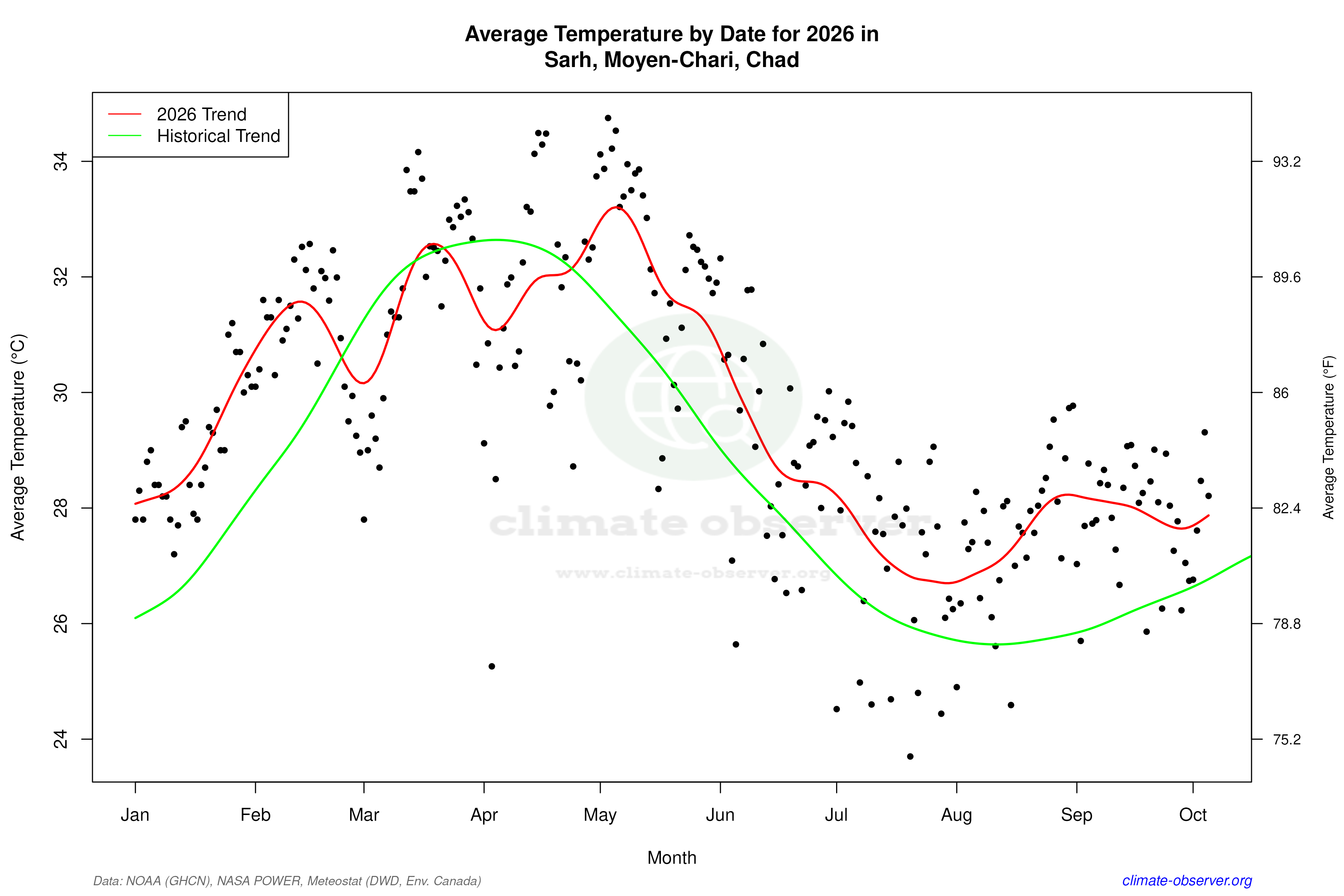
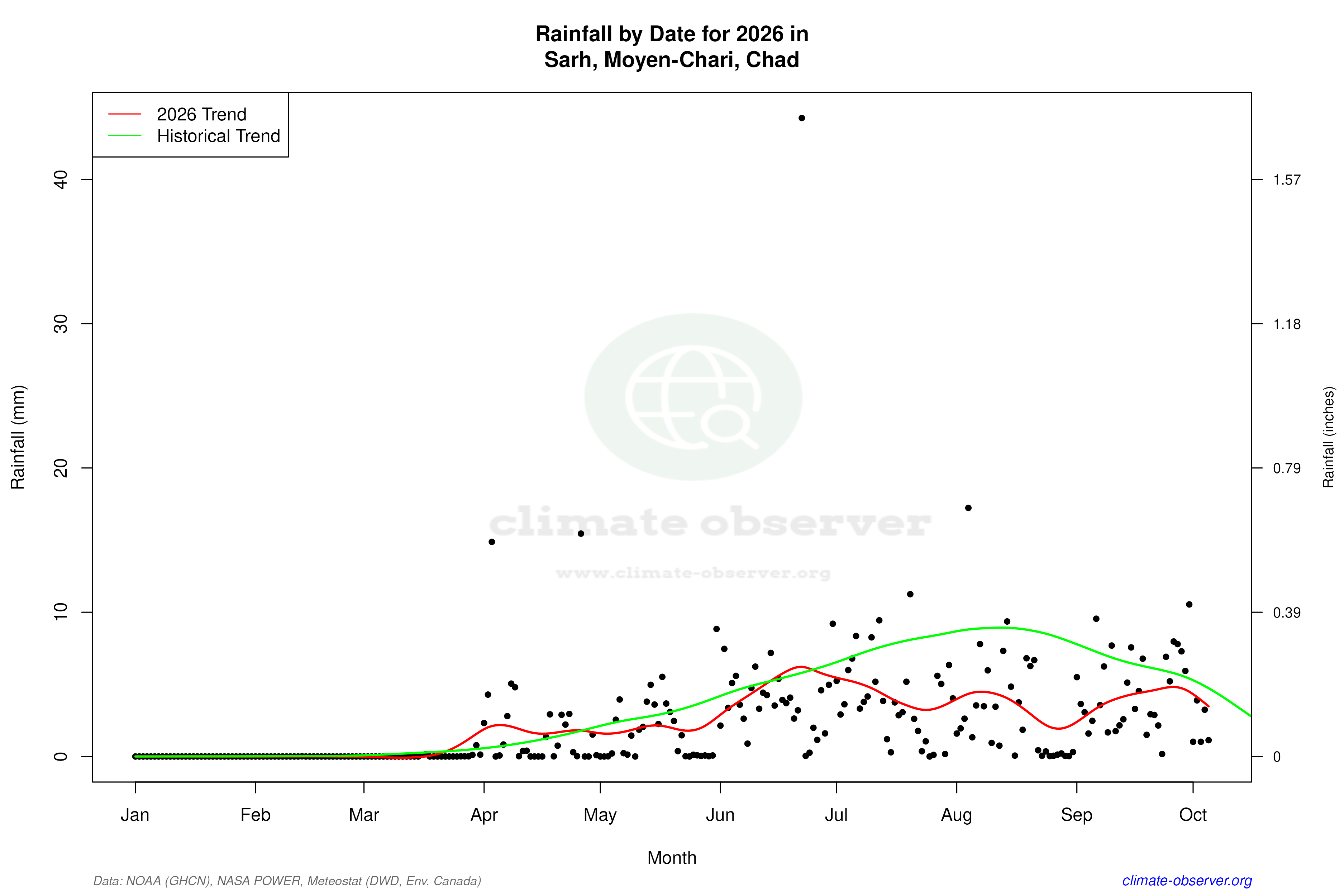
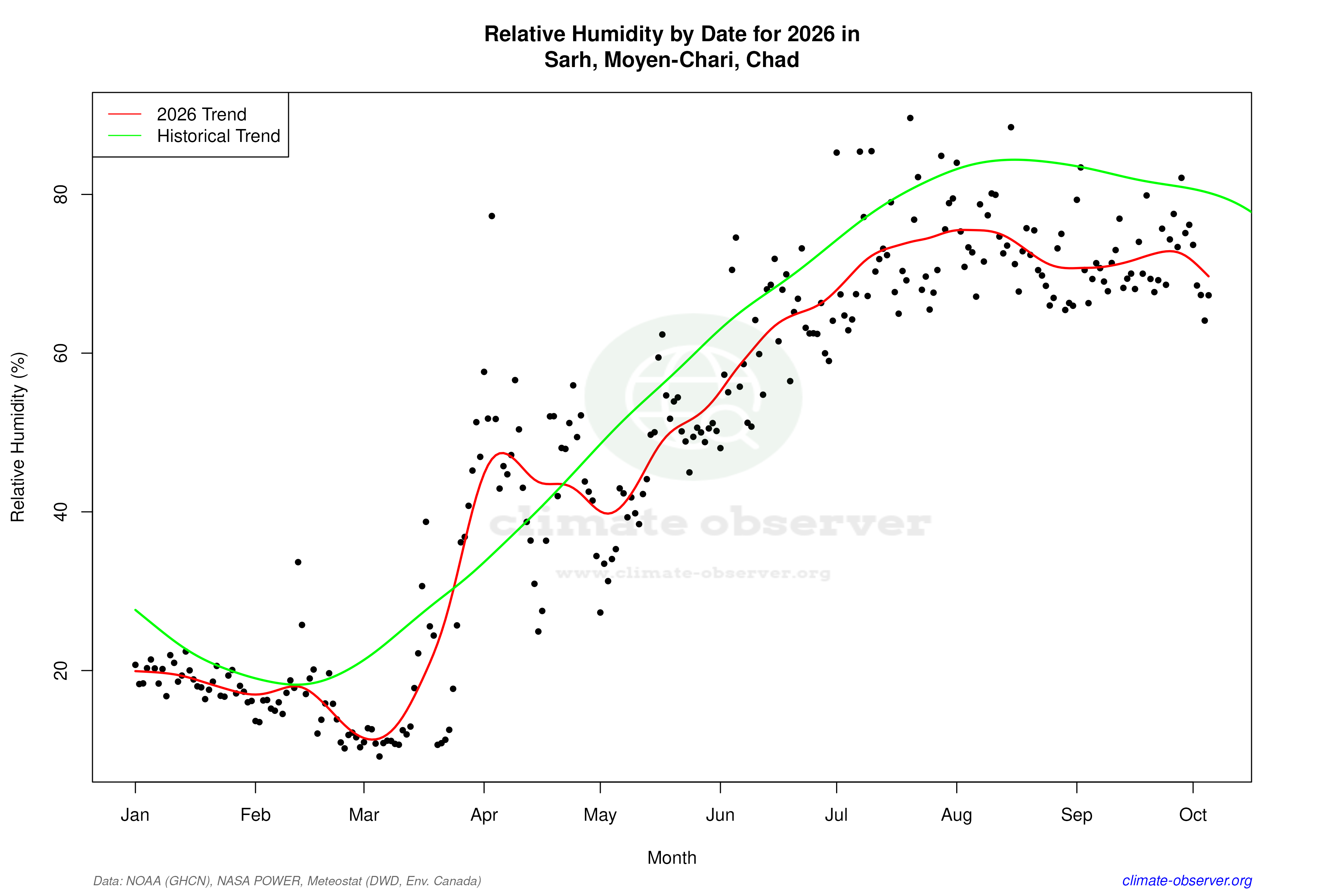

Max Temperature this Year | 1 of 6
Climate 12-Month Moving Averages
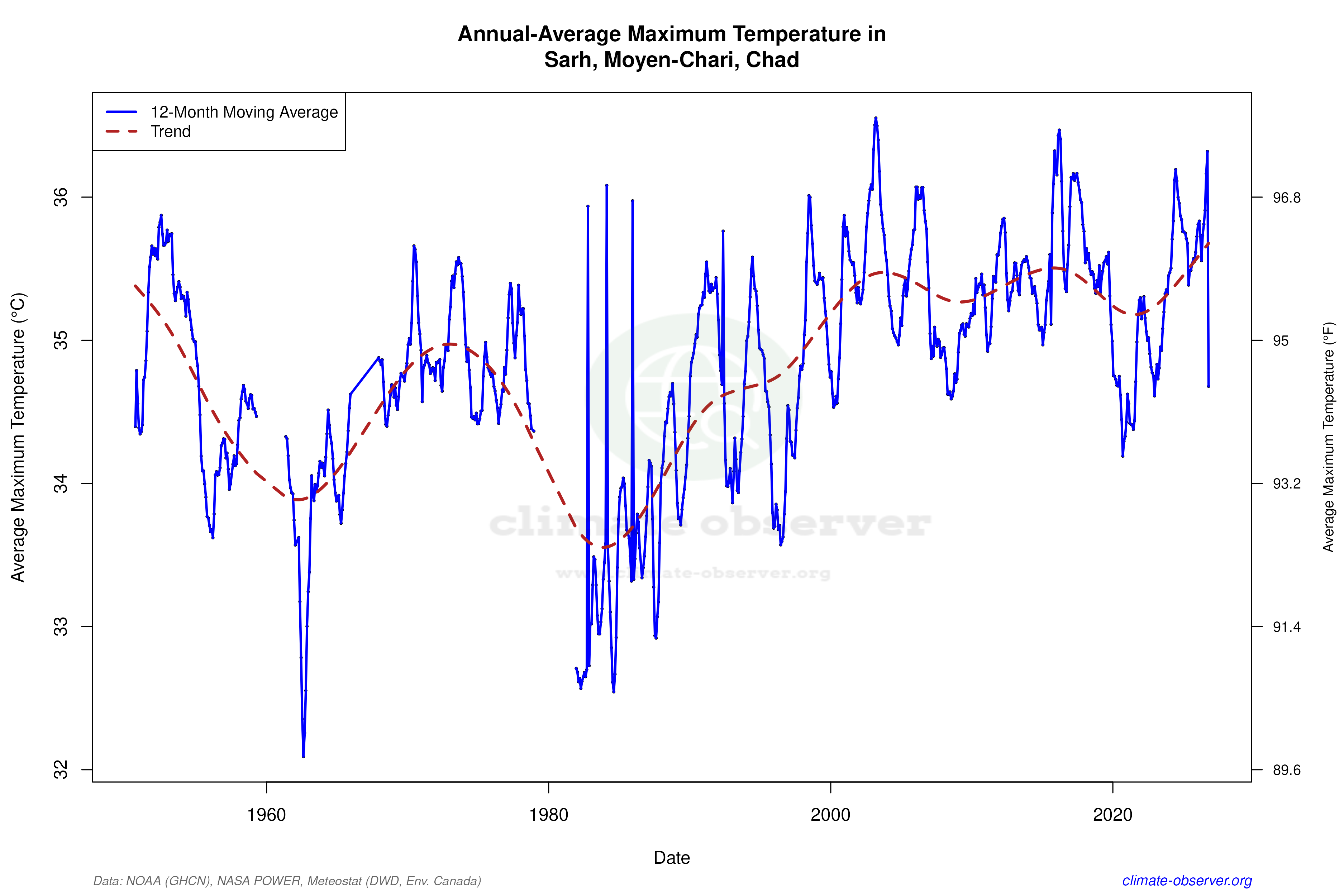
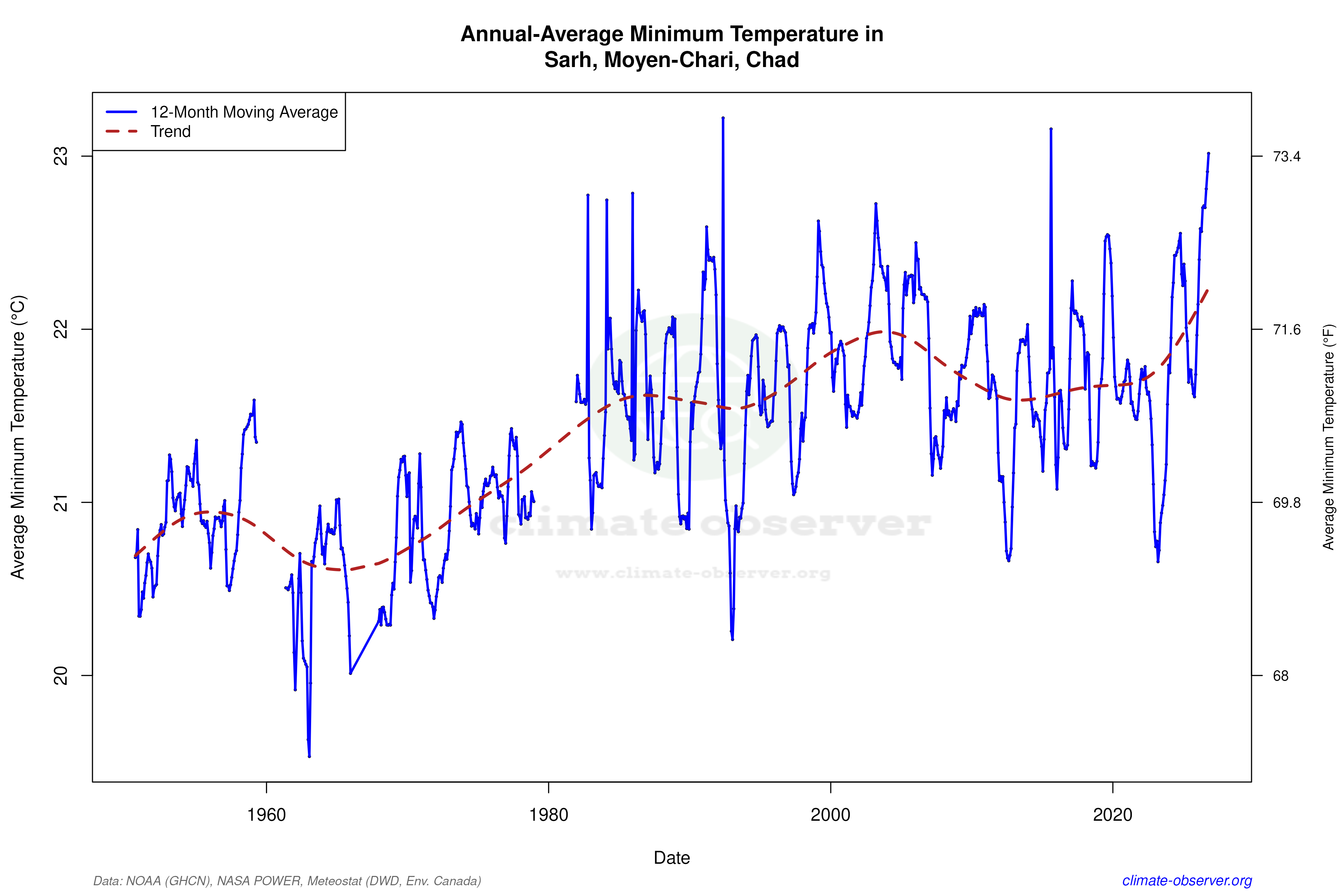
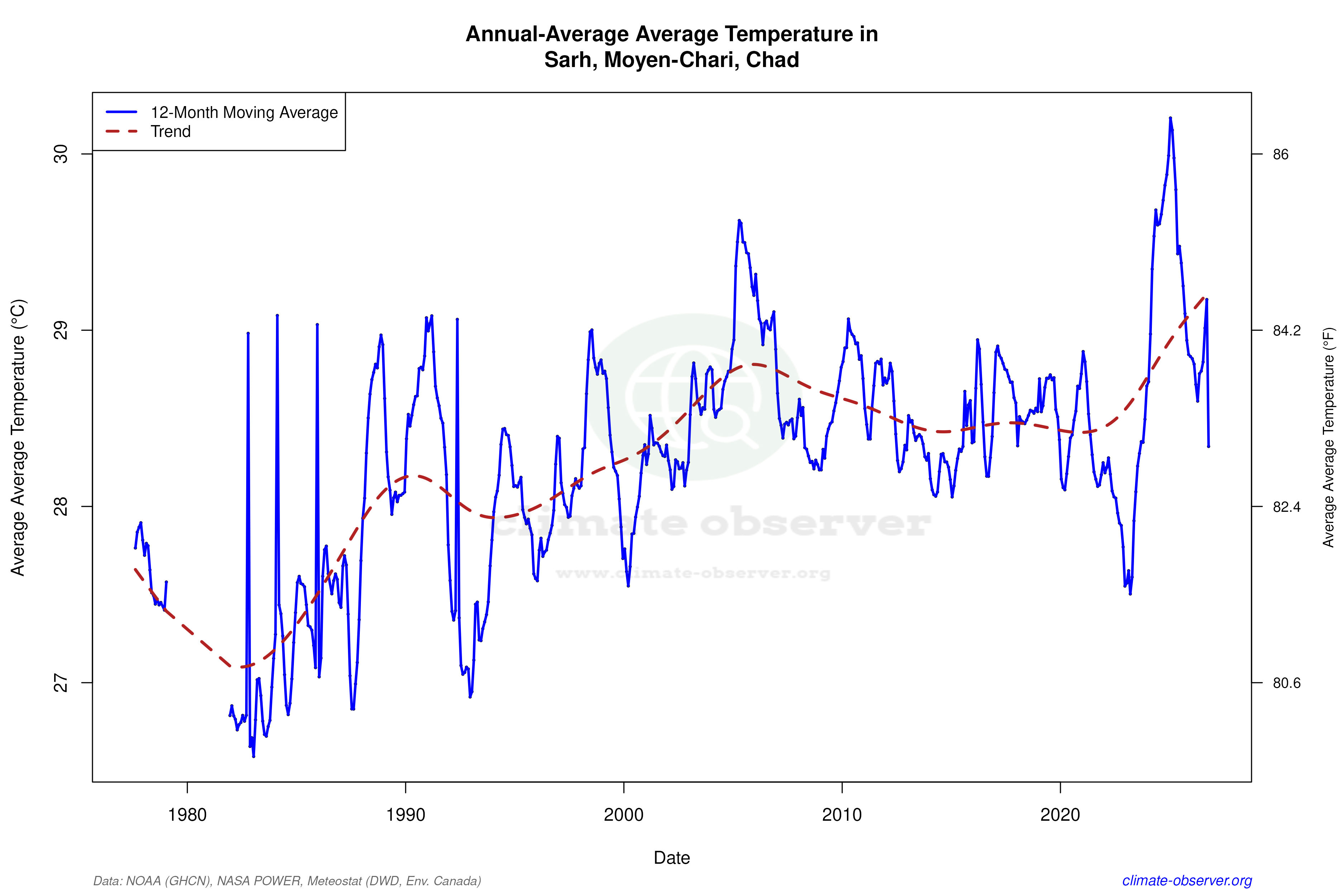
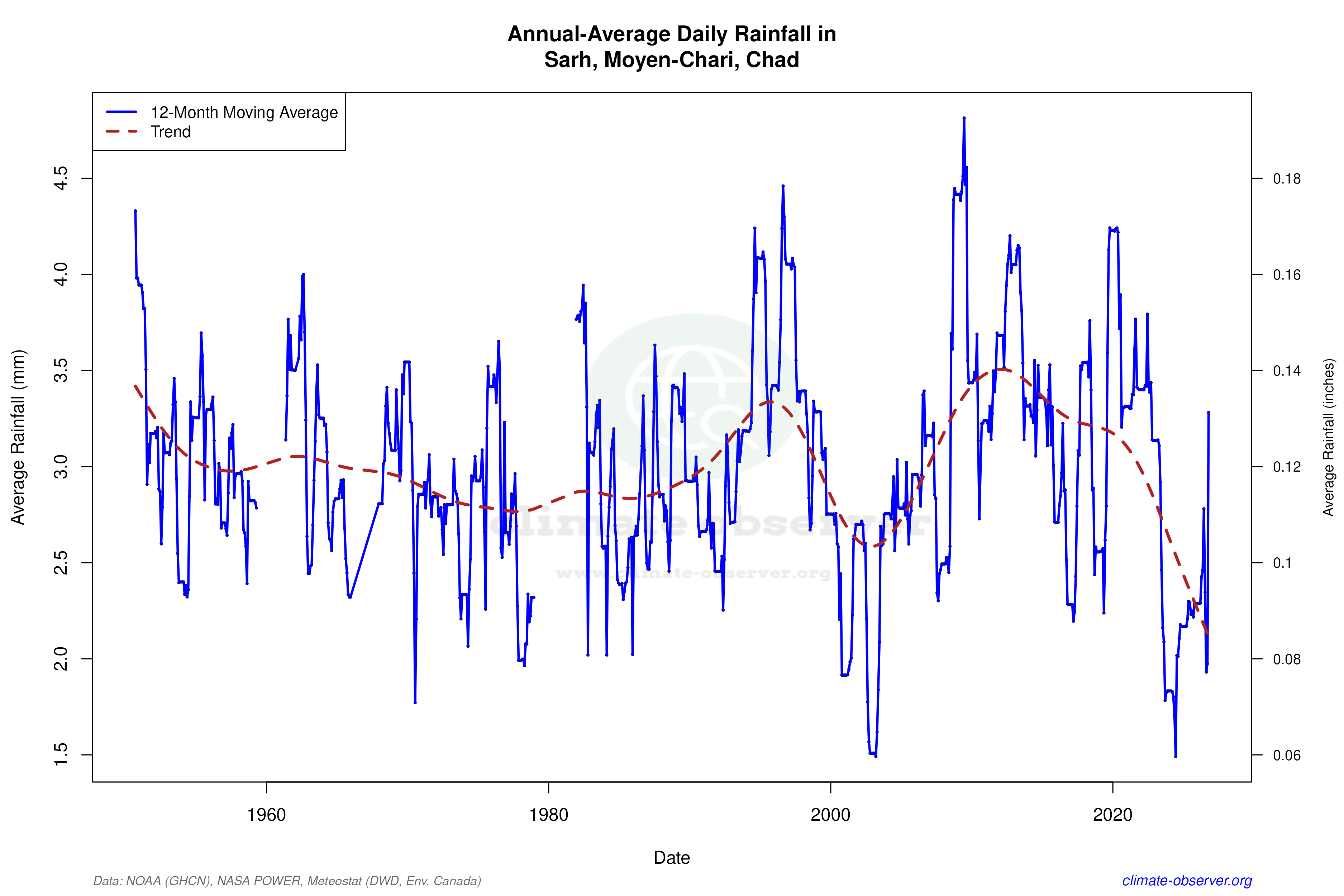
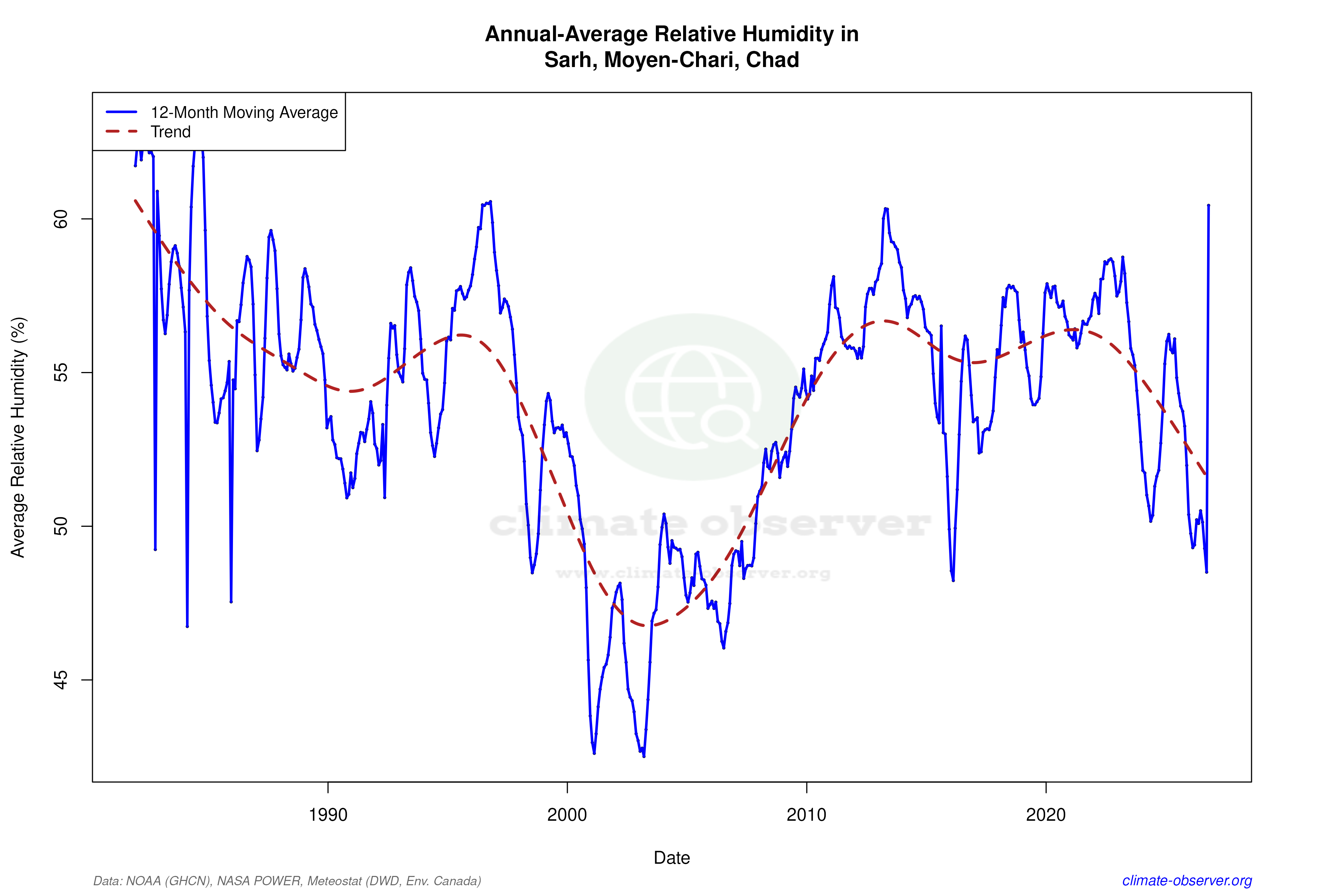

Max Temperature 12-Month MA | 1 of 6
Daily Data Points and Averages Throughout the Year
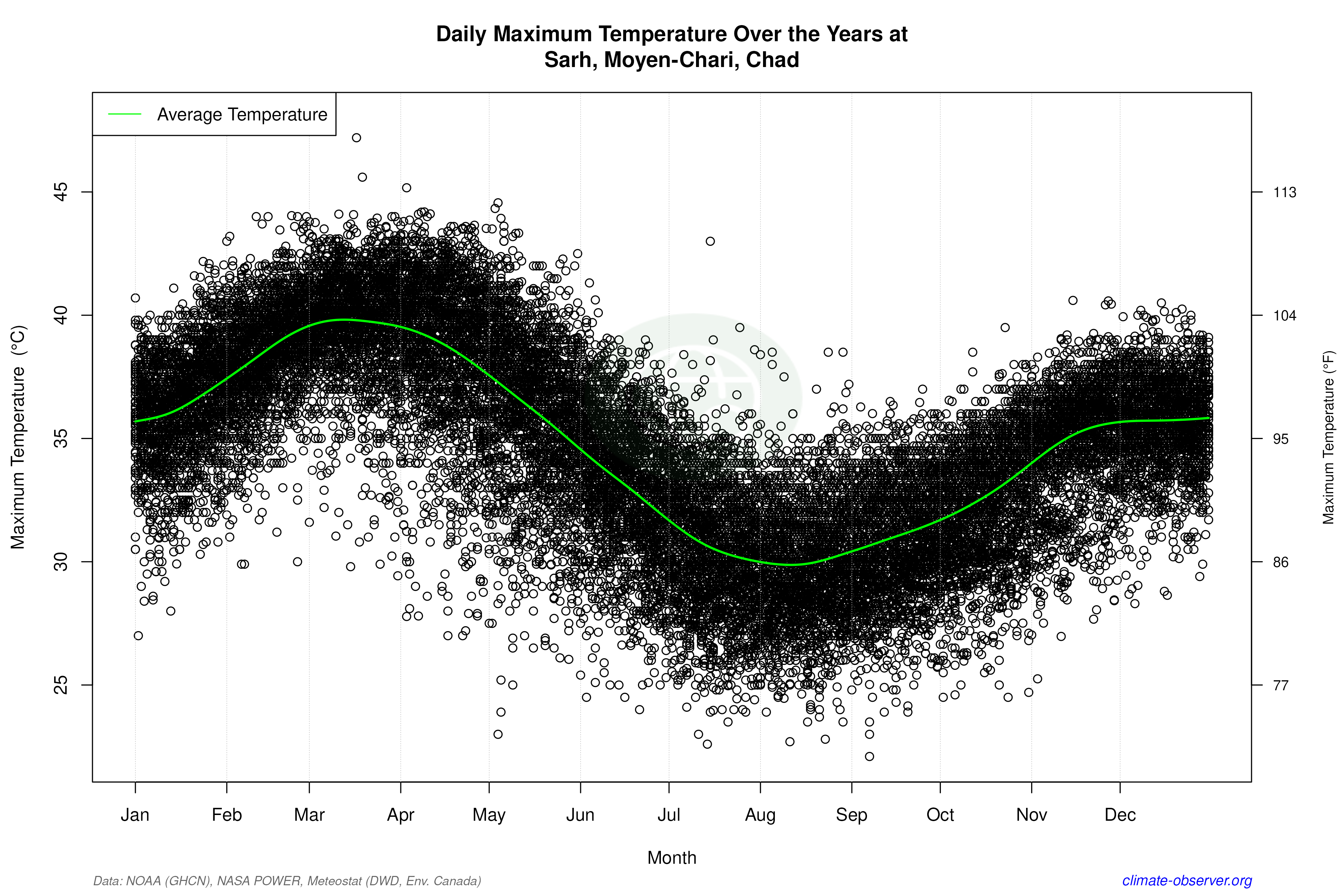
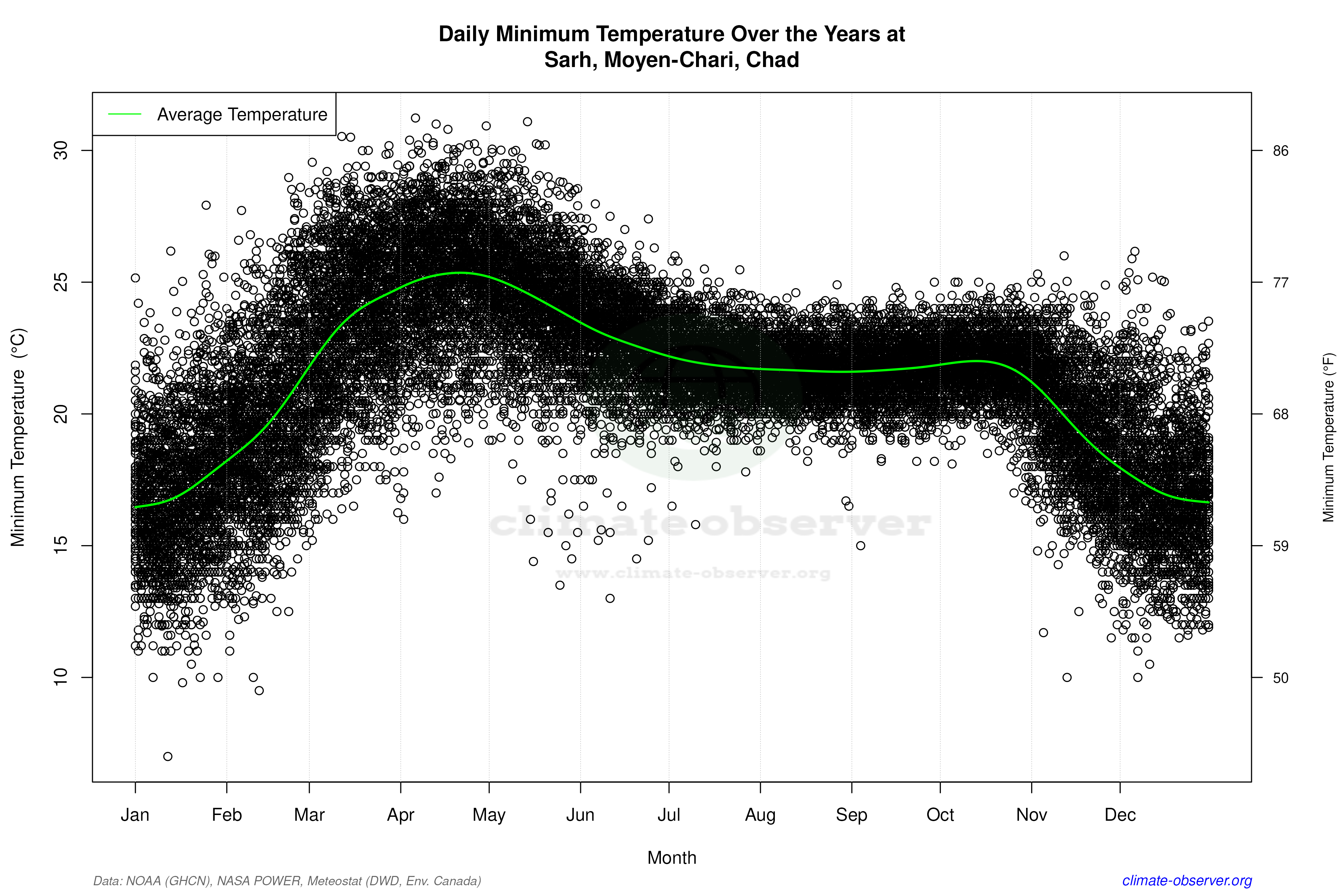
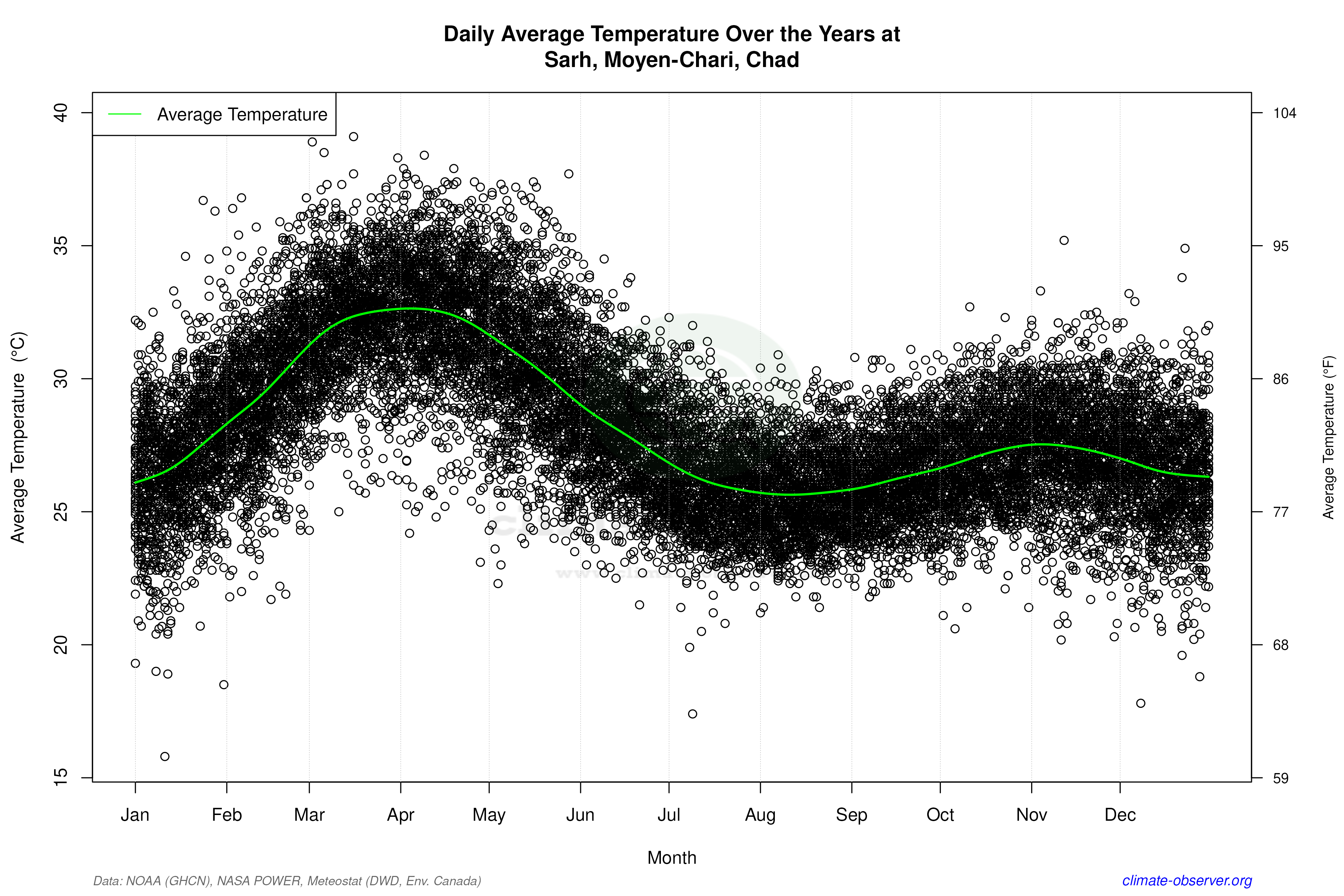
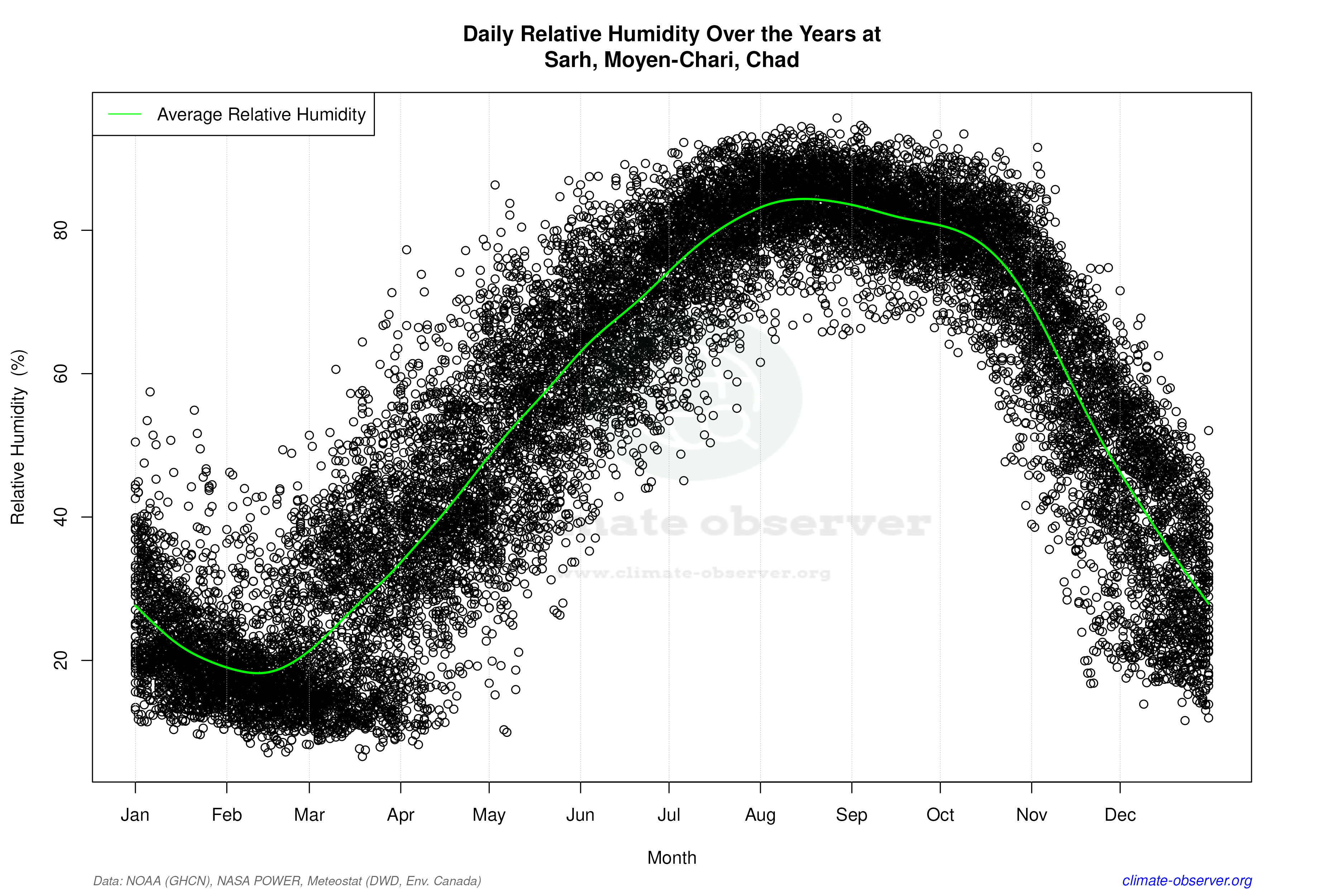

Average Max Temperature Throughout Year | 1 of 5


