Climate for Station: Keshan, Heilongjiang, China
Loading live weather...
Climate Analysis & Overview
Keshan, located in the northeastern region of China, is experiencing a nuanced climate evolution. With a significant warming trend in recent years, particularly in high temperatures, and a shift towards more evenly distributed precipitation, the region's climate dynamics are undergoing notable changes.
Keshan's Climate Context
Keshan is situated in the Heilongjiang province of China, a region characterised by its Dwa Köppen climate classification, indicating a humid continental climate with dry winters and hot summers. The area's geographical features, including its proximity to the Songhua River and expansive plains, play a critical role in shaping its climatic patterns. These natural elements contribute to the area's seasonal temperature variations and precipitation distribution.
Temperature Trends: A Warming Landscape
Over the past decade, Keshan has witnessed a marked increase in temperature, with high temperatures rising by 1.30°C (2.33°F) and lows by 0.17°C (0.31°F). This recent warming trend is more pronounced than the all-time historical data, which shows a rise of 0.19°C (0.34°F) for highs and 0.40°C (0.72°F) for lows. The disparity between the short-term and long-term data underscores a recent acceleration in warming, particularly affecting daytime temperatures. This trend aligns with China's broader climate goals of understanding and mitigating regional warming impacts.
Precipitation Patterns: Towards Even Distribution
The Precipitation Concentration Index (PCI) for Keshan has seen a decrease from a baseline of 19.9 to a current value of 16.0. This indicates that precipitation is becoming more evenly distributed throughout the year, moving away from highly concentrated events. Such a trend suggests a shift towards a more stable and predictable precipitation pattern, which could have implications for agriculture and water resource management in the region.
Record Extremes: The Bounds of Keshan's Climate
Keshan's climate is also defined by its extreme temperature records, with a maximum of 38.7°C (101.7°F) and a minimum of -42.4°C (-44.3°F). These extremes highlight the region's capacity for significant thermal oscillations, a characteristic feature of its continental climate. Understanding these extremes is crucial for preparing for potential impacts on infrastructure and human health.
Implications and Future Considerations
Keshan's evolving climate, marked by warming temperatures and more evenly distributed precipitation, presents both challenges and opportunities. The region's climate dynamics are crucial for local policy-making and adaptation strategies, particularly in agriculture and urban planning. As China continues to address climate change, Keshan's climate data will be instrumental in shaping regional and national policies.
Station Statistics
10-Year Trend
High: +8.04 °F/decade
Low: +7.21 °F/decade
Rain: +0.027 in/decade
25-Year Trend
High: +0.38 °F/decade
Low: -0.12 °F/decade
Rain: +0.012 in/decade
50-Year Trend
High: +0.75 °F/decade
Low: +0.78 °F/decade
Rain: +0.004 in/decade
All-Time Trend
High: +0.39 °F/decade
Low: +0.73 °F/decade
Rain: +0.001 in/decade
Percentage Above-Average Days
Last 12 Months: 54.5%
This Year: 55.8%
Precipitation Concentration Index (PCI) ℹ️
Last 12 Months: 23.7
Historical Average: 22.2
Percentile Rank of Last 12 Months ℹ️
High: 54th percentile
Low: 60th percentile
Rain: 88th percentile
Change in Variance ℹ️
High: +0.2%
Low: -6.7%
Intraday: -26.8%
Data Coverage
100.0%
First Year of Data
1968
Station Location
Historical Weather Records
| Max High | Avg High | Min High | Max Avg | Avg Avg | Min Avg | Max Low | Avg Low | Min Low | Max Precipitation | Avg Precipitation | Max Snow | Avg Snow | |
|---|---|---|---|---|---|---|---|---|---|---|---|---|---|
| Record | 101.66 °F | — | -22.72 °F | 87.08 °F | — | -33.34 °F | 76.10 °F | — | -44.32 °F | 15.13 in | — | — | — |
| January | 30.74 °F | 2.69 °F | -22.72 °F | 18.14 °F | -7.53 °F | -33.34 °F | 14.54 °F | -16.72 °F | -44.32 °F | 0.23 in | 0.00 in | — | — |
| February | 47.48 °F | 12.75 °F | -15.52 °F | 33.98 °F | 1.08 °F | -25.78 °F | 25.52 °F | -9.89 °F | -40.00 °F | 0.49 in | 0.00 in | — | — |
| March | 67.64 °F | 31.64 °F | -1.48 °F | 53.96 °F | 20.44 °F | -16.24 °F | 40.64 °F | 9.15 °F | -33.16 °F | 0.64 in | 0.01 in | — | — |
| April | 84.56 °F | 52.44 °F | 23.90 °F | 71.06 °F | 40.93 °F | 14.90 °F | 59.00 °F | 29.38 °F | 2.66 °F | 0.94 in | 0.03 in | — | — |
| May | 96.62 °F | 67.79 °F | 37.04 °F | 79.52 °F | 56.01 °F | 31.64 °F | 68.72 °F | 43.41 °F | 18.86 °F | 1.60 in | 0.05 in | — | — |
| June | 101.66 °F | 77.61 °F | 52.88 °F | 87.08 °F | 66.99 °F | 44.06 °F | 75.38 °F | 56.01 °F | 34.70 °F | 2.85 in | 0.11 in | — | — |
| July | 100.22 °F | 80.68 °F | 61.52 °F | 86.00 °F | 71.48 °F | 56.84 °F | 76.10 °F | 62.63 °F | 44.96 °F | 7.00 in | 0.20 in | — | — |
| August | 98.06 °F | 77.24 °F | 52.16 °F | 84.20 °F | 67.57 °F | 46.04 °F | 75.56 °F | 58.69 °F | 39.74 °F | 3.88 in | 0.15 in | — | — |
| September | 92.12 °F | 66.73 °F | 41.54 °F | 76.10 °F | 55.59 °F | 35.24 °F | 66.20 °F | 45.33 °F | 21.02 °F | 8.80 in | 0.09 in | — | — |
| October | 78.98 °F | 49.69 °F | 12.92 °F | 68.54 °F | 38.70 °F | 6.62 °F | 55.40 °F | 29.03 °F | -1.30 °F | 15.13 in | 0.03 in | — | — |
| November | 56.12 °F | 25.76 °F | -7.96 °F | 48.56 °F | 15.86 °F | -19.30 °F | 44.24 °F | 7.35 °F | -28.30 °F | 0.66 in | 0.01 in | — | — |
| December | 39.74 °F | 6.95 °F | -21.10 °F | 34.16 °F | -2.45 °F | -29.02 °F | 21.92 °F | -10.79 °F | -39.28 °F | 0.52 in | 0.01 in | — | — |
Data Visualisations
Remove WatermarksCurrent Year Climate Trends vs Historical
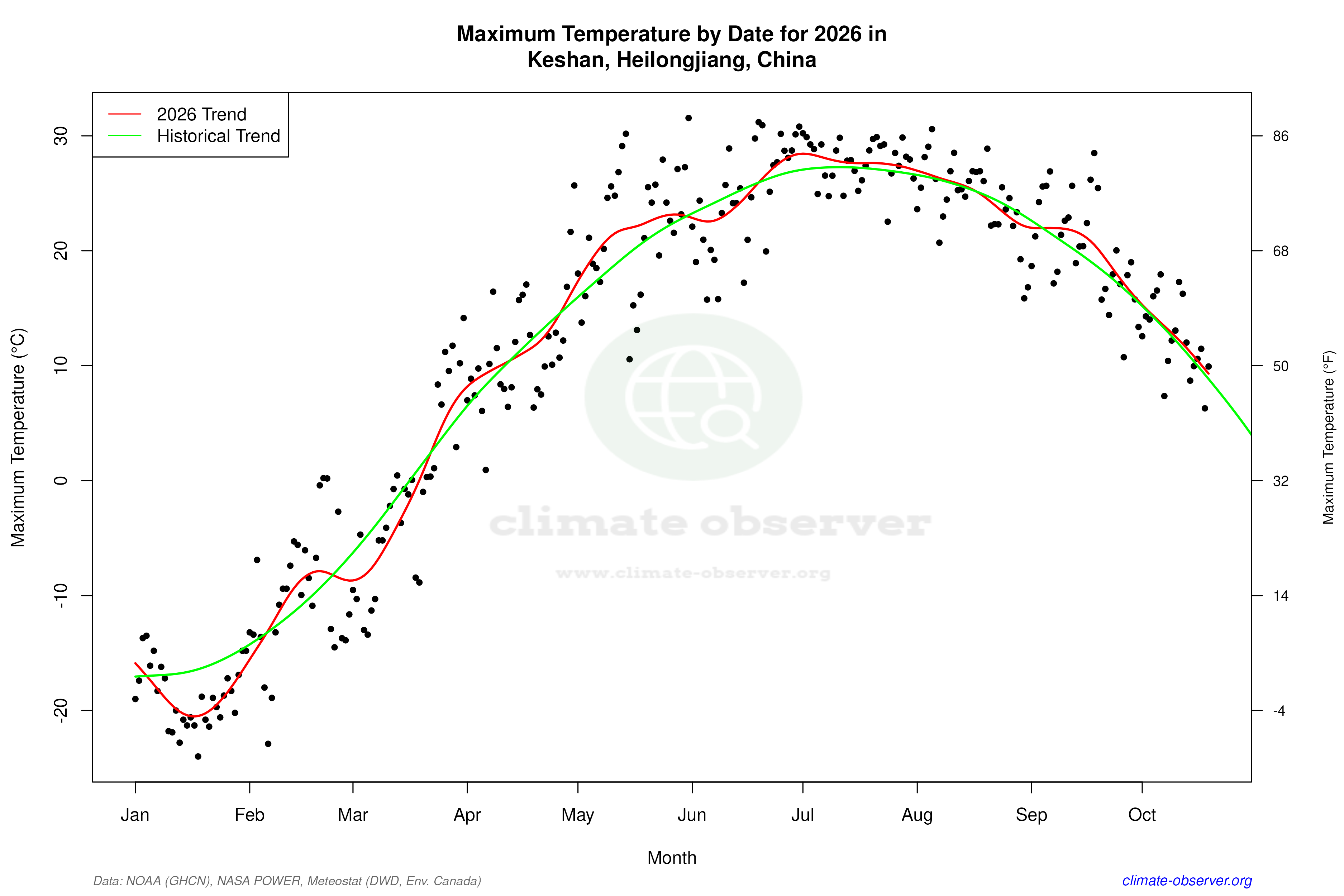
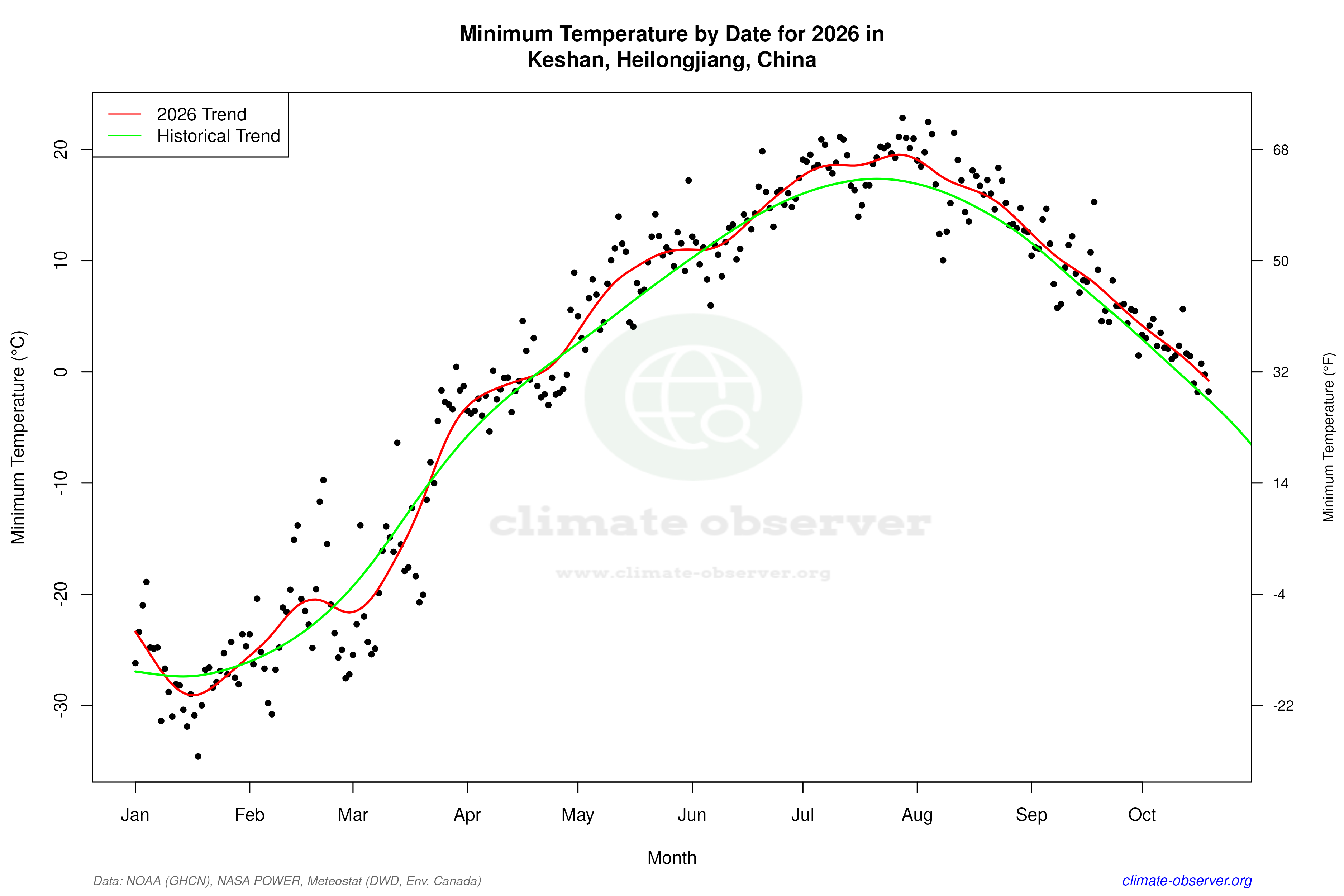
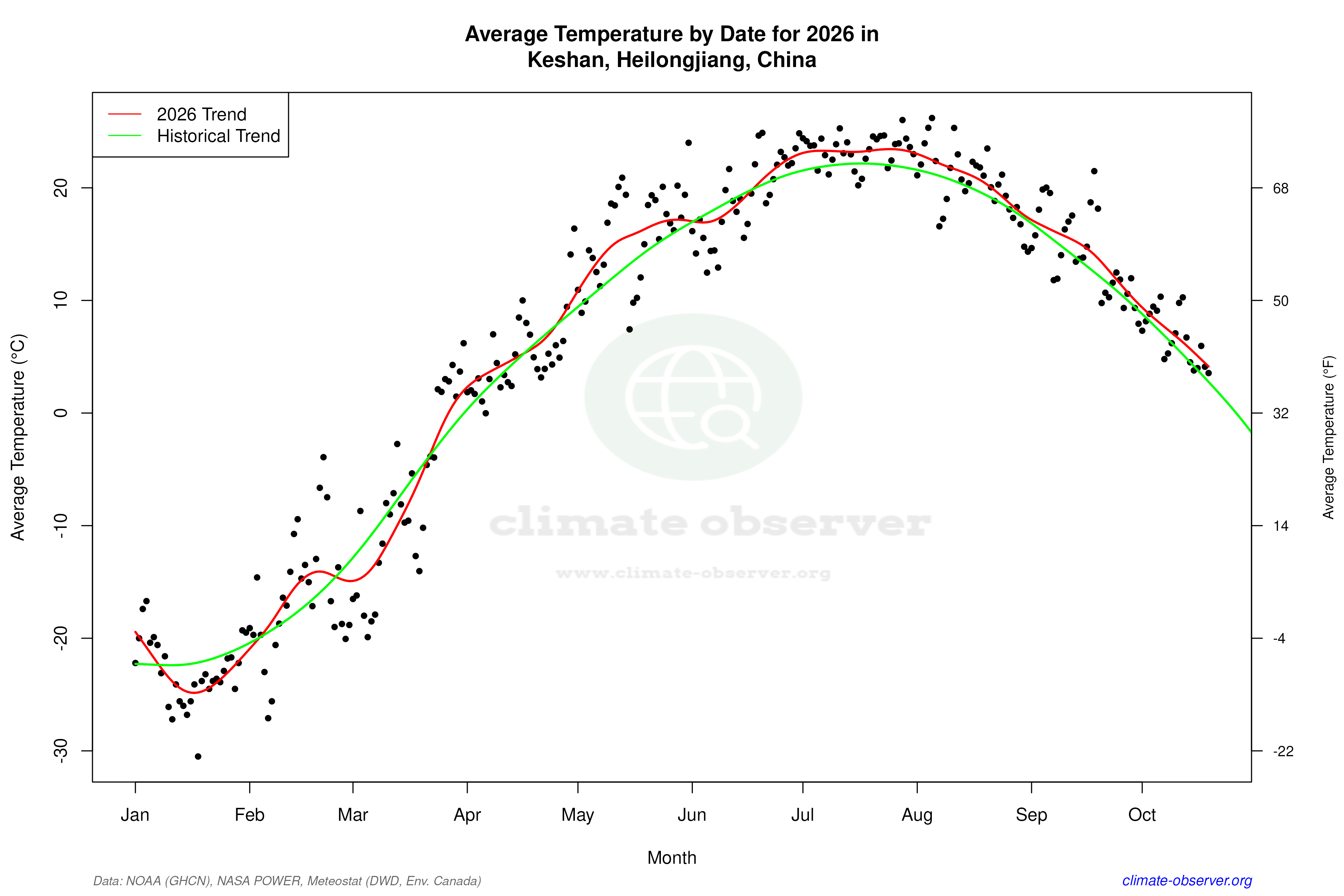
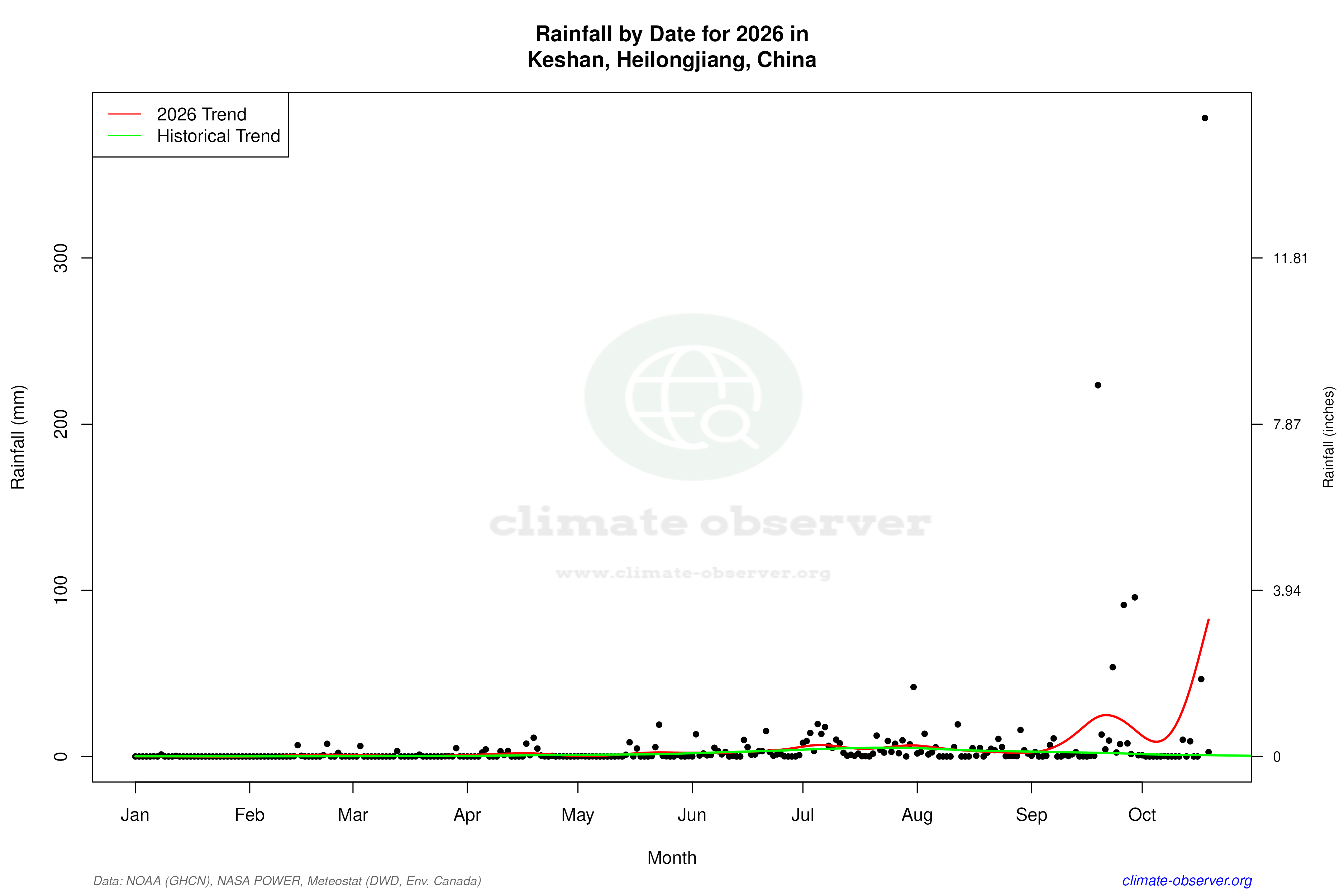
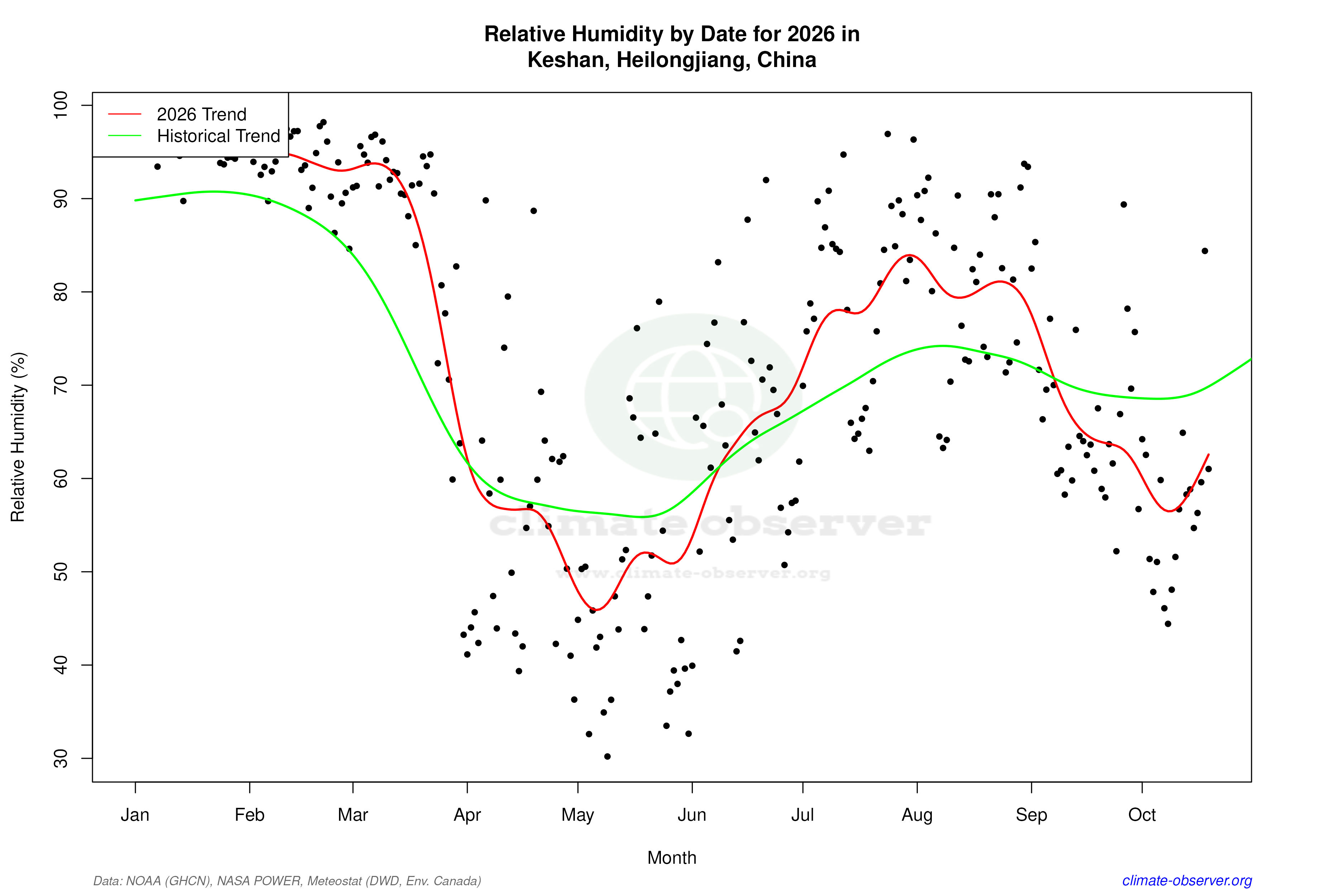

Max Temperature this Year | 1 of 6
Climate 12-Month Moving Averages
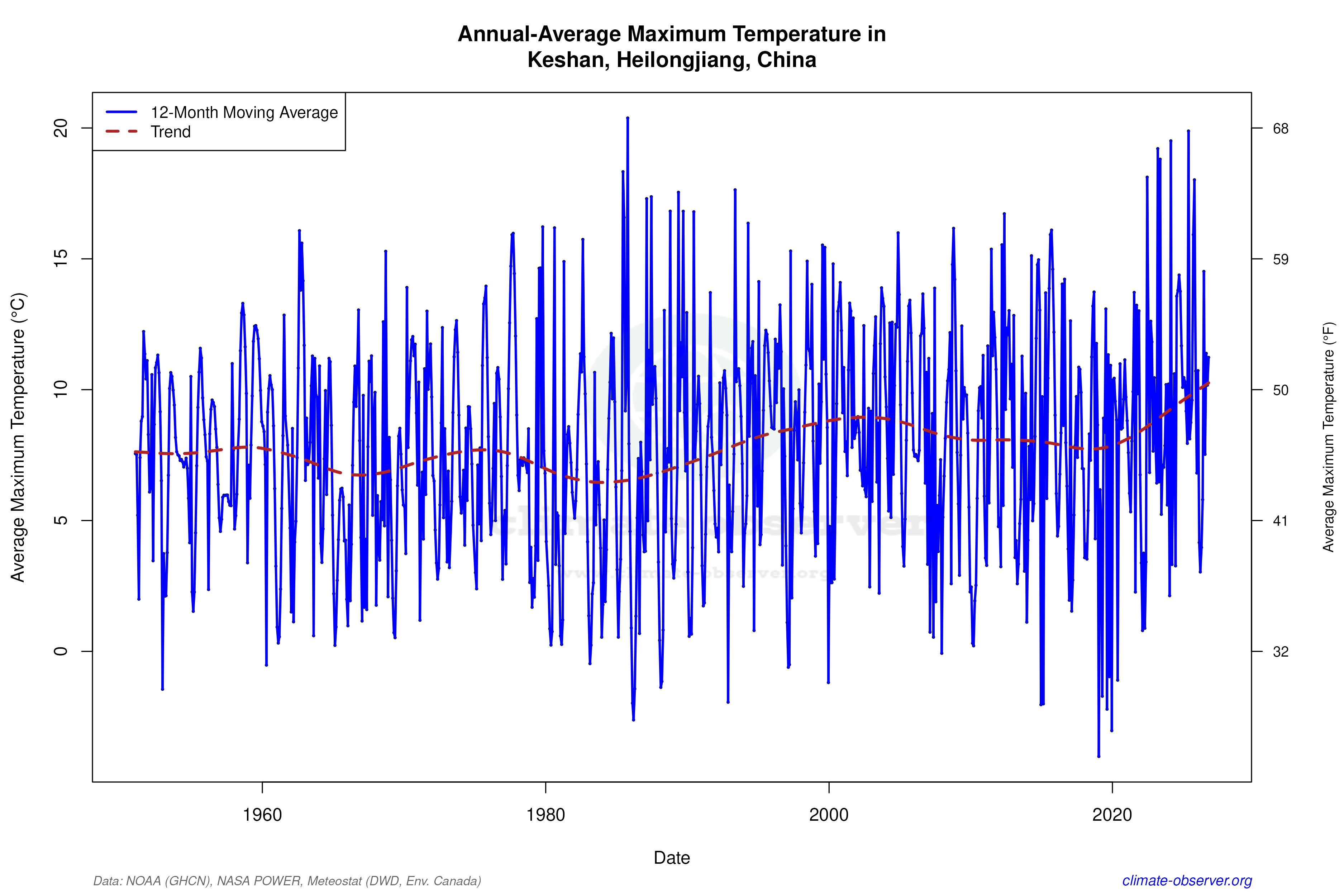
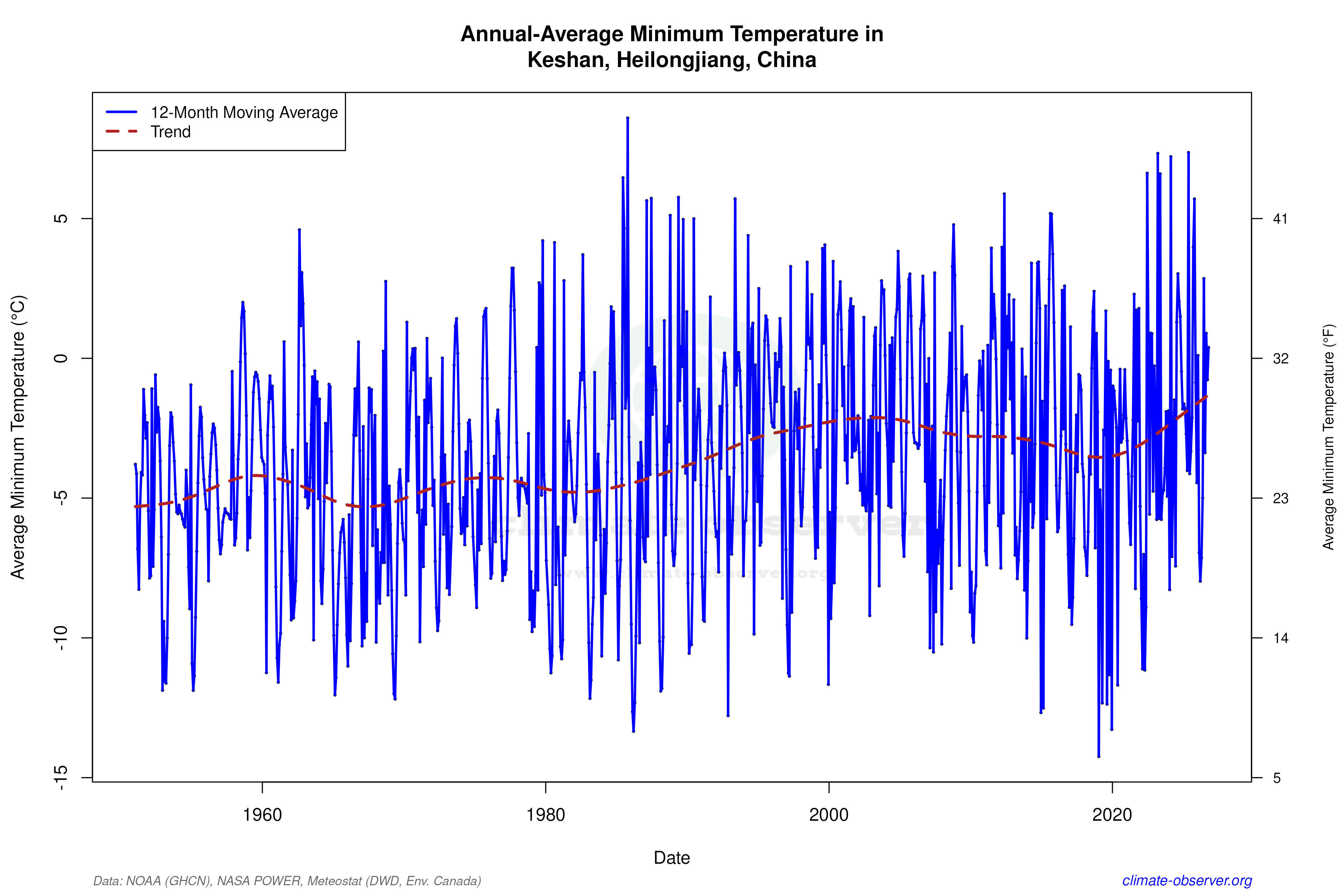
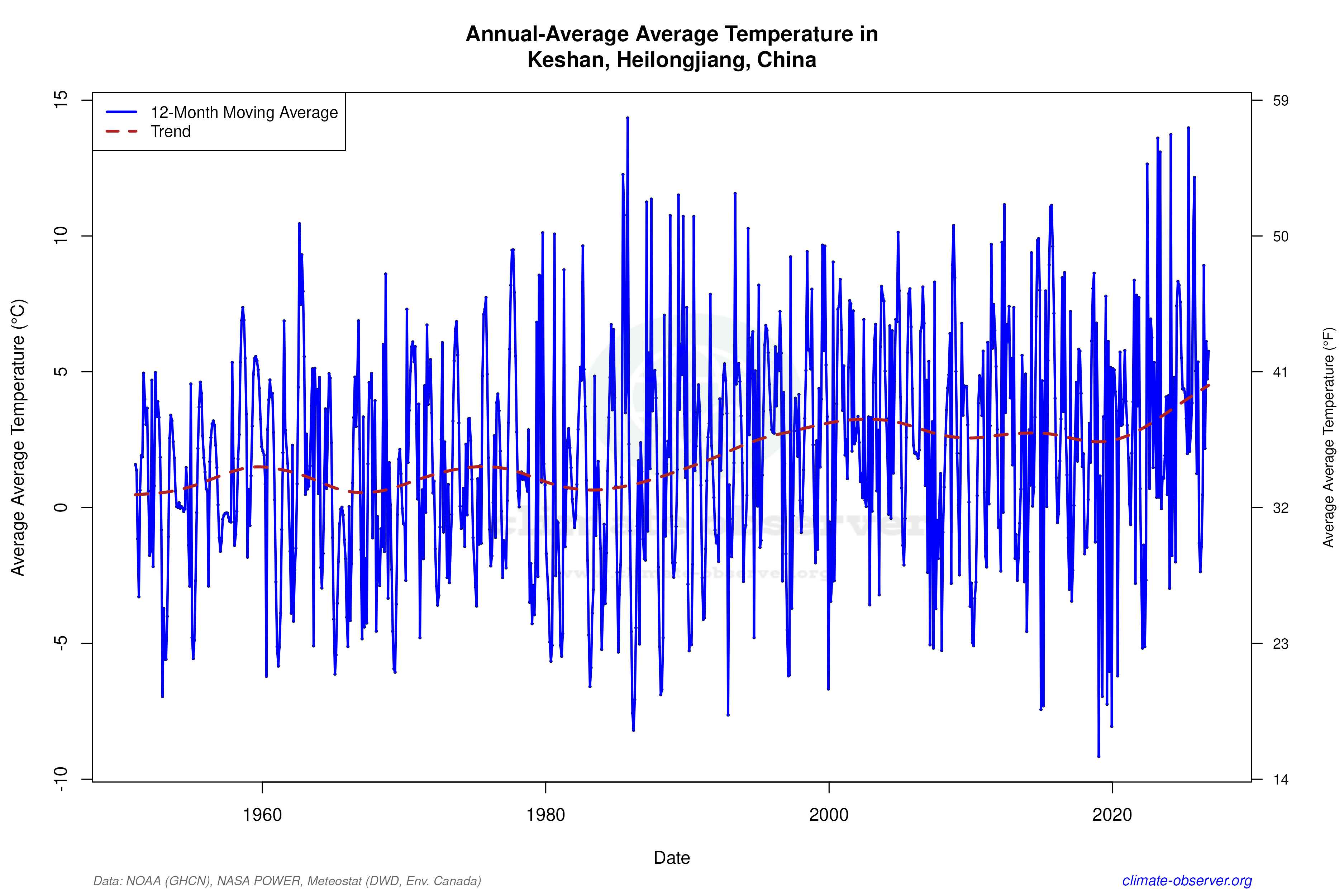
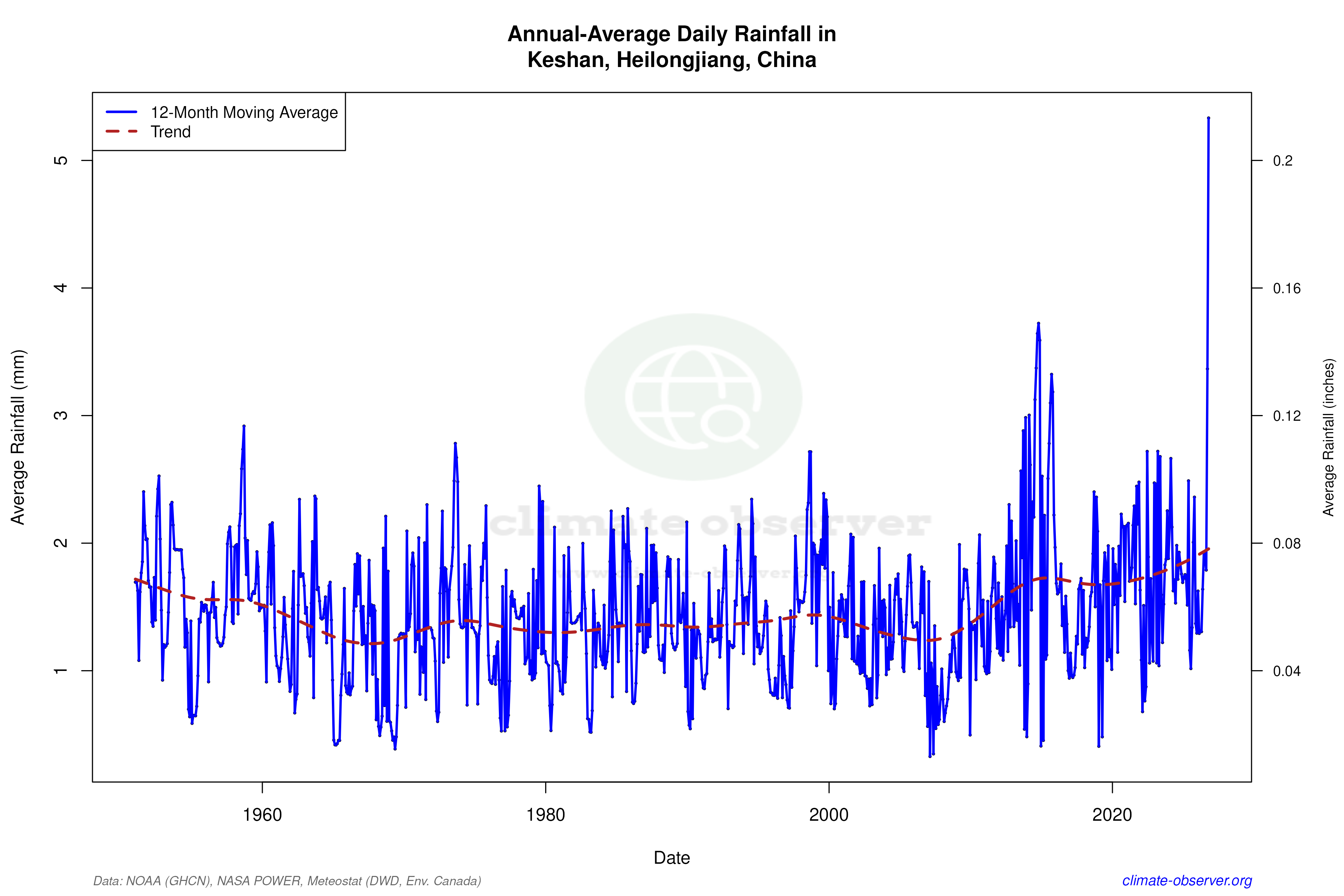
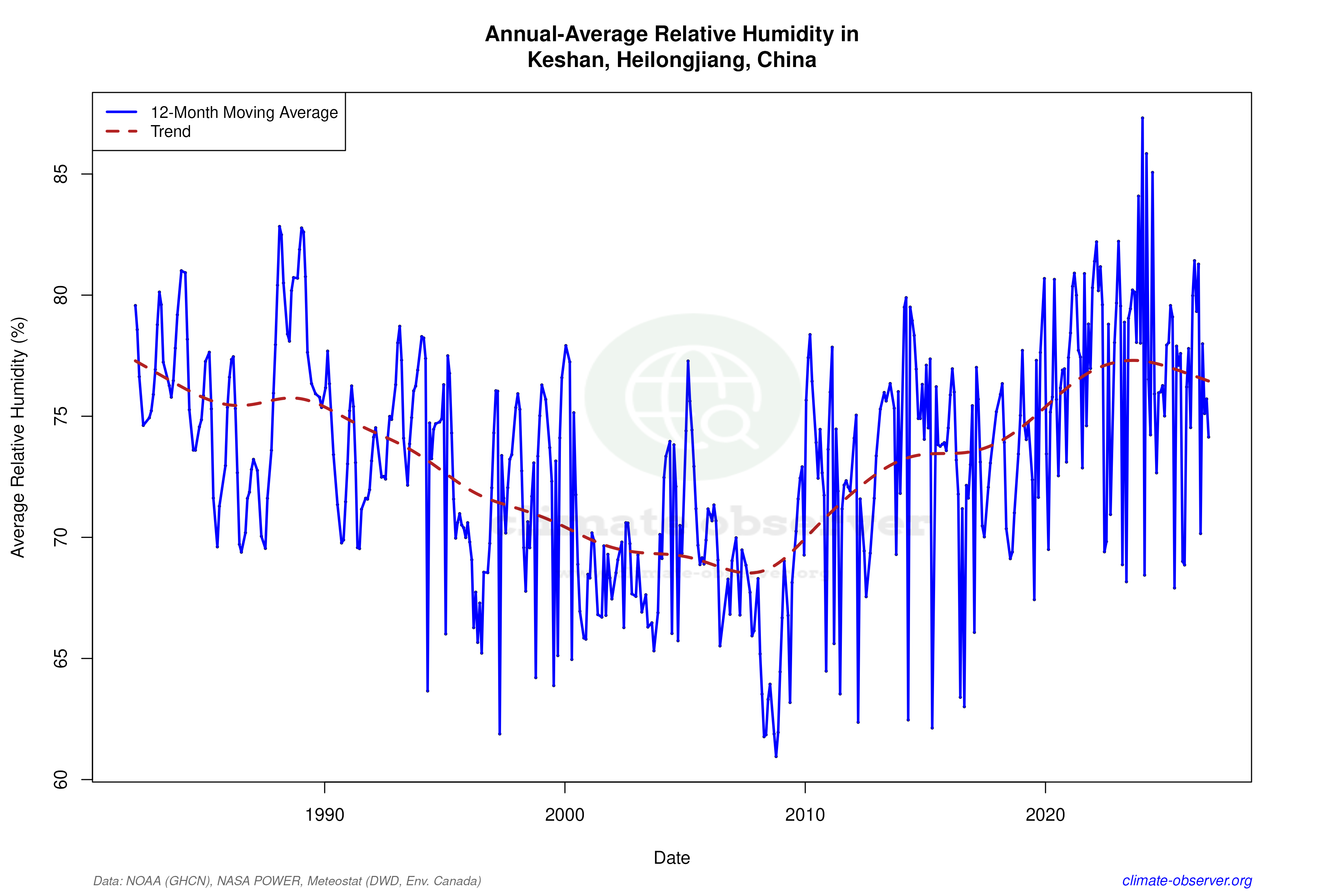

Max Temperature 12-Month MA | 1 of 6
Daily Data Points and Averages Throughout the Year
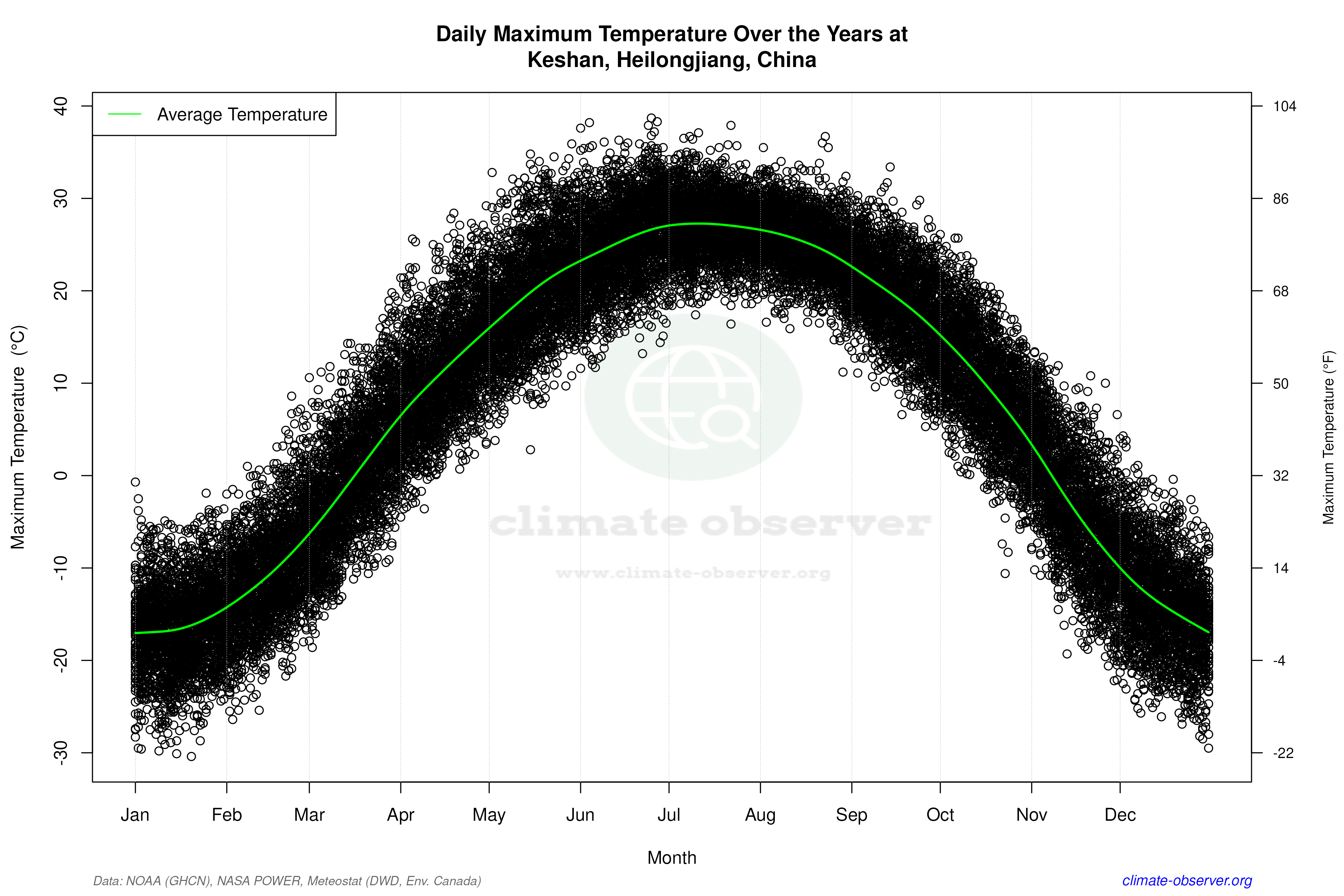
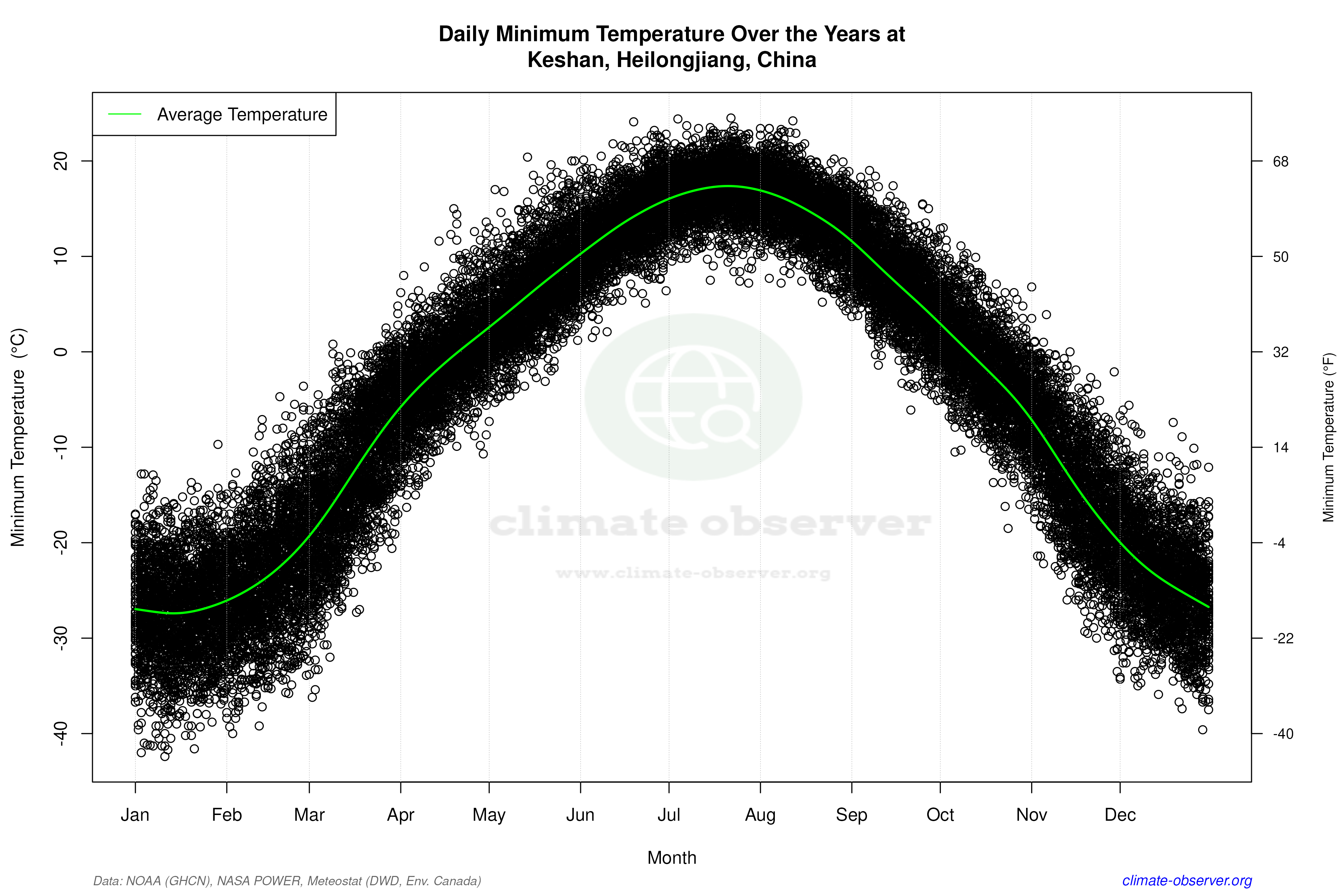
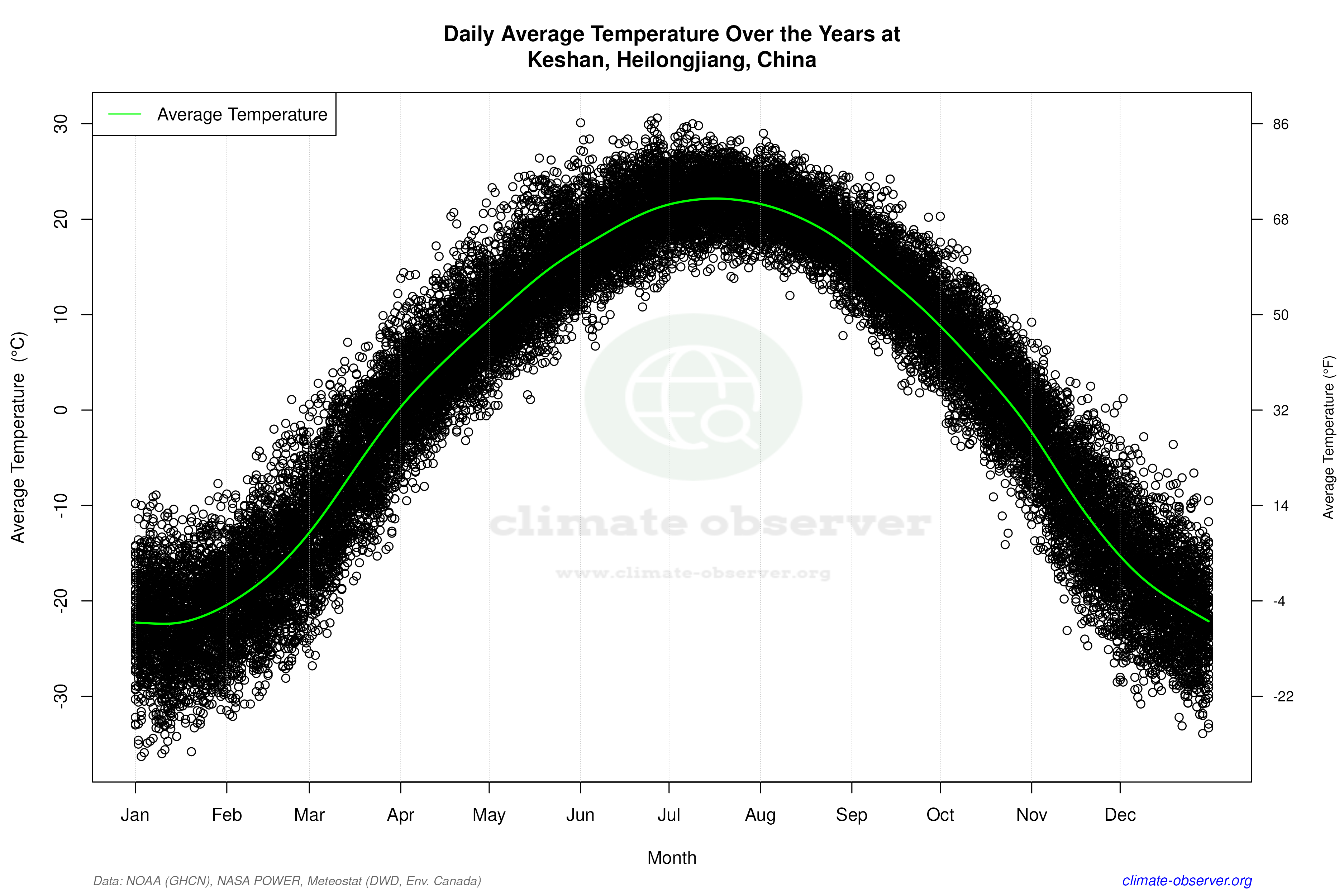
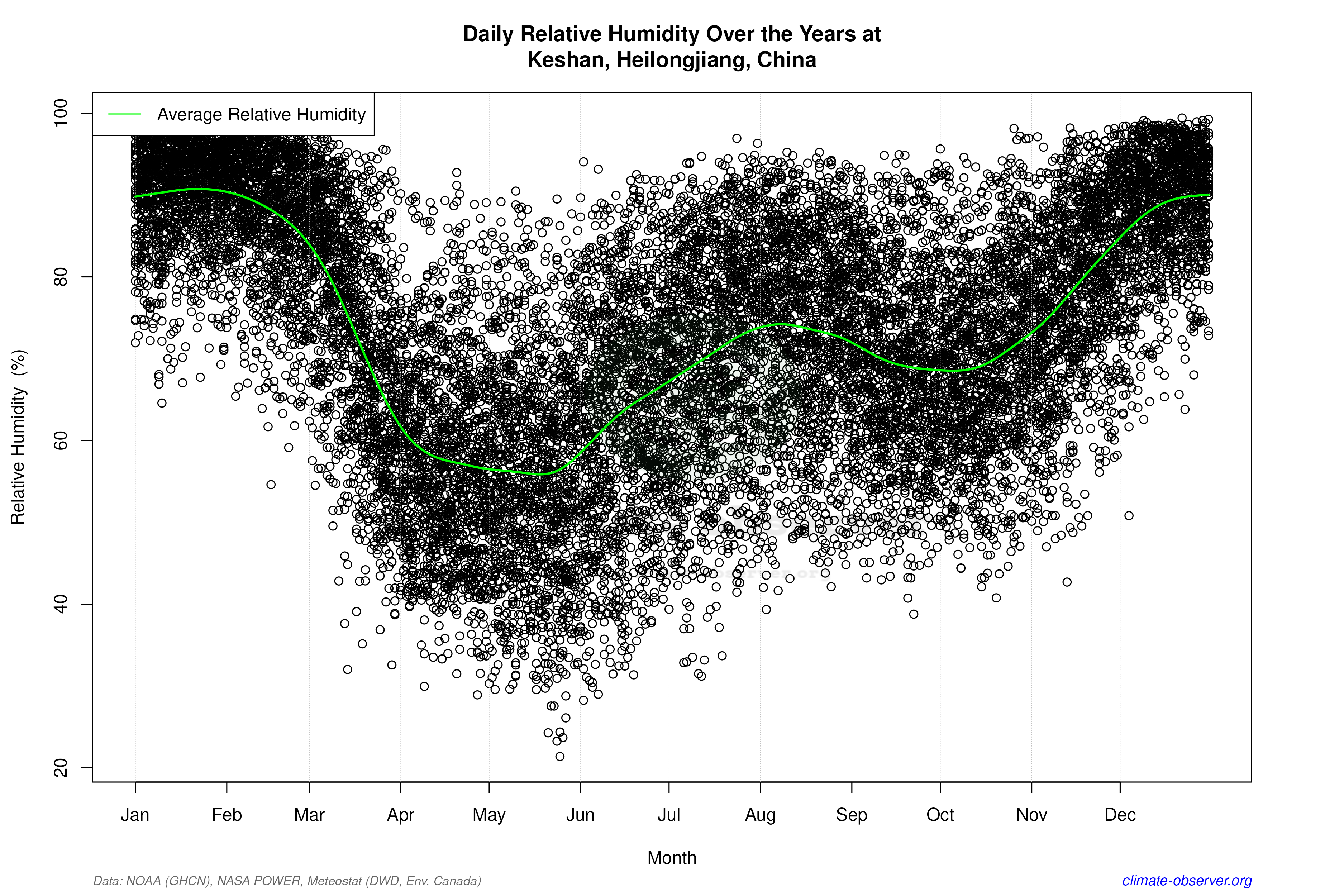

Average Max Temperature Throughout Year | 1 of 5


