Climate for Station: Qitai, Xinjiang Uygur, China
Loading live weather...
Climate Analysis & Overview
Qitai, nestled in the Xinjiang Uygur Autonomous Region of China, is experiencing a nuanced climate evolution. While long-term trends indicate a mild warming, recent short-term data reveals a more pronounced thermal shift. Precipitation patterns are becoming more evenly distributed, reflecting a subtle yet impactful climate adjustment.
Köppen Climate Context and Geographic Influences
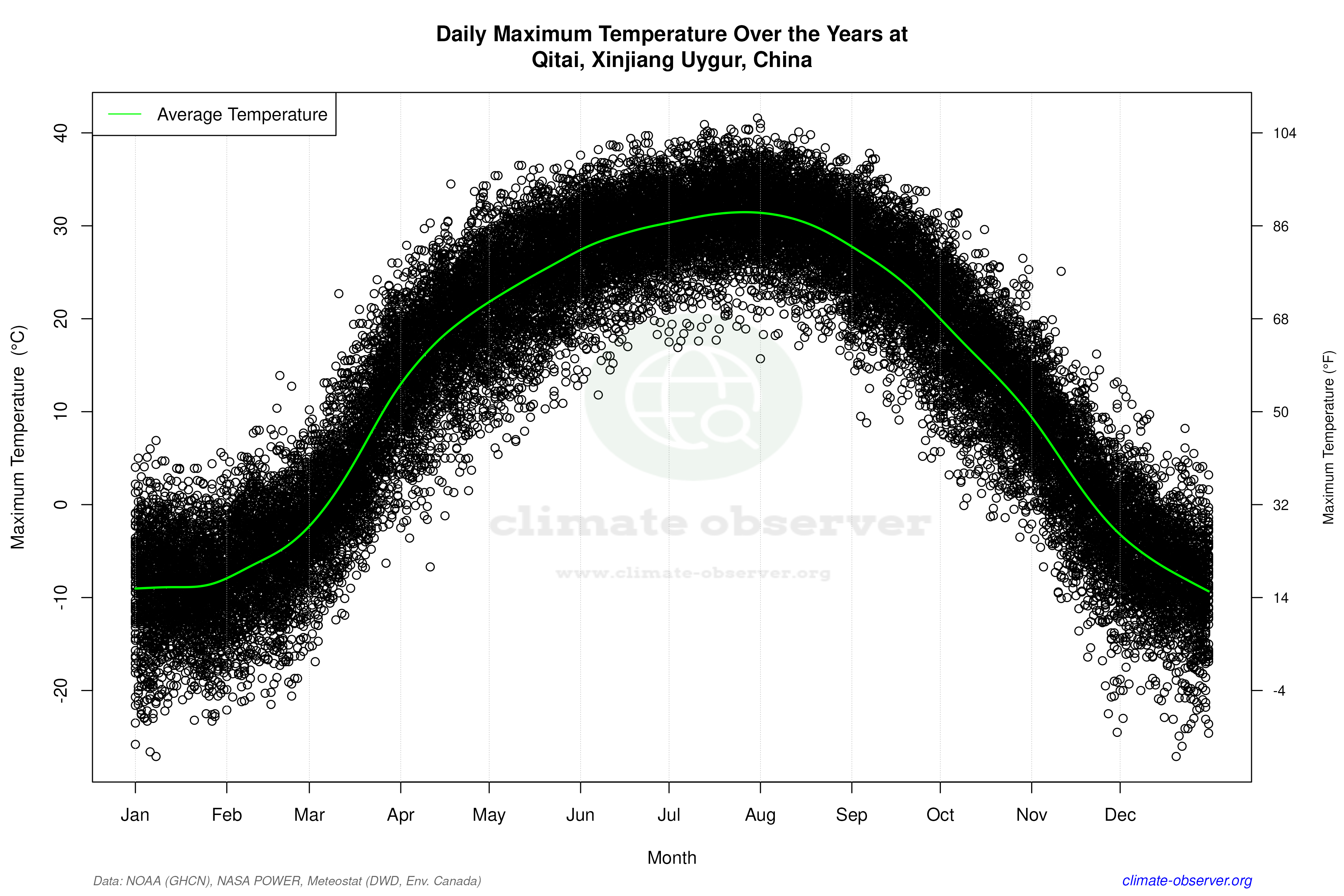
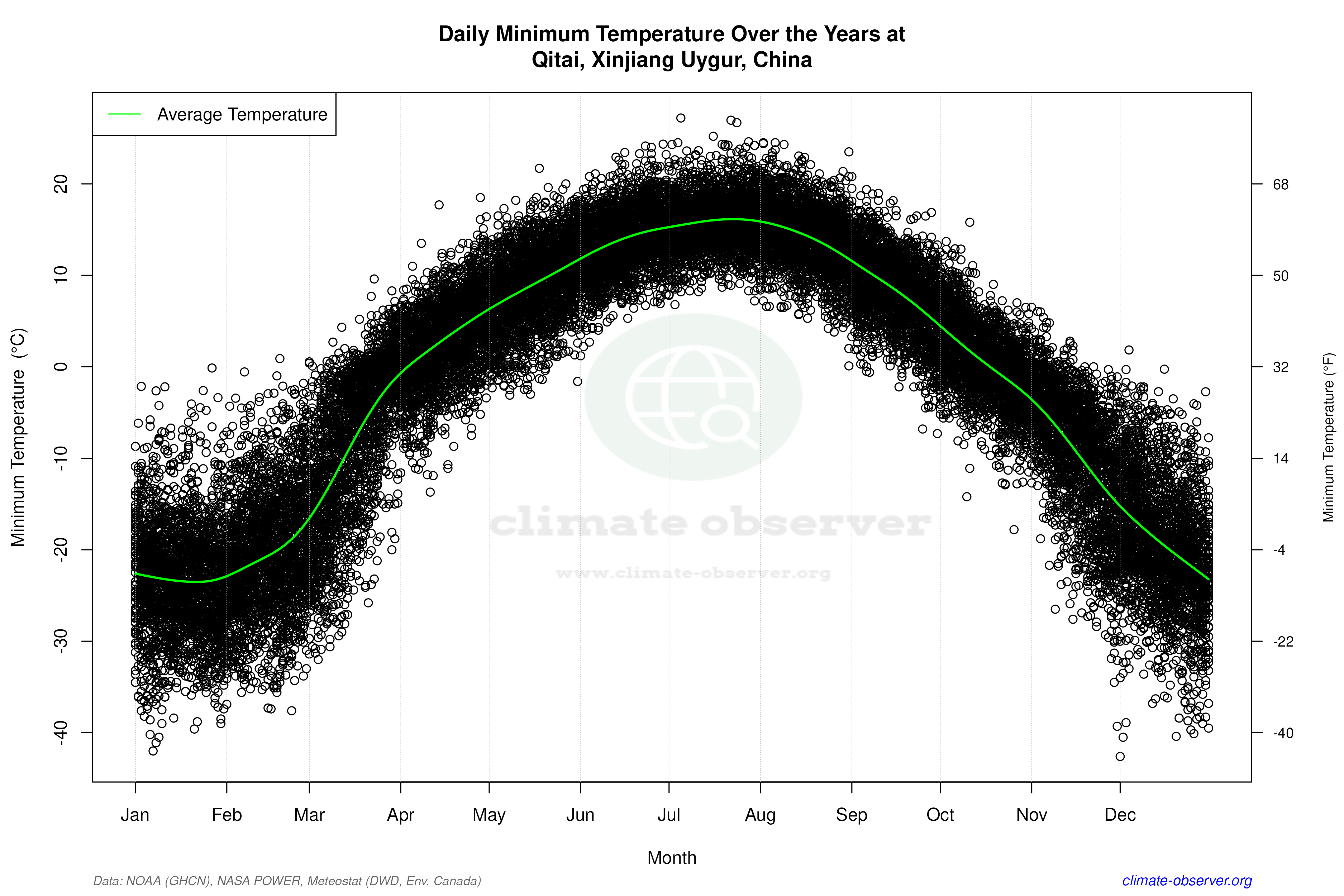
Qitai is classified under the Köppen climate system as a cold desert climate (BWk). This classification is characterised by arid conditions with significant temperature variations between seasons. The region's geography, dominated by expansive plains and distant mountain ranges, influences its climate by limiting moisture influx and enhancing temperature extremes. These geographic features contribute to the station's recorded temperature extremes, with a historical maximum of 41.6°C (106.9°F) and a minimum of -42.6°C (-44.7°F).
Long-term Climate Trends: A Subtle Warming
Examining the all-time temperature trends, Qitai has experienced a slight warming. The highs have risen by 0.31°C (0.56°F), while the lows have increased by 0.30°C (0.54°F). This gradual temperature rise suggests a warming climate over the decades, consistent with broader regional patterns observed in China. Such changes align with national climate goals targeting reduced greenhouse gas emissions and enhanced resilience to climate variability.
Recent Thermal Dynamics: A Decade of Change
In contrast to the long-term trends, the past decade has seen more dynamic thermal shifts. High temperatures have increased by 2.38°C (4.28°F), indicating a significant warming trend. Conversely, low temperatures have decreased by 0.98°C (1.77°F), suggesting cooler nights. This divergence between highs and lows over the short term may reflect increased variability and the influence of localised weather patterns or anthropogenic factors.
Precipitation Patterns: Towards Even Distribution
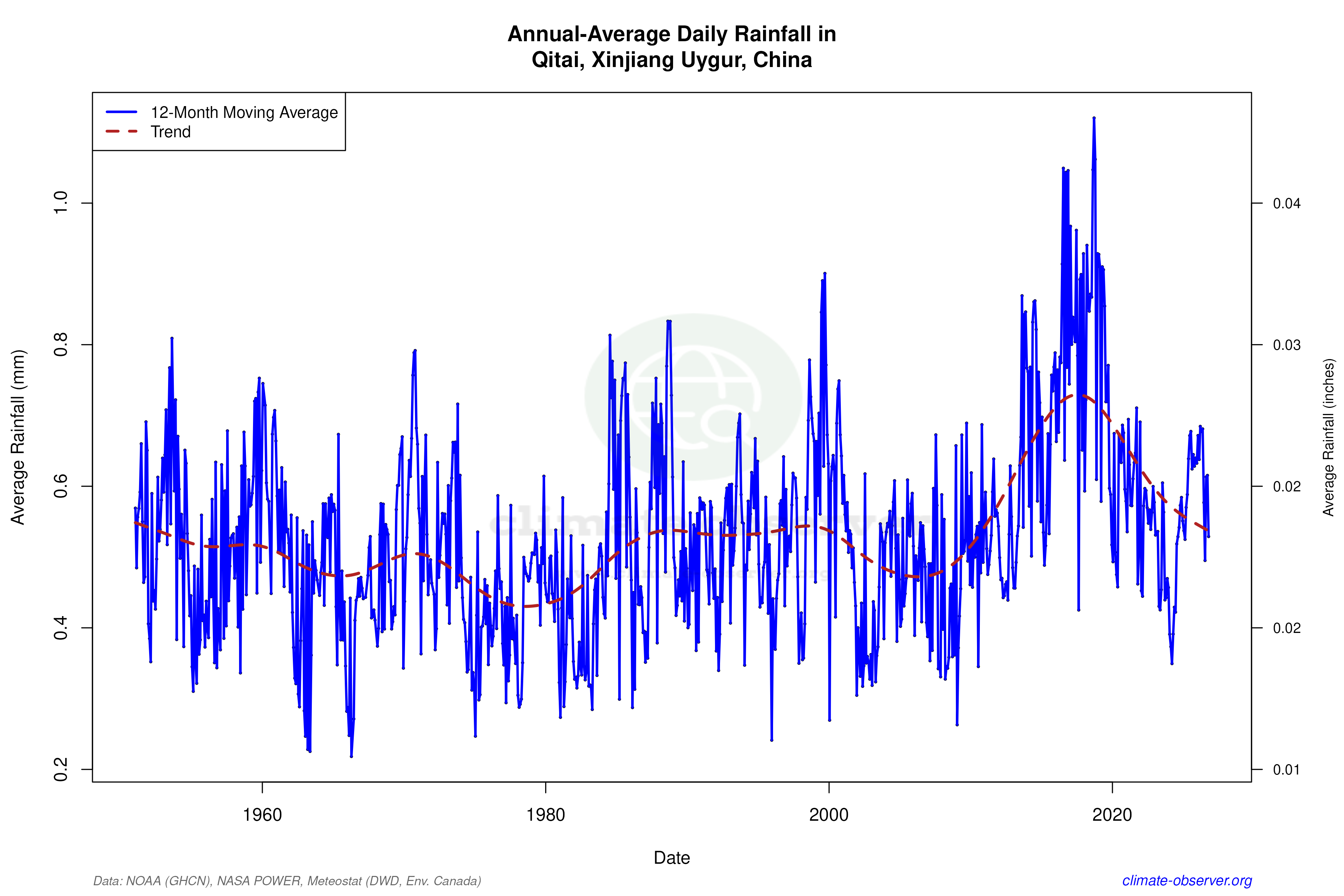
The Precipitation Concentration Index (PCI), a measure of how precipitation is distributed over time, has decreased from a baseline of 13.91 to 10.93. This reduction indicates a shift towards more evenly distributed rainfall events. While not a drastic change, this trend could have implications for local agriculture and water management, potentially reducing the risk of droughts associated with concentrated rainfall.
Implications for Regional Climate Goals
These climatic shifts in Qitai are occurring against the backdrop of China's ambitious climate goals, which include enhancing adaptation strategies and reducing carbon footprints. The observed trends, particularly the recent warming and more evenly distributed precipitation, highlight the need for adaptive measures to mitigate potential impacts on agriculture and water resources. As Qitai navigates these changes, understanding and responding to these evolving patterns will be crucial for sustainable development in the region.
Station Statistics
10-Year Trend
High: +3.02 °F/decade
Low: +0.86 °F/decade
Rain: -0.013 in/decade
25-Year Trend
High: +1.81 °F/decade
Low: +2.16 °F/decade
Rain: +0.003 in/decade
50-Year Trend
High: +0.61 °F/decade
Low: +0.52 °F/decade
Rain: +0.002 in/decade
All-Time Trend
High: +0.61 °F/decade
Low: +0.61 °F/decade
Rain: +0.001 in/decade
Percentage Above-Average Days
Last 12 Months: 58.6%
This Year: 52.2%
Precipitation Concentration Index (PCI) ℹ️
Last 12 Months: 11.1
Historical Average: 13.0
Percentile Rank of Last 12 Months ℹ️
High: 77th percentile
Low: 92nd percentile
Rain: 79th percentile
Change in Variance ℹ️
High: -3.1%
Low: -7.3%
Intraday: +22.3%
Data Coverage
100.0%
First Year of Data
1960
Station Location
Historical Weather Records
| Max High | Avg High | Min High | Max Avg | Avg Avg | Min Avg | Max Low | Avg Low | Min Low | Max Precipitation | Avg Precipitation | Max Snow | Avg Snow | |
|---|---|---|---|---|---|---|---|---|---|---|---|---|---|
| Record | 106.88 °F | — | -16.78 °F | 92.12 °F | — | -32.62 °F | 80.96 °F | — | -44.68 °F | 1.29 in | — | — | — |
| January | 44.42 °F | 15.99 °F | -16.78 °F | 34.16 °F | 0.77 °F | -32.62 °F | 31.77 °F | -9.98 °F | -43.60 °F | 0.33 in | 0.01 in | — | — |
| February | 57.00 °F | 22.16 °F | -7.78 °F | 42.39 °F | 7.17 °F | -22.54 °F | 33.62 °F | -4.69 °F | -35.68 °F | 0.48 in | 0.01 in | — | — |
| March | 78.80 °F | 40.51 °F | 1.58 °F | 62.42 °F | 28.14 °F | -13.00 °F | 49.28 °F | 17.22 °F | -25.60 °F | 0.58 in | 0.01 in | — | — |
| April | 94.10 °F | 64.09 °F | 19.94 °F | 79.88 °F | 50.03 °F | 14.00 °F | 65.30 °F | 37.05 °F | 7.34 °F | 0.79 in | 0.03 in | — | — |
| May | 97.88 °F | 76.16 °F | 41.72 °F | 87.80 °F | 62.10 °F | 32.90 °F | 71.06 °F | 48.09 °F | 26.42 °F | 0.97 in | 0.03 in | — | — |
| June | 103.46 °F | 84.39 °F | 53.24 °F | 88.16 °F | 70.85 °F | 47.66 °F | 75.81 °F | 57.04 °F | 34.16 °F | 1.19 in | 0.03 in | — | — |
| July | 106.88 °F | 87.96 °F | 62.42 °F | 92.12 °F | 74.17 °F | 55.04 °F | 80.96 °F | 60.53 °F | 44.24 °F | 1.29 in | 0.03 in | — | — |
| August | 105.80 °F | 86.33 °F | 60.26 °F | 87.44 °F | 71.49 °F | 48.92 °F | 76.10 °F | 57.72 °F | 32.18 °F | 1.26 in | 0.03 in | — | — |
| September | 100.04 °F | 75.92 °F | 41.00 °F | 81.32 °F | 60.36 °F | 32.54 °F | 69.42 °F | 46.98 °F | 18.86 °F | 0.94 in | 0.03 in | — | — |
| October | 88.52 °F | 59.03 °F | 25.70 °F | 66.92 °F | 44.13 °F | 15.80 °F | 60.44 °F | 32.80 °F | -0.04 °F | 0.80 in | 0.02 in | — | — |
| November | 77.18 °F | 37.28 °F | -12.10 °F | 51.26 °F | 24.78 °F | -26.68 °F | 43.70 °F | 15.67 °F | -38.74 °F | 0.46 in | 0.02 in | — | — |
| December | 54.32 °F | 20.21 °F | -16.78 °F | 38.48 °F | 6.99 °F | -31.72 °F | 35.31 °F | -2.96 °F | -44.68 °F | 0.50 in | 0.01 in | — | — |
Data Visualisations
Remove WatermarksCurrent Year Climate Trends vs Historical
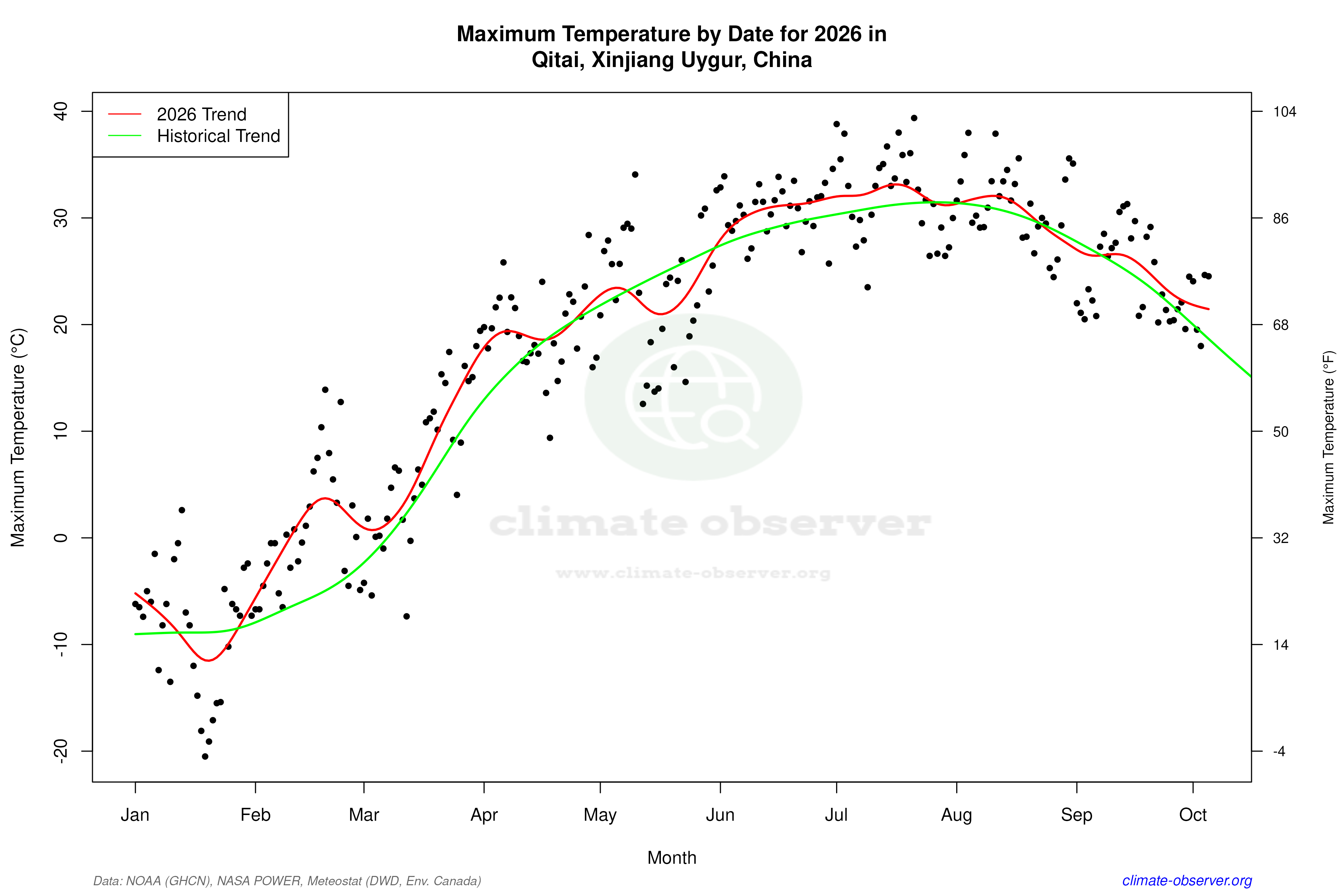
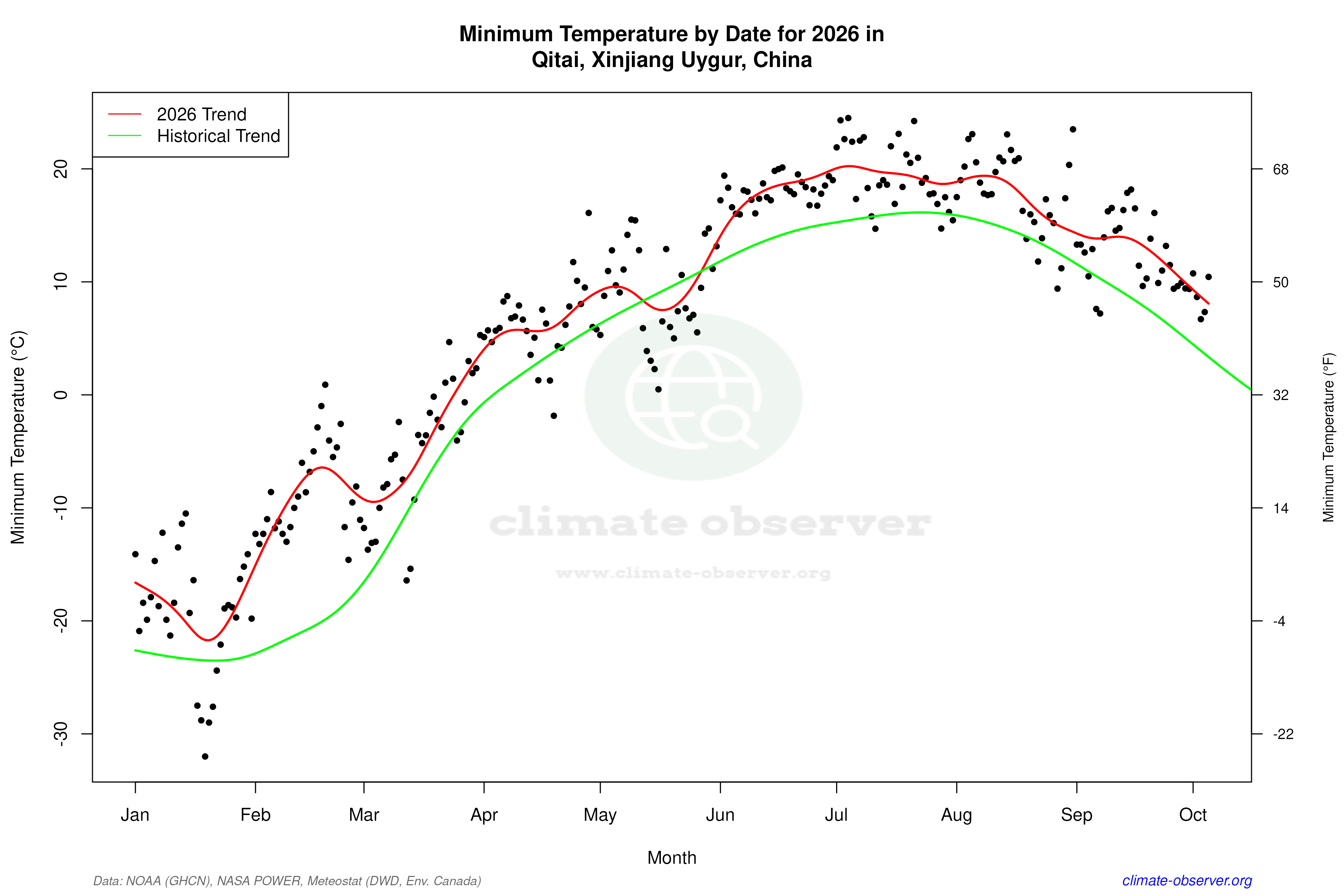
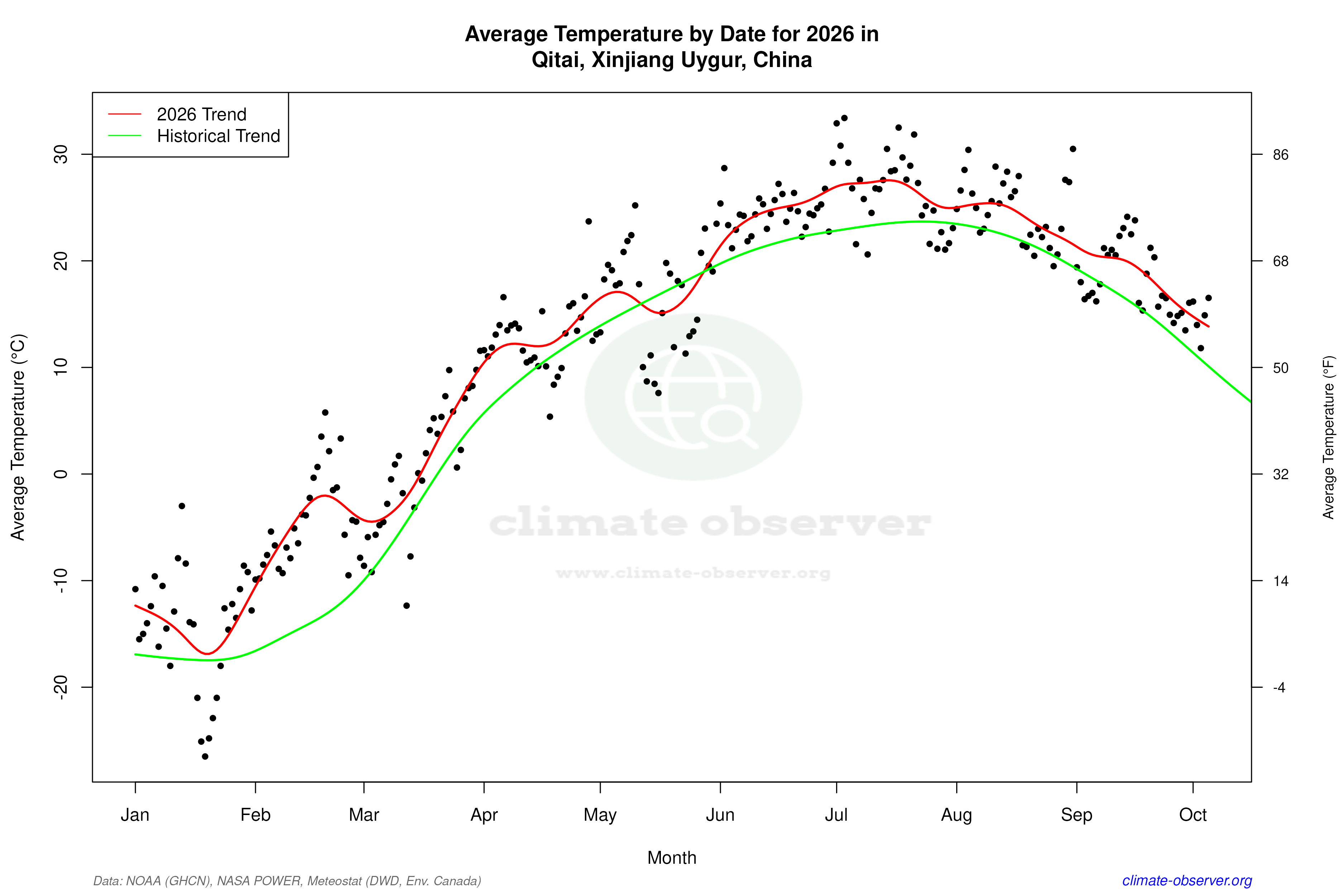
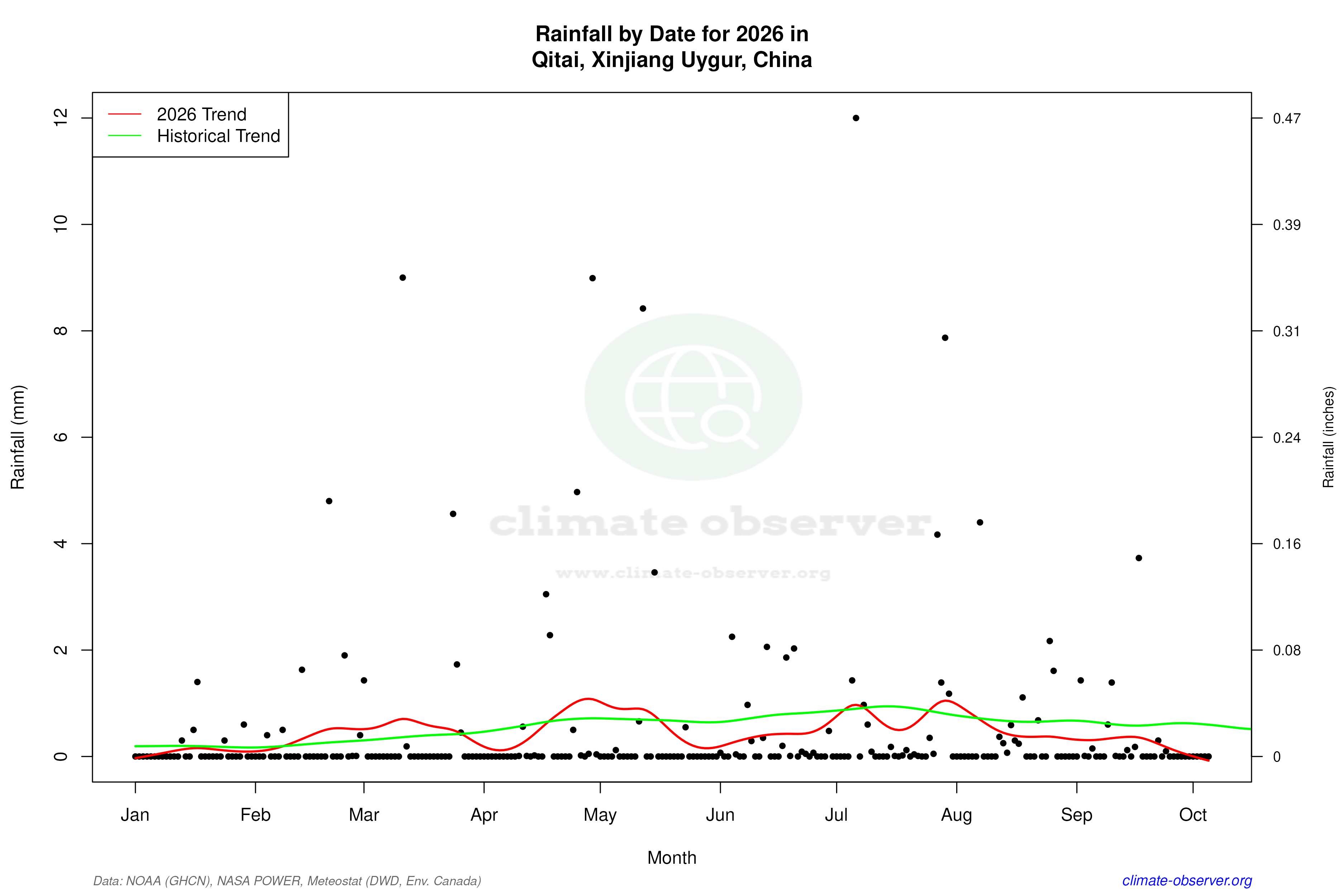
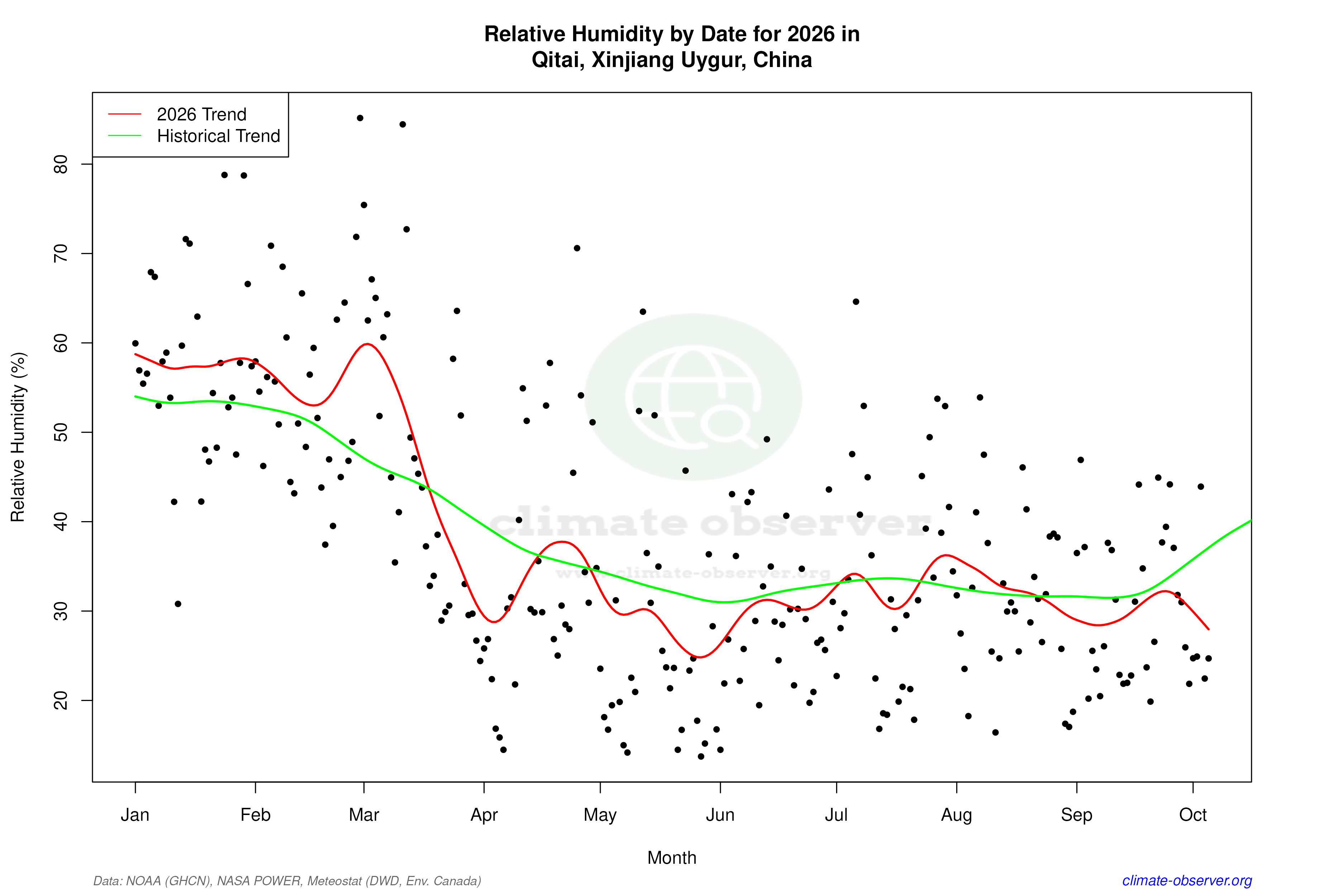

Max Temperature this Year | 1 of 6
Climate 12-Month Moving Averages
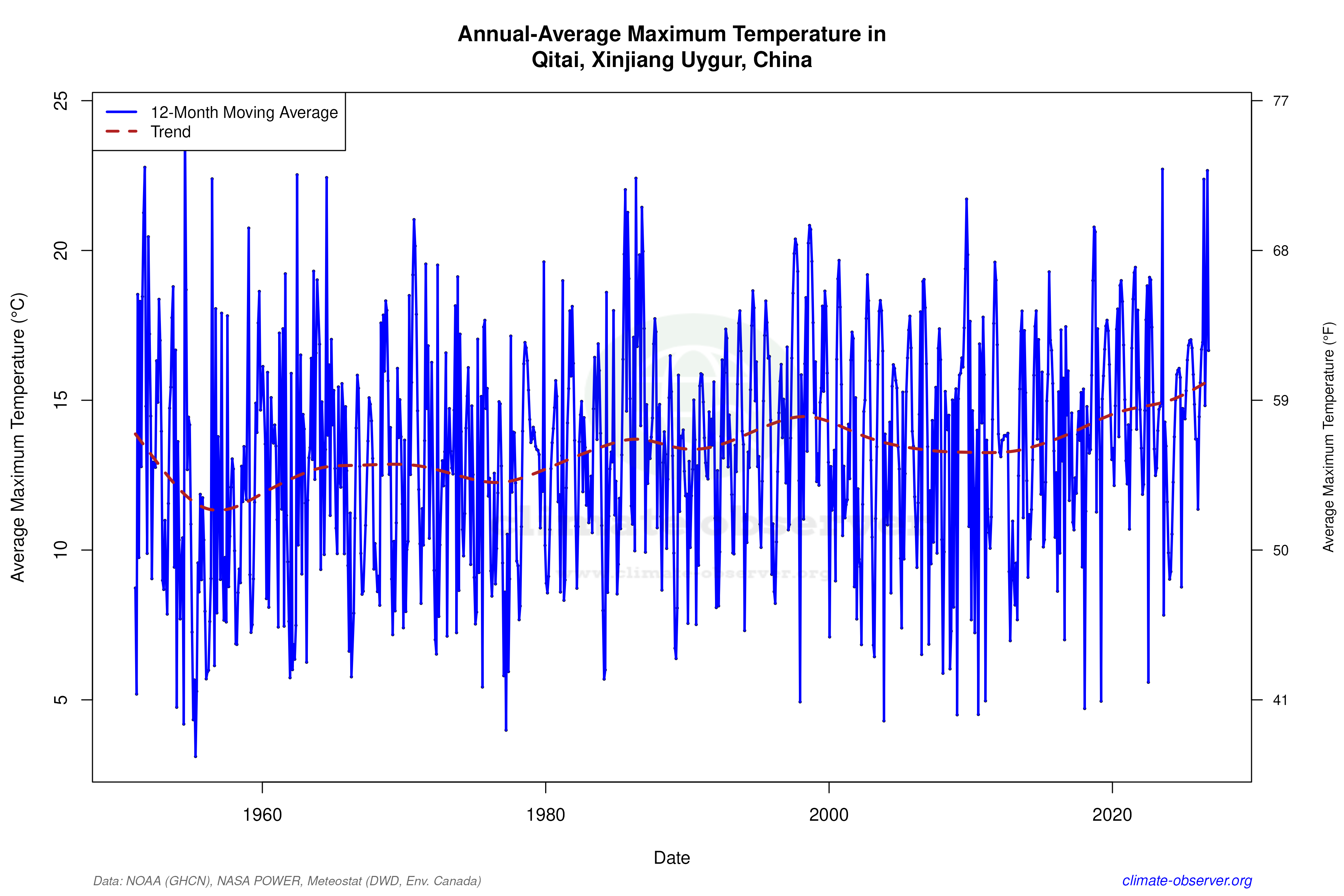
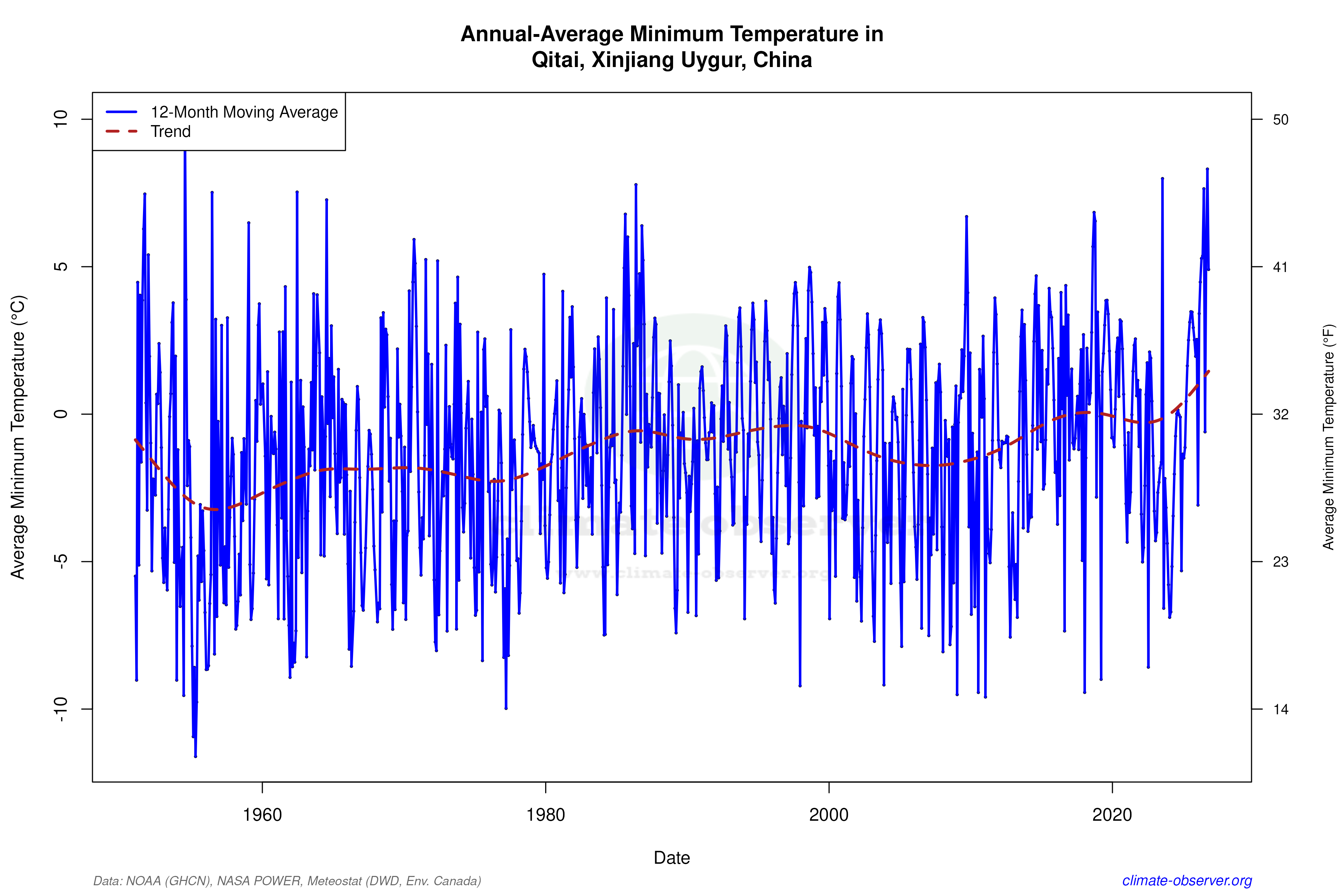
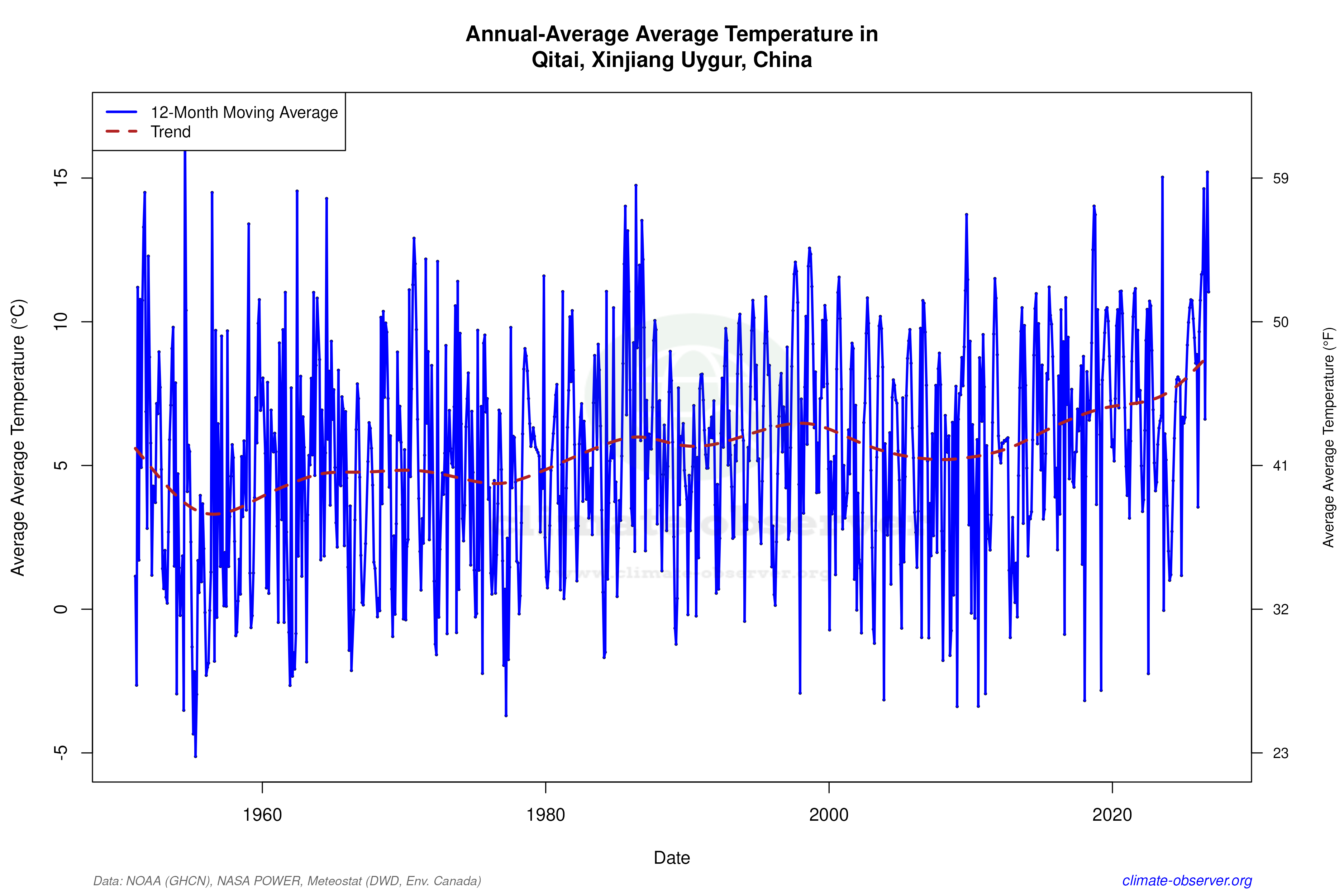

Max Temperature 12-Month MA | 1 of 6
Daily Data Points and Averages Throughout the Year
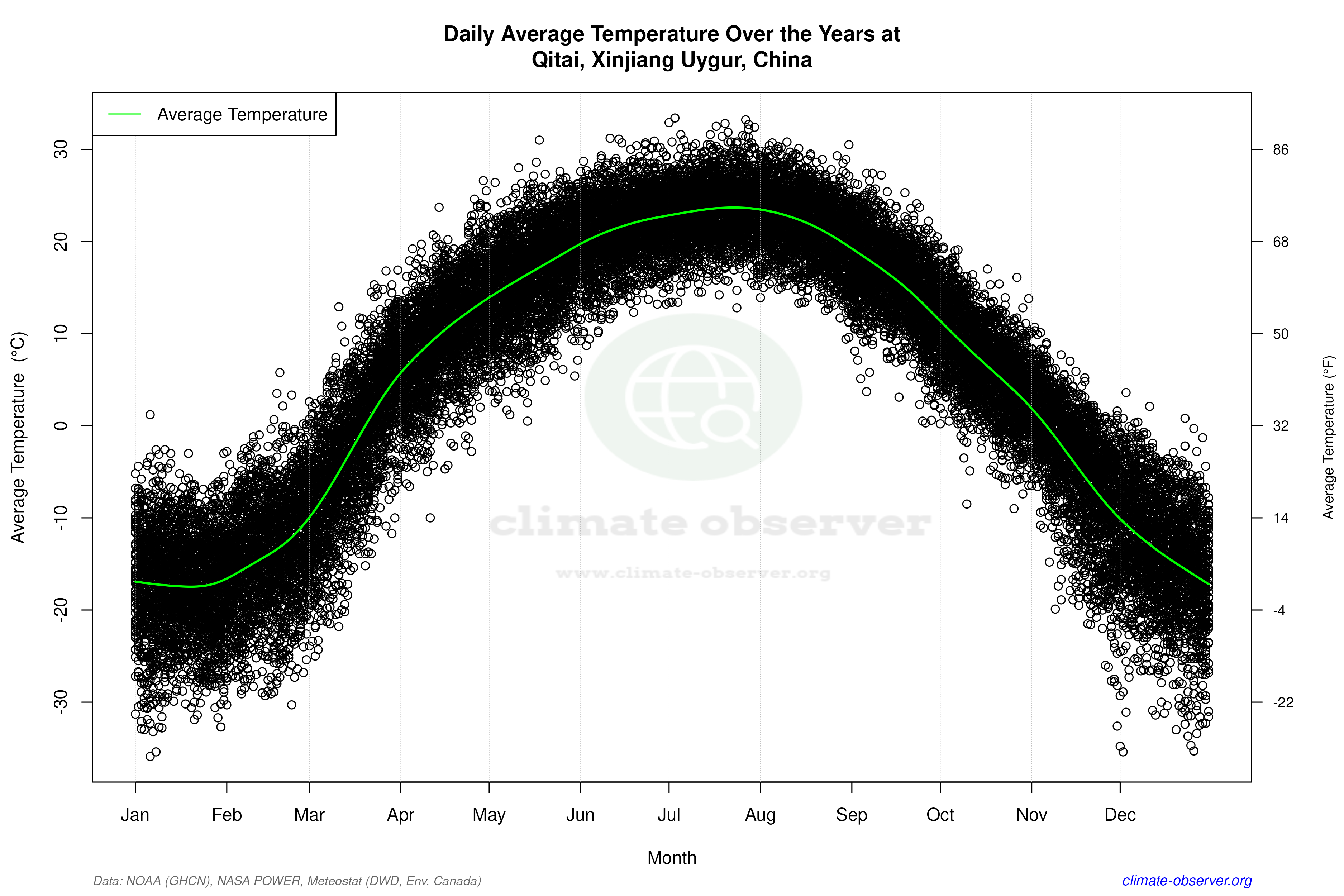
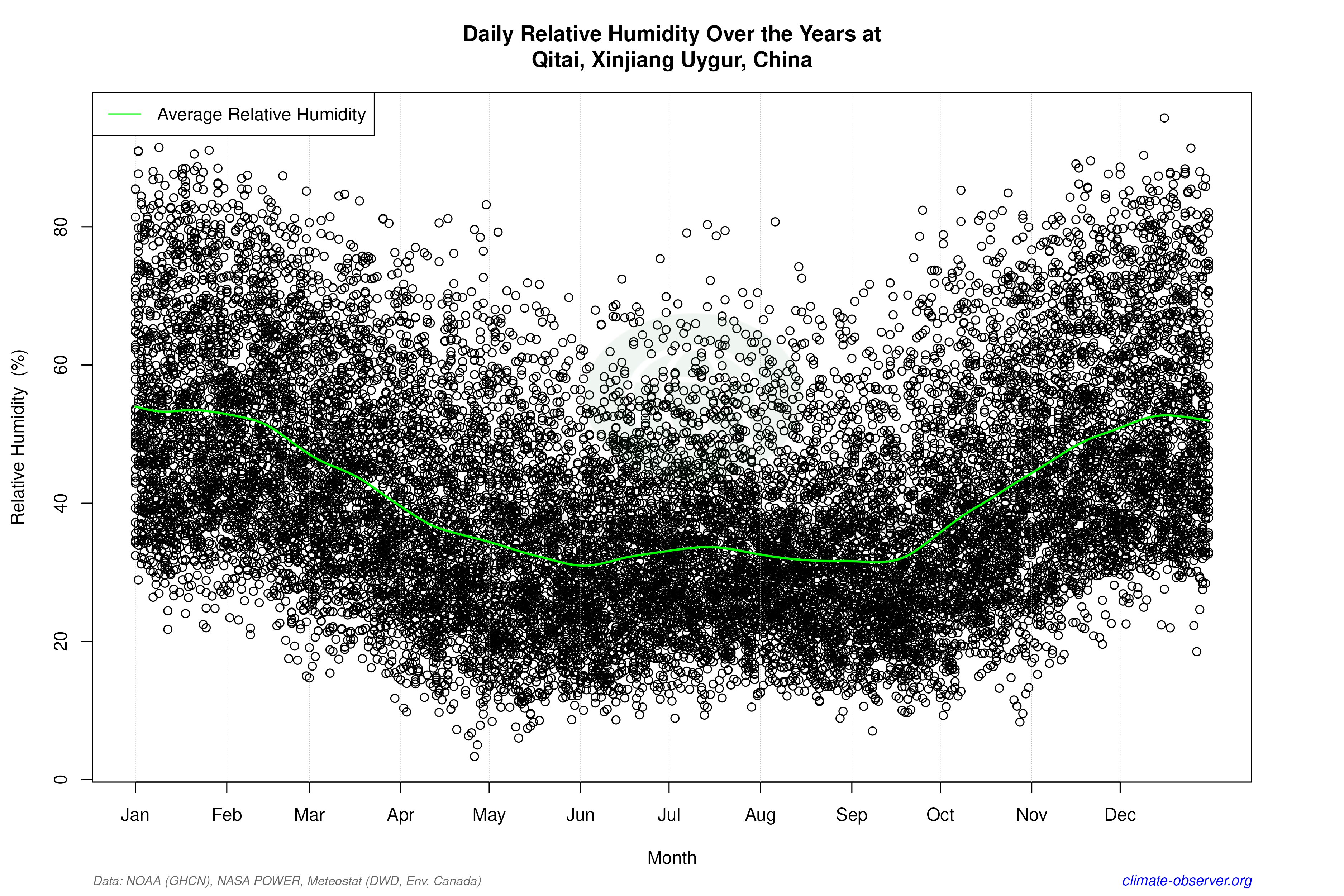

Average Max Temperature Throughout Year | 1 of 5

