Climate for Station: Wuhan, Hubei, China
Loading live weather...
Climate Analysis & Overview
Wuhan's climate is experiencing a complex interplay of warming highs and cooling lows, with a marked increase in precipitation concentration. These trends highlight the dynamic nature of the region's climate, influenced by its geographical setting and broader climatic changes.
Geographical Climate Influences
Situated at coordinates 30.6°N, 114.05°E, Wuhan lies in a subtropical monsoon climate zone, characterised by hot, humid summers and cold, dry winters. The city's location along the Yangtze River and its proximity to various mountain ranges contribute to its unique climatic patterns. These geographical features influence local weather, creating a microclimate that can deviate from broader regional trends.
Temperature Trends and Variations
Over the past decade, Wuhan has experienced a notable increase in high temperatures, with a 3.52°C (6.34°F) rise. This significant warming trend contrasts sharply with the slight cooling of low temperatures, which have decreased by 0.40°C (0.72°F). When examining the all-time trends, both highs and lows show a warming pattern, with highs increasing by 0.29°C (0.52°F) and lows by 0.23°C (0.41°F). These figures suggest a long-term warming trend, albeit less pronounced than the recent decade's rapid changes.
Precipitation Patterns and Concentration
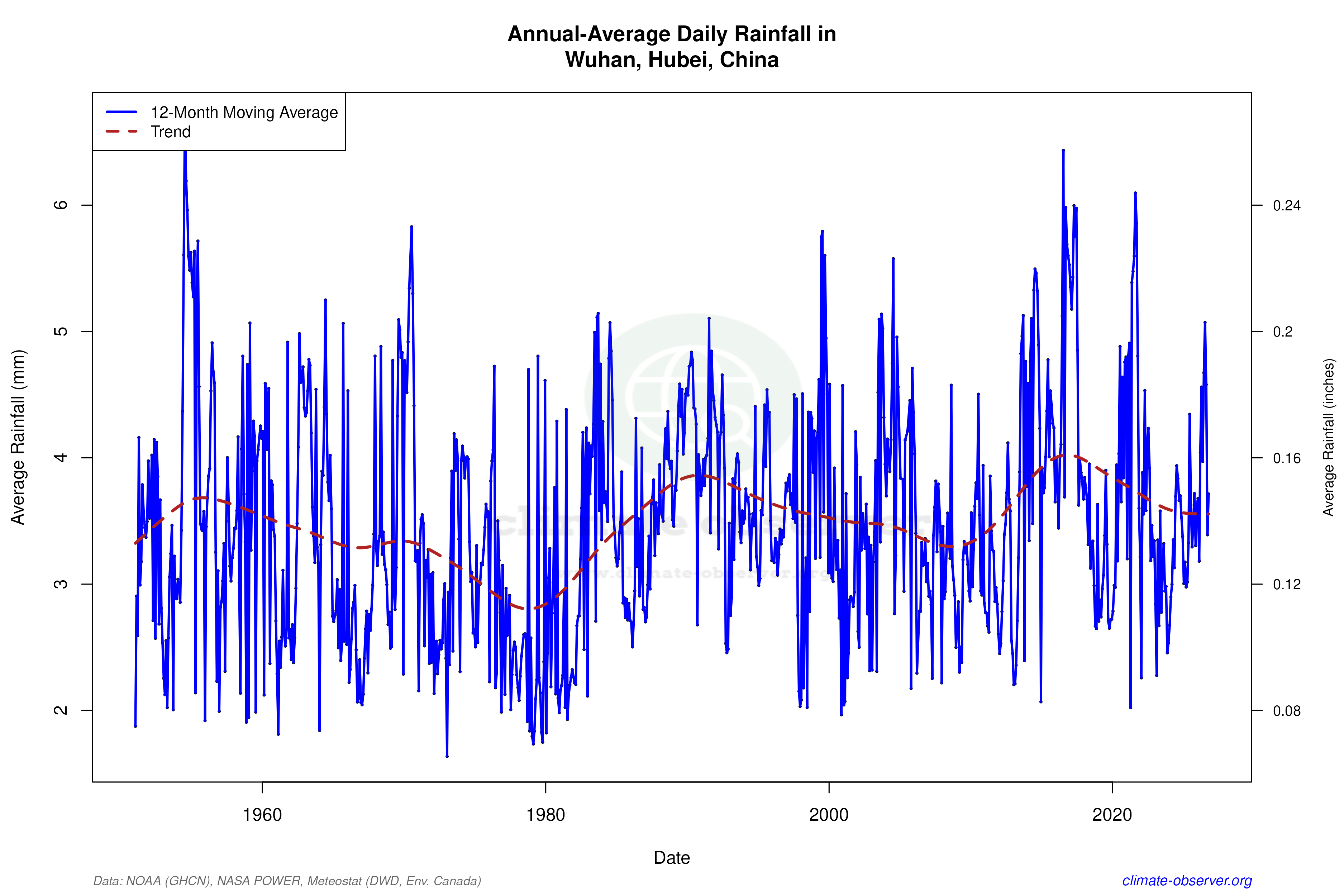
The Precipitation Concentration Index (PCI) serves as a measure of how rainfall is distributed throughout the year. Wuhan's PCI has increased from a baseline of 13.69 to a current value of 14.59, indicating a slight shift towards more concentrated rainfall events. This suggests that precipitation is becoming less evenly distributed, potentially leading to more intense rainfall events followed by longer dry spells. Such changes can have significant implications for water management and agricultural practices in the region.
Extreme Temperature Records
Wuhan has recorded extreme temperatures, with a maximum of 41.0°C (105.8°F) and a minimum of -18.1°C (-0.6°F). These extremes highlight the city's vulnerability to temperature fluctuations, which can be exacerbated by the ongoing climate trends. The record highs underscore the importance of heat mitigation strategies, while the record lows remind us of the potential for severe cold spells.
Regional Climate Context
Wuhan's climatic changes are set against the backdrop of China's national climate goals, which include reducing carbon emissions and enhancing climate resilience. The city's evolving climate patterns, particularly the warming highs and increasing precipitation concentration, align with broader global trends of climate change. Recent weather events, such as severe flooding and heatwaves, further illustrate the need for adaptive strategies to mitigate the impacts of these changes.
Station Statistics
10-Year Trend
High: +7.16 °F/decade
Low: +2.58 °F/decade
Rain: -0.005 in/decade
25-Year Trend
High: +2.17 °F/decade
Low: +0.34 °F/decade
Rain: +0.008 in/decade
50-Year Trend
High: +1.07 °F/decade
Low: +0.76 °F/decade
Rain: +0.007 in/decade
All-Time Trend
High: +0.26 °F/decade
Low: +0.24 °F/decade
Rain: +0.002 in/decade
Percentage Above-Average Days
Last 12 Months: 53.2%
This Year: 54.1%
Precipitation Concentration Index (PCI) ℹ️
Last 12 Months: 34.3
Historical Average: 14.5
Percentile Rank of Last 12 Months ℹ️
High: 92nd percentile
Low: 82nd percentile
Rain: 80th percentile
Change in Variance ℹ️
High: -1.8%
Low: +3.9%
Intraday: +24.3%
Data Coverage
100.0%
First Year of Data
1960
Station Location
Historical Weather Records
| Max High | Avg High | Min High | Max Avg | Avg Avg | Min Avg | Max Low | Avg Low | Min Low | Max Precipitation | Avg Precipitation | Max Snow | Avg Snow | |
|---|---|---|---|---|---|---|---|---|---|---|---|---|---|
| Record | 105.80 °F | — | 21.56 °F | 96.44 °F | — | 11.66 °F | 90.14 °F | — | -0.58 °F | 25.56 in | — | — | — |
| January | 77.72 °F | 46.90 °F | 21.56 °F | 64.04 °F | 38.77 °F | 11.66 °F | 54.86 °F | 32.12 °F | -0.58 °F | 1.94 in | 0.06 in | — | — |
| February | 84.38 °F | 50.86 °F | 25.70 °F | 70.88 °F | 42.88 °F | 17.06 °F | 62.78 °F | 36.23 °F | 5.36 °F | 2.04 in | 0.09 in | — | — |
| March | 93.20 °F | 59.98 °F | 33.80 °F | 80.42 °F | 51.70 °F | 31.10 °F | 72.14 °F | 44.62 °F | 23.00 °F | 2.56 in | 0.12 in | — | — |
| April | 95.18 °F | 71.36 °F | 43.52 °F | 83.48 °F | 62.83 °F | 40.46 °F | 77.36 °F | 55.34 °F | 31.46 °F | 4.33 in | 0.18 in | — | — |
| May | 96.98 °F | 80.05 °F | 52.52 °F | 89.24 °F | 71.79 °F | 49.82 °F | 84.20 °F | 64.64 °F | 44.96 °F | 5.85 in | 0.21 in | — | — |
| June | 102.20 °F | 86.38 °F | 67.10 °F | 92.12 °F | 78.85 °F | 60.98 °F | 86.90 °F | 72.39 °F | 55.40 °F | 12.50 in | 0.29 in | — | — |
| July | 102.74 °F | 91.62 °F | 72.50 °F | 95.54 °F | 84.37 °F | 69.80 °F | 89.60 °F | 78.39 °F | 63.14 °F | 7.80 in | 0.25 in | — | — |
| August | 105.80 °F | 91.32 °F | 66.74 °F | 96.44 °F | 83.42 °F | 63.86 °F | 90.14 °F | 77.17 °F | 61.52 °F | 10.30 in | 0.15 in | — | — |
| September | 104.00 °F | 83.53 °F | 60.08 °F | 92.66 °F | 75.05 °F | 54.86 °F | 85.46 °F | 68.45 °F | 50.18 °F | 3.83 in | 0.10 in | — | — |
| October | 100.40 °F | 73.52 °F | 51.44 °F | 90.68 °F | 64.41 °F | 44.60 °F | 84.20 °F | 57.25 °F | 34.34 °F | 25.56 in | 0.13 in | — | — |
| November | 86.72 °F | 62.40 °F | 32.00 °F | 74.12 °F | 53.20 °F | 29.66 °F | 66.20 °F | 46.04 °F | 19.22 °F | 2.61 in | 0.07 in | — | — |
| December | 75.56 °F | 51.39 °F | 23.18 °F | 63.14 °F | 42.62 °F | 21.92 °F | 59.72 °F | 35.57 °F | 13.82 °F | 1.68 in | 0.04 in | — | — |
Data Visualisations
Remove WatermarksCurrent Year Climate Trends vs Historical
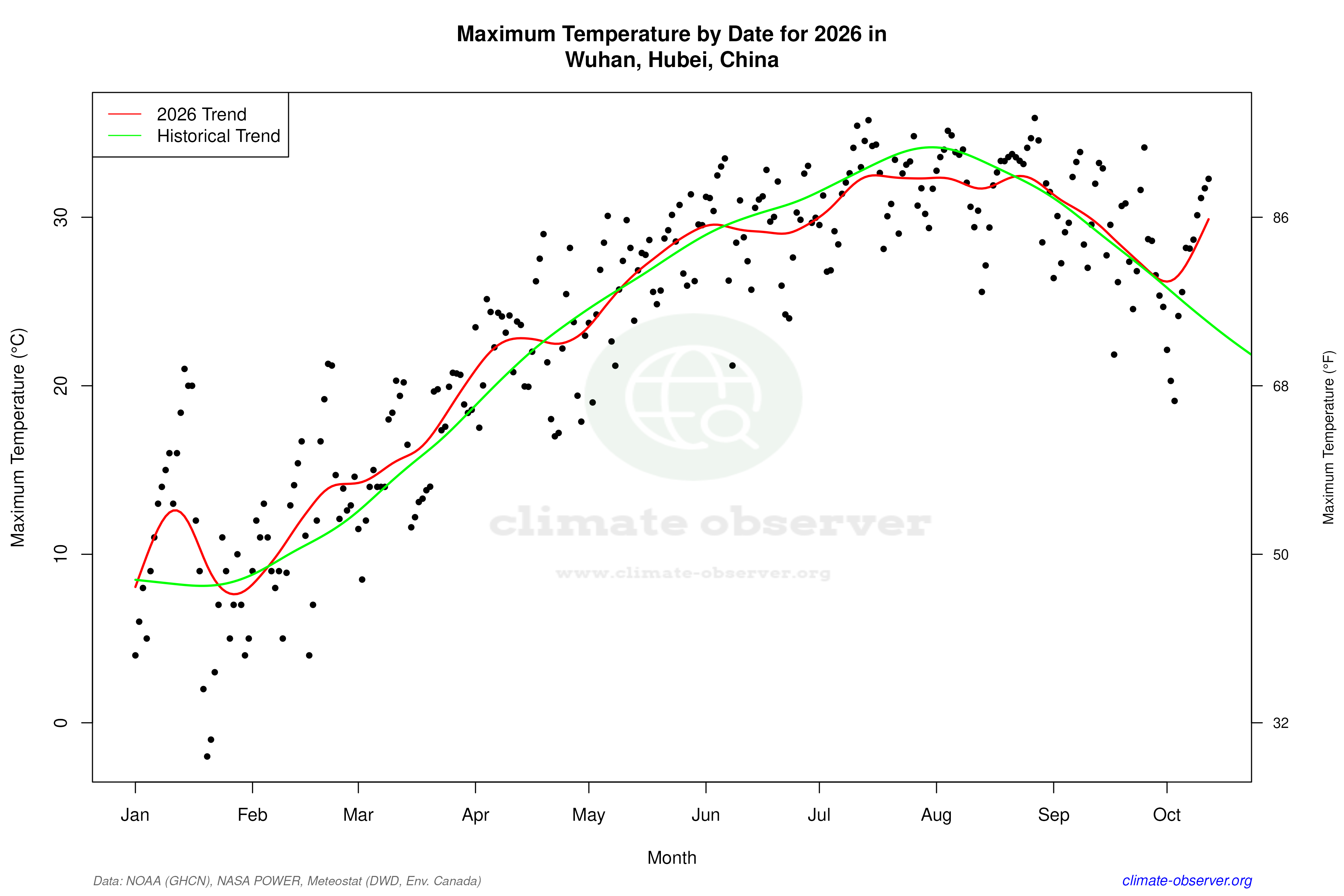
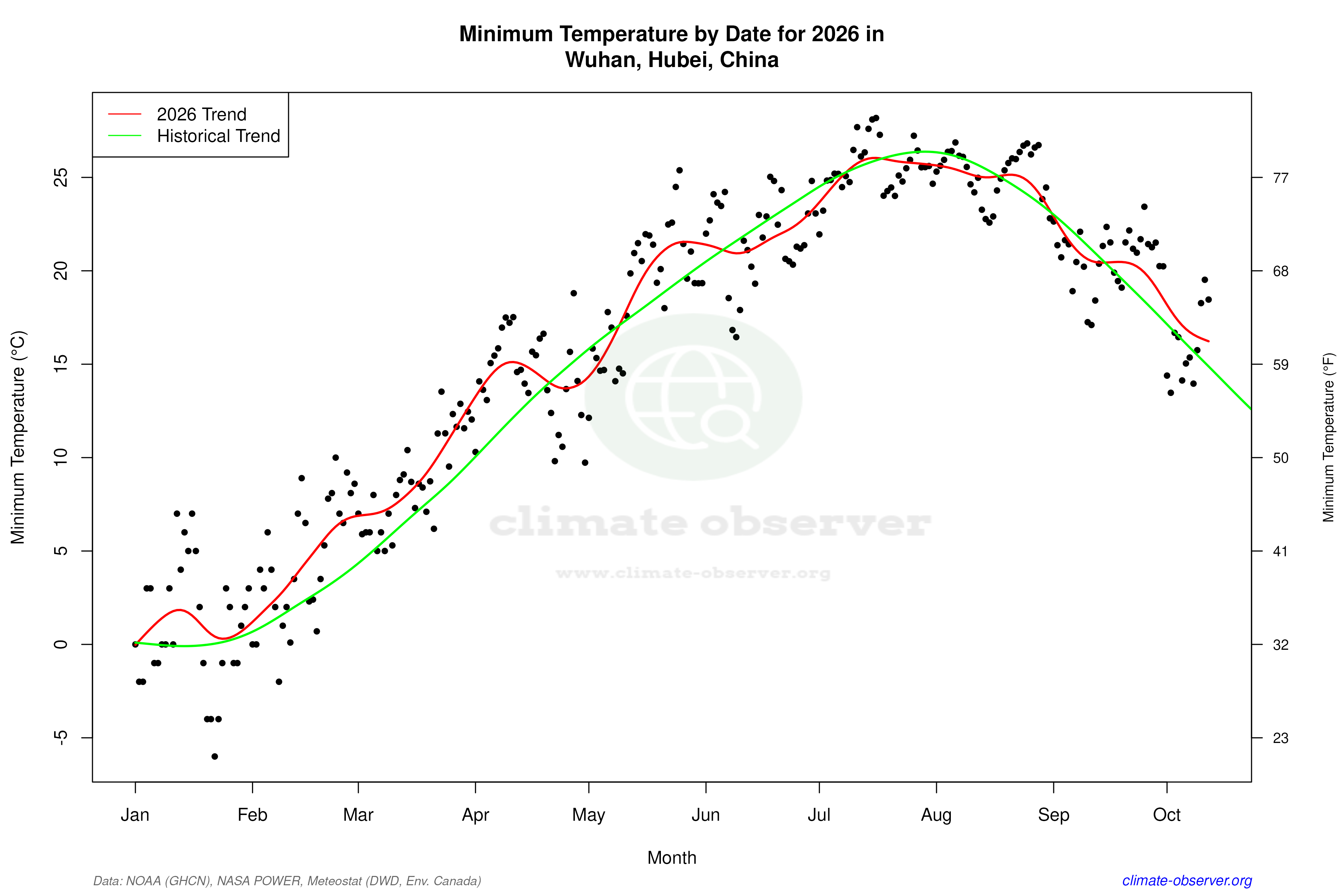
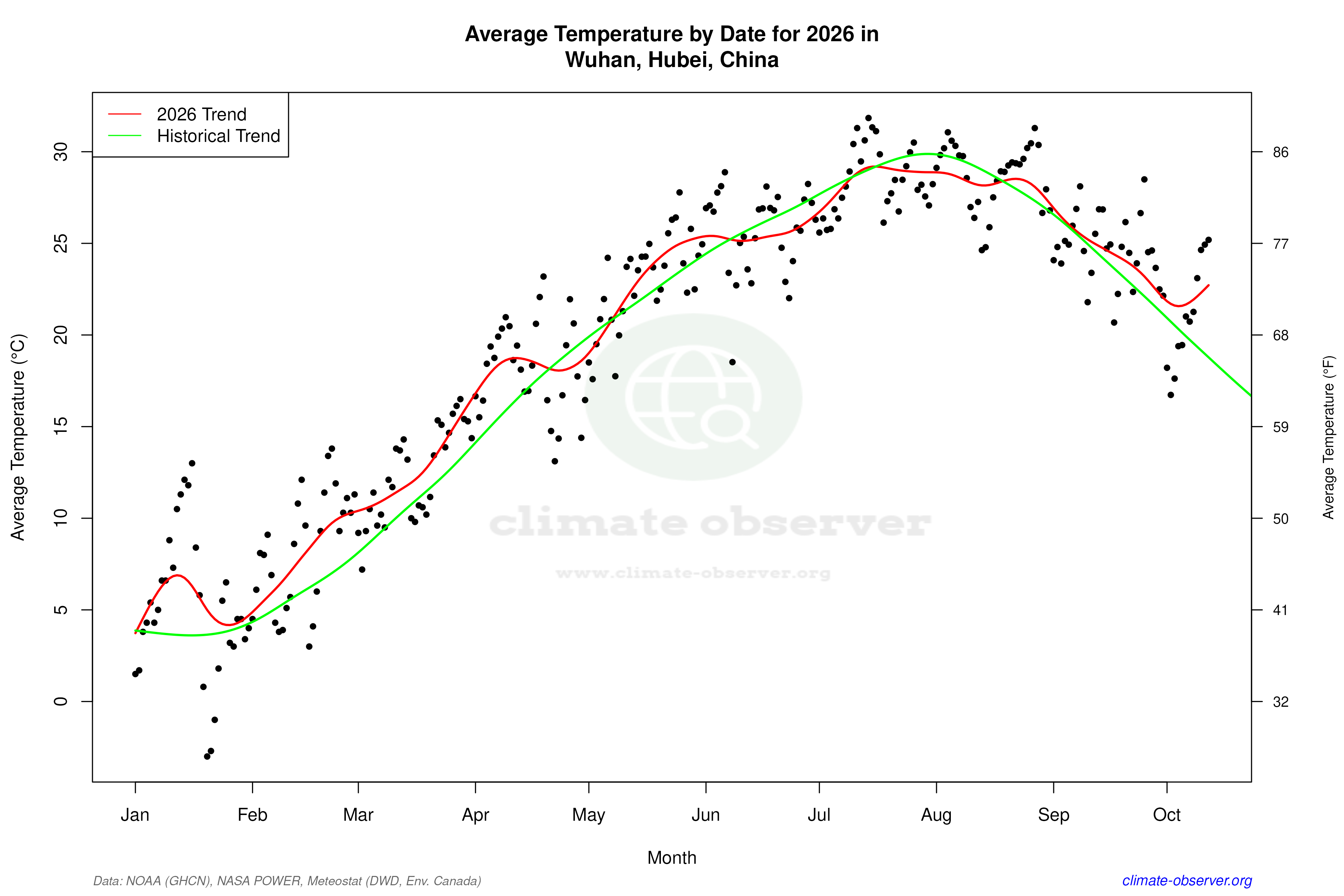
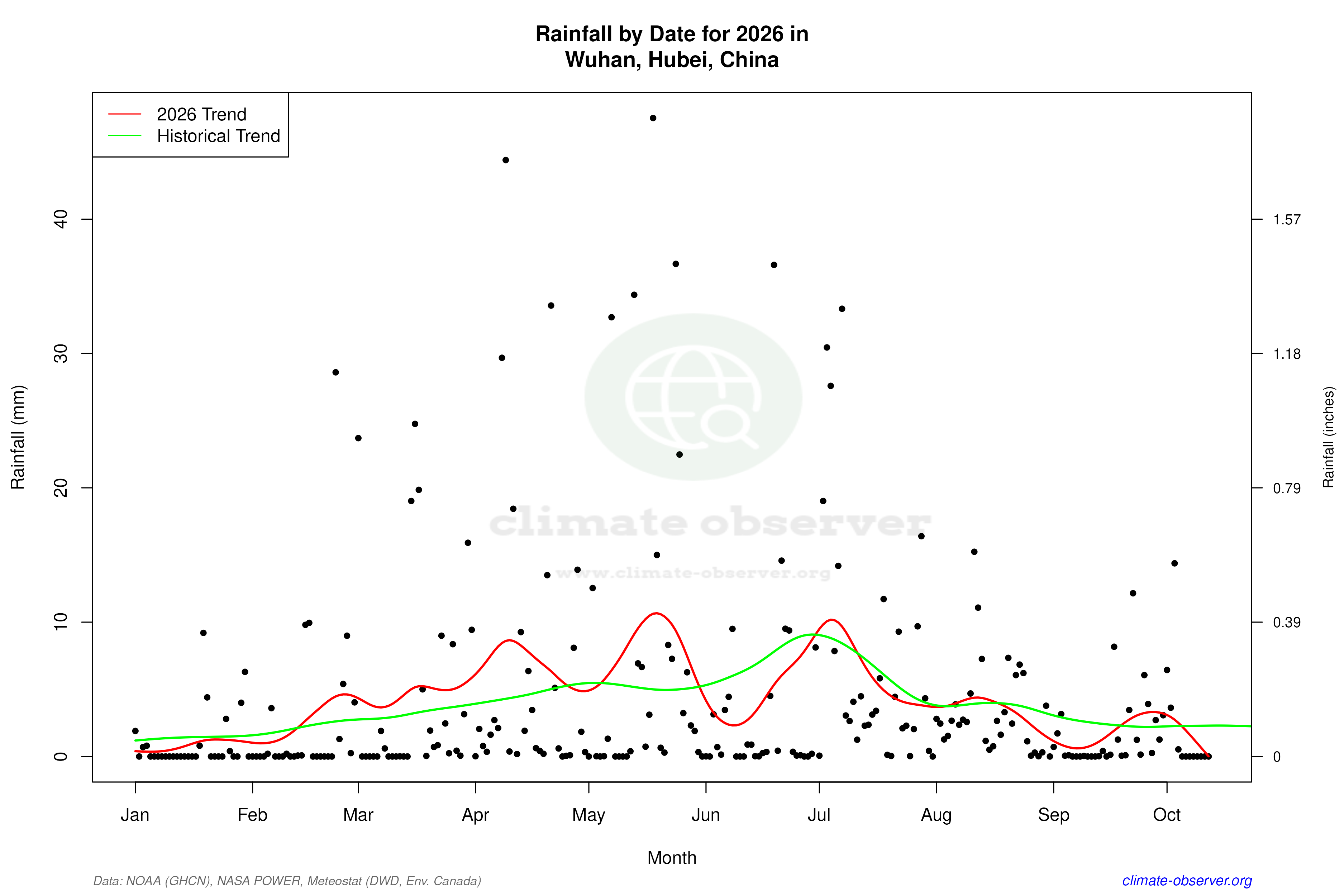
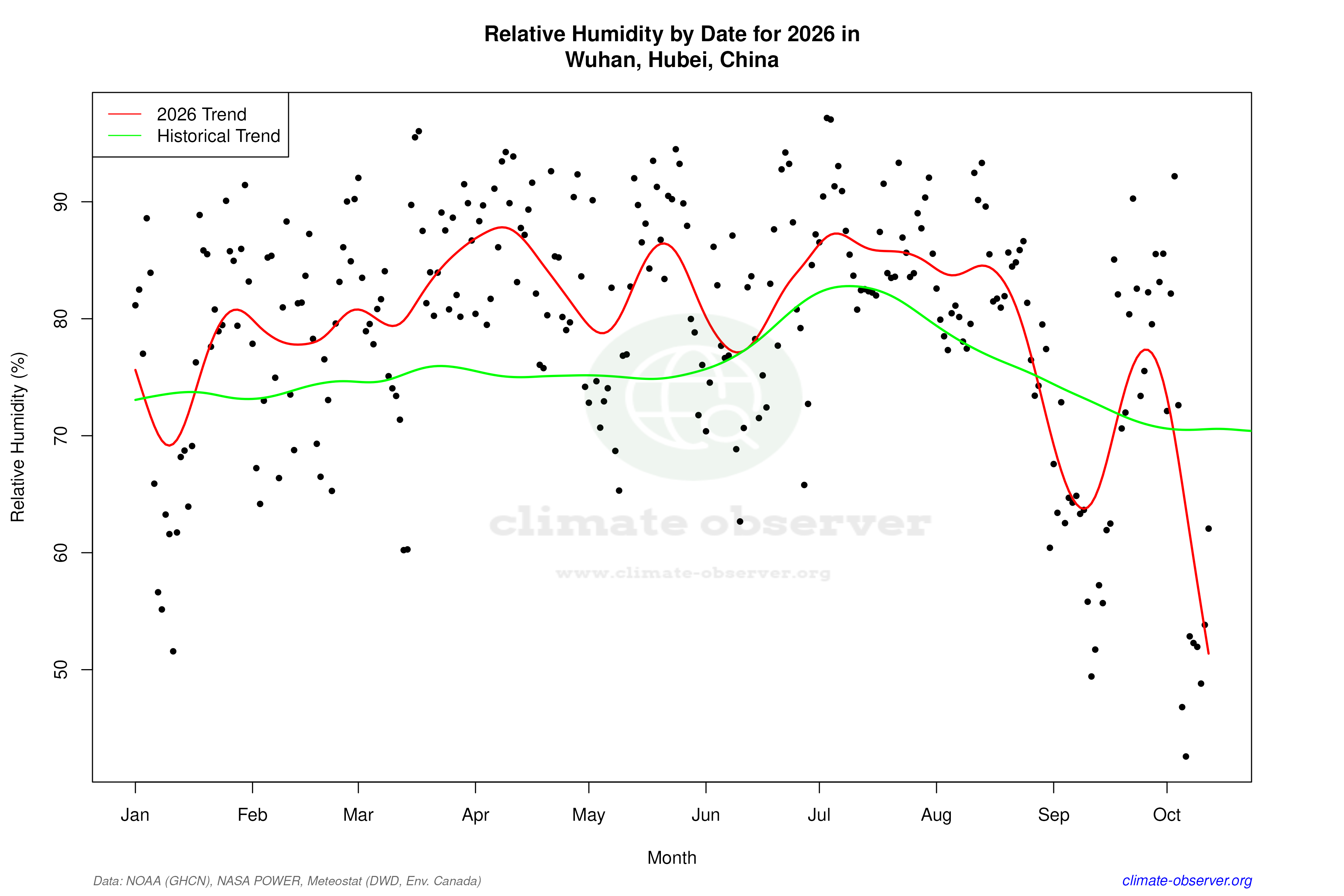

Max Temperature this Year | 1 of 6
Climate 12-Month Moving Averages
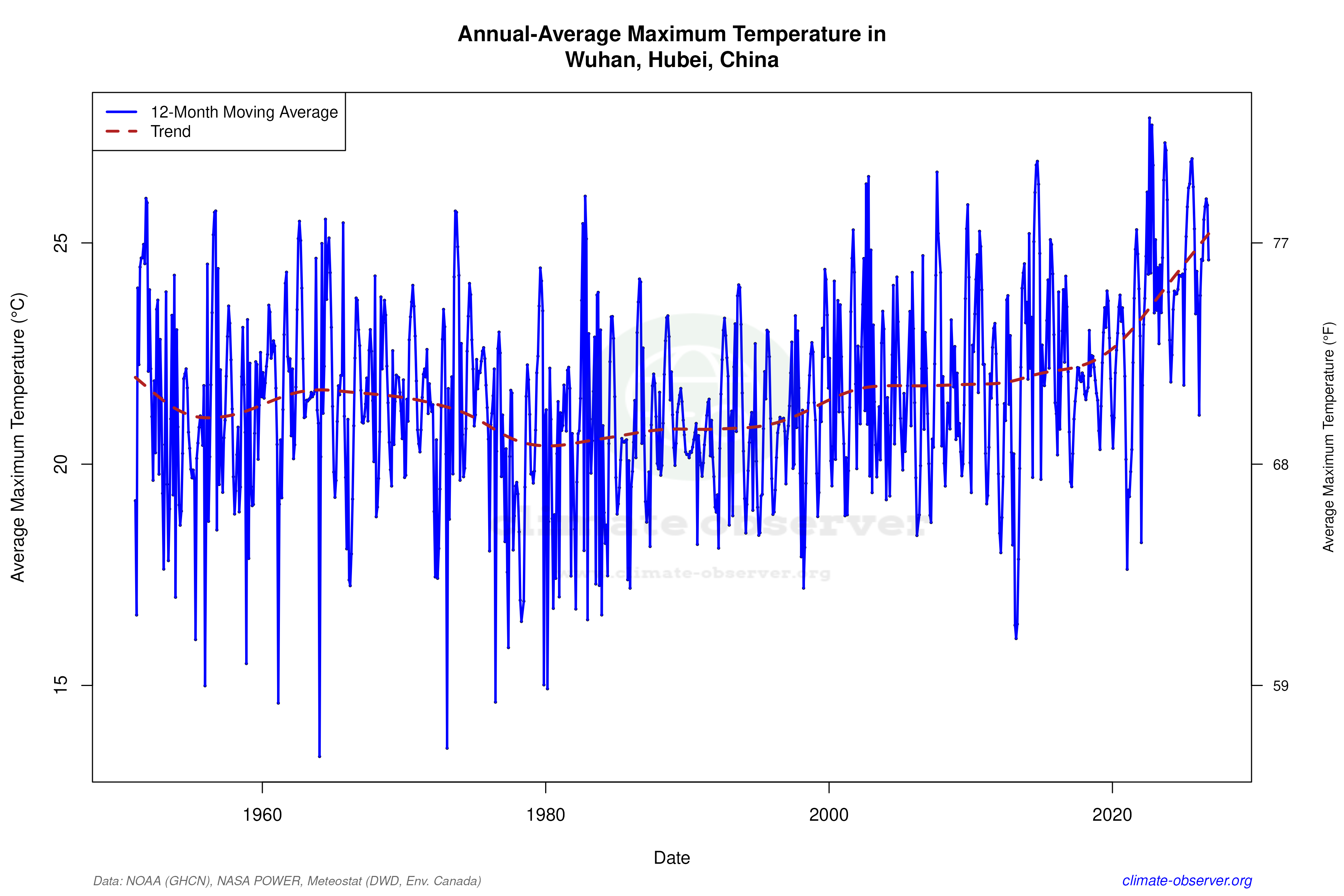
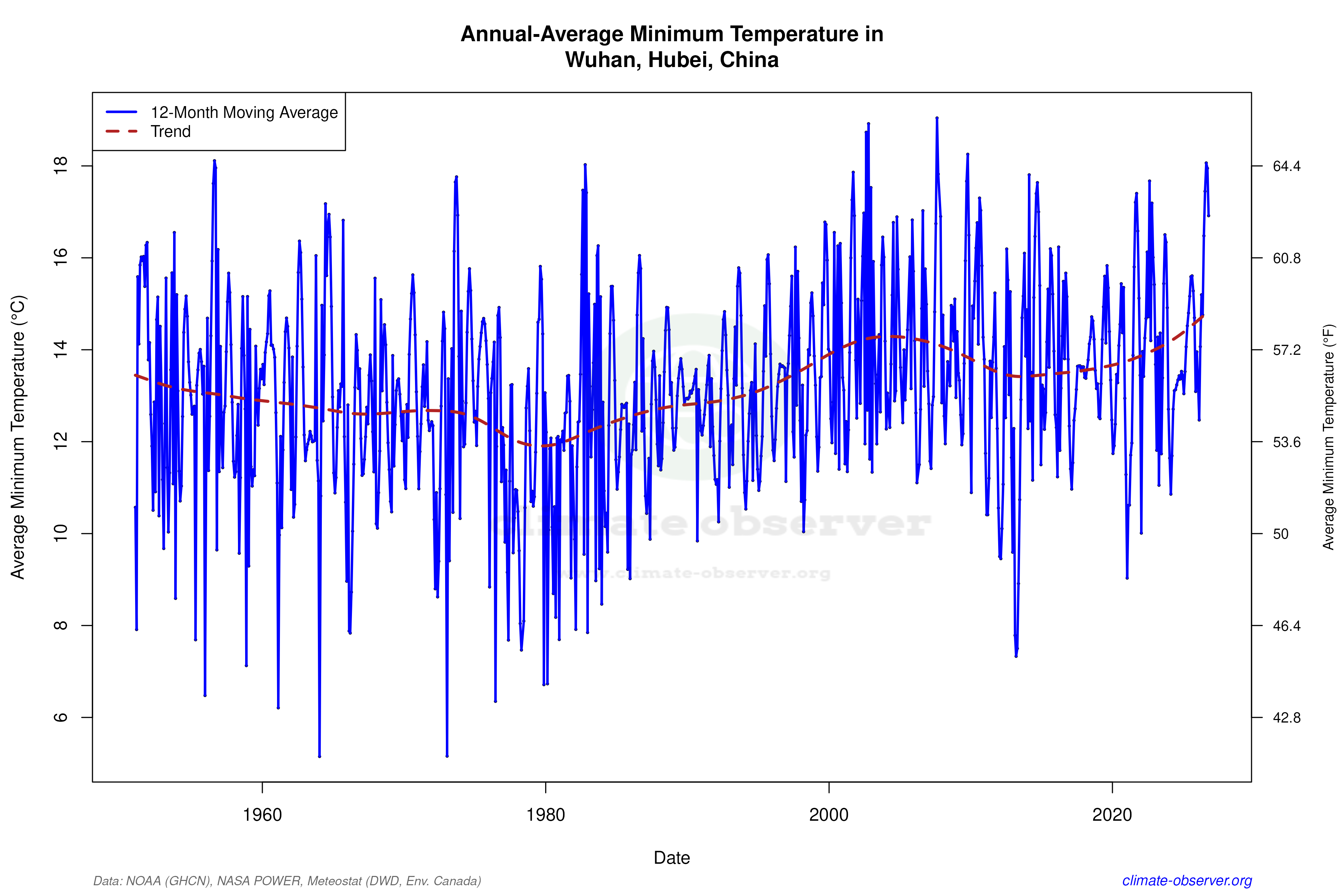
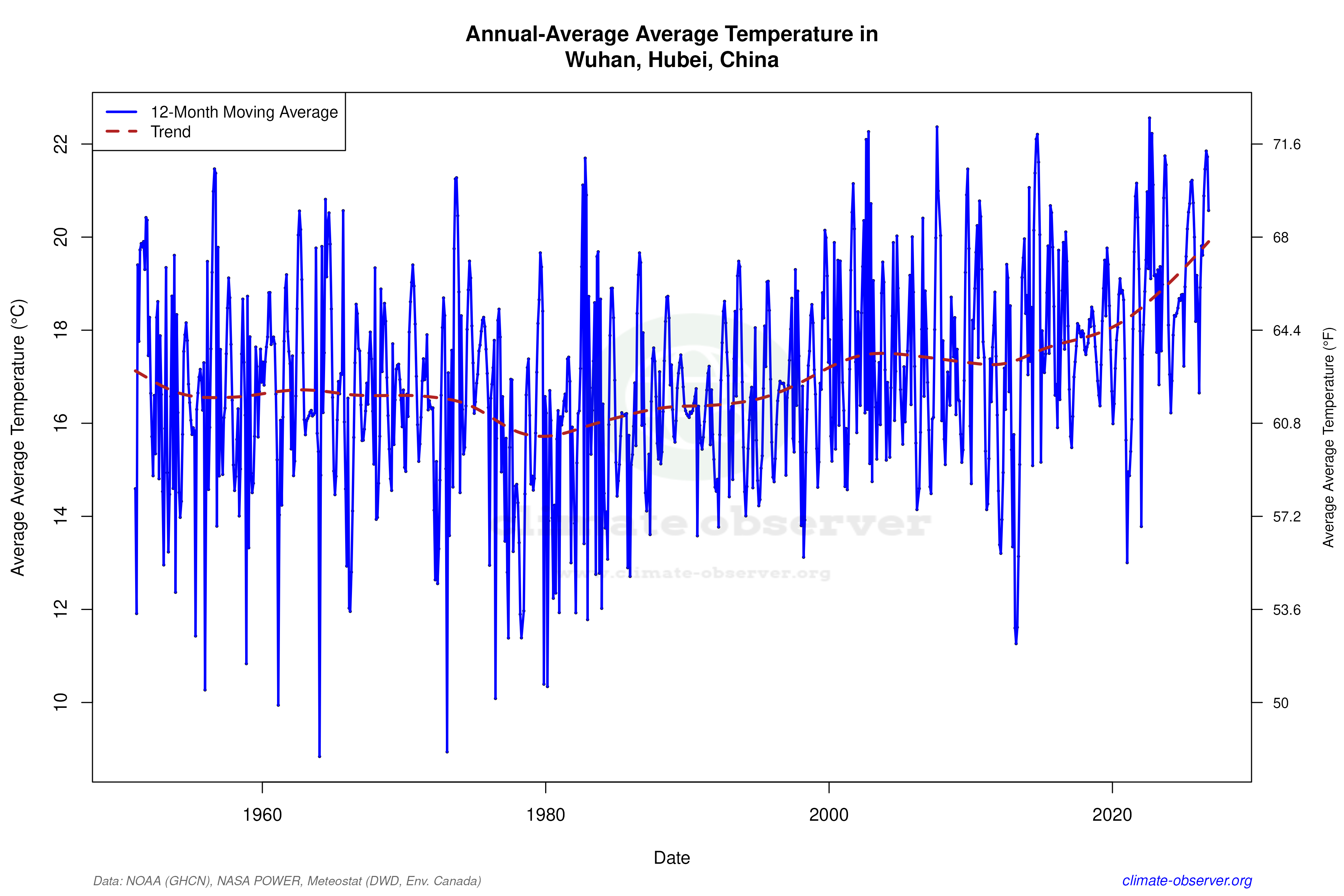
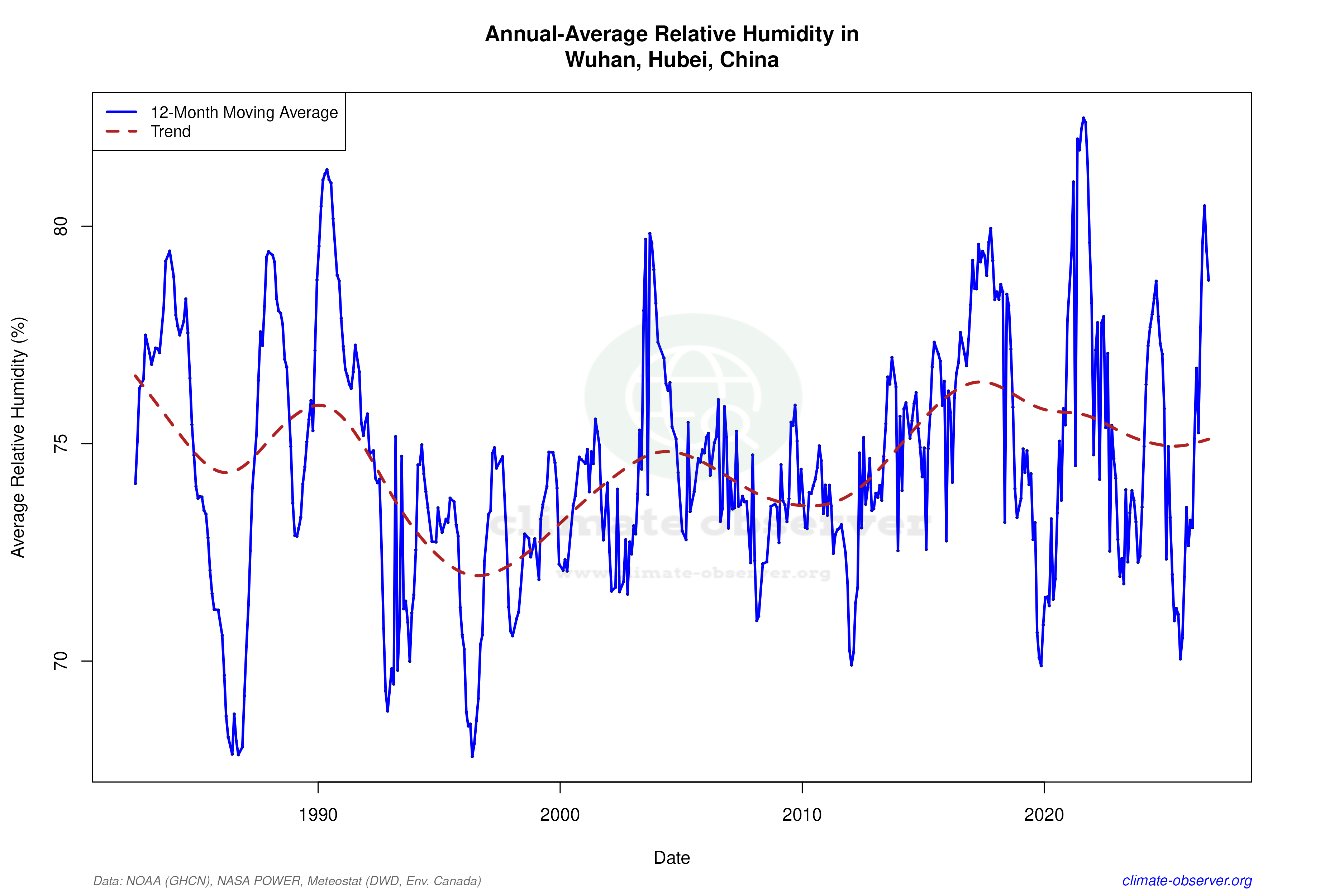

Max Temperature 12-Month MA | 1 of 6
Daily Data Points and Averages Throughout the Year
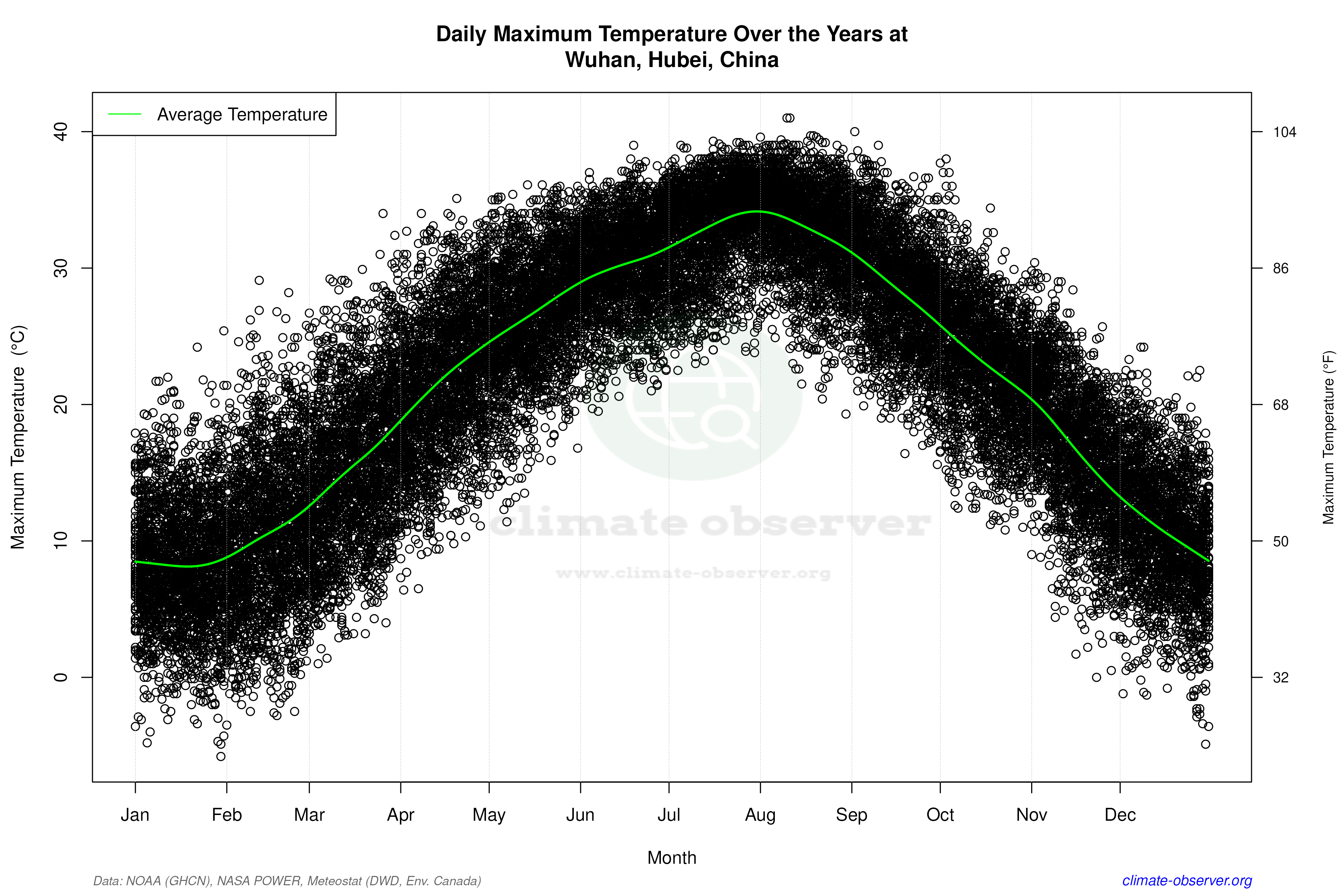
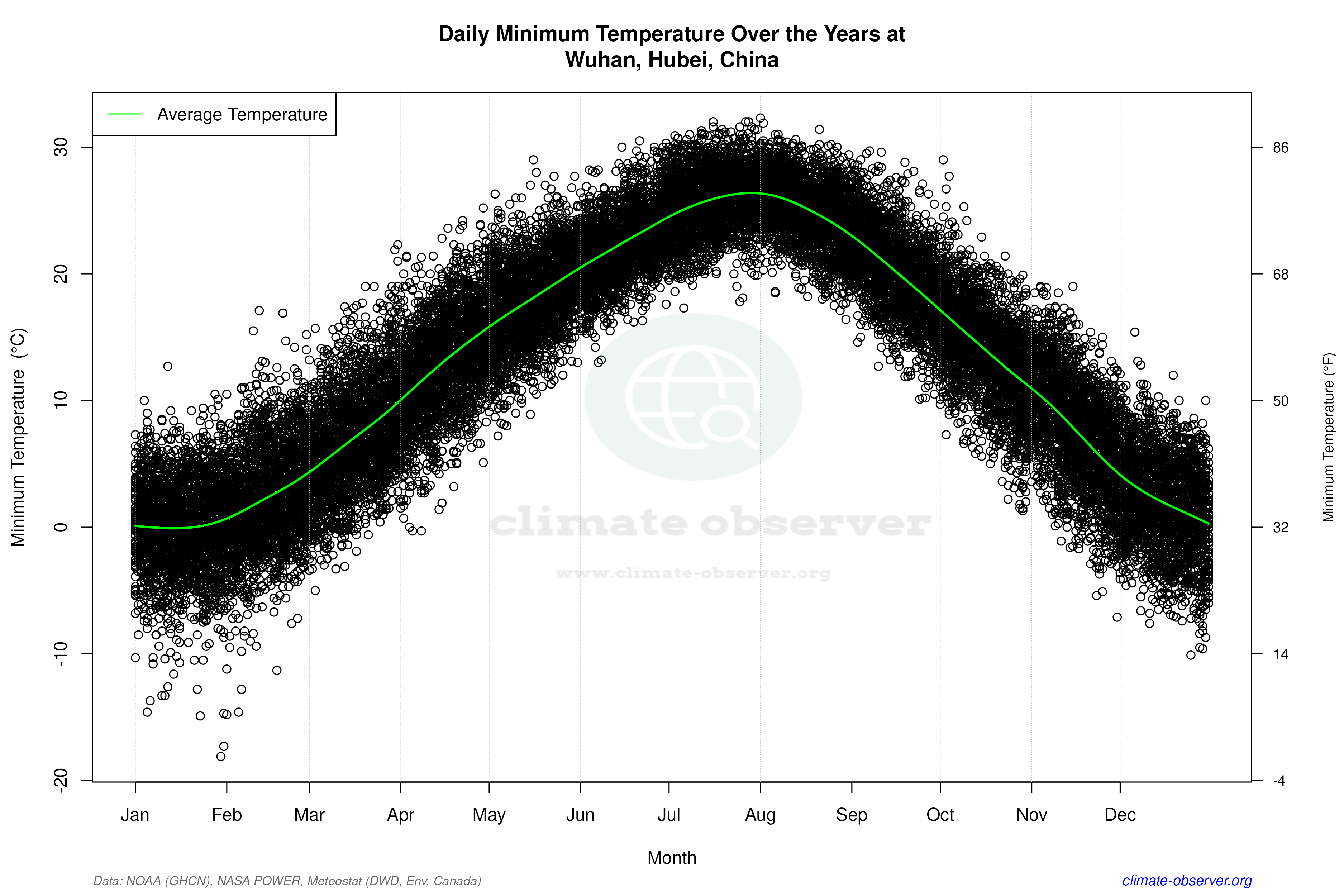
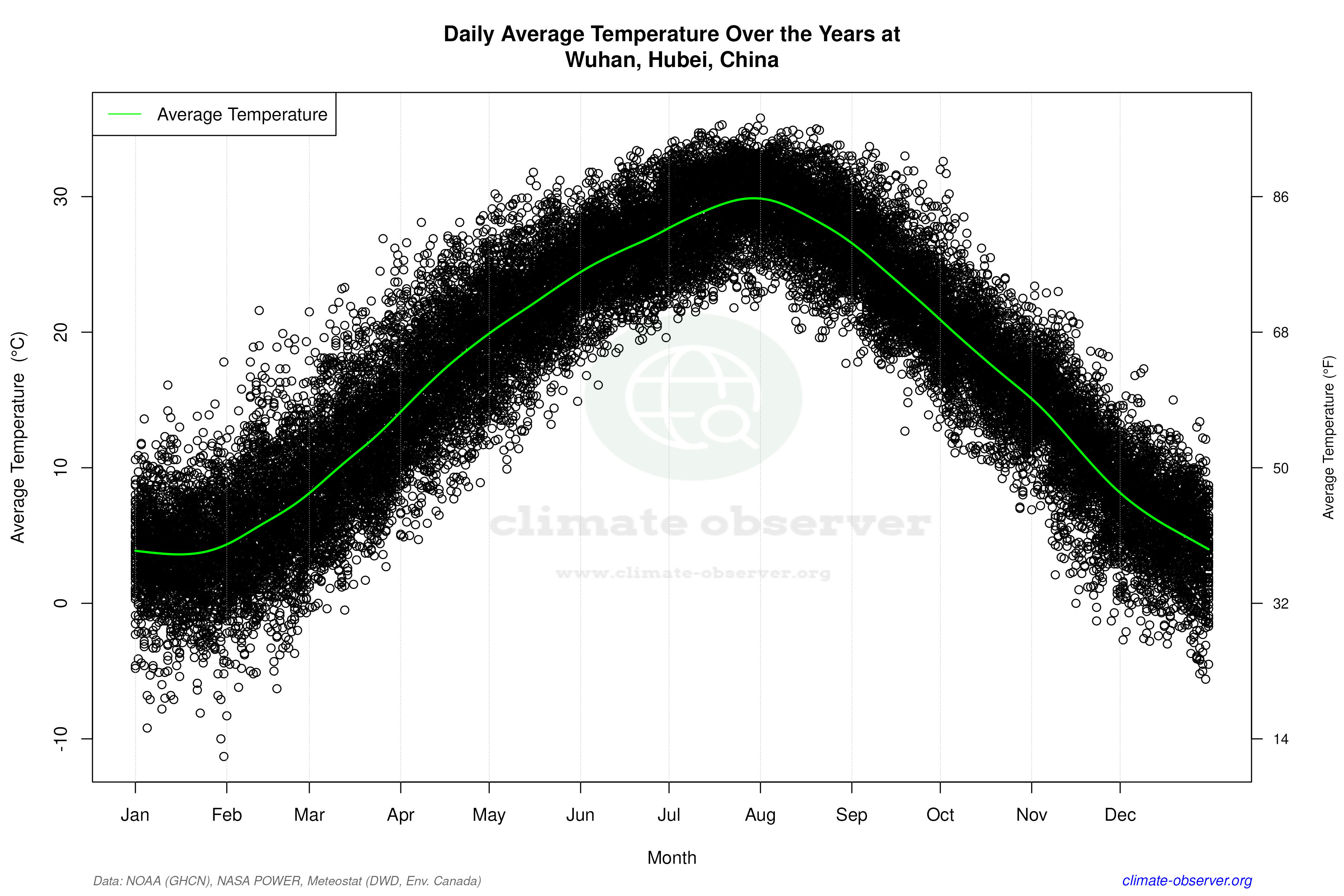
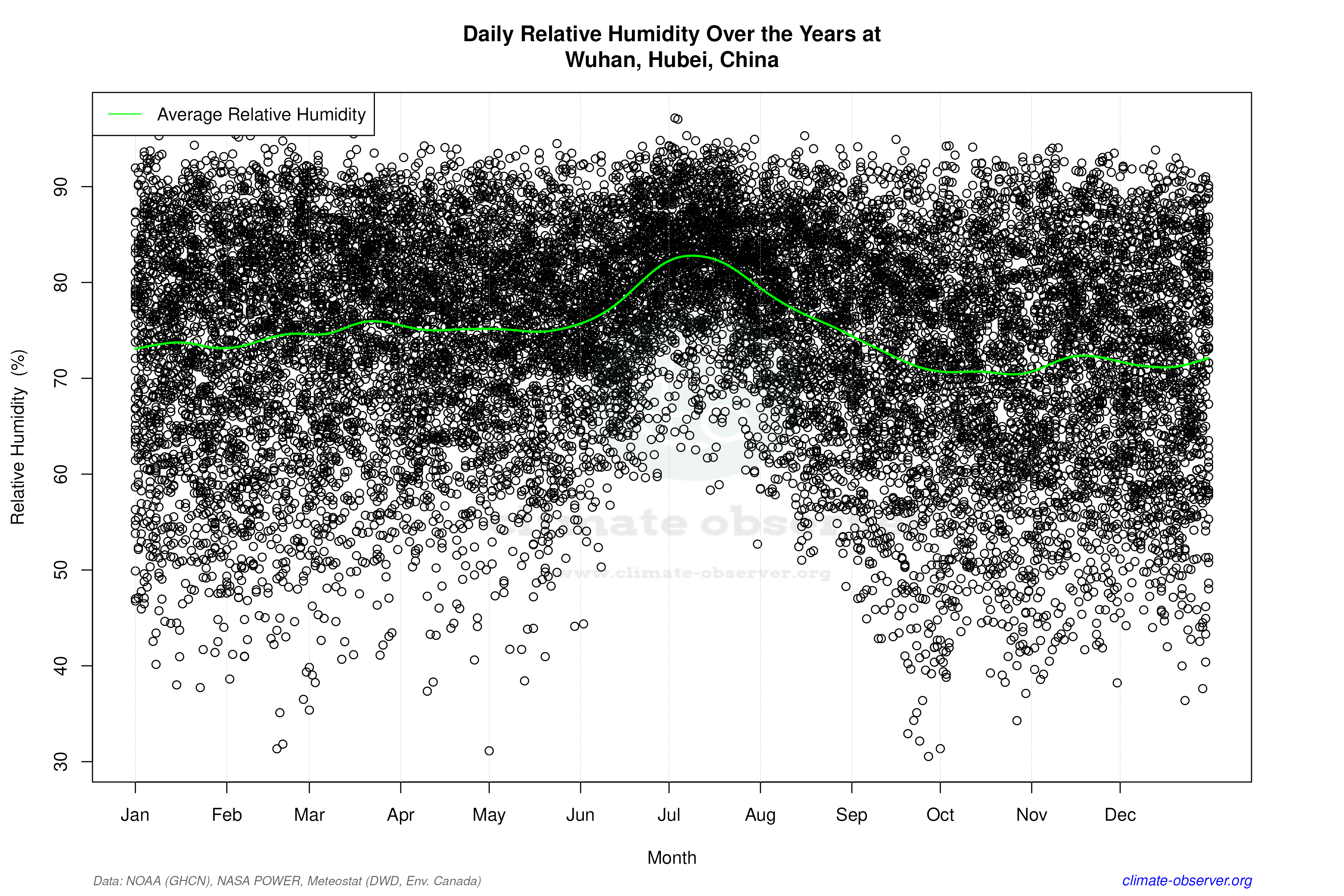

Average Max Temperature Throughout Year | 1 of 5


