Climate for Station: Lingling, Hunan, China
Loading live weather...
Climate Analysis & Overview
The climate of Lingling, located in the subtropical region of Hunan Province, China, is experiencing a warming trend, with significant increases in both high and low temperatures over the past decade. Precipitation has become more evenly distributed, which may have implications for local agriculture and water management.
Subtropical Warming Trends
Lingling, positioned at 26.233°N, 111.617°E, lies within a humid subtropical climate zone, characterised by hot summers and mild winters. Over the past decade, the region has seen a notable warming trend, with average high temperatures increasing by 4.63°C (8.33°F) and lows by 1.45°C (2.61°F). These changes are more pronounced than the all-time trends, which show a more modest warming of 0.12°C (0.22°F) for highs and 0.10°C (0.18°F) for lows. The disparity between the short-term and long-term trends suggests an acceleration in warming, which could be linked to regional climate dynamics or broader global patterns.
Temperature Extremes and Records
Lingling has recorded extreme temperatures with a maximum of 43.7°C (110.7°F) and a minimum of -8.6°C (16.5°F). These records highlight the potential for significant thermal variability within the region. Such extremes can challenge both infrastructure and public health, particularly during heatwaves or cold snaps. Understanding these extremes is crucial for preparedness and adaptation strategies.
Precipitation Patterns and Distribution
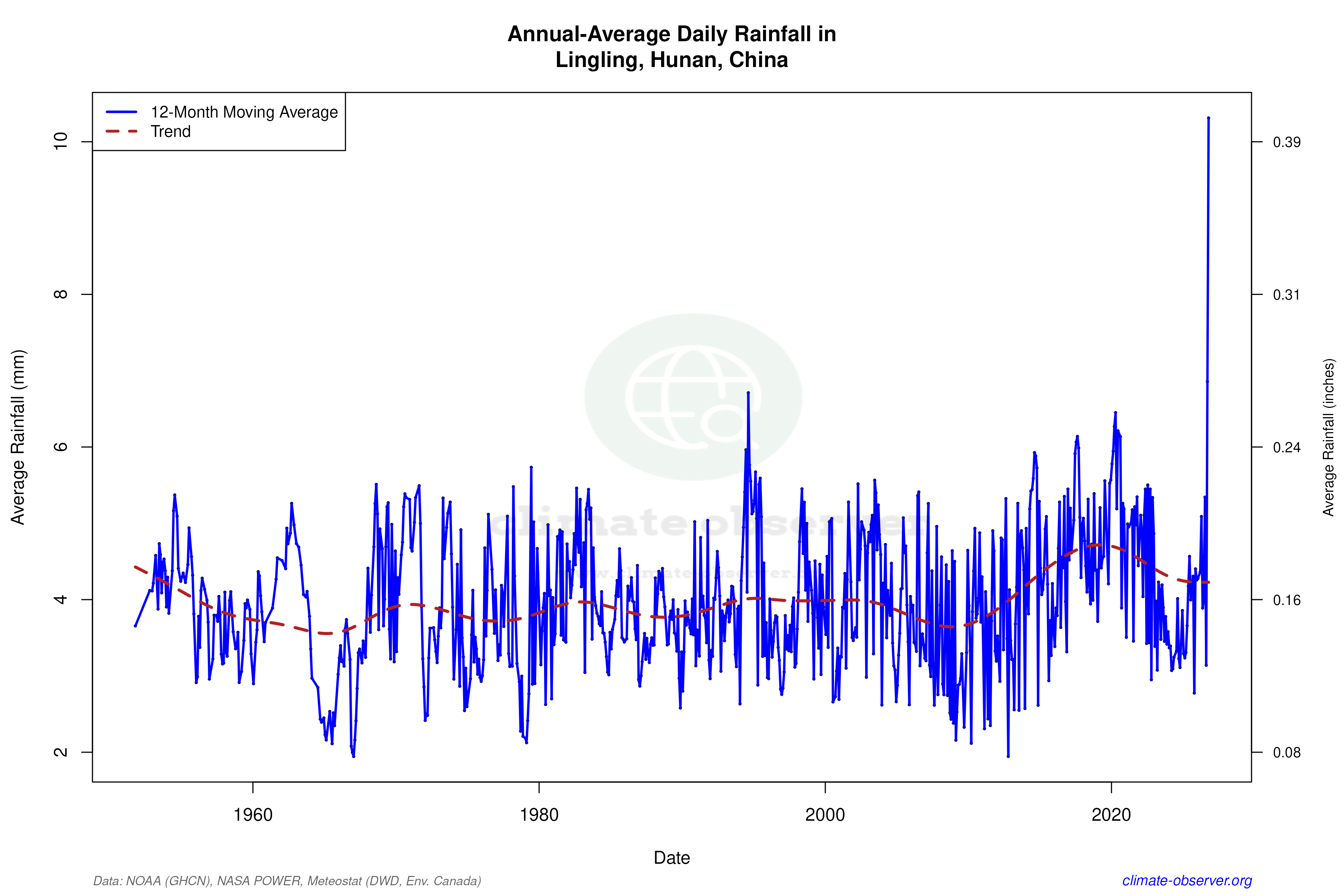
The Precipitation Concentration Index (PCI) for Lingling has shifted from a baseline of 12.8 to a current level of 11.7. This slight decrease indicates a trend towards more evenly distributed rainfall throughout the year. While the change is not dramatic, it suggests a potential reduction in the intensity of individual rainfall events, which could mitigate flood risks and benefit agricultural practices by providing more consistent water availability.
Geographical Influences and Climate Impacts
Lingling's climate is influenced by its geographical setting, with proximity to the Nanling Mountains and the Xiang River playing a role in local weather patterns. These features can enhance precipitation and modulate temperature extremes. The recent trends in temperature and precipitation distribution may affect regional agricultural outputs, water resource management, and align with China's broader climate goals of reducing vulnerability to climate change impacts.
Regional Climate Context
The observed warming and precipitation changes in Lingling are part of a larger pattern seen across China, where efforts are underway to mitigate climate change impacts. The country's commitment to reducing greenhouse gas emissions and enhancing resilience to climate variability is vital for regions like Lingling, which face both environmental and socio-economic challenges due to climate dynamics.
Station Statistics
10-Year Trend
High: +2.80 °F/decade
Low: -1.21 °F/decade
Rain: -0.040 in/decade
25-Year Trend
High: +1.13 °F/decade
Low: +0.06 °F/decade
Rain: +0.012 in/decade
50-Year Trend
High: +0.78 °F/decade
Low: +0.27 °F/decade
Rain: +0.005 in/decade
All-Time Trend
High: +0.12 °F/decade
Low: +0.07 °F/decade
Rain: +0.003 in/decade
Percentage Above-Average Days
Last 12 Months: 55.6%
This Year: 49.0%
Precipitation Concentration Index (PCI) ℹ️
Last 12 Months: 14.5
Historical Average: 12.3
Percentile Rank of Last 12 Months ℹ️
High: 86th percentile
Low: 68th percentile
Rain: 87th percentile
Change in Variance ℹ️
High: -10.1%
Low: +1.7%
Intraday: +5.6%
Data Coverage
91.2%
First Year of Data
1943
Station Location
Historical Weather Records
| Max High | Avg High | Min High | Max Avg | Avg Avg | Min Avg | Max Low | Avg Low | Min Low | Max Precipitation | Avg Precipitation | Max Snow | Avg Snow | |
|---|---|---|---|---|---|---|---|---|---|---|---|---|---|
| Record | 110.66 °F | — | 23.72 °F | 93.92 °F | — | 21.74 °F | 85.64 °F | — | 16.52 °F | 21.27 in | — | — | — |
| January | 80.96 °F | 49.33 °F | 23.72 °F | 70.52 °F | 43.23 °F | 21.74 °F | 66.20 °F | 38.34 °F | 16.52 °F | 2.07 in | 0.09 in | — | — |
| February | 88.88 °F | 52.32 °F | 28.22 °F | 77.72 °F | 46.25 °F | 23.90 °F | 71.96 °F | 41.52 °F | 19.40 °F | 2.30 in | 0.14 in | — | — |
| March | 96.26 °F | 61.14 °F | 34.88 °F | 84.74 °F | 54.18 °F | 33.26 °F | 76.46 °F | 48.94 °F | 31.82 °F | 3.10 in | 0.19 in | — | — |
| April | 96.98 °F | 72.11 °F | 43.34 °F | 86.90 °F | 64.51 °F | 40.82 °F | 80.78 °F | 58.71 °F | 38.66 °F | 3.36 in | 0.26 in | — | — |
| May | 102.92 °F | 80.25 °F | 53.42 °F | 88.88 °F | 72.60 °F | 50.54 °F | 84.38 °F | 66.69 °F | 48.56 °F | 4.84 in | 0.29 in | — | — |
| June | 104.00 °F | 86.59 °F | 64.94 °F | 89.96 °F | 79.20 °F | 60.80 °F | 84.02 °F | 73.55 °F | 57.02 °F | 4.69 in | 0.23 in | — | — |
| July | 107.42 °F | 92.63 °F | 72.68 °F | 93.92 °F | 84.32 °F | 68.00 °F | 85.64 °F | 77.98 °F | 64.65 °F | 7.67 in | 0.15 in | — | — |
| August | 110.66 °F | 91.39 °F | 70.52 °F | 92.66 °F | 82.79 °F | 68.90 °F | 84.92 °F | 76.38 °F | 60.87 °F | 4.32 in | 0.18 in | — | — |
| September | 102.92 °F | 84.74 °F | 59.72 °F | 90.68 °F | 76.63 °F | 57.56 °F | 82.40 °F | 70.36 °F | 53.19 °F | 21.27 in | 0.09 in | — | — |
| October | 102.02 °F | 75.05 °F | 50.72 °F | 89.24 °F | 66.88 °F | 47.66 °F | 80.96 °F | 60.64 °F | 40.10 °F | 13.79 in | 0.10 in | — | — |
| November | 92.66 °F | 64.49 °F | 34.00 °F | 81.32 °F | 56.91 °F | 32.54 °F | 76.28 °F | 50.99 °F | 27.86 °F | 3.08 in | 0.11 in | — | — |
| December | 83.84 °F | 54.26 °F | 26.96 °F | 73.94 °F | 47.25 °F | 25.34 °F | 71.96 °F | 41.48 °F | 22.64 °F | 1.87 in | 0.07 in | — | — |
Data Visualisations
Remove WatermarksCurrent Year Climate Trends vs Historical
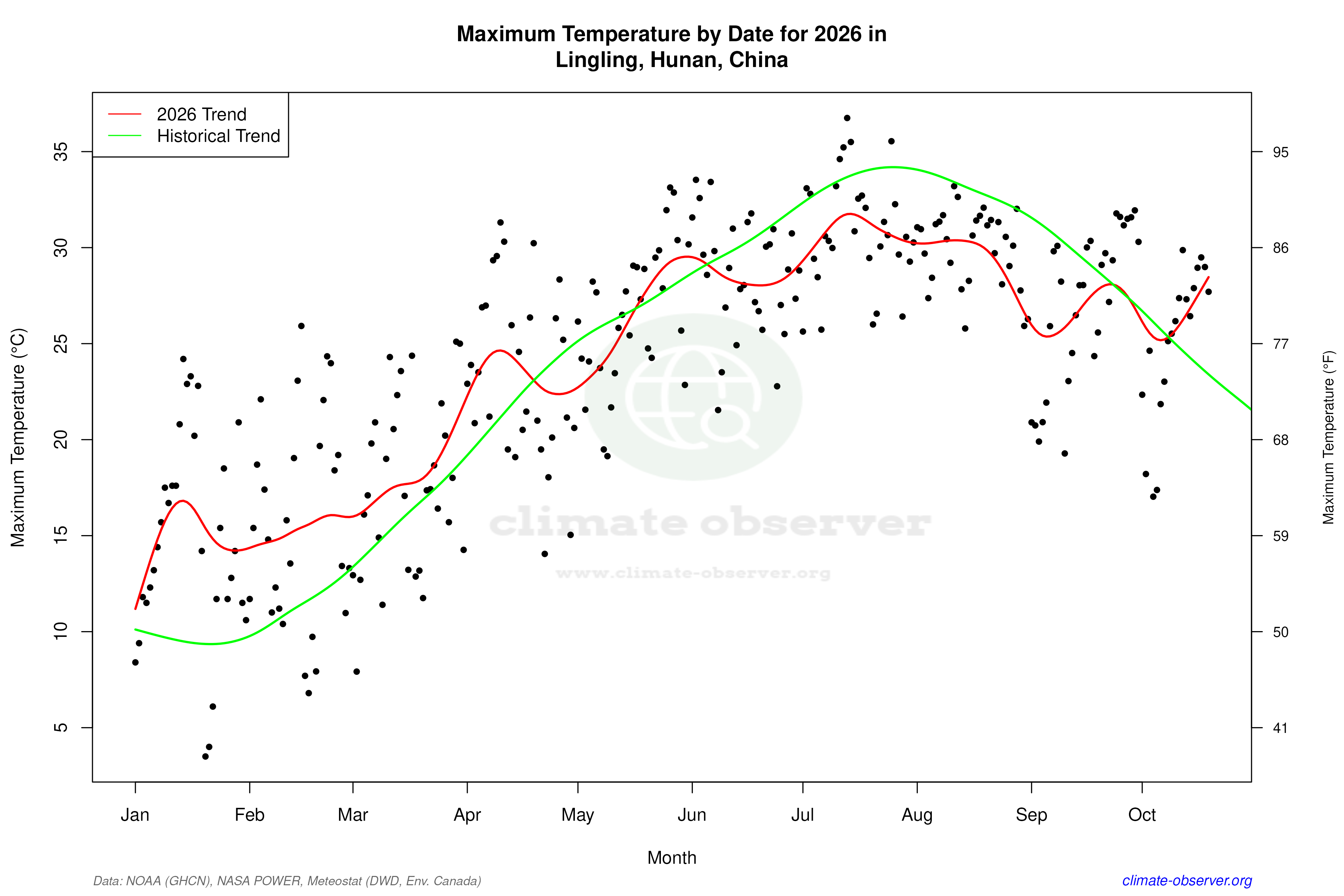
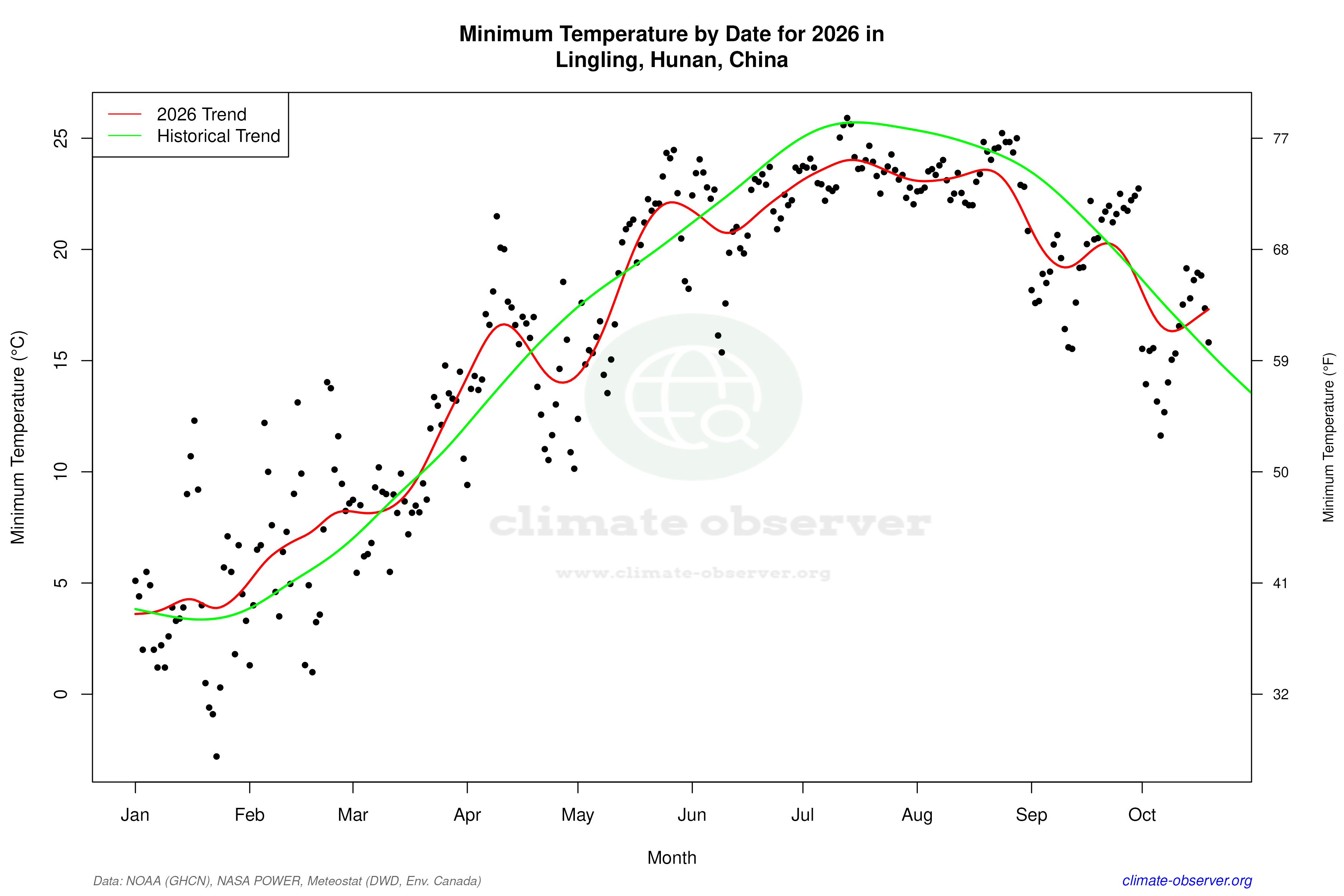
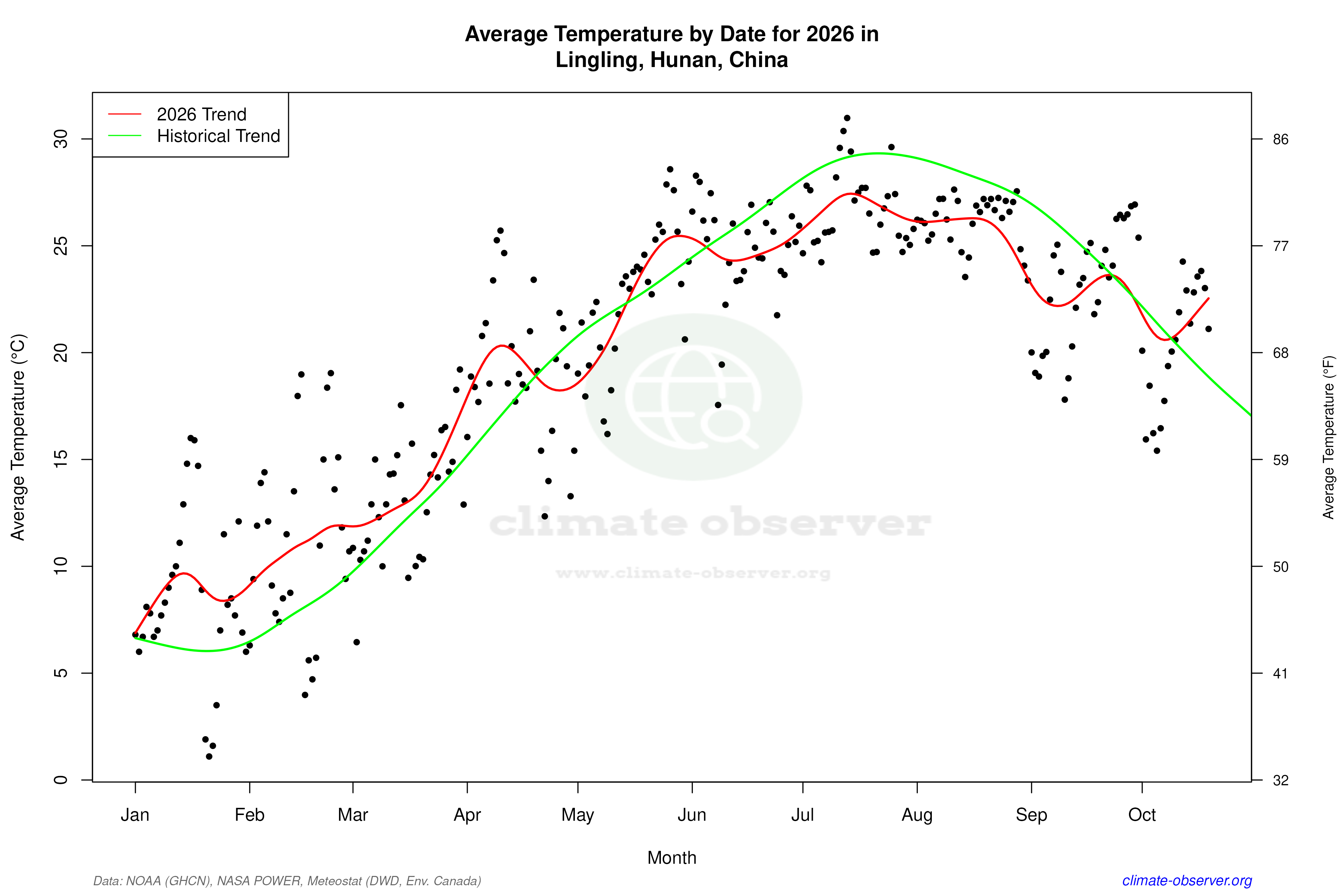
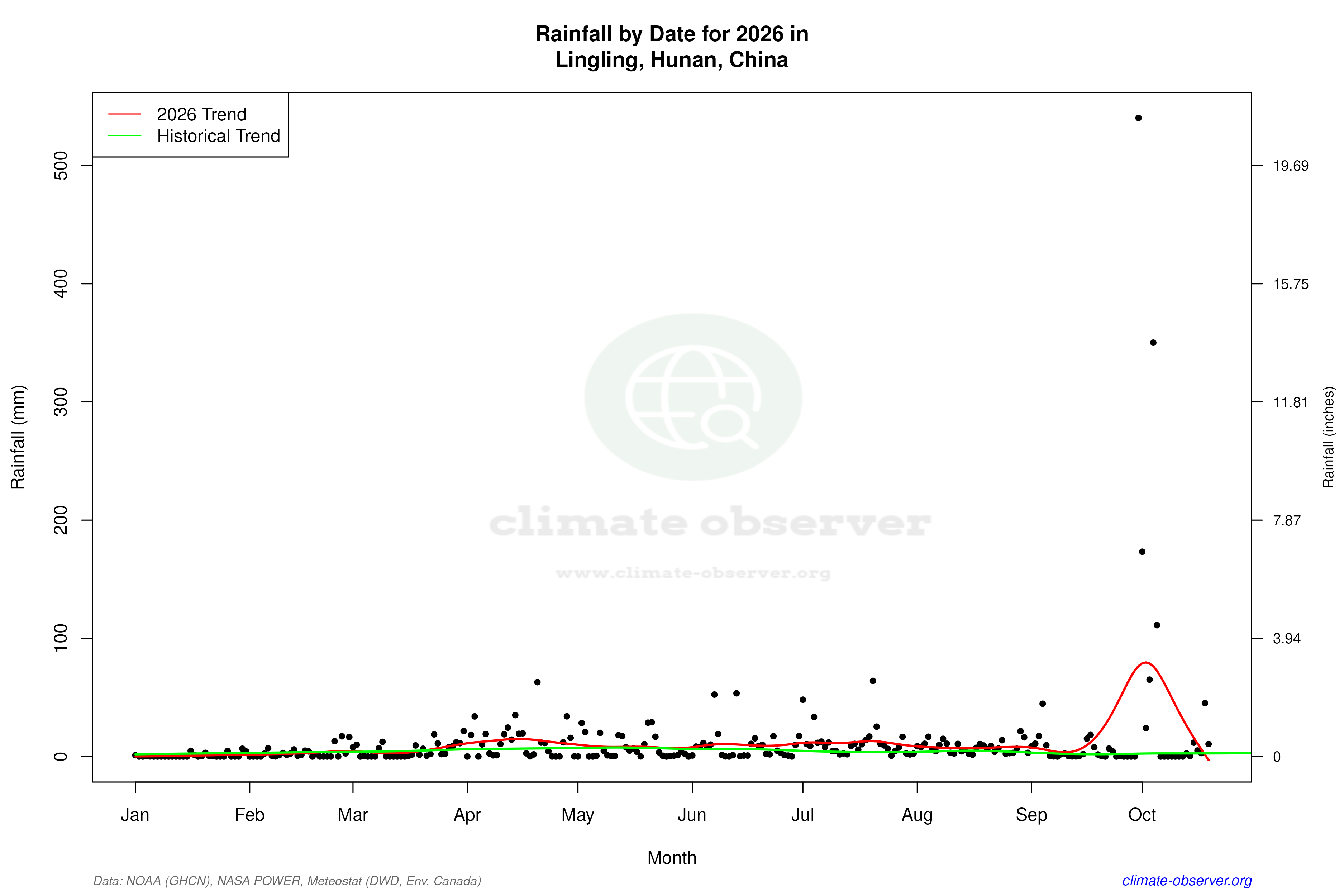
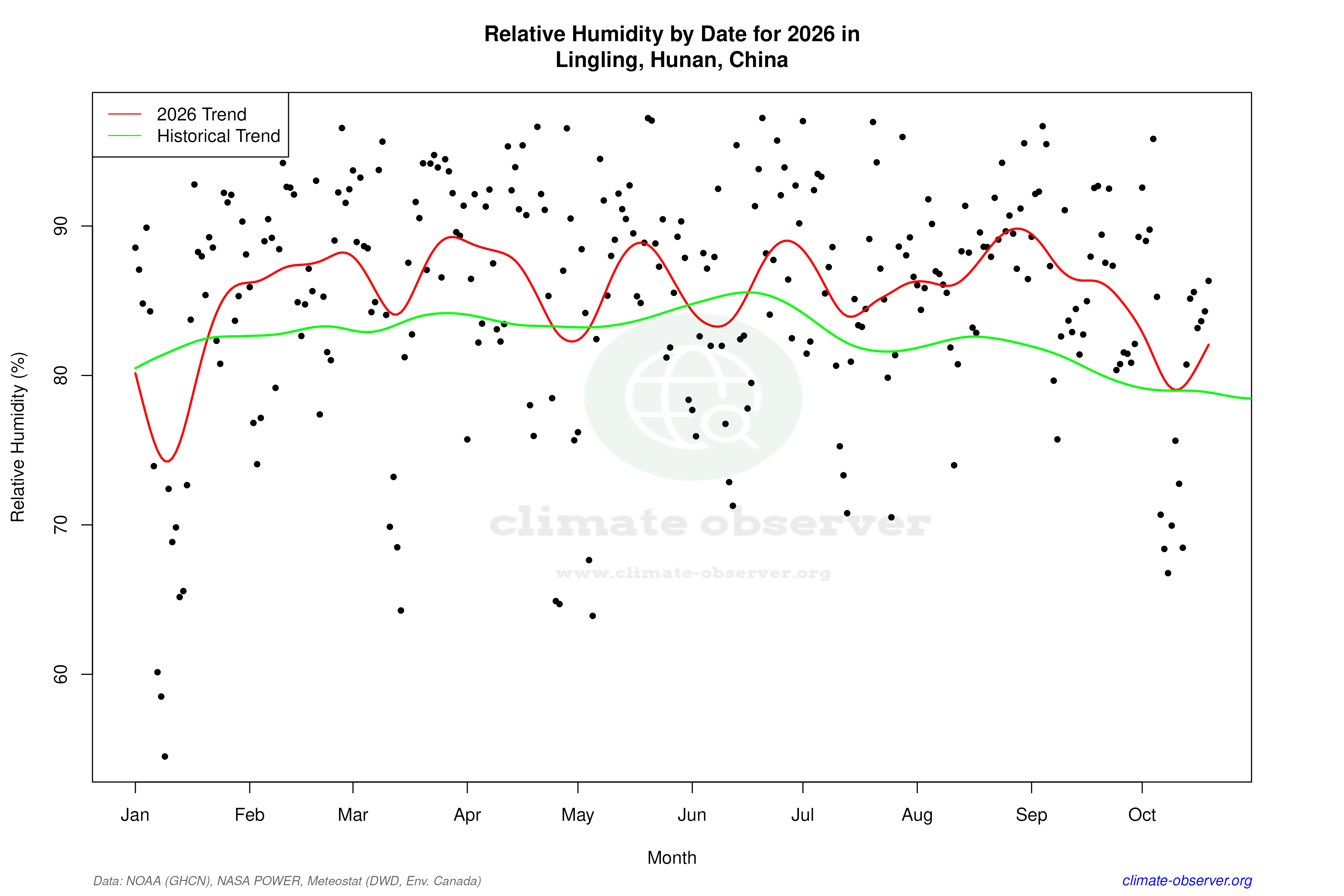

Max Temperature this Year | 1 of 6
Climate 12-Month Moving Averages
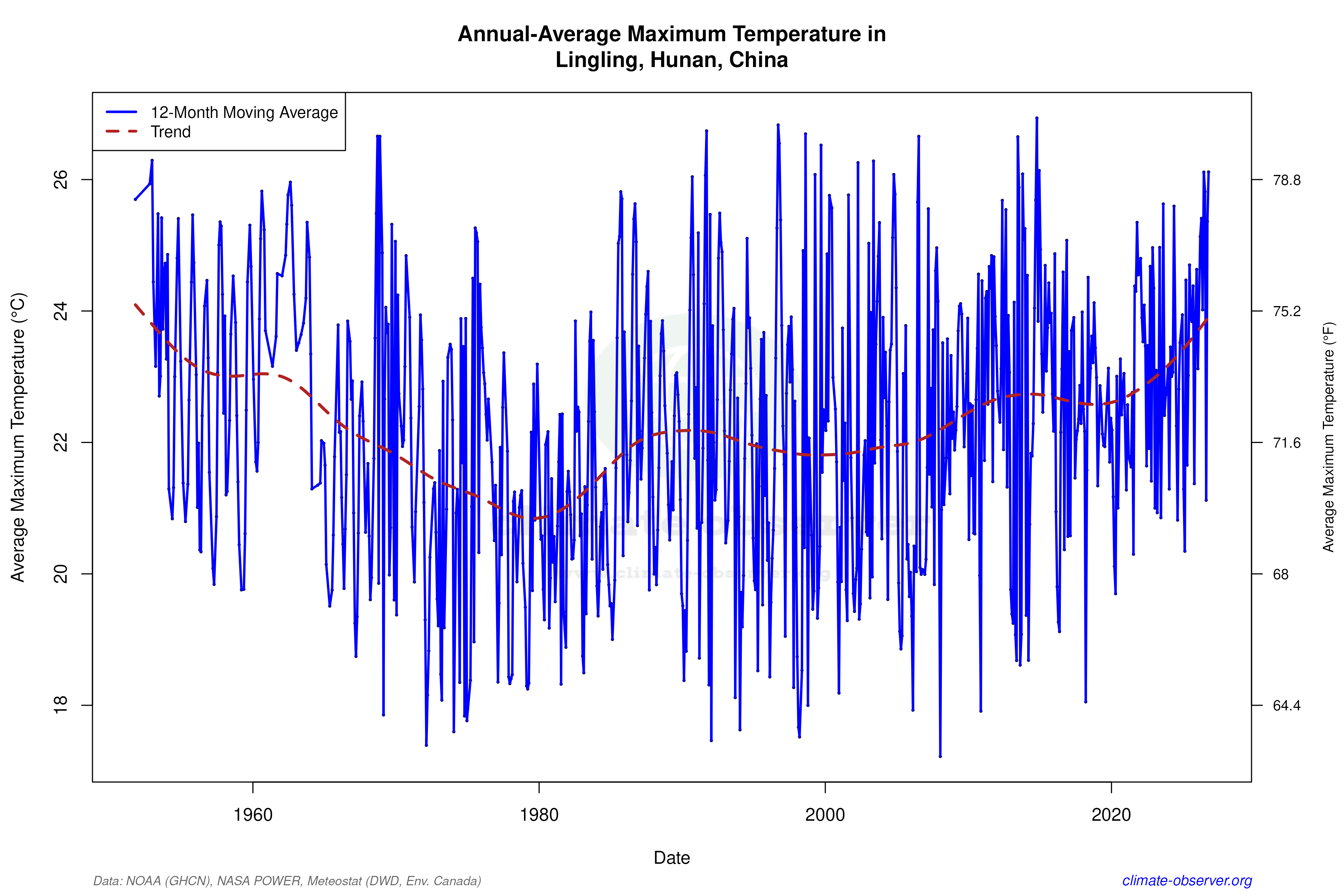
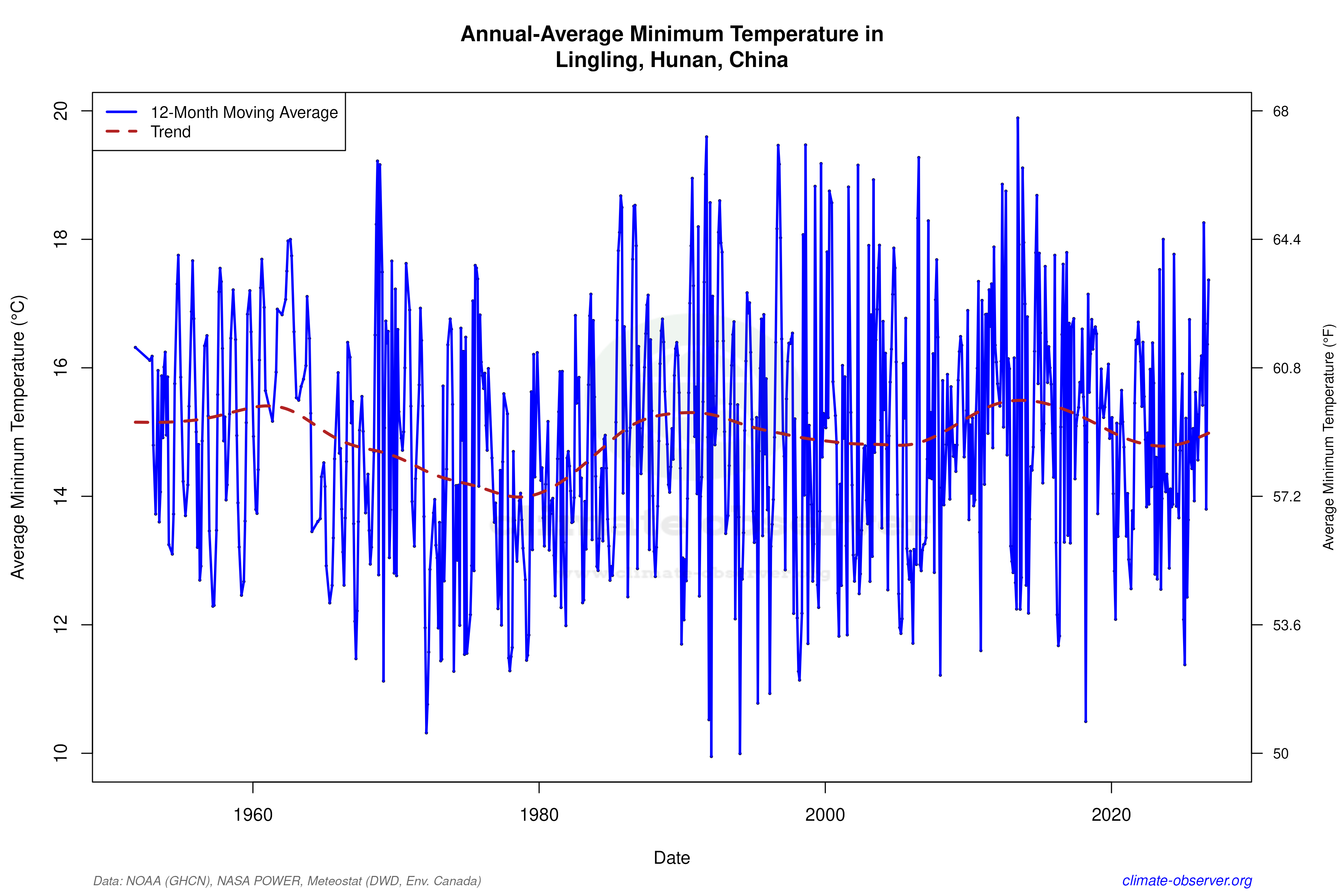
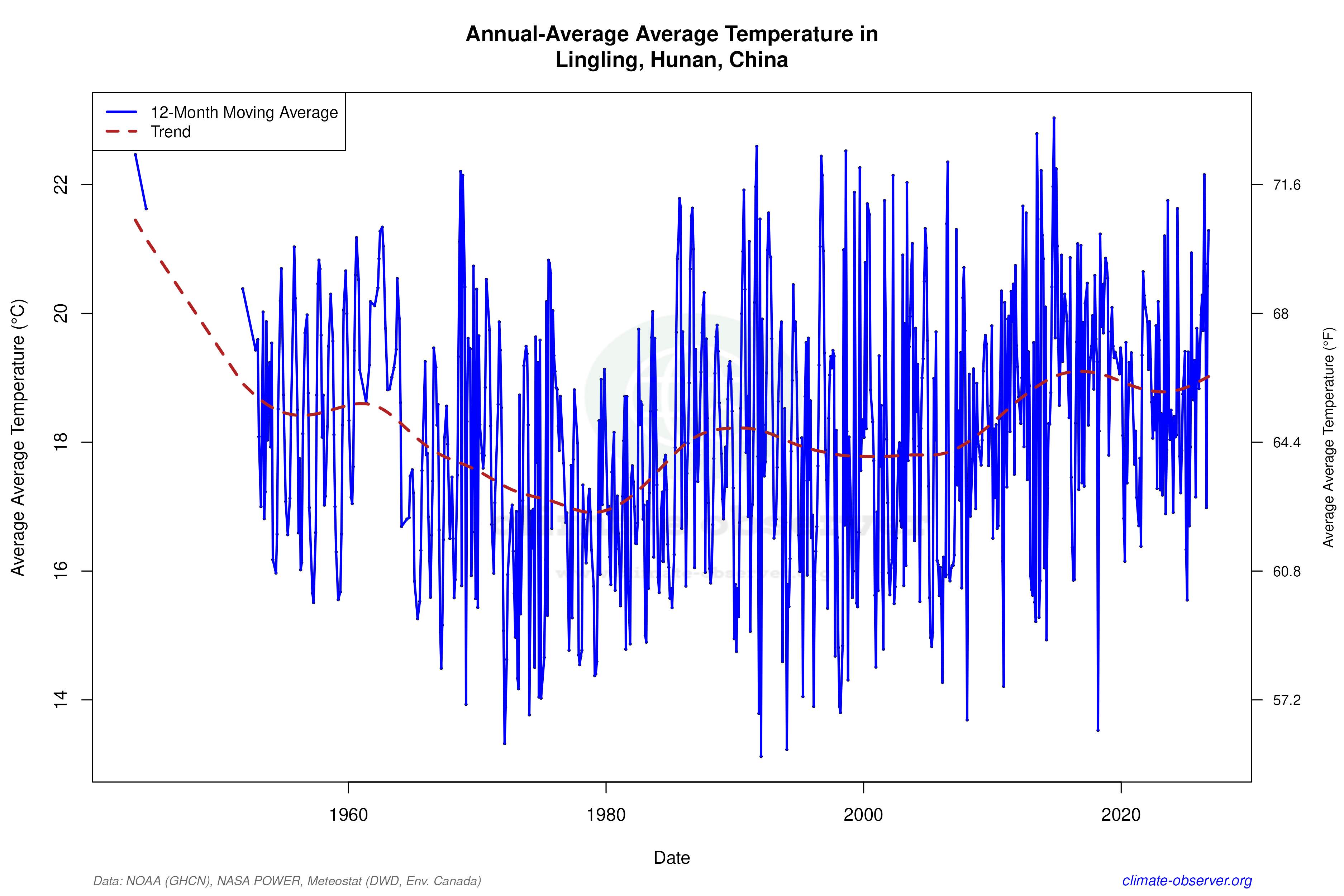
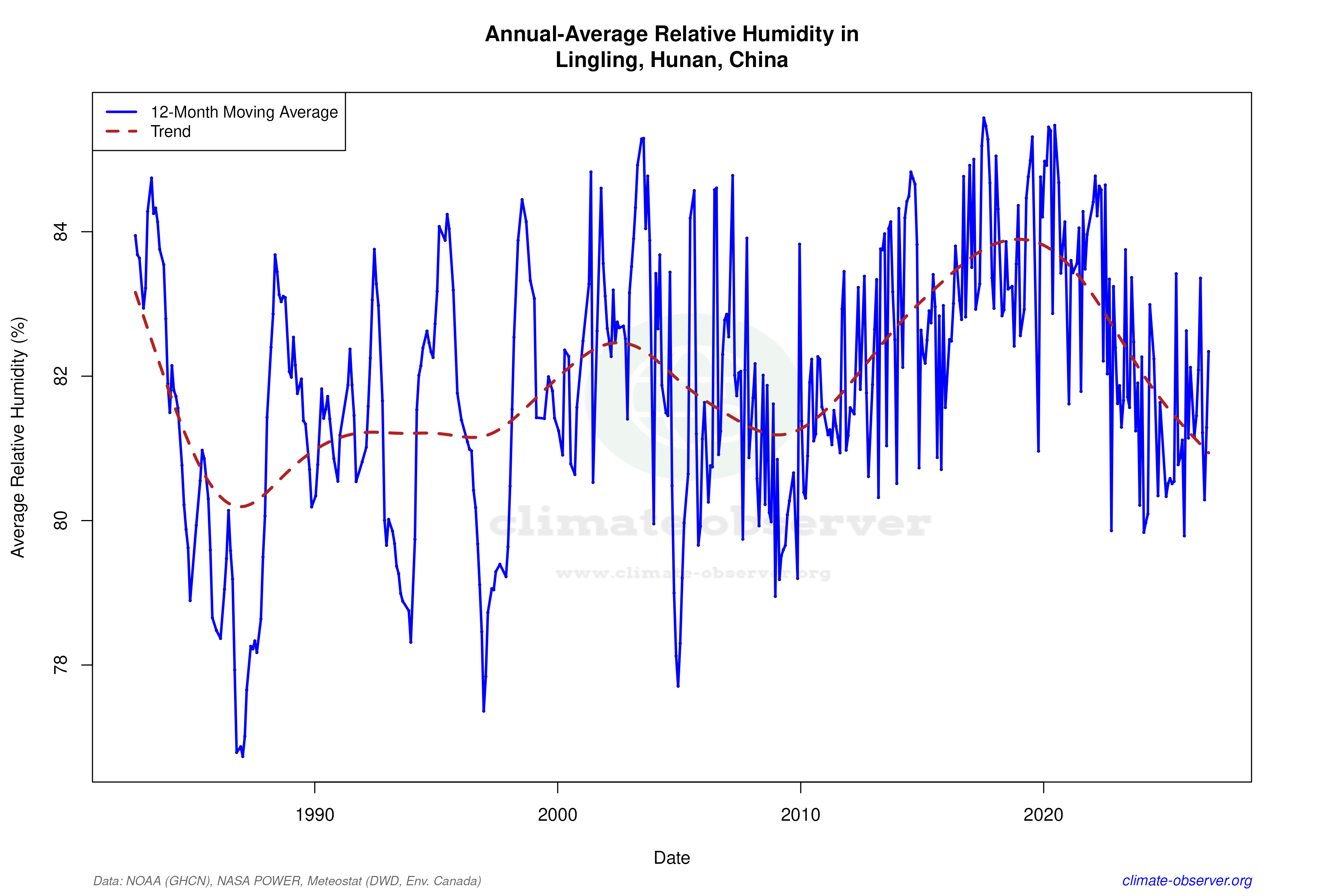

Max Temperature 12-Month MA | 1 of 6
Daily Data Points and Averages Throughout the Year
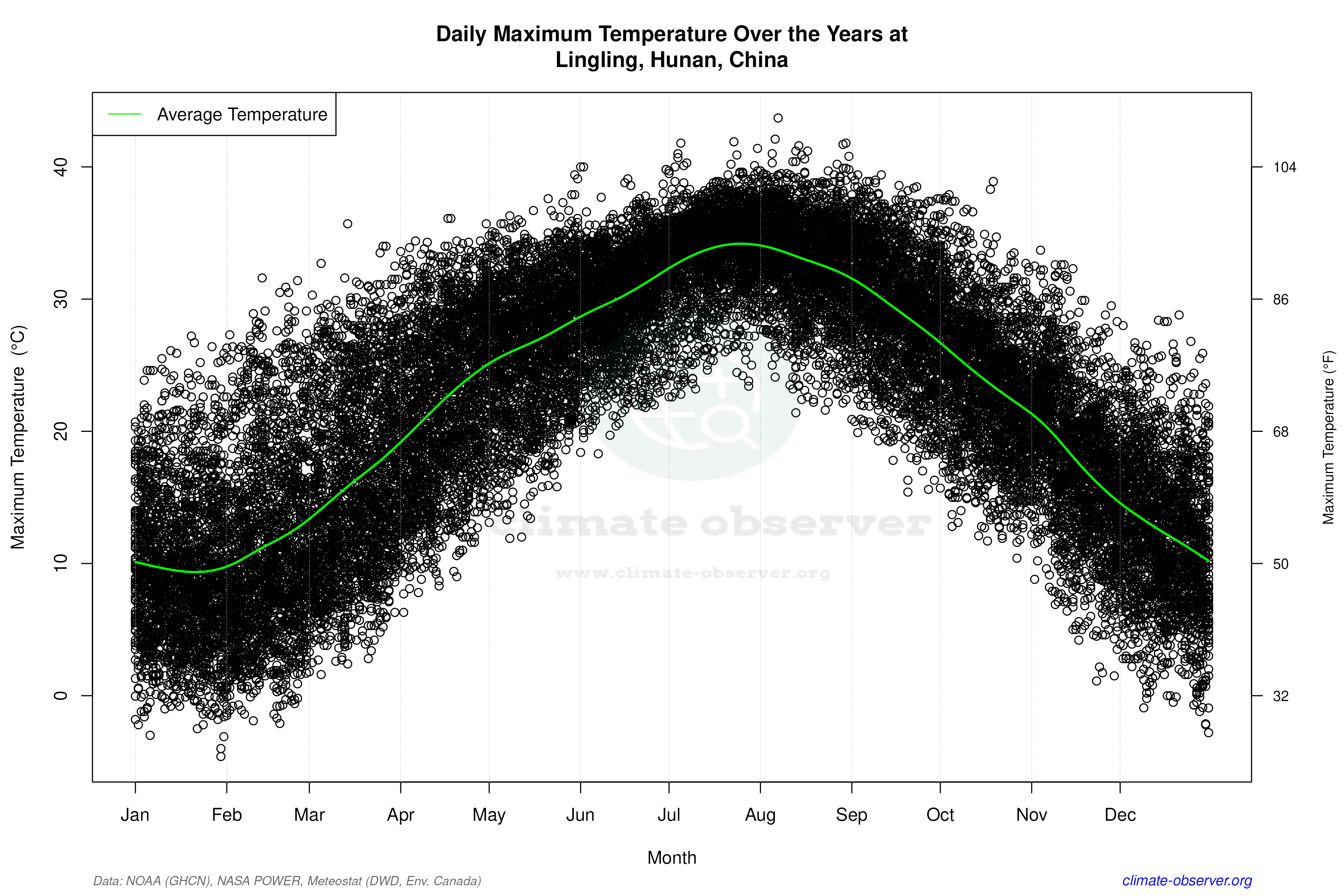
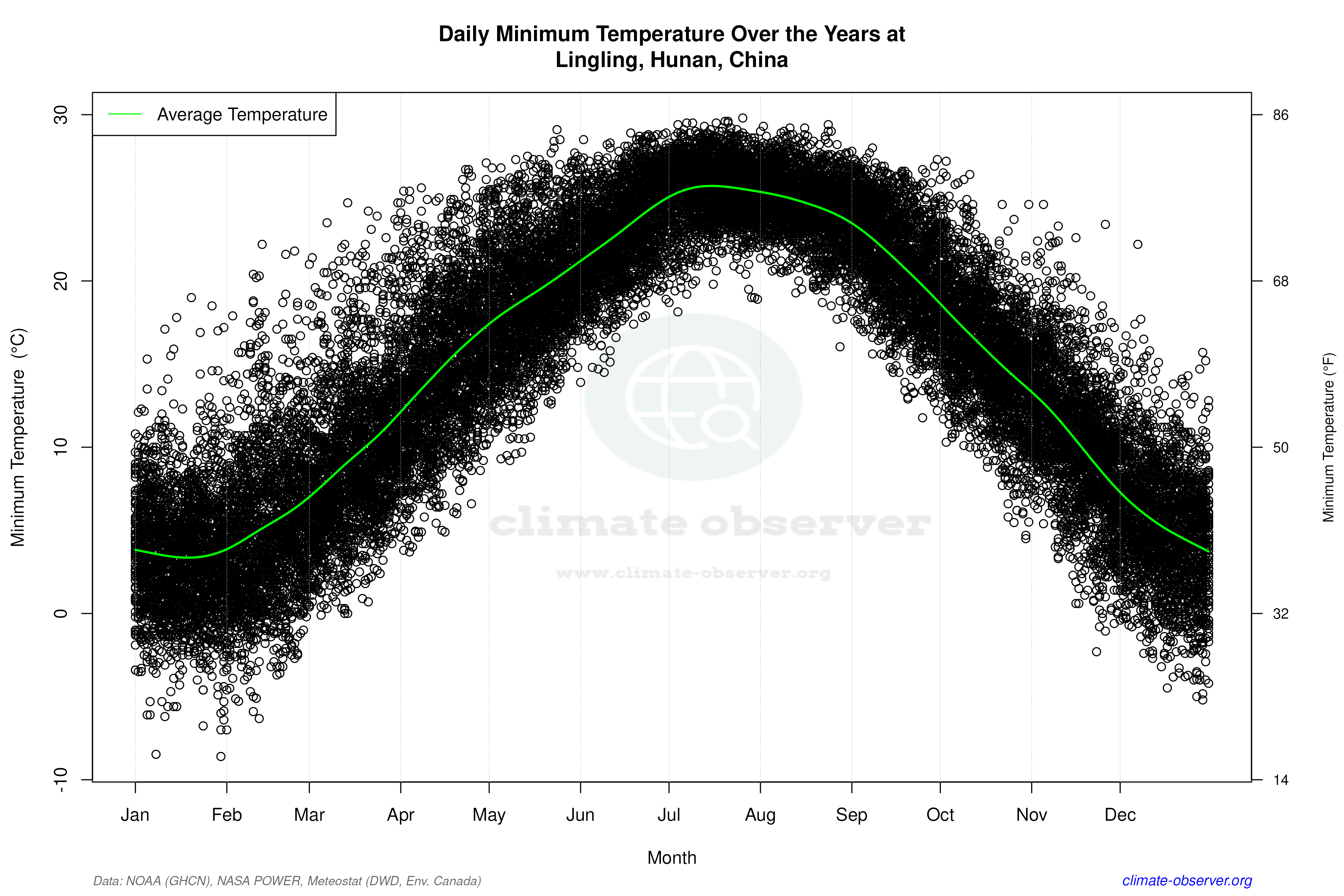
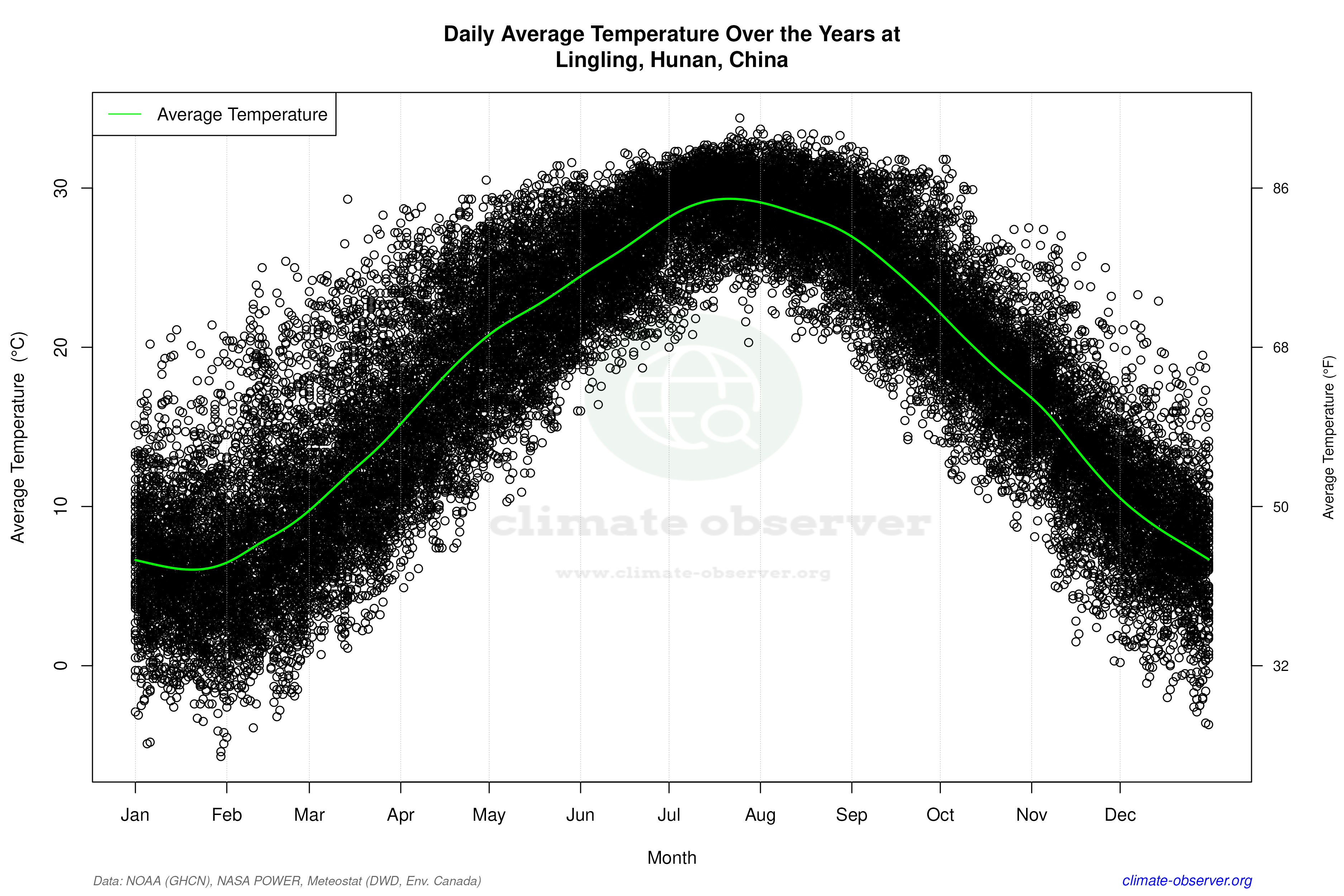
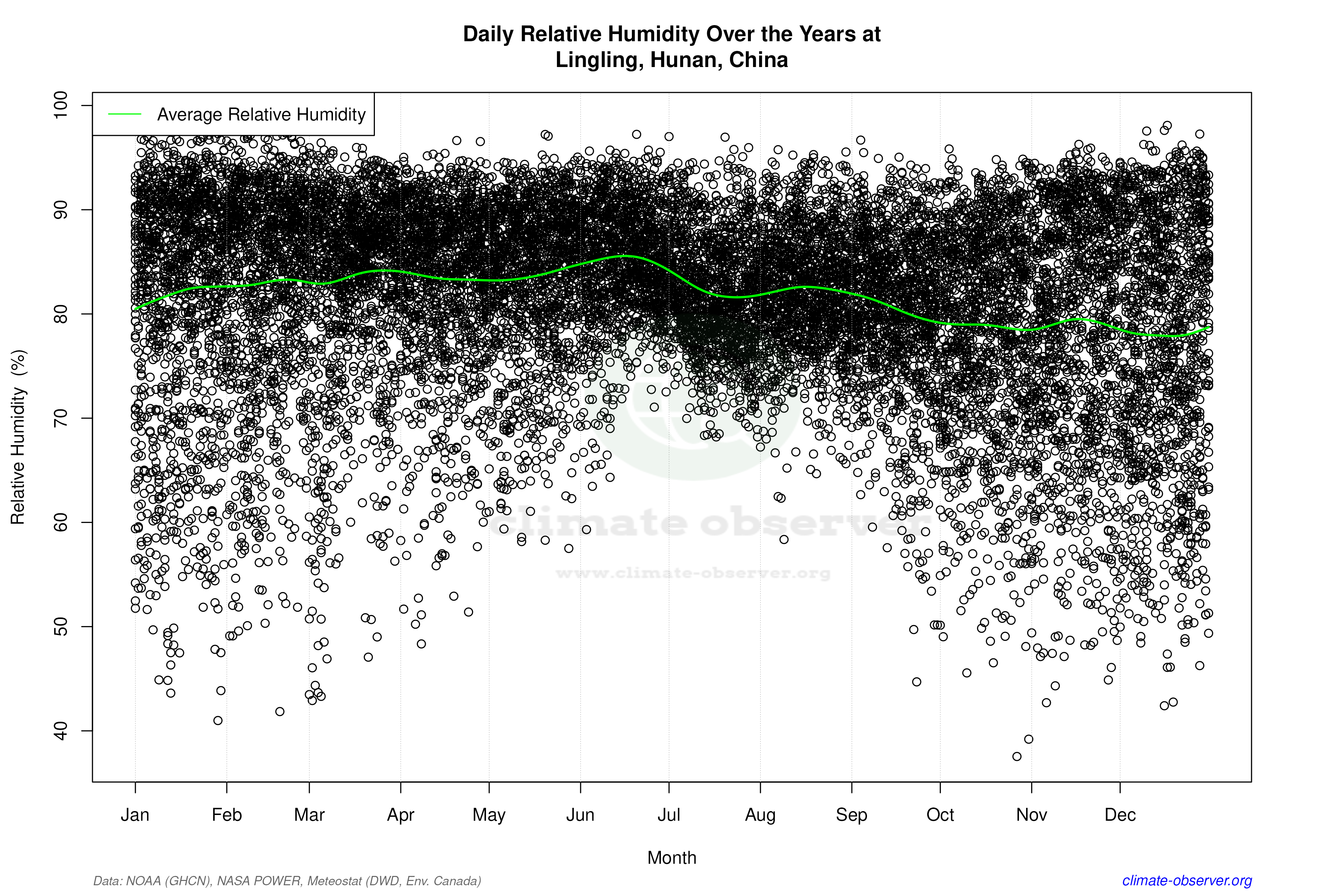

Average Max Temperature Throughout Year | 1 of 5


