Climate for Station: Georgetown, Demerara-Mahaica, Guyana
Loading live weather...
Climate Analysis & Overview
Georgetown, located near the equator in Guyana, is experiencing a complex climatic evolution. While the city has seen a 0.55°C (0.99°F) warming in high temperatures over all time, recent years show a more pronounced rise in low temperatures by 1.85°C (3.33°F). The precipitation pattern has become slightly more even, reflecting a marginal shift in rainfall distribution.
Equatorial Climate Dynamics
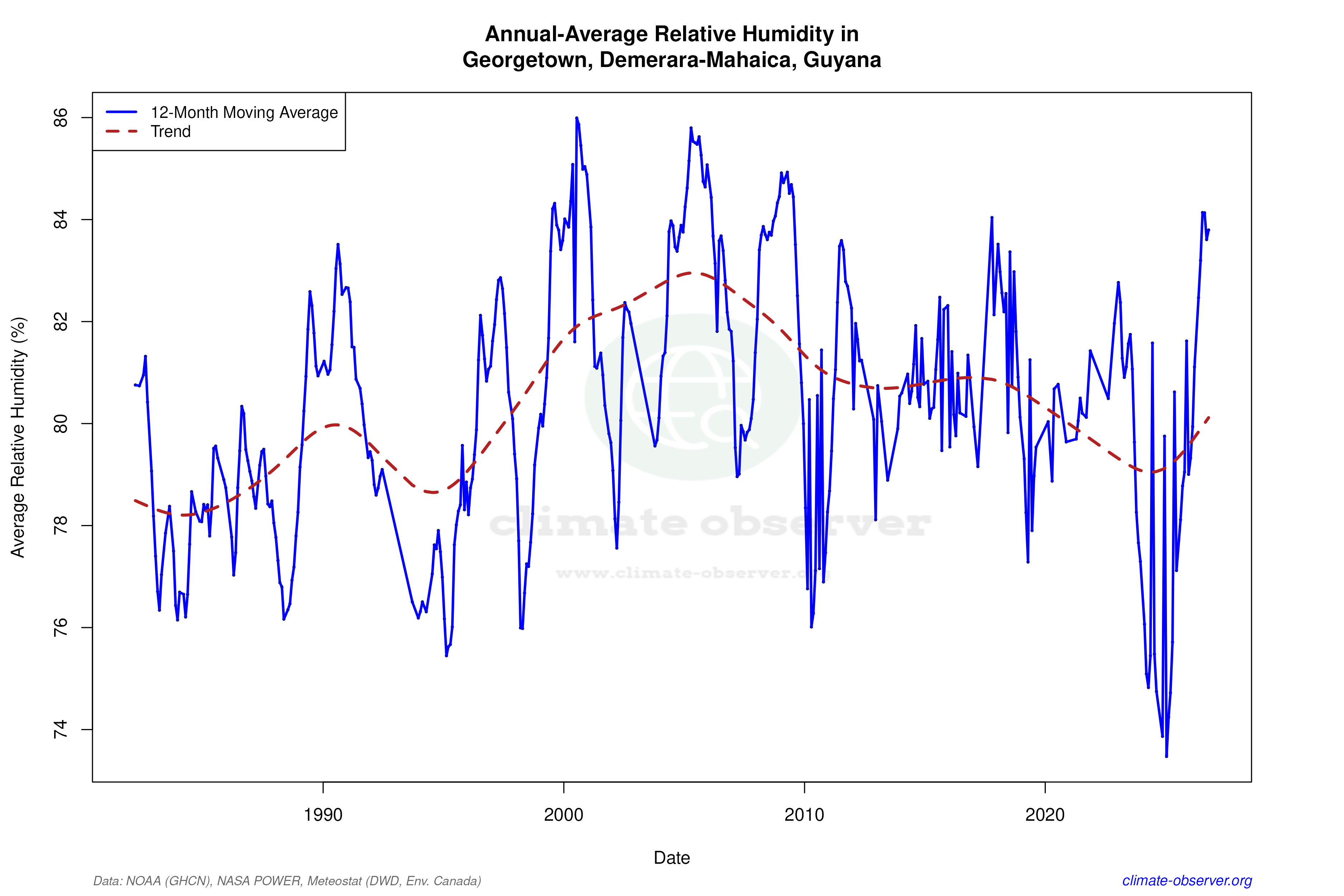
Georgetown, positioned at 6.5°N, 58.25°W, is characterised by its tropical rainforest climate, classified as "Af" under the Köppen system. This classification implies consistent high temperatures and significant rainfall throughout the year. The nearby Atlantic Ocean and the Essequibo River contribute to the city’s humid conditions, moderating extreme temperature fluctuations. However, the all-time warming trend of 0.55°C (0.99°F) in high temperatures suggests a gradual shift that could impact local ecosystems and urban planning.
Temperature Trends: A Tale of Two Extremes
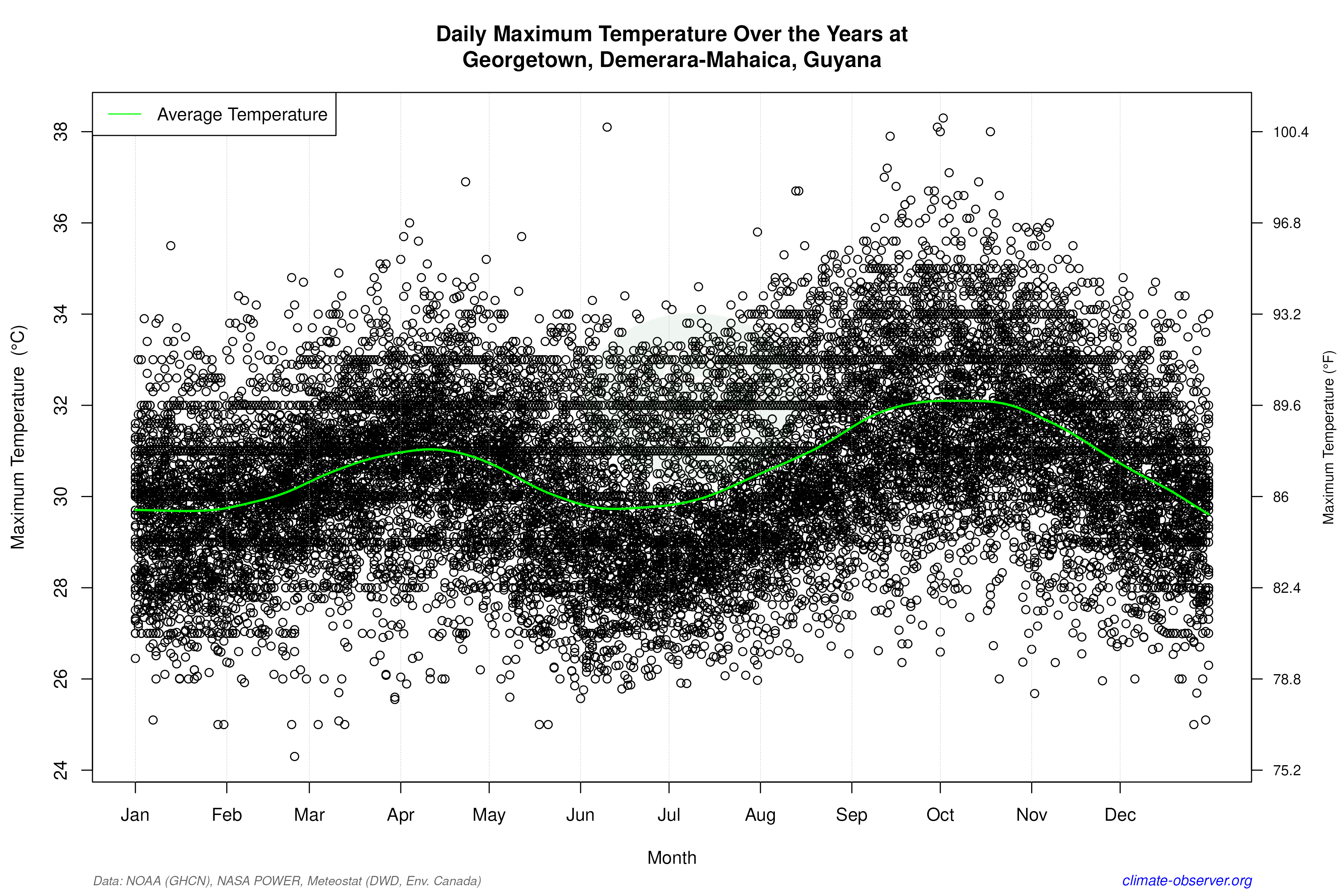
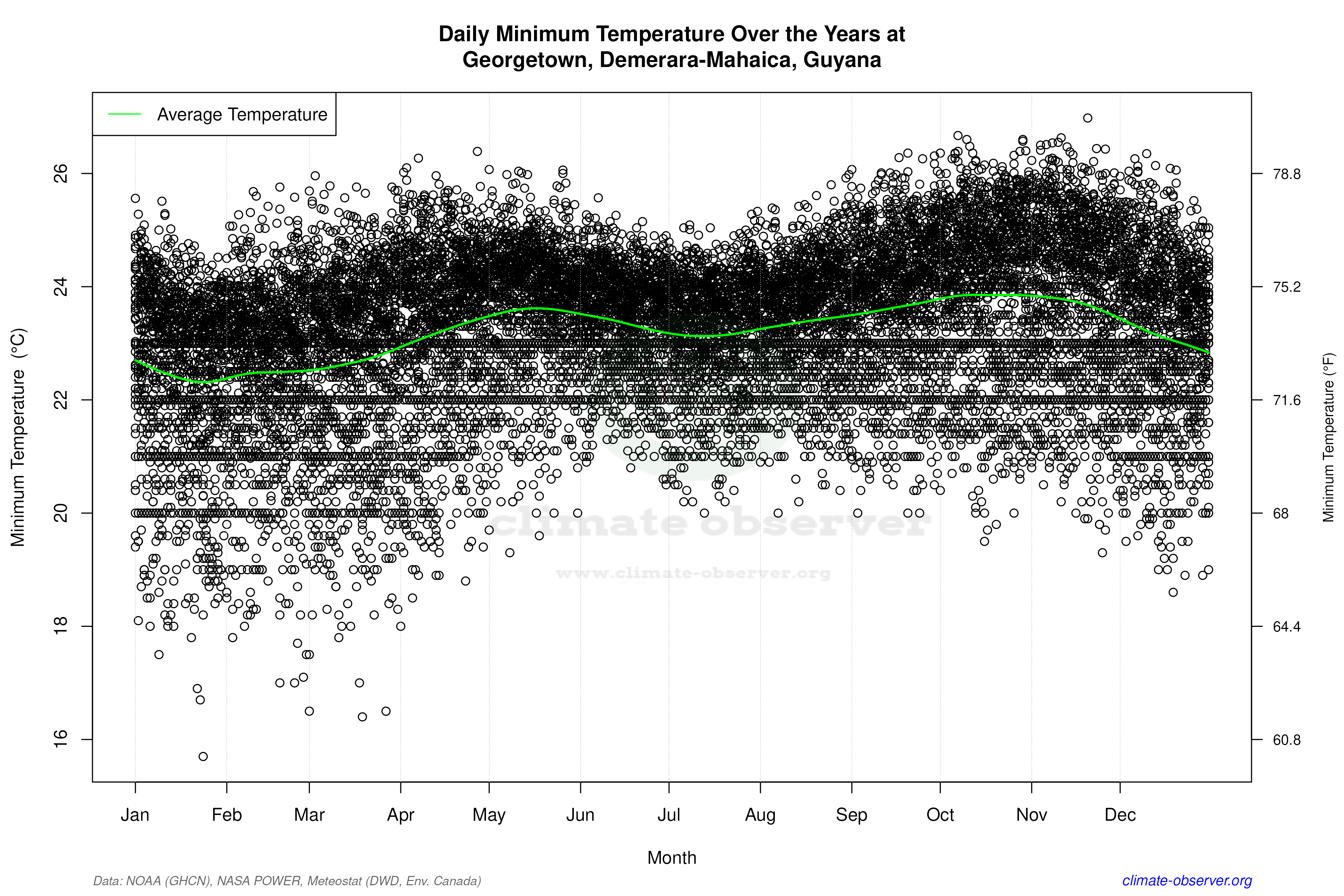
Over the past decade, Georgetown has experienced a notable increase in low temperatures by 1.85°C (3.33°F), a stark contrast to the all-time cooling trend of 0.43°C (0.77°F) in lows. This divergence indicates a recent warming phase, potentially linked to urban heat island effects or broader regional climatic changes. The record high of 38.3°C (100.9°F) and low of 15.7°C (60.3°F) underscore the city's temperature range, though such extremes remain infrequent.
Precipitation Patterns: A Subtle Shift
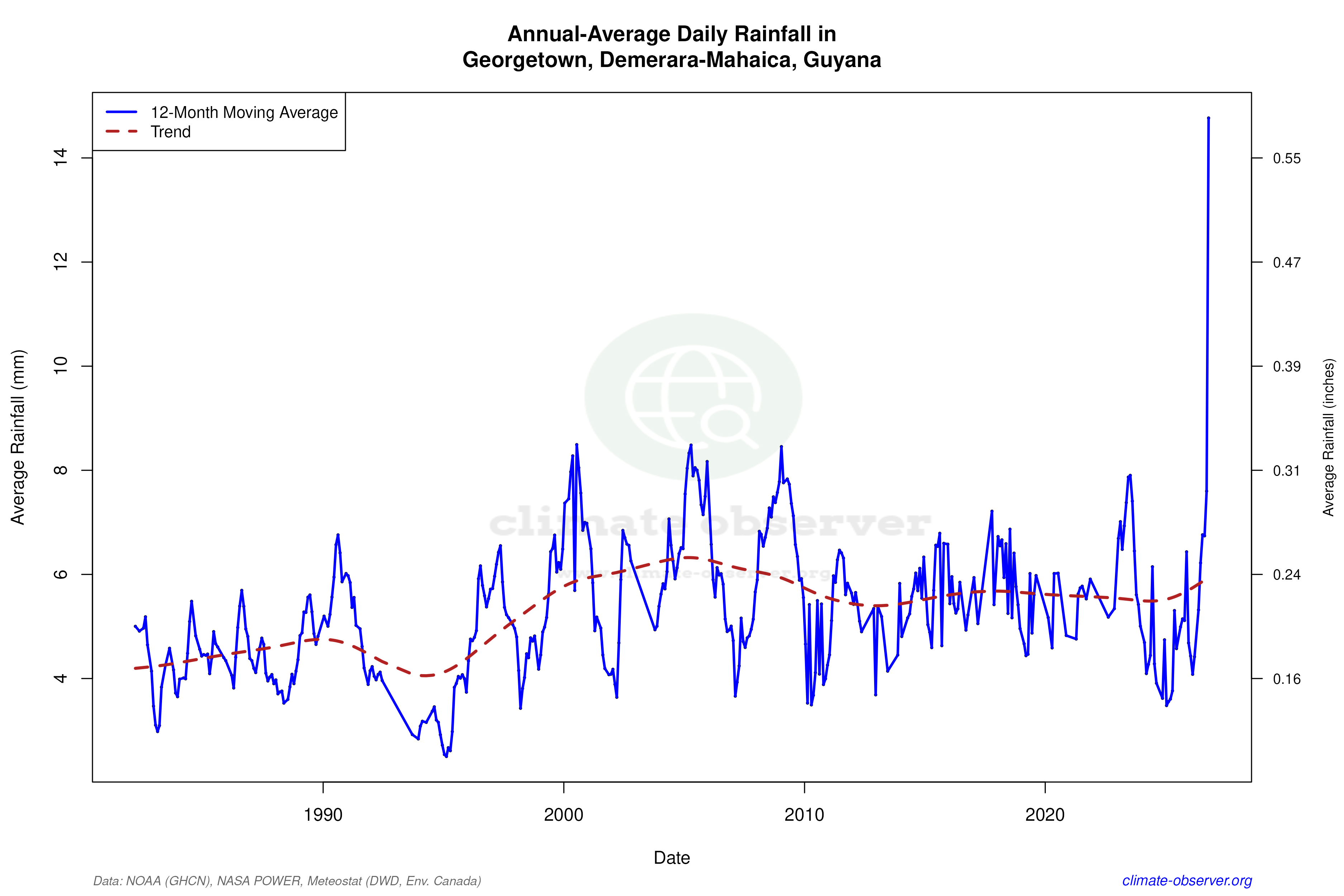
The Precipitation Concentration Index (PCI) of Georgetown has decreased from a baseline of 13.08 to 11.84, indicating a more even distribution of rainfall events. This marginal change suggests that while rainfall remains abundant, it is less likely to be concentrated in intense downpours. Such a shift can have implications for water management and agricultural practices, potentially reducing the risk of flash floods and improving crop resilience.
Regional Climate Goals and Implications
Guyana's commitment to sustainable development and climate resilience is crucial in the context of these climatic trends. The observed temperature increases, particularly in lows, could challenge energy demands for cooling and affect public health. Meanwhile, the more evenly distributed rainfall aligns with the nation's goals to mitigate flood risks and enhance water resource management. Recent weather events, such as prolonged rainy seasons, highlight the need for adaptive strategies to cope with these evolving climatic conditions.
Station Statistics
10-Year Trend
High: +0.31 °F/decade
Low: +3.28 °F/decade
Rain: -0.004 in/decade
25-Year Trend
High: +1.49 °F/decade
Low: -0.98 °F/decade
Rain: -0.008 in/decade
50-Year Trend
High: +0.90 °F/decade
Low: -0.65 °F/decade
Rain: +0.014 in/decade
All-Time Trend
High: +0.90 °F/decade
Low: -0.65 °F/decade
Rain: +0.014 in/decade
Percentage Above-Average Days
Last 12 Months: 20.3%
This Year: 7.9%
Precipitation Concentration Index (PCI) ℹ️
Last 12 Months: 18.2
Historical Average: 11.7
Percentile Rank of Last 12 Months ℹ️
High: 61st percentile
Low: 56th percentile
Rain: 82nd percentile
Change in Variance ℹ️
High: +19.2%
Low: +0.9%
Intraday: +9.0%
Data Coverage
62.2%
First Year of Data
1952
Station Location
Historical Weather Records
| Max High | Avg High | Min High | Max Avg | Avg Avg | Min Avg | Max Low | Avg Low | Min Low | Max Precipitation | Avg Precipitation | Max Snow | Avg Snow | |
|---|---|---|---|---|---|---|---|---|---|---|---|---|---|
| Record | 100.94 °F | — | 75.74 °F | 89.06 °F | — | 70.16 °F | 80.56 °F | — | 60.26 °F | 10.12 in | — | 0.00 in | — |
| January | 95.90 °F | 85.44 °F | 77.00 °F | 84.56 °F | 77.73 °F | 71.06 °F | 78.01 °F | 72.35 °F | 60.26 °F | 3.05 in | 0.20 in | 0.00 in | 0.00 in |
| February | 94.64 °F | 85.95 °F | 75.74 °F | 87.80 °F | 78.09 °F | 70.16 °F | 78.37 °F | 72.51 °F | 62.60 °F | 4.03 in | 0.14 in | 0.00 in | 0.00 in |
| March | 95.18 °F | 87.25 °F | 77.00 °F | 86.18 °F | 78.87 °F | 71.60 °F | 78.73 °F | 72.80 °F | 61.52 °F | 2.59 in | 0.12 in | 0.00 in | 0.00 in |
| April | 98.42 °F | 87.74 °F | 78.60 °F | 87.44 °F | 79.50 °F | 72.68 °F | 79.50 °F | 73.79 °F | 64.40 °F | 3.89 in | 0.19 in | 0.00 in | 0.00 in |
| May | 96.26 °F | 86.48 °F | 77.00 °F | 86.36 °F | 79.20 °F | 73.58 °F | 78.93 °F | 74.45 °F | 66.74 °F | 3.94 in | 0.34 in | 0.00 in | 0.00 in |
| June | 100.58 °F | 85.55 °F | 78.03 °F | 87.44 °F | 78.61 °F | 73.58 °F | 78.03 °F | 74.04 °F | 68.90 °F | 3.90 in | 0.38 in | — | — |
| July | 96.44 °F | 86.16 °F | 78.62 °F | 84.74 °F | 78.61 °F | 71.96 °F | 77.59 °F | 73.69 °F | 68.00 °F | 2.95 in | 0.31 in | — | — |
| August | 98.06 °F | 87.66 °F | 79.61 °F | 87.26 °F | 79.57 °F | 73.40 °F | 78.76 °F | 74.08 °F | 68.00 °F | 3.48 in | 0.23 in | — | — |
| September | 100.58 °F | 89.51 °F | 79.45 °F | 89.06 °F | 80.51 °F | 73.58 °F | 79.45 °F | 74.52 °F | 68.00 °F | 4.70 in | 0.13 in | — | — |
| October | 100.94 °F | 89.69 °F | 78.80 °F | 88.88 °F | 80.72 °F | 72.68 °F | 80.01 °F | 74.94 °F | 67.10 °F | 9.48 in | 0.16 in | — | — |
| November | 96.80 °F | 88.35 °F | 78.22 °F | 87.08 °F | 79.95 °F | 72.32 °F | 80.56 °F | 74.66 °F | 66.74 °F | 3.19 in | 0.17 in | — | — |
| December | 94.64 °F | 86.34 °F | 77.00 °F | 87.08 °F | 78.55 °F | 71.42 °F | 79.43 °F | 73.60 °F | 65.48 °F | 10.12 in | 0.23 in | — | — |
Data Visualisations
Remove WatermarksCurrent Year Climate Trends vs Historical
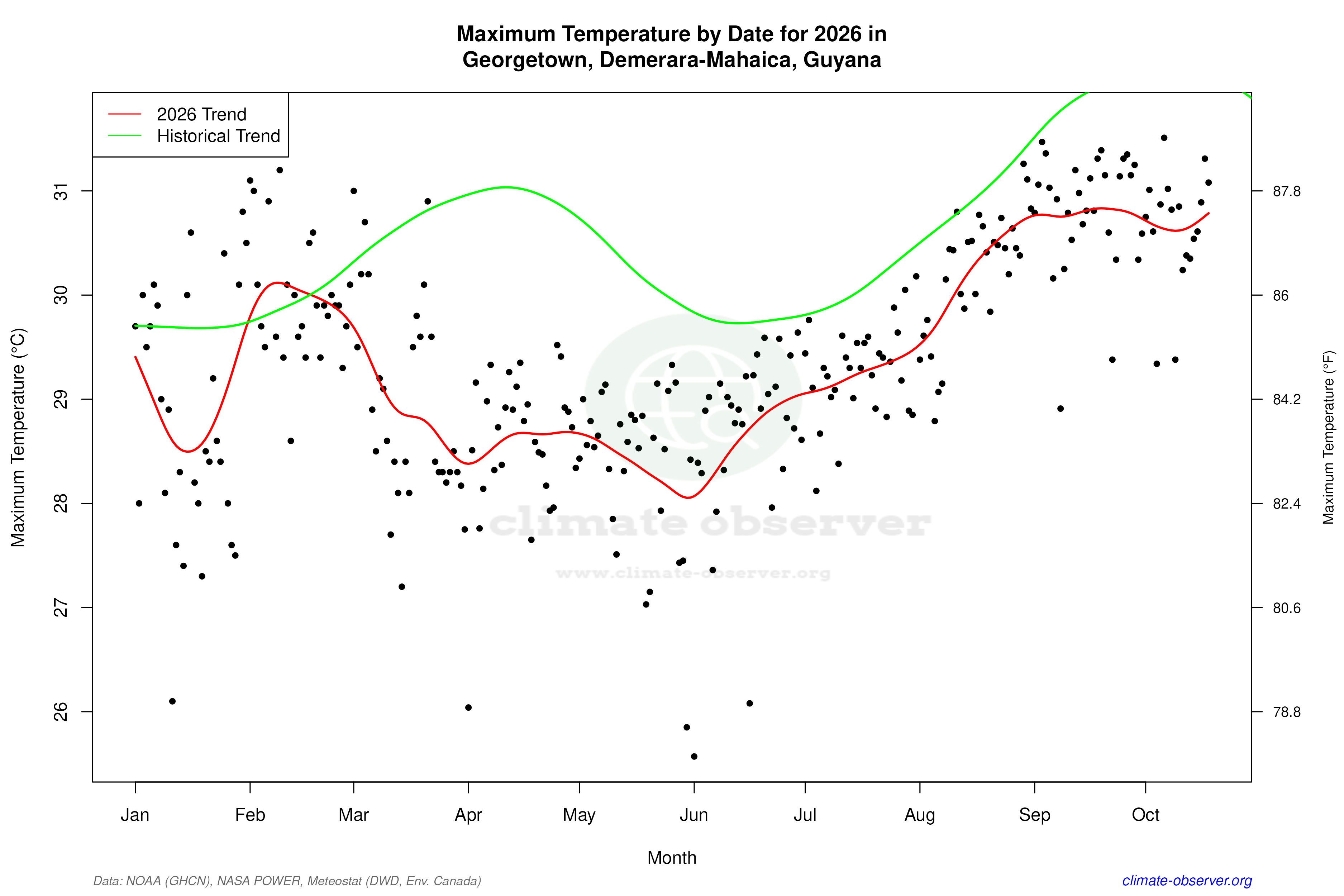
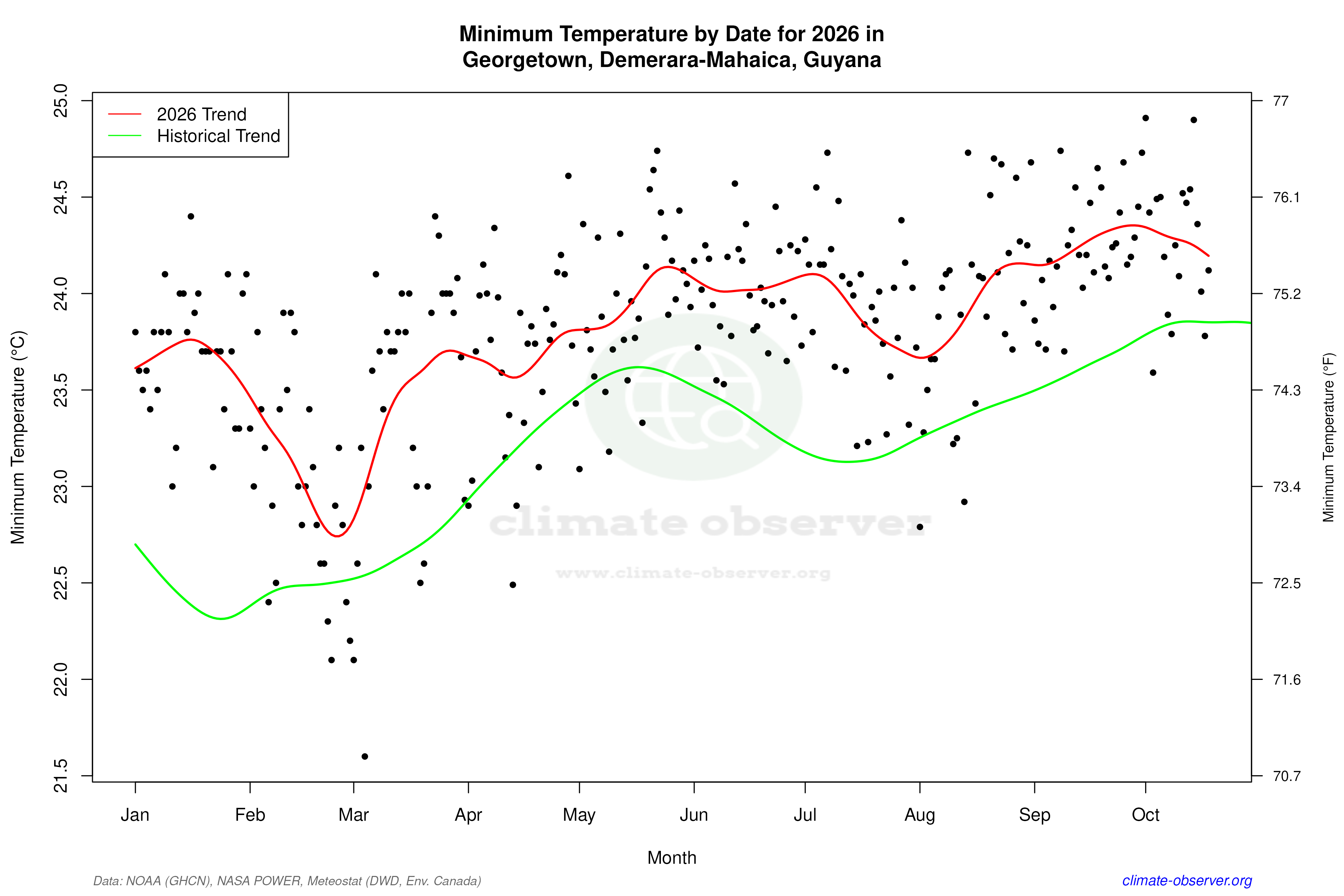
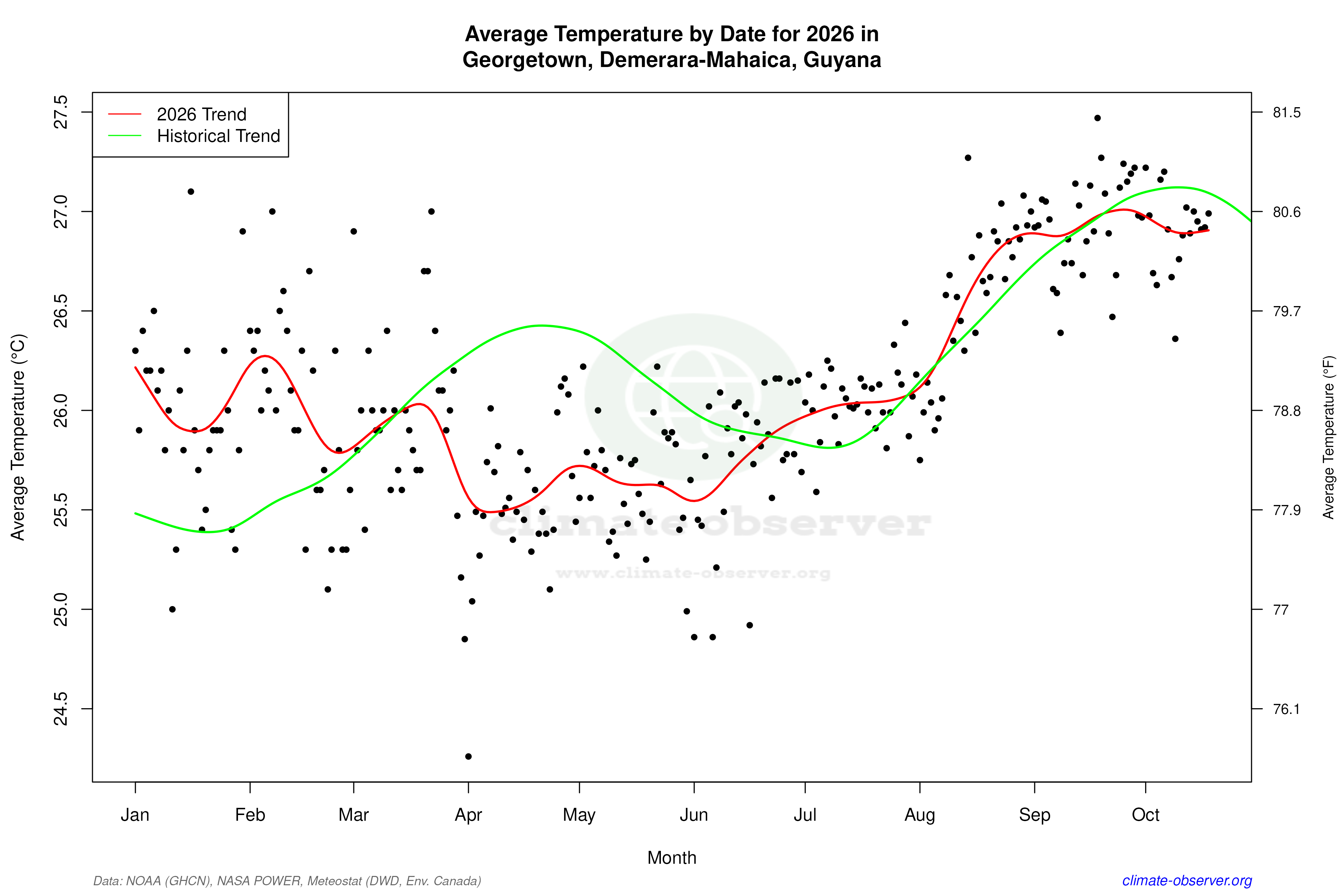
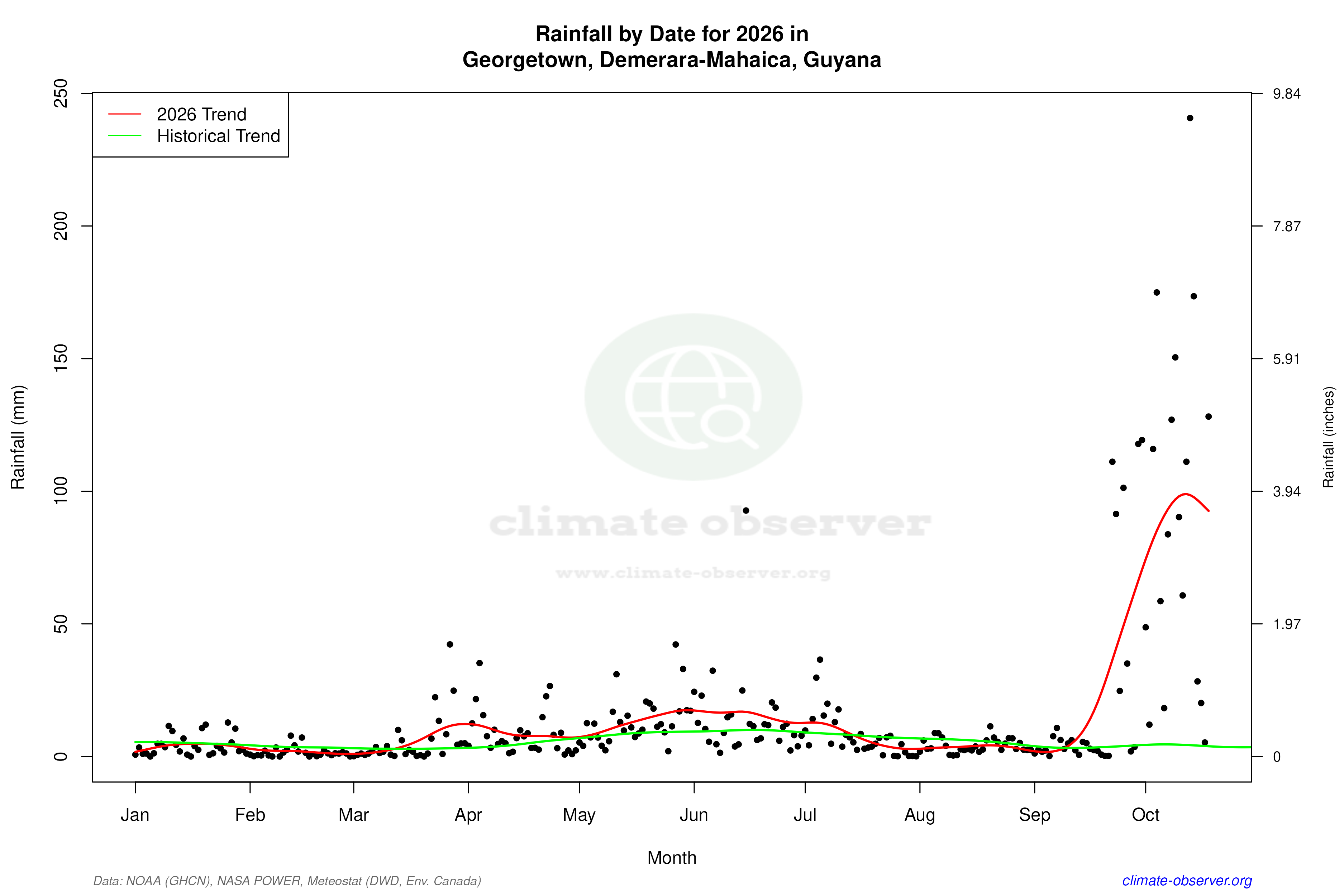
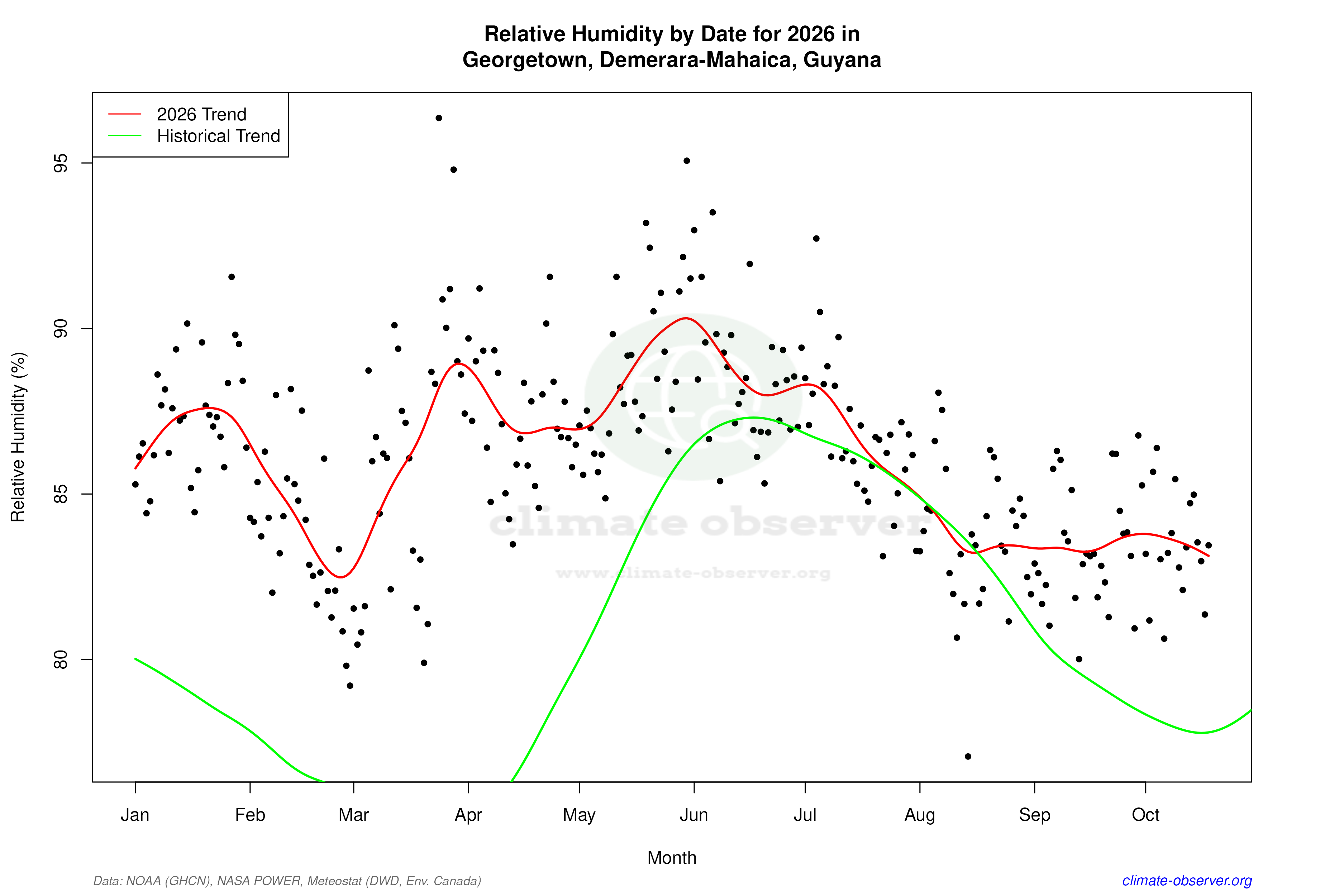

Max Temperature this Year | 1 of 6
Climate 12-Month Moving Averages
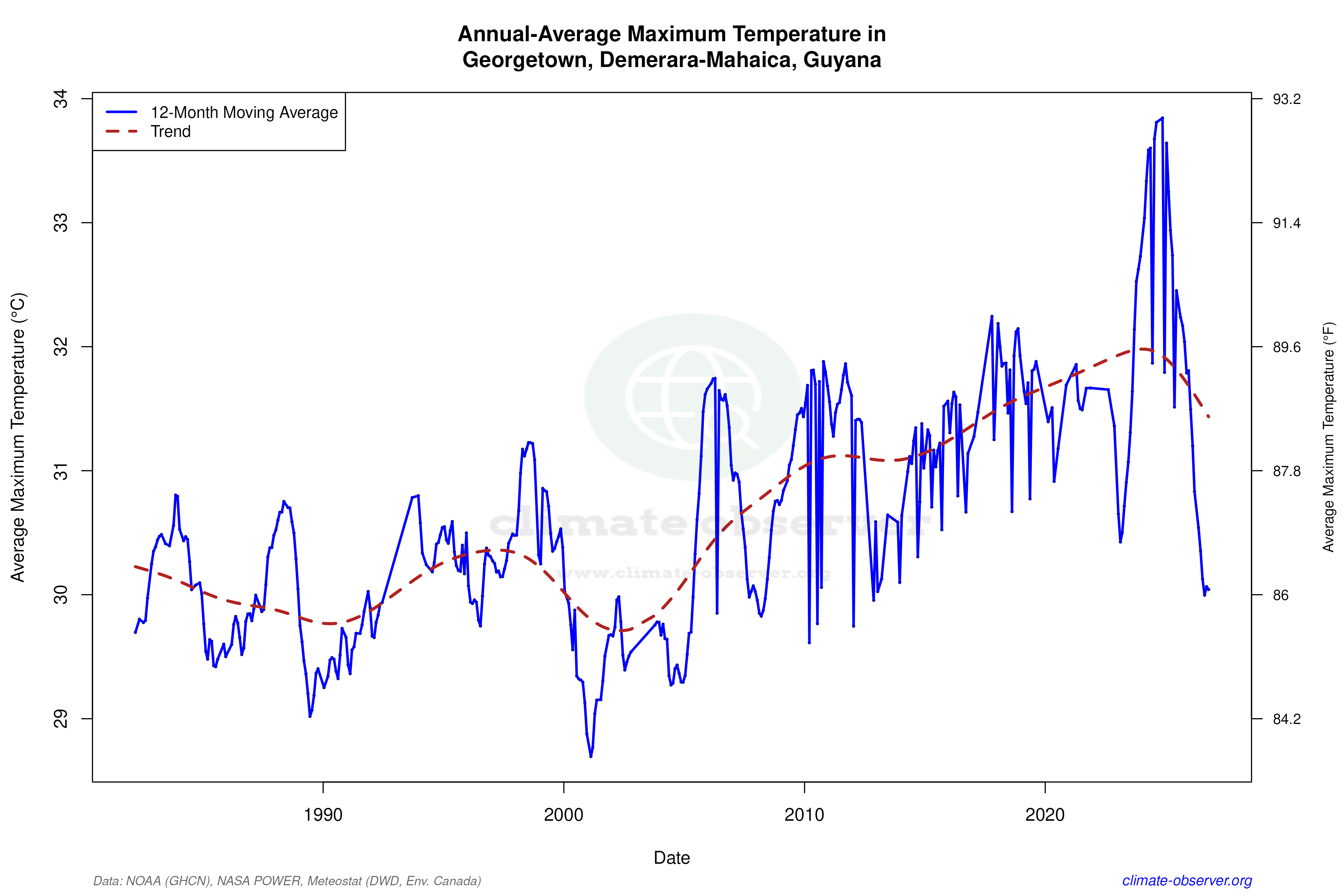
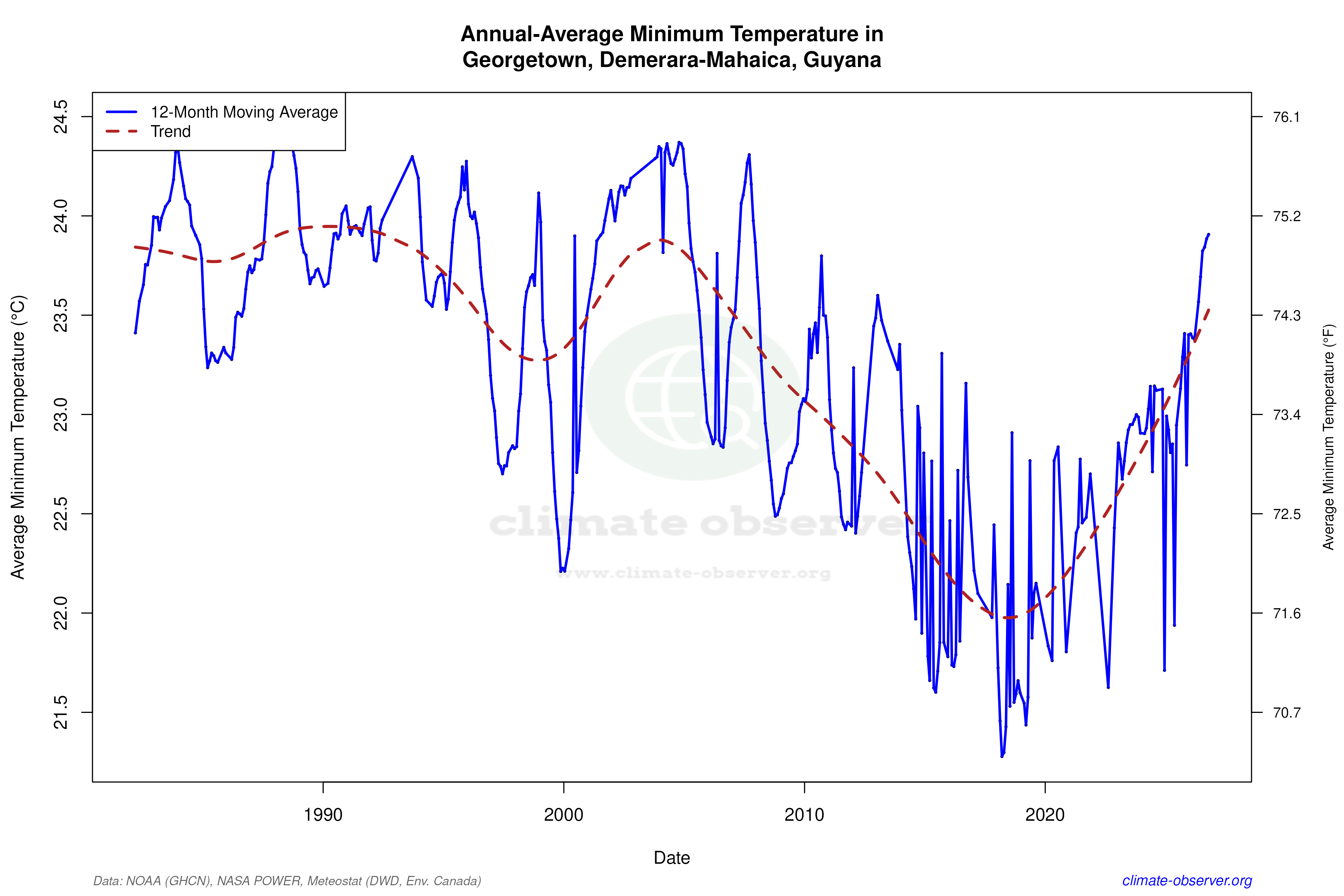
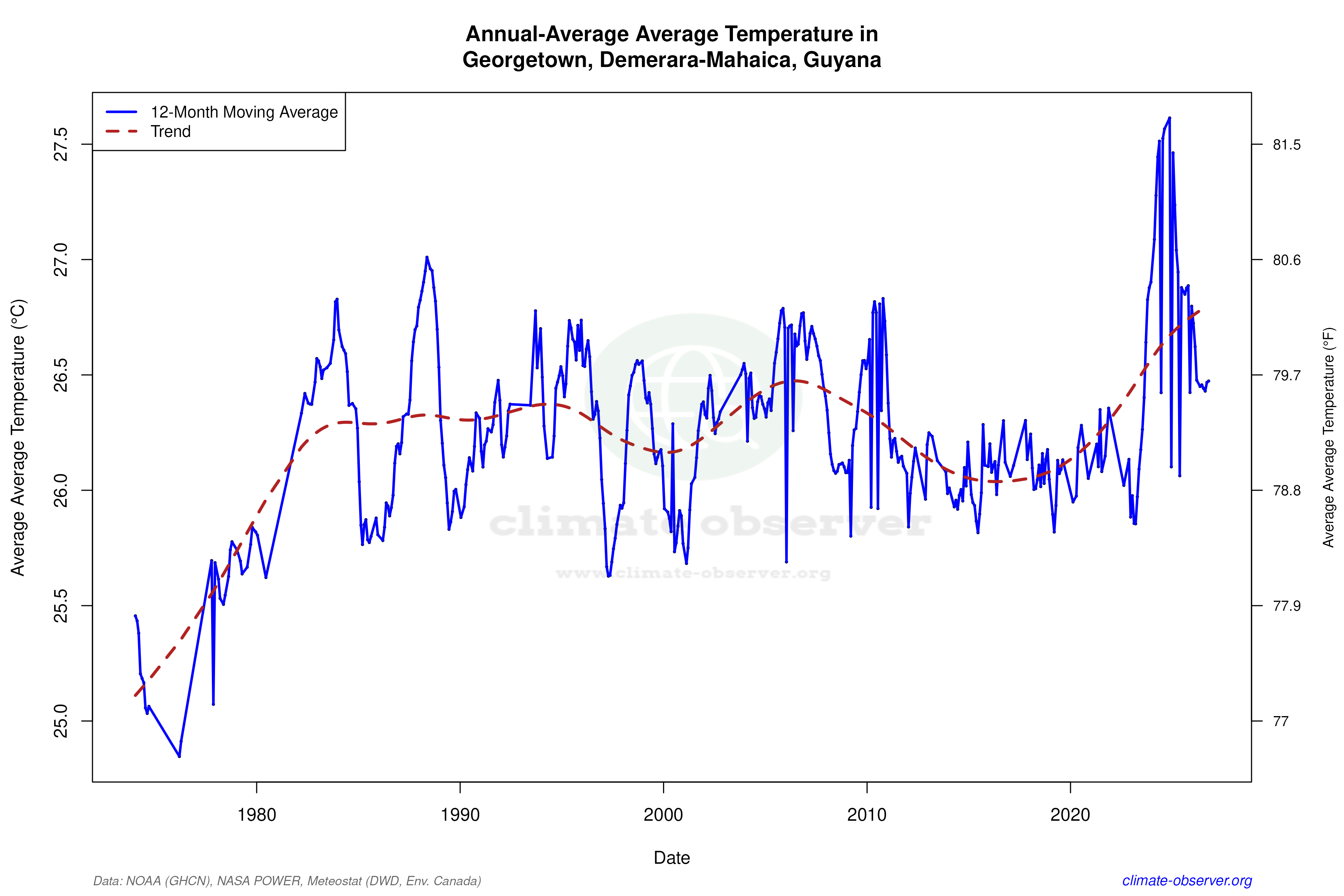

Max Temperature 12-Month MA | 1 of 6
Daily Data Points and Averages Throughout the Year
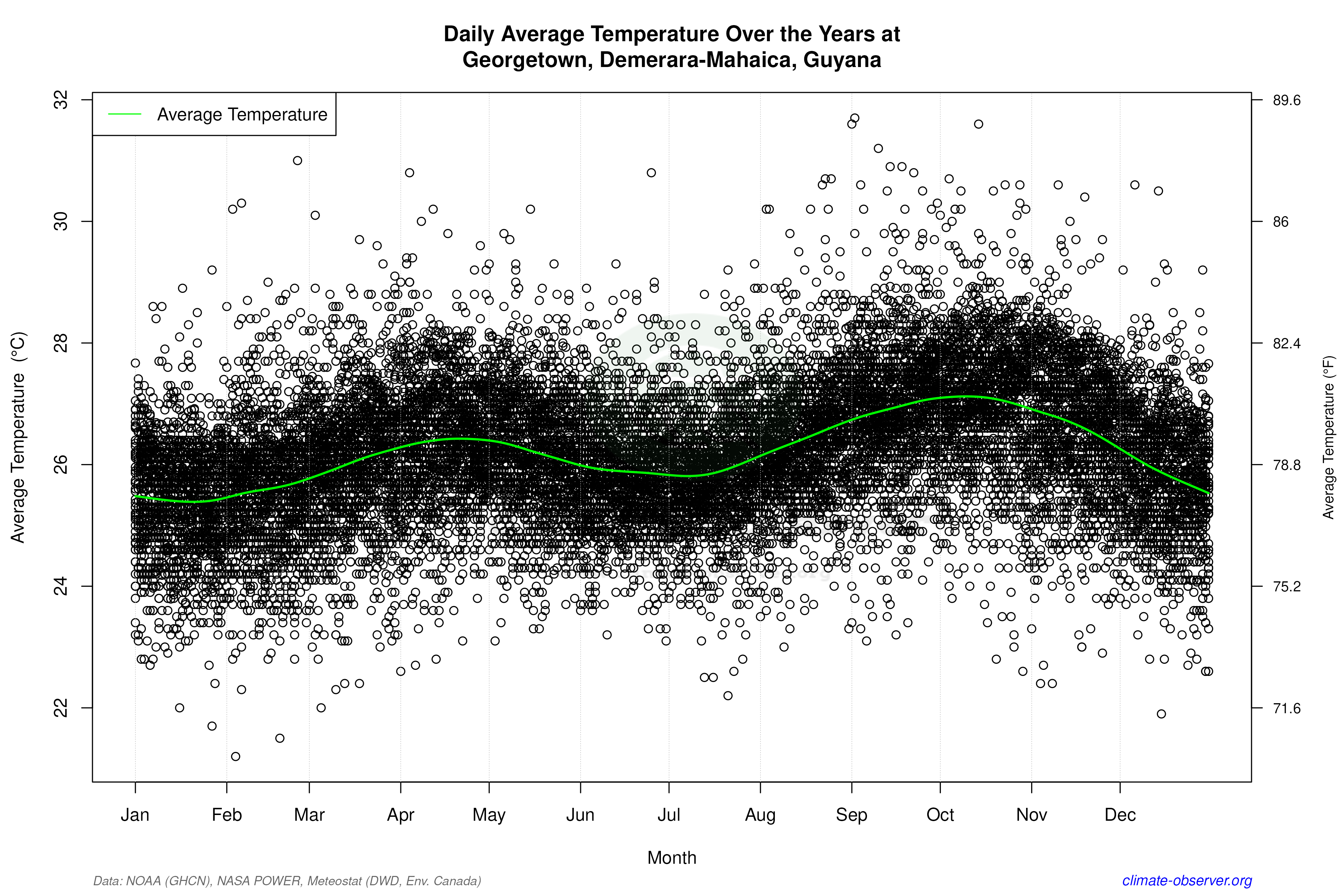
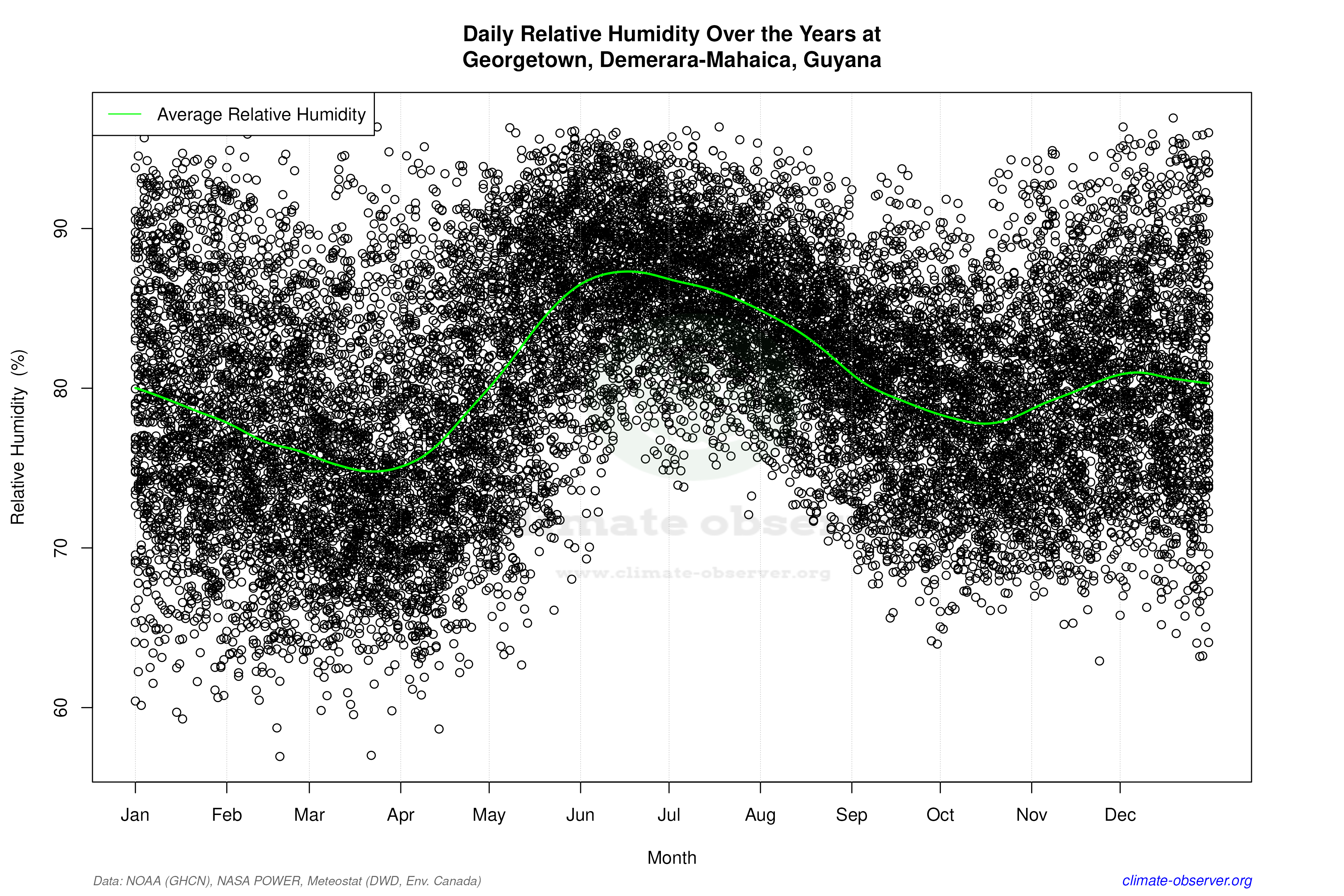

Average Max Temperature Throughout Year | 1 of 5


