Climate for Station: Hvar, Split-Dalmatia, Croatia
Loading live weather...
Climate Analysis & Overview
Hvar, a jewel of the Adriatic, is experiencing a nuanced climate evolution. With a slight warming trend in both highs and lows, and a more evenly distributed precipitation pattern, this Mediterranean locale is adapting to changes that mirror broader regional shifts in climate.
Mediterranean Warmth with a Twist
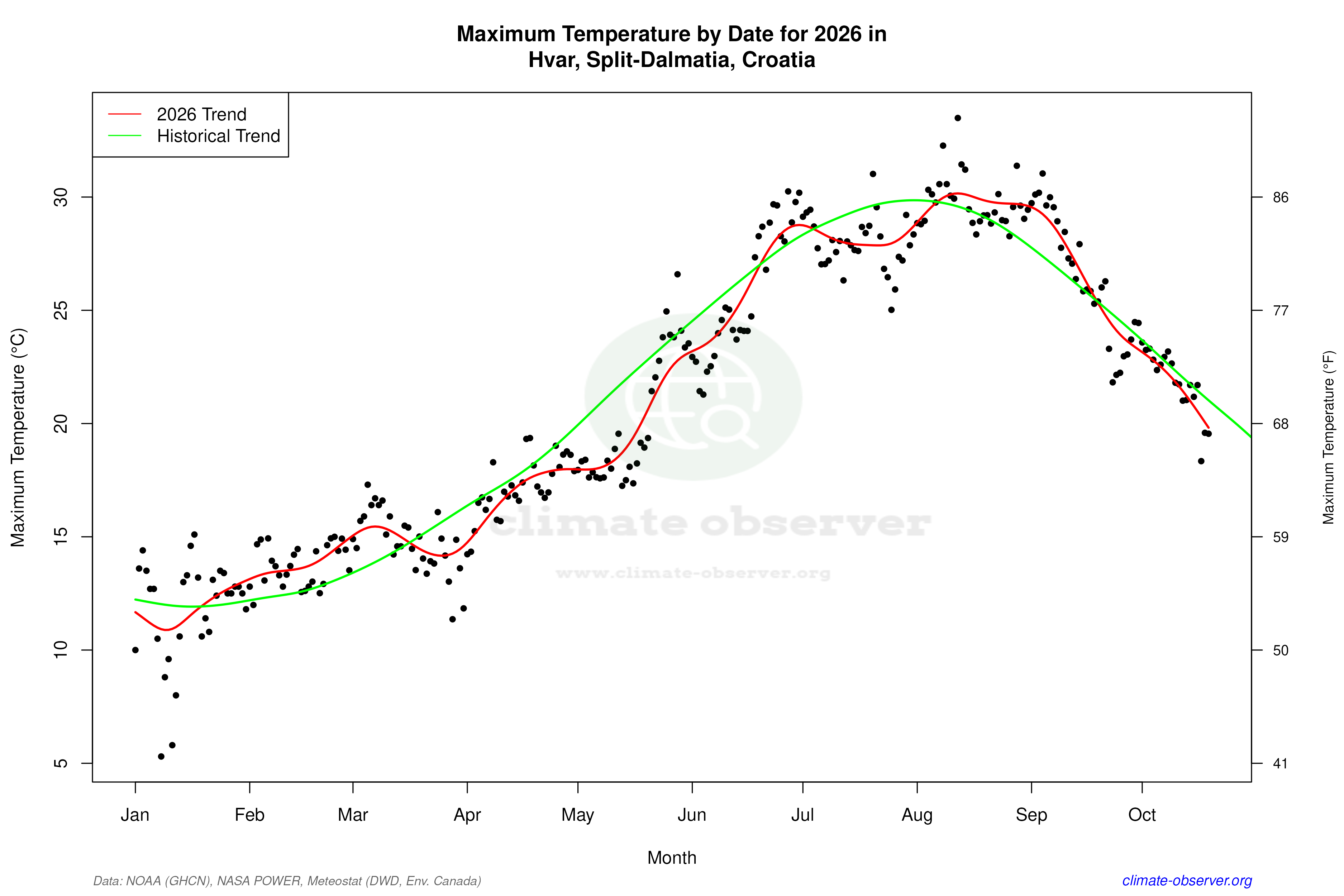
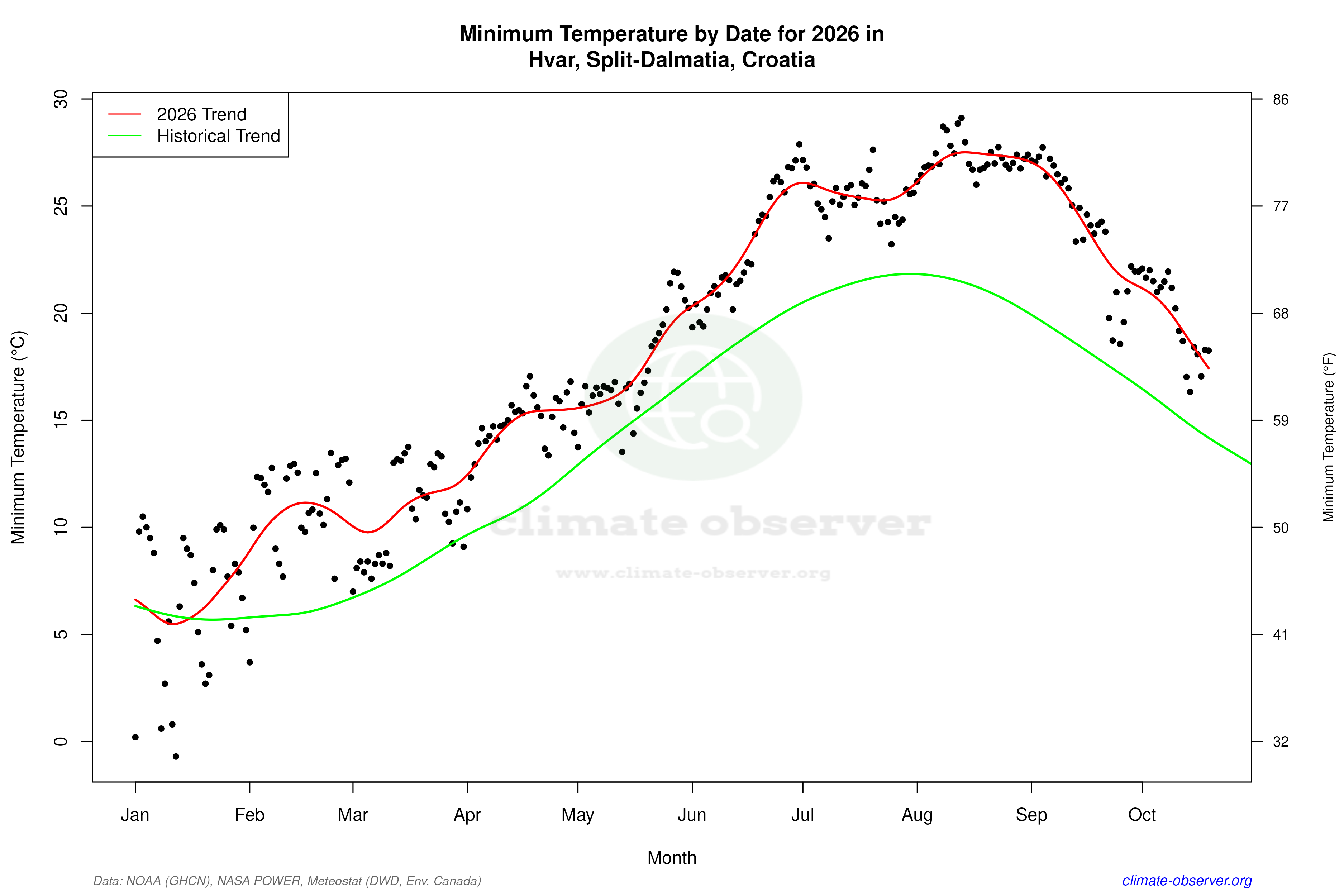
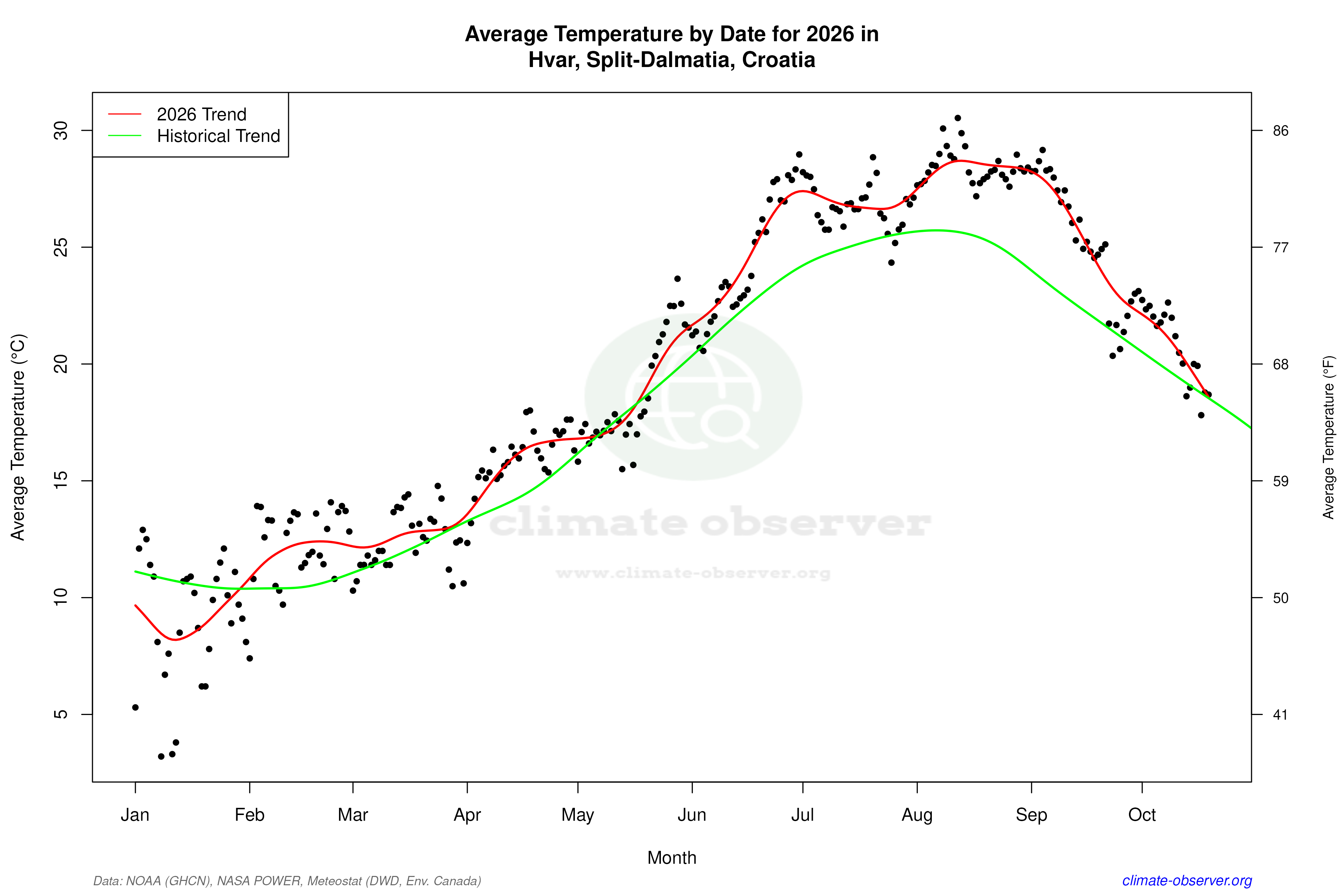
Hvar, nestled in the Adriatic Sea, boasts a Mediterranean climate characterised by hot, dry summers and mild, wet winters. This is classified under the Köppen system as Csa. The island's geography, with its coastal proximity and elevation variations, plays a significant role in moderating its climate. Over the past decade, Hvar has experienced a warming trend in its high temperatures, with an increase of 0.23°C (0.41°F). The lows have risen more sharply by 0.28°C (0.50°F), suggesting a more pronounced warming during cooler periods. However, when examining all-time trends, the highs show a more modest rise of 0.17°C (0.31°F), while lows have increased by a mere 0.04°C (0.07°F). This suggests a long-term warming pattern, albeit at a slower rate than the recent decade.
Temperature Extremes: A Balancing Act
Hvar's temperature extremes provide a fascinating insight into its climate dynamics. The record high temperature stands at 38.0°C (100.4°F), indicative of the intense summer heat that can envelop the island. Conversely, the record low of -7.0°C (19.4°F) underscores the potential for cold snaps, albeit rare. These extremes highlight the island's ability to experience significant thermal oscillations, a testament to its complex climatic influences.
Precipitation Patterns: Evening Out
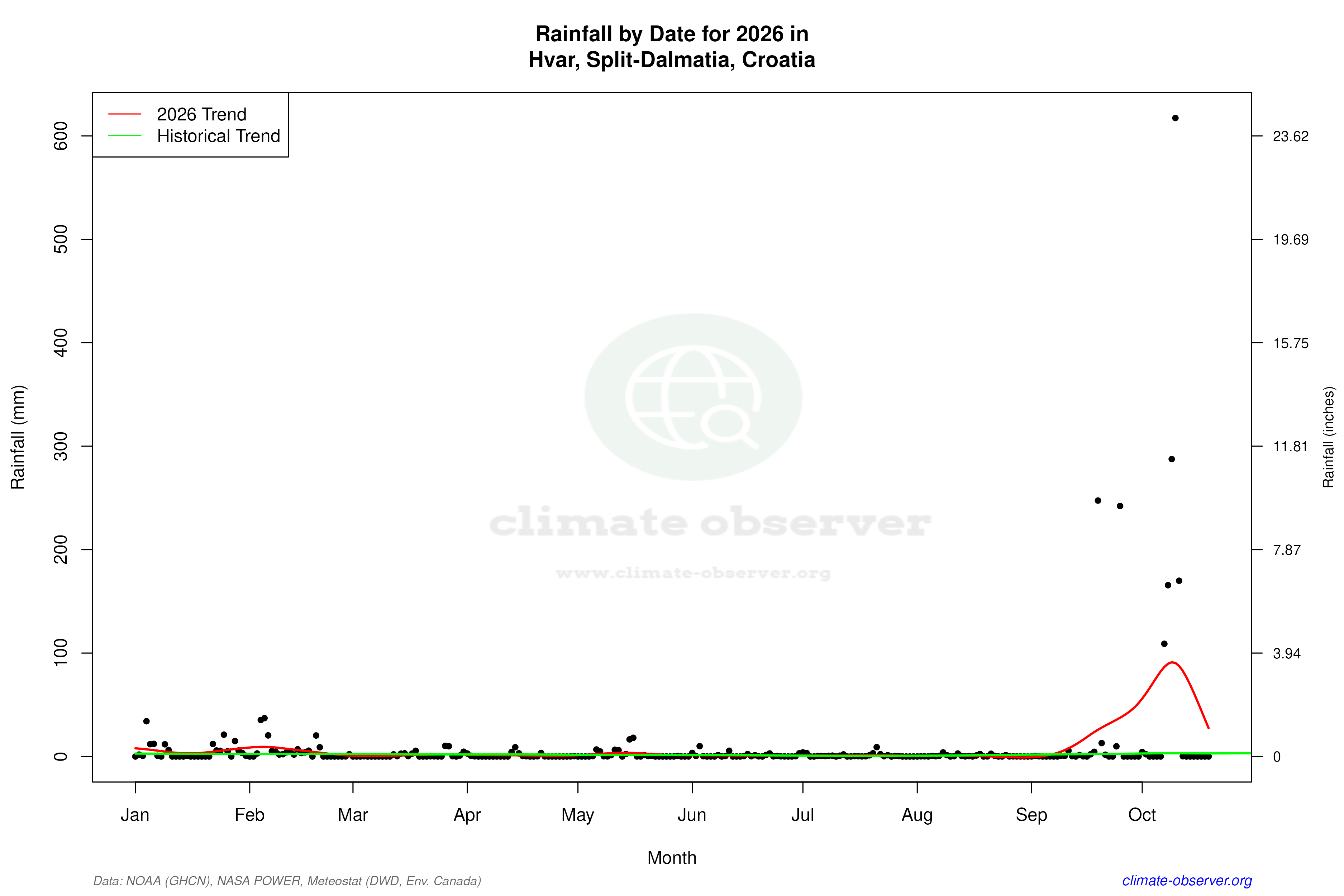
The Precipitation Concentration Index (PCI) for Hvar has shown a notable shift. The baseline PCI of 13.1 has decreased to a current value of 9.7, indicating a more even distribution of rainfall events. For the residents and ecosystems of Hvar, this means precipitation is less likely to be concentrated in a few intense events, reducing the risk of flooding and benefiting agriculture. This change aligns with Croatia's broader climate goals of enhancing resilience to extreme weather events.
Regional Context and Climate Goals
Hvar's climate story is part of a larger narrative playing out across Croatia. The country has committed to reducing greenhouse gas emissions and adapting to climate change impacts. Recent regional weather events, such as heatwaves and heavy rainfall, underscore the importance of these efforts. Hvar's climate data, with its warming trends and evolving precipitation patterns, reflects the broader challenges and opportunities faced by Croatia in its pursuit of sustainable development and climate resilience.
Station Statistics
10-Year Trend
High: -0.28 °F/decade
Low: +1.26 °F/decade
Rain: +0.050 in/decade
25-Year Trend
High: +0.89 °F/decade
Low: +0.68 °F/decade
Rain: +0.009 in/decade
50-Year Trend
High: +0.76 °F/decade
Low: +0.81 °F/decade
Rain: +0.003 in/decade
All-Time Trend
High: +0.31 °F/decade
Low: +0.07 °F/decade
Rain: +0.000 in/decade
Percentage Above-Average Days
Last 12 Months: 41.4%
This Year: 45.5%
Precipitation Concentration Index (PCI) ℹ️
Last 12 Months: 30.2
Historical Average: 13.0
Percentile Rank of Last 12 Months ℹ️
High: 57th percentile
Low: 94th percentile
Rain: 98th percentile
Change in Variance ℹ️
High: +5.4%
Low: +11.7%
Intraday: +32.5%
Data Coverage
73.3%
First Year of Data
1873
Station Location
Historical Weather Records
| Max High | Avg High | Min High | Max Avg | Avg Avg | Min Avg | Max Low | Avg Low | Min Low | Max Precipitation | Avg Precipitation | Max Snow | Avg Snow | |
|---|---|---|---|---|---|---|---|---|---|---|---|---|---|
| Record | 100.40 °F | — | 28.76 °F | 88.16 °F | — | 31.44 °F | 84.92 °F | — | 19.40 °F | 24.30 in | — | — | — |
| January | 67.28 °F | 53.61 °F | 28.76 °F | 60.62 °F | 51.10 °F | 31.44 °F | 59.00 °F | 42.52 °F | 19.40 °F | 4.25 in | 0.10 in | — | — |
| February | 74.12 °F | 54.84 °F | 32.90 °F | 61.88 °F | 51.01 °F | 35.24 °F | 60.08 °F | 43.00 °F | 22.10 °F | 2.85 in | 0.10 in | — | — |
| March | 76.10 °F | 58.52 °F | 35.60 °F | 62.19 °F | 53.77 °F | 34.45 °F | 63.50 °F | 46.46 °F | 23.72 °F | 3.11 in | 0.09 in | — | — |
| April | 82.04 °F | 64.26 °F | 45.50 °F | 69.03 °F | 57.98 °F | 43.70 °F | 67.10 °F | 51.79 °F | 32.00 °F | 2.80 in | 0.08 in | — | — |
| May | 91.40 °F | 72.05 °F | 54.32 °F | 75.38 °F | 64.81 °F | 53.04 °F | 77.00 °F | 58.93 °F | 41.18 °F | 3.39 in | 0.06 in | — | — |
| June | 100.40 °F | 79.64 °F | 62.60 °F | 86.72 °F | 72.25 °F | 60.10 °F | 82.18 °F | 65.93 °F | 50.00 °F | 3.74 in | 0.05 in | — | — |
| July | 99.50 °F | 84.73 °F | 69.26 °F | 87.26 °F | 77.12 °F | 68.25 °F | 84.92 °F | 70.44 °F | 55.04 °F | 2.65 in | 0.03 in | — | — |
| August | 100.22 °F | 84.56 °F | 69.62 °F | 88.16 °F | 77.61 °F | 66.20 °F | 84.92 °F | 70.14 °F | 49.46 °F | 3.22 in | 0.05 in | — | — |
| September | 93.92 °F | 78.47 °F | 58.82 °F | 84.49 °F | 72.02 °F | 60.13 °F | 81.93 °F | 64.83 °F | 46.40 °F | 9.74 in | 0.09 in | — | — |
| October | 88.70 °F | 70.68 °F | 50.18 °F | 74.25 °F | 65.96 °F | 50.63 °F | 73.94 °F | 58.31 °F | 40.82 °F | 24.30 in | 0.12 in | — | — |
| November | 78.26 °F | 62.30 °F | 35.24 °F | 70.32 °F | 59.23 °F | 44.42 °F | 71.78 °F | 51.37 °F | 26.60 °F | 4.99 in | 0.14 in | — | — |
| December | 69.08 °F | 56.34 °F | 33.08 °F | 65.12 °F | 53.85 °F | 35.53 °F | 63.50 °F | 45.72 °F | 23.00 °F | 4.70 in | 0.13 in | — | — |
Data Visualisations
Remove WatermarksCurrent Year Climate Trends vs Historical
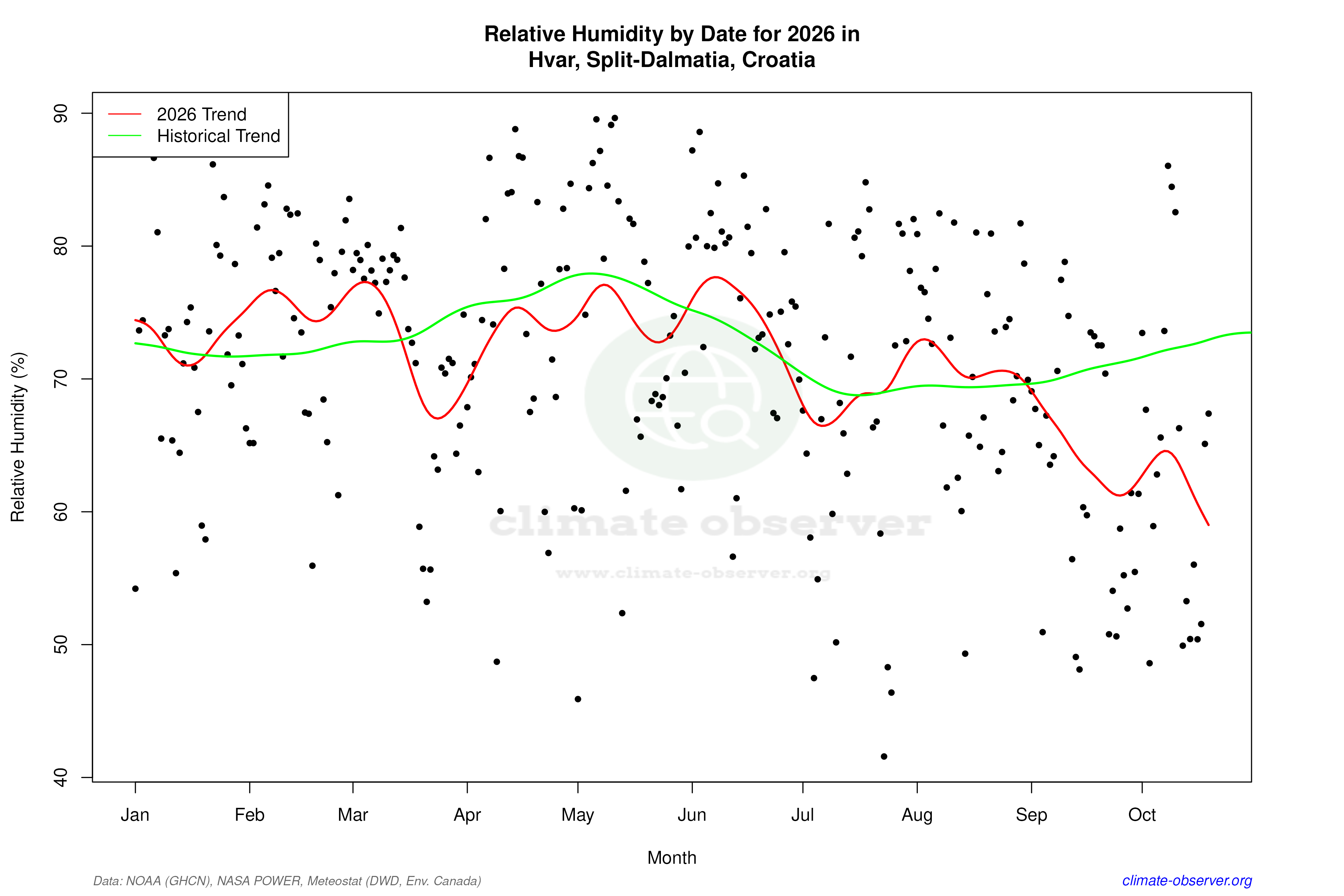

Max Temperature this Year | 1 of 6
Climate 12-Month Moving Averages
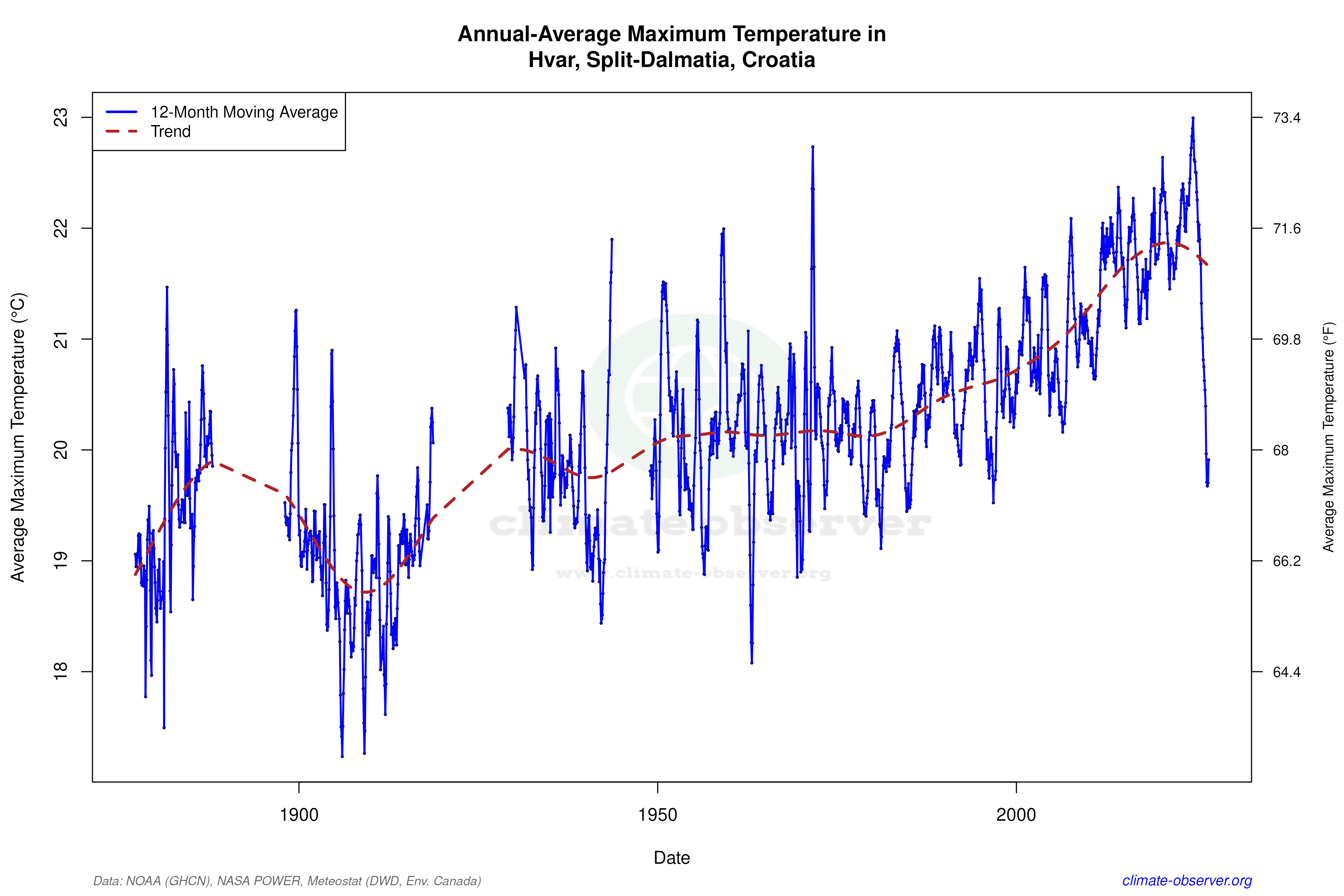
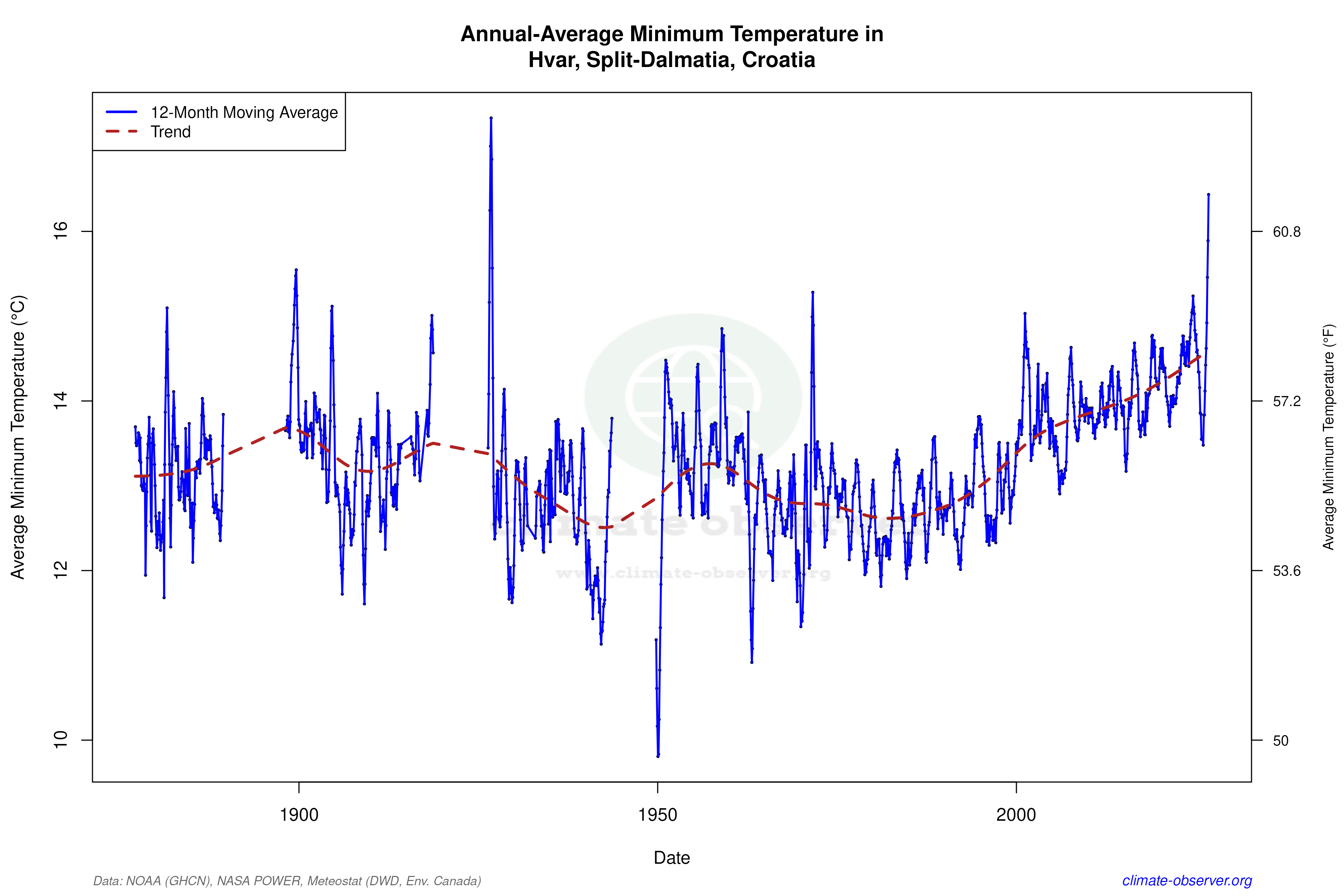
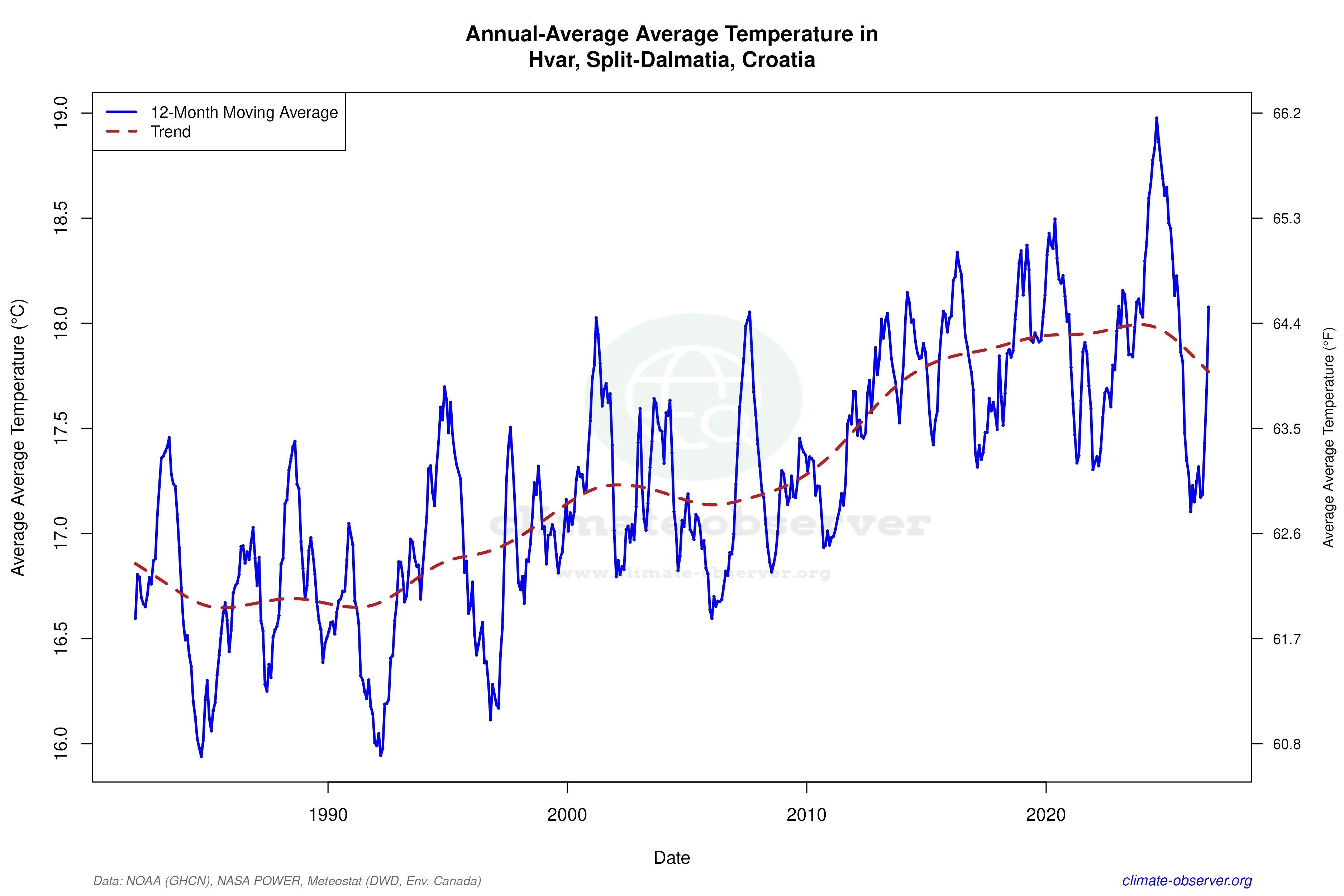
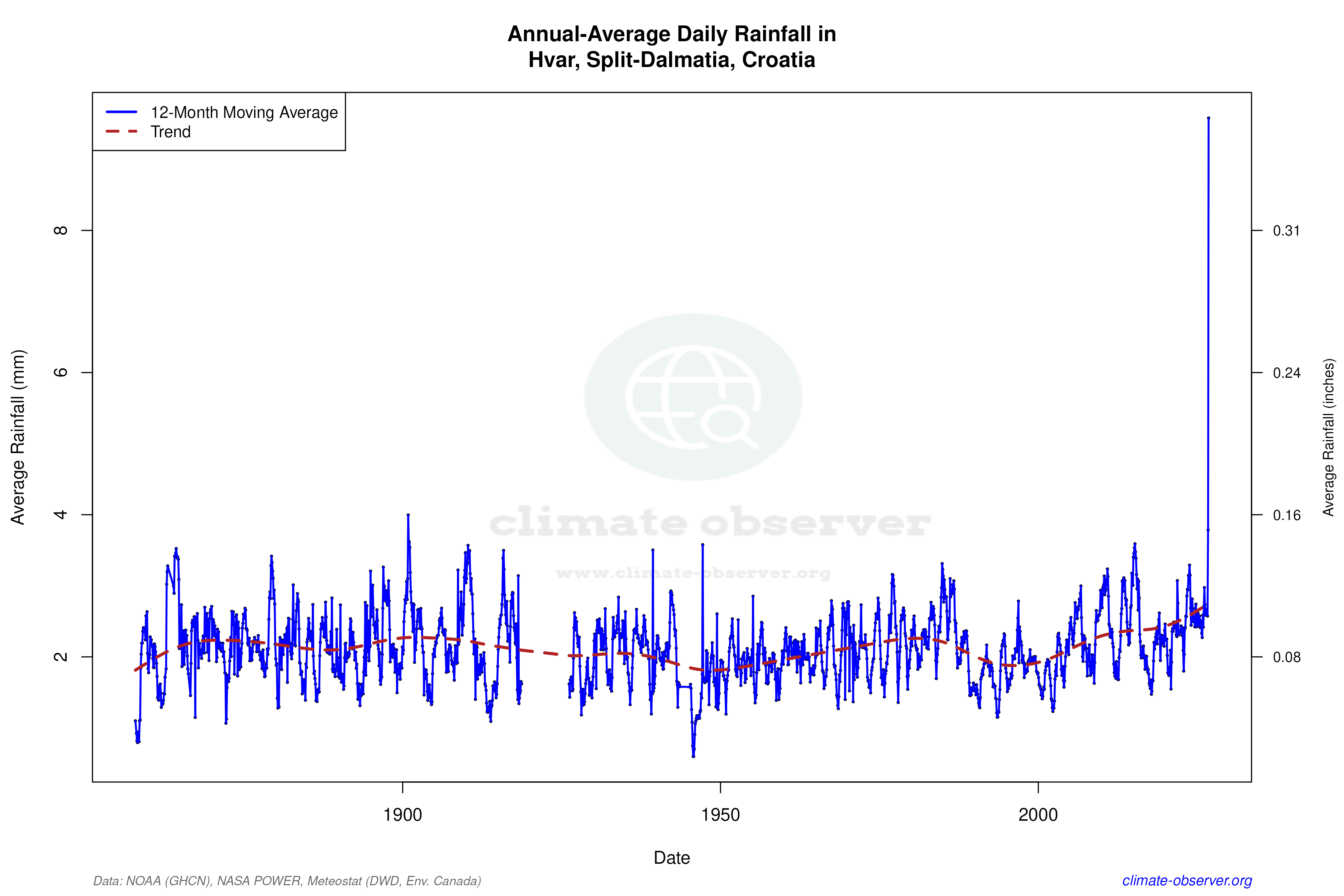
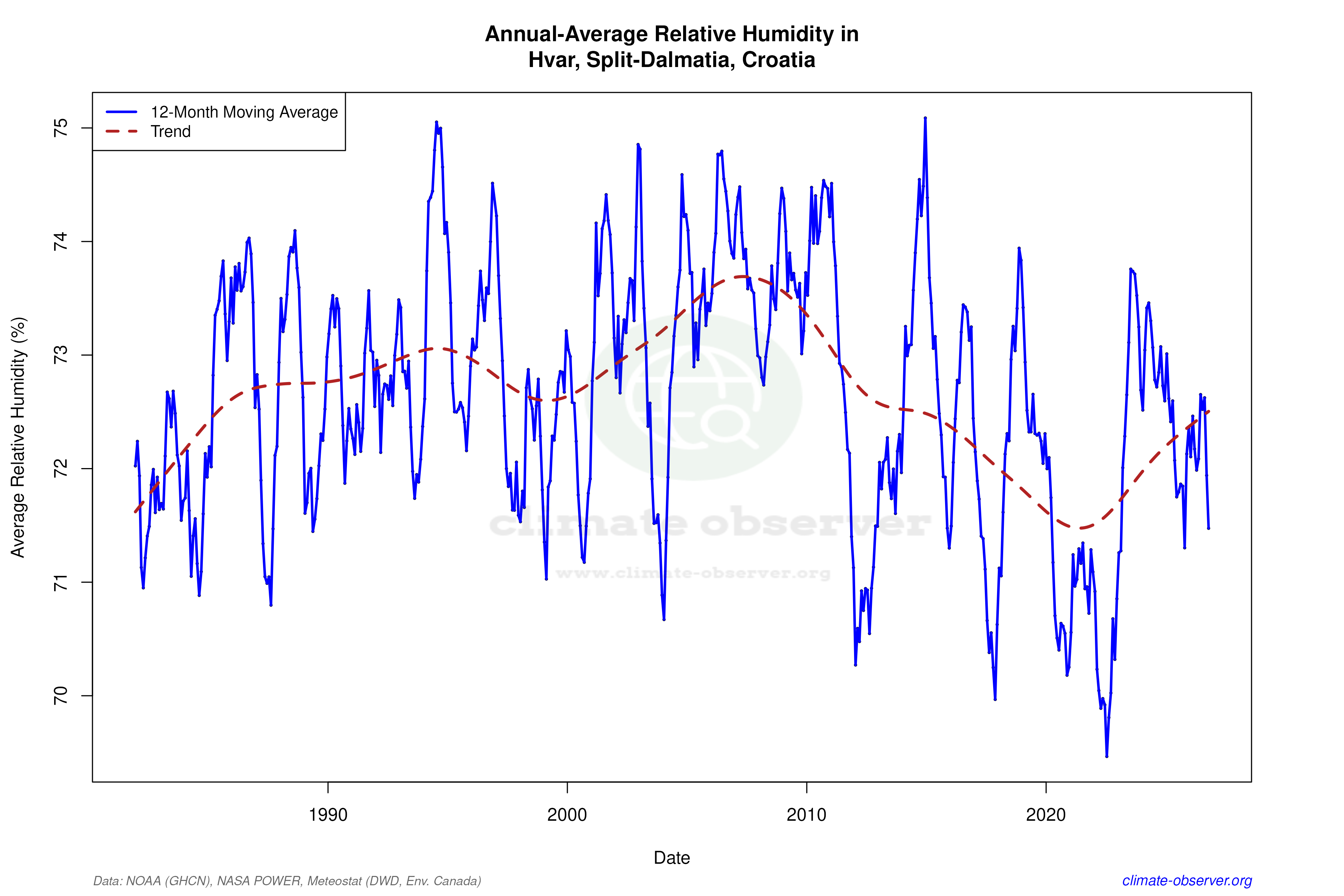

Max Temperature 12-Month MA | 1 of 6
Daily Data Points and Averages Throughout the Year
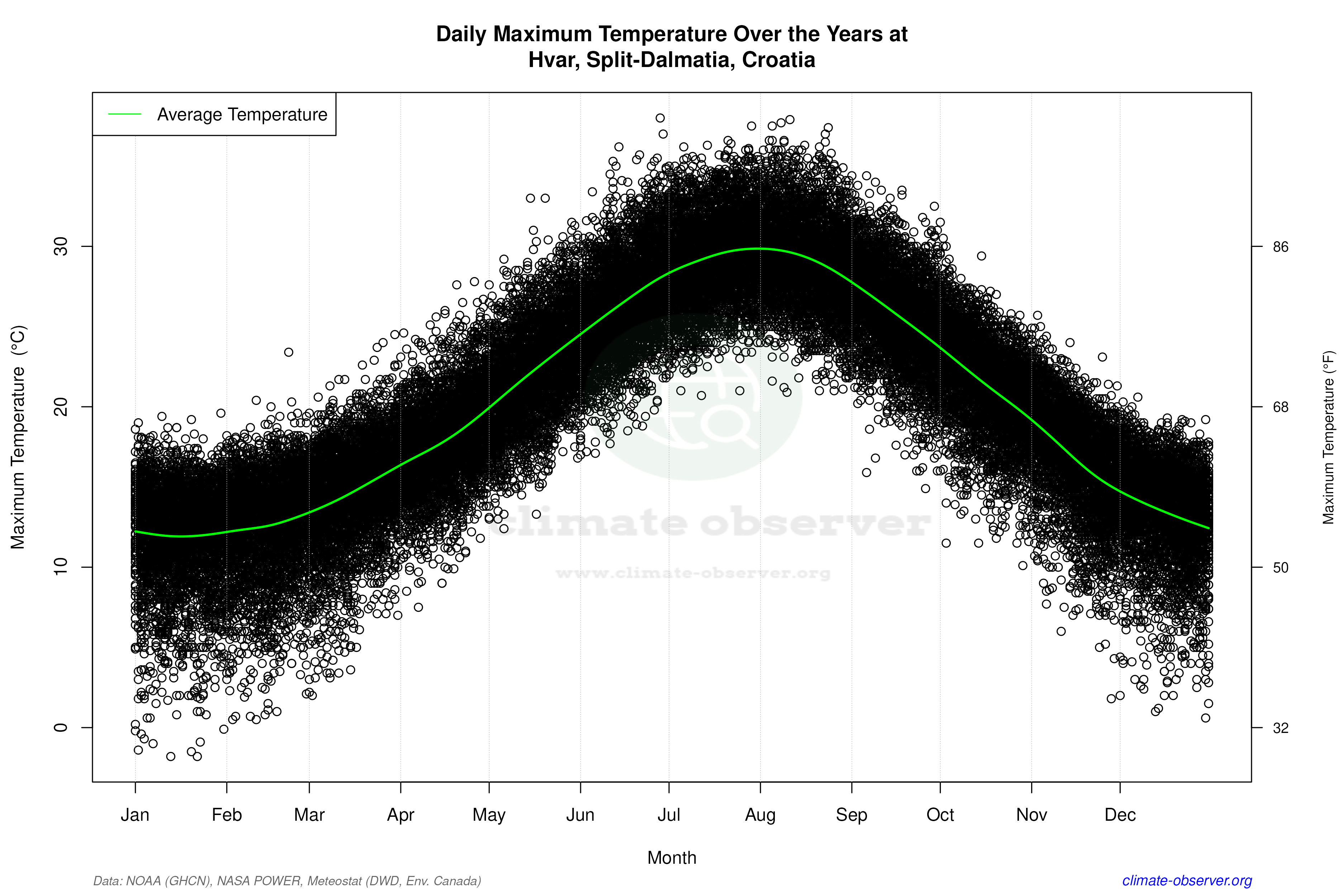
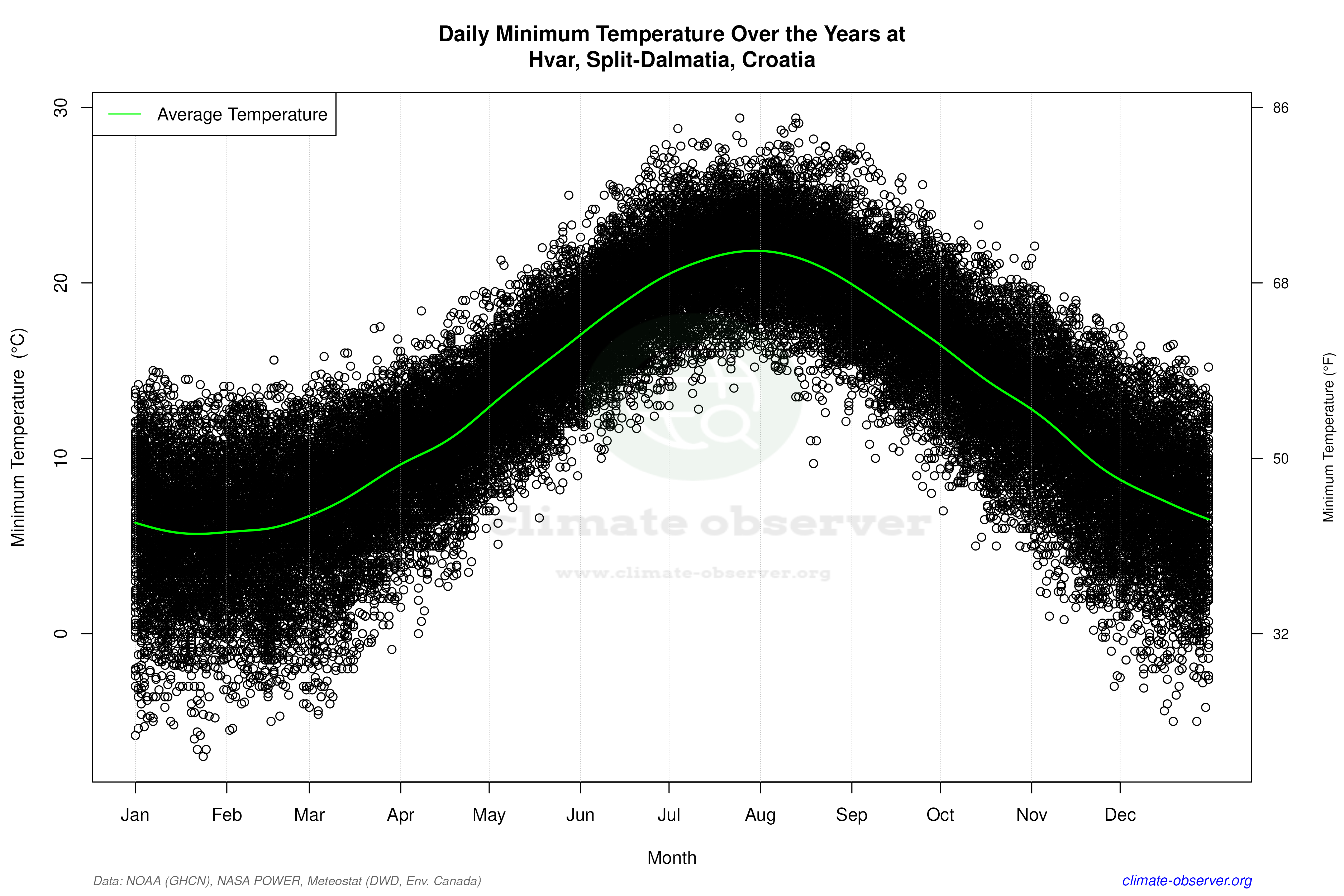
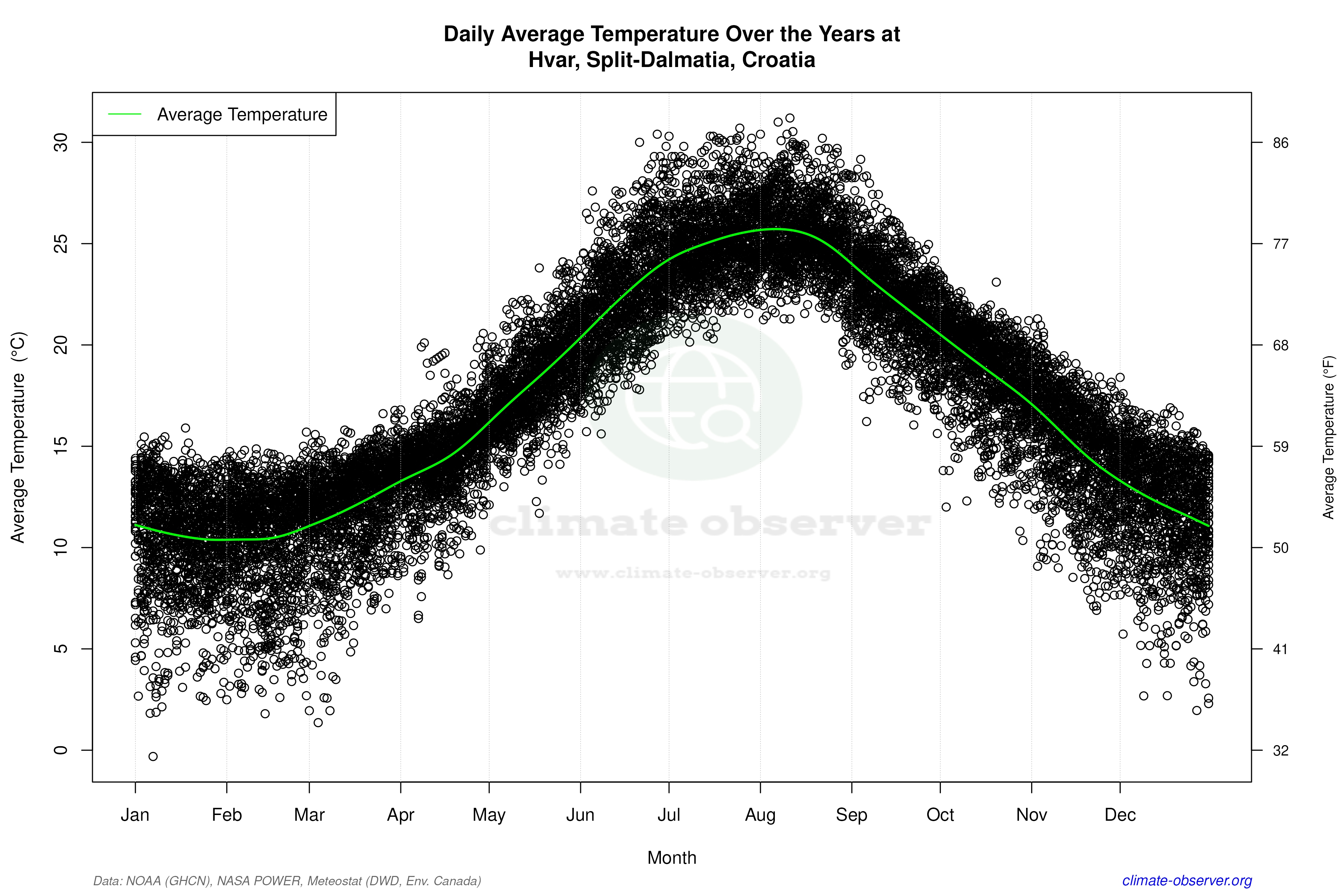
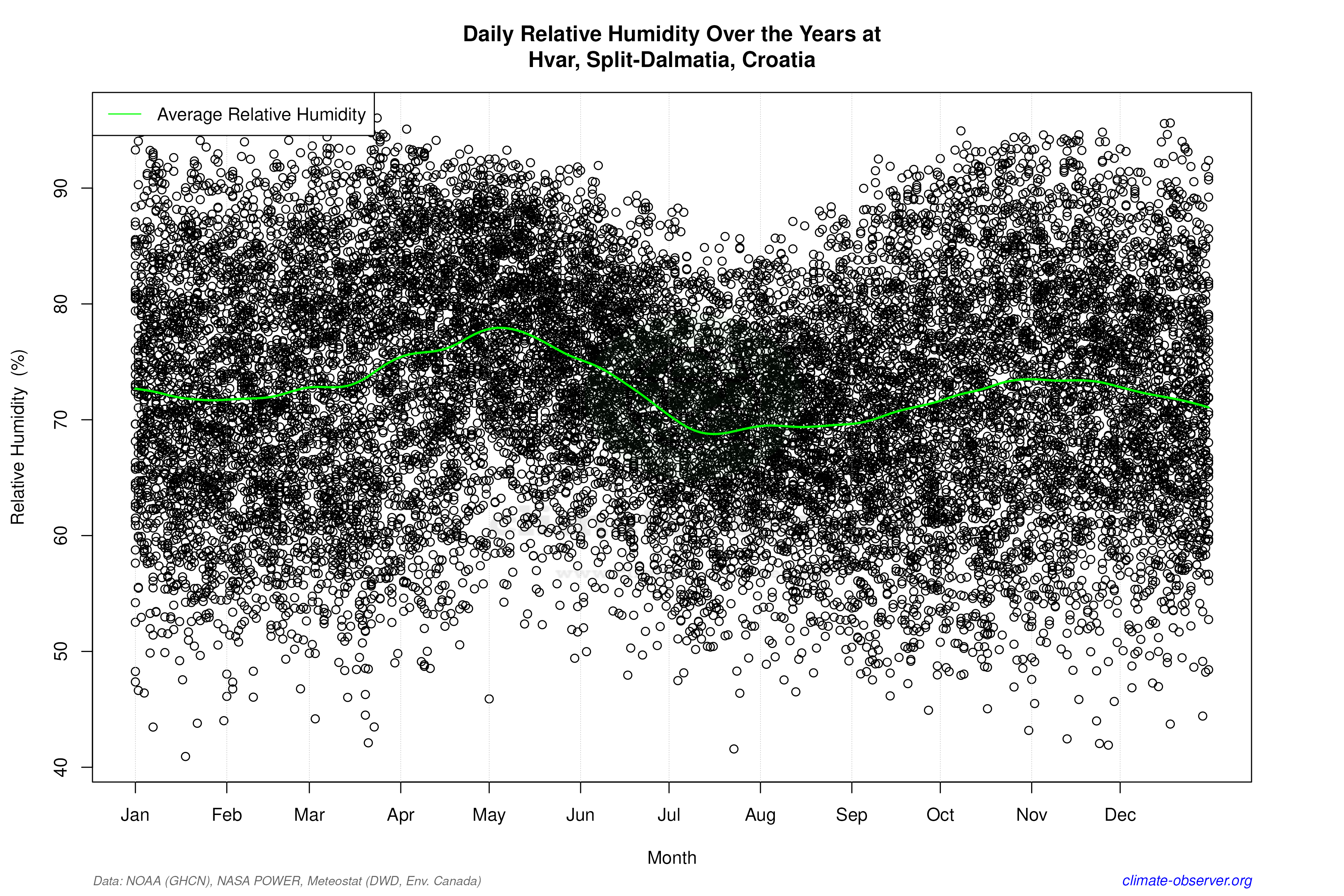

Average Max Temperature Throughout Year | 1 of 5


