Climate for Station: Goa/Panjim, Goa, India
Loading live weather...
Climate Analysis & Overview
Goa's climate profile reveals a nuanced picture of warming and cooling trends over different timescales, with a notable shift towards more evenly distributed rainfall. Recent data suggests a complex interplay between regional climate goals and localised weather phenomena.
Monsoon Mysteries and Rainfall Patterns
Goa, located on the western coast of India, experiences a tropical monsoon climate, classified under the Köppen system as Am. The region is heavily influenced by the Arabian Sea, which plays a pivotal role in shaping its weather patterns. The Precipitation Concentration Index (PCI) has seen a significant decrease from a baseline of 24.20 to a current value of 18.00. This indicates a shift towards more evenly distributed rainfall, moving away from highly concentrated monsoon events. Such a trend aligns with India's broader climate goals of managing water resources more effectively amid changing climate conditions.
Temperature Trends: A Tale of Two Scales
The temperature data for Goa presents a dual narrative. Over the past decade, there has been a cooling trend in high temperatures, with a decrease of 0.72°C (1.30°F). This contrasts with a warming trend in low temperatures, which have risen by 0.39°C (0.70°F). However, when considering all-time trends, both high and low temperatures show a warming pattern, albeit modestly. Highs have increased by 0.23°C (0.41°F), while lows have risen by 0.03°C (0.05°F). This suggests a gradual warming over the long term, consistent with global climate change patterns, yet the recent decade's cooling highs introduce a layer of complexity.
Record Extremes and Climatic Variability
The absolute temperature records for Goa highlight the region's climatic variability. The highest recorded temperature stands at 39.2°C (102.6°F), while the lowest is 12.8°C (55.0°F). These extremes underscore the range of conditions experienced in the area, influenced by both local geography and broader climatic forces. The coastal proximity moderates temperatures, yet the variability in records points to potential challenges in managing heatwaves and cold spells.
Navigating Climate Goals Amidst Local Change
India's regional climate ambitions, including reducing carbon emissions and enhancing renewable energy use, provide a backdrop to Goa's localised changes. The interplay between these goals and the observed climatic shifts, such as the more evenly distributed rainfall, suggests a dynamic environment where policy and natural variability intersect. Recent weather events, such as intensified monsoon rains, highlight the importance of adaptive strategies in this coastal state.
Geographical Influences and Future Implications
Goa's unique geographical features, including its coastline and proximity to the Western Ghats, significantly impact its climate. The Ghats act as a barrier, influencing monsoon patterns and contributing to the region's rich biodiversity. As climate trends evolve, understanding these geographical influences becomes crucial for future planning and sustainability efforts in the region.
Station Statistics
10-Year Trend
High: -0.87 °C/decade
Low: +0.66 °C/decade
Rain: +1.92 mm/decade
25-Year Trend
High: +0.02 °C/decade
Low: +0.20 °C/decade
Rain: +1.53 mm/decade
50-Year Trend
High: +0.21 °C/decade
Low: +0.05 °C/decade
Rain: -1.48 mm/decade
All-Time Trend
High: +0.21 °C/decade
Low: +0.05 °C/decade
Rain: -1.67 mm/decade
Percentage Above-Average Days
Last 12 Months: 51.5%
This Year: 29.5%
Precipitation Concentration Index (PCI) ℹ️
Last 12 Months: 21.4
Historical Average: 26.1
Percentile Rank of Last 12 Months ℹ️
High: 5th percentile
Low: 94th percentile
Rain: 77th percentile
Change in Variance ℹ️
High: +9.0%
Low: -10.1%
Intraday: +7.1%
Data Coverage
97.4%
First Year of Data
2003
Station Location
Historical Weather Records
| Max High | Avg High | Min High | Max Avg | Avg Avg | Min Avg | Max Low | Avg Low | Min Low | Max Precipitation | Avg Precipitation | Max Snow | Avg Snow | |
|---|---|---|---|---|---|---|---|---|---|---|---|---|---|
| Record | 39.2 °C | — | 23.9 °C | 34.1 °C | — | 20.8 °C | 29.6 °C | — | 12.8 °C | 573.8 mm | — | — | — |
| January | 36.8 °C | 32.2 °C | 26.4 °C | 29.9 °C | 25.6 °C | 20.8 °C | 26.4 °C | 20.5 °C | 12.8 °C | 5.9 mm | 0.0 mm | — | — |
| February | 39.2 °C | 32.4 °C | 27.8 °C | 32.2 °C | 26.3 °C | 21.9 °C | 26.9 °C | 21.2 °C | 14.0 °C | 9.9 mm | 0.0 mm | — | — |
| March | 38.2 °C | 32.7 °C | 28.8 °C | 32.4 °C | 27.9 °C | 23.6 °C | 27.9 °C | 23.5 °C | 13.2 °C | 32.3 mm | 0.1 mm | — | — |
| April | 37.0 °C | 33.4 °C | 30.0 °C | 33.4 °C | 29.3 °C | 25.8 °C | 29.0 °C | 25.6 °C | 19.0 °C | 58.9 mm | 0.3 mm | — | — |
| May | 38.7 °C | 33.6 °C | 27.1 °C | 34.1 °C | 29.9 °C | 25.2 °C | 29.6 °C | 26.6 °C | 20.9 °C | 262.4 mm | 2.7 mm | — | — |
| June | 39.2 °C | 30.5 °C | 23.9 °C | 34.1 °C | 27.6 °C | 23.2 °C | 29.3 °C | 25.3 °C | 20.9 °C | 573.8 mm | 32.8 mm | — | — |
| July | 35.0 °C | 29.1 °C | 24.0 °C | 29.9 °C | 26.7 °C | 23.1 °C | 27.6 °C | 24.6 °C | 21.0 °C | 491.7 mm | 34.9 mm | — | — |
| August | 35.6 °C | 29.1 °C | 24.0 °C | 30.6 °C | 26.6 °C | 22.5 °C | 27.0 °C | 24.4 °C | 20.8 °C | 448.3 mm | 22.0 mm | — | — |
| September | 34.8 °C | 29.9 °C | 25.0 °C | 30.7 °C | 26.8 °C | 23.2 °C | 26.6 °C | 24.2 °C | 21.6 °C | 239.8 mm | 11.8 mm | — | — |
| October | 38.0 °C | 31.8 °C | 24.0 °C | 31.3 °C | 27.5 °C | 23.4 °C | 27.1 °C | 24.1 °C | 19.8 °C | 256.0 mm | 5.0 mm | — | — |
| November | 37.2 °C | 33.0 °C | 26.0 °C | 32.2 °C | 27.2 °C | 22.3 °C | 27.0 °C | 22.8 °C | 16.7 °C | 143.5 mm | 1.4 mm | — | — |
| December | 36.6 °C | 32.7 °C | 26.4 °C | 29.3 °C | 26.2 °C | 21.0 °C | 26.8 °C | 21.3 °C | 12.9 °C | 69.9 mm | 0.2 mm | — | — |
Data Visualisations
Remove WatermarksCurrent Year Climate Trends vs Historical
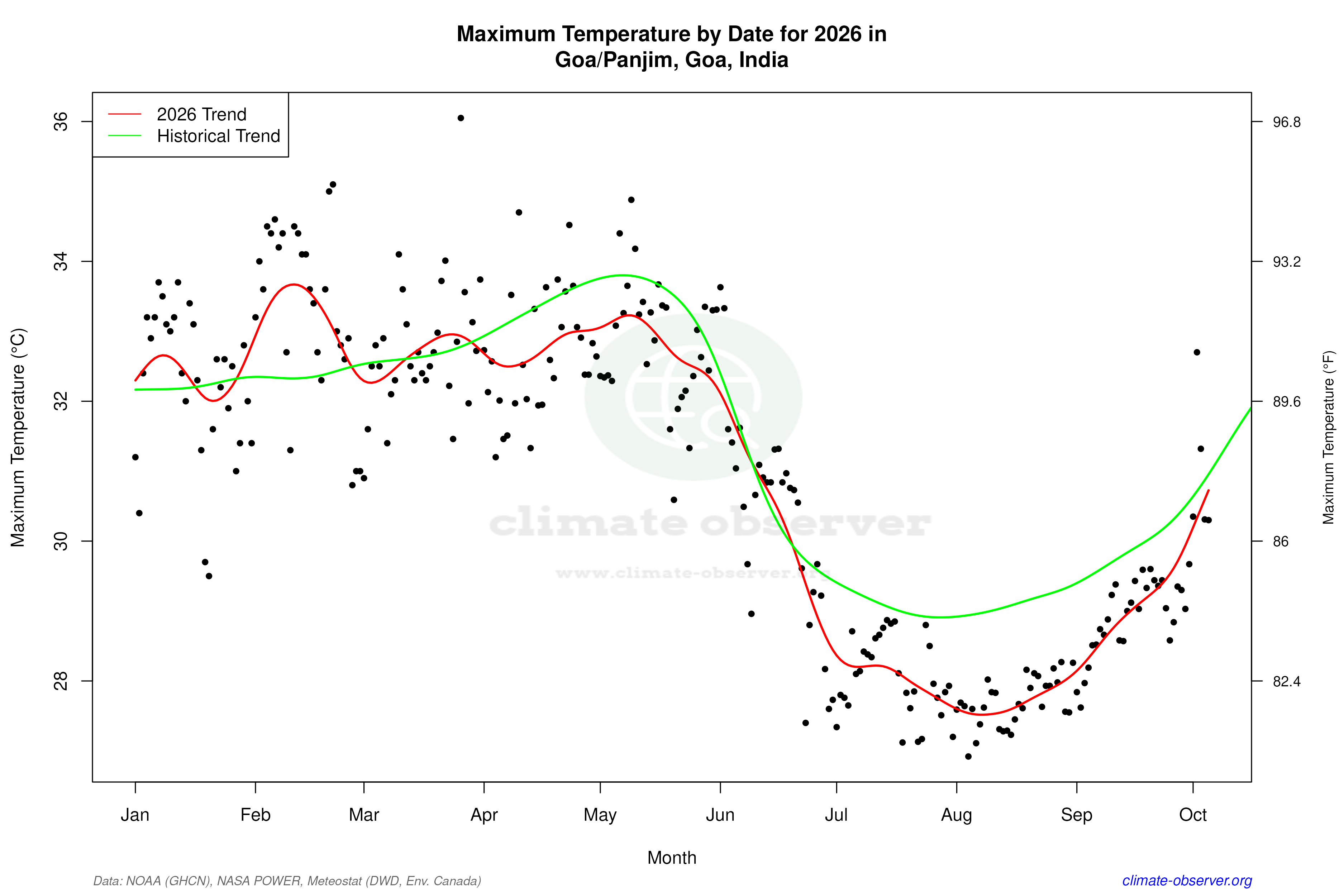
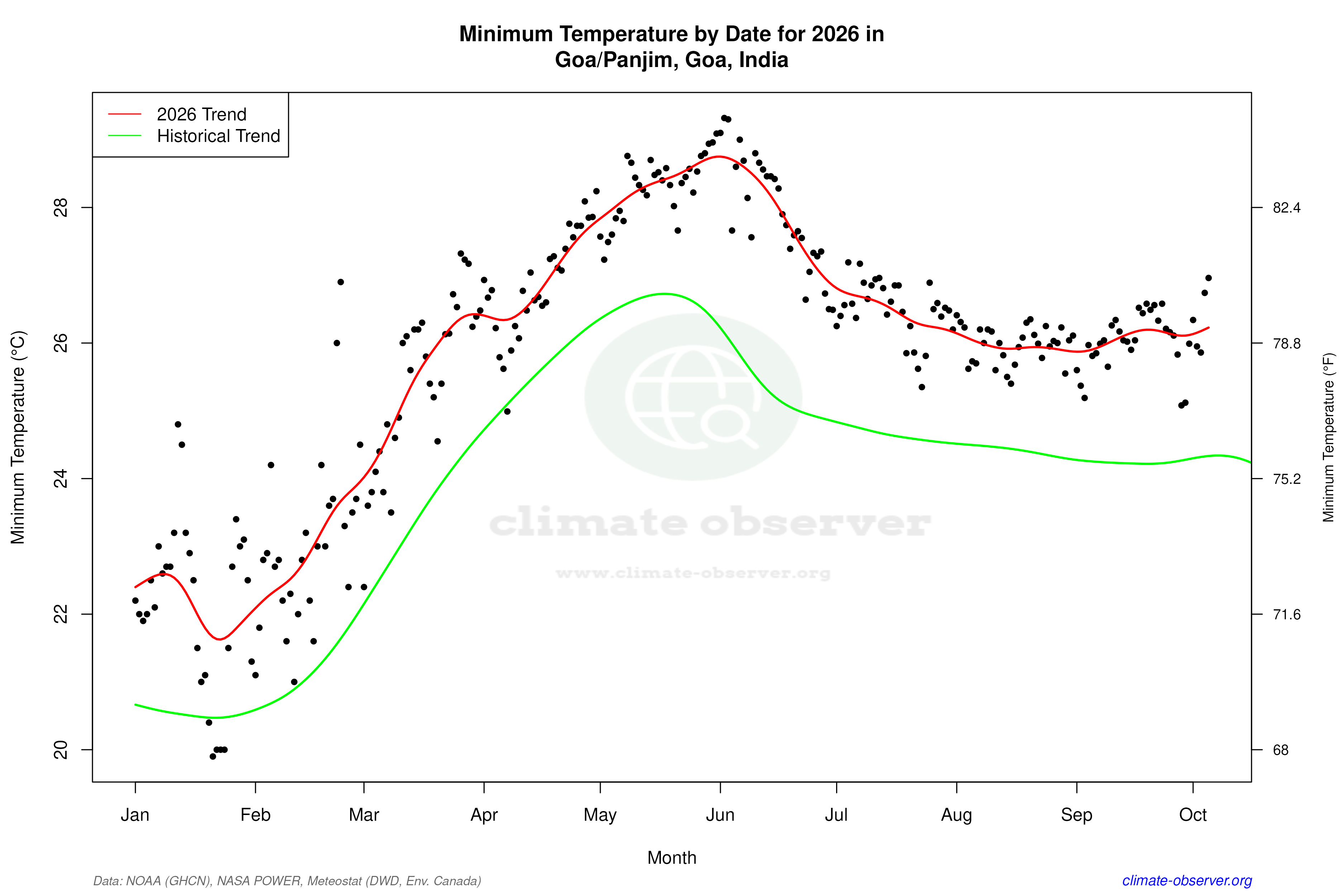
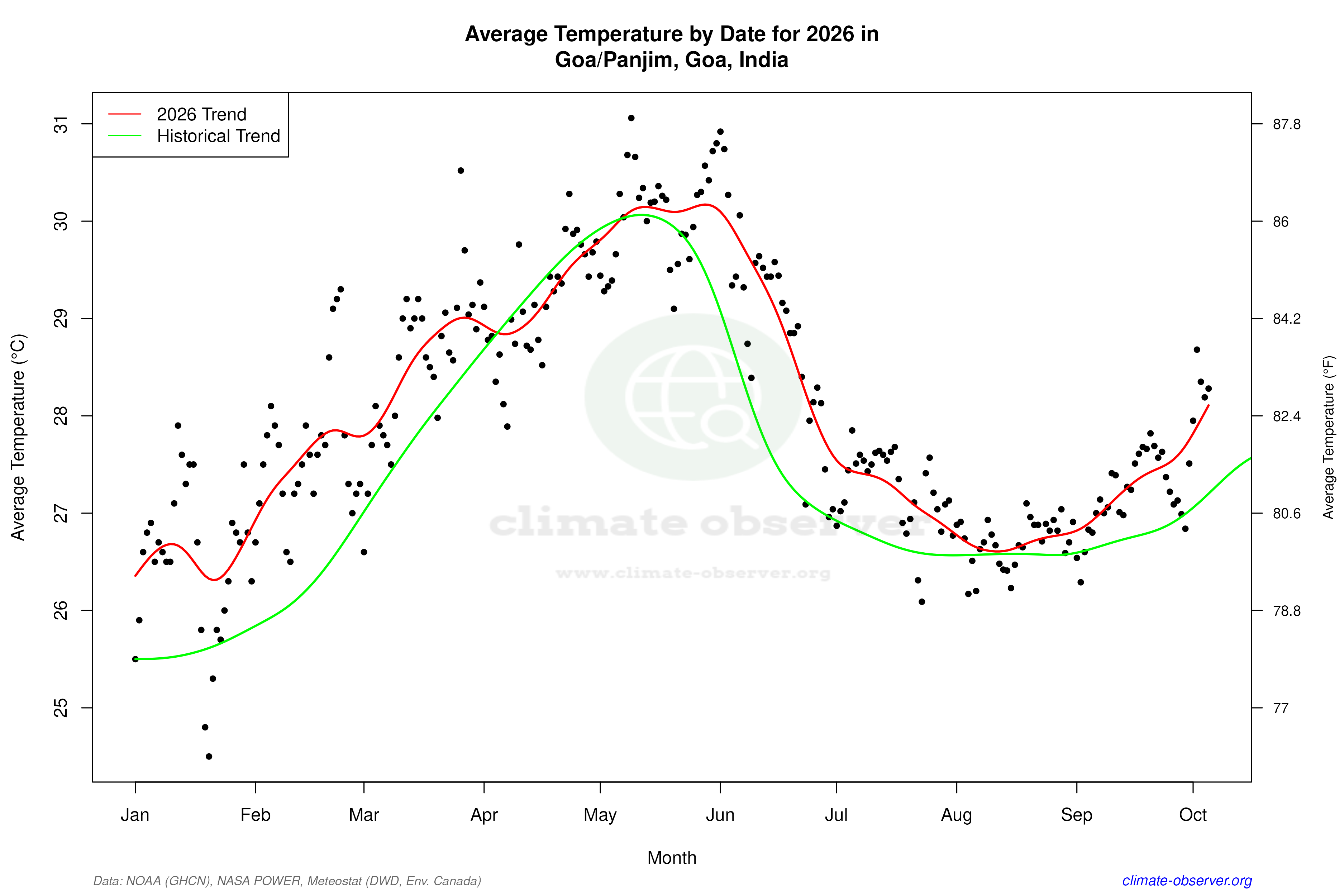
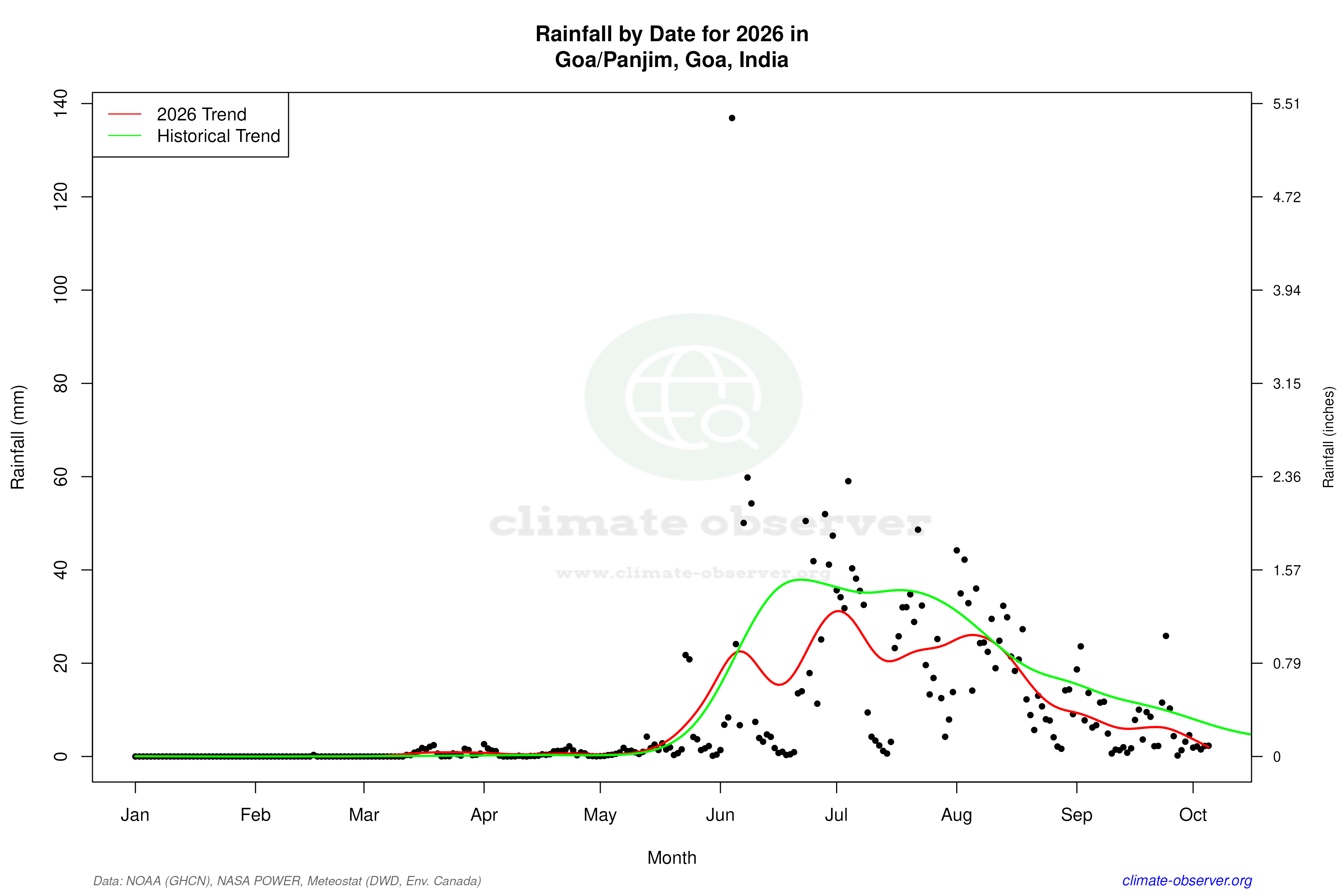
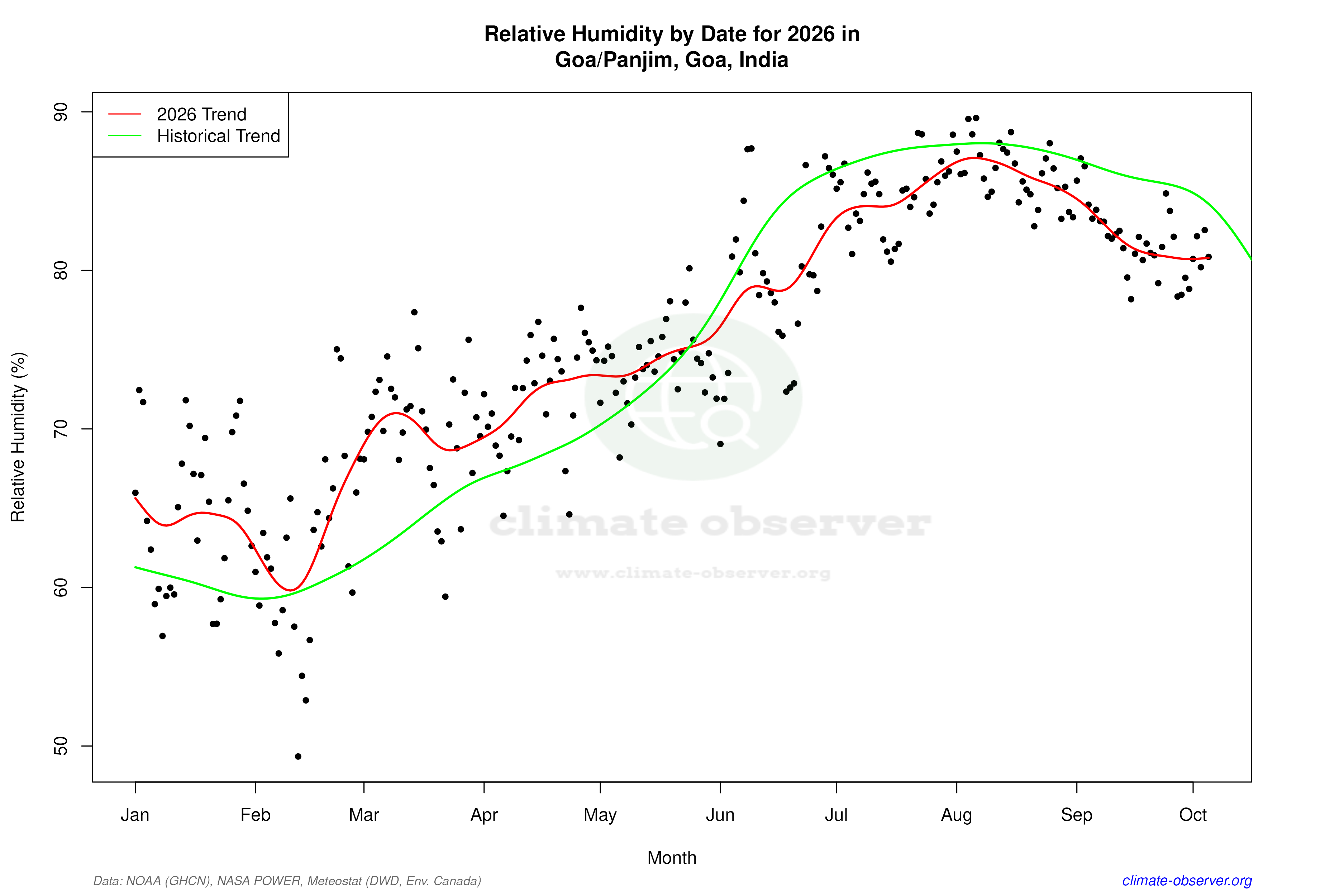

Max Temperature this Year | 1 of 6
Climate 12-Month Moving Averages
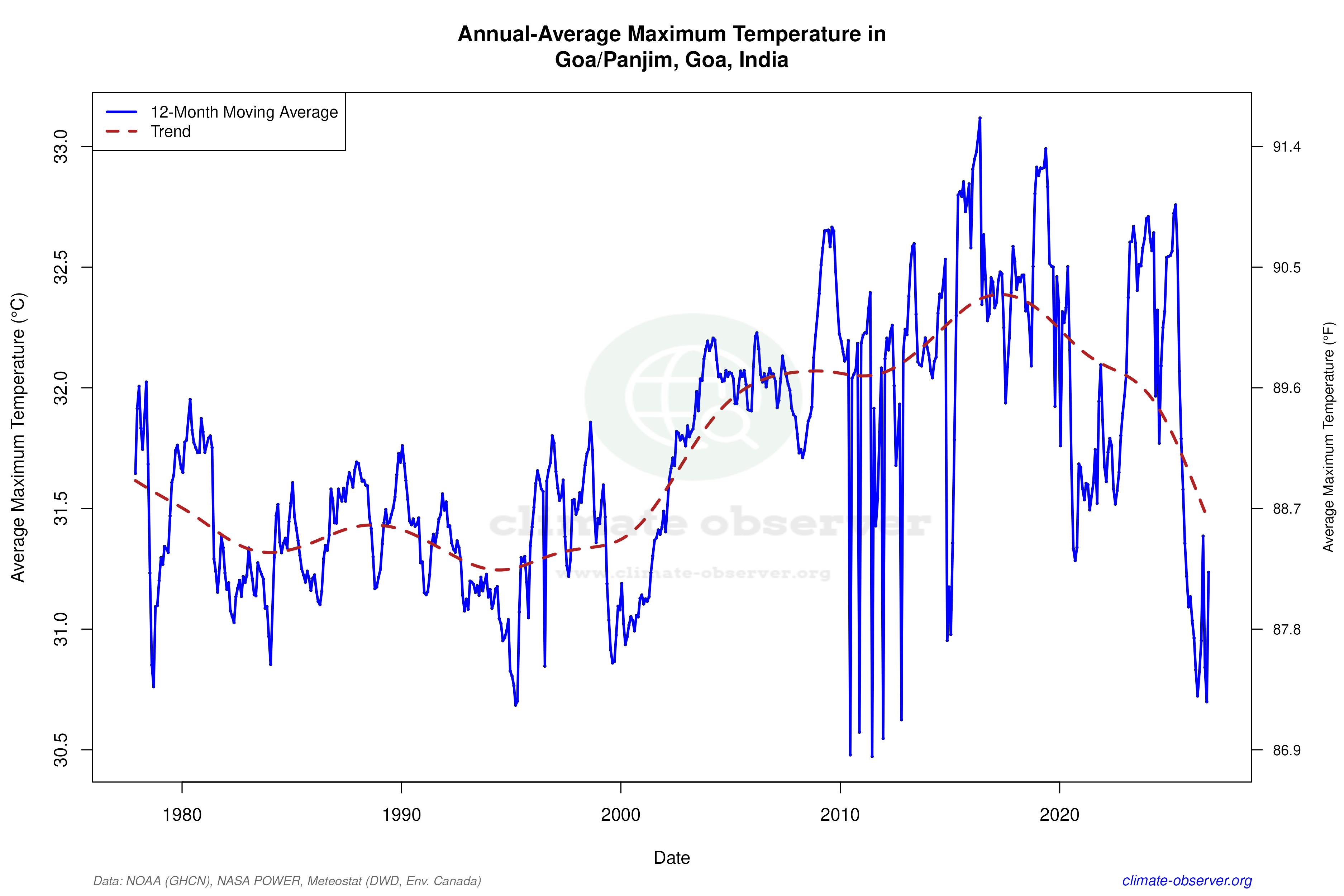
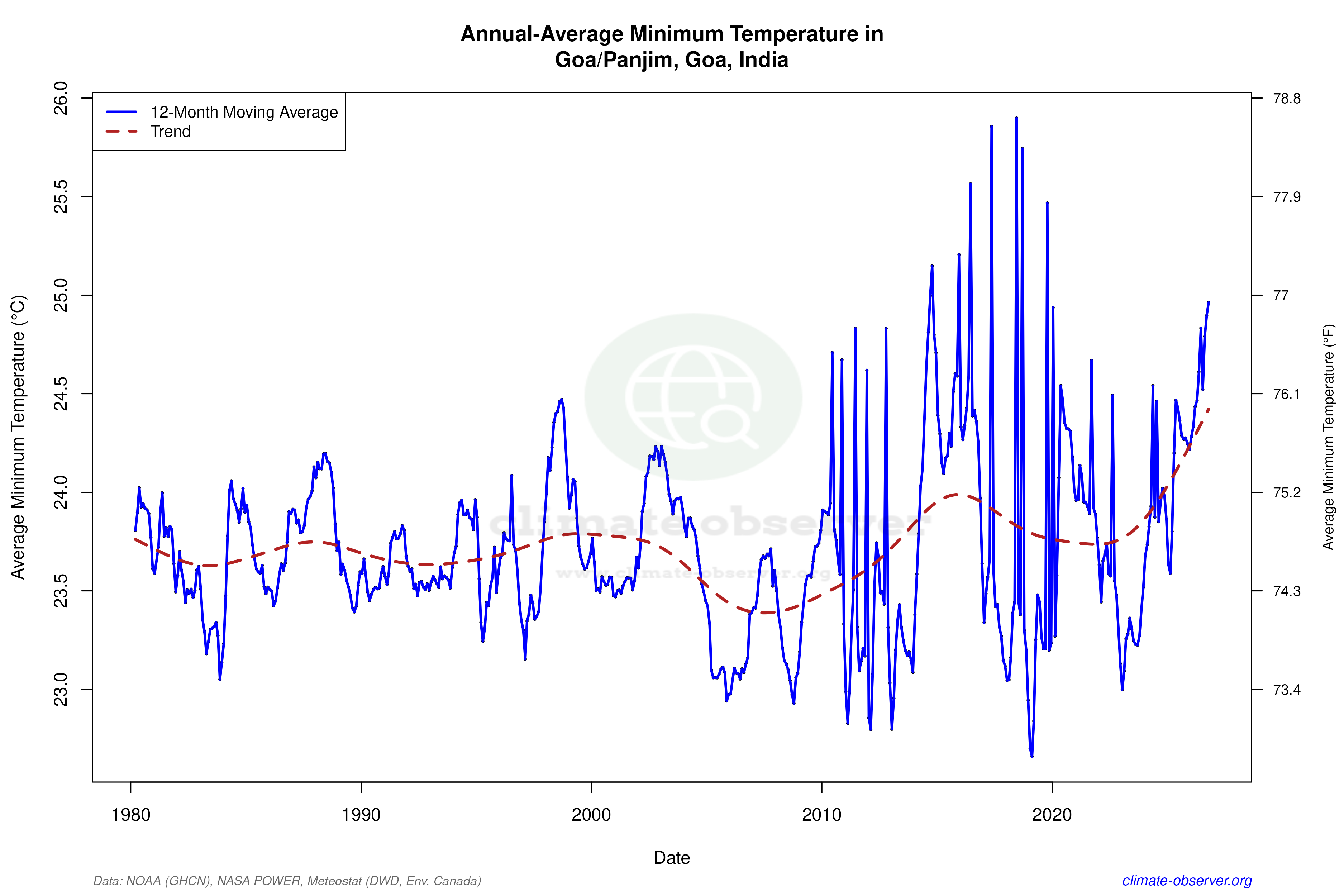
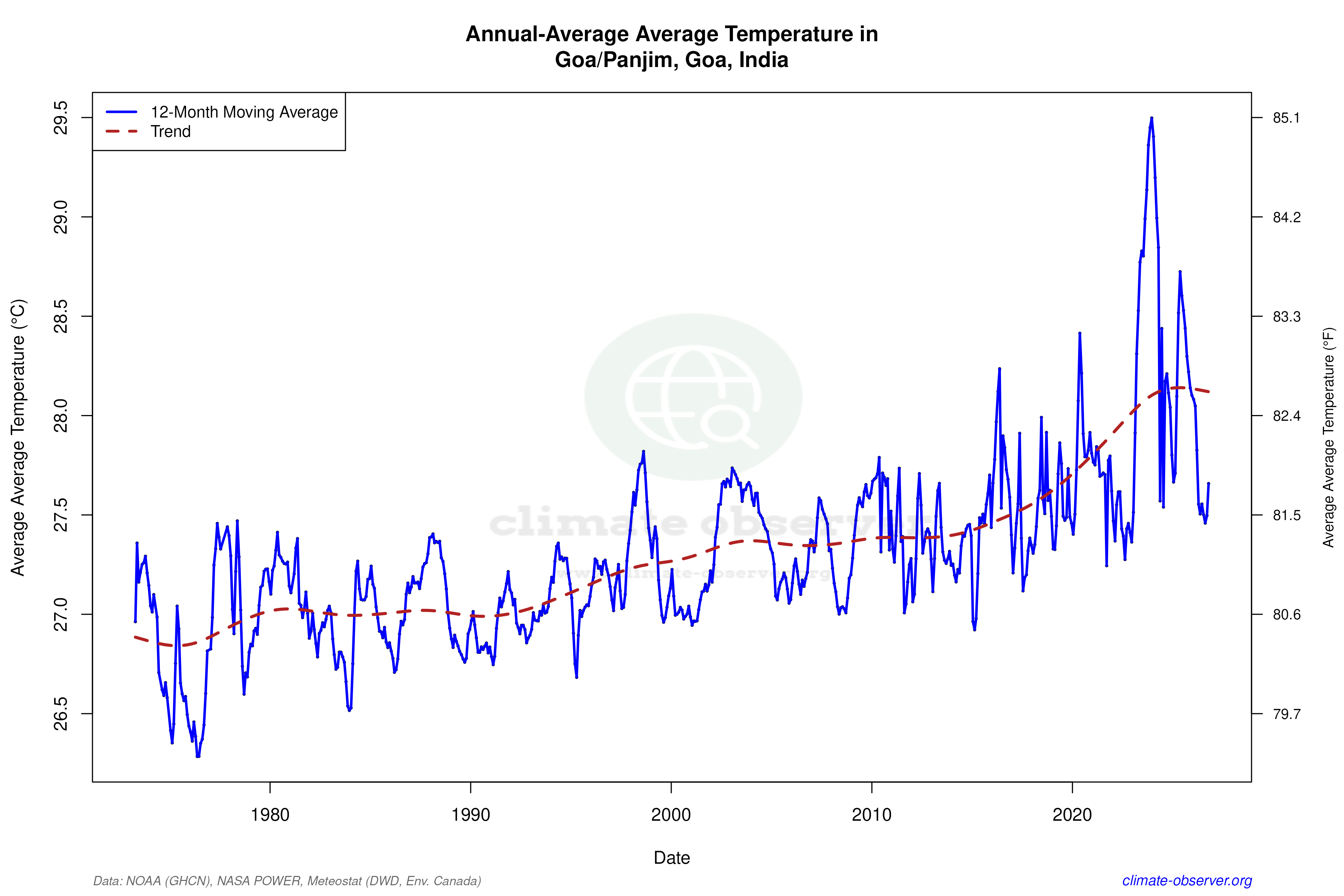
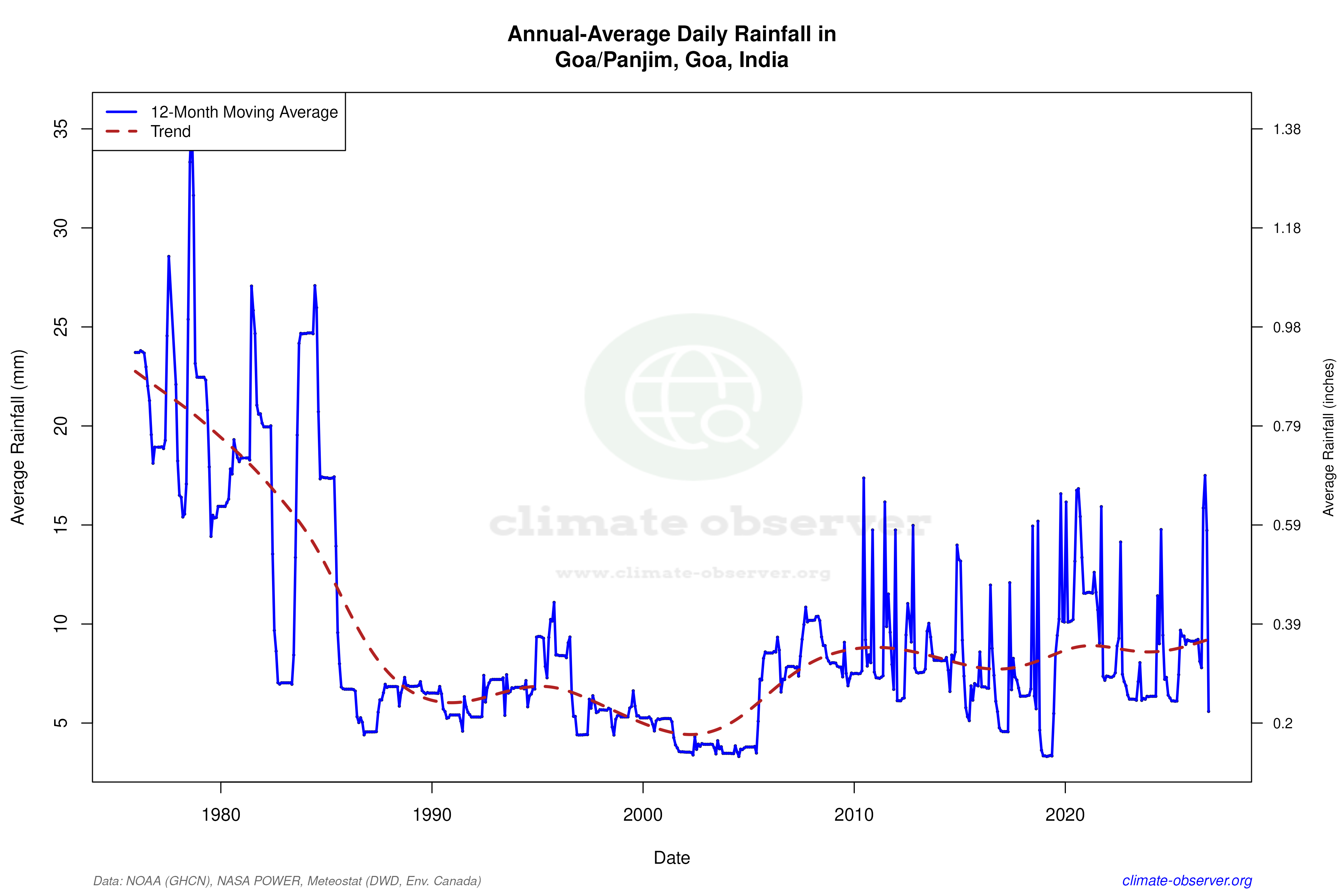
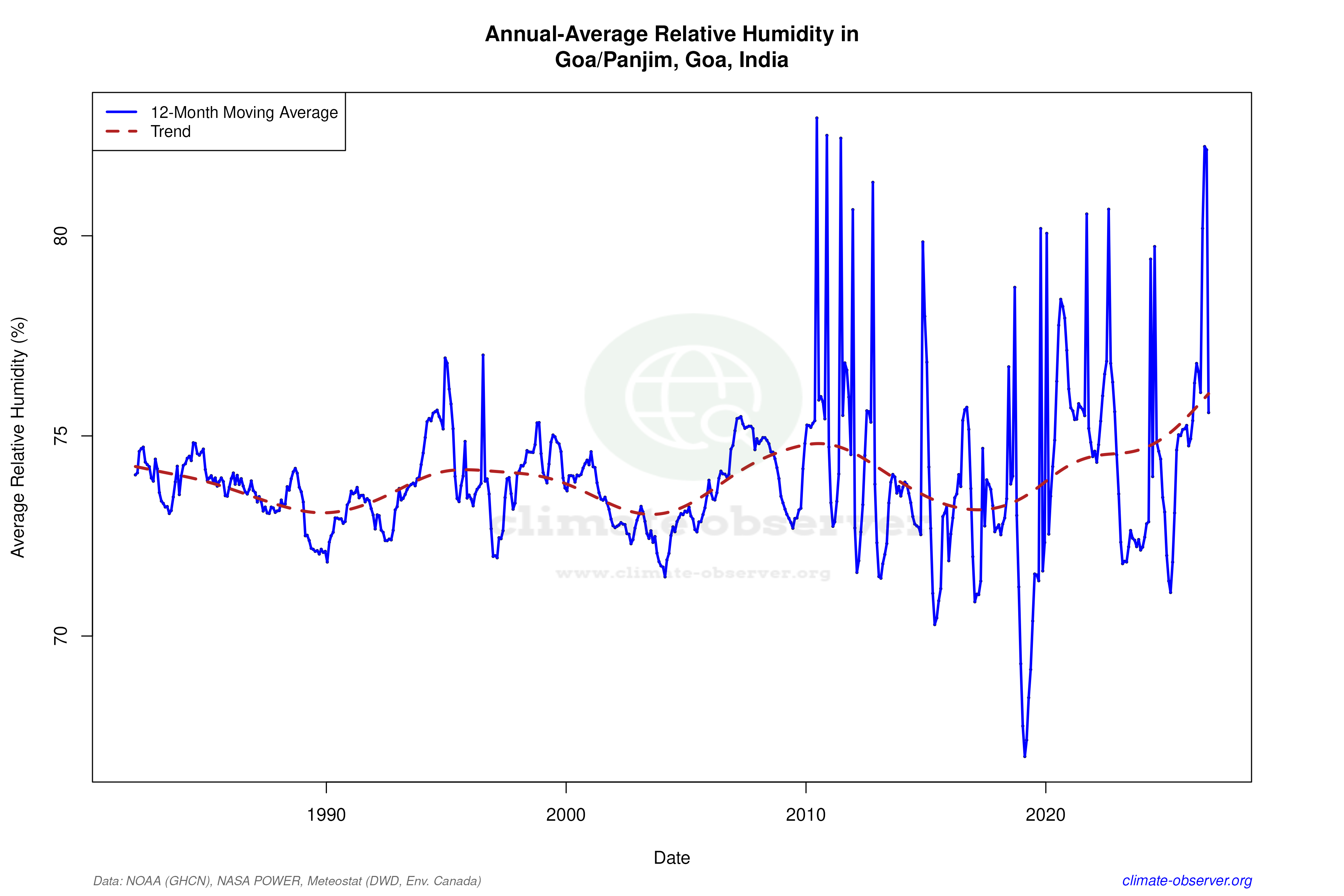

Max Temperature 12-Month MA | 1 of 6
Daily Data Points and Averages Throughout the Year
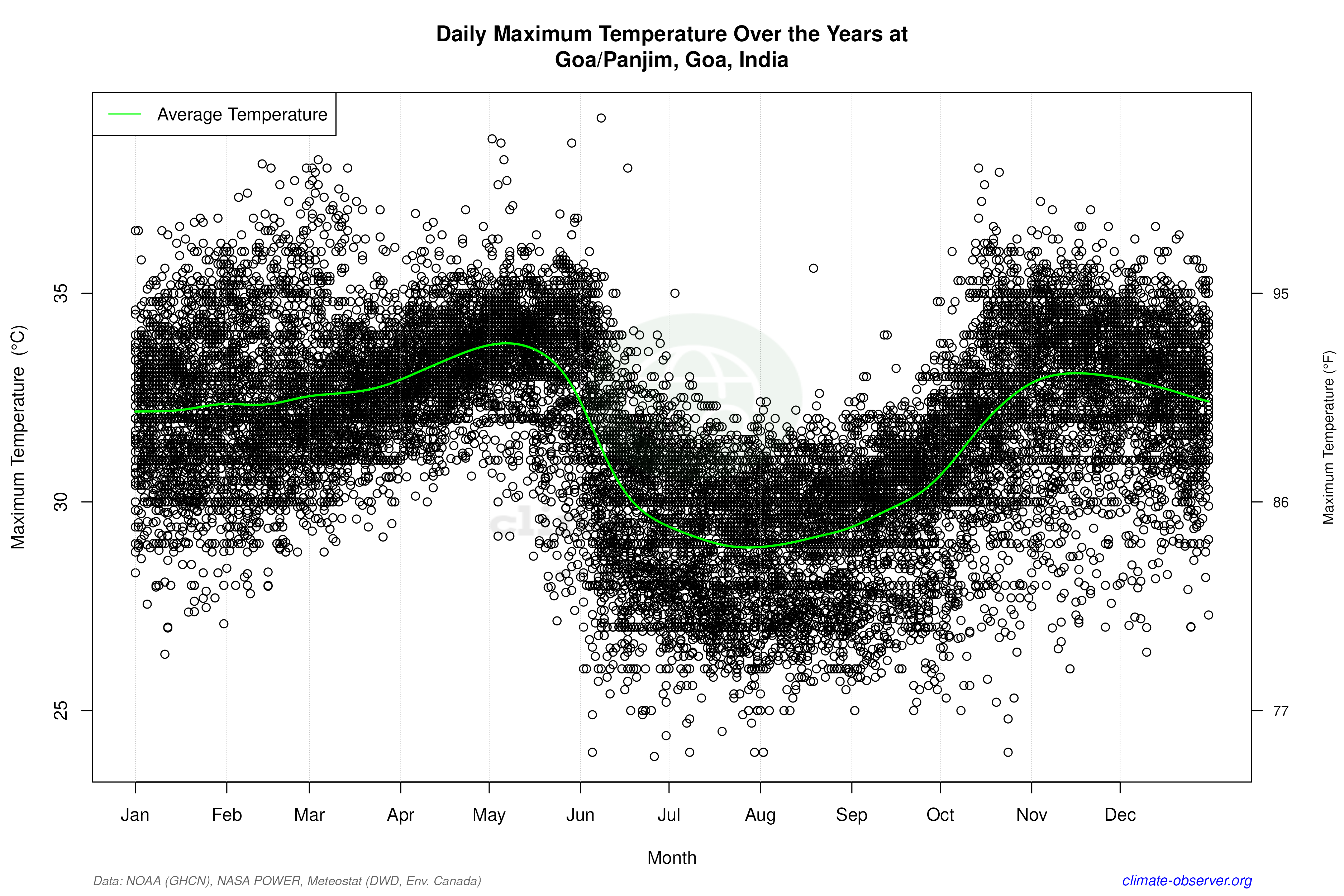
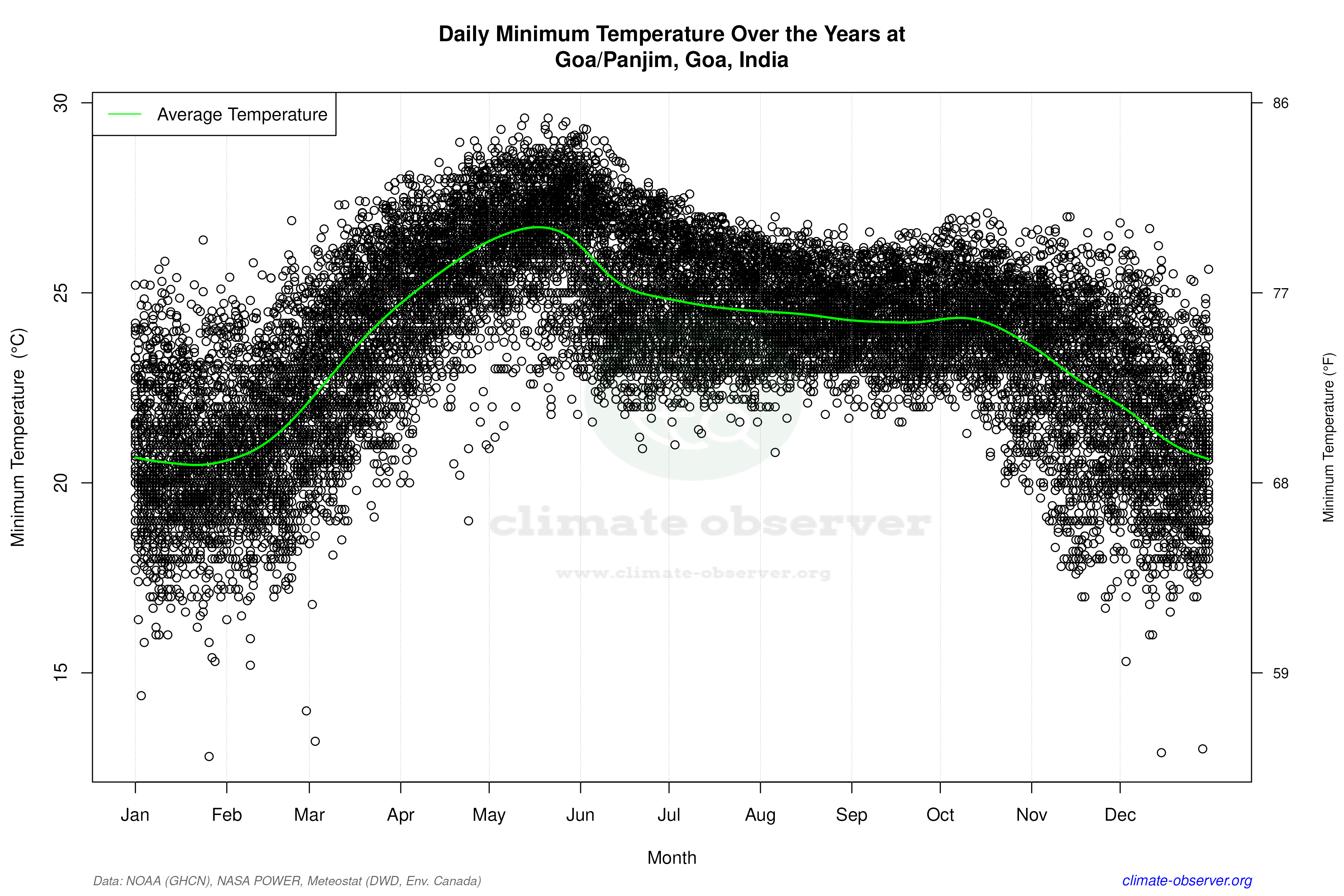
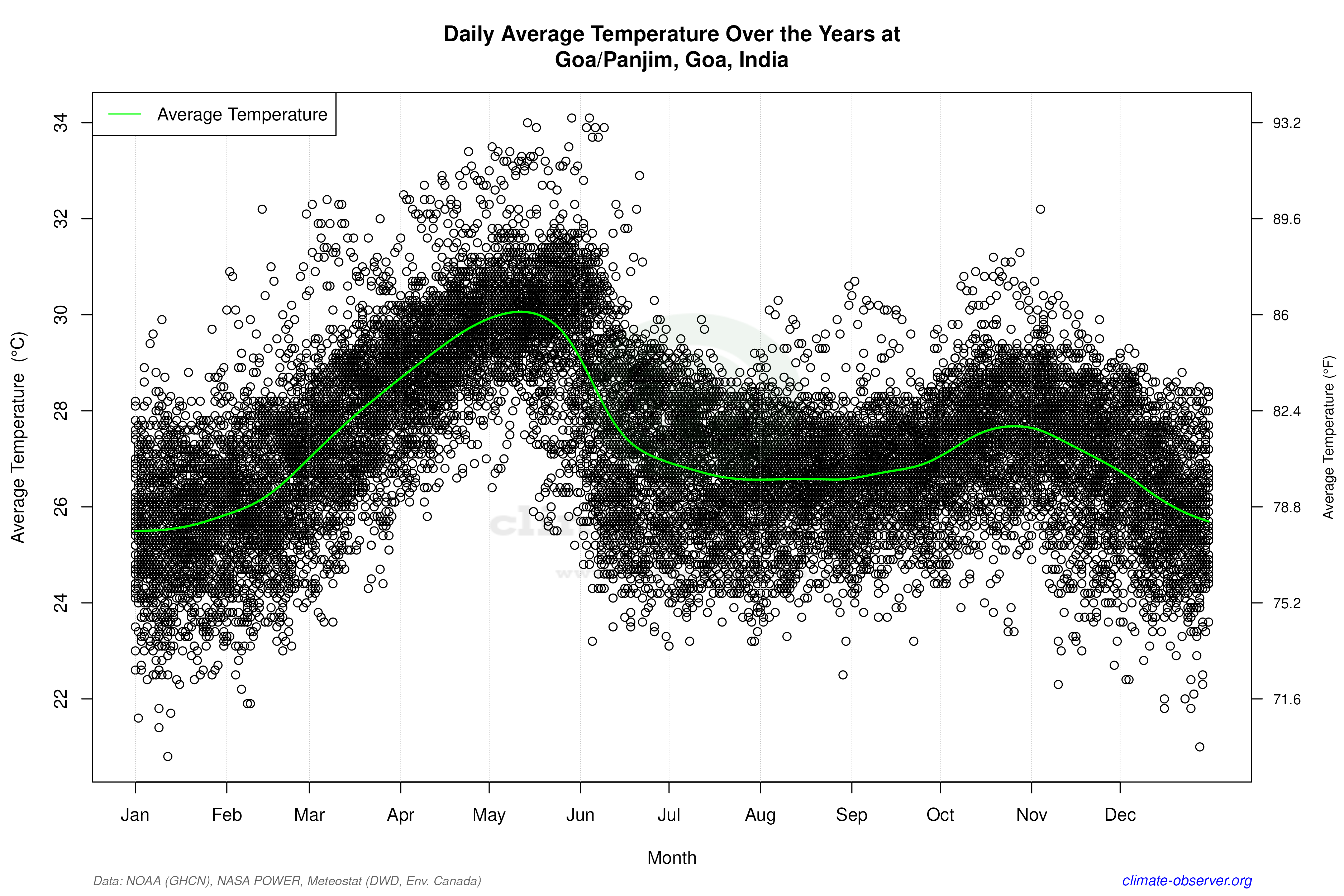
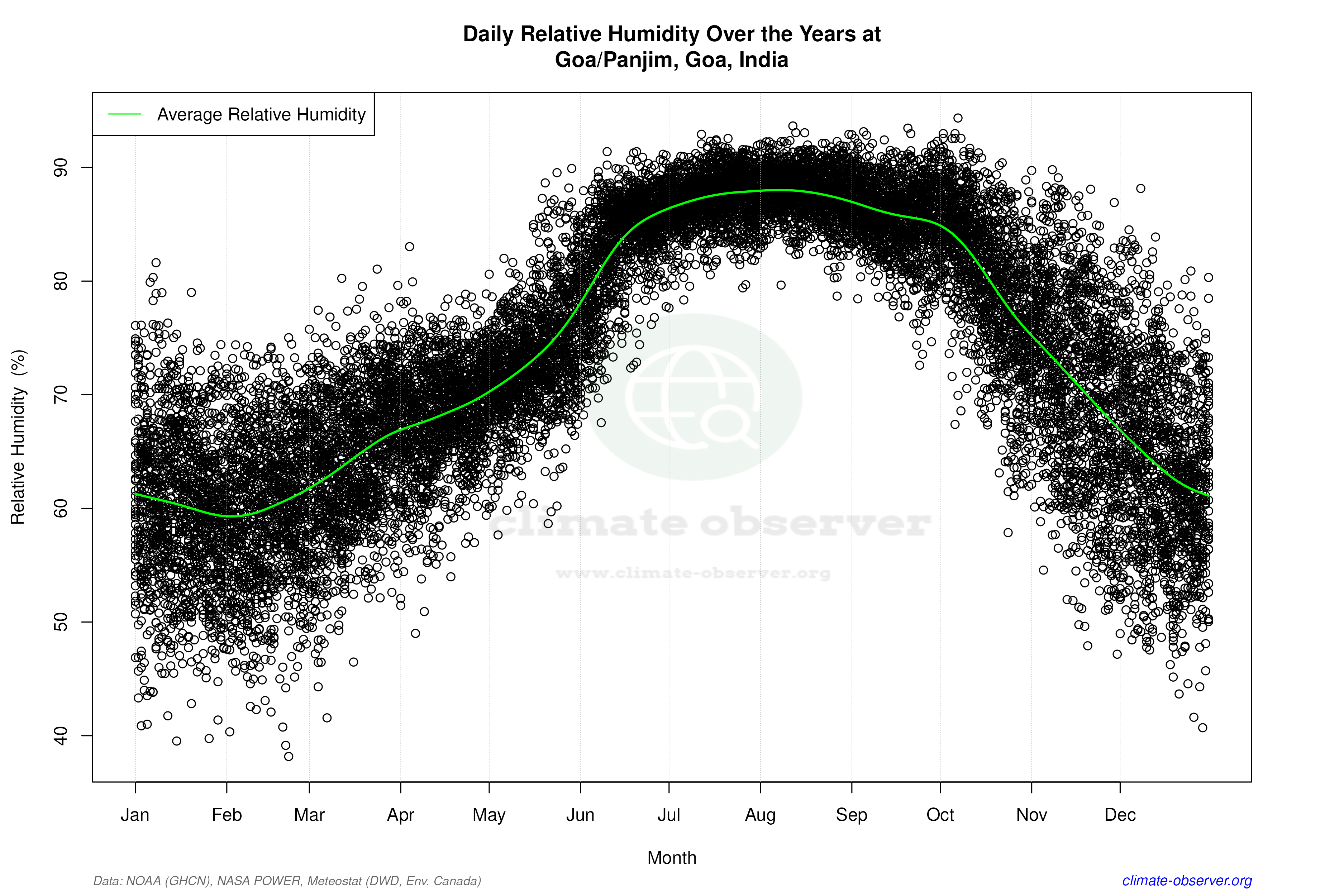

Average Max Temperature Throughout Year | 1 of 5


