Climate for Station: Derna, Derna District, Libya
Loading live weather...
Climate Analysis & Overview
Derna, Libya, is experiencing a complex climate narrative marked by a recent 4.06°C (7.31°F) rise in high temperatures over the past decade, contrasting with a historical cooling trend. The city's precipitation patterns have become slightly more evenly distributed, reflecting a decrease in the Precipitation Concentration Index from 22.48 to 20.37.
Coastal Mediterranean Climate Dynamics
Derna, located at latitude 32.76 and longitude 22.66, enjoys a Mediterranean climate (Csa in the Köppen classification), characterised by hot, dry summers and mild, wet winters. The city's proximity to the Mediterranean Sea moderates its temperatures, but recent data reveals nuanced trends. Over the past decade, high temperatures have climbed by 4.06°C (7.31°F), suggesting a significant warming phase. However, this contrasts with the all-time trend, which shows a slight cooling of 0.07°C (0.13°F) in high temperatures, indicating a complex interplay of local and broader climatic factors.
Temperature Extremes and Variability
Derna's climate is marked by notable temperature extremes. The recorded maximum temperature stands at 43.0°C (109.4°F), while the minimum has dipped to -0.1°C (31.8°F). These figures highlight the city's potential for temperature variability, influenced by both seasonal shifts and broader climate patterns. Interestingly, while high temperatures have surged in recent years, low temperatures have decreased slightly by 0.46°C (0.83°F) over the past decade, against an all-time warming trend of 0.48°C (0.86°F). This duality suggests a complex thermal dynamic that may be influenced by regional atmospheric changes.
Evolving Precipitation Patterns
The Precipitation Concentration Index (PCI) is a measure of how rainfall is distributed over time. Derna's PCI has decreased from a baseline of 22.48 to a current value of 20.37, indicating a slight shift towards more evenly distributed precipitation events. While still highly concentrated, this change suggests a marginal redistribution of rainfall, potentially impacting local water resources and agricultural practices.
Regional Climate Context and Implications
Libya's climate goals focus on mitigating the impacts of climate change, with an emphasis on sustainable water management and adaptation strategies. Derna's recent warming trend and evolving precipitation patterns underscore the need for adaptive measures. The city's climate data provides valuable insights into the broader regional climate dynamics, offering a microcosm of the challenges faced by Mediterranean coastal cities in an era of climate uncertainty.
Station Statistics
10-Year Trend
High: +6.15 °F/decade
Low: +0.15 °F/decade
Rain: -0.005 in/decade
25-Year Trend
High: +1.05 °F/decade
Low: +0.04 °F/decade
Rain: +0.001 in/decade
50-Year Trend
High: +0.45 °F/decade
Low: +0.40 °F/decade
Rain: +0.000 in/decade
All-Time Trend
High: -0.06 °F/decade
Low: +0.65 °F/decade
Rain: +0.000 in/decade
Percentage Above-Average Days
Last 12 Months: 51.0%
This Year: 48.8%
Precipitation Concentration Index (PCI) ℹ️
Last 12 Months: 12.2
Historical Average: 22.3
Percentile Rank of Last 12 Months ℹ️
High: 90th percentile
Low: 75th percentile
Rain: 23rd percentile
Change in Variance ℹ️
High: +12.1%
Low: -0.3%
Intraday: -41.8%
Data Coverage
64.8%
First Year of Data
1951
Station Location
Historical Weather Records
| Max High | Avg High | Min High | Max Avg | Avg Avg | Min Avg | Max Low | Avg Low | Min Low | Max Precipitation | Avg Precipitation | Max Snow | Avg Snow | |
|---|---|---|---|---|---|---|---|---|---|---|---|---|---|
| Record | 109.40 °F | — | 47.30 °F | 94.64 °F | — | 41.72 °F | 85.64 °F | — | 31.82 °F | 6.29 in | — | — | — |
| January | 83.12 °F | 62.66 °F | 49.46 °F | 72.32 °F | 57.98 °F | 41.72 °F | 68.90 °F | 52.35 °F | 32.36 °F | 6.29 in | 0.08 in | — | — |
| February | 90.50 °F | 62.86 °F | 47.30 °F | 77.90 °F | 57.81 °F | 46.22 °F | 68.00 °F | 51.92 °F | 32.00 °F | 1.69 in | 0.06 in | — | — |
| March | 95.00 °F | 65.55 °F | 48.20 °F | 79.16 °F | 60.10 °F | 46.94 °F | 74.30 °F | 53.66 °F | 31.82 °F | 2.30 in | 0.04 in | — | — |
| April | 107.60 °F | 70.41 °F | 55.13 °F | 83.84 °F | 63.78 °F | 53.06 °F | 76.64 °F | 56.98 °F | 33.80 °F | 1.14 in | 0.01 in | — | — |
| May | 109.40 °F | 75.31 °F | 61.72 °F | 94.64 °F | 69.27 °F | 58.82 °F | 83.84 °F | 61.95 °F | 33.80 °F | 2.86 in | 0.01 in | — | — |
| June | 107.06 °F | 80.34 °F | 68.99 °F | 94.28 °F | 75.14 °F | 65.66 °F | 84.20 °F | 68.39 °F | 50.00 °F | 1.86 in | 0.00 in | — | — |
| July | 98.96 °F | 82.89 °F | 74.55 °F | 89.96 °F | 78.73 °F | 71.76 °F | 84.56 °F | 73.10 °F | 52.70 °F | 0.12 in | 0.00 in | — | — |
| August | 101.30 °F | 83.94 °F | 77.47 °F | 92.17 °F | 79.91 °F | 73.04 °F | 85.64 °F | 74.47 °F | 56.84 °F | 1.57 in | 0.00 in | — | — |
| September | 96.80 °F | 81.94 °F | 68.90 °F | 91.04 °F | 77.62 °F | 66.92 °F | 83.84 °F | 71.92 °F | 50.00 °F | 3.54 in | 0.01 in | — | — |
| October | 104.72 °F | 78.50 °F | 64.04 °F | 89.60 °F | 73.07 °F | 59.90 °F | 80.24 °F | 67.04 °F | 48.20 °F | 2.57 in | 0.04 in | — | — |
| November | 100.04 °F | 72.36 °F | 57.02 °F | 84.38 °F | 67.08 °F | 54.50 °F | 75.20 °F | 61.26 °F | 38.48 °F | 3.13 in | 0.05 in | — | — |
| December | 88.70 °F | 65.67 °F | 49.82 °F | 79.88 °F | 60.96 °F | 48.47 °F | 72.50 °F | 55.37 °F | 33.62 °F | 2.17 in | 0.08 in | — | — |
Data Visualisations
Remove WatermarksCurrent Year Climate Trends vs Historical
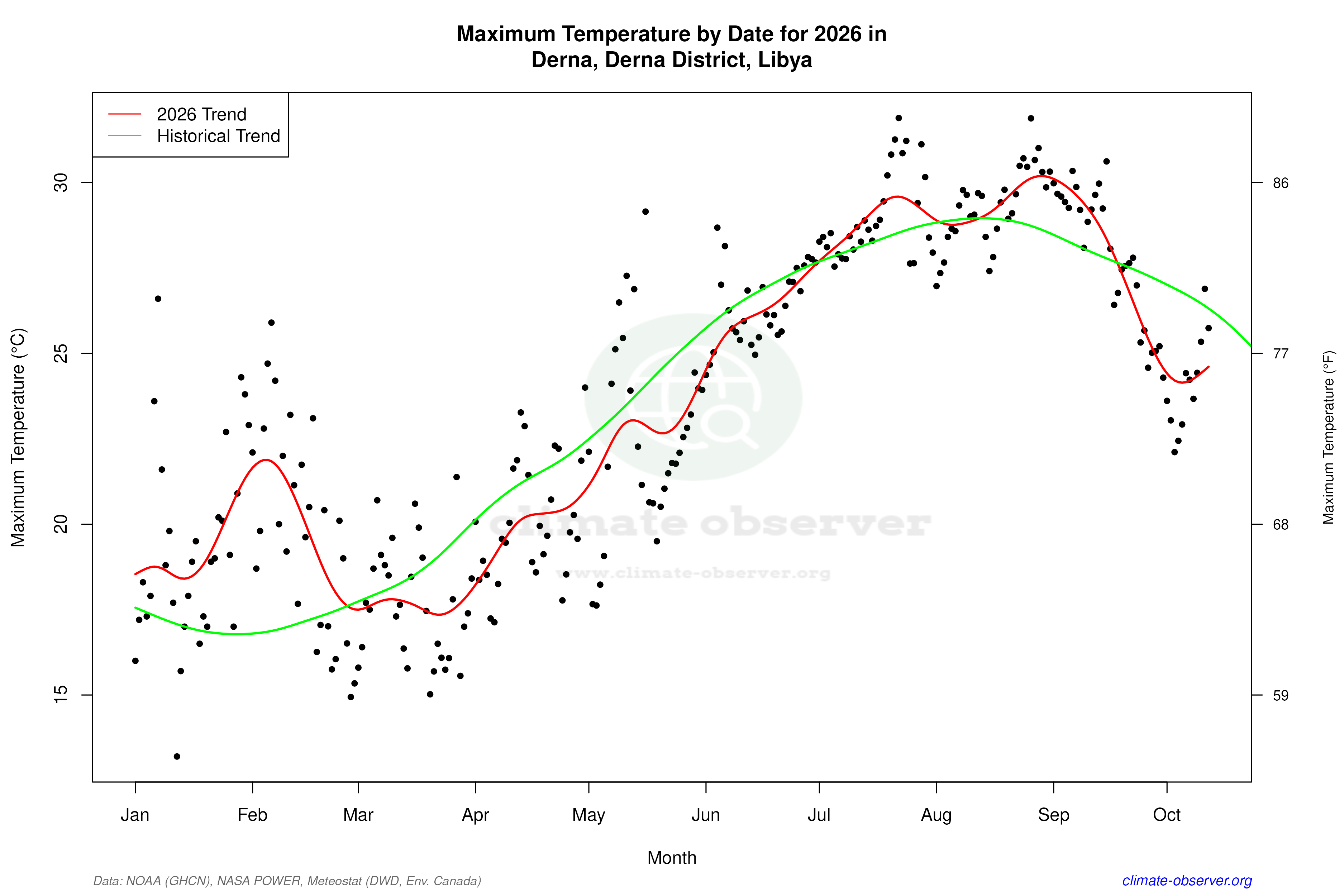
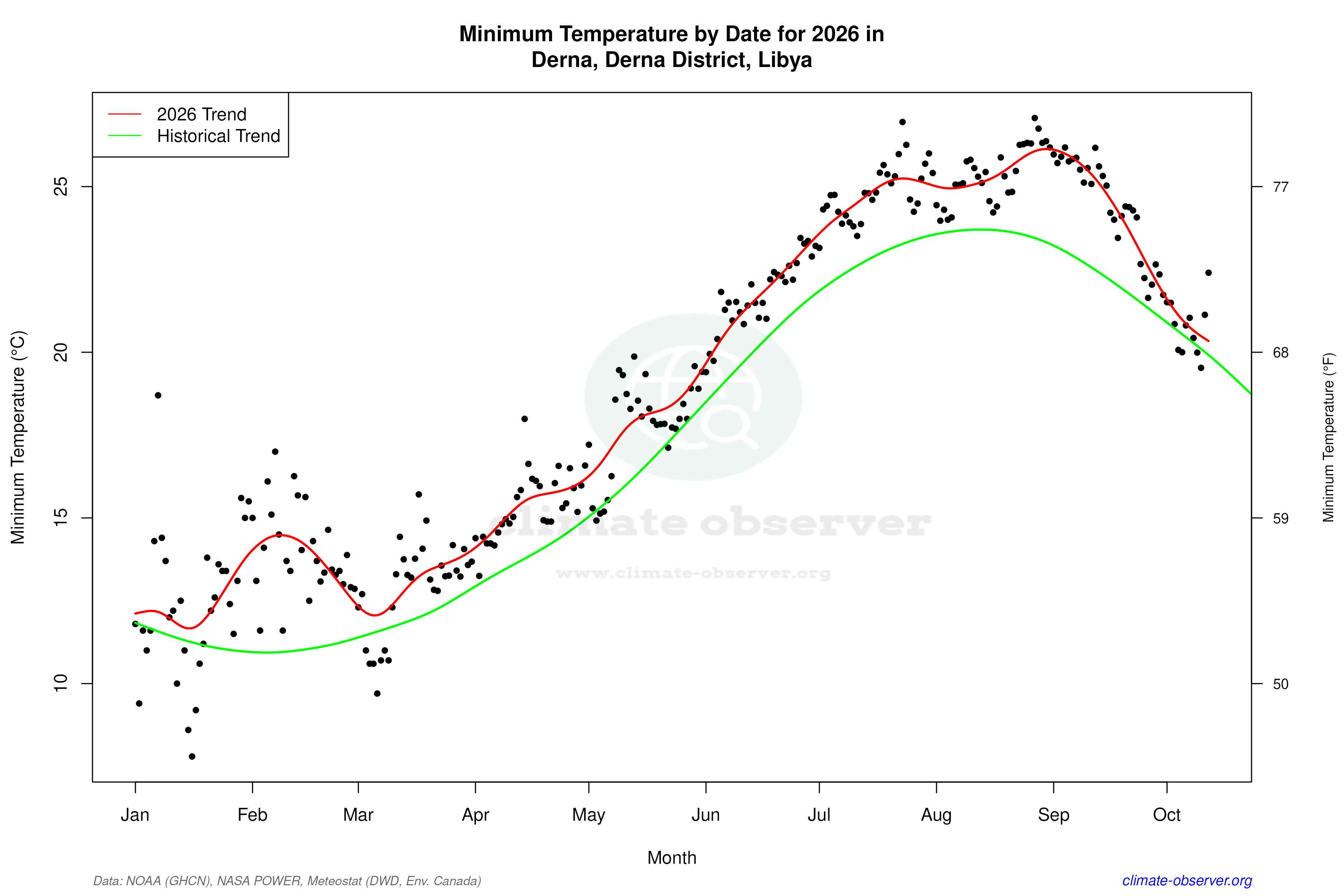
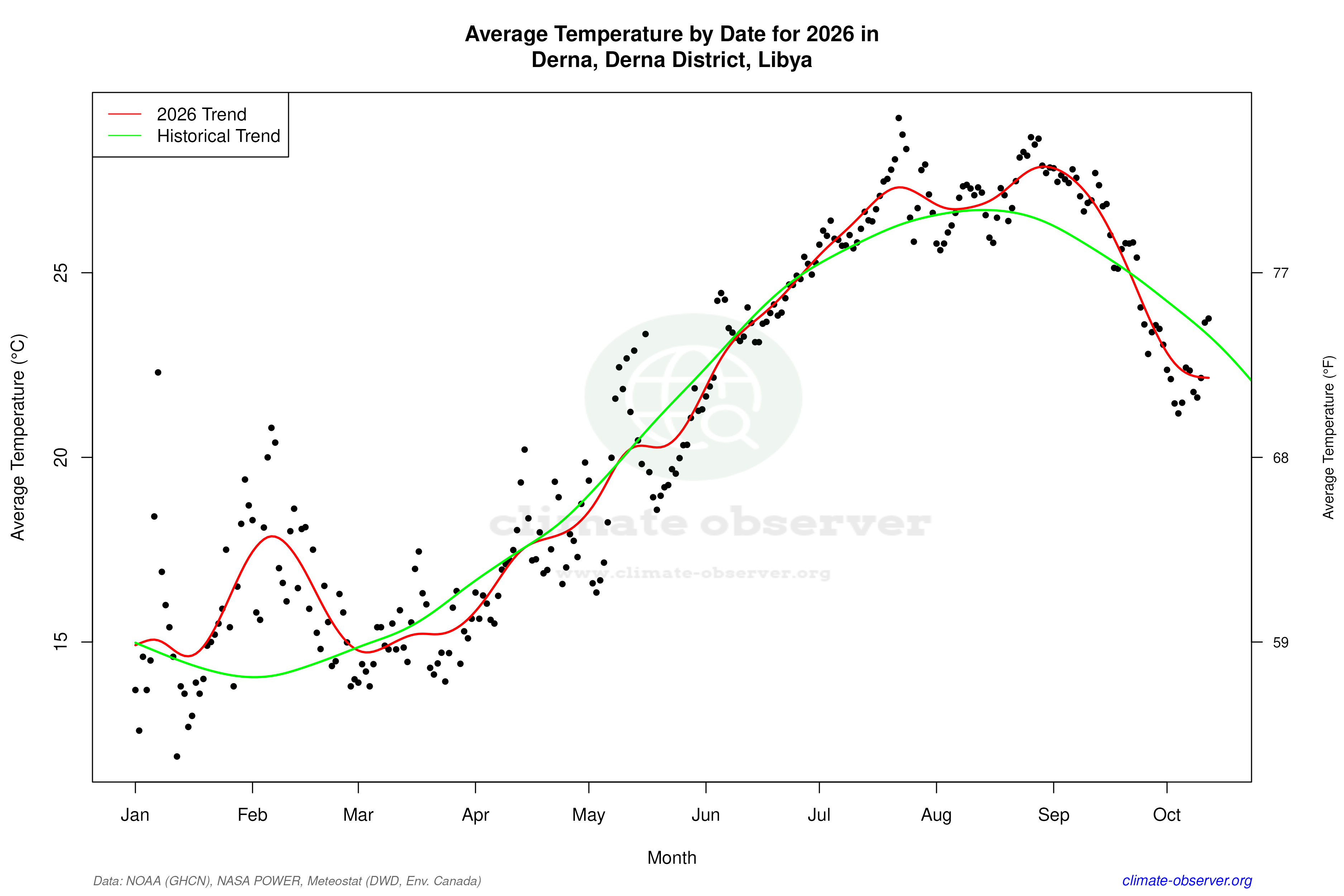
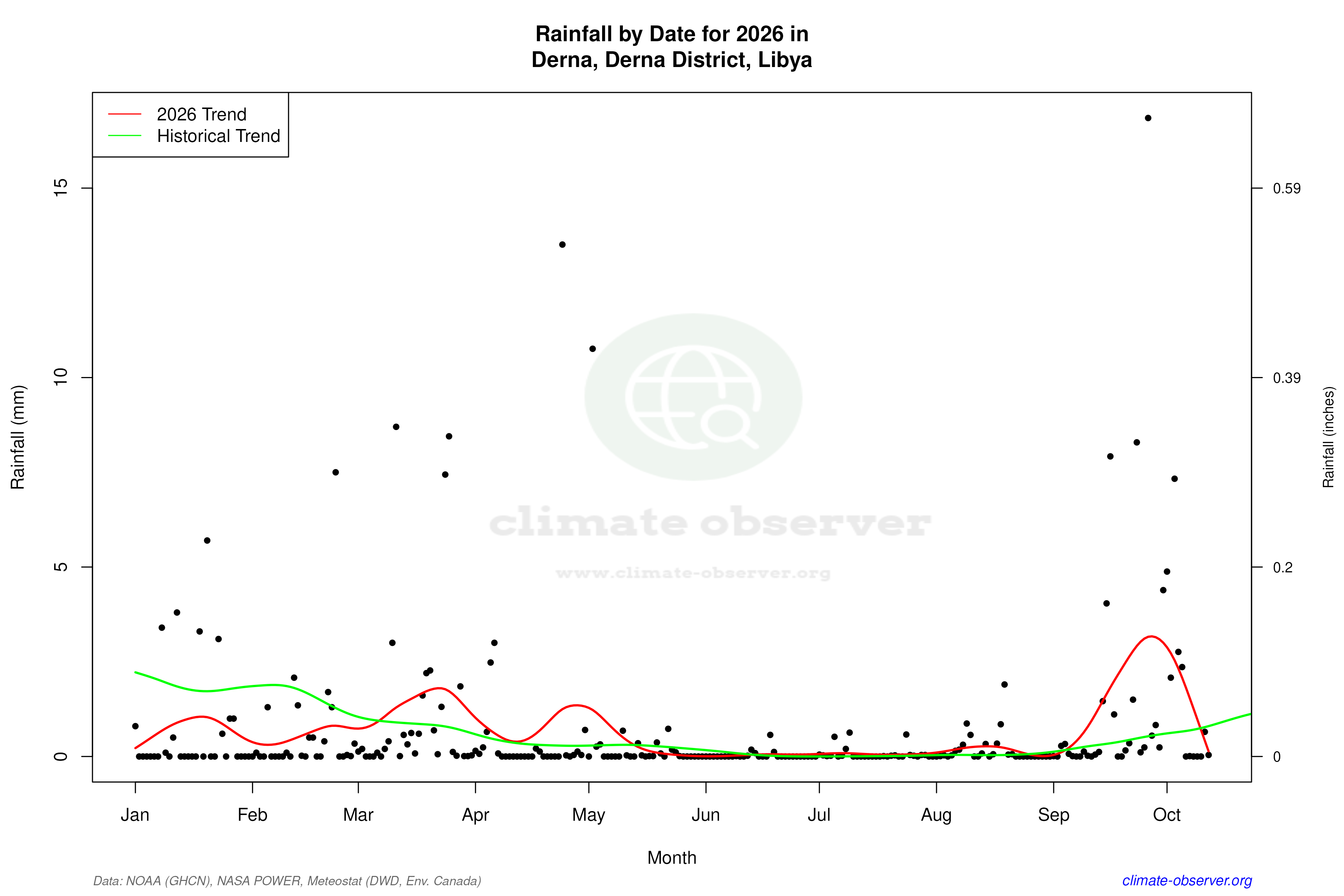
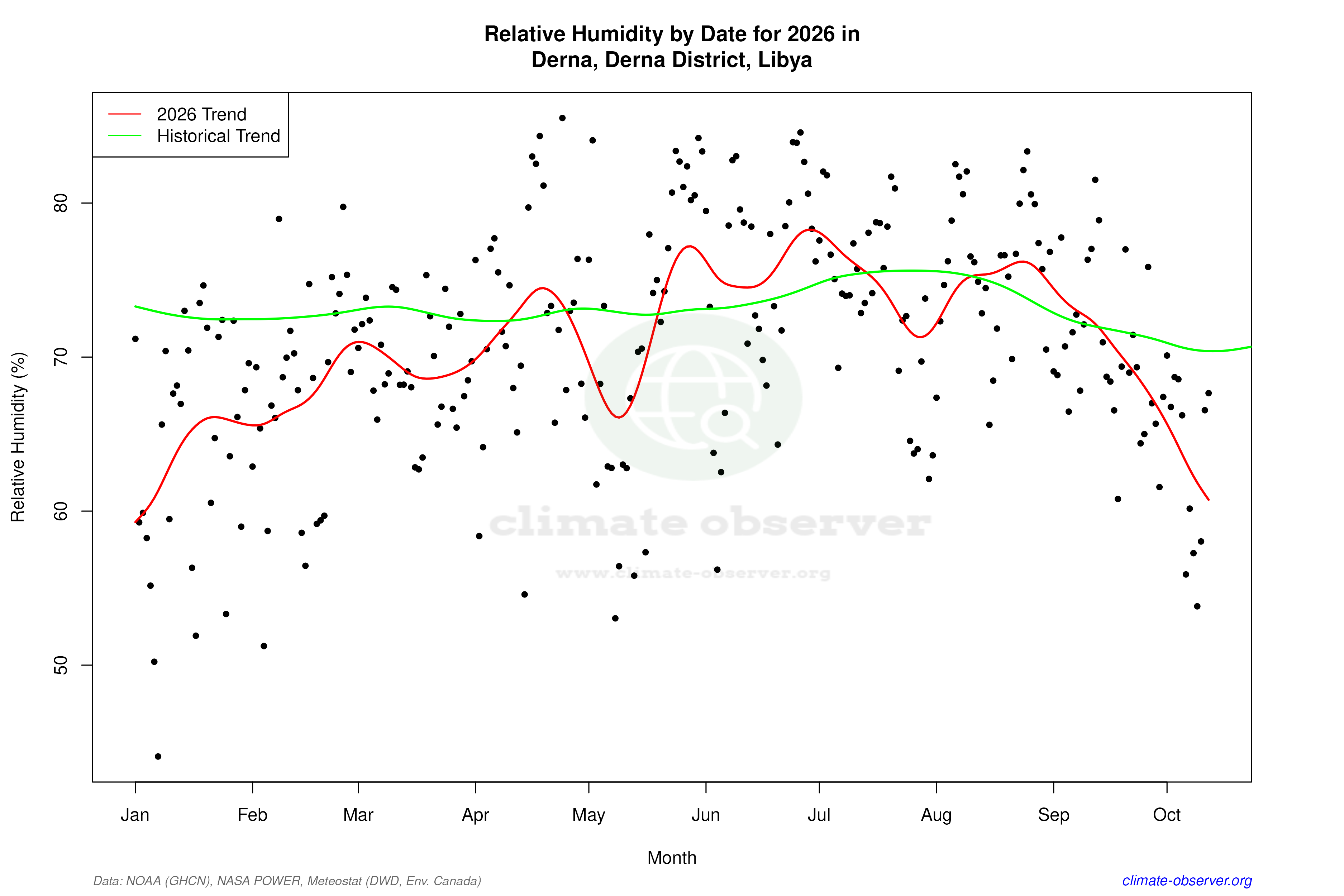

Max Temperature this Year | 1 of 6
Climate 12-Month Moving Averages
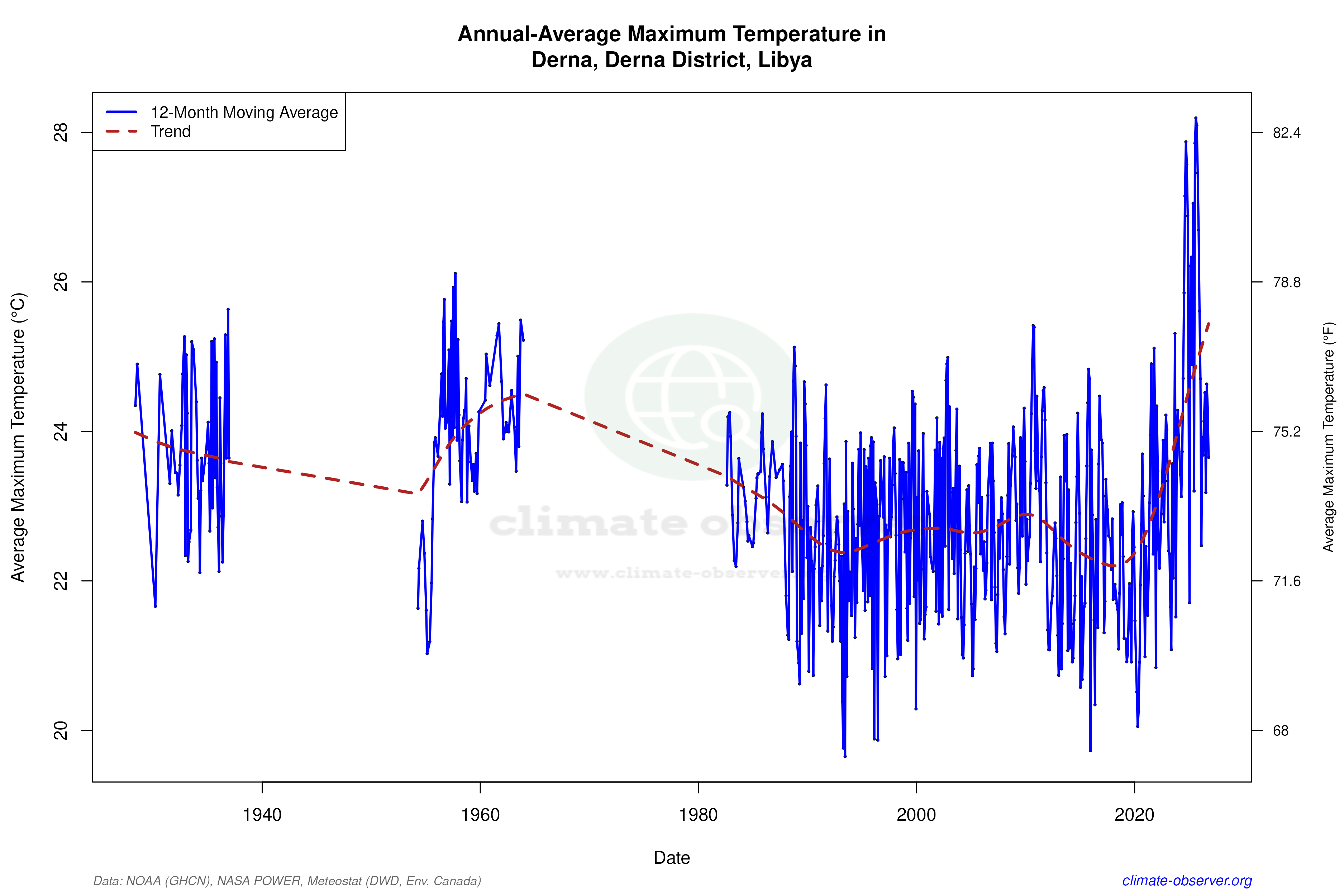
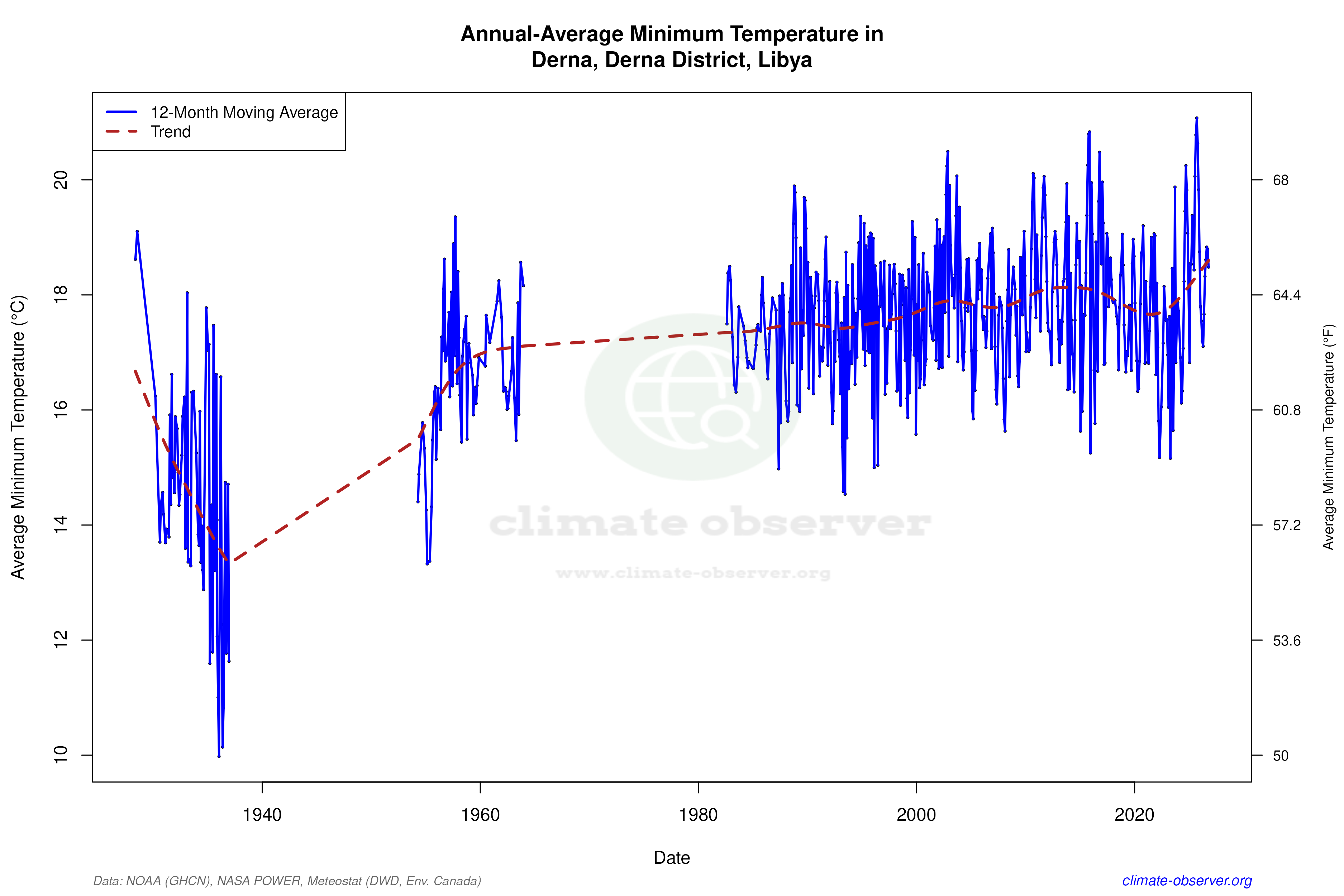
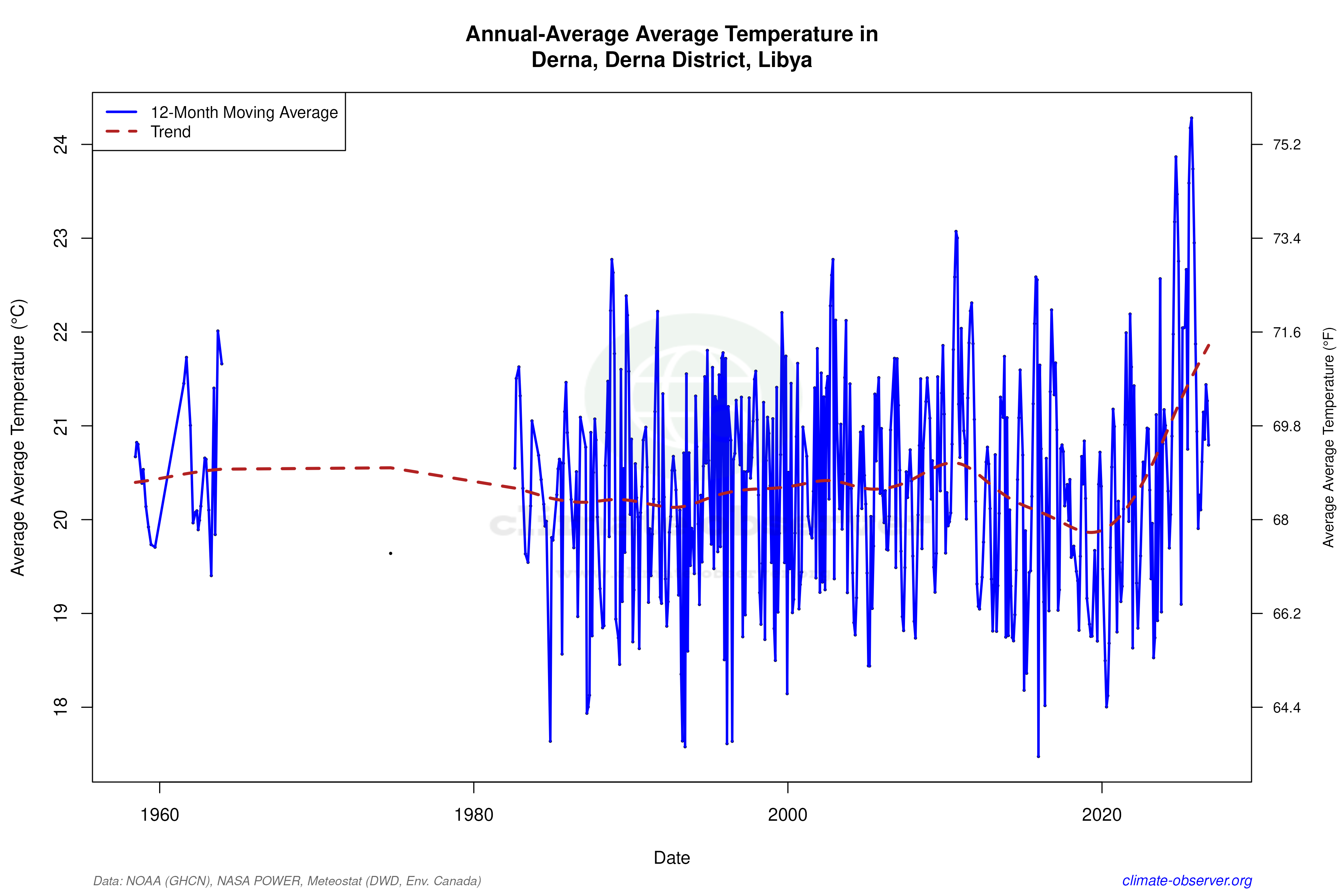
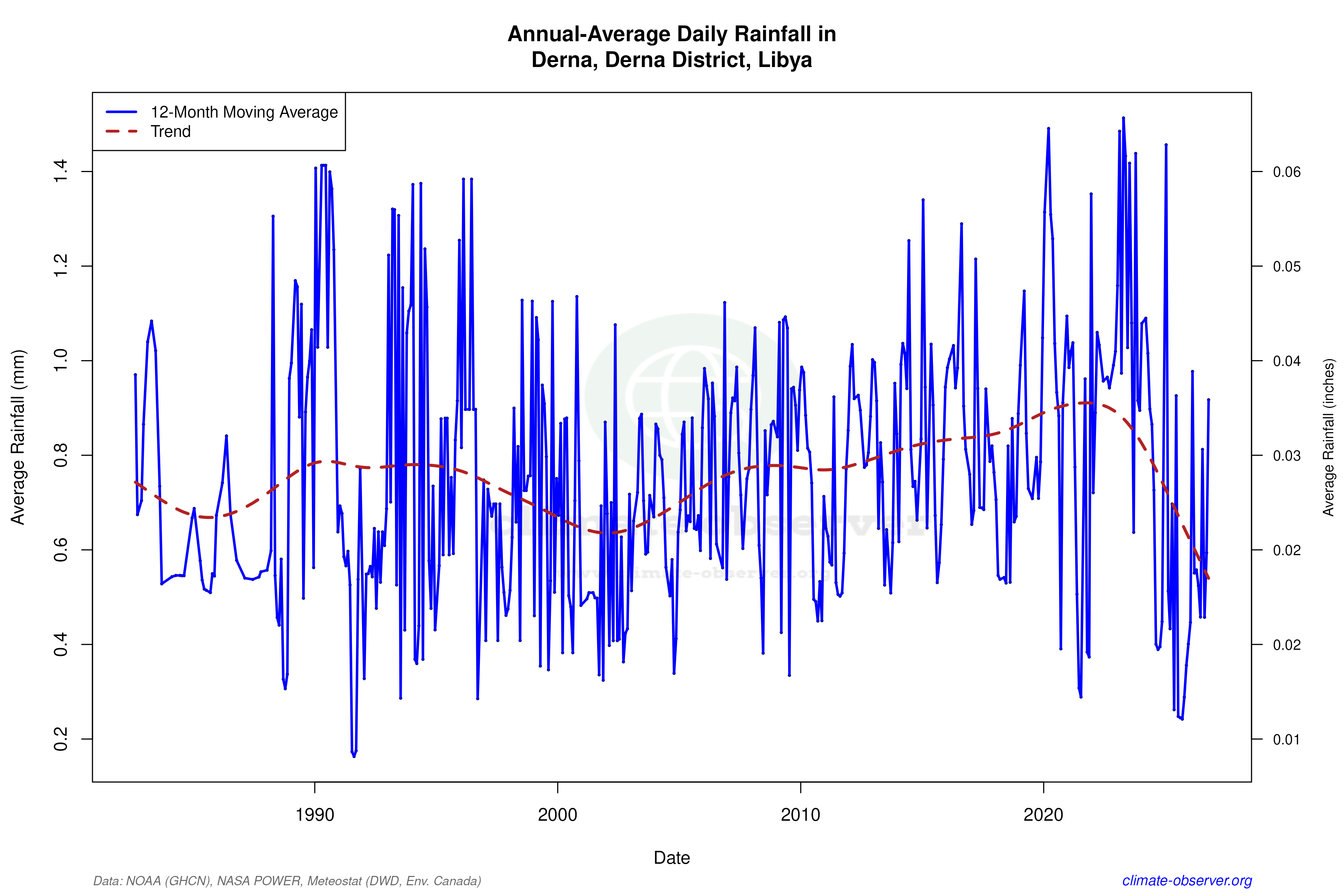
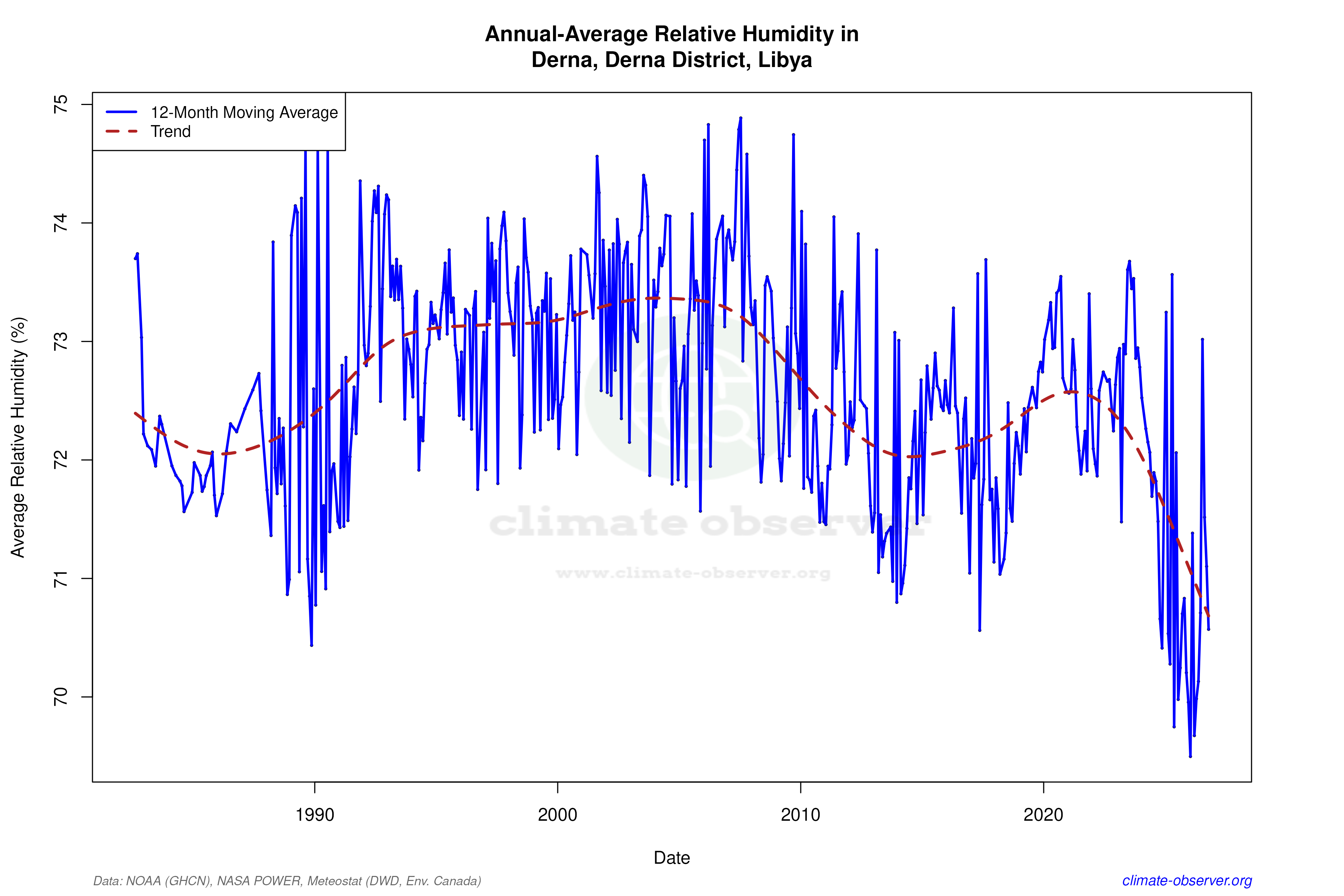

Max Temperature 12-Month MA | 1 of 6
Daily Data Points and Averages Throughout the Year
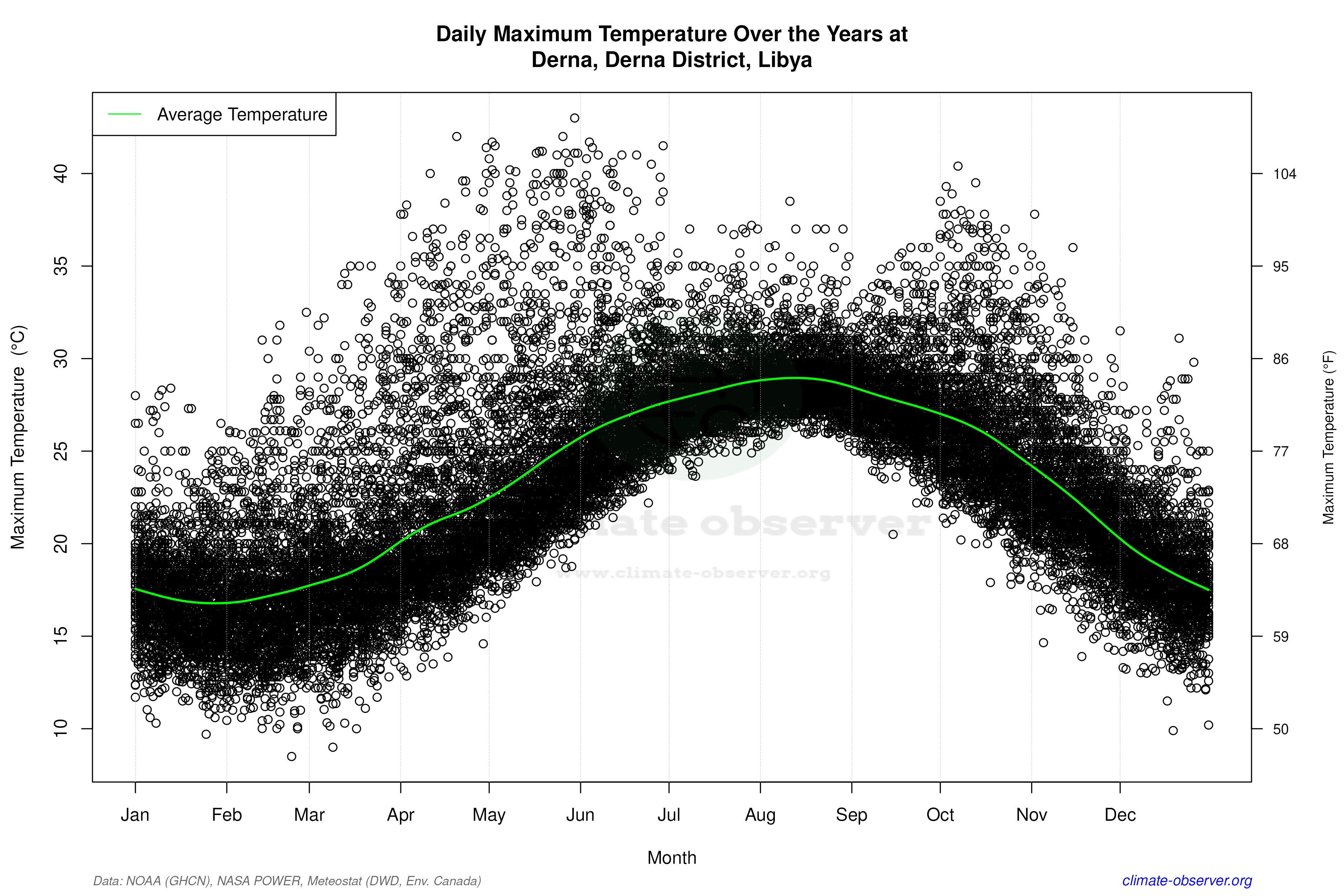
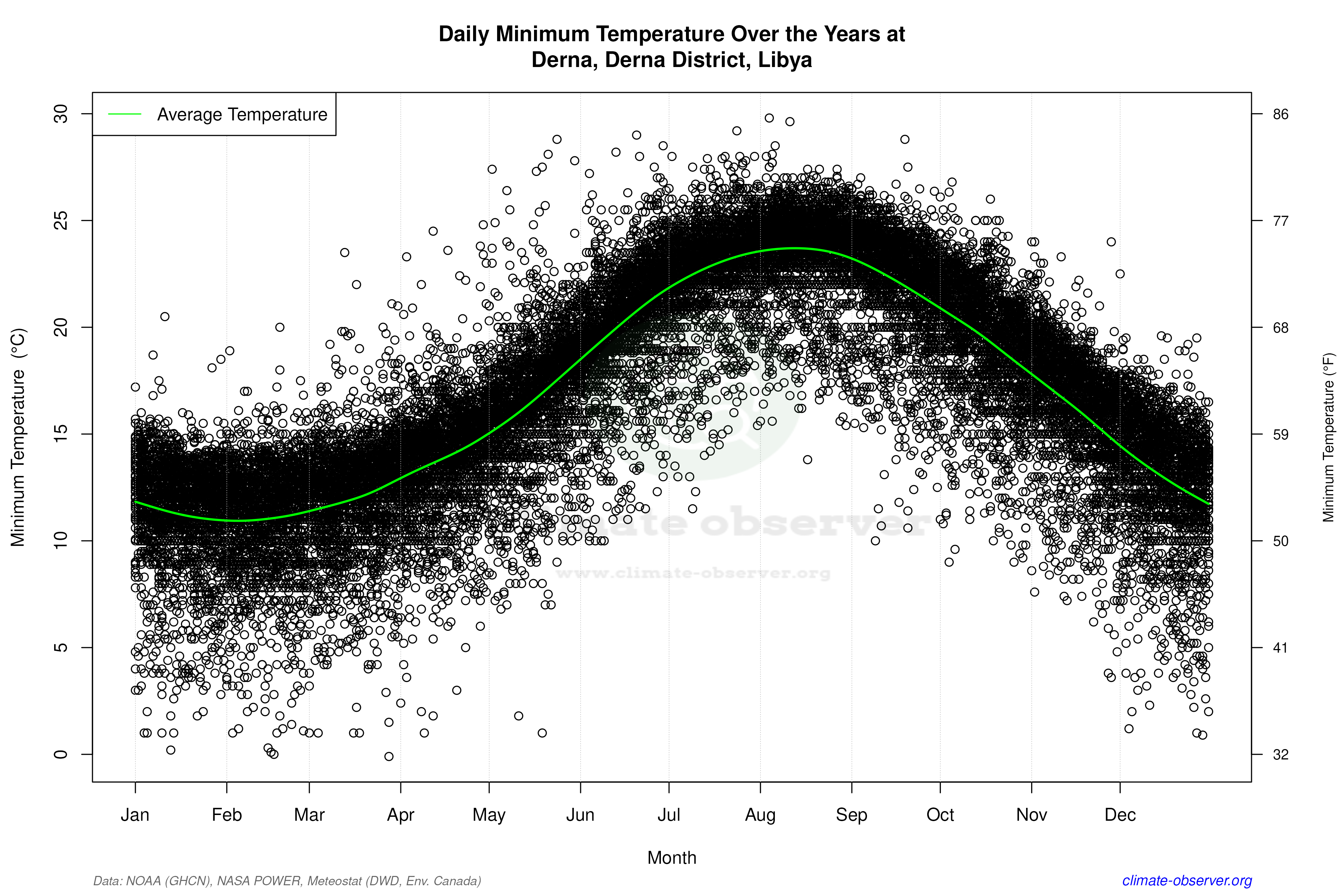
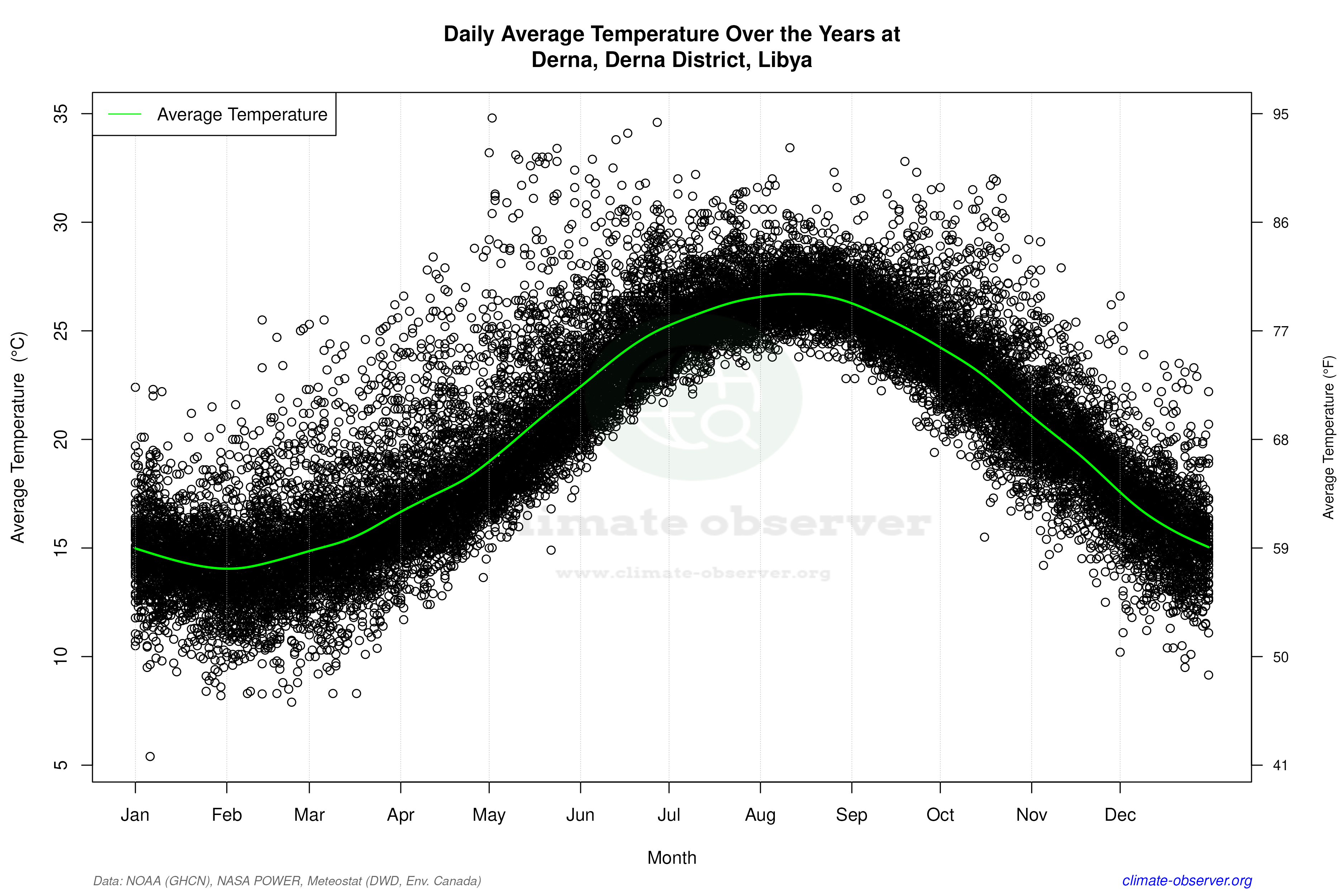
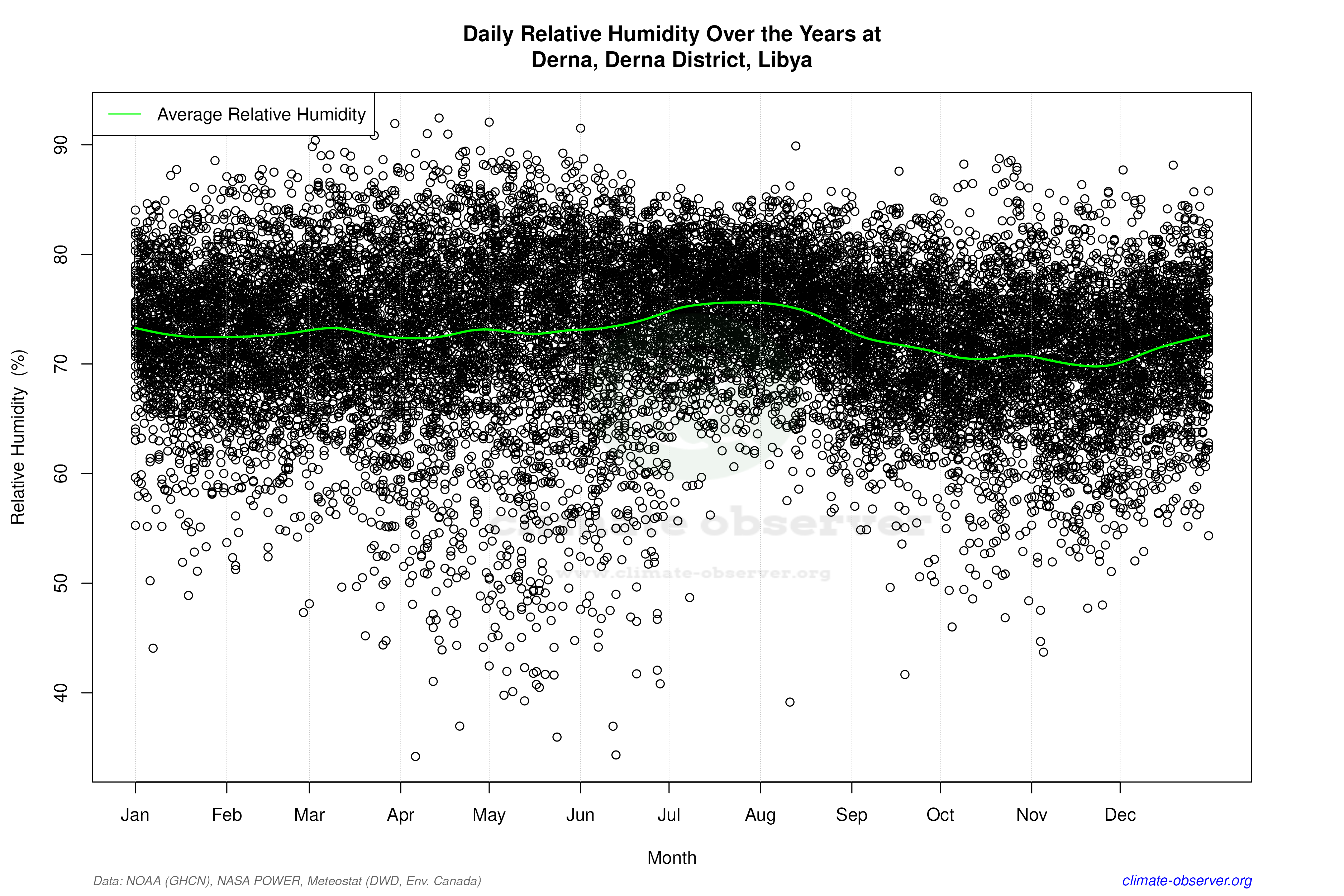

Average Max Temperature Throughout Year | 1 of 5


