Climate for Station: Bulgan, Bulgan Province, Mongolia
Loading live weather...
Climate Analysis & Overview
Bulgan, Mongolia, is experiencing a warming trend, with notable increases in both high and low temperatures over the past decade. Precipitation is becoming more evenly distributed, suggesting shifts in local weather patterns. These changes are aligned with Mongolia's broader climate adaptation goals, which focus on managing temperature extremes and improving water resource distribution.
Warming Trends in Bulgan
Bulgan, located in north-central Mongolia, falls under the Köppen climate classification of Dwb, characterised by dry winters and warm summers. Over the past decade, there has been a notable 0.06°C (0.11°F) increase in high temperatures, while low temperatures have risen significantly by 2.04°C (3.67°F). This suggests a more pronounced warming during colder periods, which could impact local ecosystems and agriculture. All-time trends also indicate a warming pattern, with high temperatures increasing by 0.13°C (0.23°F) and lows by 0.25°C (0.45°F). These changes reflect broader regional warming trends observed across Mongolia, where temperature management is crucial for sustaining nomadic lifestyles and pastoral activities.
Temperature Extremes and Records
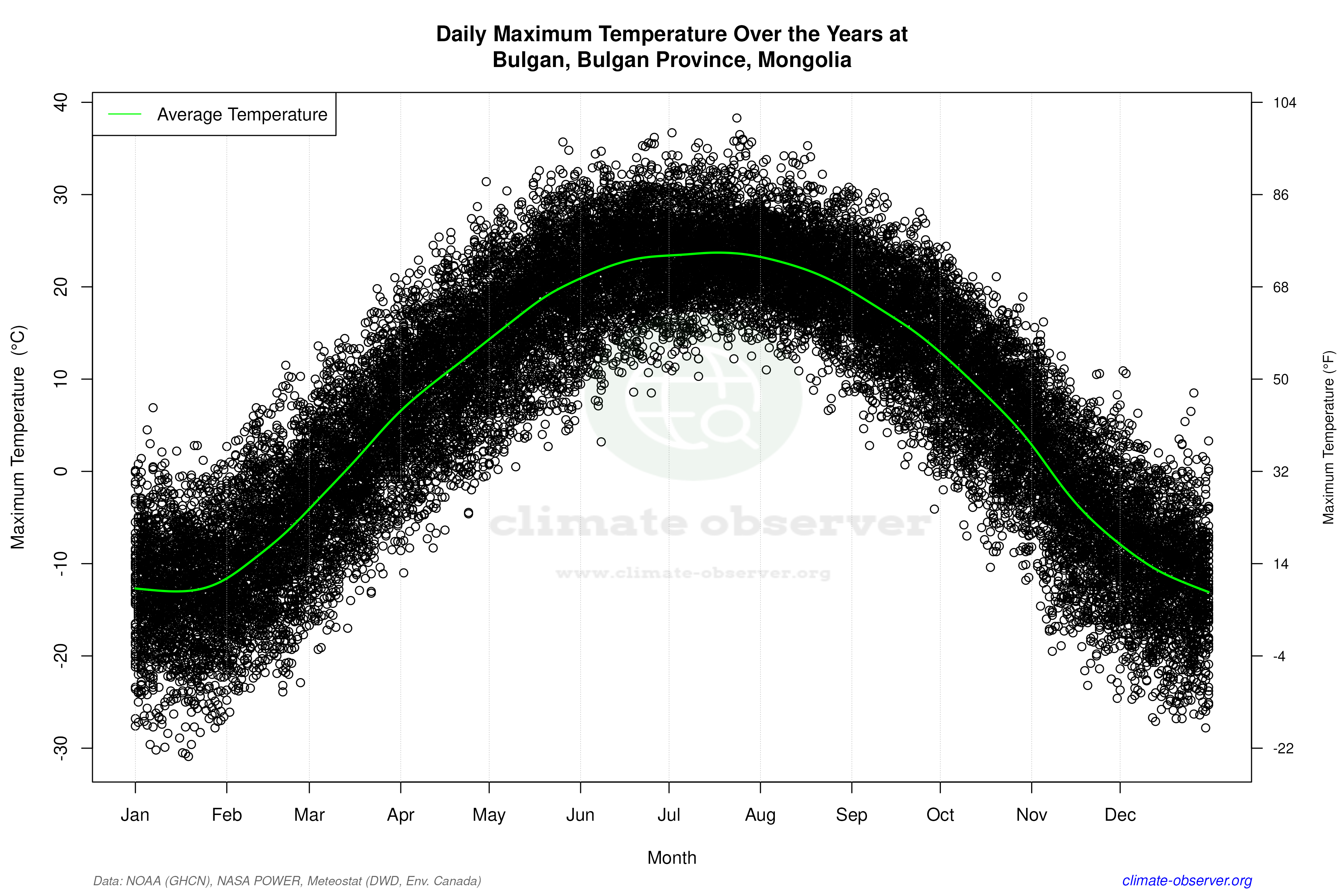
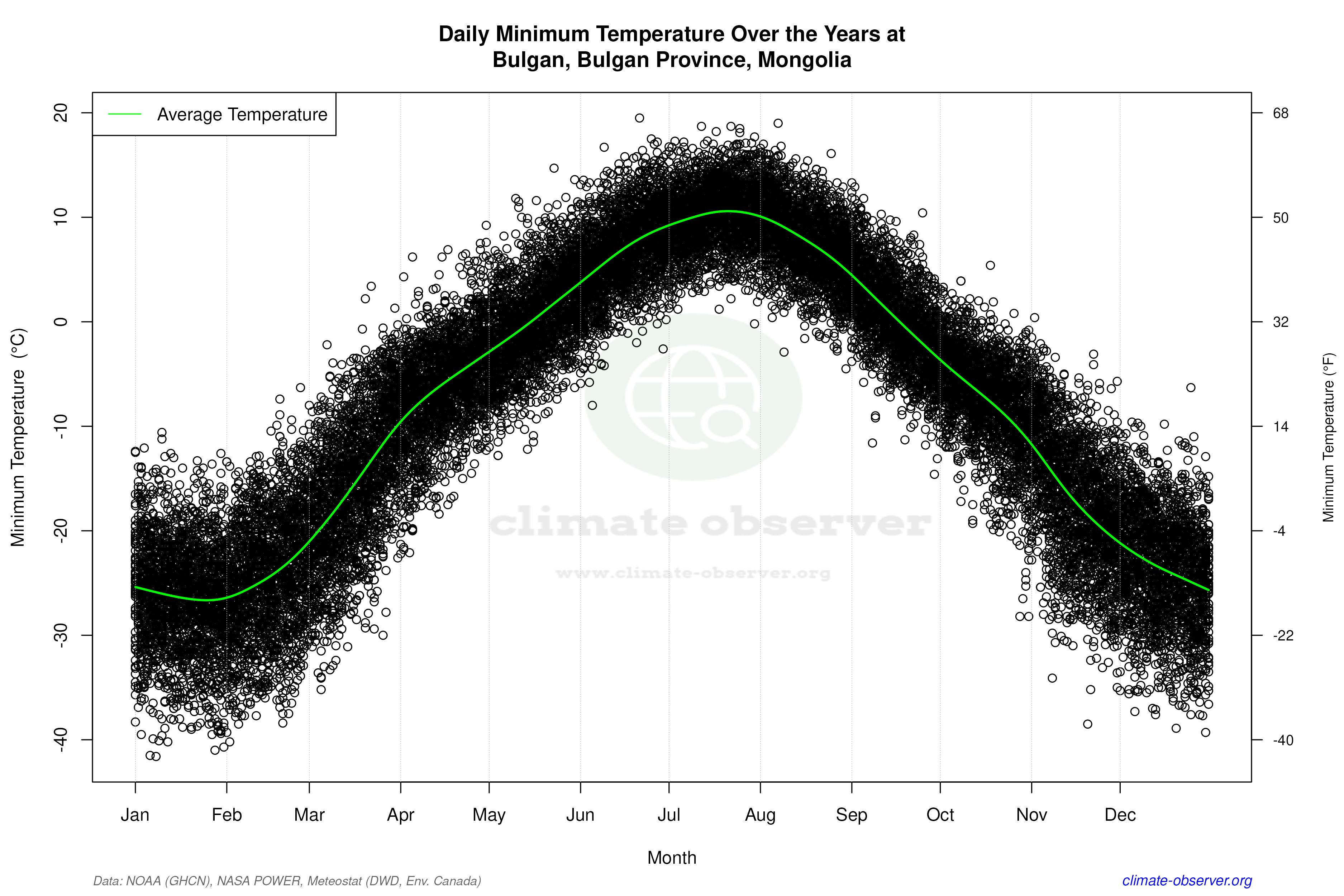
Bulgan's temperature records highlight the region's climatic extremes, with an all-time high of 38.3°C (100.9°F) and a record low of -41.6°C (-42.9°F). These extremes are typical for Mongolia's continental climate, where large temperature variations can occur between seasons. The warming trends observed in Bulgan may lead to more frequent occurrences of such extremes, posing challenges for local infrastructure and livelihoods.
Precipitation Patterns and Distribution
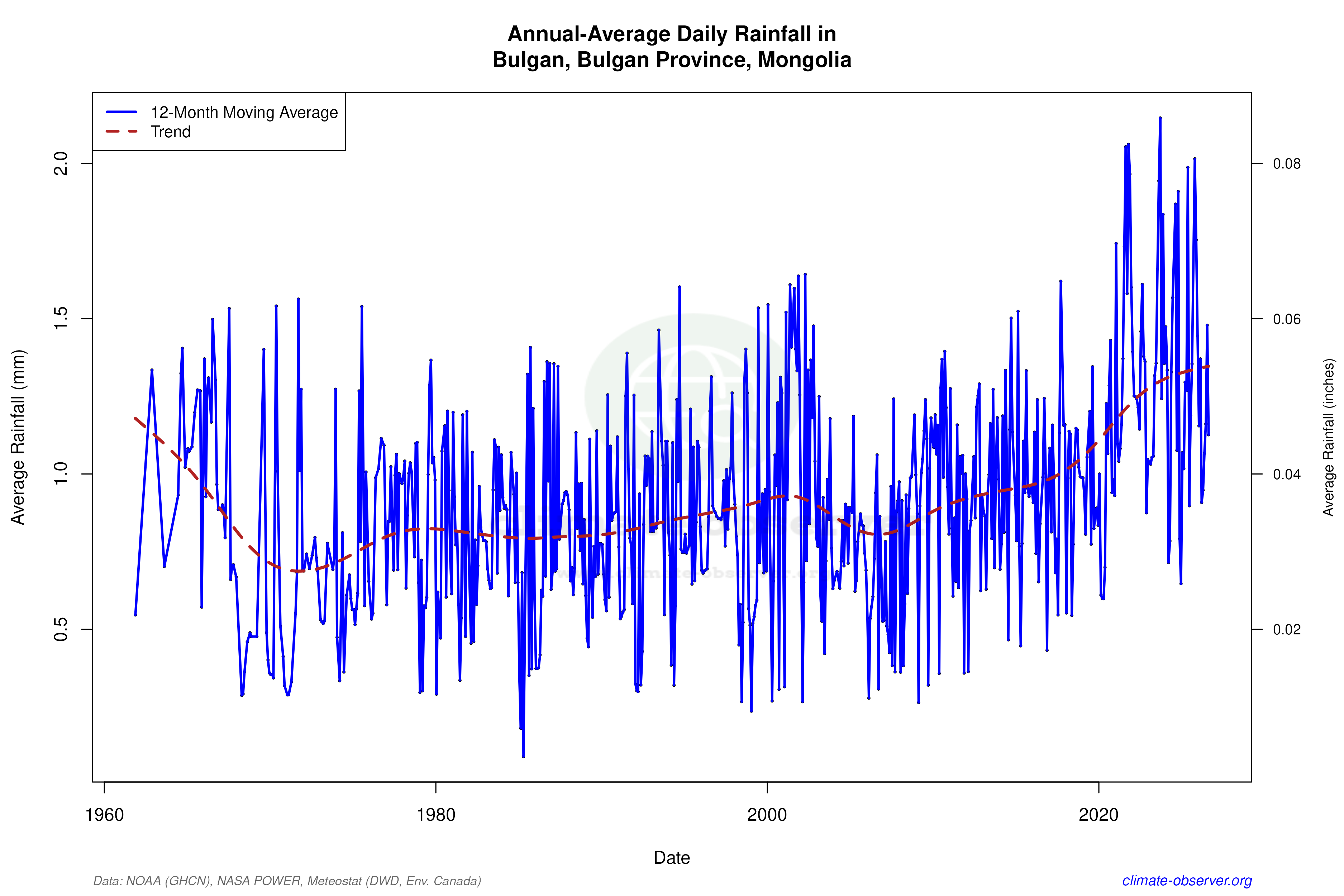
The Precipitation Concentration Index (PCI) for Bulgan has decreased from a baseline of 19.2 to a current value of 16.2. This indicates a more even distribution of rainfall throughout the year, as opposed to being concentrated in a few heavy events. While the change is not drastic, it suggests a shift towards more consistent precipitation, which could benefit agricultural planning and water resource management in the region. This aligns with Mongolia's climate goals, which include improving water distribution to mitigate the impacts of climate change.
Geographical Influences on Climate
Bulgan's climate is influenced by its geographical position, surrounded by mountains that can affect local weather patterns. These mountains can create microclimates, leading to variations in temperature and precipitation within short distances. The warming trends and changes in precipitation distribution may be further influenced by these geographical features, necessitating localised climate adaptation strategies. Understanding these influences is vital for developing effective policies to address the impacts of climate change in Bulgan and similar regions across Mongolia.
Station Statistics
10-Year Trend
High: +1.53 °F/decade
Low: +4.87 °F/decade
Rain: +0.020 in/decade
25-Year Trend
High: -0.44 °F/decade
Low: -0.11 °F/decade
Rain: +0.009 in/decade
50-Year Trend
High: +0.29 °F/decade
Low: +0.68 °F/decade
Rain: +0.003 in/decade
All-Time Trend
High: +0.41 °F/decade
Low: +0.66 °F/decade
Rain: +0.003 in/decade
Percentage Above-Average Days
Last 12 Months: 51.2%
This Year: 51.7%
Precipitation Concentration Index (PCI) ℹ️
Last 12 Months: 28.5
Historical Average: 22.1
Percentile Rank of Last 12 Months ℹ️
High: 34th percentile
Low: 68th percentile
Rain: 83rd percentile
Change in Variance ℹ️
High: +5.6%
Low: -0.3%
Intraday: -0.2%
Data Coverage
92.1%
First Year of Data
1979
Station Location
Historical Weather Records
| Max High | Avg High | Min High | Max Avg | Avg Avg | Min Avg | Max Low | Avg Low | Min Low | Max Precipitation | Avg Precipitation | Max Snow | Avg Snow | |
|---|---|---|---|---|---|---|---|---|---|---|---|---|---|
| Record | 100.94 °F | — | -23.62 °F | 85.64 °F | — | -34.78 °F | 67.10 °F | — | -42.88 °F | 9.35 in | — | — | — |
| January | 44.42 °F | 9.02 °F | -23.62 °F | 22.28 °F | -4.75 °F | -34.78 °F | 12.94 °F | -15.20 °F | -42.88 °F | 0.22 in | 0.00 in | — | — |
| February | 52.70 °F | 17.12 °F | -14.98 °F | 35.96 °F | 1.32 °F | -27.22 °F | 20.66 °F | -11.85 °F | -40.36 °F | 0.25 in | 0.00 in | — | — |
| March | 69.80 °F | 34.00 °F | -2.74 °F | 53.24 °F | 18.55 °F | -20.56 °F | 38.12 °F | 4.11 °F | -31.36 °F | 0.37 in | 0.01 in | — | — |
| April | 88.52 °F | 50.73 °F | 12.20 °F | 69.26 °F | 36.27 °F | 3.02 °F | 48.61 °F | 21.15 °F | -7.96 °F | 0.59 in | 0.01 in | — | — |
| May | 96.26 °F | 64.14 °F | 32.36 °F | 75.92 °F | 49.18 °F | 22.82 °F | 58.46 °F | 32.38 °F | 8.96 °F | 5.04 in | 0.03 in | — | — |
| June | 97.16 °F | 72.55 °F | 37.76 °F | 81.32 °F | 59.04 °F | 35.60 °F | 67.10 °F | 44.23 °F | 17.60 °F | 1.73 in | 0.07 in | — | — |
| July | 100.94 °F | 74.40 °F | 50.54 °F | 85.64 °F | 62.79 °F | 42.26 °F | 65.66 °F | 50.28 °F | 31.64 °F | 2.17 in | 0.13 in | — | — |
| August | 95.54 °F | 71.18 °F | 43.88 °F | 79.52 °F | 58.66 °F | 37.58 °F | 66.20 °F | 45.99 °F | 23.90 °F | 2.91 in | 0.10 in | — | — |
| September | 86.90 °F | 61.70 °F | 24.64 °F | 72.68 °F | 46.62 °F | 21.56 °F | 55.94 °F | 32.89 °F | 5.72 °F | 2.05 in | 0.05 in | — | — |
| October | 75.92 °F | 46.98 °F | 10.76 °F | 57.02 °F | 31.36 °F | -4.72 °F | 41.72 °F | 18.85 °F | -18.76 °F | 9.35 in | 0.02 in | — | — |
| November | 61.16 °F | 26.73 °F | -12.28 °F | 45.32 °F | 12.64 °F | -23.98 °F | 32.72 °F | 1.69 °F | -37.30 °F | 0.29 in | 0.01 in | — | — |
| December | 51.62 °F | 12.46 °F | -18.04 °F | 42.62 °F | -0.18 °F | -29.74 °F | 20.66 °F | -10.47 °F | -38.74 °F | 0.22 in | 0.00 in | — | — |
Data Visualisations
Remove WatermarksCurrent Year Climate Trends vs Historical
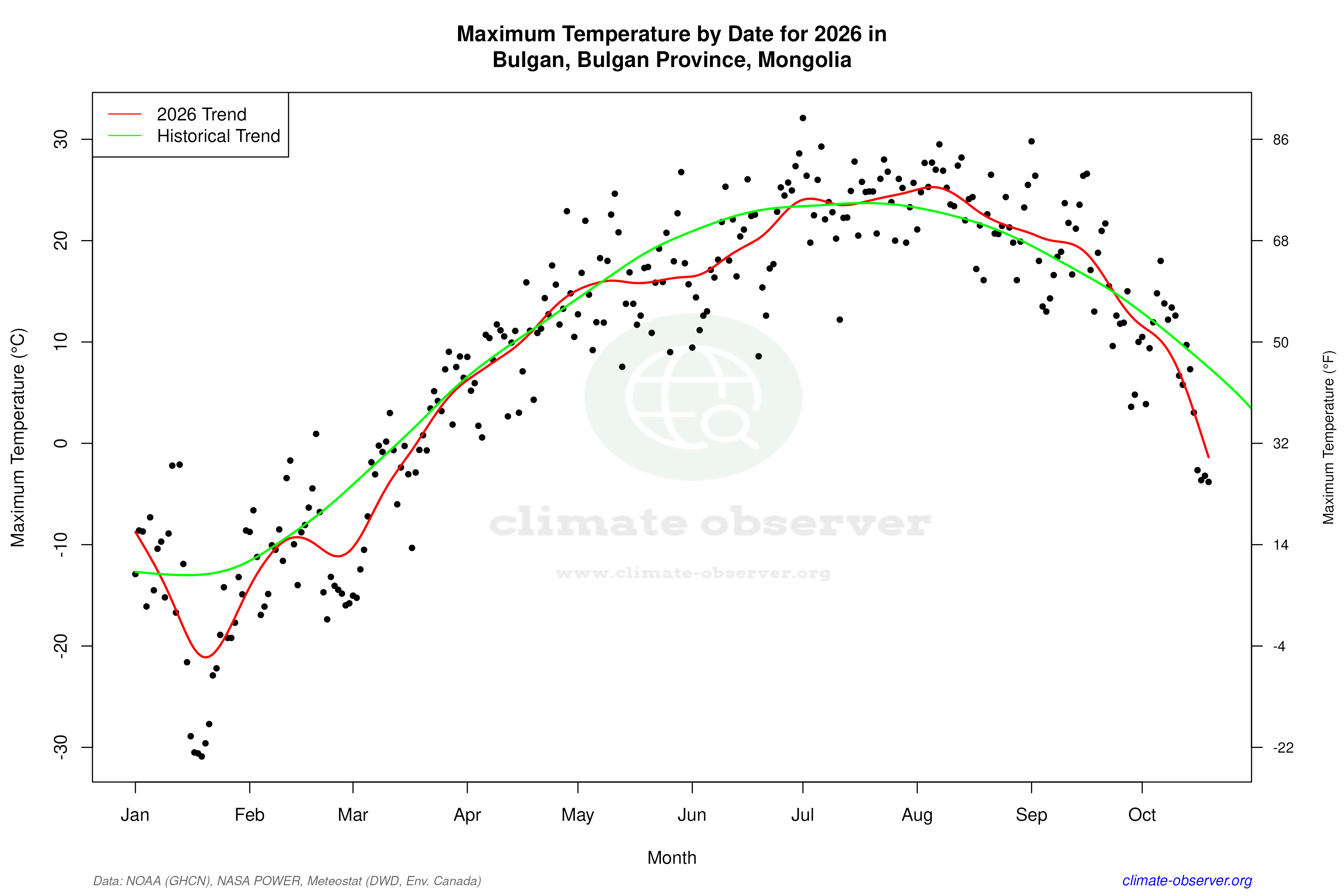
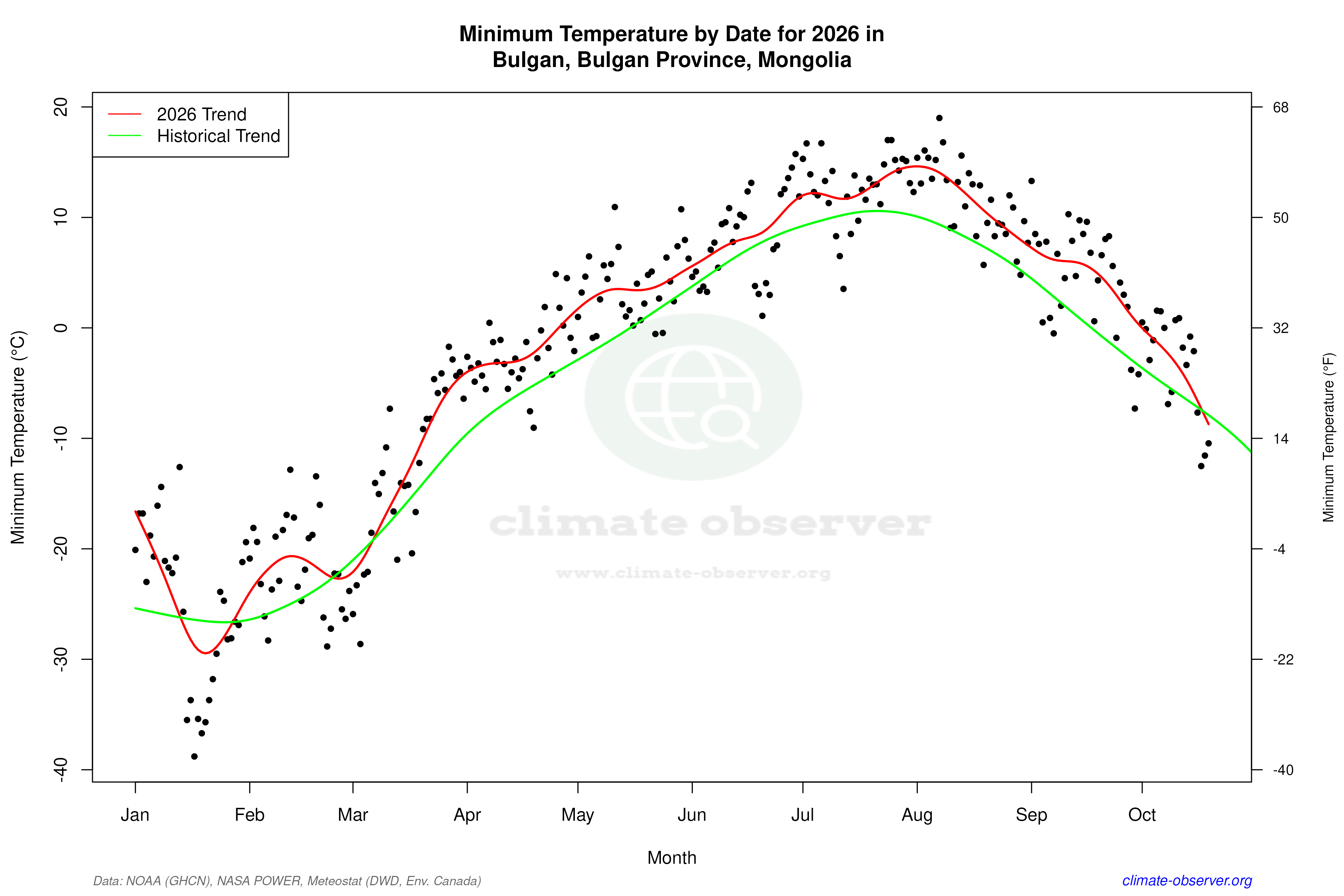
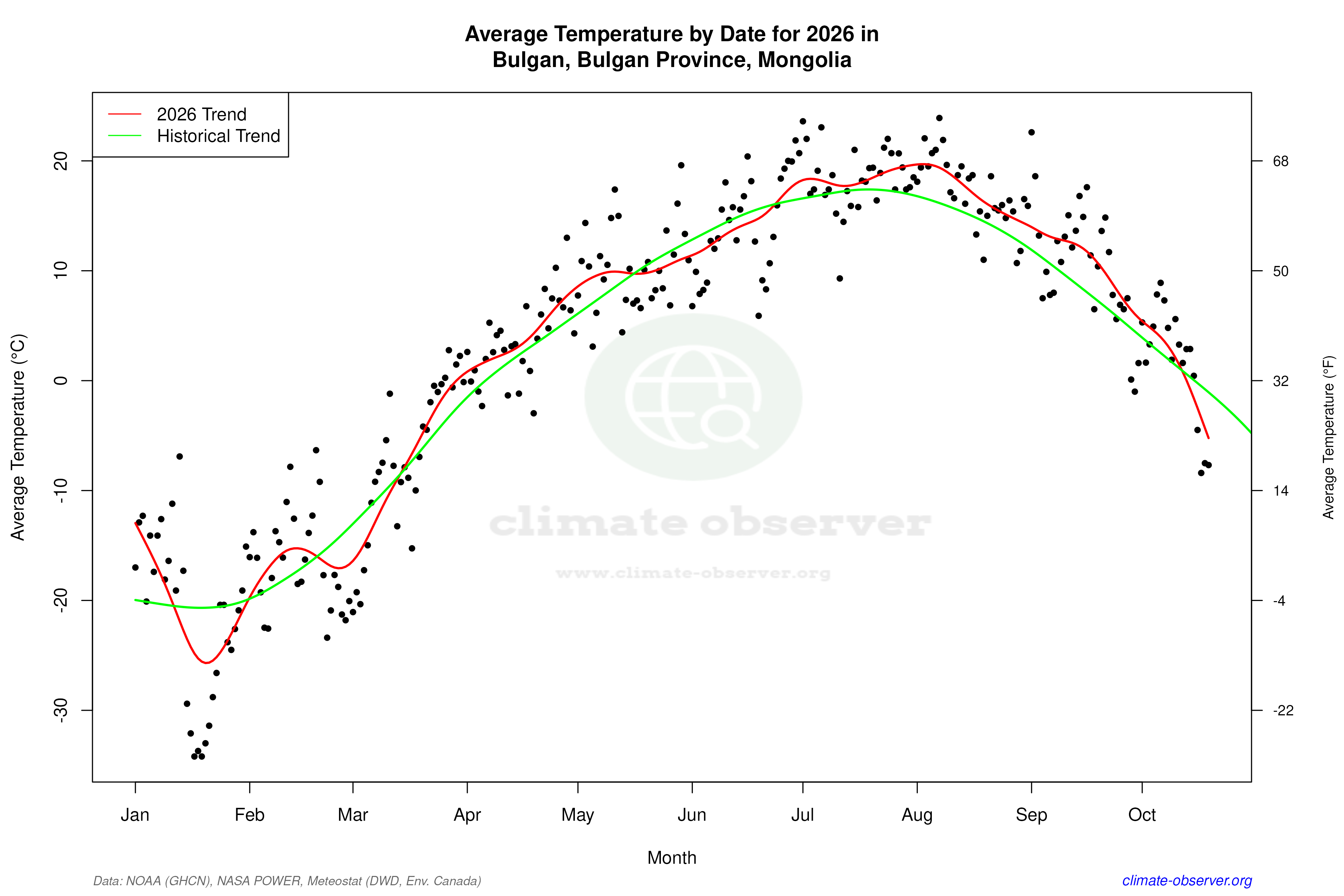
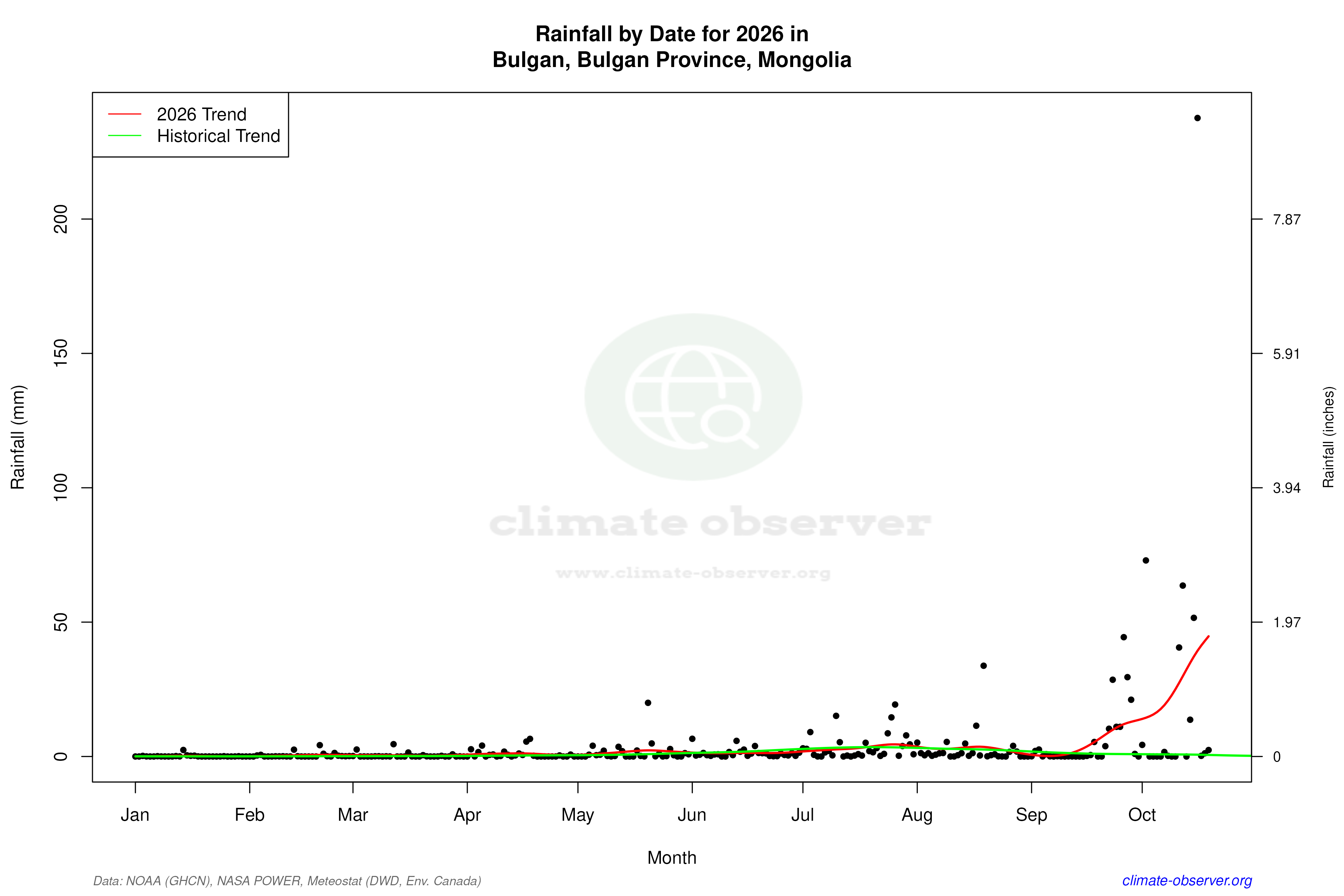
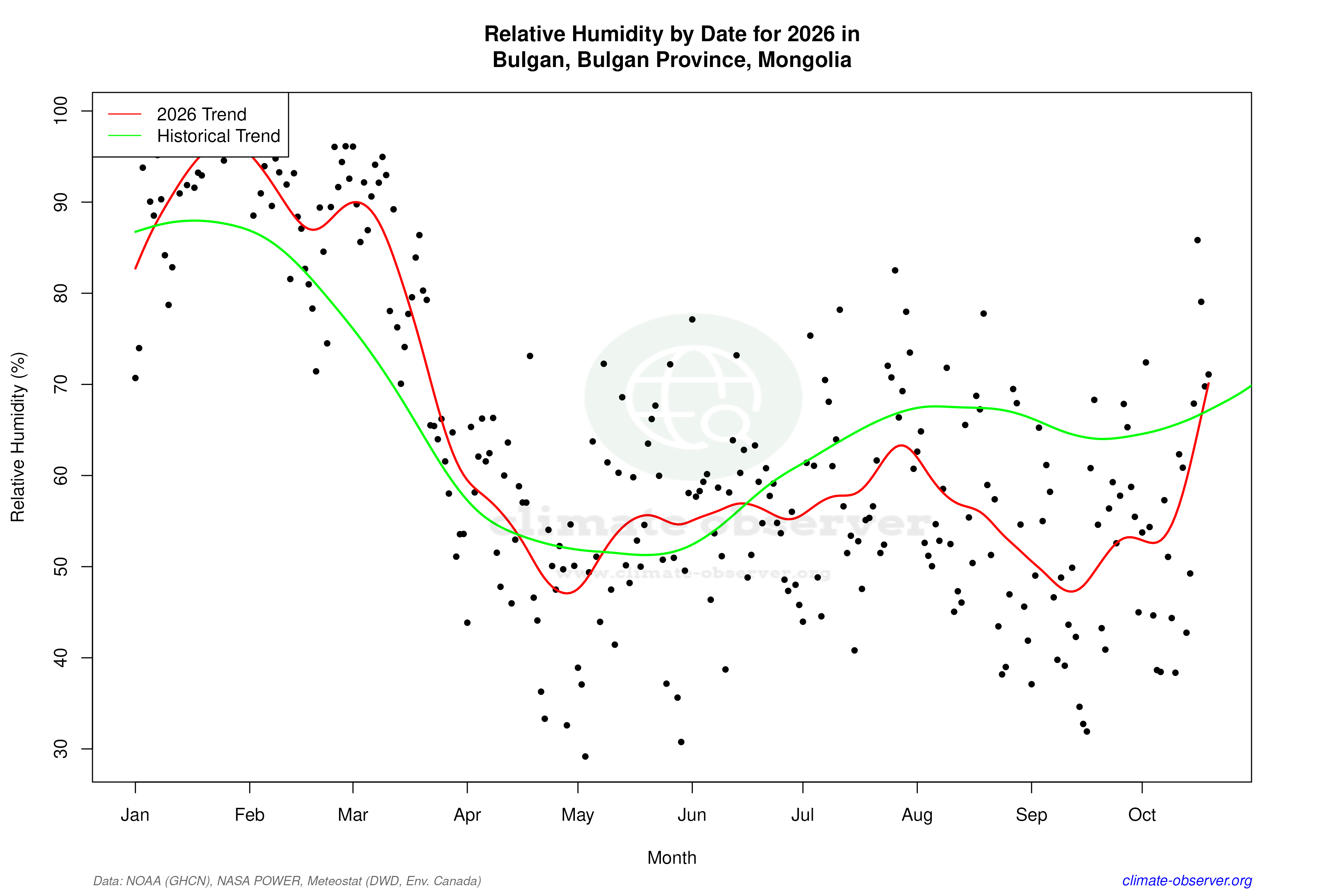

Max Temperature this Year | 1 of 6
Climate 12-Month Moving Averages
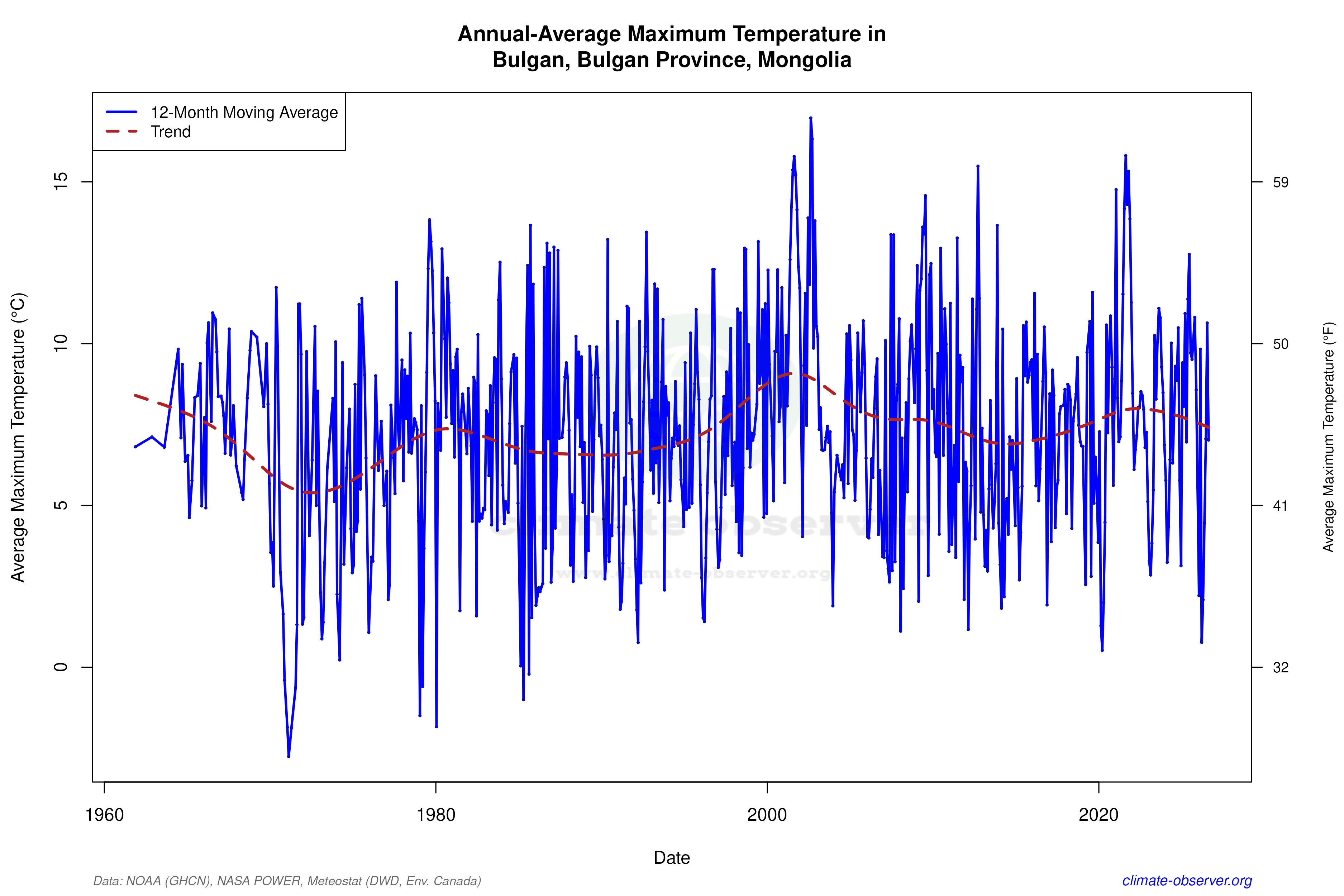
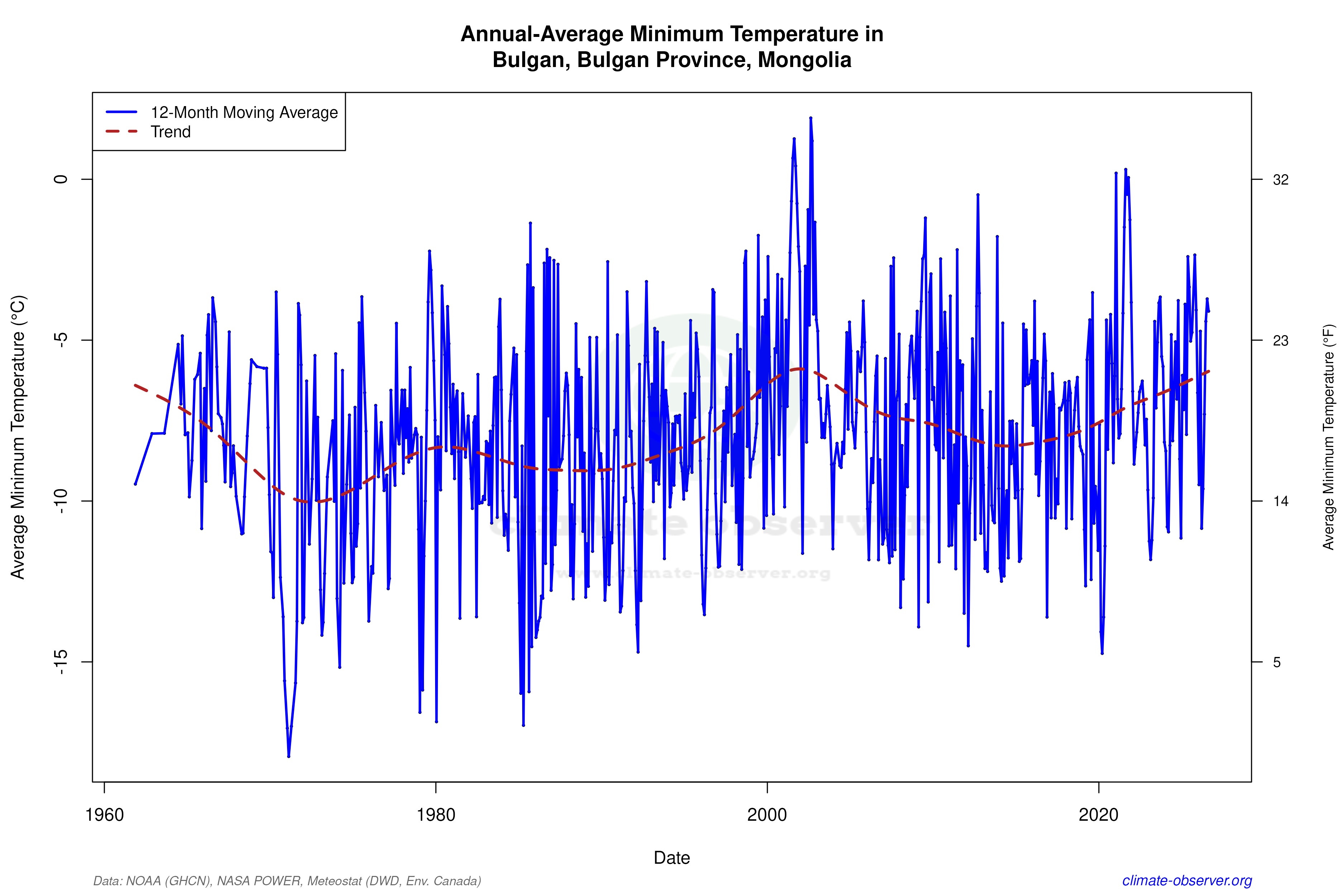
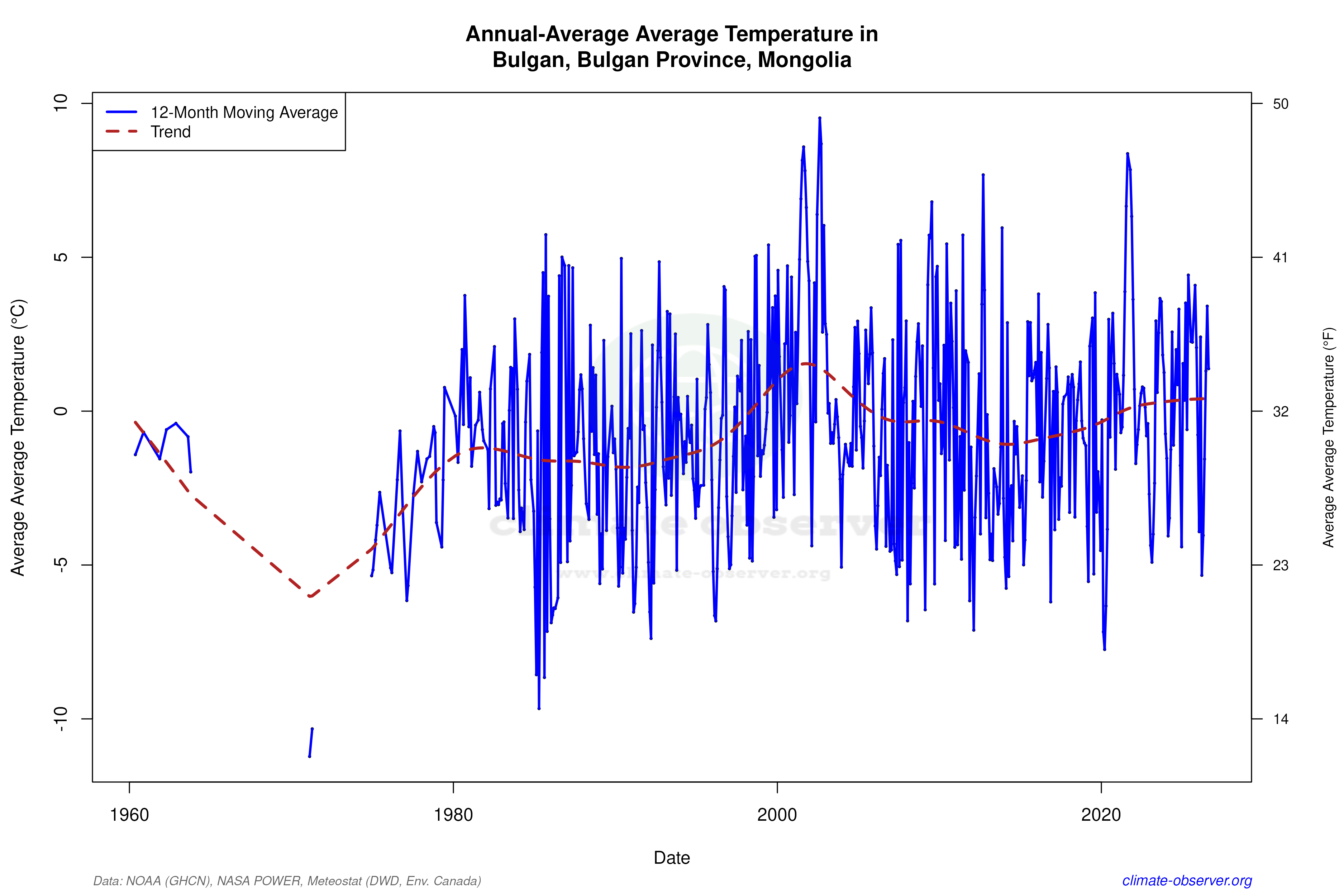

Max Temperature 12-Month MA | 1 of 6
Daily Data Points and Averages Throughout the Year
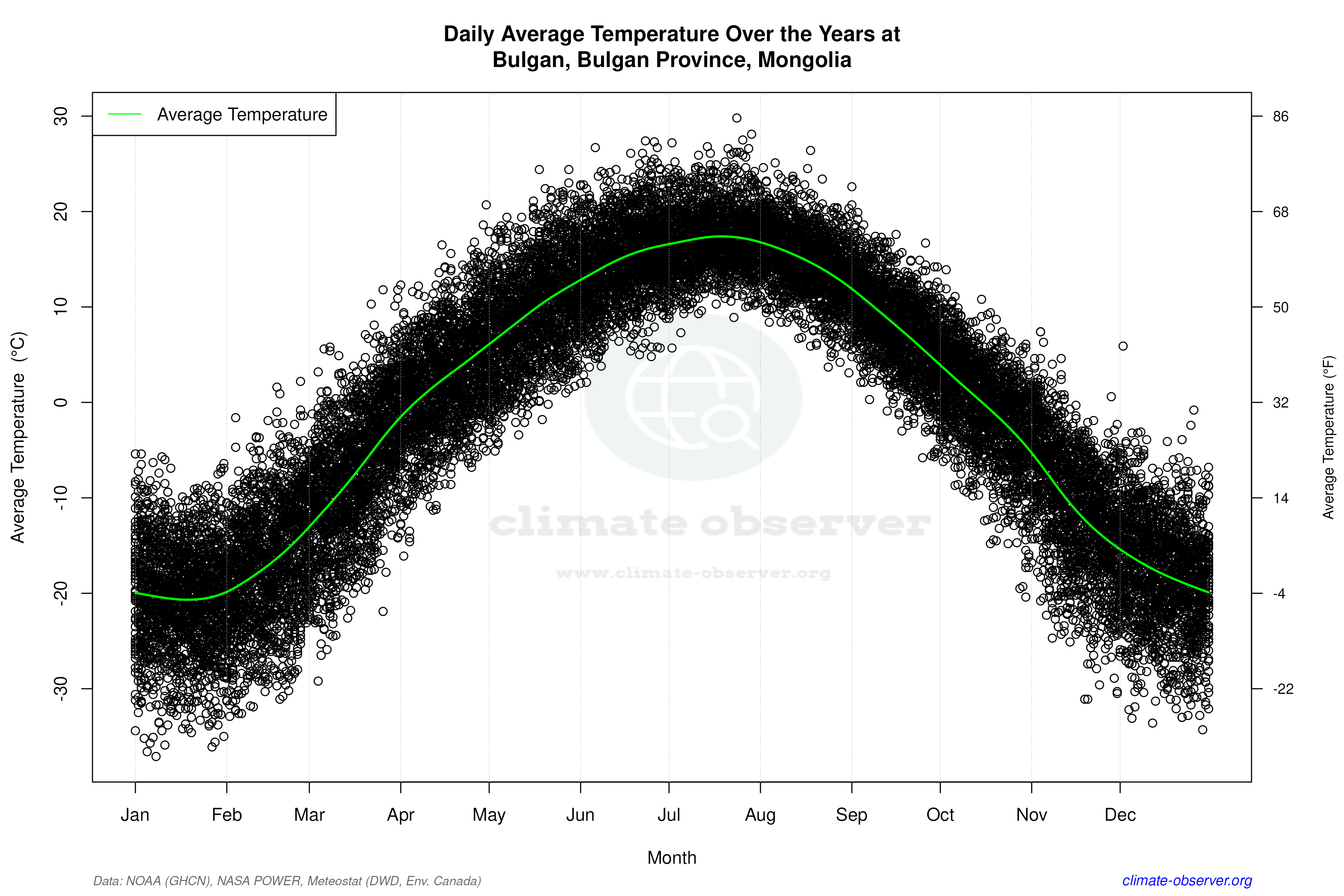
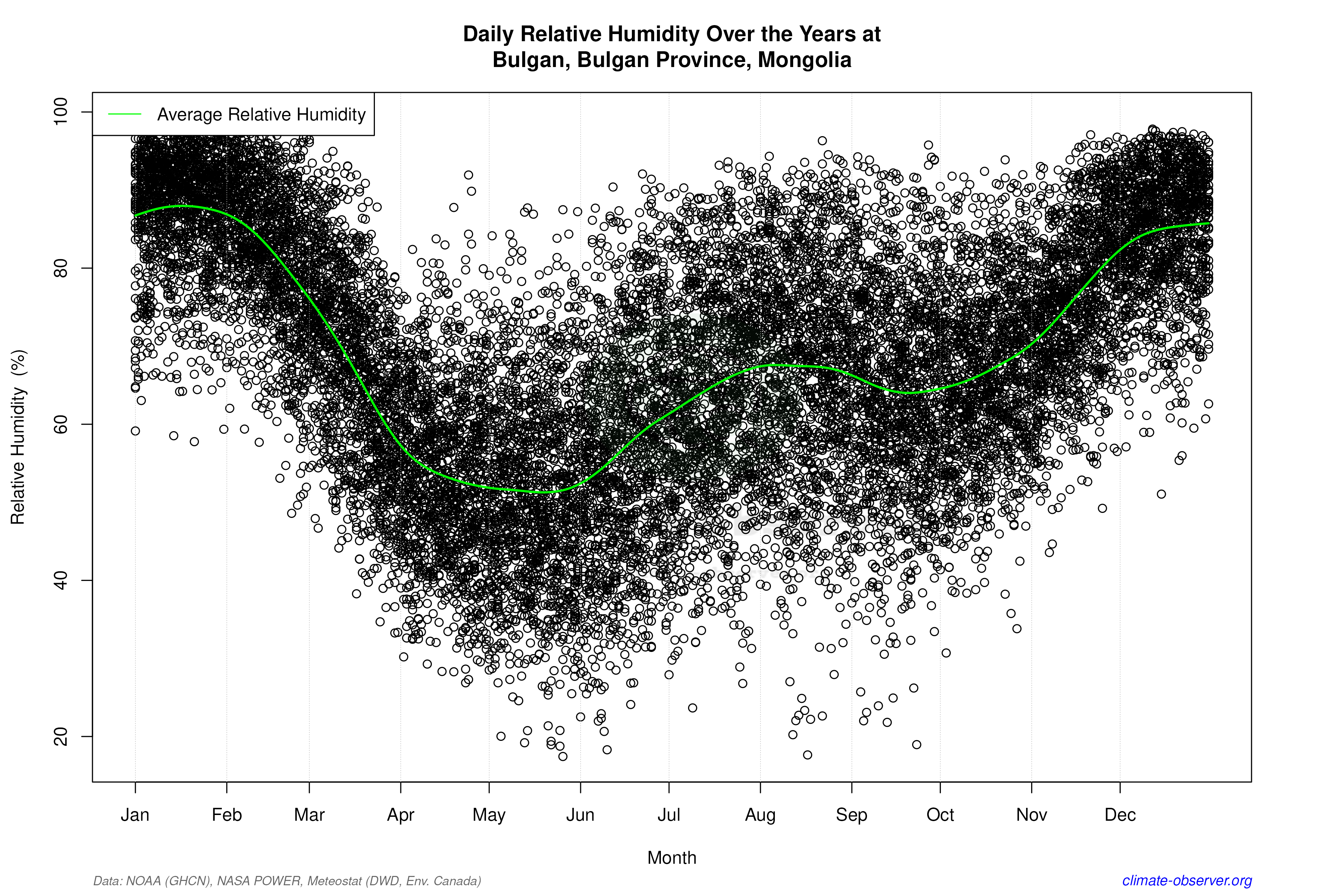

Average Max Temperature Throughout Year | 1 of 5


