Climate for Station: Bougouni, Sikasso Region, Mali
Loading live weather...
Climate Analysis & Overview
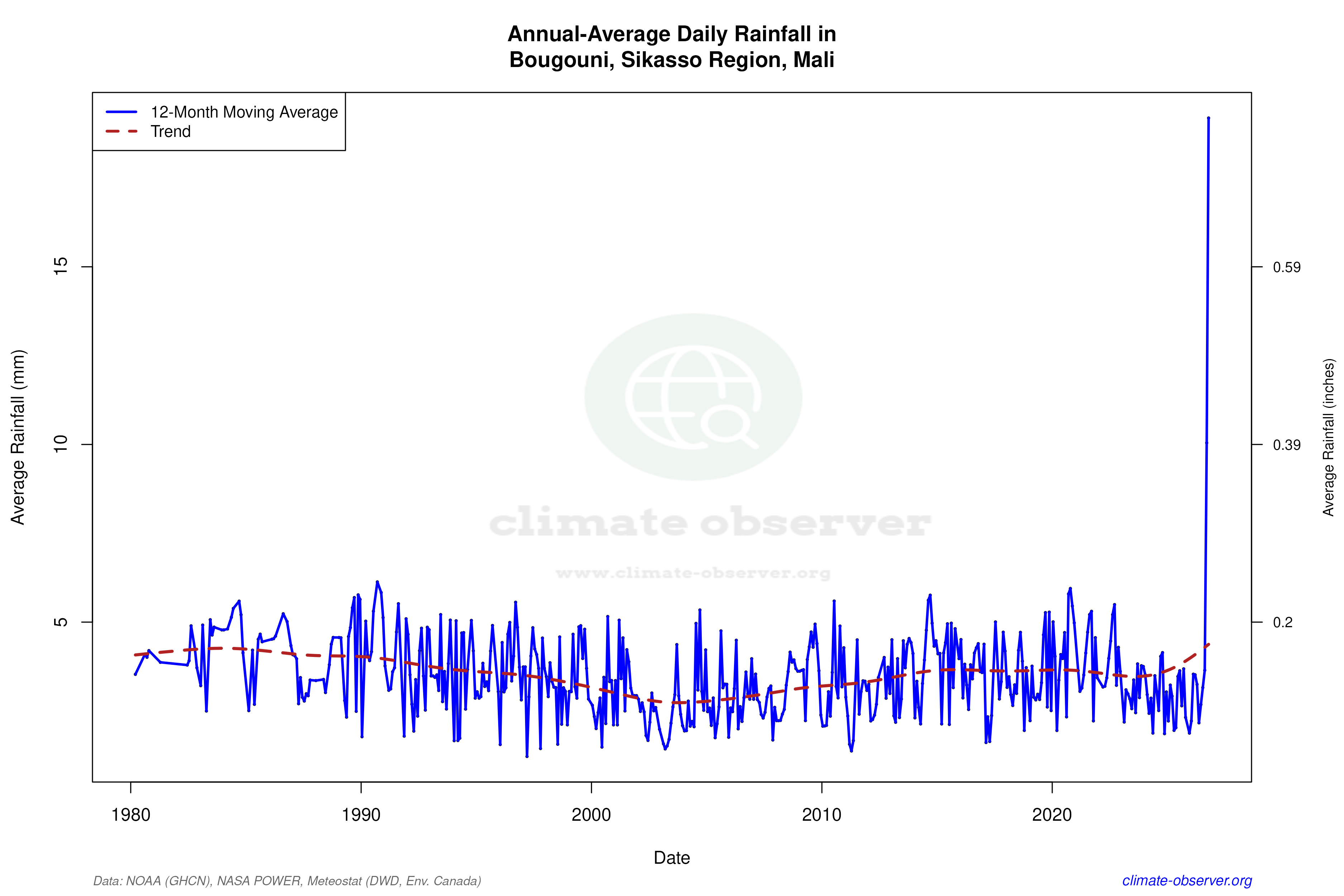
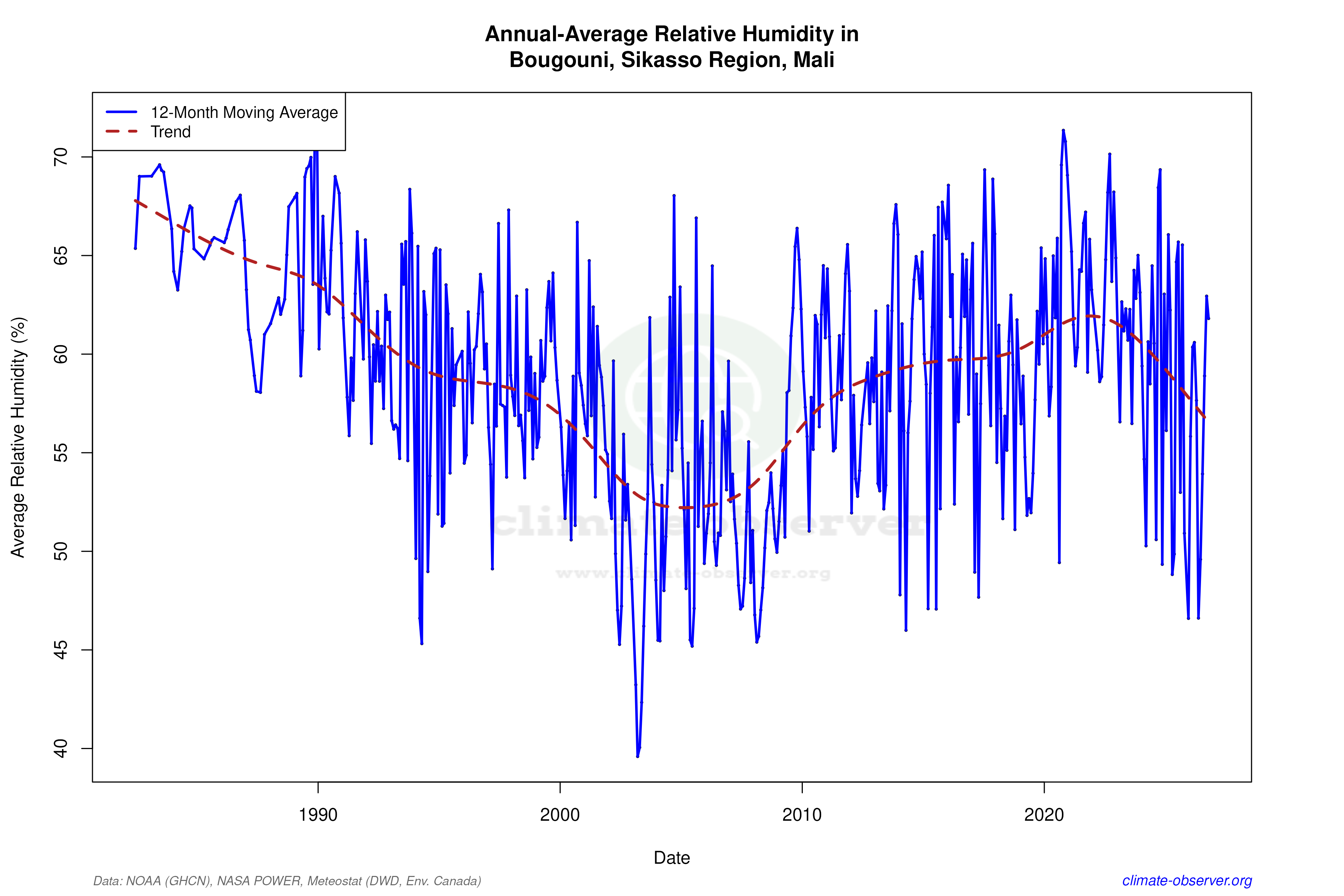
Bougouni, located in Mali's Sikasso region, is experiencing a warming trend, with both high and low temperatures showing significant increases over the past decades. The precipitation pattern has become slightly more concentrated, indicating shifts in rainfall distribution. These changes are crucial for local climate adaptation strategies.
Bougouni's Thermal Dynamics
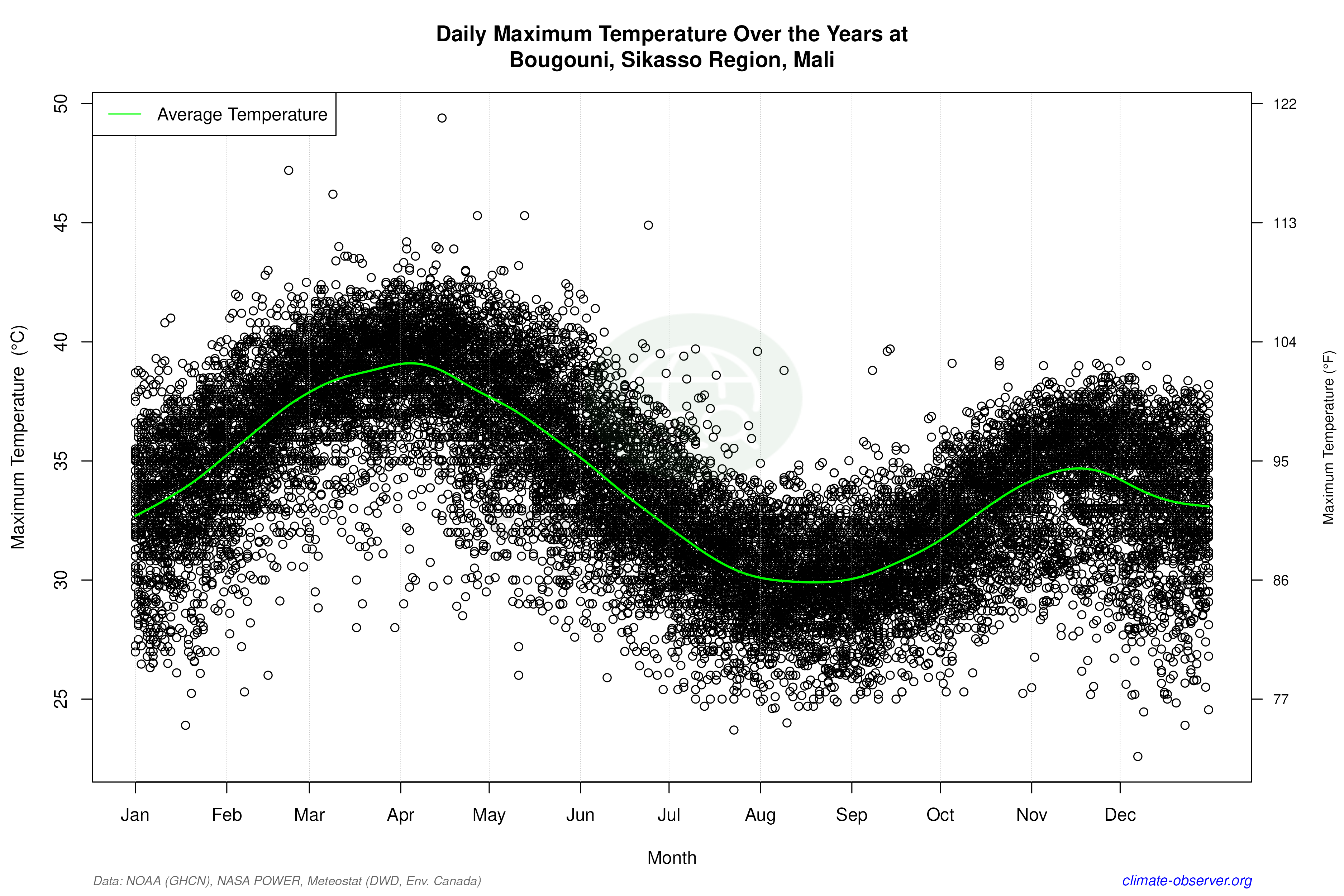
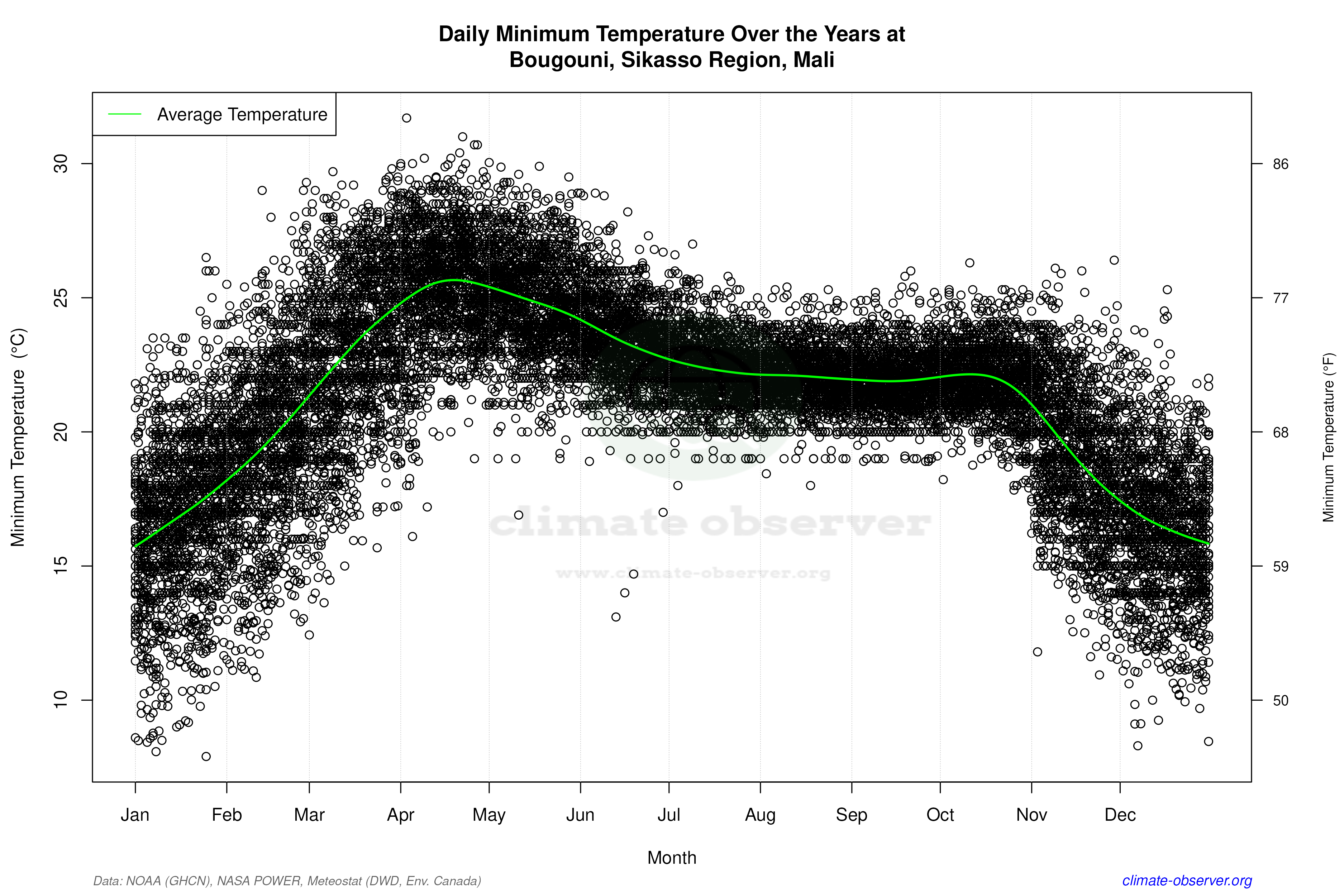
Situated in the southern part of Mali, Bougouni falls under the Köppen climate classification of Aw, which denotes a tropical savanna climate with a pronounced dry season. The all-time temperature trends reveal a warming pattern, with highs increasing by 0.51°C (0.92°F) and lows by 0.44°C (0.79°F). This warming trend is consistent with regional climate projections, which suggest increasing temperatures due to global climate change. Over the past decade, the trend for high temperatures has been a modest rise of 0.06°C (0.11°F), while low temperatures have surged by 0.77°C (1.39°F), suggesting more pronounced warming during cooler periods.
Precipitation Patterns and Concentration
The Precipitation Concentration Index (PCI) for Bougouni has shown a slight increase from a baseline of 20.99 to a current value of 21.32. The PCI measures how rainfall is distributed over time; a higher PCI indicates that precipitation is more concentrated in fewer events. This slight increase suggests a marginal shift towards more intense rainfall events, which could have implications for agriculture and water management in the region. Given that a PCI over 20 is considered highly concentrated, Bougouni's rainfall pattern is already skewed towards intense, sporadic rainfall.
Temperature Extremes and Implications
Bougouni has recorded extreme temperatures with a maximum of 49.4°C (120.9°F) and a minimum of 7.9°C (46.2°F). These extremes highlight the significant thermal variability within the region, which can pose challenges to both human and ecological systems. The increasing trend in low temperatures may offer some relief during cooler periods but also suggests a narrowing of the temperature range that could affect local biodiversity.
Regional Context and Climate Goals
In the broader context of Mali's climate goals, which focus on adaptation and resilience, Bougouni's warming trends and changing precipitation patterns underscore the need for targeted interventions. The region's geography, characterised by its flat landscapes and proximity to the Niger River, influences local climate dynamics, making it susceptible to both droughts and floods. Recent weather events, such as unseasonal rainfall and prolonged dry spells, have further highlighted the urgency of implementing adaptive measures to mitigate the impacts of these climatic shifts.
Station Statistics
10-Year Trend
High: +0.76 °F/decade
Low: +2.74 °F/decade
Rain: +0.019 in/decade
25-Year Trend
High: +0.48 °F/decade
Low: +1.13 °F/decade
Rain: +0.020 in/decade
50-Year Trend
High: +0.90 °F/decade
Low: +0.70 °F/decade
Rain: -0.003 in/decade
All-Time Trend
High: +0.90 °F/decade
Low: +0.70 °F/decade
Rain: -0.003 in/decade
Percentage Above-Average Days
Last 12 Months: 70.4%
This Year: 80.8%
Precipitation Concentration Index (PCI) ℹ️
Last 12 Months: 38.3
Historical Average: 19.7
Percentile Rank of Last 12 Months ℹ️
High: 74th percentile
Low: 93rd percentile
Rain: 92nd percentile
Change in Variance ℹ️
High: +3.8%
Low: -29.1%
Intraday: -14.0%
Data Coverage
79.1%
First Year of Data
1960
Station Location
Historical Weather Records
| Max High | Avg High | Min High | Max Avg | Avg Avg | Min Avg | Max Low | Avg Low | Min Low | Max Precipitation | Avg Precipitation | Max Snow | Avg Snow | |
|---|---|---|---|---|---|---|---|---|---|---|---|---|---|
| Record | 120.92 °F | — | 72.66 °F | 99.86 °F | — | 58.75 °F | 89.06 °F | — | 46.22 °F | 26.91 in | — | — | — |
| January | 105.80 °F | 92.85 °F | 75.02 °F | 94.82 °F | 77.80 °F | 61.25 °F | 79.70 °F | 62.37 °F | 46.22 °F | 0.35 in | 0.00 in | — | — |
| February | 116.96 °F | 97.89 °F | 77.54 °F | 99.32 °F | 82.79 °F | 66.74 °F | 84.74 °F | 67.31 °F | 51.53 °F | 0.73 in | 0.00 in | — | — |
| March | 115.16 °F | 101.37 °F | 82.40 °F | 97.52 °F | 87.44 °F | 70.65 °F | 85.66 °F | 73.69 °F | 54.37 °F | 1.86 in | 0.01 in | — | — |
| April | 120.92 °F | 101.52 °F | 83.30 °F | 99.86 °F | 89.16 °F | 76.10 °F | 89.06 °F | 77.83 °F | 60.98 °F | 1.50 in | 0.05 in | — | — |
| May | 113.54 °F | 97.85 °F | 78.80 °F | 97.16 °F | 86.77 °F | 75.20 °F | 86.07 °F | 76.75 °F | 62.42 °F | 3.54 in | 0.14 in | — | — |
| June | 112.82 °F | 92.63 °F | 77.72 °F | 94.10 °F | 82.67 °F | 71.42 °F | 84.02 °F | 74.09 °F | 55.58 °F | 4.41 in | 0.22 in | — | — |
| July | 103.46 °F | 87.77 °F | 74.66 °F | 89.60 °F | 79.46 °F | 70.52 °F | 80.60 °F | 72.23 °F | 64.40 °F | 5.69 in | 0.33 in | — | — |
| August | 101.84 °F | 85.94 °F | 75.20 °F | 89.06 °F | 78.25 °F | 71.60 °F | 77.72 °F | 71.71 °F | 64.40 °F | 6.97 in | 0.39 in | — | — |
| September | 103.46 °F | 87.31 °F | 77.00 °F | 87.98 °F | 78.86 °F | 71.78 °F | 78.80 °F | 71.46 °F | 66.02 °F | 12.19 in | 0.35 in | — | — |
| October | 102.56 °F | 91.31 °F | 77.43 °F | 89.96 °F | 80.95 °F | 73.22 °F | 79.34 °F | 71.57 °F | 64.09 °F | 26.91 in | 0.16 in | — | — |
| November | 102.38 °F | 94.22 °F | 77.34 °F | 91.58 °F | 80.27 °F | 65.79 °F | 79.52 °F | 66.42 °F | 51.69 °F | 0.36 in | 0.01 in | — | — |
| December | 102.56 °F | 92.20 °F | 72.66 °F | 90.68 °F | 76.97 °F | 58.75 °F | 77.54 °F | 61.70 °F | 46.94 °F | 0.11 in | 0.00 in | — | — |
Data Visualisations
Remove WatermarksCurrent Year Climate Trends vs Historical
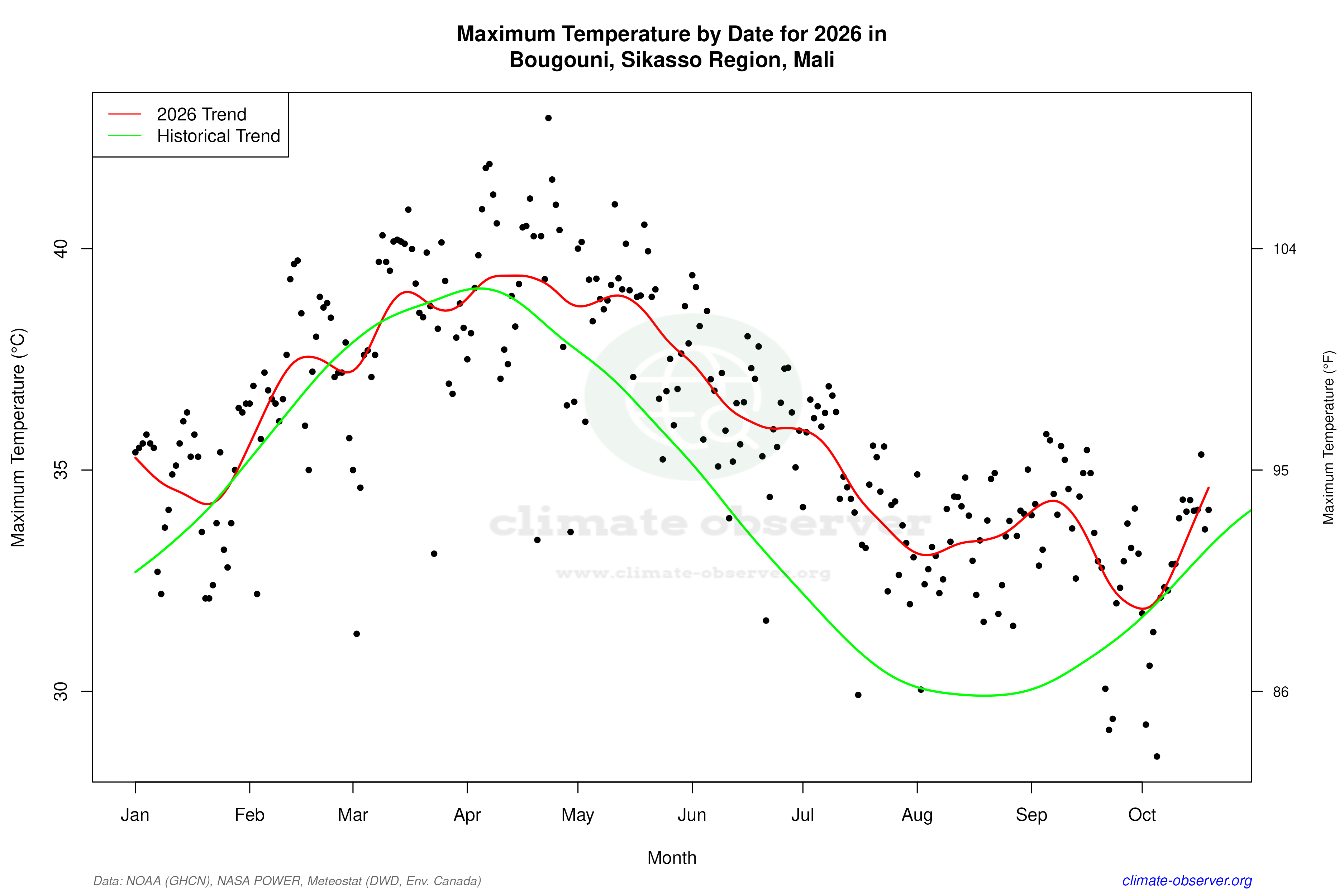
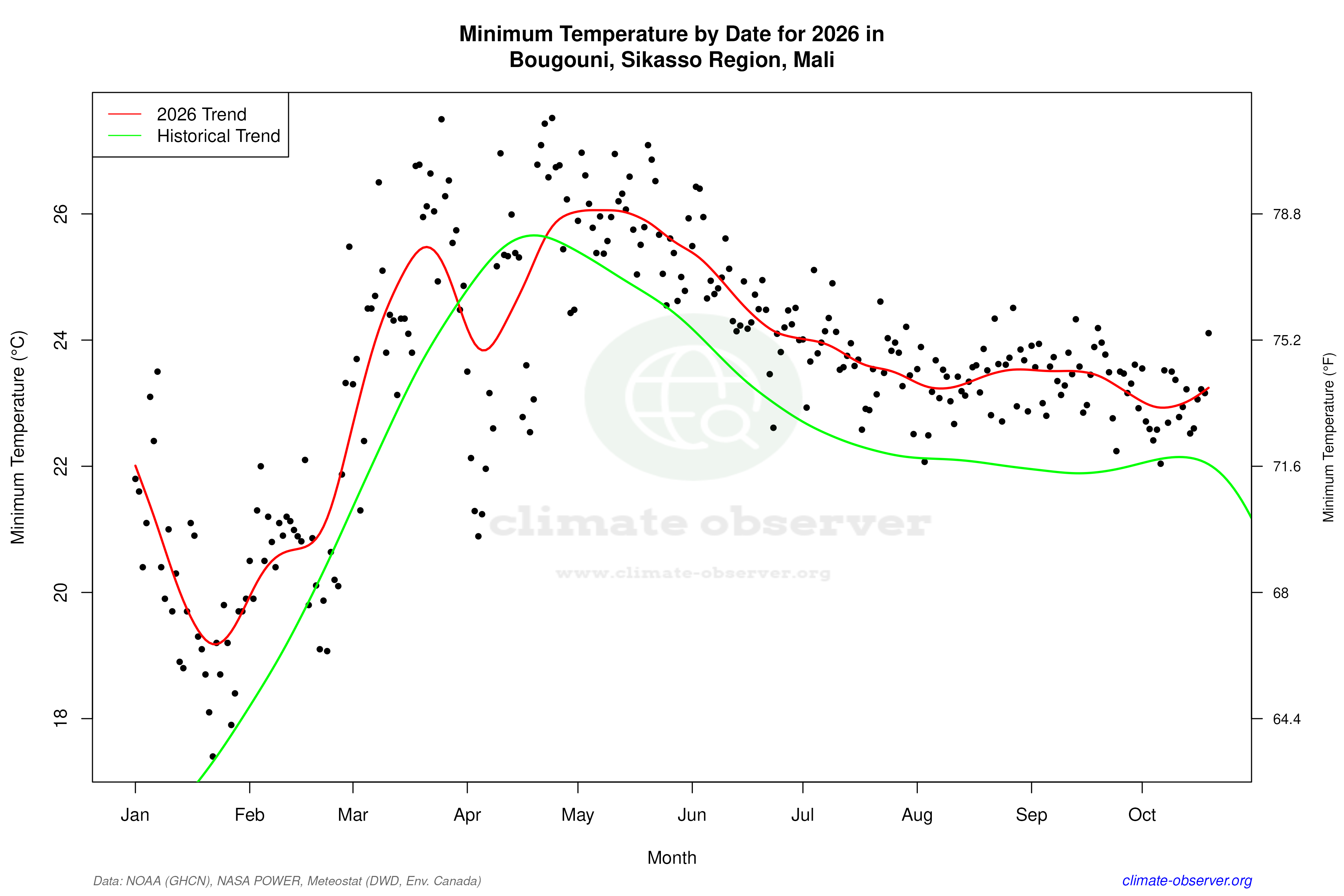
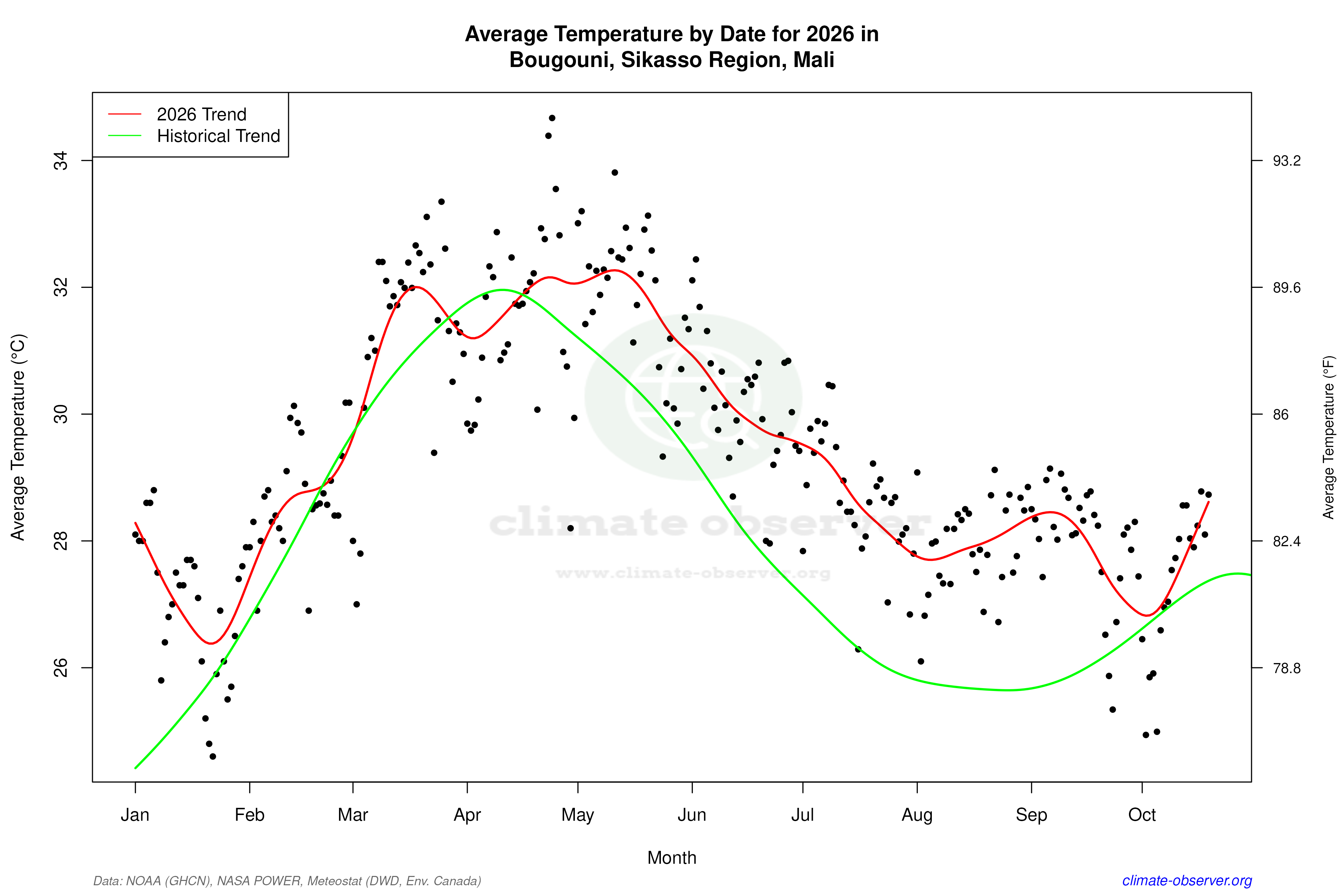
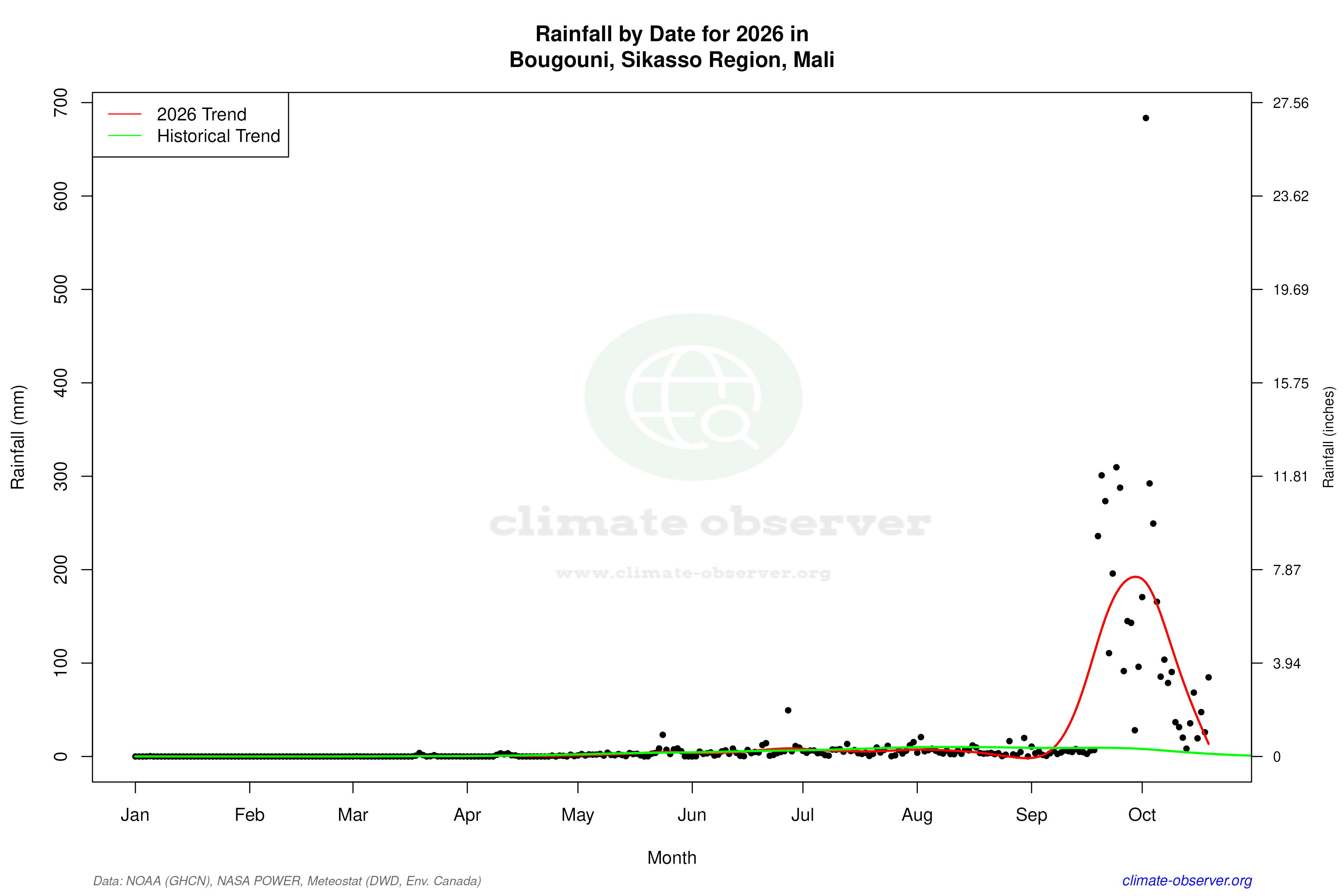
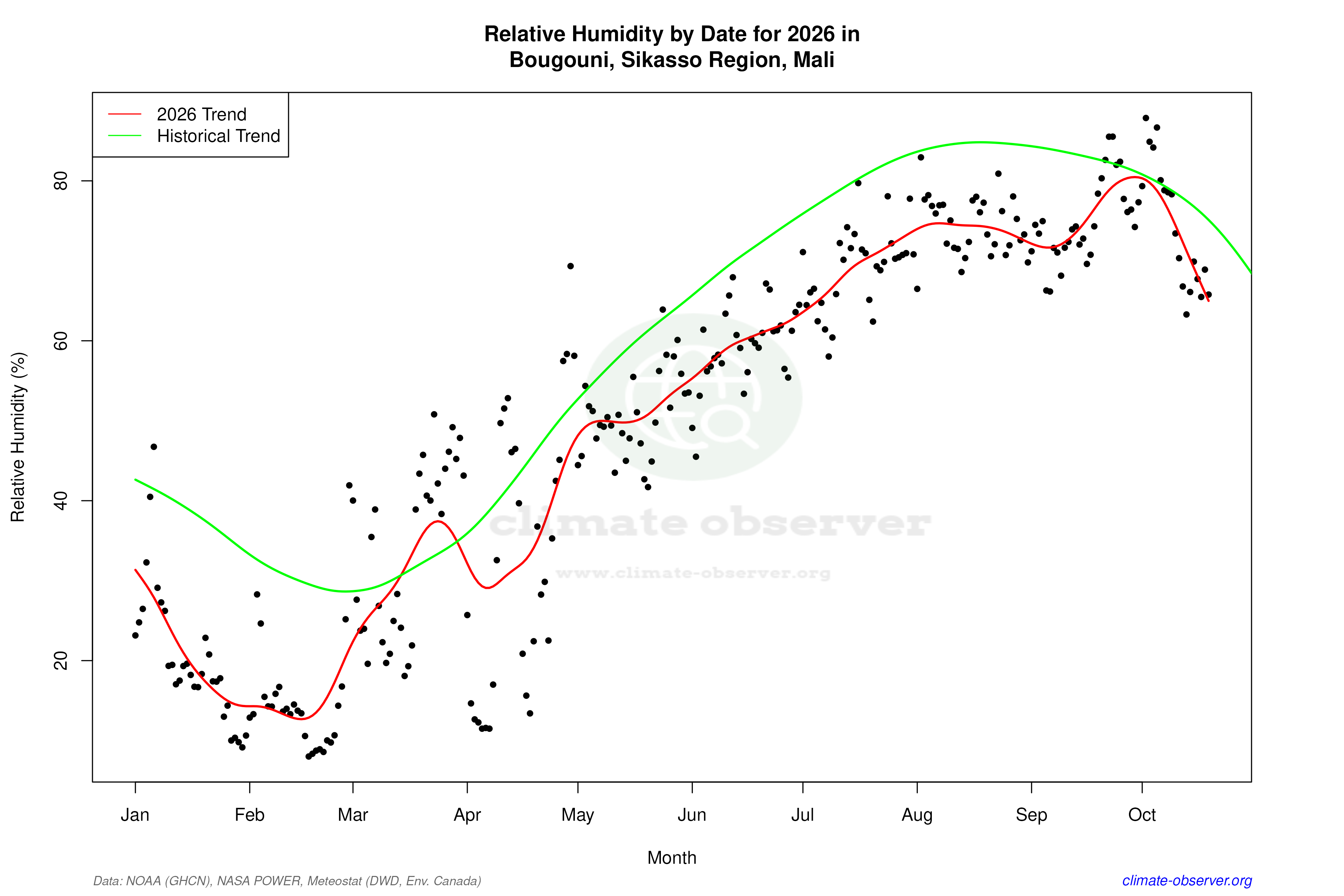

Max Temperature this Year | 1 of 6
Climate 12-Month Moving Averages
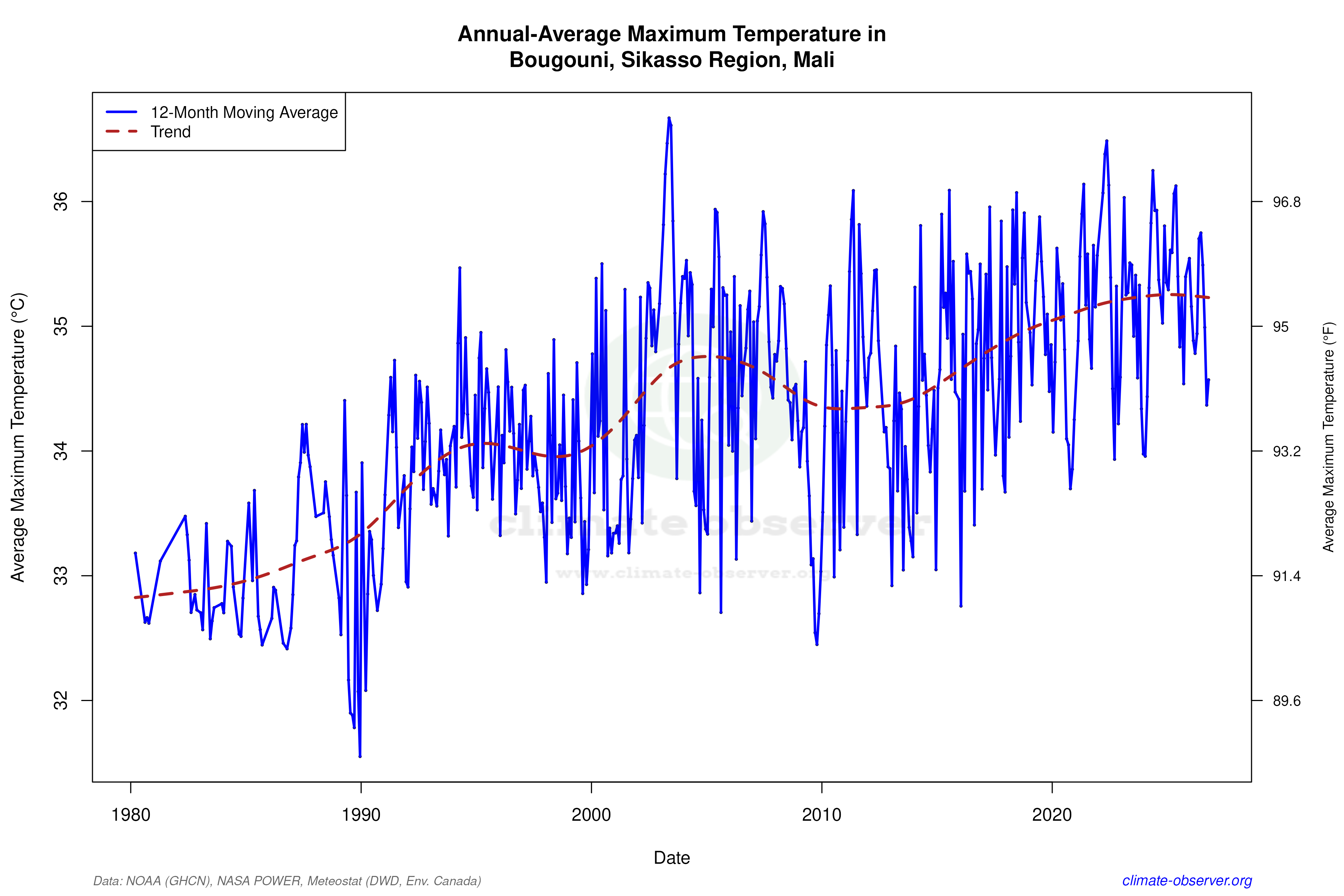
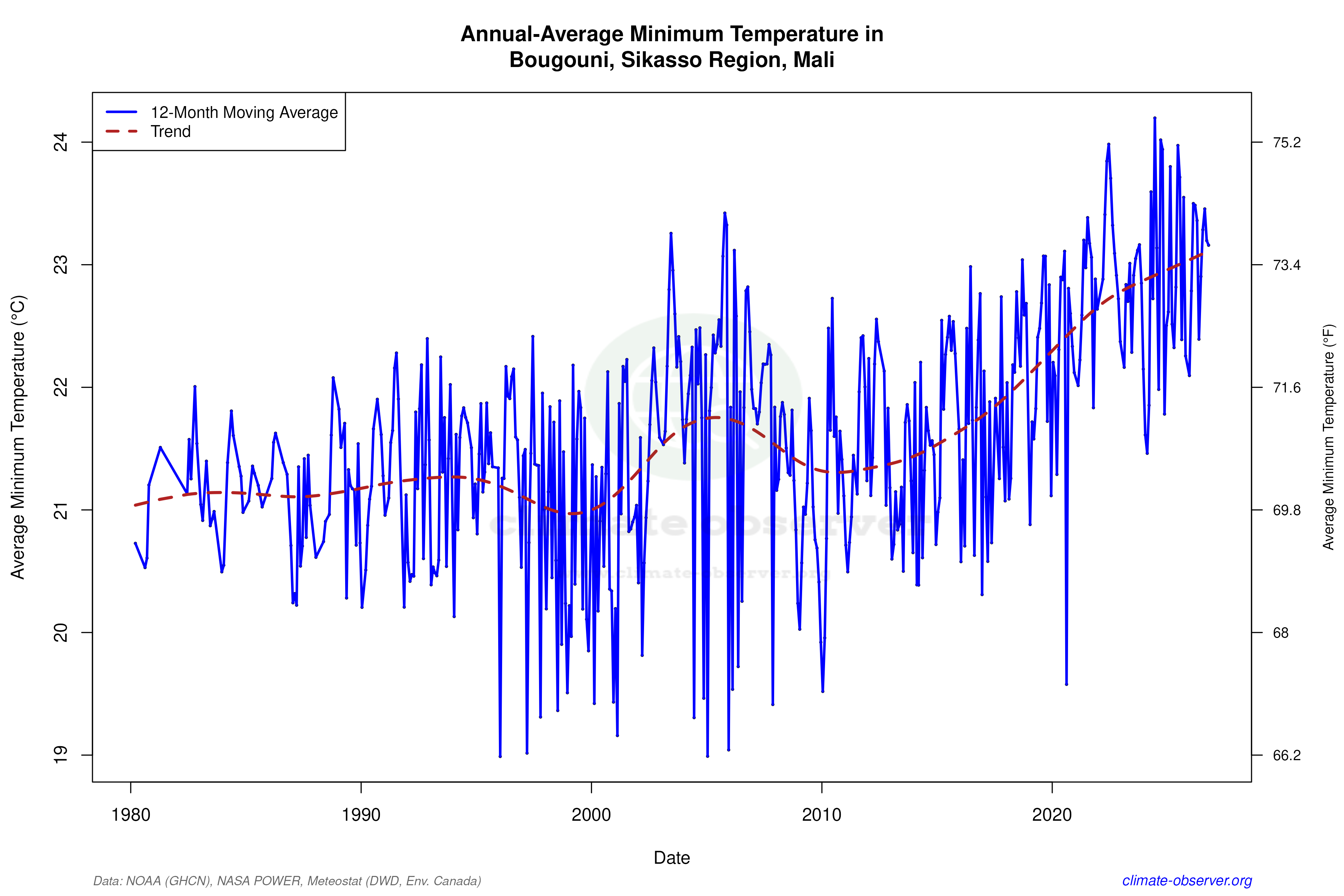
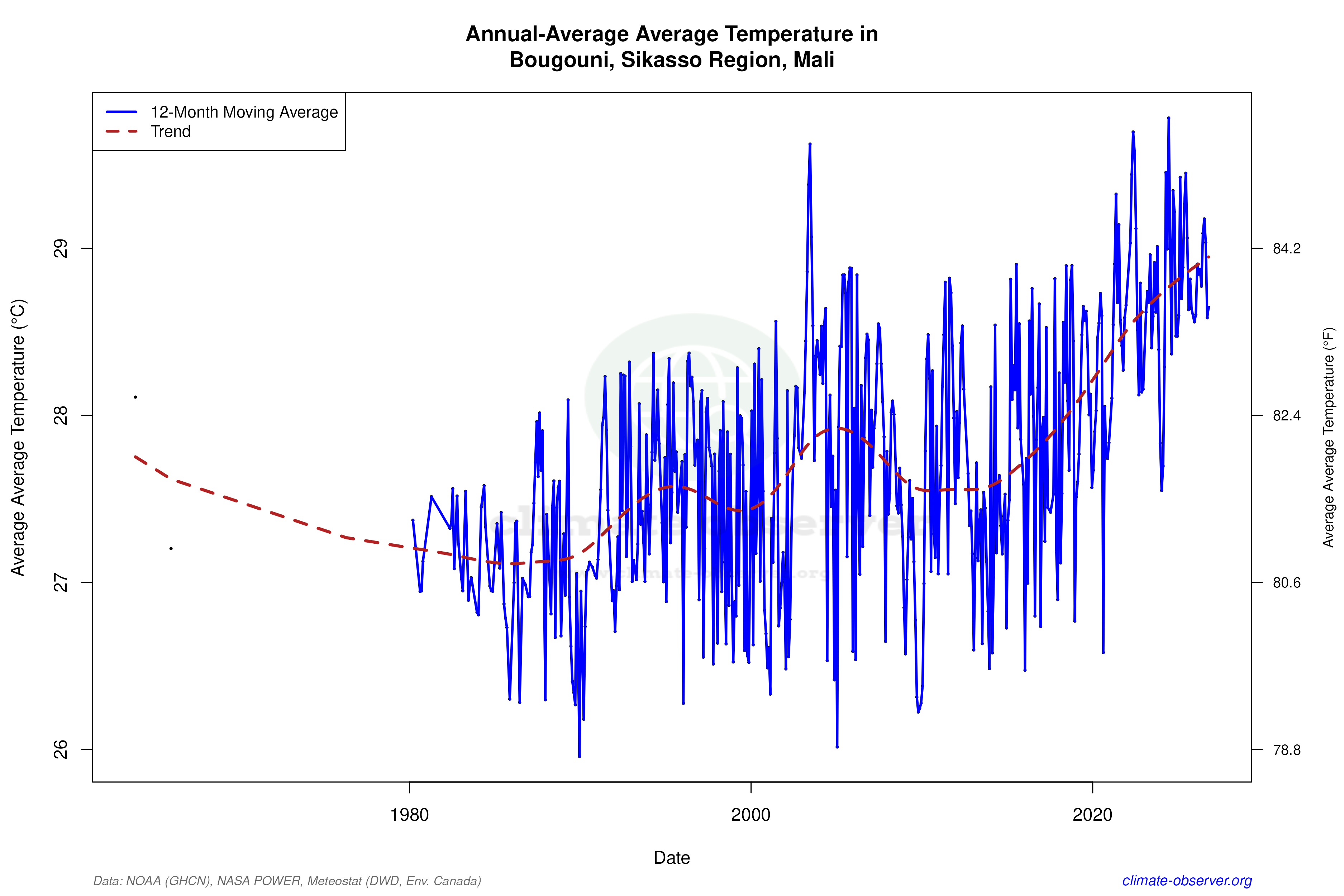

Max Temperature 12-Month MA | 1 of 6
Daily Data Points and Averages Throughout the Year
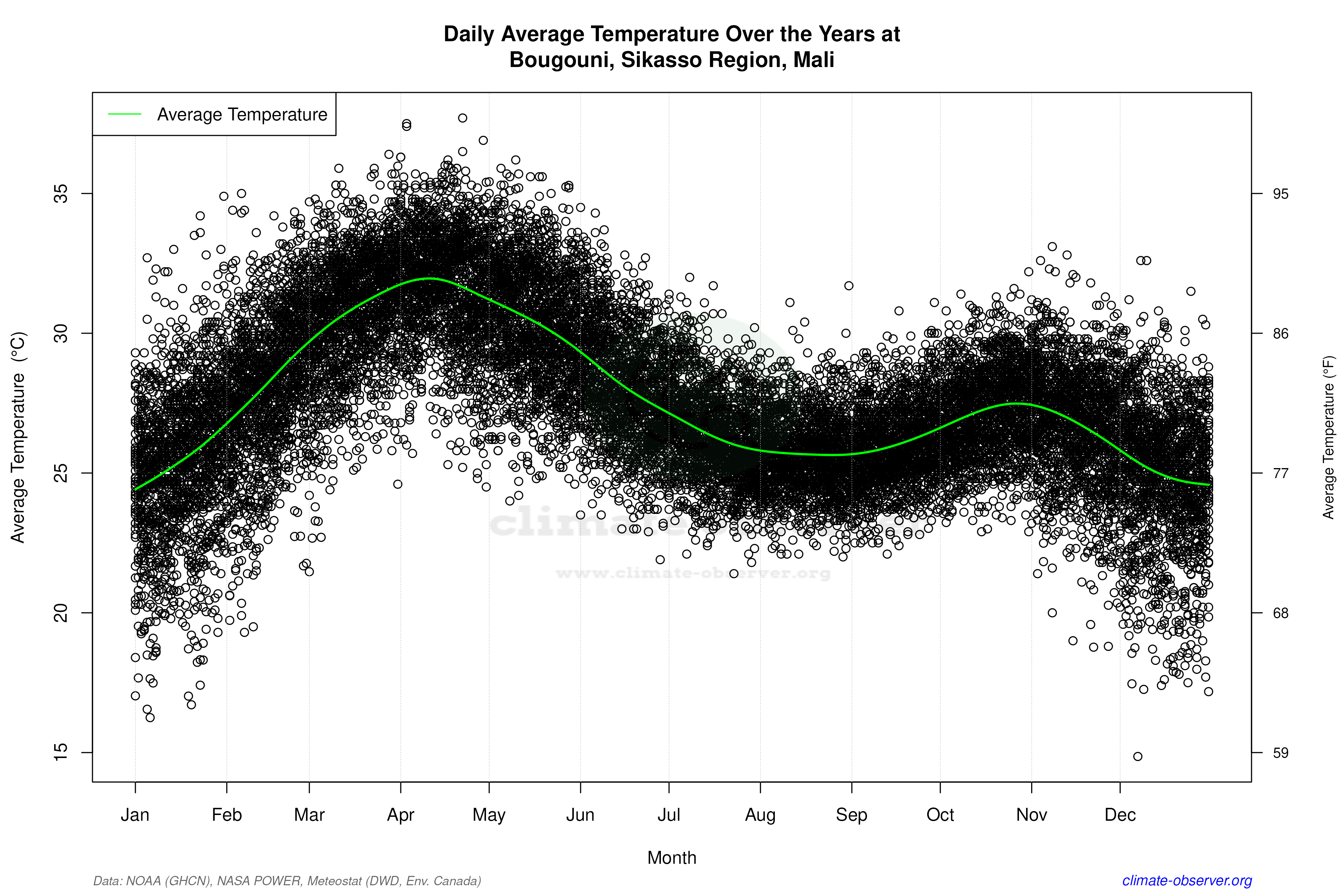
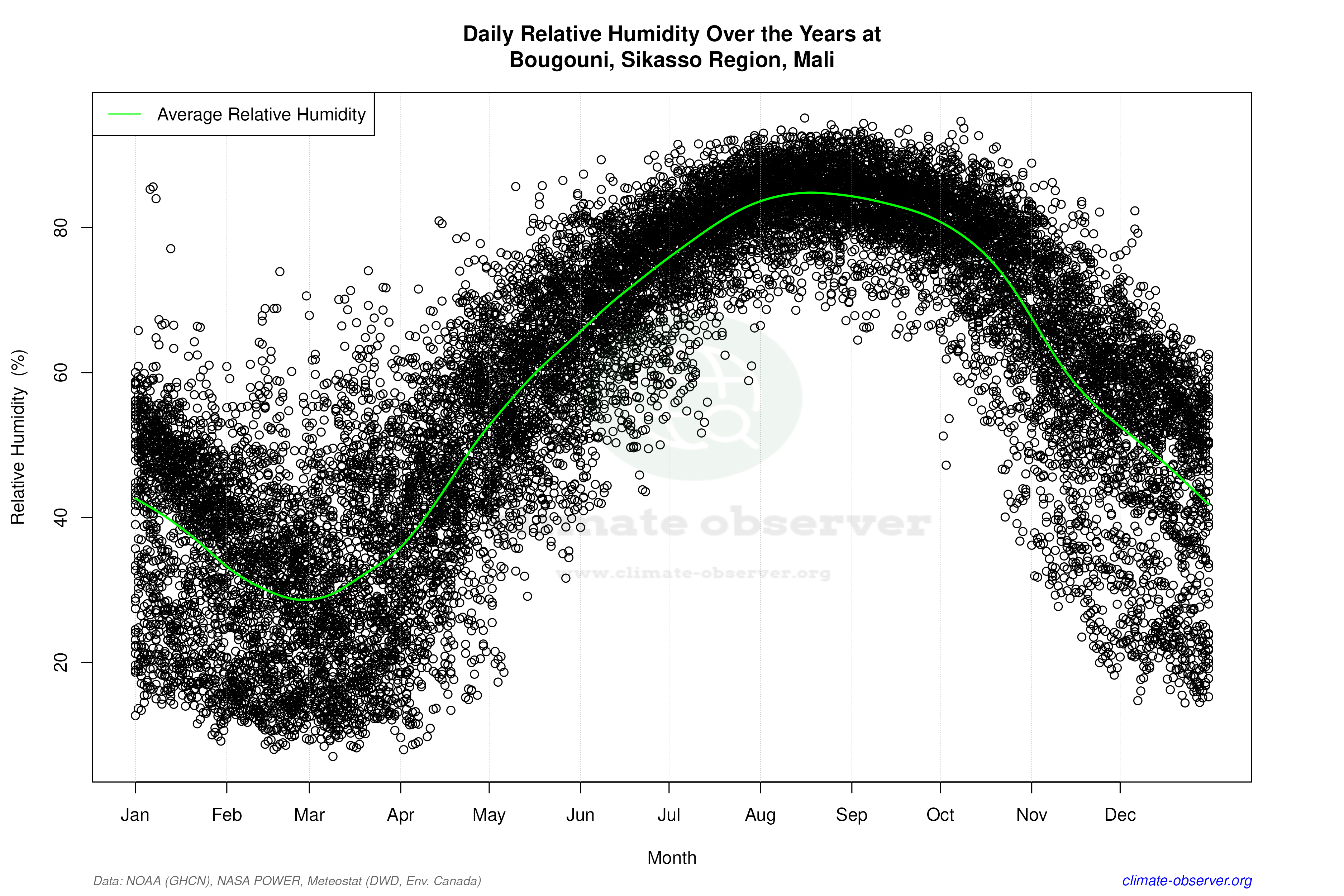

Average Max Temperature Throughout Year | 1 of 5


