Climate for Station: Penang Intl, Penang, Malaysia
Loading live weather...
Climate Analysis & Overview
Penang International Airport is experiencing a warming trend, with a notable rise in both high and low temperatures over the past decade. The increasing Precipitation Concentration Index suggests more intense rainfall events, aligning with Malaysia's broader climate adaptation goals.
Tropical Climate Dynamics
Penang International Airport, located at 5.297°N, 100.277°E, is situated in a tropical rainforest climate, classified as Af under the Köppen system. This classification is characterised by high humidity and significant rainfall throughout the year. The airport's proximity to the Strait of Malacca influences its climate, with the surrounding waters moderating temperature extremes and contributing to frequent precipitation.
Temperature Trends: A Decade of Warming
Over the past ten years, the airport has experienced a warming trend, with average high temperatures rising by 0.52°C (0.94°F) and lows increasing by a more substantial 1.29°C (2.32°F). These trends are even more pronounced when considering all-time data, where highs have increased by 0.52°C (0.94°F), while lows have shown a minimal cooling of 0.04°C (0.07°F). This warming aligns with Malaysia's national climate goals to monitor and adapt to changing temperature patterns.
Precipitation Patterns: Intensifying Rainfall
The Precipitation Concentration Index (PCI) at Penang International has risen from a baseline of 11.45 to a current value of 12.84. This increase indicates that rainfall is becoming more concentrated in fewer, more intense events. Such a change can lead to challenges in water management and flood prevention, particularly in urban areas like George Town. The PCI, a measure of how rainfall is distributed over time, suggests a shift towards more extreme weather events, a trend that is consistent with global climate change projections.
Record Temperatures: Extremes in Context
The record high temperature at Penang International stands at 37.2°C (98.96°F), while the record low is 20.0°C (68.0°F). These extremes highlight the variability within the tropical climate, where even minor shifts can have significant impacts on local ecosystems and human activities. The relatively stable record lows, despite the overall warming trend, suggest that the region's nights remain cooler, possibly due to the moderating influence of surrounding waters.
Regional Implications and Adaptation
The observed climate trends at Penang International Airport reflect broader regional patterns, where rising temperatures and more concentrated rainfall events pose challenges for infrastructure and agriculture. Malaysia's commitment to climate resilience is critical in addressing these changes, with strategies focusing on sustainable urban development and enhanced weather monitoring systems. As the climate continues to evolve, understanding and adapting to these trends will be essential for safeguarding the region's economic and environmental health.
Station Statistics
10-Year Trend
High: +0.50 °F/decade
Low: +1.89 °F/decade
Rain: -0.021 in/decade
25-Year Trend
High: +0.50 °F/decade
Low: +0.40 °F/decade
Rain: -0.012 in/decade
50-Year Trend
High: +1.25 °F/decade
Low: -0.50 °F/decade
Rain: +0.005 in/decade
All-Time Trend
High: +1.22 °F/decade
Low: -0.47 °F/decade
Rain: +0.005 in/decade
Percentage Above-Average Days
Last 12 Months: 27.1%
This Year: 29.5%
Precipitation Concentration Index (PCI) ℹ️
Last 12 Months: 11.2
Historical Average: 11.4
Percentile Rank of Last 12 Months ℹ️
High: 70th percentile
Low: 78th percentile
Rain: 32nd percentile
Change in Variance ℹ️
High: -25.1%
Low: -28.2%
Intraday: -54.6%
Data Coverage
70.7%
First Year of Data
1949
Station Location
Historical Weather Records
| Max High | Avg High | Min High | Max Avg | Avg Avg | Min Avg | Max Low | Avg Low | Min Low | Max Precipitation | Avg Precipitation | Max Snow | Avg Snow | |
|---|---|---|---|---|---|---|---|---|---|---|---|---|---|
| Record | 98.96 °F | — | 77.00 °F | 90.68 °F | — | 73.04 °F | 86.31 °F | — | 68.00 °F | 10.12 in | — | — | — |
| January | 95.36 °F | 88.11 °F | 79.16 °F | 86.18 °F | 81.56 °F | 73.04 °F | 81.50 °F | 76.59 °F | 68.00 °F | 2.76 in | 0.09 in | — | — |
| February | 96.80 °F | 88.96 °F | 80.01 °F | 87.98 °F | 82.27 °F | 75.56 °F | 82.53 °F | 77.09 °F | 68.00 °F | 3.15 in | 0.11 in | — | — |
| March | 98.06 °F | 89.22 °F | 81.10 °F | 90.68 °F | 82.70 °F | 74.48 °F | 83.77 °F | 77.91 °F | 69.80 °F | 4.02 in | 0.18 in | — | — |
| April | 95.00 °F | 88.90 °F | 81.01 °F | 89.06 °F | 82.85 °F | 75.56 °F | 86.31 °F | 78.60 °F | 68.00 °F | 9.43 in | 0.24 in | — | — |
| May | 97.34 °F | 88.51 °F | 81.14 °F | 88.70 °F | 82.79 °F | 76.46 °F | 85.62 °F | 78.82 °F | 68.90 °F | 7.56 in | 0.30 in | — | — |
| June | 94.10 °F | 88.38 °F | 80.60 °F | 87.98 °F | 82.45 °F | 73.94 °F | 85.71 °F | 78.64 °F | 69.80 °F | 5.12 in | 0.21 in | — | — |
| July | 94.28 °F | 87.73 °F | 80.60 °F | 88.52 °F | 81.78 °F | 74.30 °F | 85.82 °F | 77.89 °F | 69.80 °F | 4.83 in | 0.24 in | — | — |
| August | 94.28 °F | 87.35 °F | 78.80 °F | 87.26 °F | 81.40 °F | 74.48 °F | 84.61 °F | 77.51 °F | 69.98 °F | 6.90 in | 0.28 in | — | — |
| September | 93.38 °F | 86.76 °F | 77.00 °F | 86.61 °F | 80.78 °F | 74.48 °F | 84.85 °F | 76.96 °F | 69.98 °F | 9.06 in | 0.38 in | — | — |
| October | 93.38 °F | 86.50 °F | 78.08 °F | 86.90 °F | 80.48 °F | 73.76 °F | 83.70 °F | 76.70 °F | 69.98 °F | 10.04 in | 0.39 in | — | — |
| November | 93.20 °F | 86.73 °F | 77.00 °F | 86.00 °F | 80.57 °F | 74.84 °F | 82.18 °F | 76.63 °F | 69.98 °F | 10.12 in | 0.31 in | — | — |
| December | 98.96 °F | 87.26 °F | 78.44 °F | 86.18 °F | 80.93 °F | 74.12 °F | 82.04 °F | 76.55 °F | 69.80 °F | 3.27 in | 0.15 in | — | — |
Data Visualisations
Remove WatermarksCurrent Year Climate Trends vs Historical
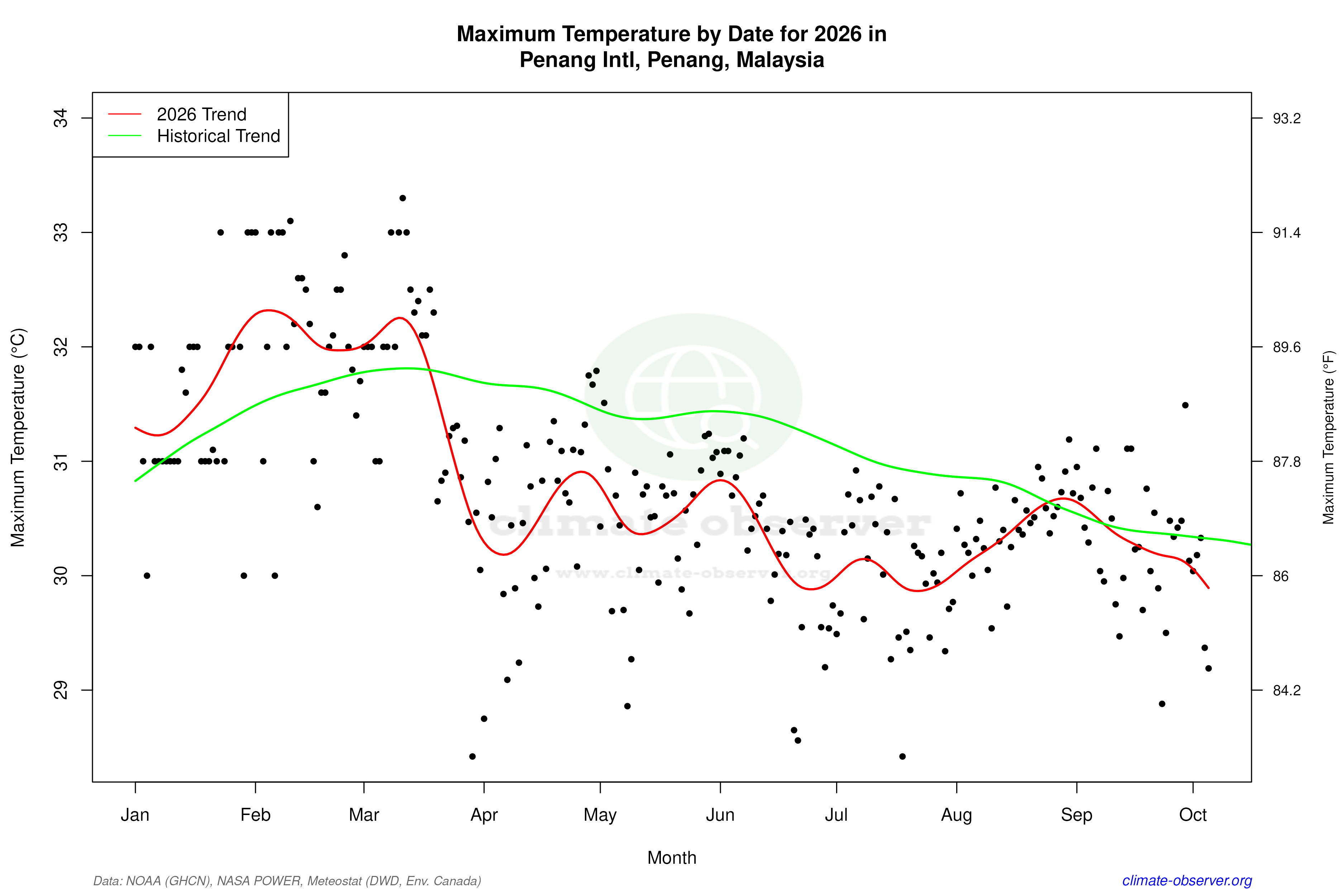
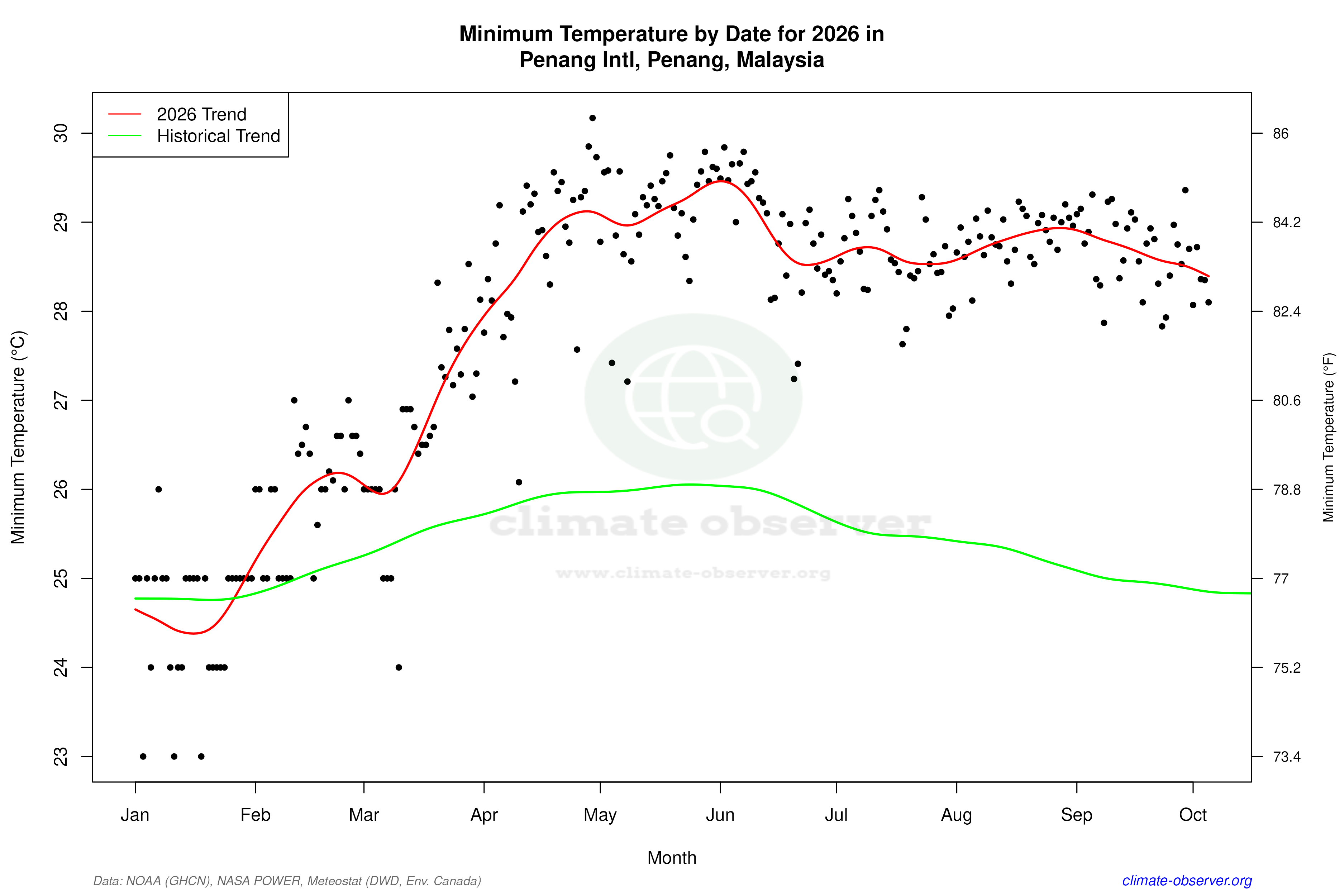
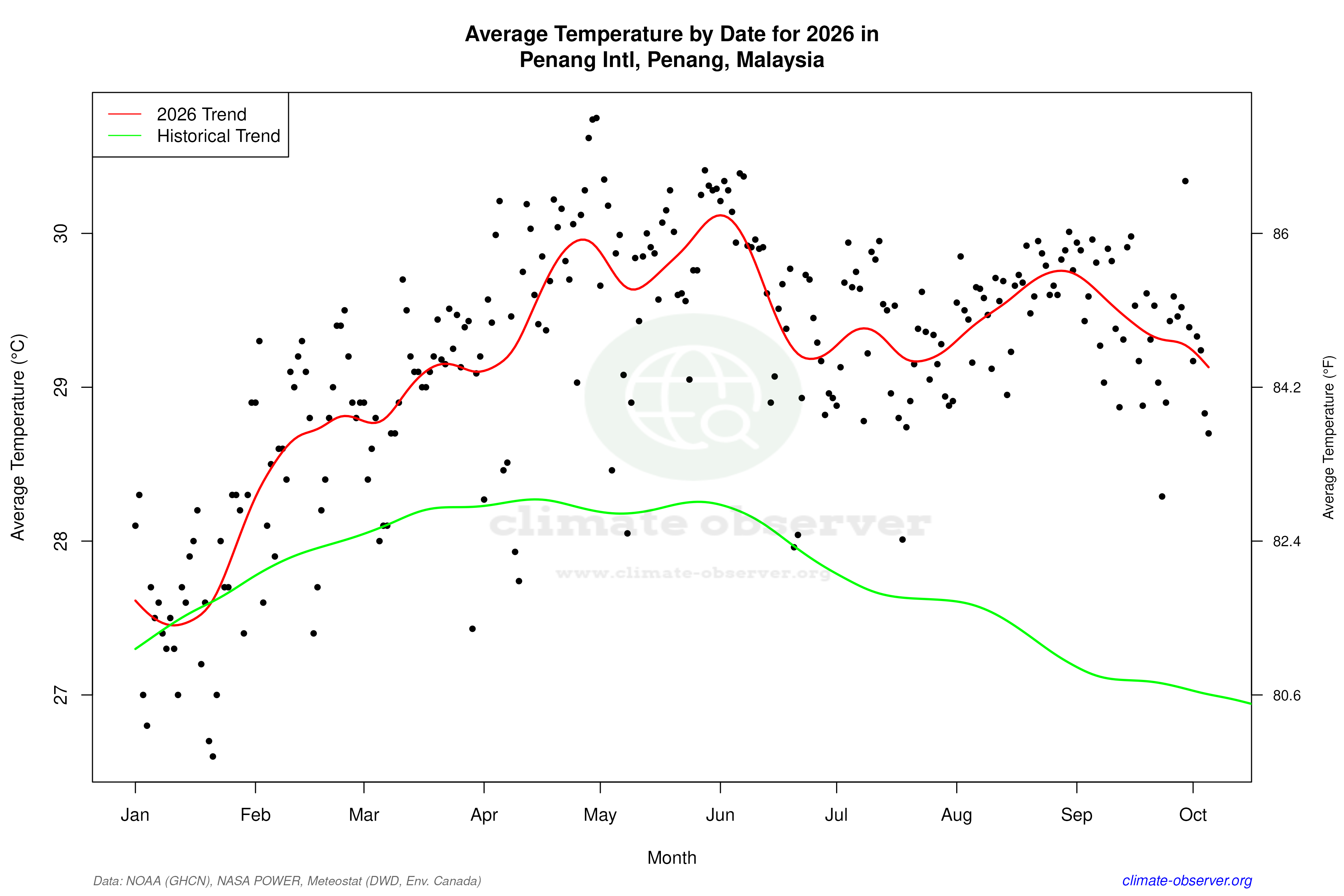
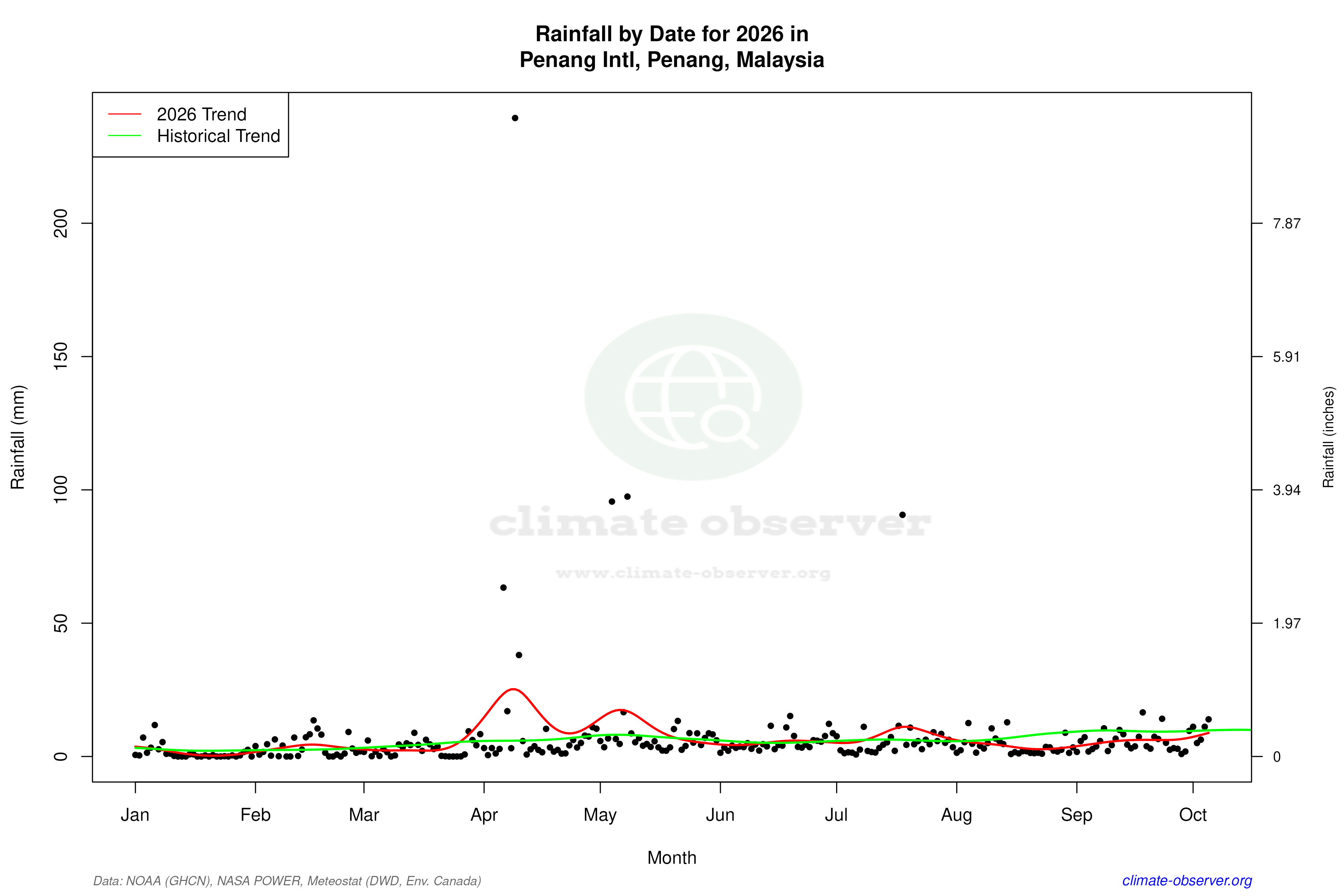
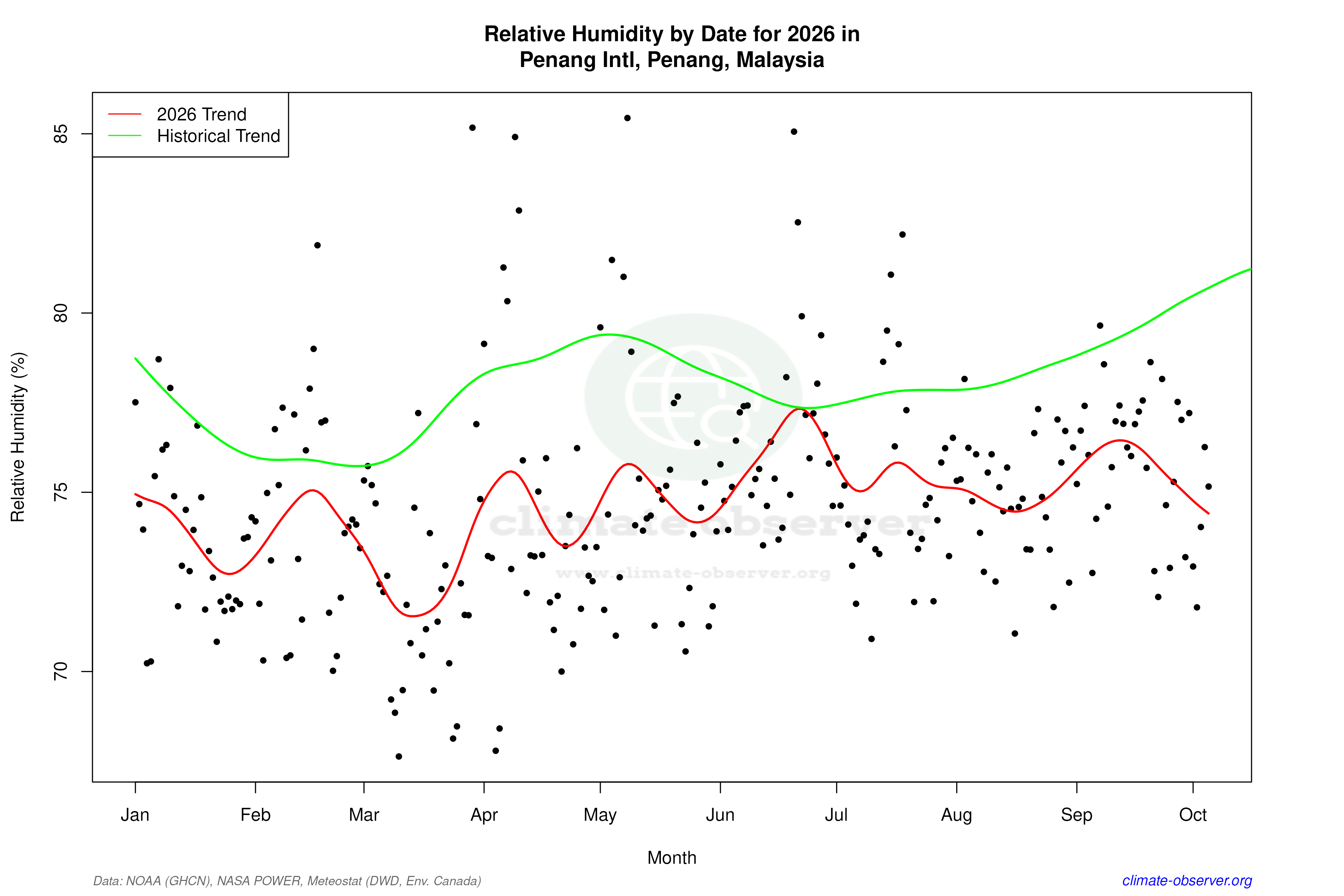

Max Temperature this Year | 1 of 6
Climate 12-Month Moving Averages
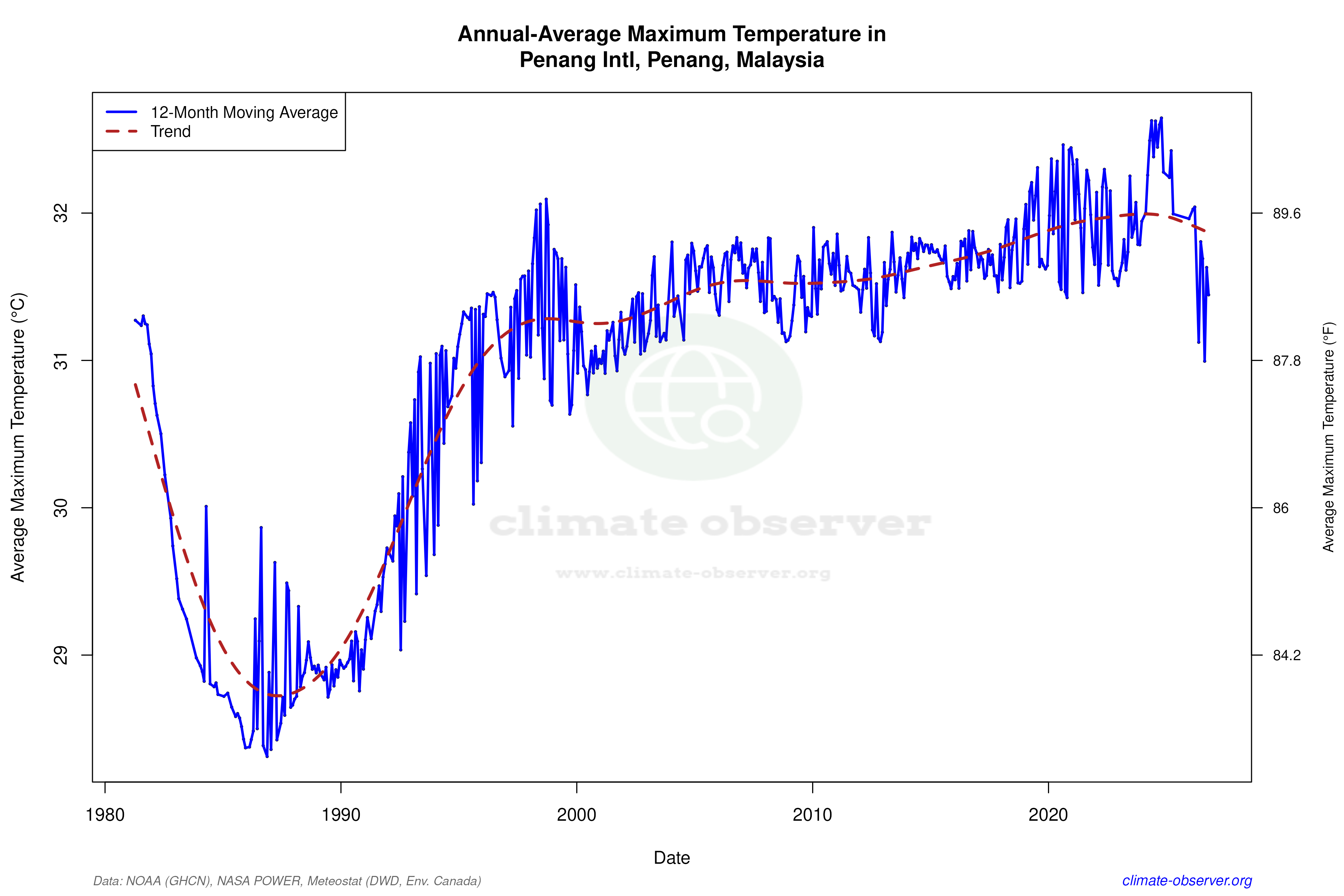
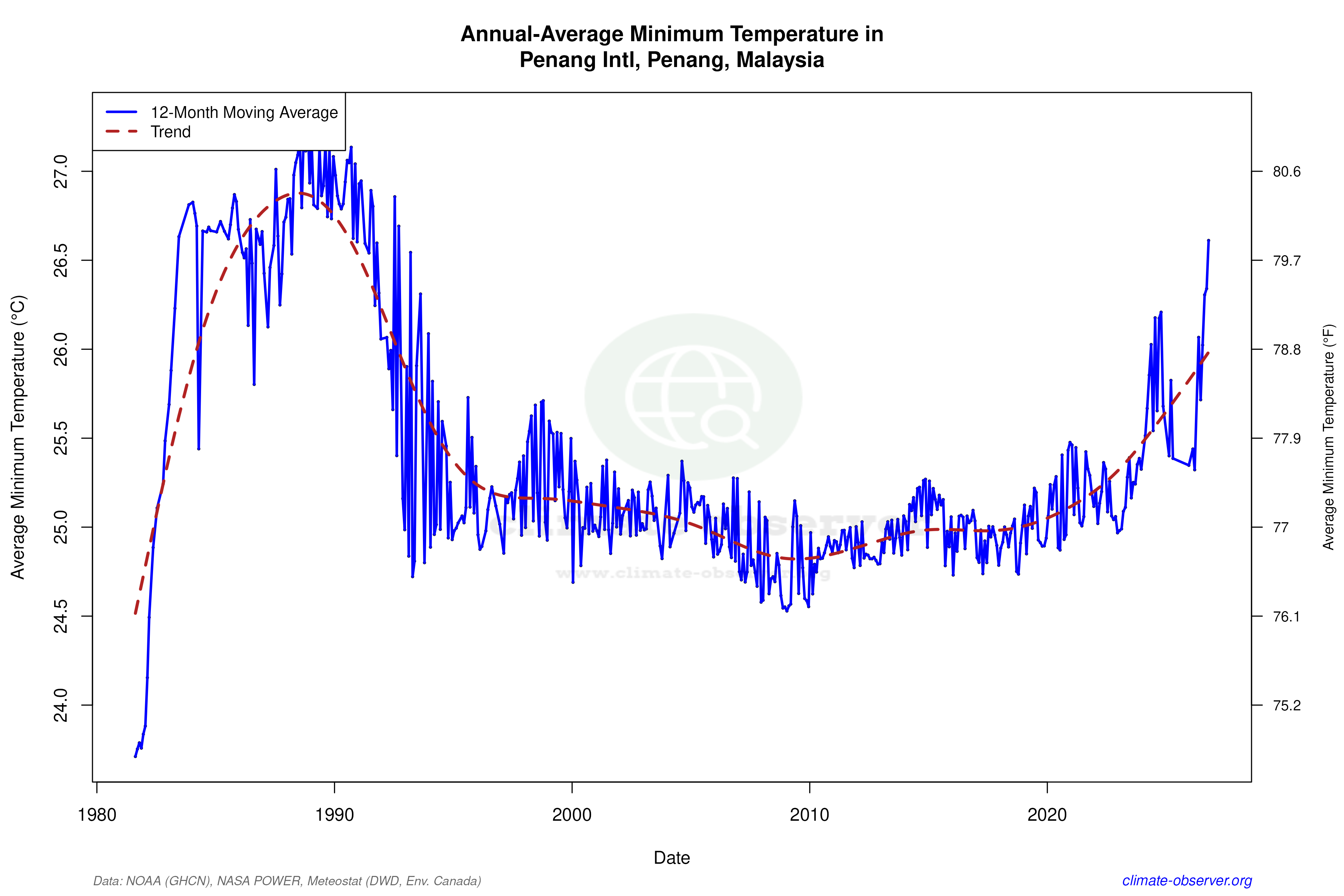
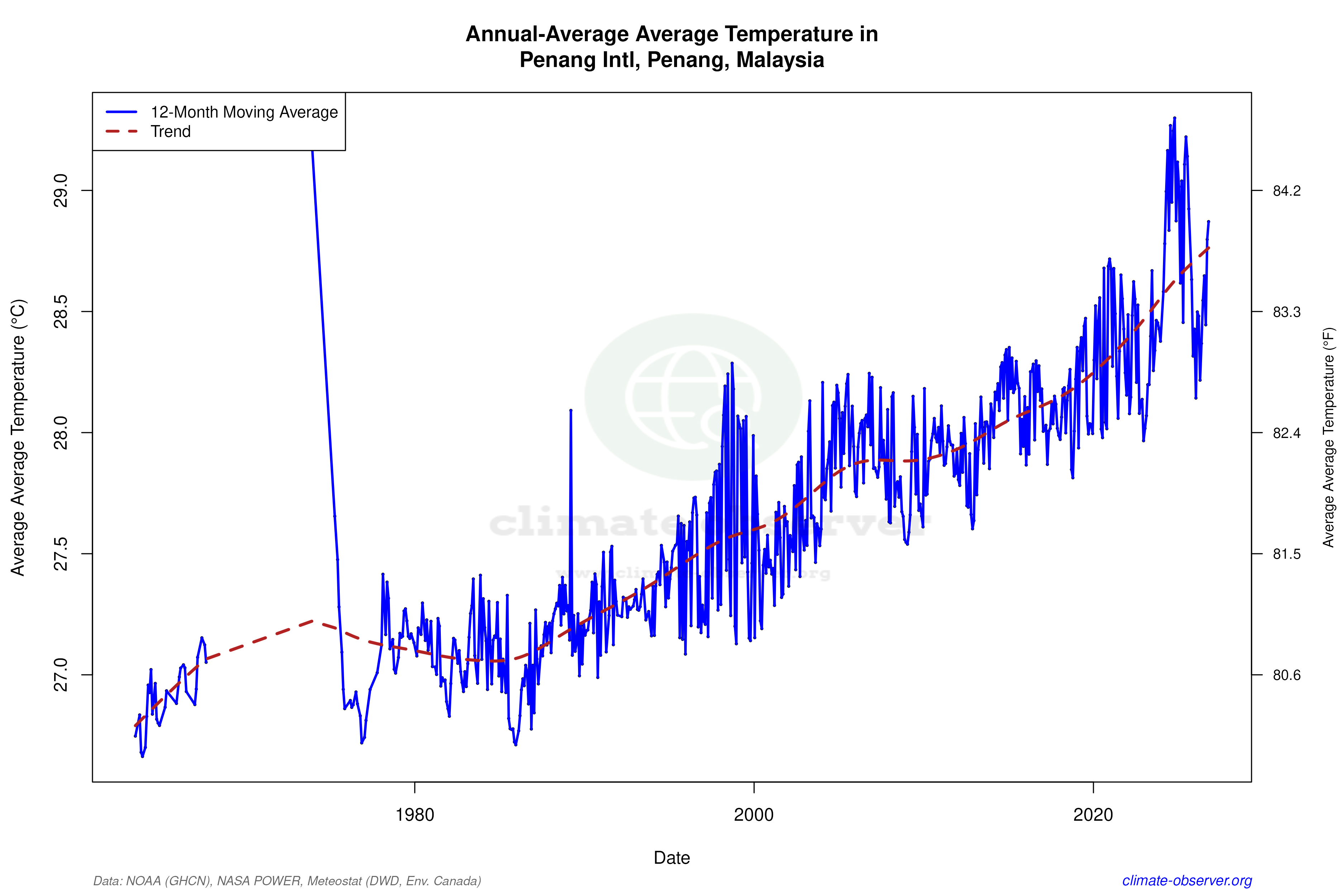
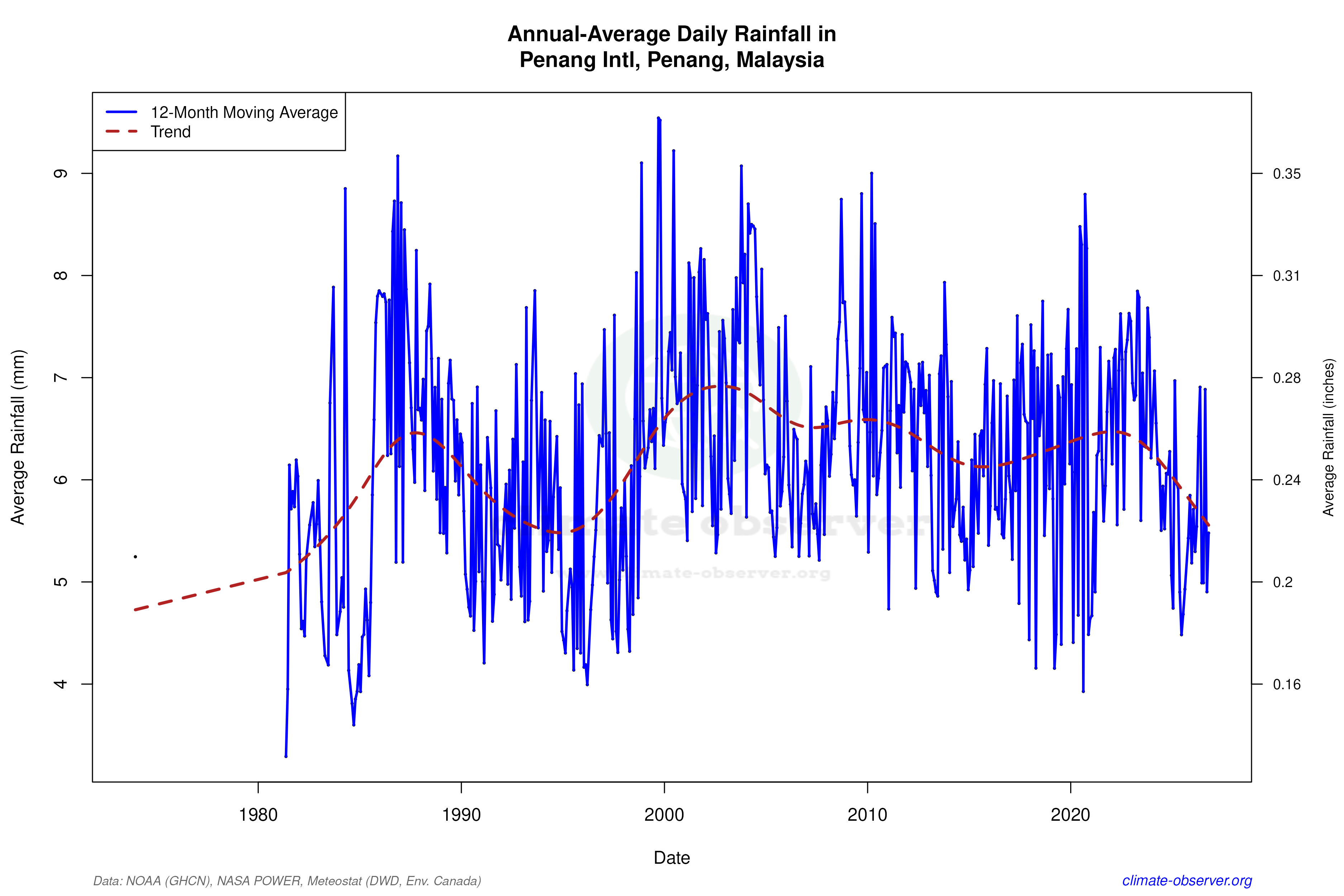
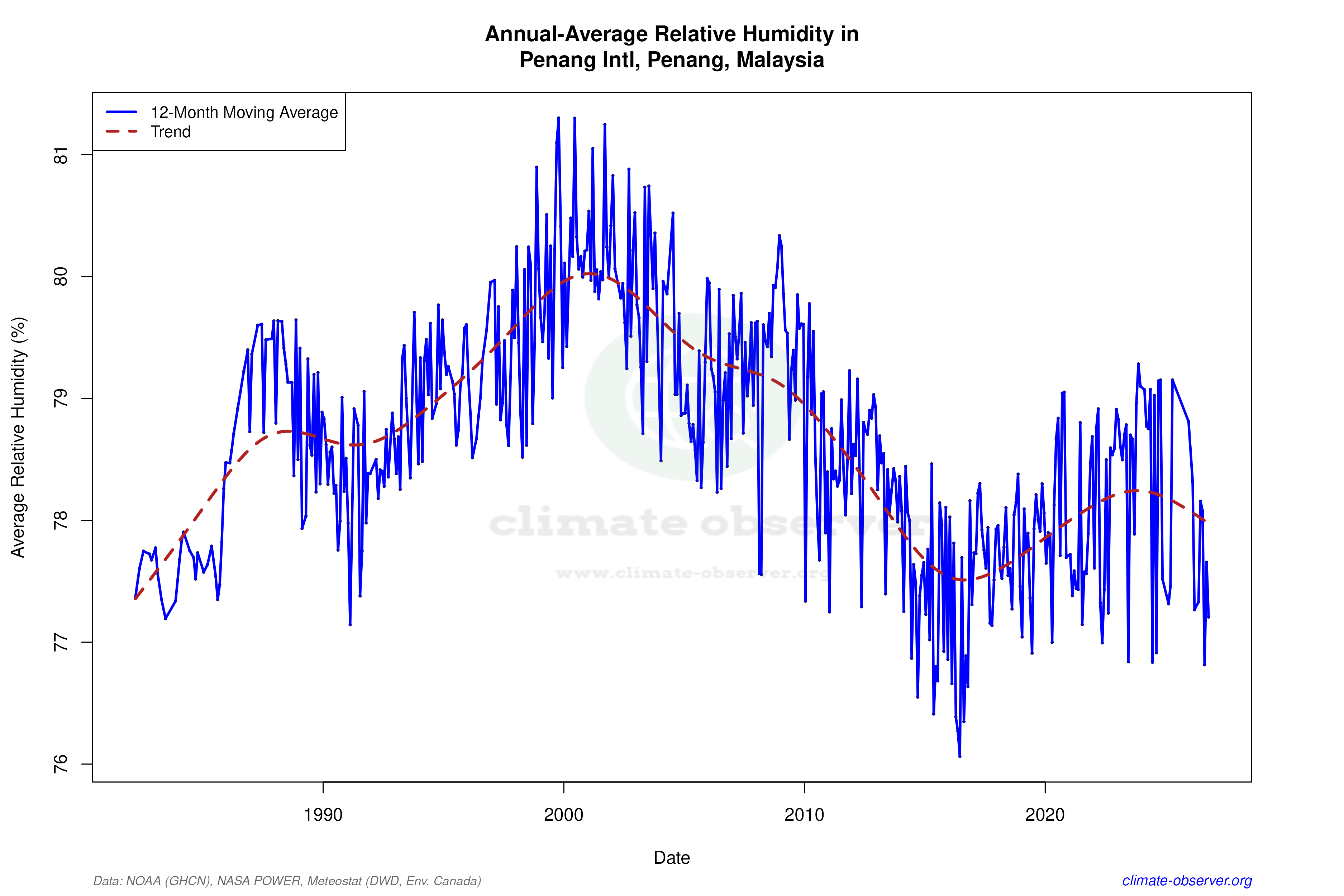

Max Temperature 12-Month MA | 1 of 6
Daily Data Points and Averages Throughout the Year
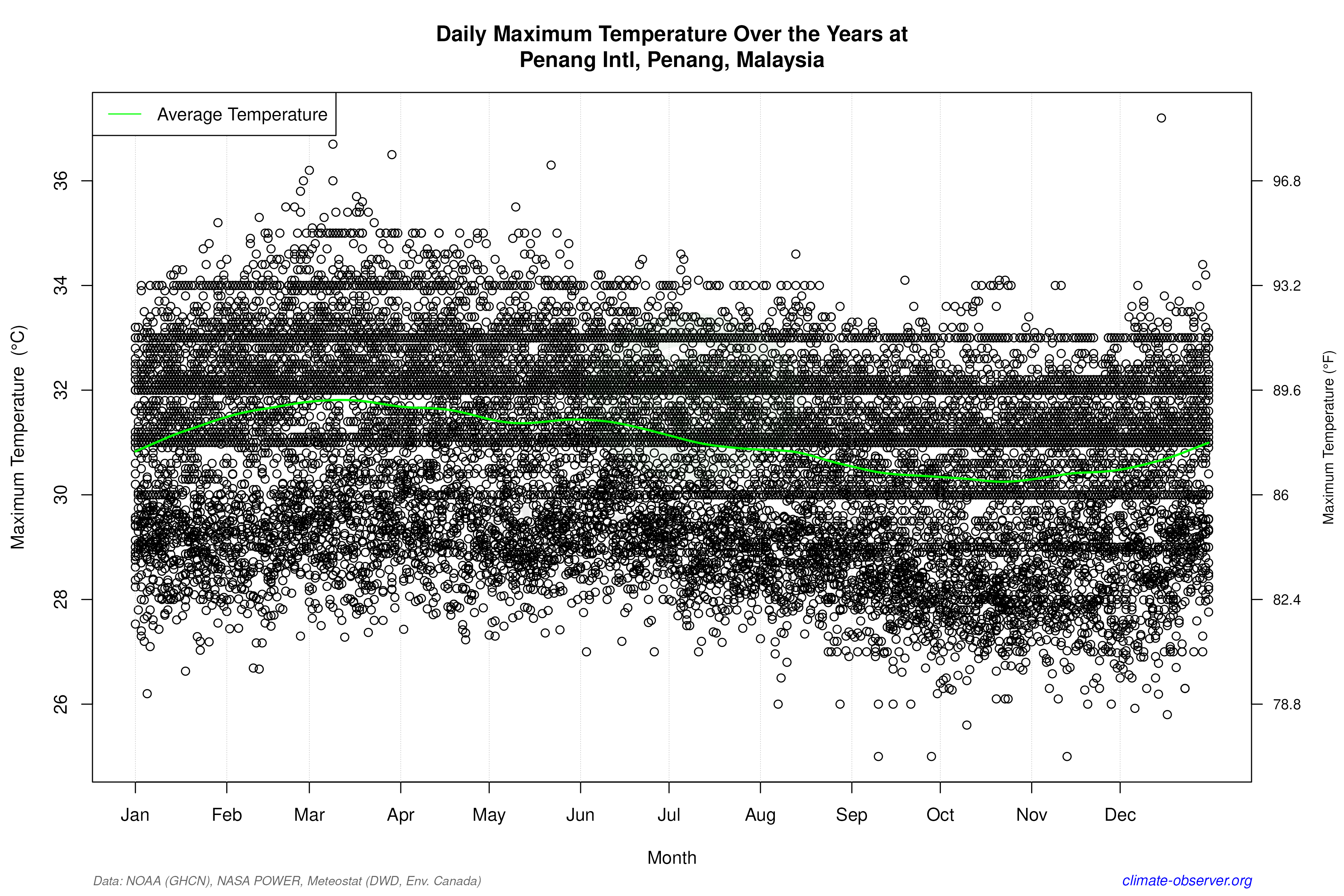
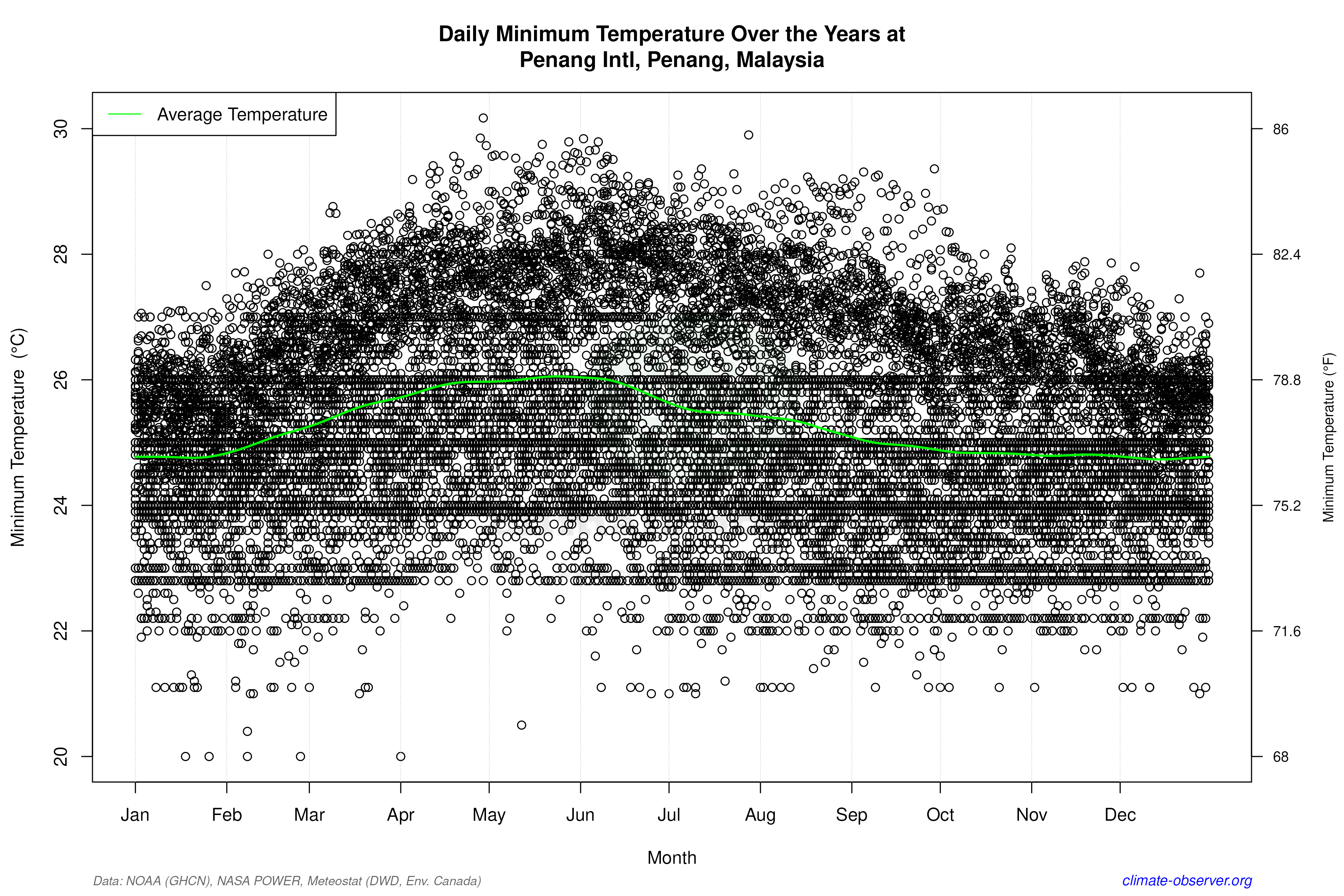
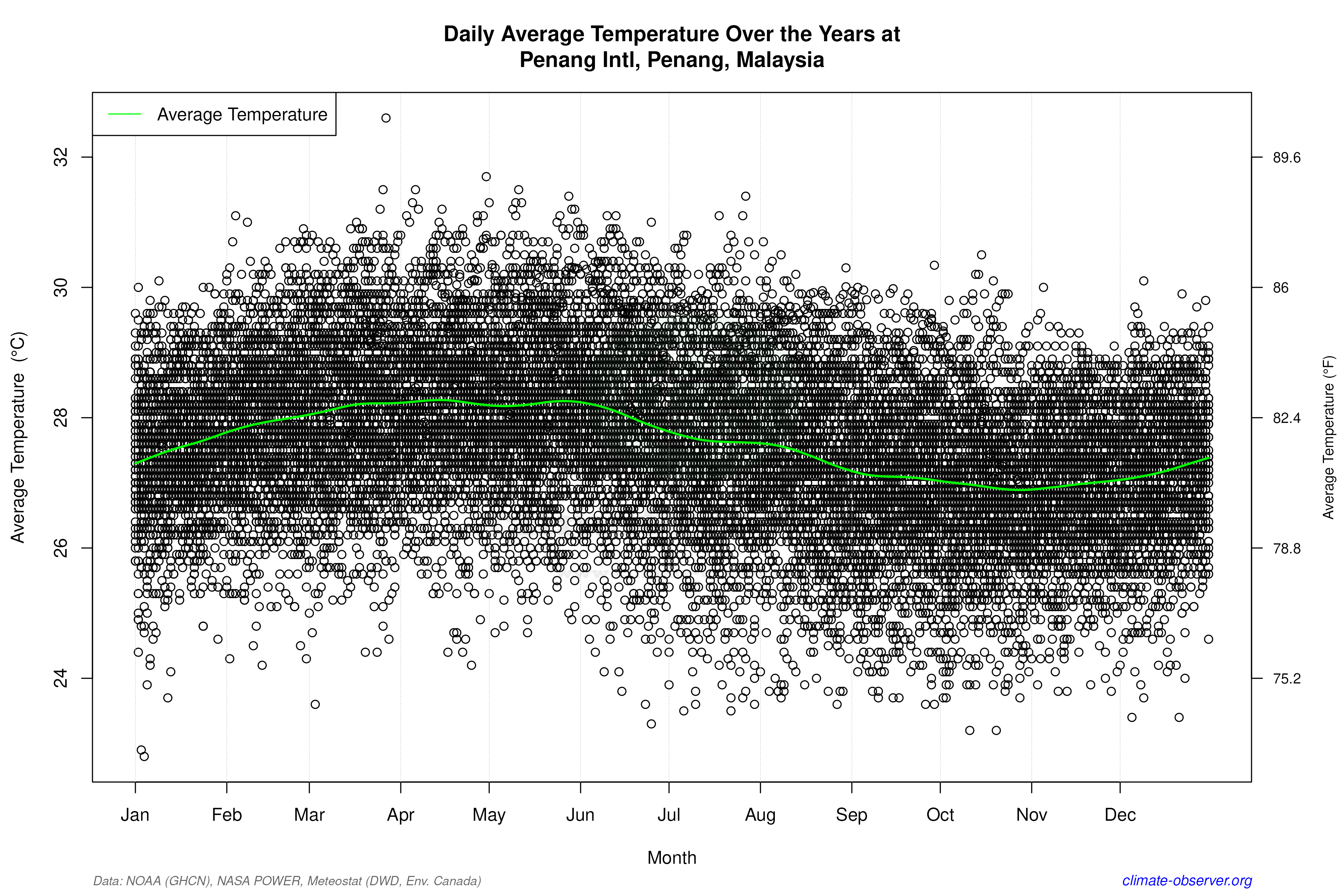
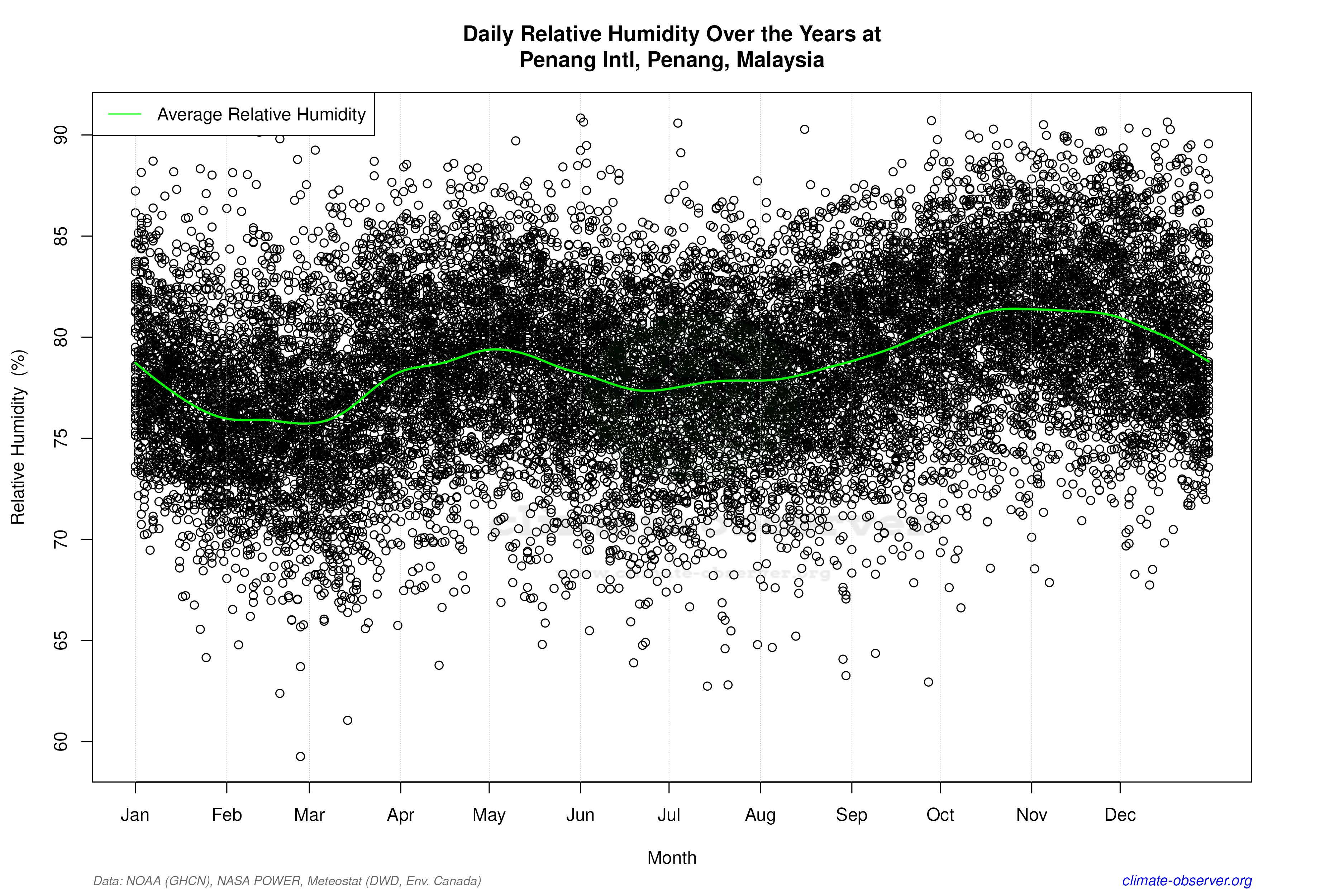

Average Max Temperature Throughout Year | 1 of 5


