Climate for Station: Belgrade (Observatory), Central Serbia, Serbia
Loading live weather...
Climate Analysis & Overview
Belgrade's climate is experiencing a noticeable warming trend, particularly over the past decade, with both high and low temperatures rising. Precipitation patterns have become more evenly distributed, suggesting a shift towards more regular rainfall events.
Warming Trends in Belgrade
Belgrade, situated at 44.8°N, 20.4667°E, falls under the humid subtropical climate classification (Köppen: Cfa), characterised by hot summers and cold winters. Over the past decade, the city has experienced a warming trend, with average high temperatures increasing by 1.34°C (2.41°F) and low temperatures by 1.27°C (2.29°F). This recent warming is more pronounced than the all-time trends, which show a more modest rise of 0.29°C (0.52°F) for highs and 0.32°C (0.58°F) for lows. Such changes may be influenced by urban heat island effects and regional climate dynamics, including the proximity to the Danube and Sava rivers, which can moderate extreme temperatures.
Temperature Extremes and Records
Belgrade's temperature records reflect the city's climatic extremes. The highest recorded temperature is 43.6°C (110.5°F), while the lowest is -24.5°C (-12.1°F). These records underscore the significant temperature variability that can occur within this region. The warming trends noted over the past decade suggest that such extremes could become more frequent, potentially impacting local ecosystems and infrastructure.
Evolving Precipitation Patterns
The Precipitation Concentration Index (PCI) for Belgrade has decreased from a baseline of 11.69 to a current value of 10.22. This shift indicates that precipitation is becoming more evenly distributed throughout the year. A PCI value under 10 is considered very even, suggesting that Belgrade is moving towards more regular rainfall events rather than concentrated downpours. This change could have implications for water resource management and agricultural practices in the region.
Regional Climate Dynamics
The warming trends and changing precipitation patterns in Belgrade are set against the backdrop of Serbia's regional climate goals, which aim to mitigate the impacts of climate change through sustainable practices and policies. Recent weather events, such as heatwaves and heavy rainfall, have highlighted the need for adaptive strategies to cope with these evolving climatic conditions. The city's geographic location, nestled between rivers and surrounded by hills, plays a crucial role in shaping its microclimate, influencing both temperature and precipitation patterns.
Implications for the Future
As Belgrade continues to warm, the city may face challenges related to heat stress, energy demand, and water management. The more evenly distributed precipitation could benefit agriculture but may also require adjustments in water storage and flood management strategies. Understanding these trends is vital for policymakers and residents as they navigate the complexities of a changing climate.
Station Statistics
10-Year Trend
High: +1.59 °C/decade
Low: +1.52 °C/decade
Rain: +0.04 mm/decade
25-Year Trend
High: +1.04 °C/decade
Low: +0.84 °C/decade
Rain: -0.09 mm/decade
50-Year Trend
High: +0.77 °C/decade
Low: +0.68 °C/decade
Rain: -0.01 mm/decade
All-Time Trend
High: +0.29 °C/decade
Low: +0.32 °C/decade
Rain: -0.00 mm/decade
Percentage Above-Average Days
Last 12 Months: 52.3%
This Year: 72.7%
Precipitation Concentration Index (PCI) ℹ️
Last 12 Months: 11.8
Historical Average: 11.6
Percentile Rank of Last 12 Months ℹ️
High: 89th percentile
Low: 97th percentile
Rain: 13th percentile
Change in Variance ℹ️
High: -1.4%
Low: -1.2%
Intraday: -1.3%
Data Coverage
91.6%
First Year of Data
1939
Station Location
Historical Weather Records
| Max High | Avg High | Min High | Max Avg | Avg Avg | Min Avg | Max Low | Avg Low | Min Low | Max Precipitation | Avg Precipitation | Max Snow | Avg Snow | |
|---|---|---|---|---|---|---|---|---|---|---|---|---|---|
| Record | 43.6 °C | — | -17.3 °C | 33.7 °C | — | -18.2 °C | 27.9 °C | — | -24.5 °C | 88.4 mm | — | — | — |
| January | 20.7 °C | 4.3 °C | -17.3 °C | 16.4 °C | 1.4 °C | -15.5 °C | 13.4 °C | -1.7 °C | -24.5 °C | 36.8 mm | 1.6 mm | — | — |
| February | 23.9 °C | 7.0 °C | -12.4 °C | 16.8 °C | 3.1 °C | -18.2 °C | 13.2 °C | -0.1 °C | -20.5 °C | 41.7 mm | 1.5 mm | — | — |
| March | 30.0 °C | 12.3 °C | -5.4 °C | 23.2 °C | 7.6 °C | -10.3 °C | 18.2 °C | 3.5 °C | -12.4 °C | 38.5 mm | 1.5 mm | — | — |
| April | 32.4 °C | 18.0 °C | 1.0 °C | 26.4 °C | 12.6 °C | 0.6 °C | 20.0 °C | 8.0 °C | -3.4 °C | 40.9 mm | 1.8 mm | — | — |
| May | 34.9 °C | 22.9 °C | 6.8 °C | 28.6 °C | 17.4 °C | 5.8 °C | 23.4 °C | 12.5 °C | 0.4 °C | 63.7 mm | 2.4 mm | — | — |
| June | 38.9 °C | 26.3 °C | 10.0 °C | 31.8 °C | 21.1 °C | 8.2 °C | 26.4 °C | 15.8 °C | 4.6 °C | 82.5 mm | 3.0 mm | — | — |
| July | 43.6 °C | 28.5 °C | 13.6 °C | 33.7 °C | 23.0 °C | 12.6 °C | 27.7 °C | 17.5 °C | 8.3 °C | 72.6 mm | 2.1 mm | — | — |
| August | 40.0 °C | 28.5 °C | 12.9 °C | 32.6 °C | 23.0 °C | 11.8 °C | 27.9 °C | 17.3 °C | 6.7 °C | 47.4 mm | 1.8 mm | — | — |
| September | 41.8 °C | 24.3 °C | 7.0 °C | 30.3 °C | 18.4 °C | 7.6 °C | 27.0 °C | 13.6 °C | 0.6 °C | 88.4 mm | 1.7 mm | — | — |
| October | 33.7 °C | 18.2 °C | 0.7 °C | 24.4 °C | 13.0 °C | 1.1 °C | 19.8 °C | 8.8 °C | -6.9 °C | 43.7 mm | 1.5 mm | — | — |
| November | 28.4 °C | 11.4 °C | -4.6 °C | 20.2 °C | 7.2 °C | -7.5 °C | 17.3 °C | 4.4 °C | -8.3 °C | 51.8 mm | 2.0 mm | — | — |
| December | 22.7 °C | 5.9 °C | -10.2 °C | 17.7 °C | 3.0 °C | -13.5 °C | 14.5 °C | 0.2 °C | -15.8 °C | 39.9 mm | 1.8 mm | — | — |
Data Visualisations
Remove WatermarksCurrent Year Climate Trends vs Historical
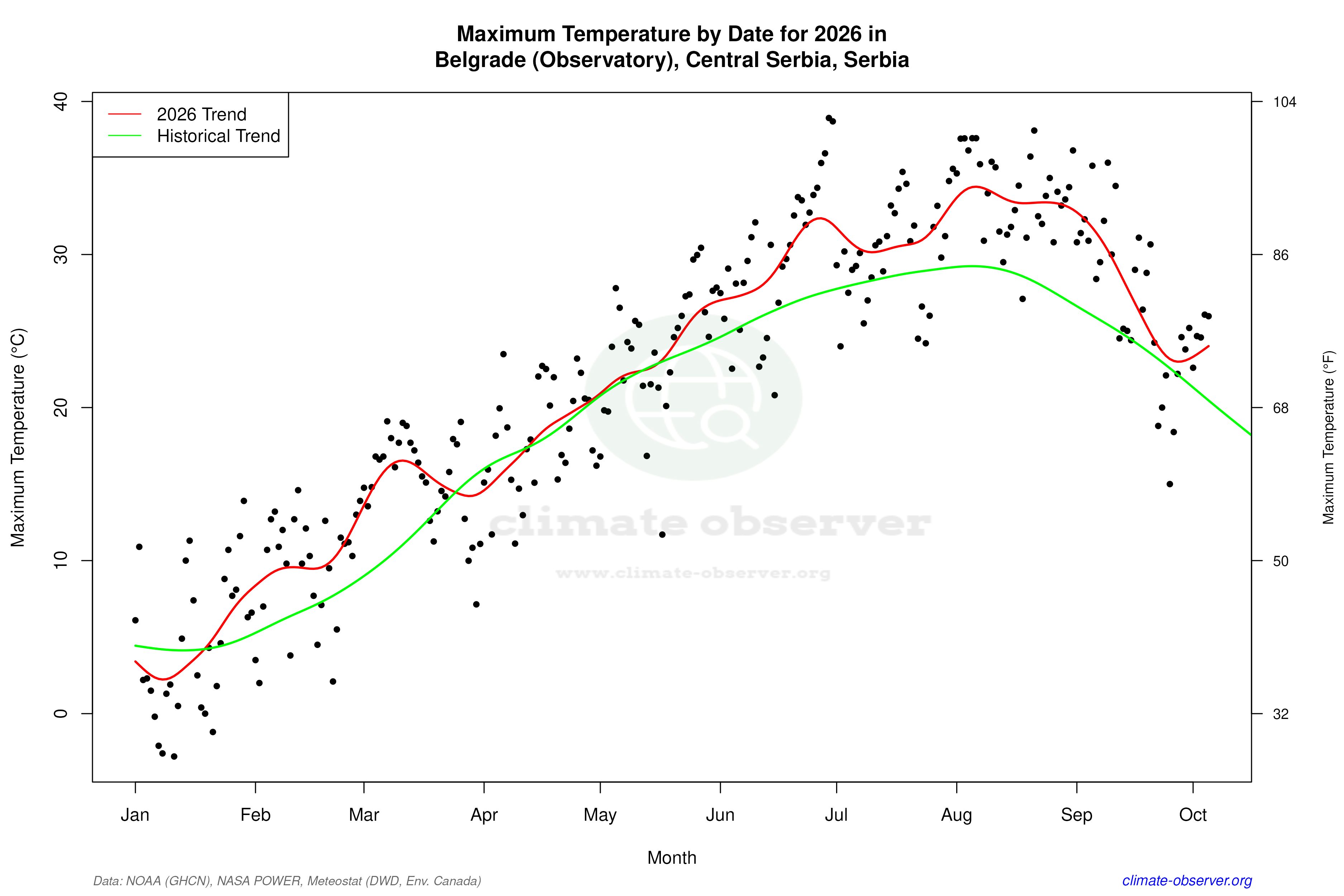
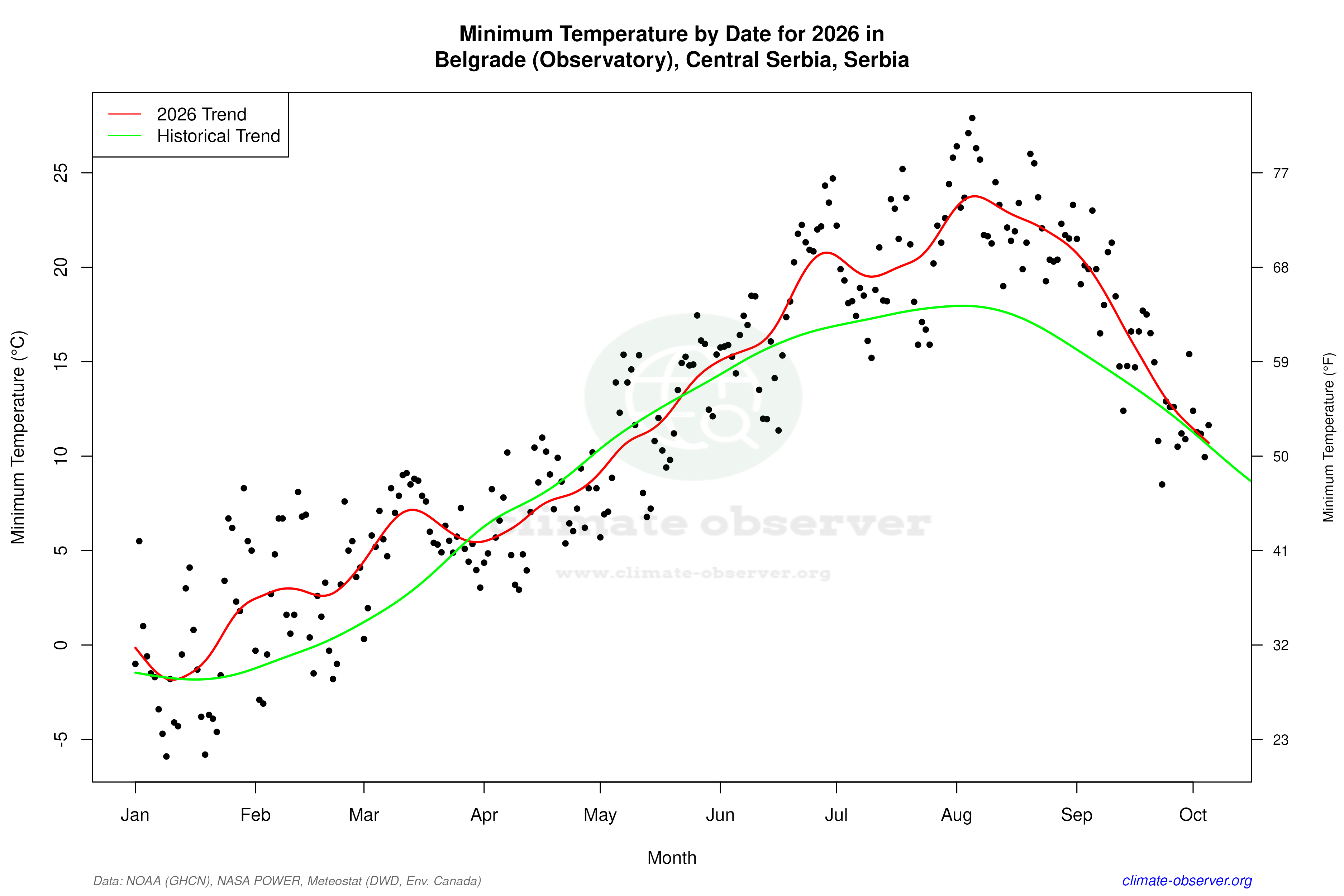
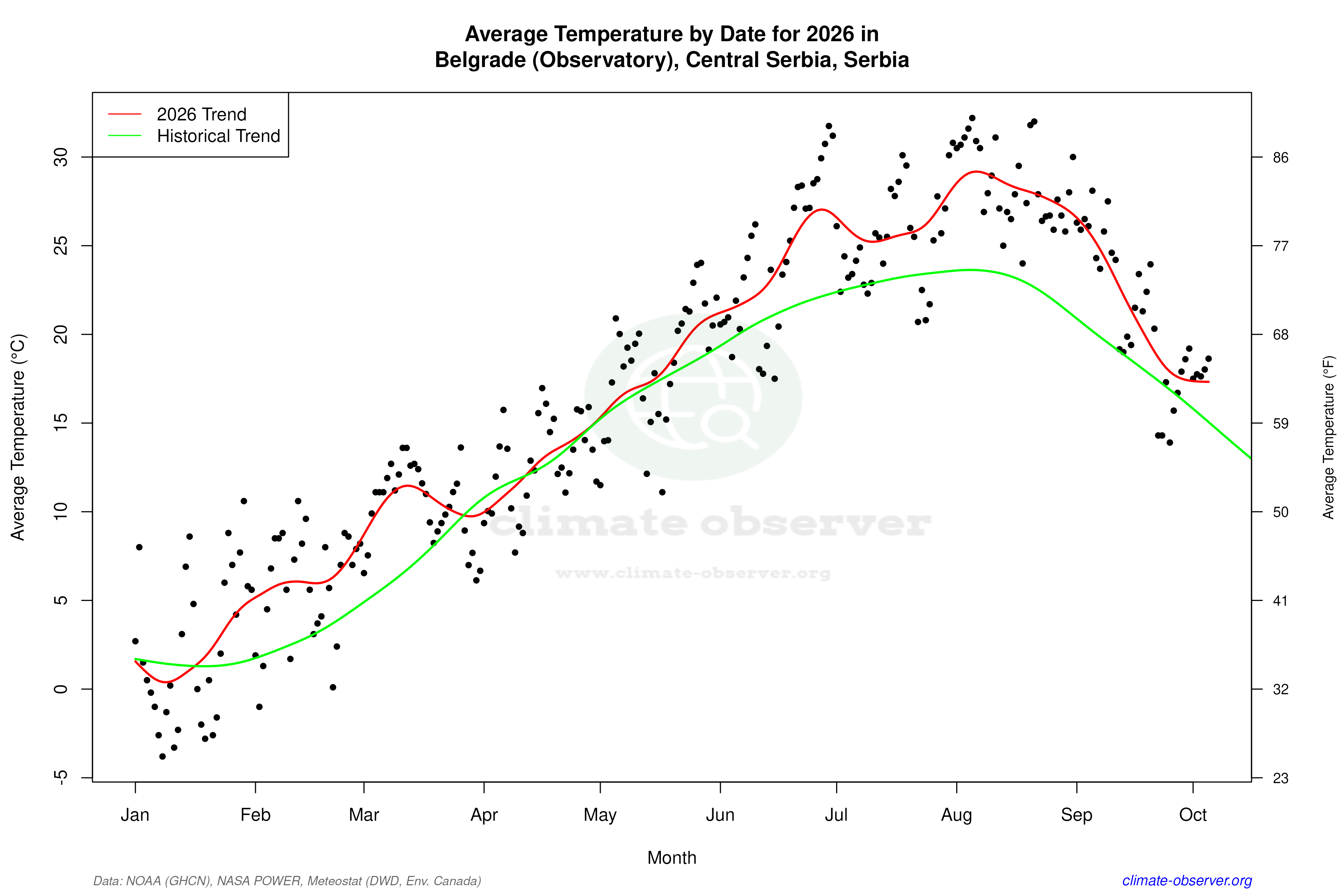
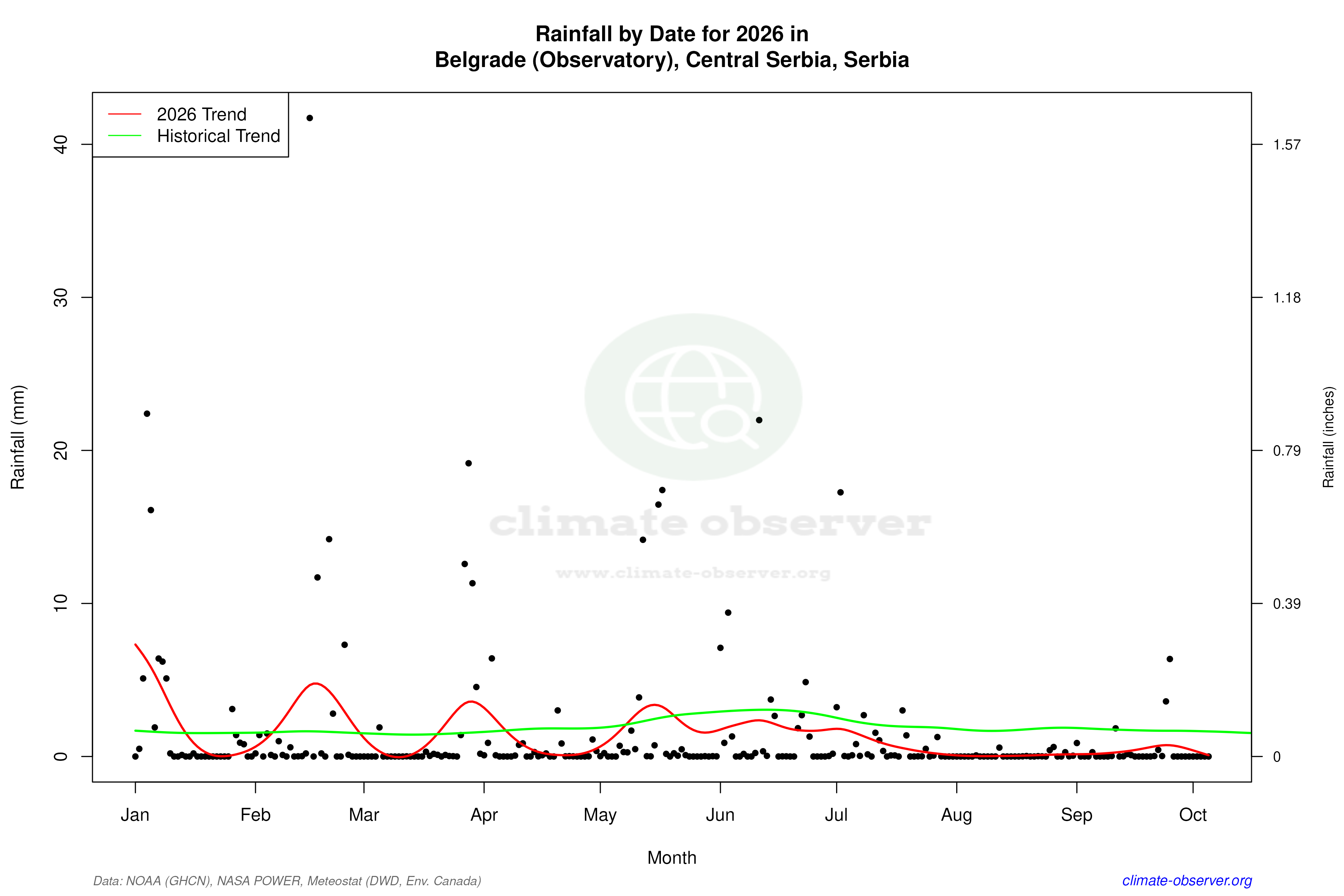
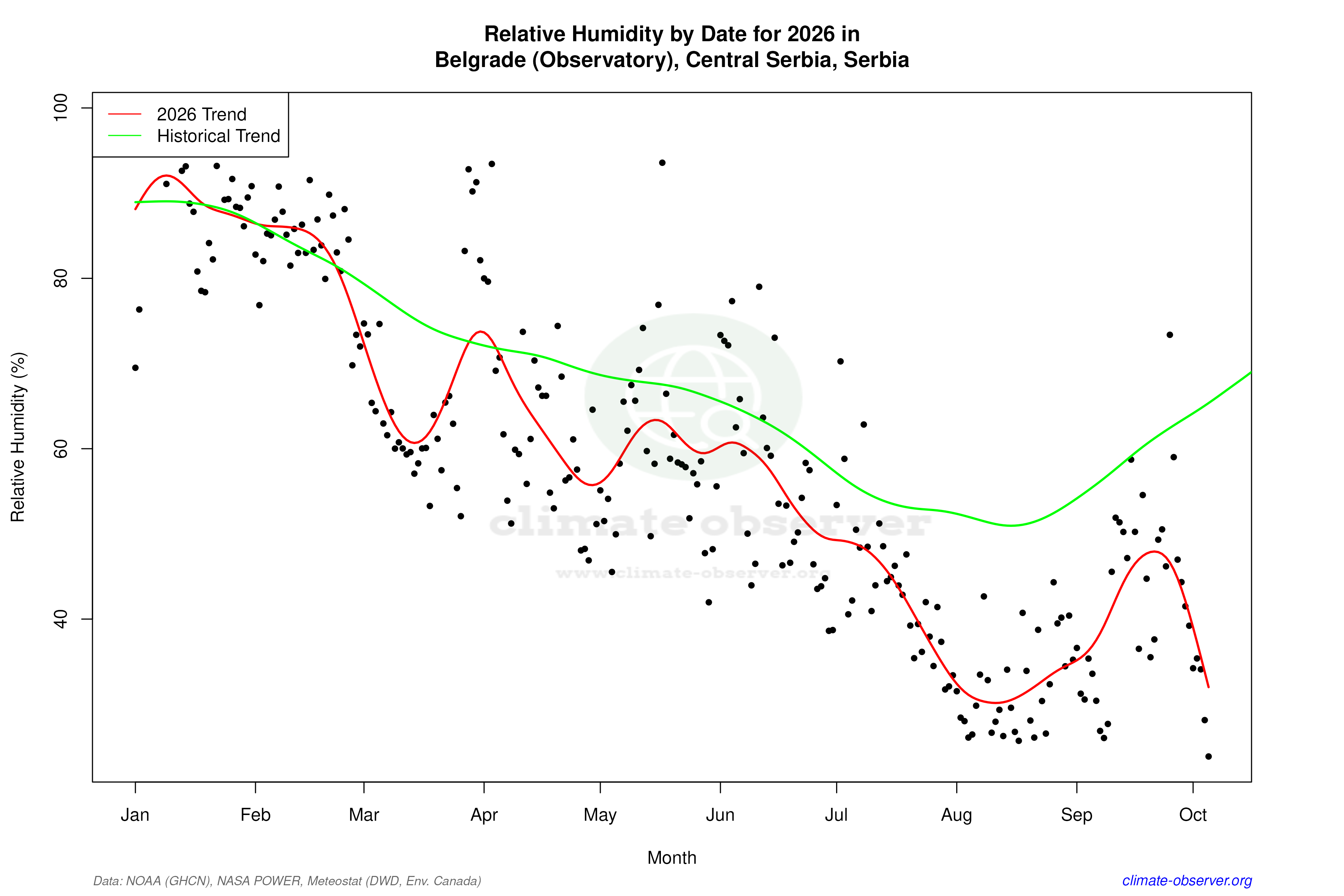

Max Temperature this Year | 1 of 6
Climate 12-Month Moving Averages
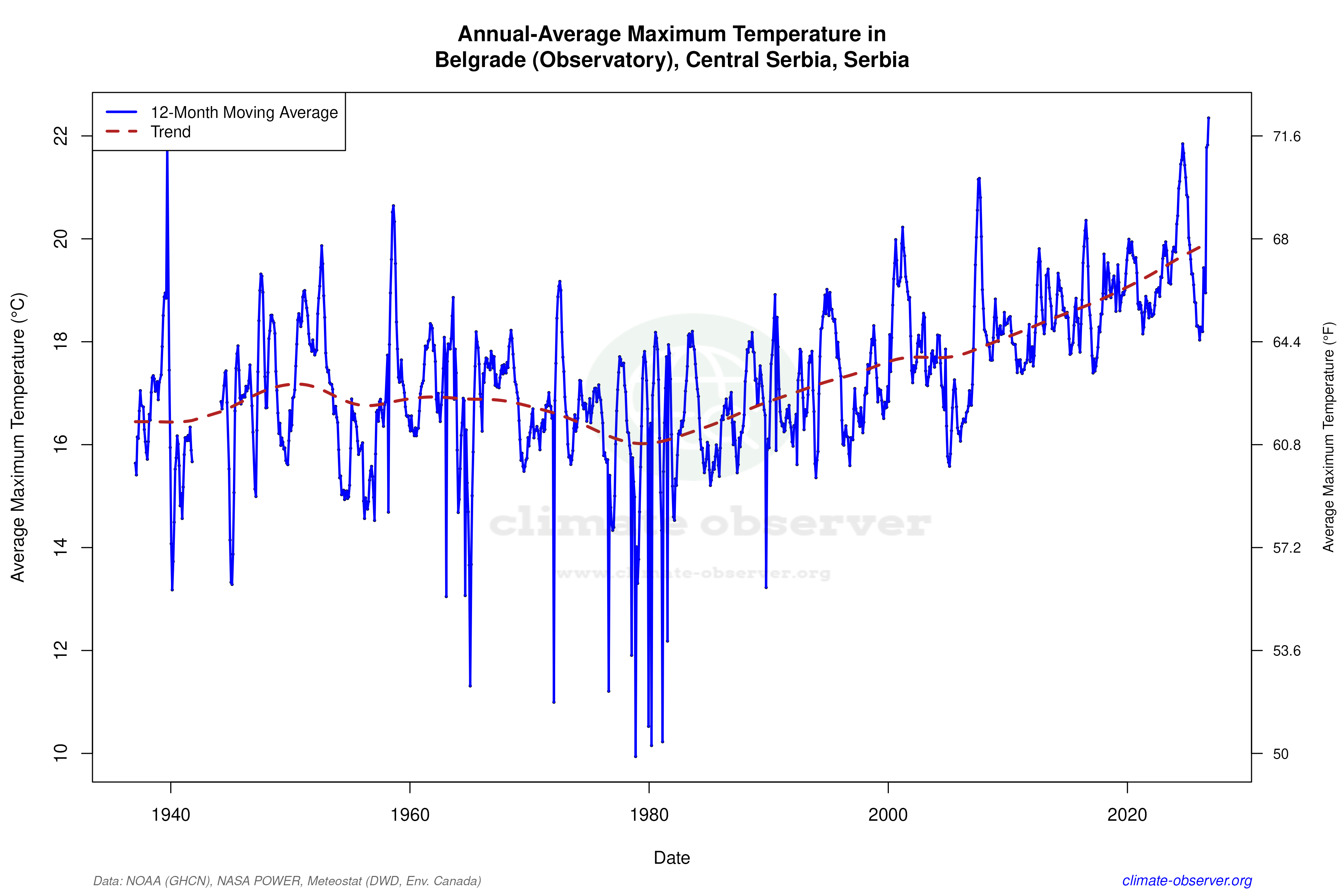
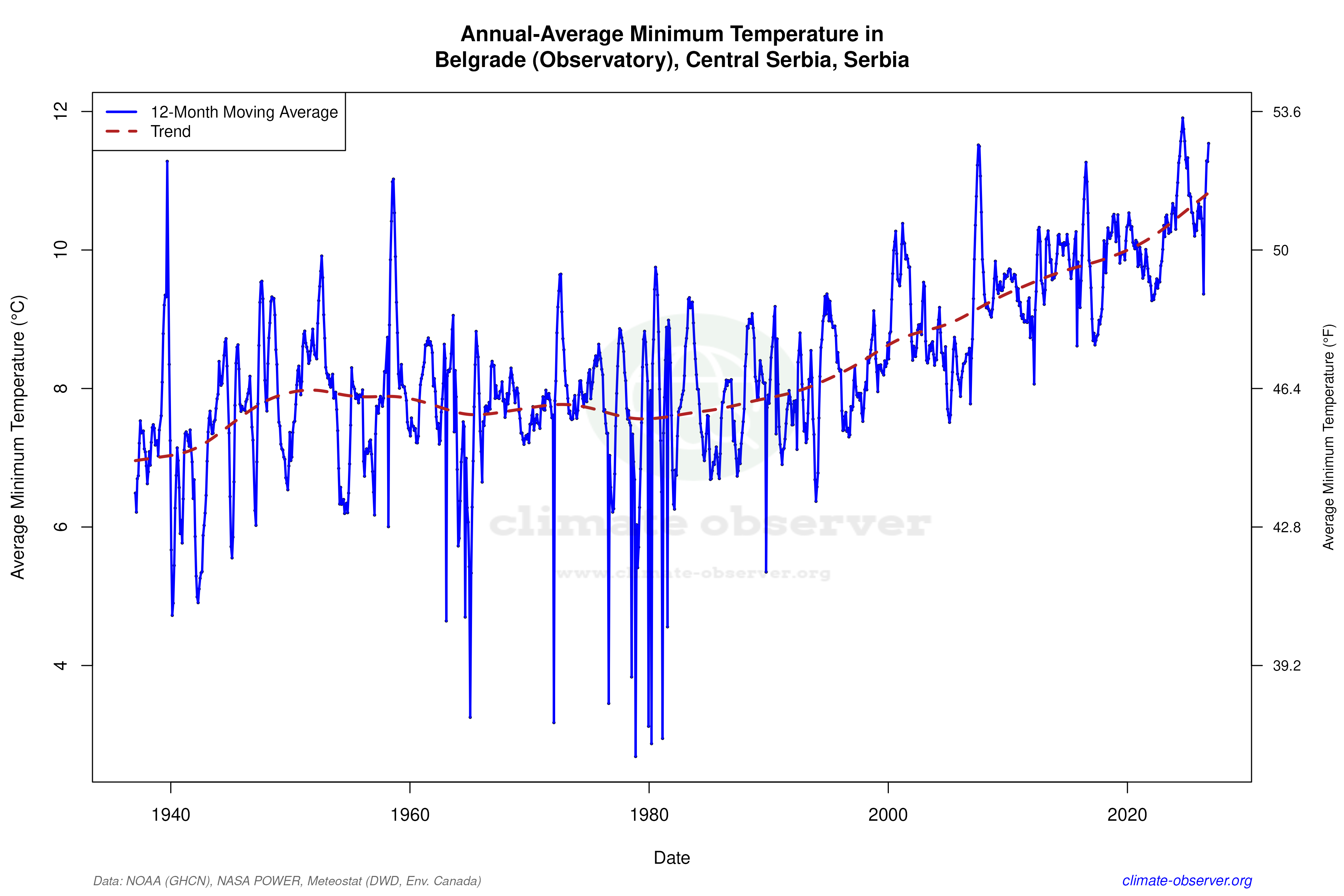
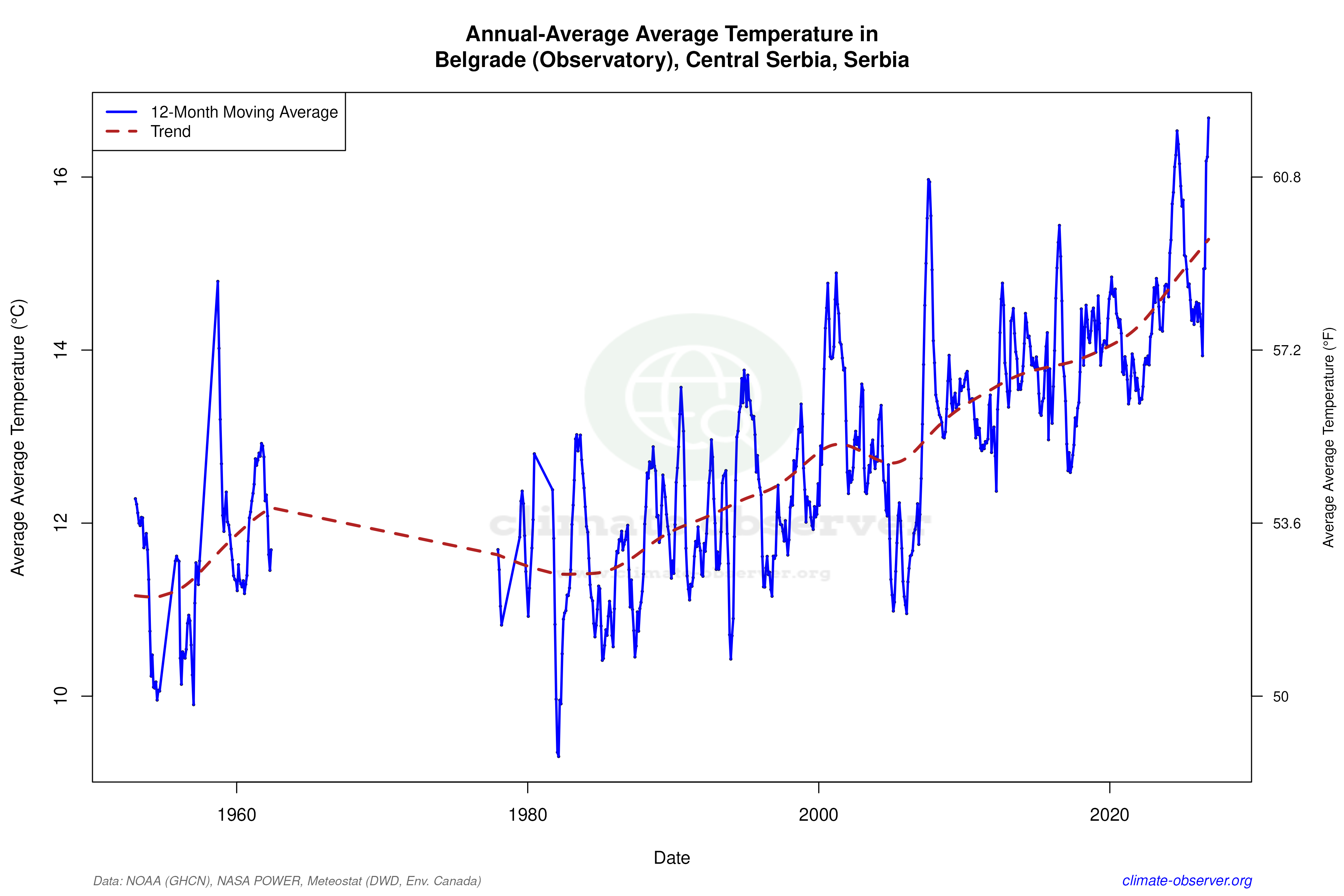
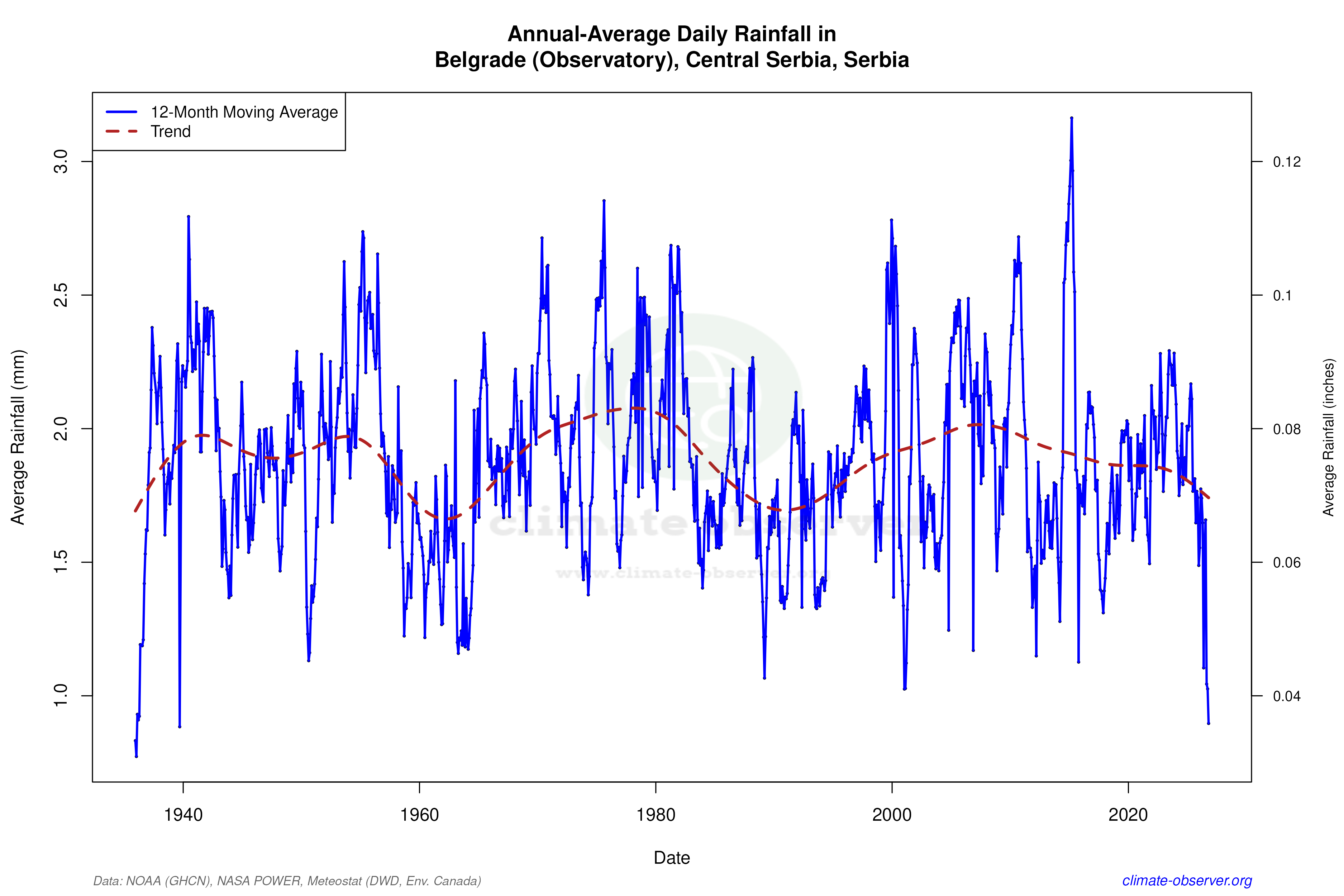
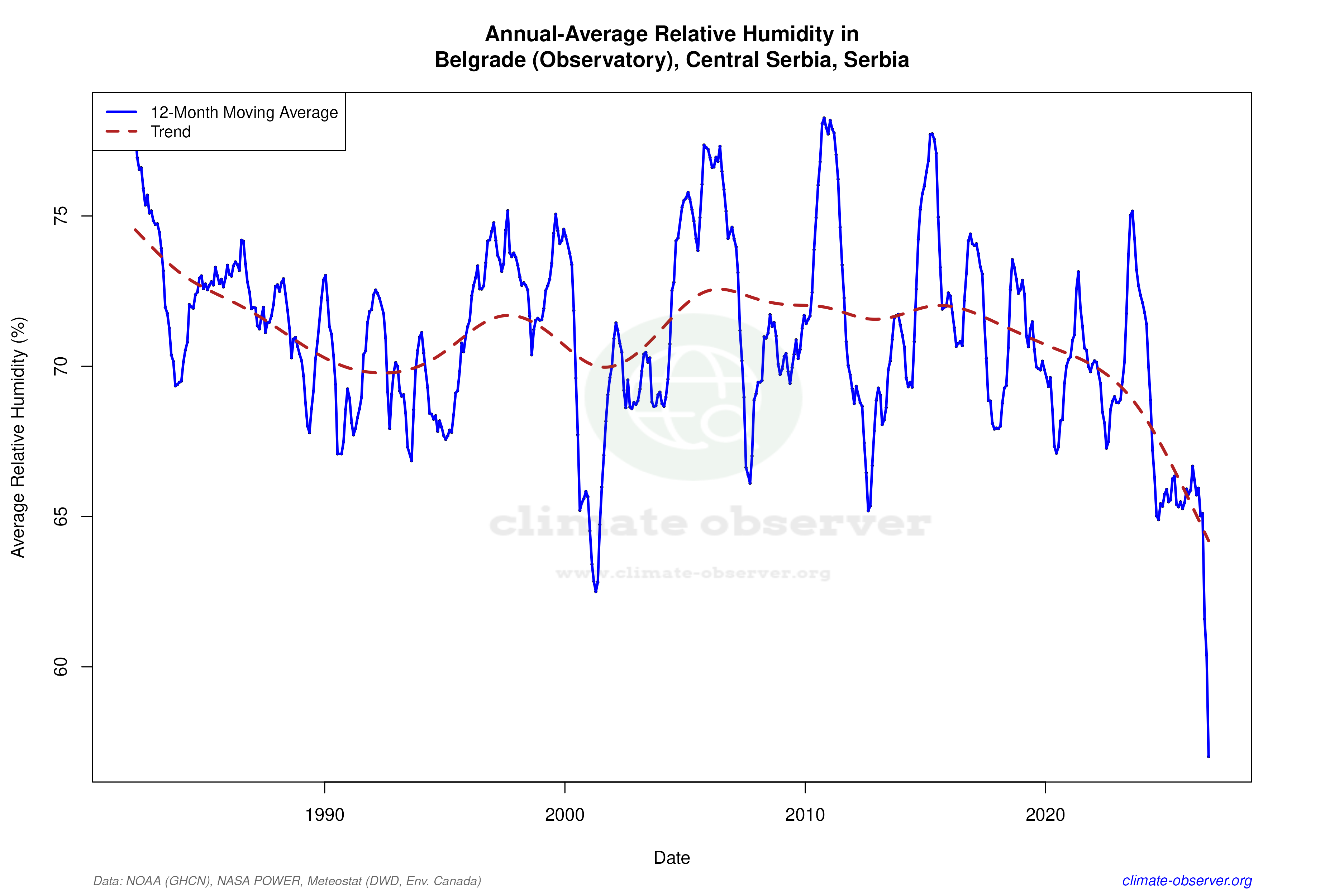

Max Temperature 12-Month MA | 1 of 6
Daily Data Points and Averages Throughout the Year
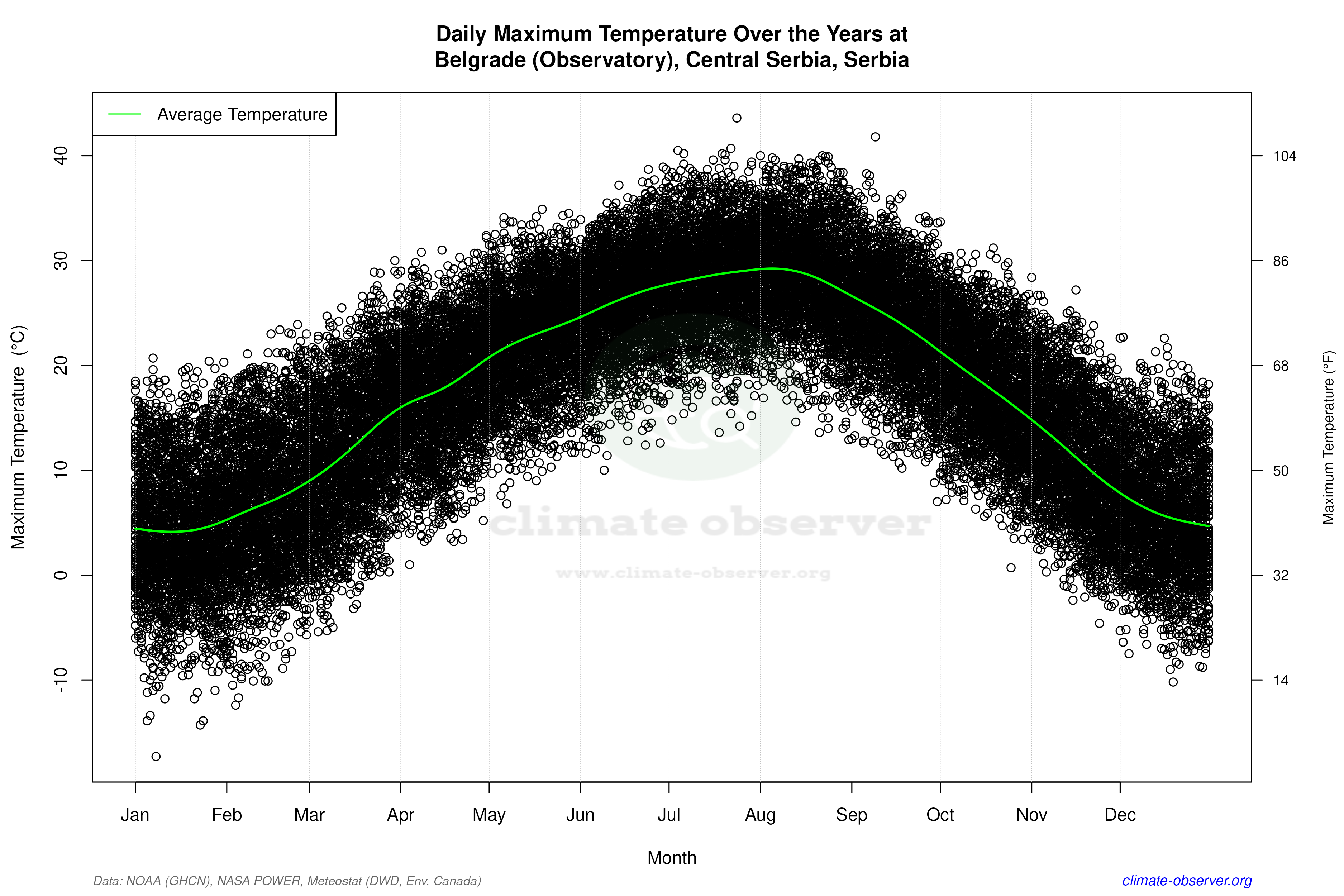
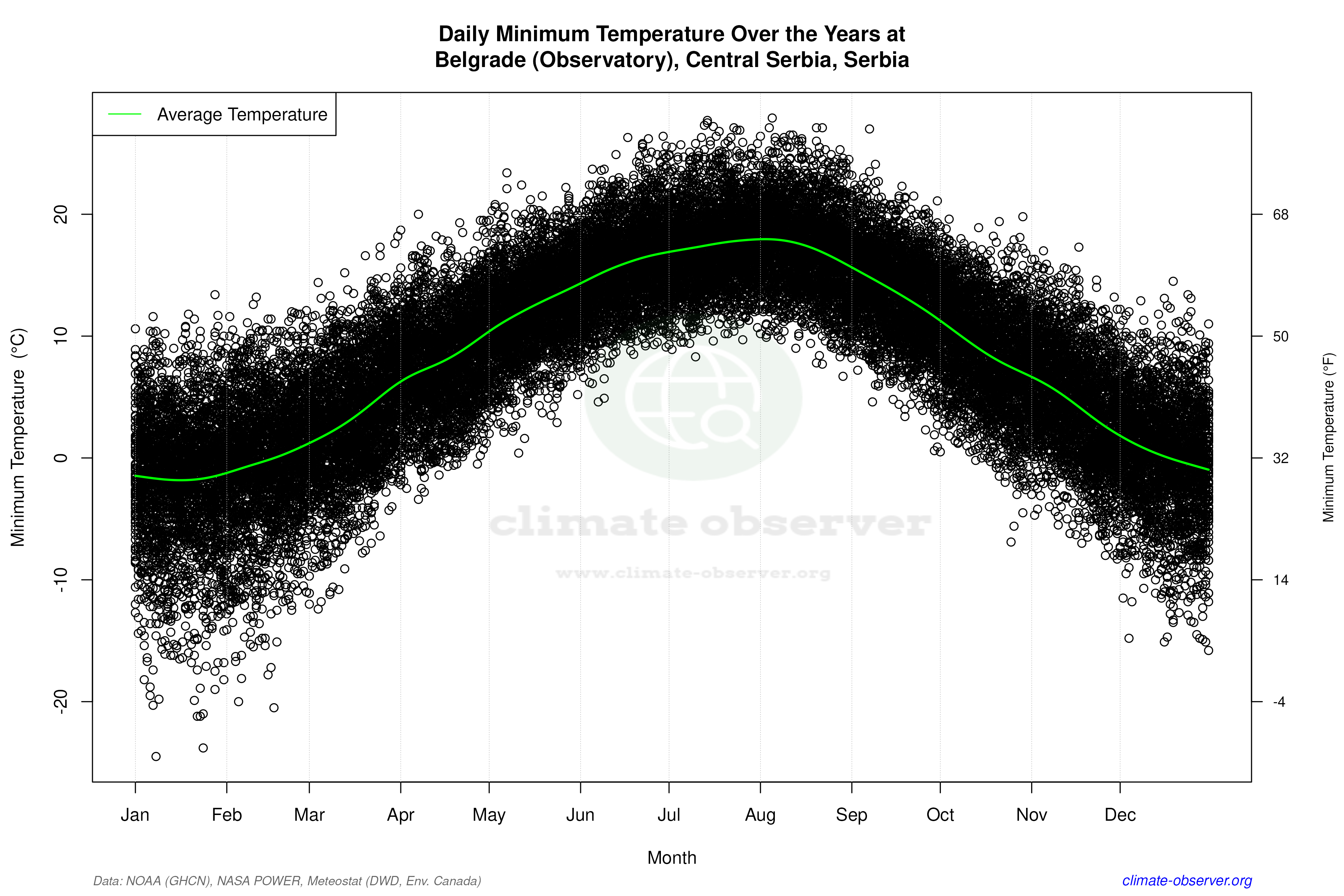
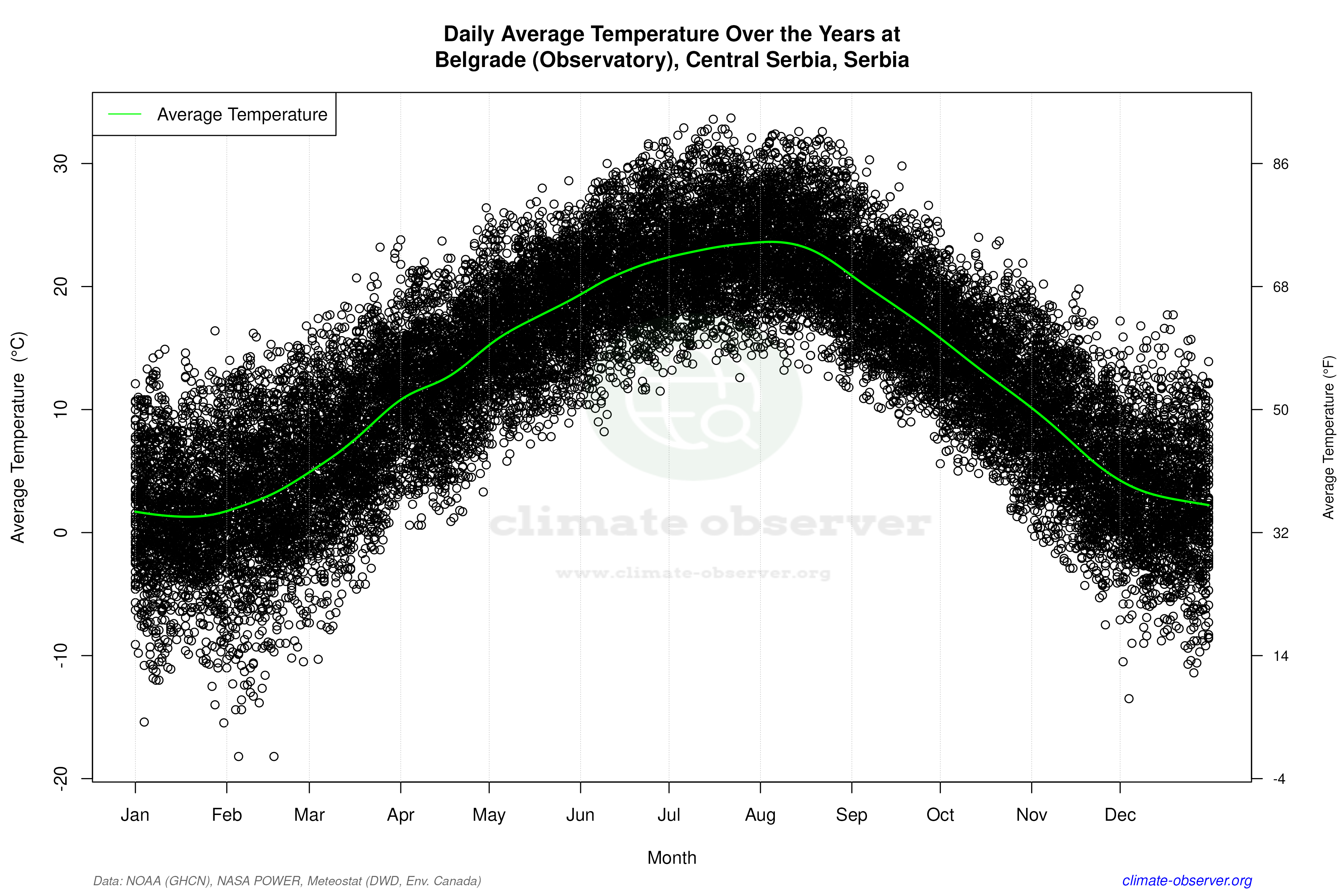
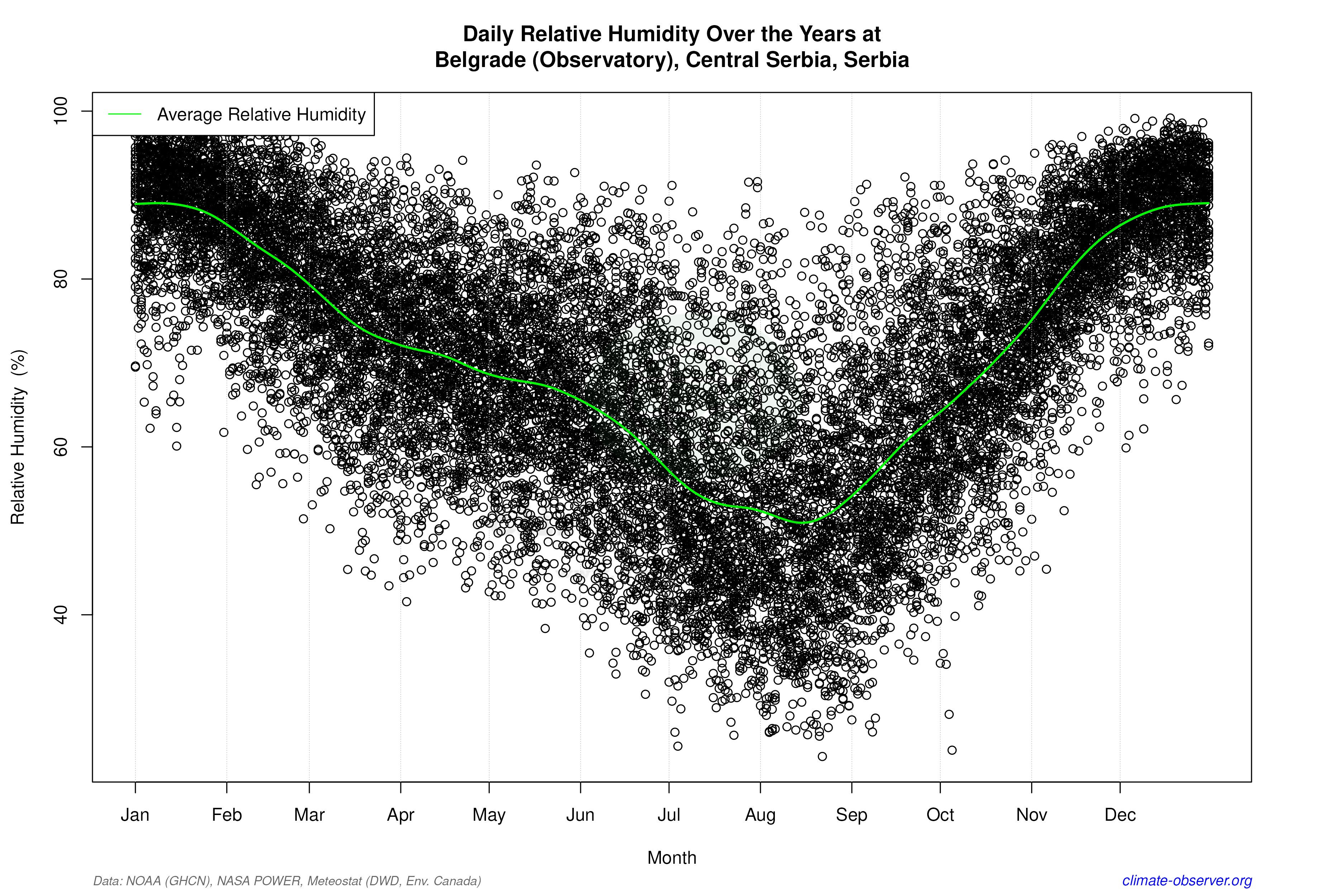

Average Max Temperature Throughout Year | 1 of 5


