Climate for Station: Chita, Zabaykalsky Krai, Russia
Loading live weather...
Climate Analysis & Overview
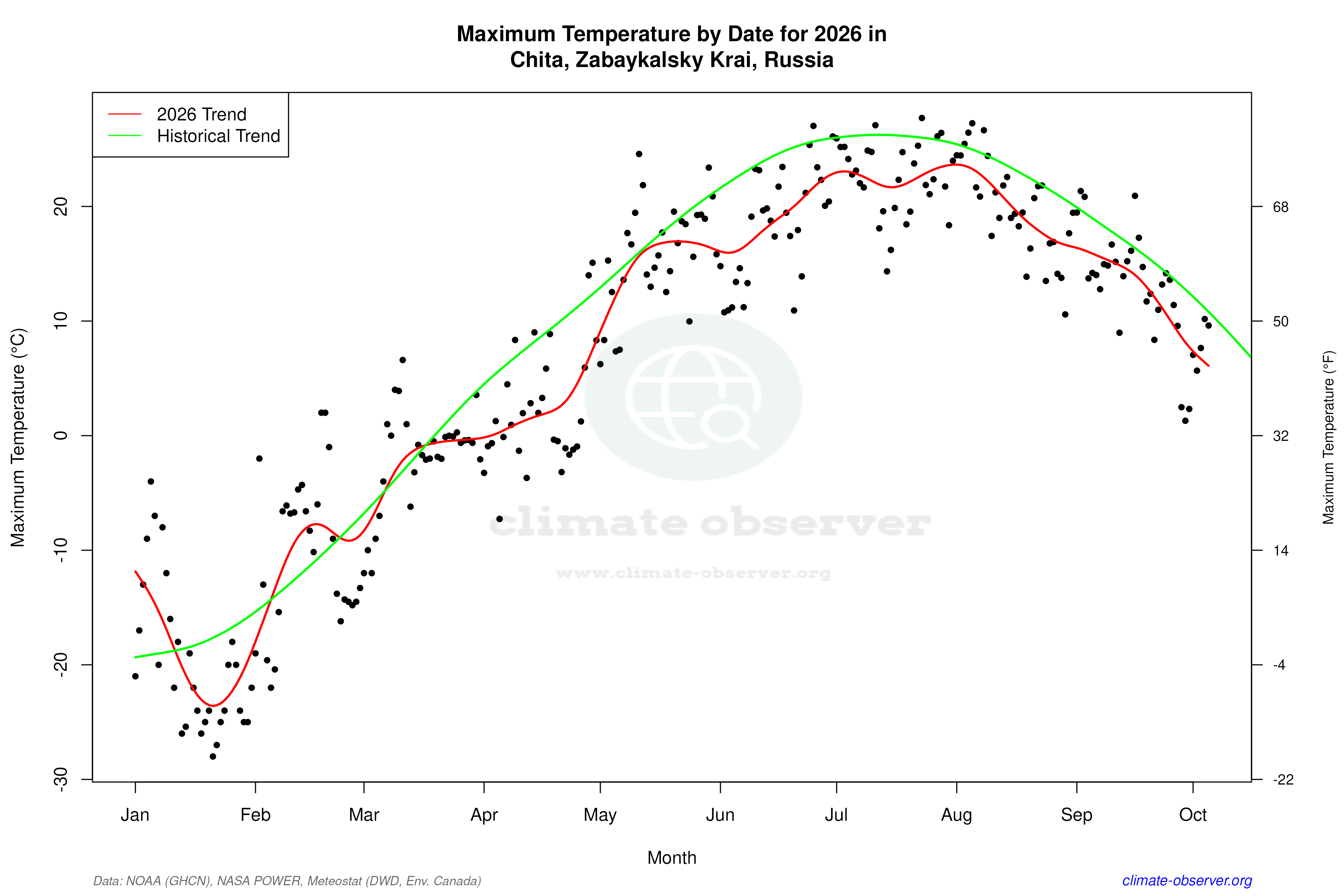
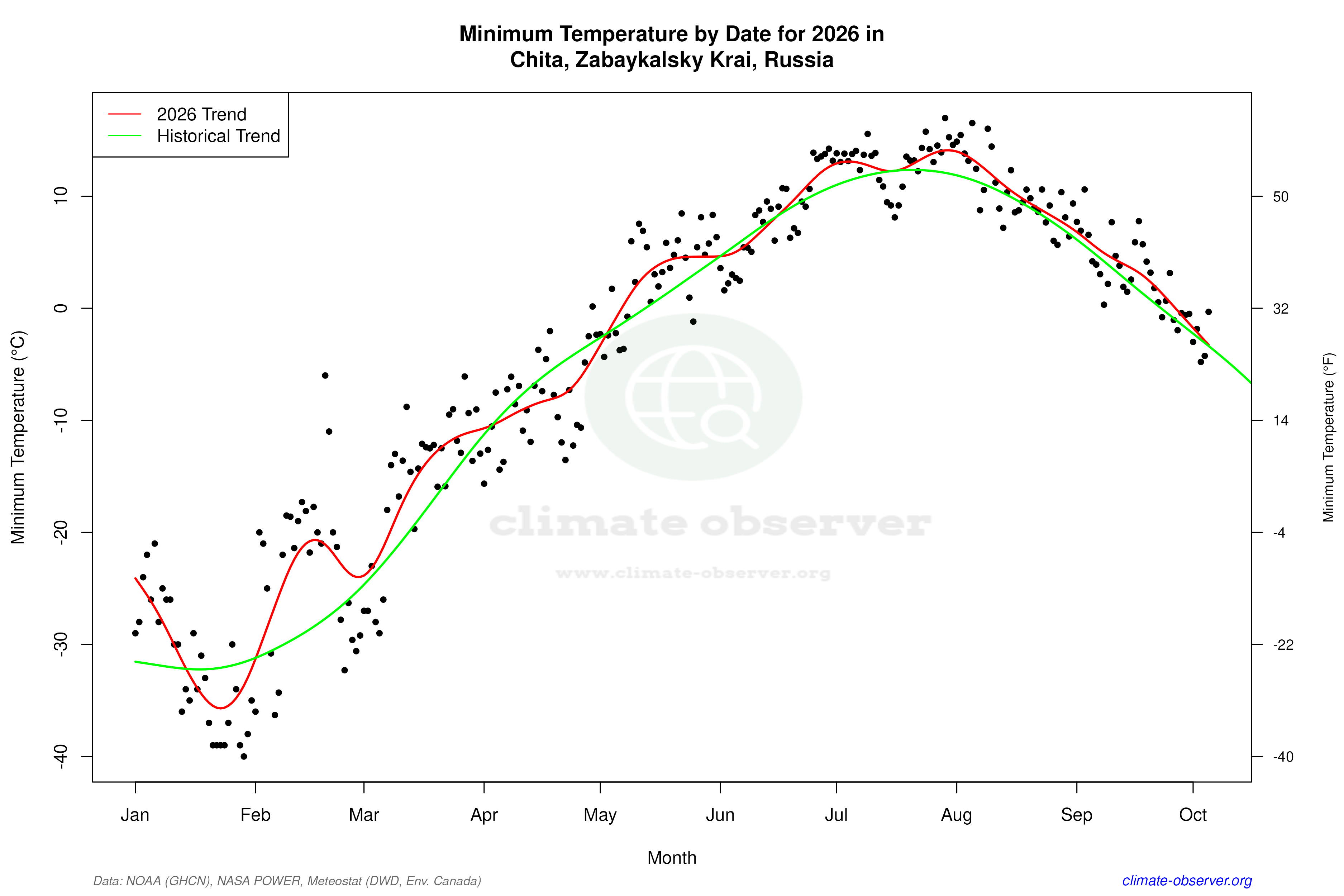
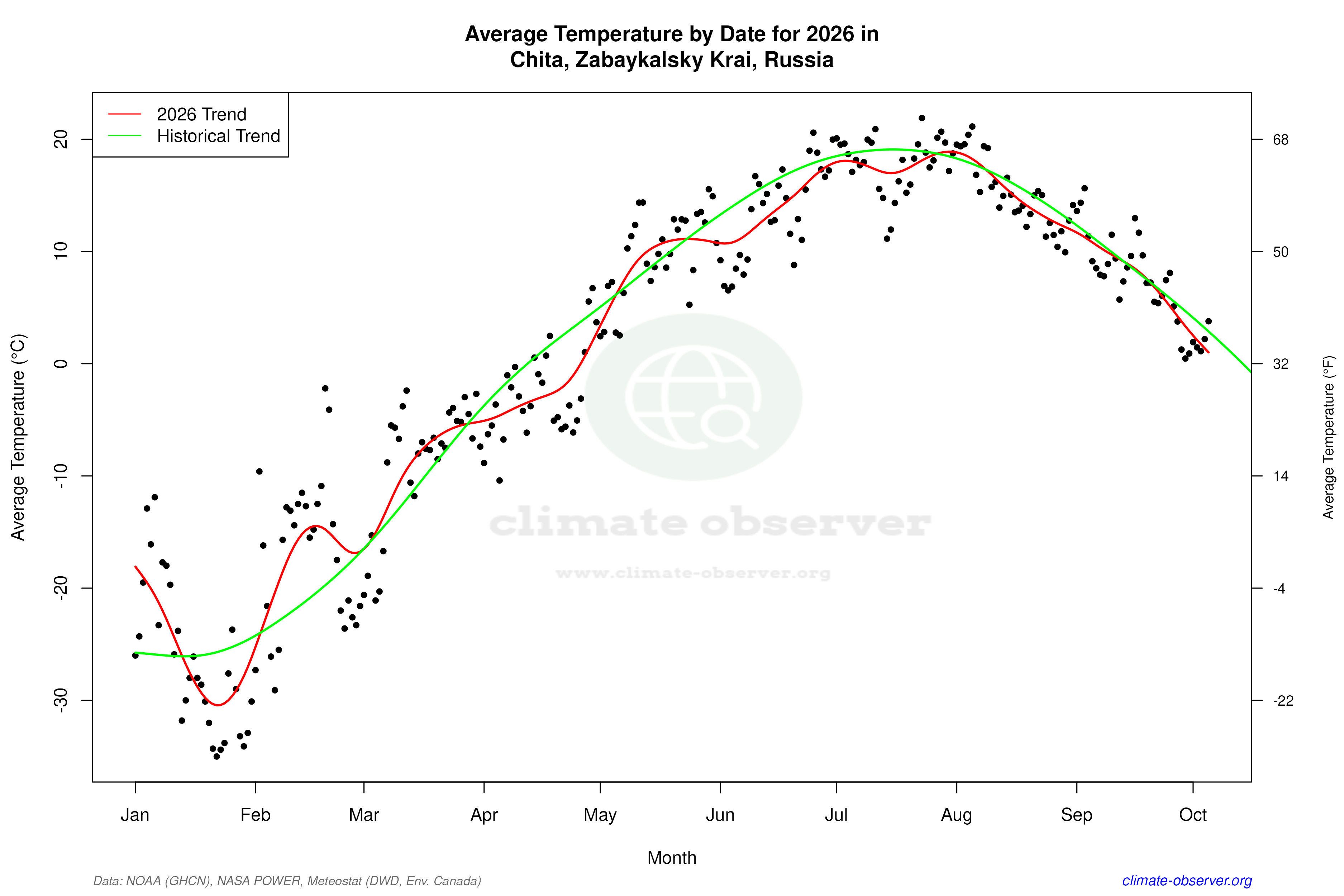
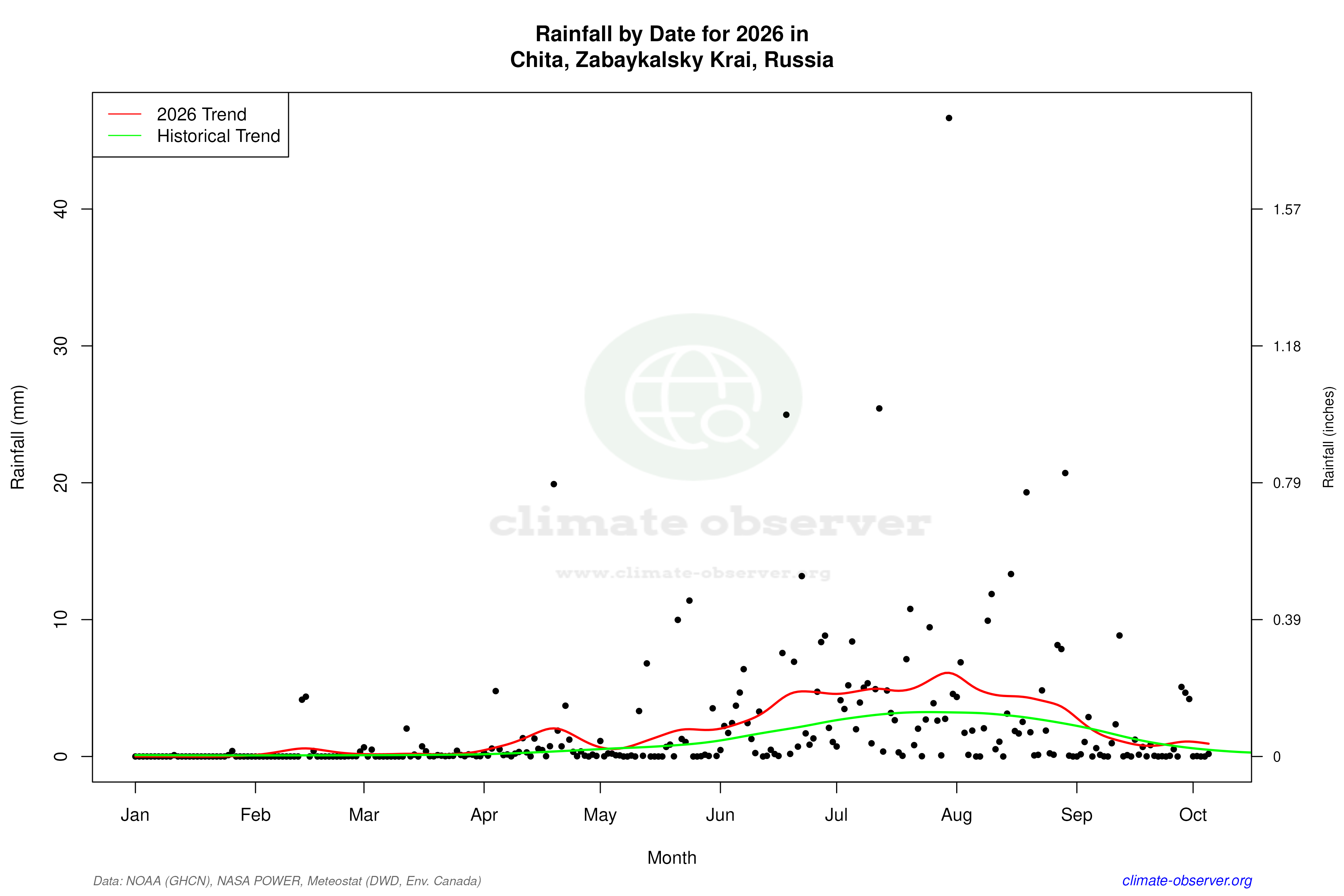
Chita's climate is experiencing a nuanced transformation with a general warming trend in high temperatures over time, while recent years show contrasting cooling trends in lows. Precipitation is becoming more concentrated, indicating potential shifts in seasonal weather patterns.
Köppen Classification and Geographic Influences
Chita, located at 52.0831°N, 113.4831°E, falls under the Dwb category in the Köppen climate classification, characterized by dry winters and warm summers. Nestled in the Transbaikal region, the local climate is influenced by its position within a continental interior, far from moderating oceanic effects. The surrounding terrain, including the nearby Yablonovy Mountains, contributes to temperature extremes, with records showing a maximum of 43.2°C (109.8°F) and a minimum of -49.6°C (-57.3°F).
Temperature Trends: A Complex Picture
Over the long term, Chita's climate exhibits a warming trend. All-time data reveals a rise in high temperatures by 0.22°C (0.39°F) and low temperatures by 0.19°C (0.34°F). However, the past decade presents a more complex picture, with high temperatures increasing by 0.58°C (1.04°F), while low temperatures have slightly decreased by 0.02°C (0.04°F). This suggests a divergence in recent thermal behaviour, where daytime warming is more pronounced, yet nights have seen a marginal cooling.
Precipitation Patterns: Increasing Concentration
The Precipitation Concentration Index (PCI) for Chita has shifted from a baseline of 18.8 to a current value of 23.3, indicating a significant increase in precipitation concentration. This suggests that rainfall events are becoming more intense and less frequent, which could impact water availability and agriculture. A PCI over 20 is considered highly concentrated, highlighting the potential for more extreme weather events.
Regional Climate Context and Implications
Russia's broader climate goals focus on mitigating the impacts of climate change, and Chita's evolving climate profile is a microcosm of these challenges. The observed warming trends align with national concerns over rising temperatures and their ecological impacts. Recent weather events, such as severe heatwaves, underscore the urgency of adaptive strategies in the region.
Implications for Local Climate Adaptation
The combination of warming temperatures and concentrated precipitation patterns in Chita necessitates a strategic approach to climate adaptation. Infrastructure resilience, water resource management, and agricultural practices must evolve to accommodate these changes. The nuanced trends in temperature and precipitation provide critical insights for policymakers and stakeholders aiming to bolster regional climate resilience.
Station Statistics
10-Year Trend
High: +0.25 °F/decade
Low: +1.04 °F/decade
Rain: +0.008 in/decade
25-Year Trend
High: +0.18 °F/decade
Low: +0.47 °F/decade
Rain: +0.004 in/decade
50-Year Trend
High: +0.83 °F/decade
Low: +1.27 °F/decade
Rain: +0.001 in/decade
All-Time Trend
High: +0.33 °F/decade
Low: +0.27 °F/decade
Rain: -0.000 in/decade
Percentage Above-Average Days
Last 12 Months: 44.7%
This Year: 27.3%
Precipitation Concentration Index (PCI) ℹ️
Last 12 Months: 19.0
Historical Average: 22.2
Percentile Rank of Last 12 Months ℹ️
High: 69th percentile
Low: 79th percentile
Rain: 68th percentile
Change in Variance ℹ️
High: -10.3%
Low: -10.4%
Intraday: -4.7%
Data Coverage
91.5%
First Year of Data
1892
Station Location
Historical Weather Records
| Max High | Avg High | Min High | Max Avg | Avg Avg | Min Avg | Max Low | Avg Low | Min Low | Max Precipitation | Avg Precipitation | Max Snow | Avg Snow | |
|---|---|---|---|---|---|---|---|---|---|---|---|---|---|
| Record | 109.76 °F | — | -36.58 °F | 84.56 °F | — | -47.92 °F | 71.42 °F | — | -57.28 °F | 4.10 in | — | — | — |
| January | 32.72 °F | -0.47 °F | -36.58 °F | 24.62 °F | -14.32 °F | -47.92 °F | 21.02 °F | -25.53 °F | -57.28 °F | 0.79 in | 0.00 in | — | — |
| February | 45.32 °F | 11.56 °F | -29.92 °F | 28.40 °F | -5.39 °F | -44.50 °F | 21.92 °F | -19.26 °F | -54.40 °F | 0.26 in | 0.00 in | — | — |
| March | 69.98 °F | 29.75 °F | -7.06 °F | 47.48 °F | 13.44 °F | -26.86 °F | 42.80 °F | -1.00 °F | -49.54 °F | 0.87 in | 0.00 in | — | — |
| April | 84.74 °F | 47.54 °F | 13.28 °F | 65.12 °F | 33.50 °F | -1.30 °F | 50.72 °F | 20.30 °F | -21.28 °F | 1.03 in | 0.01 in | — | — |
| May | 98.42 °F | 63.17 °F | 33.08 °F | 73.94 °F | 48.39 °F | 22.64 °F | 64.58 °F | 33.46 °F | 8.06 °F | 1.98 in | 0.03 in | — | — |
| June | 109.76 °F | 75.74 °F | 38.66 °F | 84.56 °F | 61.19 °F | 34.16 °F | 69.08 °F | 46.40 °F | 22.28 °F | 2.02 in | 0.07 in | — | — |
| July | 109.40 °F | 78.81 °F | 55.22 °F | 84.02 °F | 65.91 °F | 46.04 °F | 71.42 °F | 53.60 °F | 32.18 °F | 3.86 in | 0.12 in | — | — |
| August | 105.62 °F | 73.56 °F | 46.22 °F | 78.98 °F | 60.40 °F | 39.38 °F | 66.74 °F | 49.16 °F | 15.44 °F | 4.10 in | 0.11 in | — | — |
| September | 95.00 °F | 61.48 °F | 33.26 °F | 68.18 °F | 47.16 °F | 25.34 °F | 59.72 °F | 35.63 °F | 12.56 °F | 1.47 in | 0.05 in | — | — |
| October | 78.80 °F | 44.03 °F | 5.00 °F | 57.92 °F | 30.35 °F | -13.00 °F | 50.54 °F | 19.61 °F | -27.58 °F | 1.46 in | 0.01 in | — | — |
| November | 54.86 °F | 20.22 °F | -19.84 °F | 41.72 °F | 7.69 °F | -30.46 °F | 34.16 °F | -2.89 °F | -41.98 °F | 0.53 in | 0.01 in | — | — |
| December | 41.00 °F | 2.93 °F | -30.10 °F | 32.54 °F | -9.14 °F | -43.96 °F | 28.04 °F | -19.47 °F | -54.04 °F | 0.21 in | 0.01 in | — | — |
Data Visualisations
Remove WatermarksCurrent Year Climate Trends vs Historical
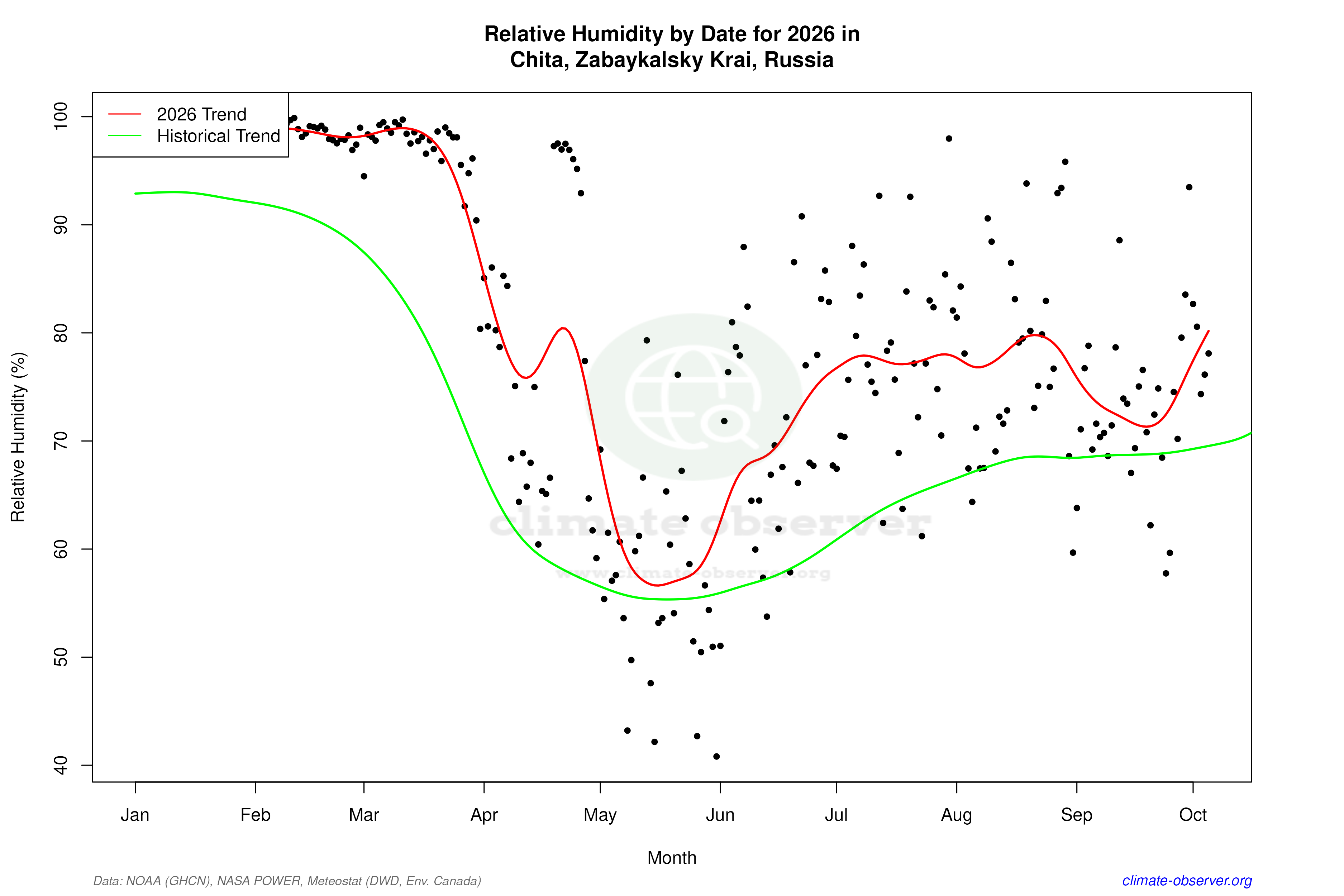

Max Temperature this Year | 1 of 6
Climate 12-Month Moving Averages
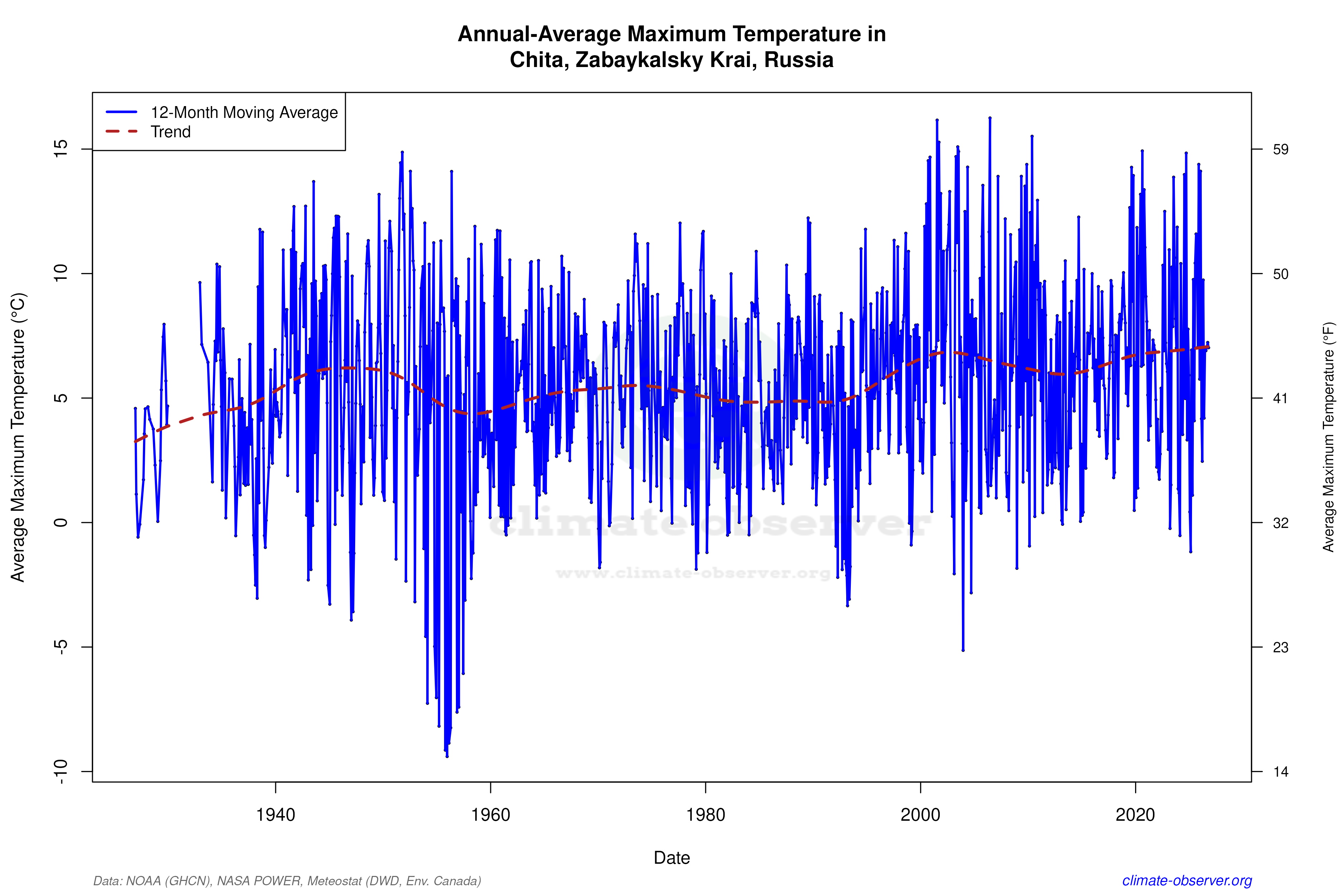
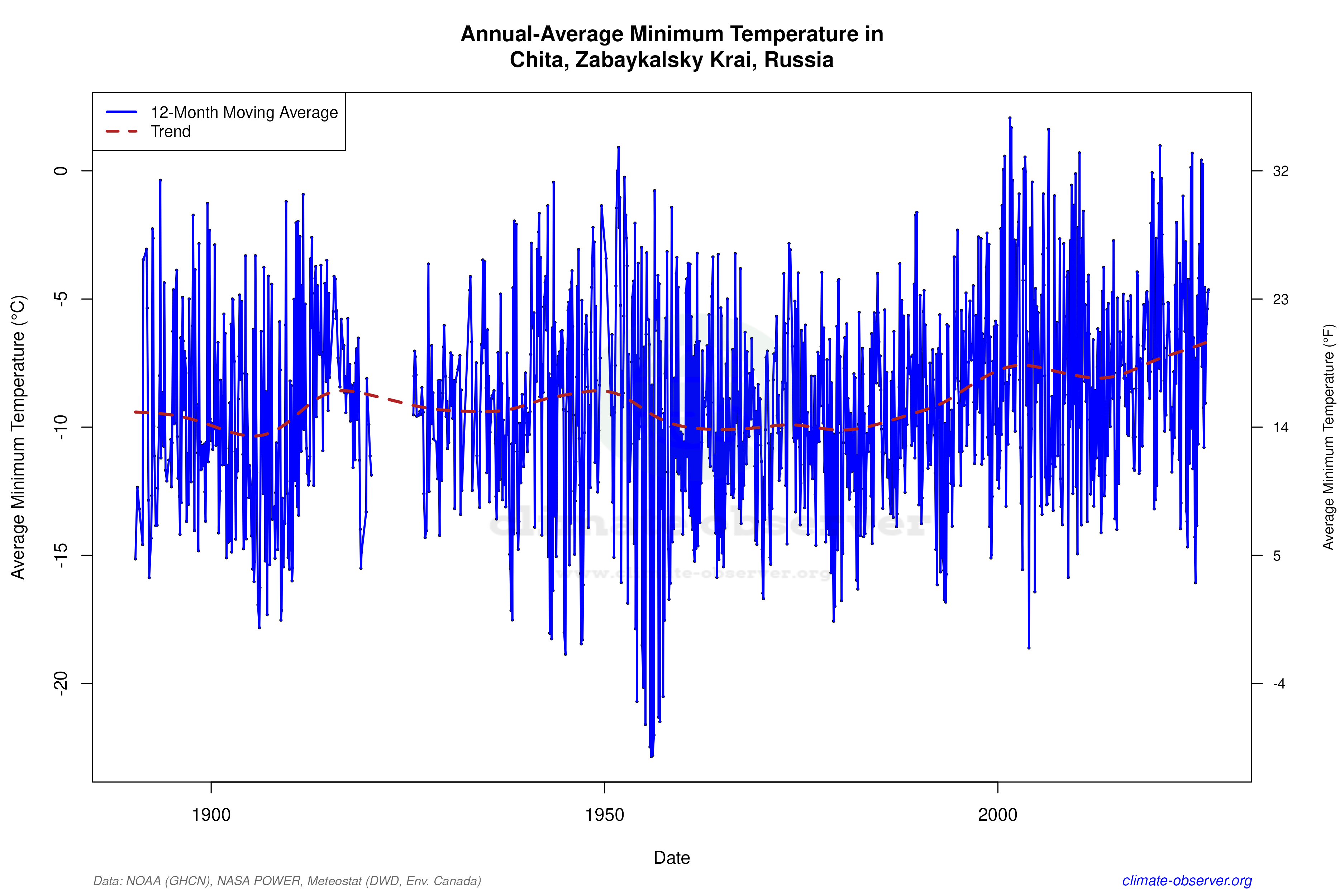
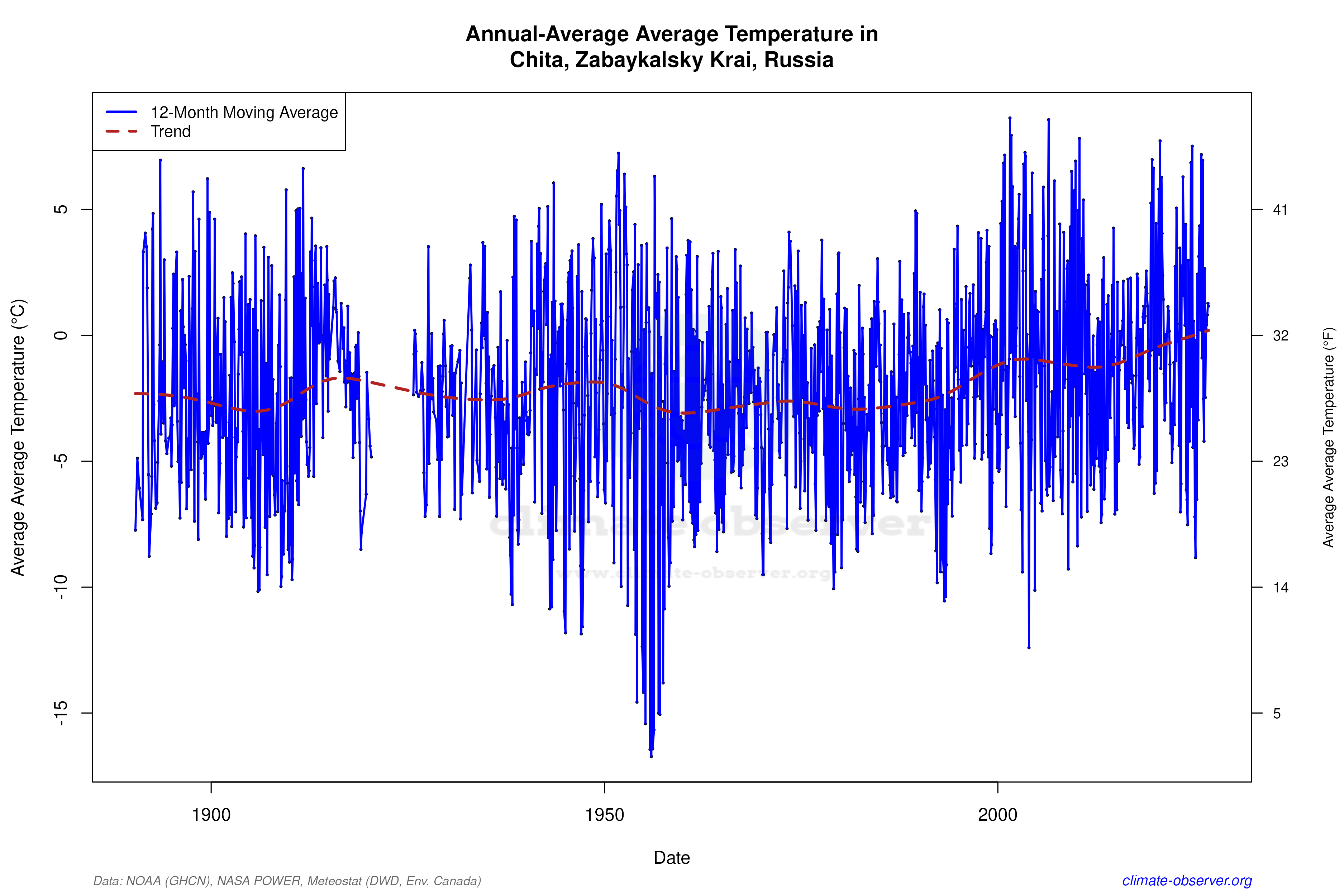
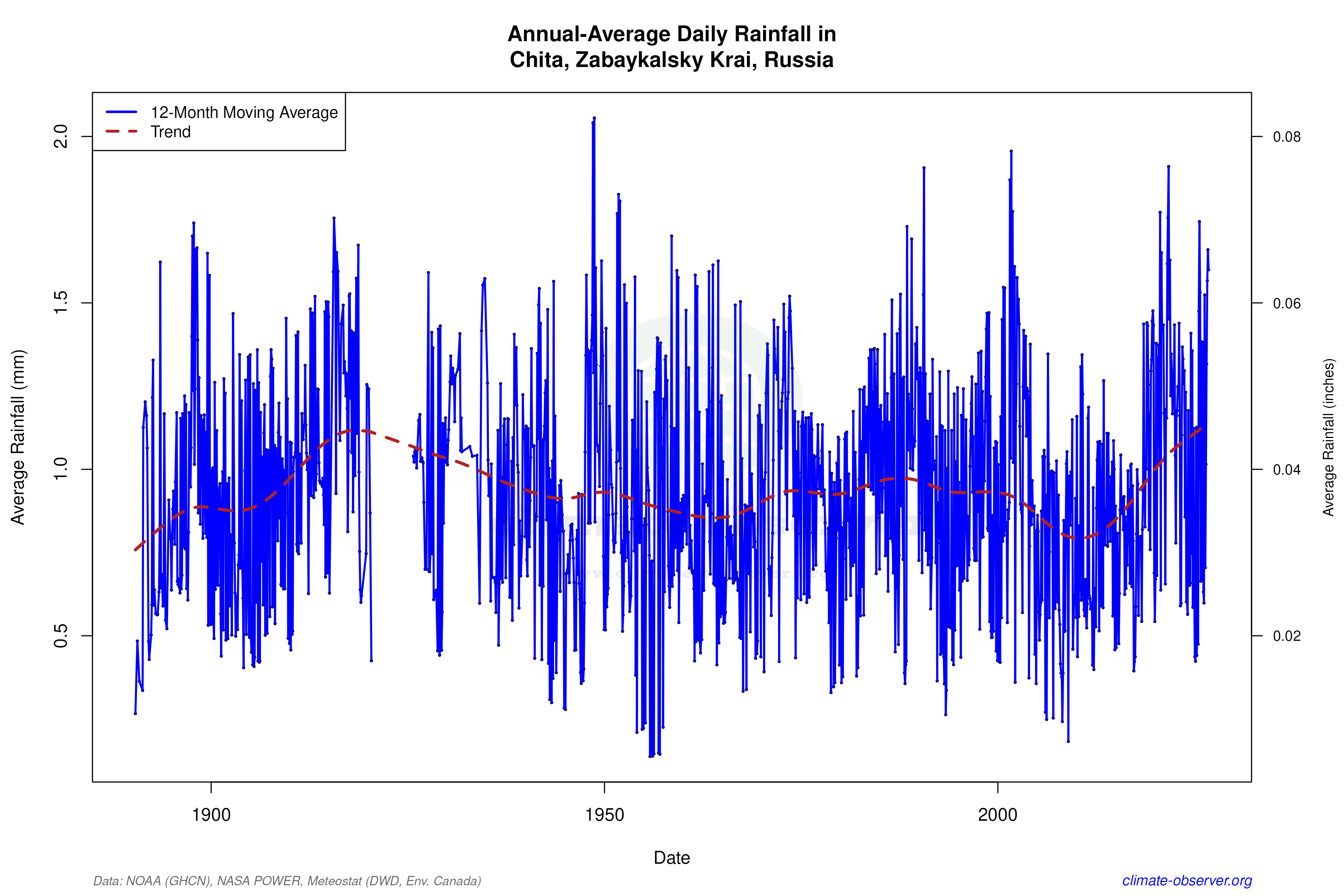
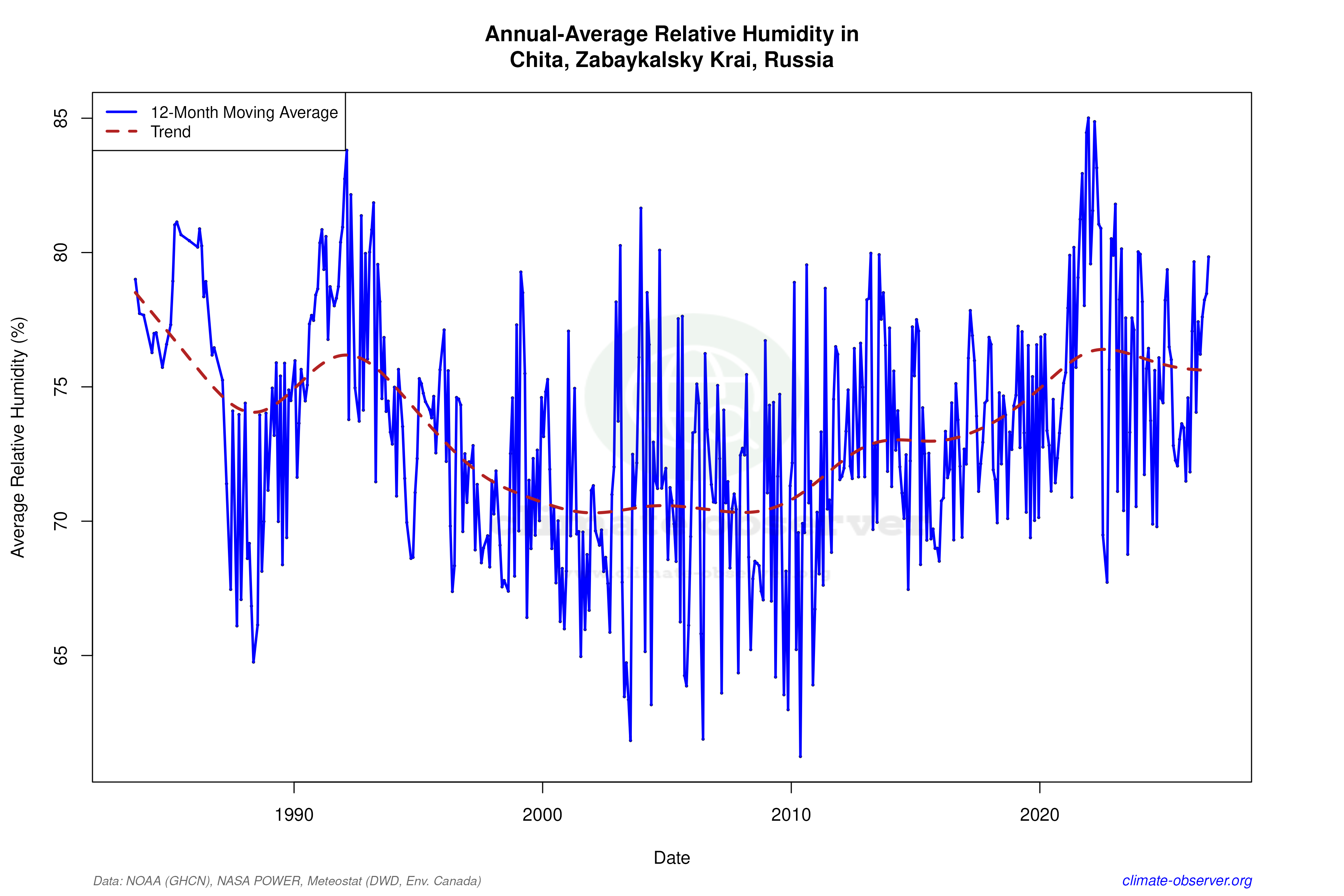

Max Temperature 12-Month MA | 1 of 6
Daily Data Points and Averages Throughout the Year
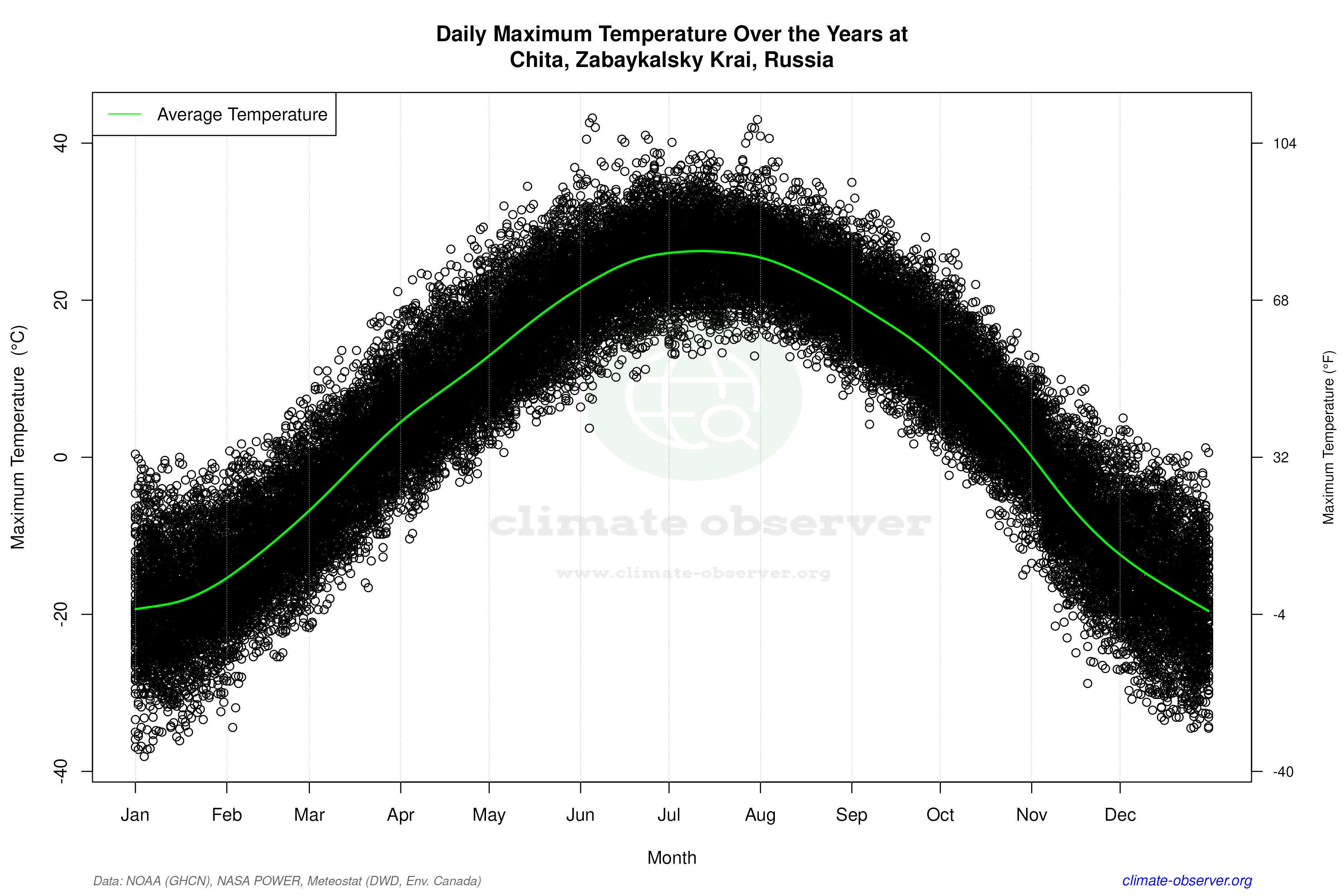
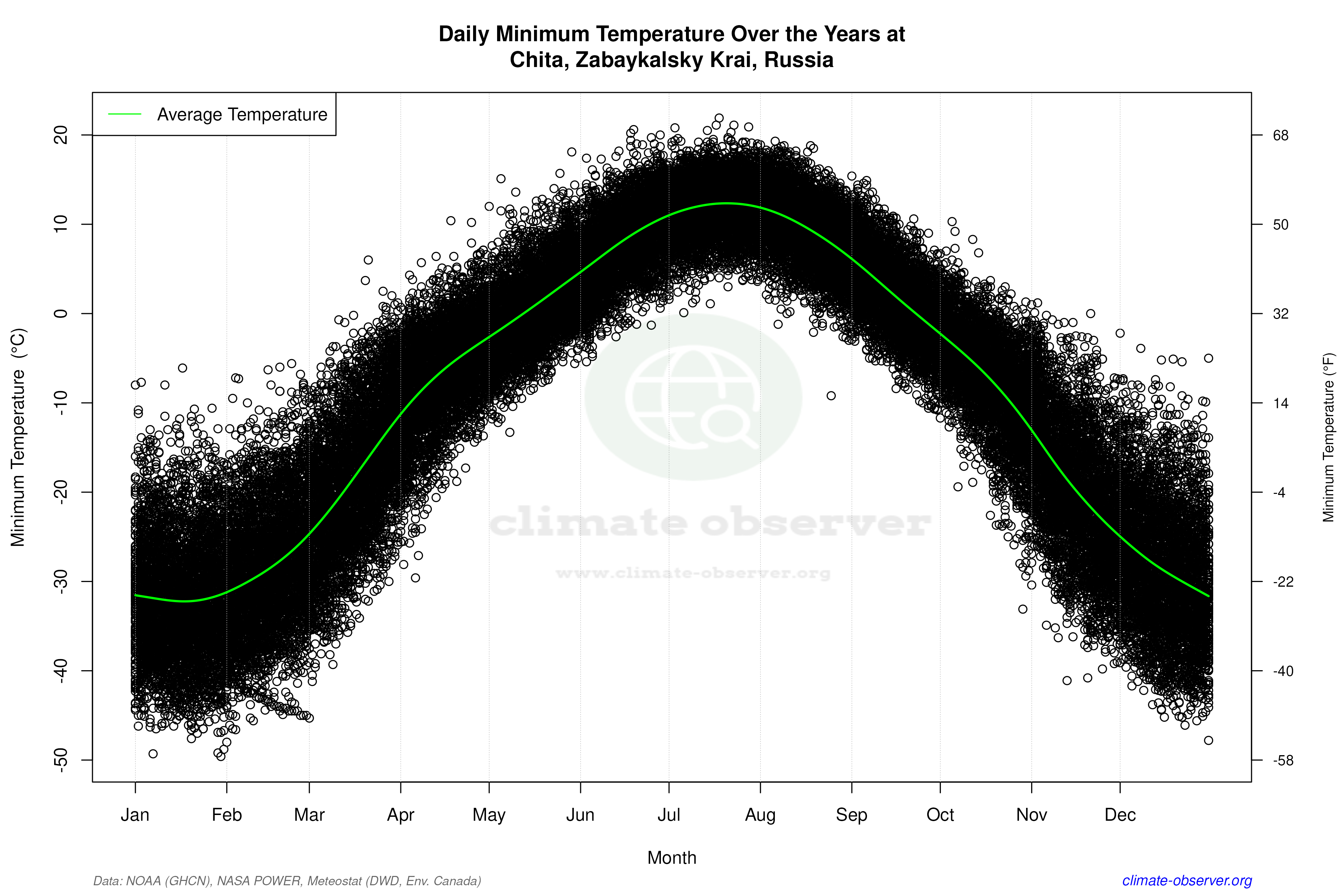
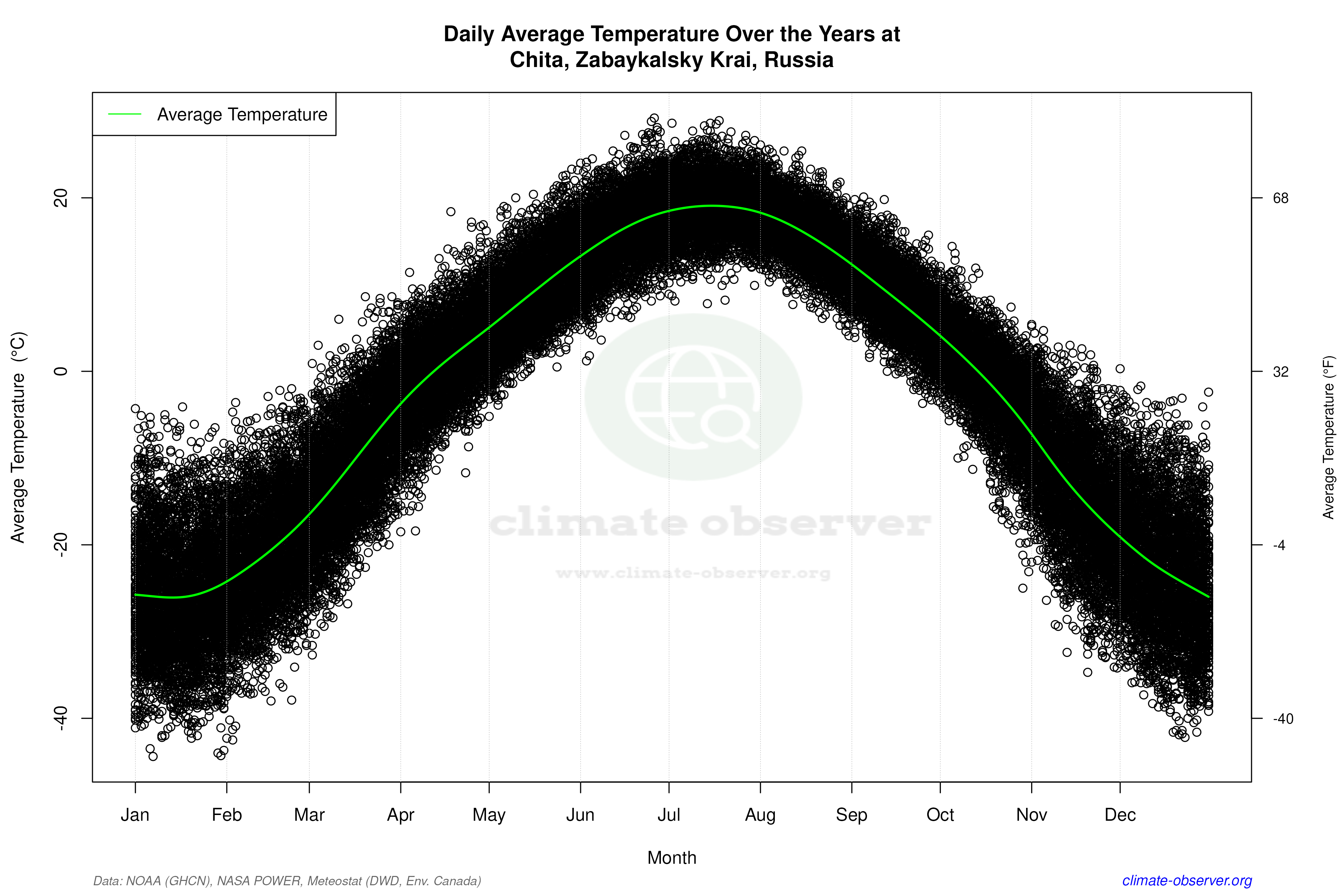
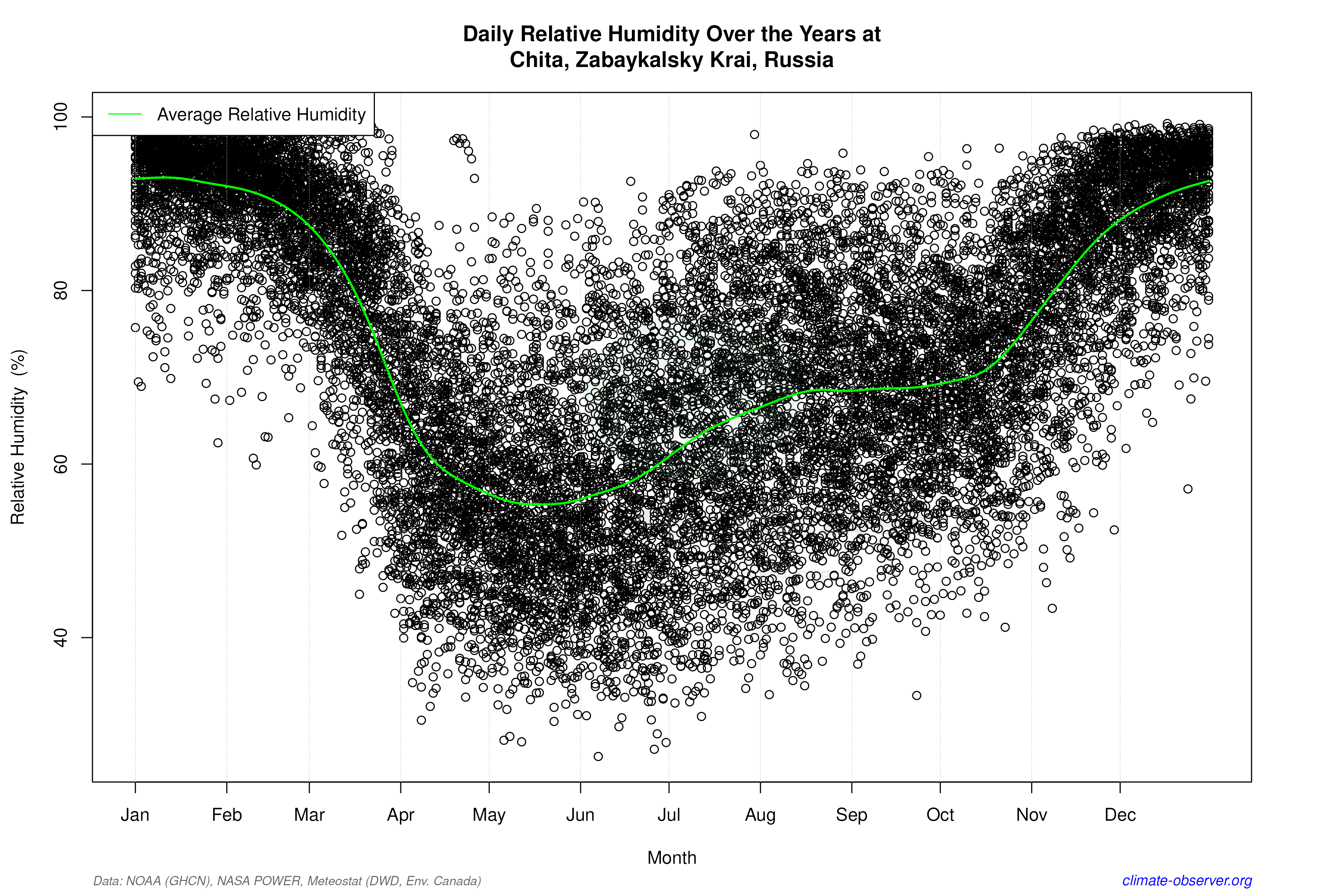

Average Max Temperature Throughout Year | 1 of 5


