Climate for Station: Oktjabrskij-Gorodok, Saratov Oblast, Russia
Loading live weather...
Climate Analysis & Overview
Oktjabrskij-Gorodok is experiencing a notable warming trend, particularly in nighttime temperatures, with lows rising by 3.43°C (6.17°F) over the past decade. This shift, combined with a decrease in the Precipitation Concentration Index, suggests a more evenly distributed rainfall pattern, aligning with regional climate adaptation goals.
Geographical and Climatic Context
Oktjabrskij-Gorodok, situated in the Saratov Oblast of Russia, experiences a humid continental climate (Dfb) according to the Köppen classification. This region is characterised by cold winters and warm summers, influenced by its inland position away from moderating oceanic effects. The surrounding flat terrain allows for significant temperature variations, contributing to the area's extreme temperature records, with a maximum of 40.5°C (104.9°F) and a minimum of -41.0°C (-41.8°F).
Recent Temperature Trends
Over the past decade, Oktjabrskij-Gorodok has seen a pronounced warming trend. High temperatures have increased by 1.93°C (3.47°F), while low temperatures have risen even more significantly by 3.43°C (6.17°F). This trend is more pronounced than the all-time warming, where highs have increased by 0.20°C (0.36°F) and lows by 0.32°C (0.58°F). The disparity between the 10-year and all-time trends indicates an acceleration in warming, particularly during nighttime, which could have implications for local ecosystems and energy consumption patterns.
Precipitation Patterns and Changes
The Precipitation Concentration Index (PCI) for Oktjabrskij-Gorodok has decreased from a baseline of 11.68 to a current value of 9.71. This shift indicates a more even distribution of rainfall throughout the year, as a PCI under 10 suggests low concentration. Such a change may reduce the risk of flooding and soil erosion, aligning with Russia's regional climate resilience strategies. The more even precipitation pattern could support agricultural stability, crucial for this agrarian region.
Implications for Regional Climate Goals
The observed climatic changes in Oktjabrskij-Gorodok must be viewed in the context of Russia's broader climate goals. The country aims to adapt to climate change by enhancing water management and agricultural practices. The warming trend, particularly in winter lows, could reduce heating demands, while the more evenly distributed precipitation could benefit crop yields. However, the rapid warming trend may also pose challenges, requiring adaptive measures to mitigate potential negative impacts on biodiversity and human health.
Station Statistics
10-Year Trend
High: +2.99 °F/decade
Low: +4.23 °F/decade
Rain: +0.001 in/decade
25-Year Trend
High: +0.50 °F/decade
Low: +0.83 °F/decade
Rain: +0.001 in/decade
50-Year Trend
High: +0.56 °F/decade
Low: +0.78 °F/decade
Rain: -0.000 in/decade
All-Time Trend
High: +0.31 °F/decade
Low: +0.61 °F/decade
Rain: +0.001 in/decade
Percentage Above-Average Days
Last 12 Months: 59.2%
This Year: 59.9%
Precipitation Concentration Index (PCI) ℹ️
Last 12 Months: 20.6
Historical Average: 11.5
Percentile Rank of Last 12 Months ℹ️
High: 78th percentile
Low: 90th percentile
Rain: 82nd percentile
Change in Variance ℹ️
High: -14.2%
Low: -11.2%
Intraday: -23.8%
Data Coverage
93.9%
First Year of Data
1939
Station Location
Historical Weather Records
| Max High | Avg High | Min High | Max Avg | Avg Avg | Min Avg | Max Low | Avg Low | Min Low | Max Precipitation | Avg Precipitation | Max Snow | Avg Snow | |
|---|---|---|---|---|---|---|---|---|---|---|---|---|---|
| Record | 104.90 °F | — | -24.70 °F | 91.94 °F | — | -33.16 °F | 78.26 °F | — | -41.80 °F | 10.83 in | — | — | — |
| January | 50.00 °F | 18.08 °F | -24.70 °F | 39.02 °F | 11.42 °F | -33.16 °F | 37.58 °F | 4.73 °F | -41.80 °F | 1.00 in | 0.04 in | — | — |
| February | 45.14 °F | 18.95 °F | -20.02 °F | 41.00 °F | 11.88 °F | -26.14 °F | 34.52 °F | 4.54 °F | -39.10 °F | 1.78 in | 0.03 in | — | — |
| March | 66.92 °F | 29.98 °F | -3.82 °F | 55.22 °F | 22.57 °F | -12.46 °F | 48.02 °F | 15.70 °F | -27.04 °F | 1.08 in | 0.03 in | — | — |
| April | 85.82 °F | 52.46 °F | 12.02 °F | 72.86 °F | 42.67 °F | 3.74 °F | 60.98 °F | 34.07 °F | -1.48 °F | 2.16 in | 0.03 in | — | — |
| May | 93.20 °F | 69.09 °F | 35.42 °F | 81.68 °F | 58.04 °F | 27.14 °F | 69.62 °F | 46.17 °F | 16.52 °F | 1.53 in | 0.05 in | — | — |
| June | 104.00 °F | 77.09 °F | 39.92 °F | 88.16 °F | 66.03 °F | 37.22 °F | 77.72 °F | 53.90 °F | 27.86 °F | 1.87 in | 0.06 in | — | — |
| July | 104.90 °F | 81.31 °F | 57.38 °F | 91.94 °F | 70.05 °F | 50.00 °F | 78.26 °F | 57.76 °F | 37.76 °F | 2.28 in | 0.06 in | — | — |
| August | 103.82 °F | 78.92 °F | 48.92 °F | 87.98 °F | 66.93 °F | 44.60 °F | 77.90 °F | 55.05 °F | 31.46 °F | 4.39 in | 0.05 in | — | — |
| September | 102.92 °F | 66.51 °F | 35.24 °F | 79.34 °F | 55.15 °F | 29.12 °F | 68.90 °F | 45.12 °F | 20.66 °F | 10.83 in | 0.05 in | — | — |
| October | 82.58 °F | 50.05 °F | 11.84 °F | 69.62 °F | 41.24 °F | 7.34 °F | 60.80 °F | 33.94 °F | -6.88 °F | 1.69 in | 0.05 in | — | — |
| November | 67.28 °F | 33.44 °F | -5.44 °F | 55.94 °F | 27.75 °F | -19.30 °F | 51.26 °F | 22.52 °F | -20.02 °F | 1.04 in | 0.04 in | — | — |
| December | 49.46 °F | 22.48 °F | -19.12 °F | 45.32 °F | 16.71 °F | -28.12 °F | 42.62 °F | 11.06 °F | -34.96 °F | 1.10 in | 0.04 in | — | — |
Data Visualisations
Remove WatermarksCurrent Year Climate Trends vs Historical
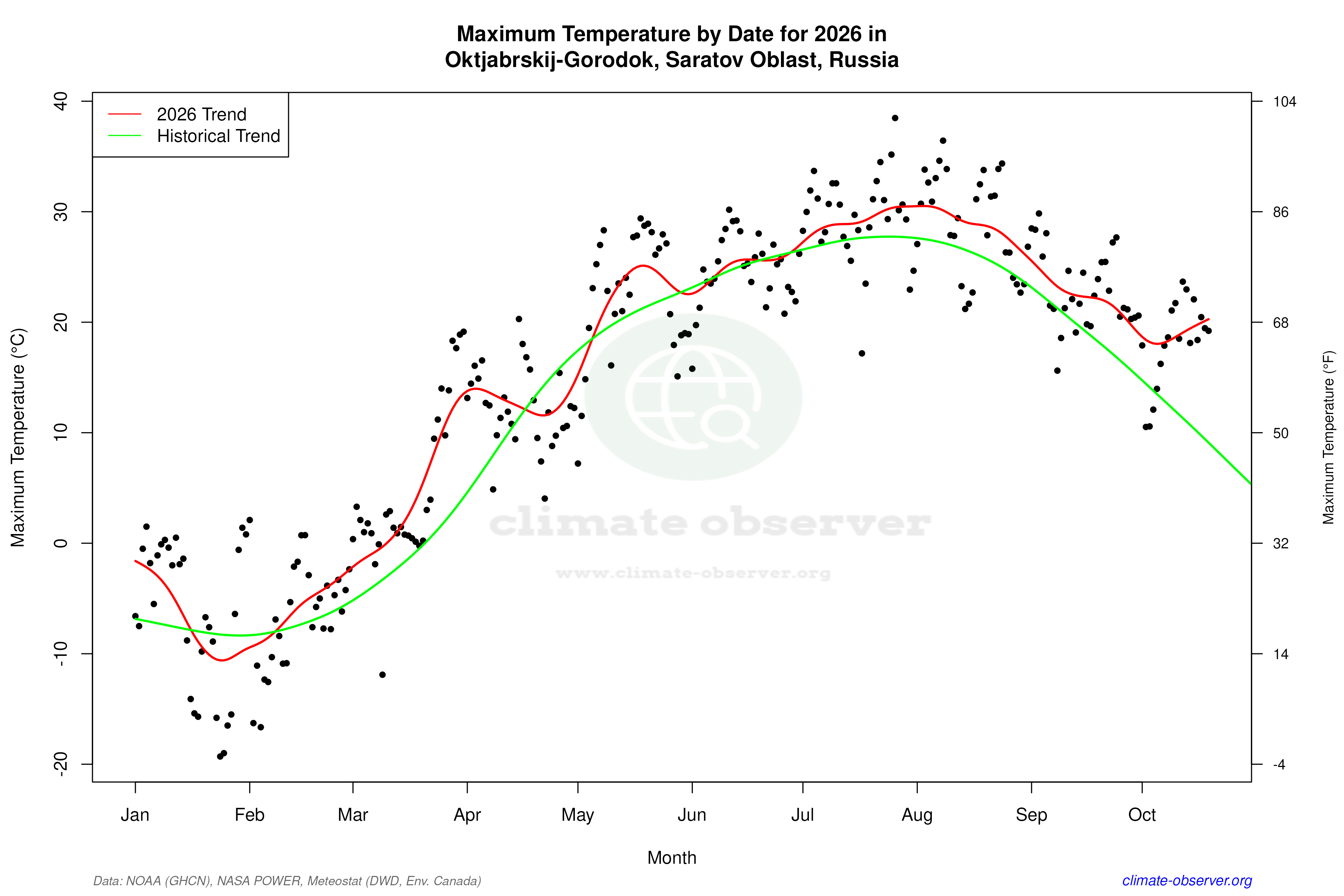
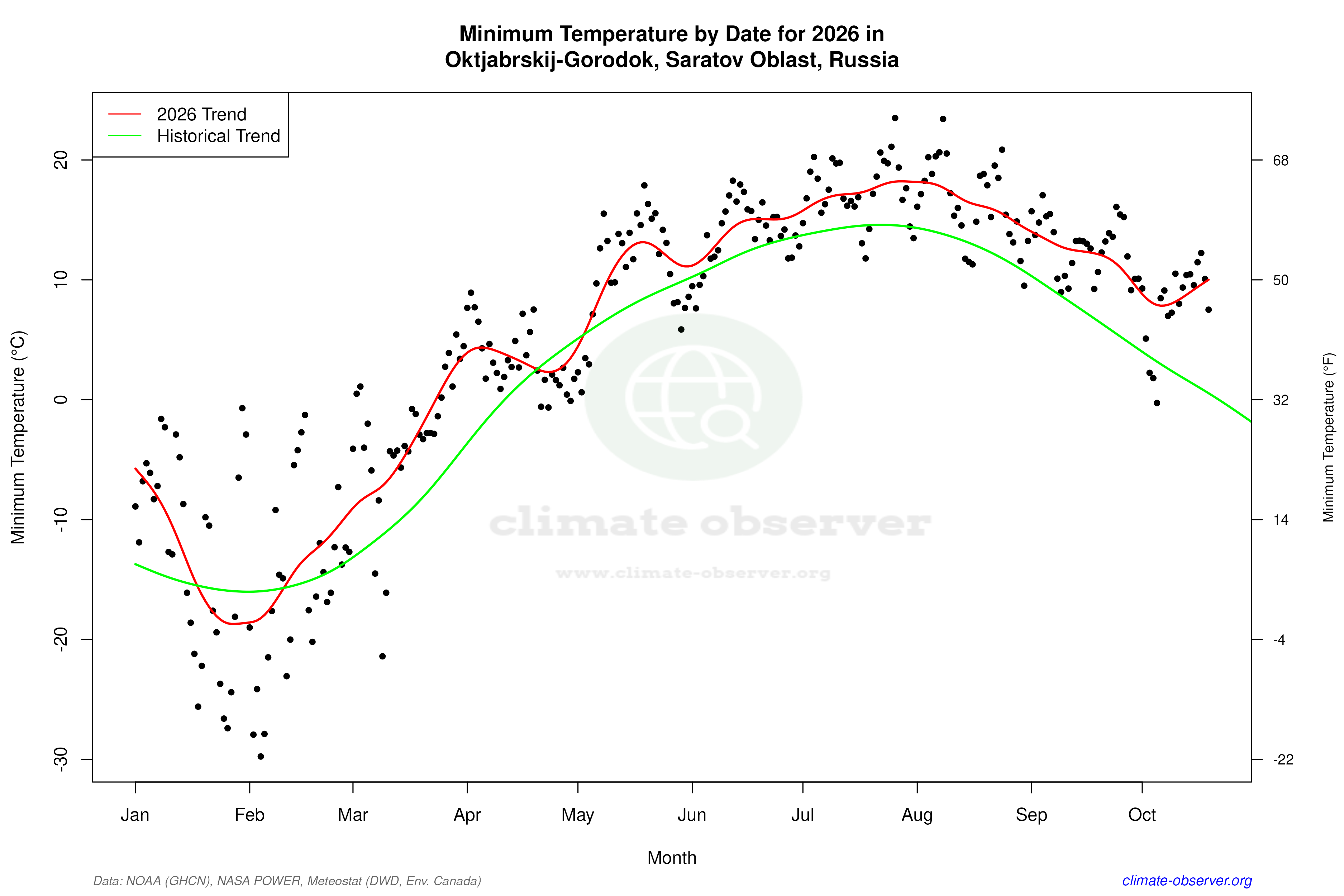
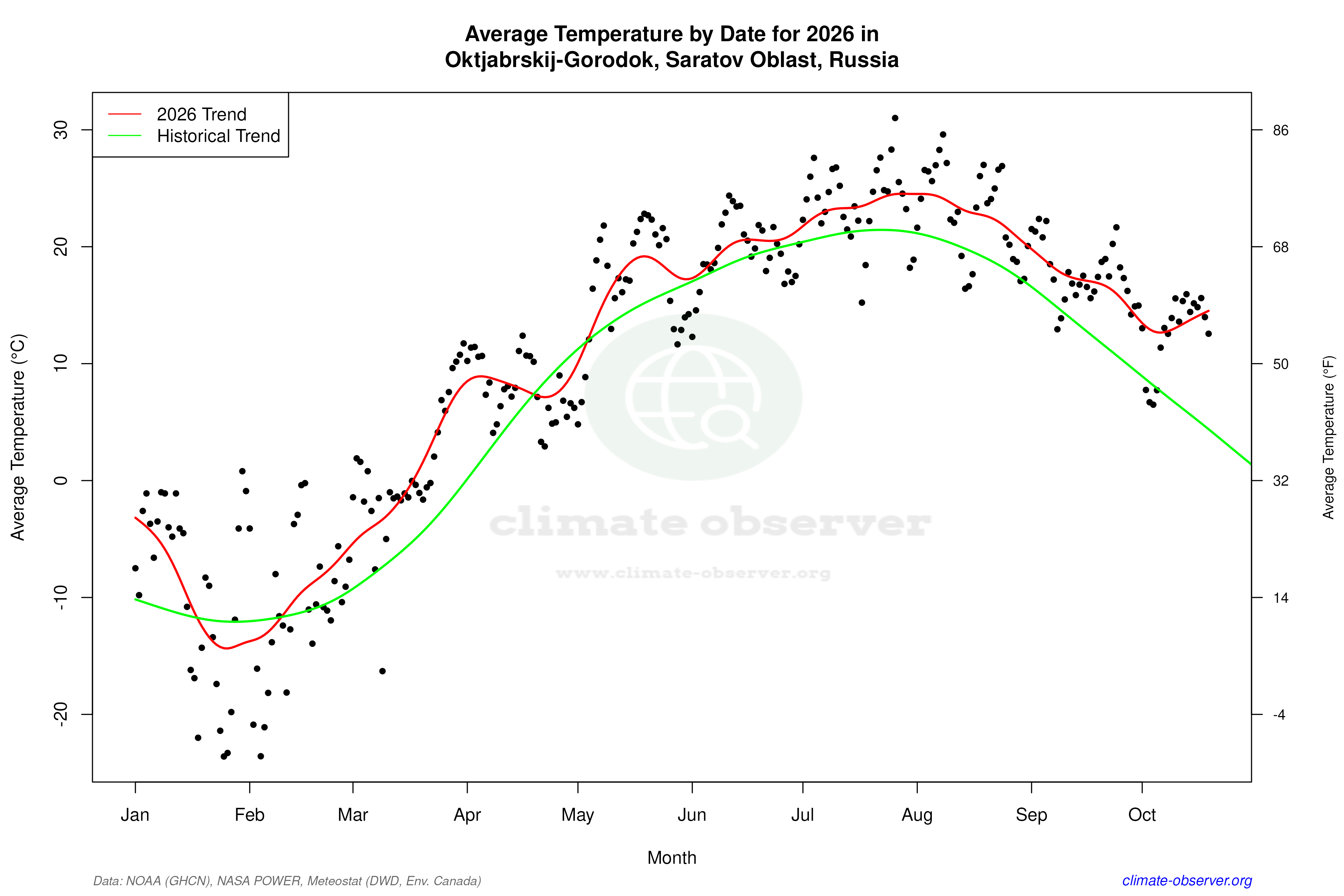
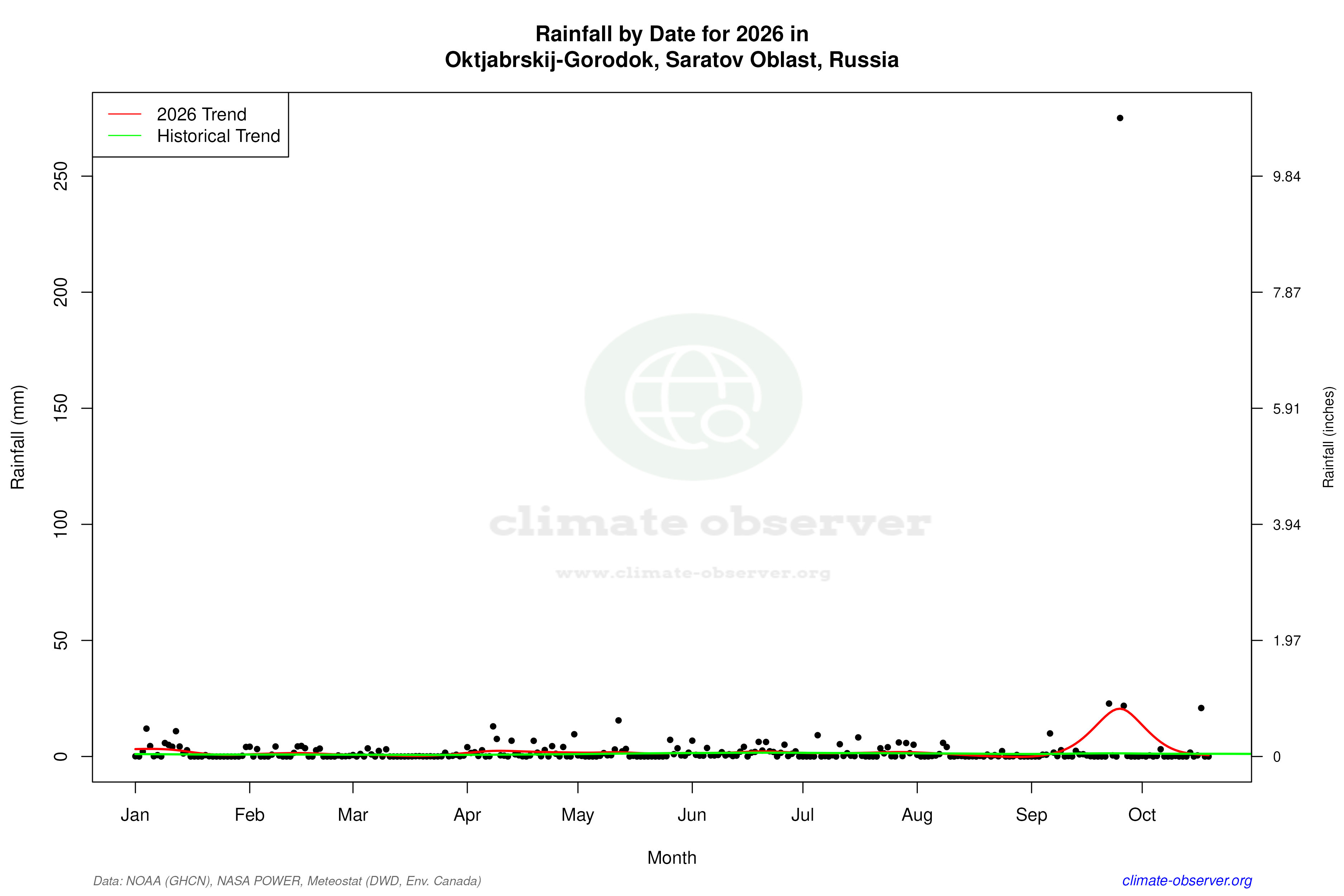
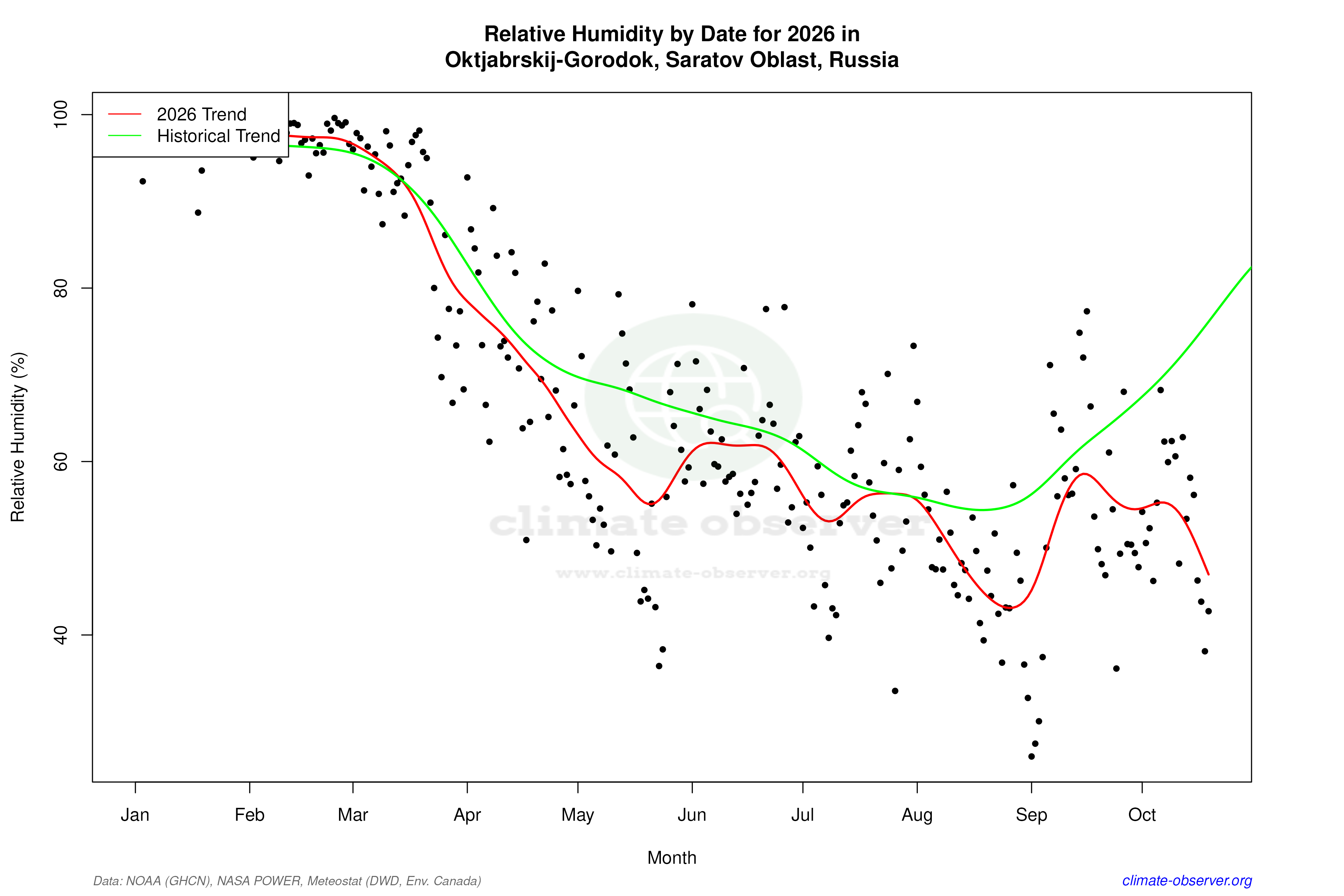

Max Temperature this Year | 1 of 6
Climate 12-Month Moving Averages
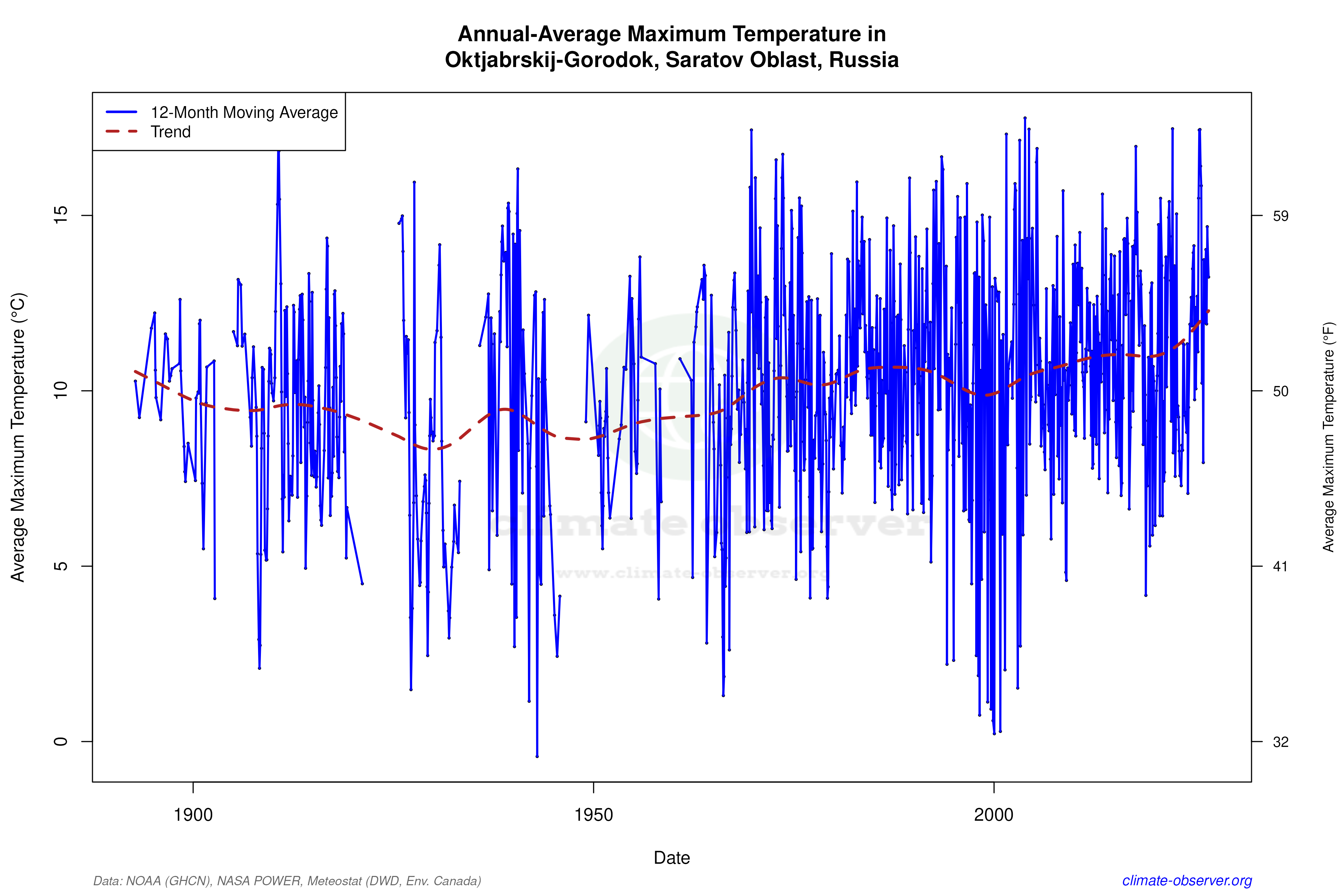
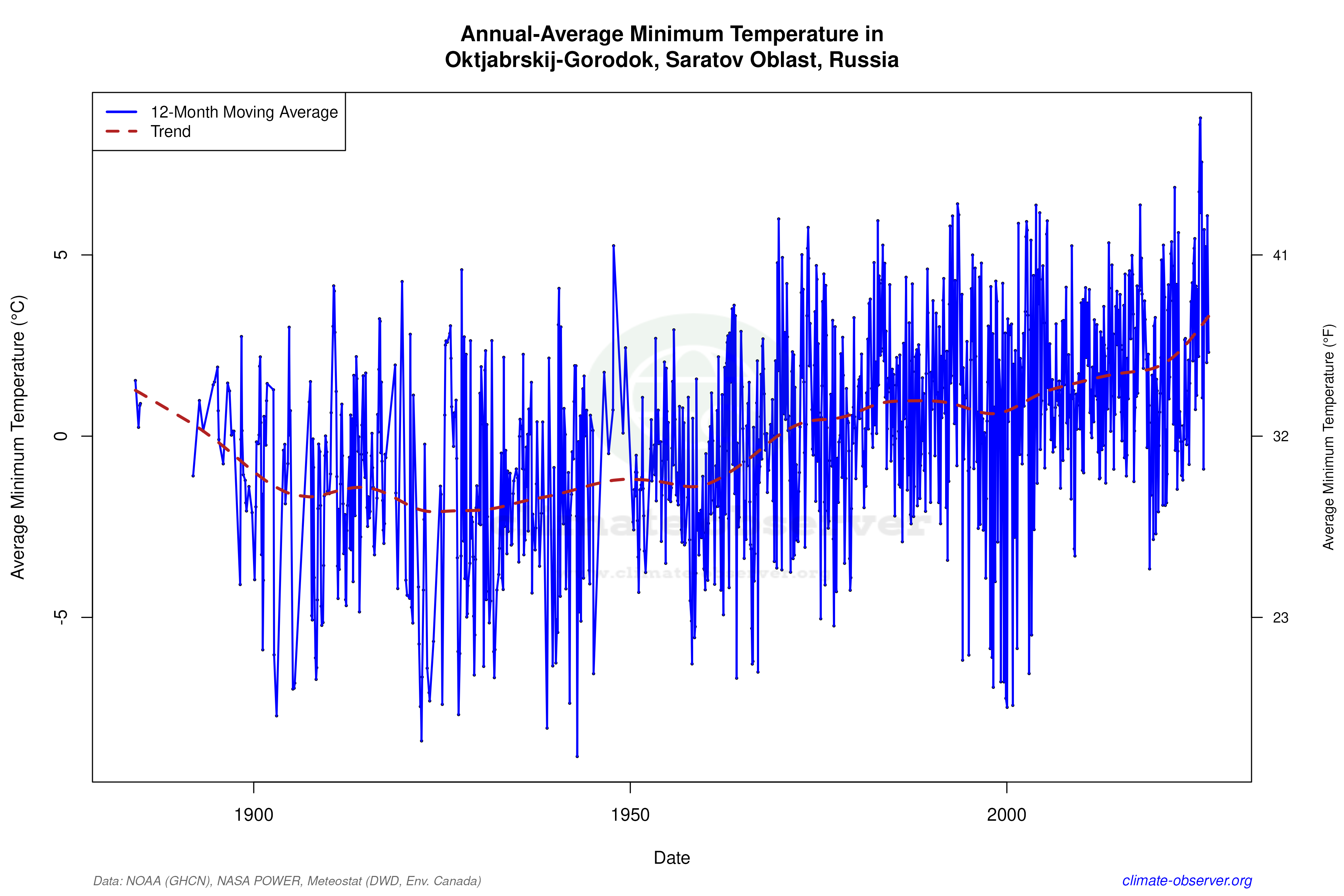
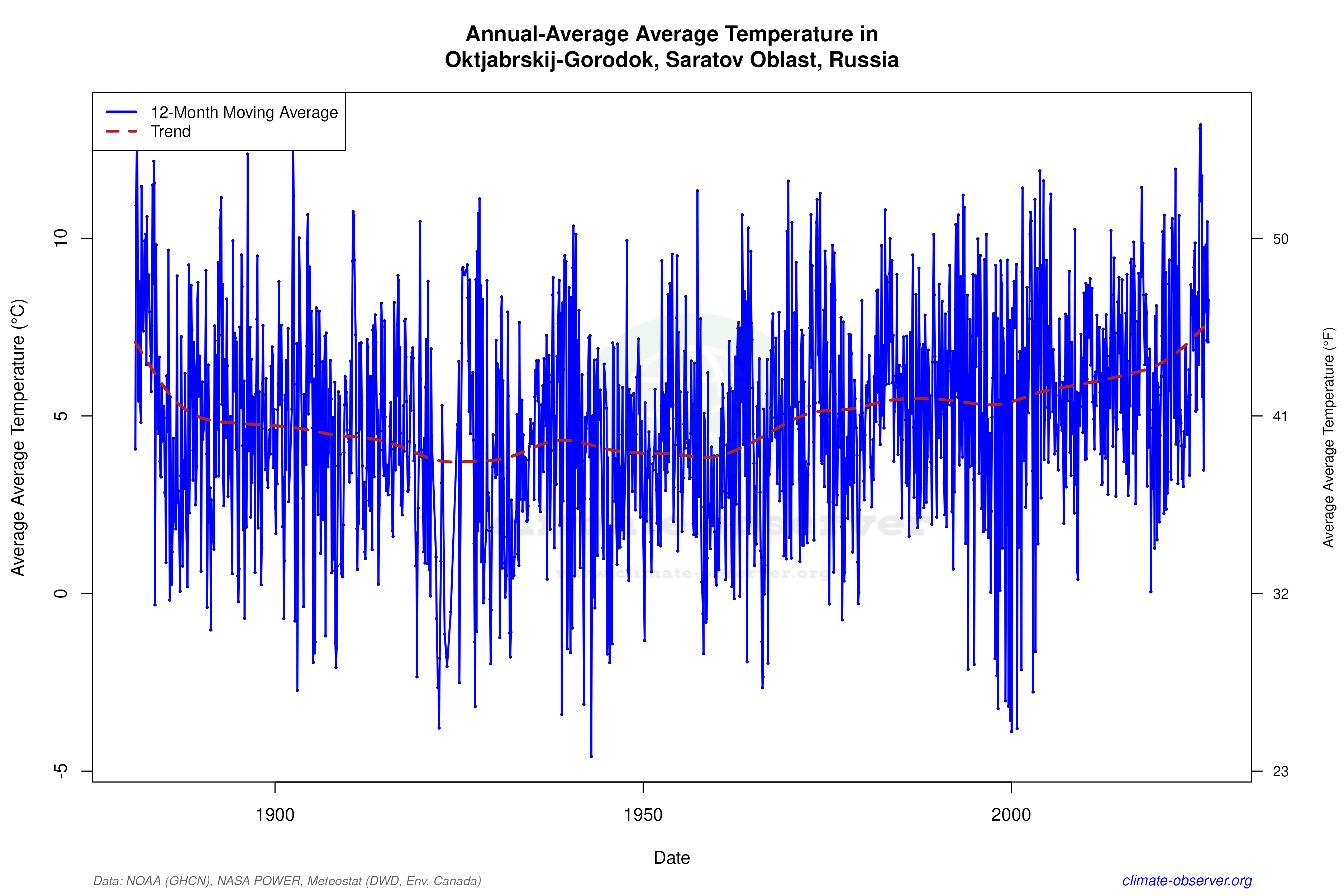
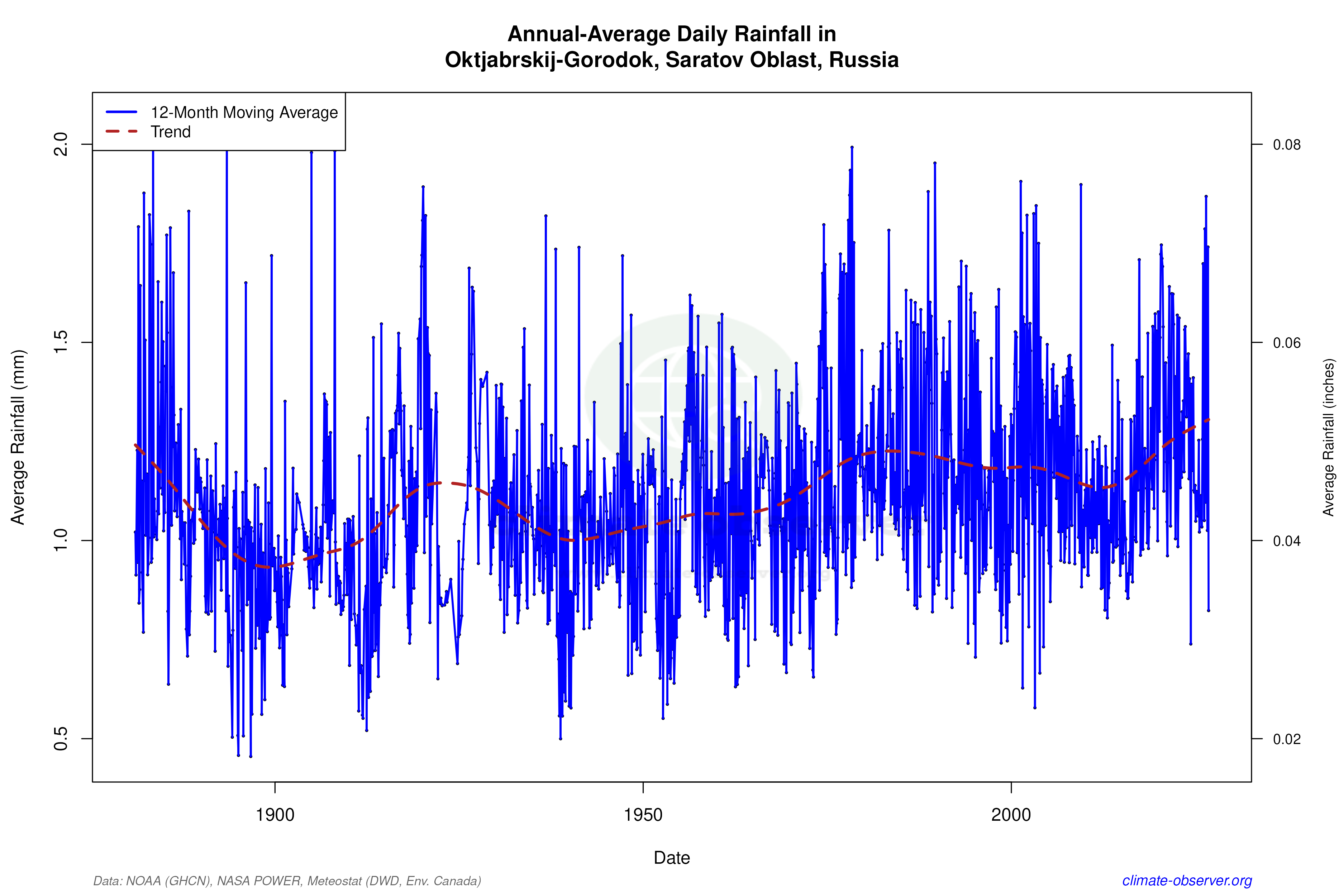
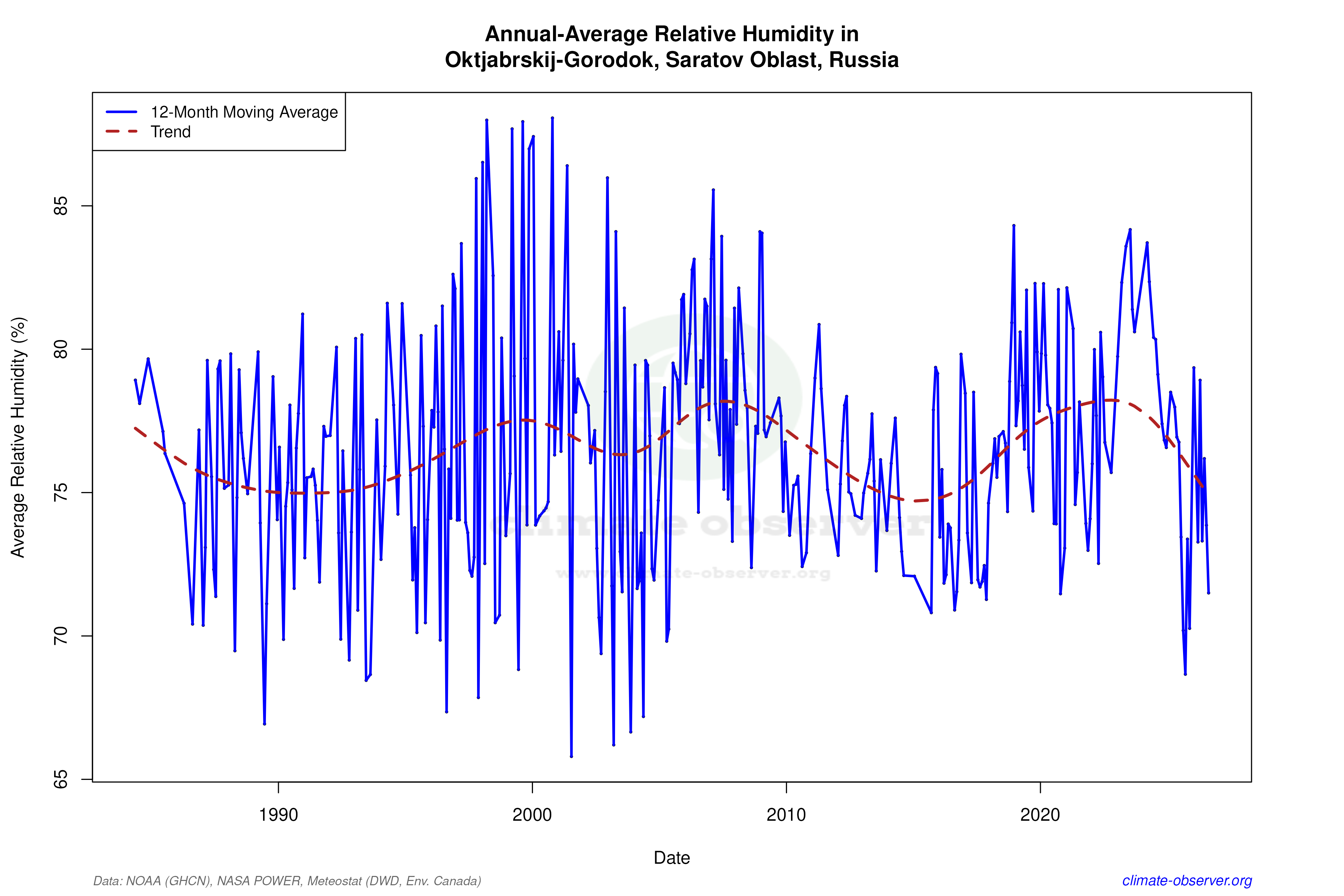

Max Temperature 12-Month MA | 1 of 6
Daily Data Points and Averages Throughout the Year
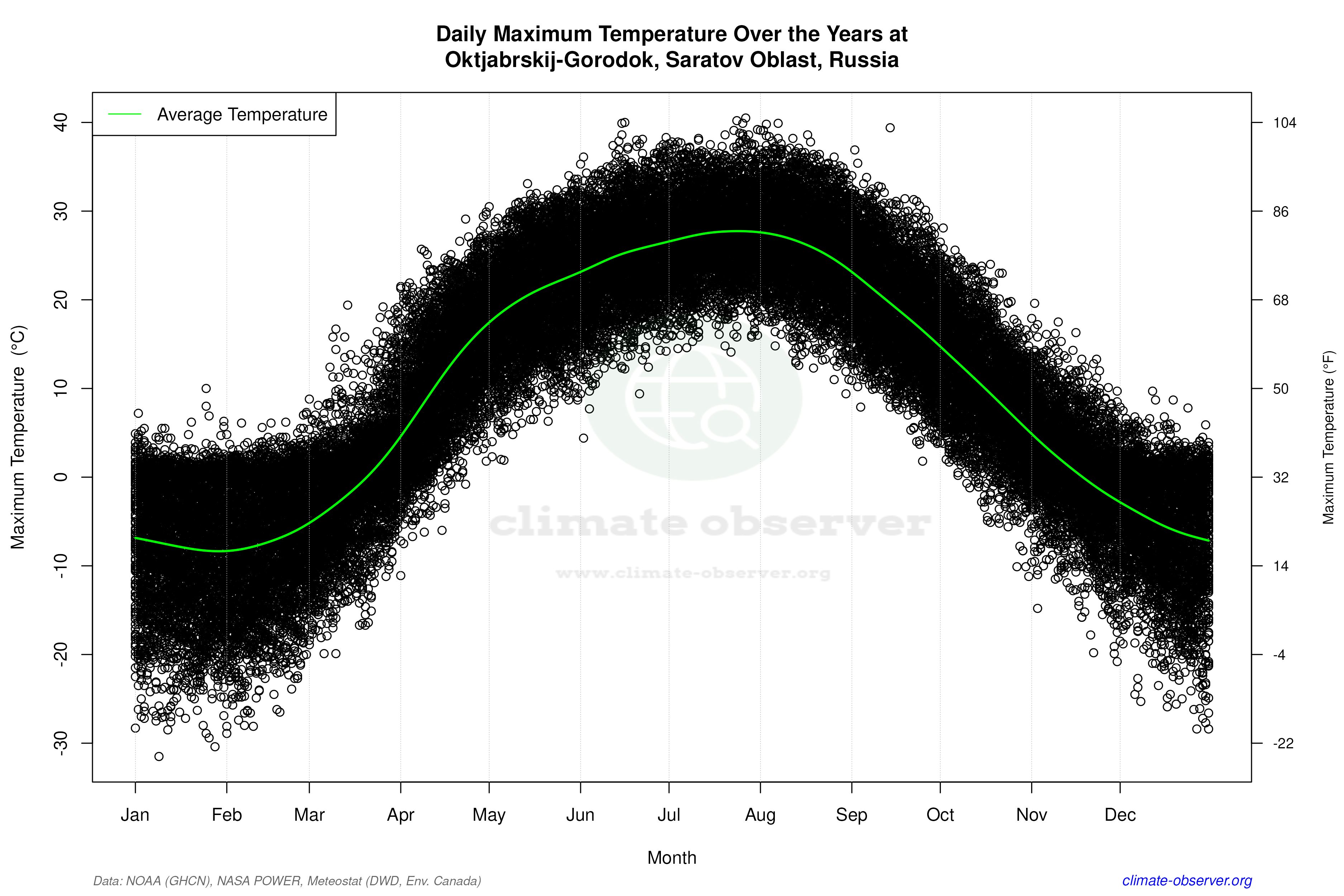
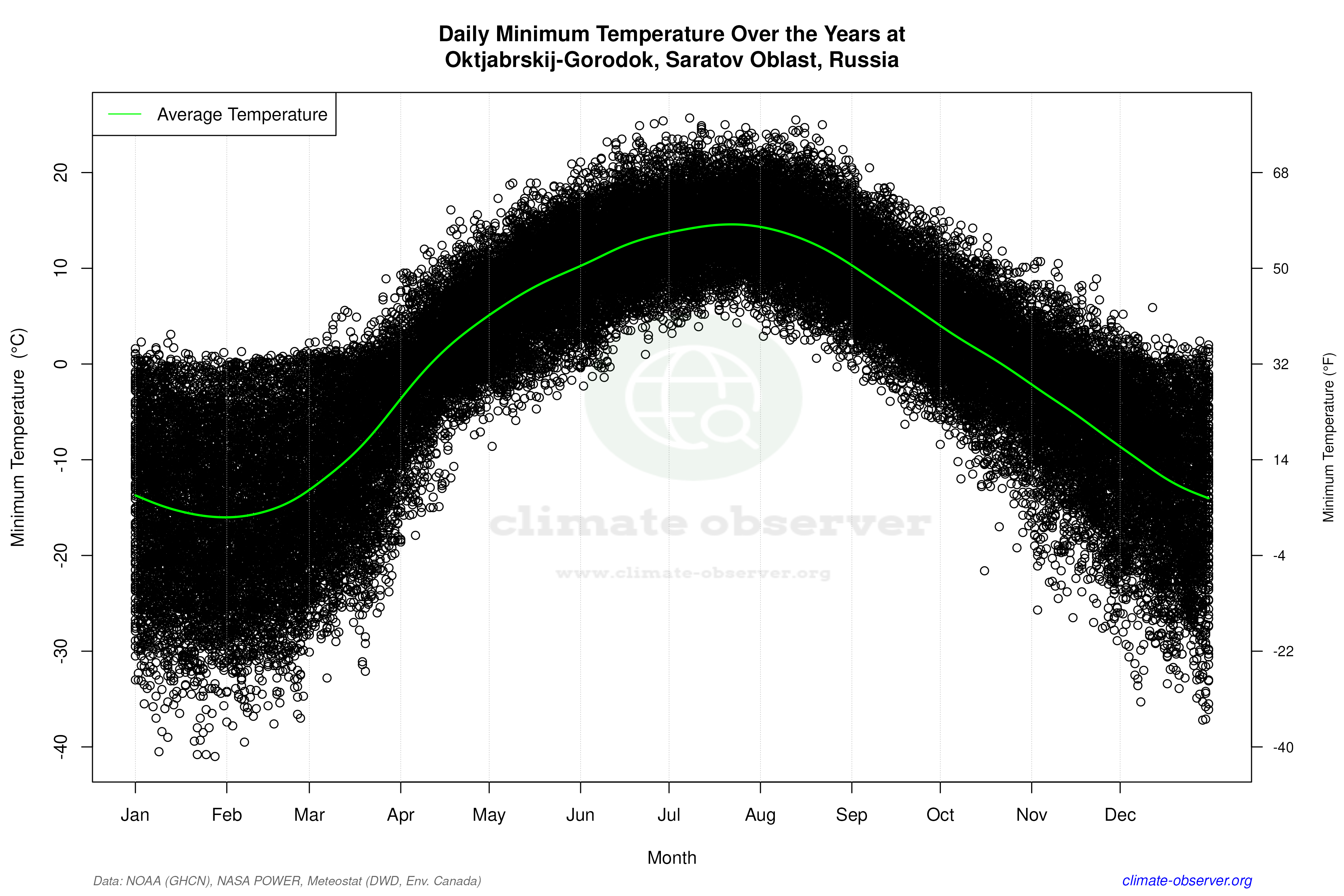
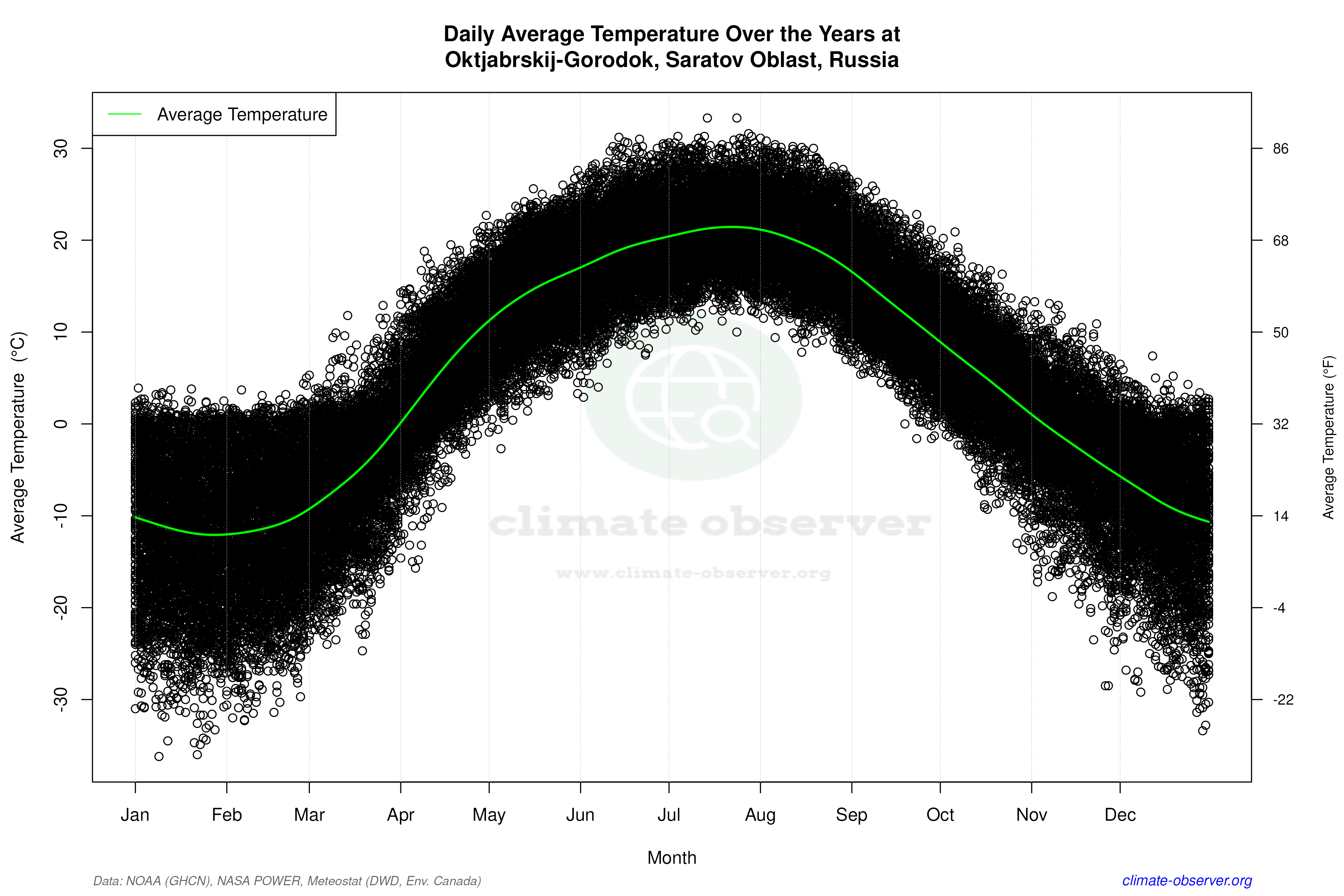
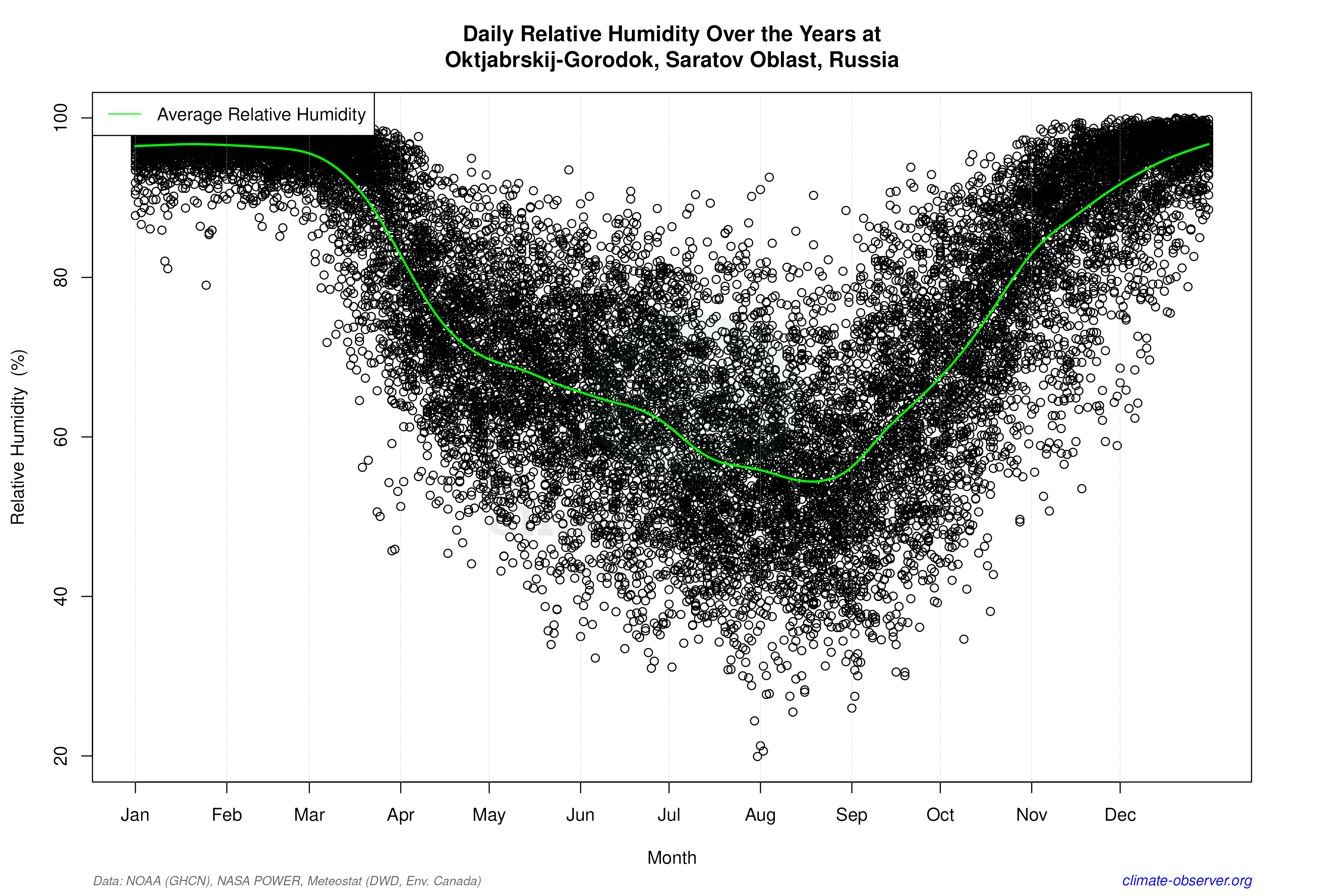

Average Max Temperature Throughout Year | 1 of 5


