Climate for Station: Kimberley, Northern Cape, South Africa
Loading live weather...
Climate Analysis & Overview
Kimberley, South Africa, is experiencing a nuanced climate shift with a slight warming over the long term, contrasting with recent cooling trends. Precipitation patterns have become more evenly distributed, indicating a shift in local weather dynamics.
Subtle Long-term Warming
Kimberley, located in the Northern Cape, South Africa, falls under the BSh category in the Köppen climate classification, indicating a semi-arid climate. Over the all-time period, Kimberley's temperatures have shown a slight warming trend, with highs rising by 0.50°C (0.90°F). This warming trend is subtle but noteworthy, given the region's typically hot and dry conditions. The all-time low temperatures, however, have experienced a slight cooling of 0.23°C (0.41°F), suggesting a complex interaction of climatic factors at play.
Recent Cooling Trends
In contrast to the long-term warming, the past decade has seen a cooling trend. High temperatures have decreased by 0.81°C (1.46°F), while low temperatures have fallen by 0.87°C (1.57°F). This recent cooling may be influenced by regional climatic variations or changes in atmospheric circulation patterns. Such a cooling trend is unusual for a semi-arid region and may impact local agriculture and water resources, which are typically adapted to warmer conditions.
Precipitation Patterns Evolving
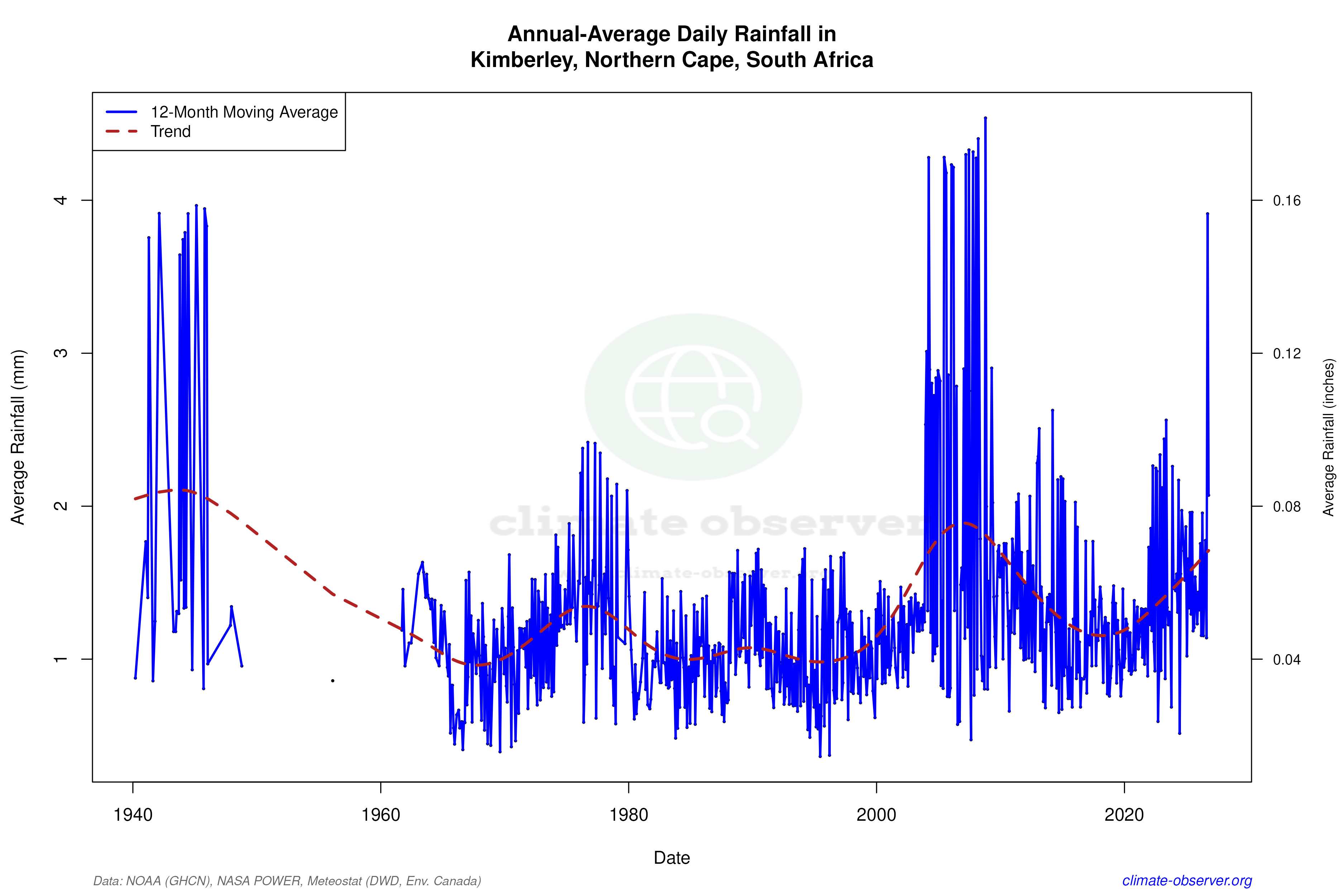
The Precipitation Concentration Index (PCI) for Kimberley has decreased from a baseline of 17.7 to a current value of 15.3. This indicates that rainfall is now more evenly distributed throughout the year, as opposed to being concentrated in fewer, intense events. Such a shift can have significant implications for water management and agricultural planning in the region, as more consistent rainfall can enhance water availability and reduce the risk of droughts.
Record Extremes
Kimberley has experienced some extreme temperatures over the years, with a record high of 45.7°C (114.3°F) and a record low of -17.8°C (-0.04°F). These extremes highlight the variability and intensity of the region's climate, which can pose challenges for infrastructure and human health. Understanding these extremes is crucial for developing adaptive strategies to mitigate their impacts.
Regional Climate Context
South Africa has been actively pursuing climate goals to reduce greenhouse gas emissions and adapt to changing weather patterns. Kimberley's climate data provides valuable insights into the broader regional trends, helping to inform policy and adaptation measures. Recent weather events, such as prolonged droughts or unexpected cold spells, underscore the importance of continuous monitoring and research to understand and anticipate future climatic shifts.
Station Statistics
10-Year Trend
High: -1.20 °F/decade
Low: -2.00 °F/decade
Rain: +0.025 in/decade
25-Year Trend
High: +1.56 °F/decade
Low: -0.20 °F/decade
Rain: -0.007 in/decade
50-Year Trend
High: +1.31 °F/decade
Low: -0.19 °F/decade
Rain: +0.004 in/decade
All-Time Trend
High: +0.77 °F/decade
Low: -0.41 °F/decade
Rain: +0.001 in/decade
Percentage Above-Average Days
Last 12 Months: 55.6%
This Year: 62.7%
Precipitation Concentration Index (PCI) ℹ️
Last 12 Months: 33.9
Historical Average: 19.1
Percentile Rank of Last 12 Months ℹ️
High: 84th percentile
Low: 40th percentile
Rain: 87th percentile
Change in Variance ℹ️
High: -8.7%
Low: +6.5%
Intraday: +12.3%
Data Coverage
81.5%
First Year of Data
1941
Station Location
Historical Weather Records
| Max High | Avg High | Min High | Max Avg | Avg Avg | Min Avg | Max Low | Avg Low | Min Low | Max Precipitation | Avg Precipitation | Max Snow | Avg Snow | |
|---|---|---|---|---|---|---|---|---|---|---|---|---|---|
| Record | 114.26 °F | — | 39.92 °F | 100.22 °F | — | 30.92 °F | 98.06 °F | — | -0.04 °F | 15.18 in | — | — | — |
| January | 110.66 °F | 91.42 °F | 62.96 °F | 96.44 °F | 77.54 °F | 59.00 °F | 82.22 °F | 63.53 °F | 42.26 °F | 2.93 in | 0.09 in | — | — |
| February | 110.48 °F | 89.17 °F | 61.16 °F | 92.84 °F | 75.85 °F | 60.26 °F | 78.98 °F | 62.83 °F | 41.72 °F | 3.23 in | 0.10 in | — | — |
| March | 103.46 °F | 85.22 °F | 60.26 °F | 90.50 °F | 71.78 °F | 48.74 °F | 75.74 °F | 58.75 °F | 35.60 °F | 2.99 in | 0.09 in | — | — |
| April | 106.52 °F | 78.23 °F | 49.64 °F | 84.02 °F | 64.44 °F | 43.88 °F | 73.40 °F | 50.96 °F | 26.96 °F | 2.26 in | 0.07 in | — | — |
| May | 87.98 °F | 72.17 °F | 43.88 °F | 75.74 °F | 57.30 °F | 37.04 °F | 81.68 °F | 43.02 °F | 21.74 °F | 2.13 in | 0.02 in | — | — |
| June | 84.38 °F | 66.64 °F | 39.92 °F | 67.82 °F | 51.02 °F | 32.36 °F | 79.88 °F | 36.63 °F | -0.04 °F | 2.15 in | 0.01 in | — | — |
| July | 84.92 °F | 67.13 °F | 43.16 °F | 67.10 °F | 50.89 °F | 30.92 °F | 81.50 °F | 36.11 °F | 14.18 °F | 0.95 in | 0.01 in | — | — |
| August | 90.14 °F | 71.95 °F | 47.48 °F | 75.38 °F | 55.94 °F | 33.80 °F | 83.66 °F | 40.06 °F | 16.70 °F | 2.28 in | 0.01 in | — | — |
| September | 98.60 °F | 79.72 °F | 47.66 °F | 82.58 °F | 63.55 °F | 40.46 °F | 98.06 °F | 47.15 °F | 22.10 °F | 15.18 in | 0.03 in | — | — |
| October | 108.14 °F | 84.19 °F | 50.90 °F | 88.88 °F | 69.20 °F | 48.20 °F | 74.84 °F | 53.17 °F | 30.74 °F | 2.34 in | 0.05 in | — | — |
| November | 111.20 °F | 87.76 °F | 53.96 °F | 91.58 °F | 72.98 °F | 49.28 °F | 74.48 °F | 57.57 °F | 34.70 °F | 2.36 in | 0.06 in | — | — |
| December | 114.26 °F | 90.75 °F | 62.60 °F | 100.22 °F | 76.27 °F | 57.92 °F | 77.36 °F | 61.15 °F | 38.84 °F | 2.60 in | 0.08 in | — | — |
Data Visualisations
Remove WatermarksCurrent Year Climate Trends vs Historical
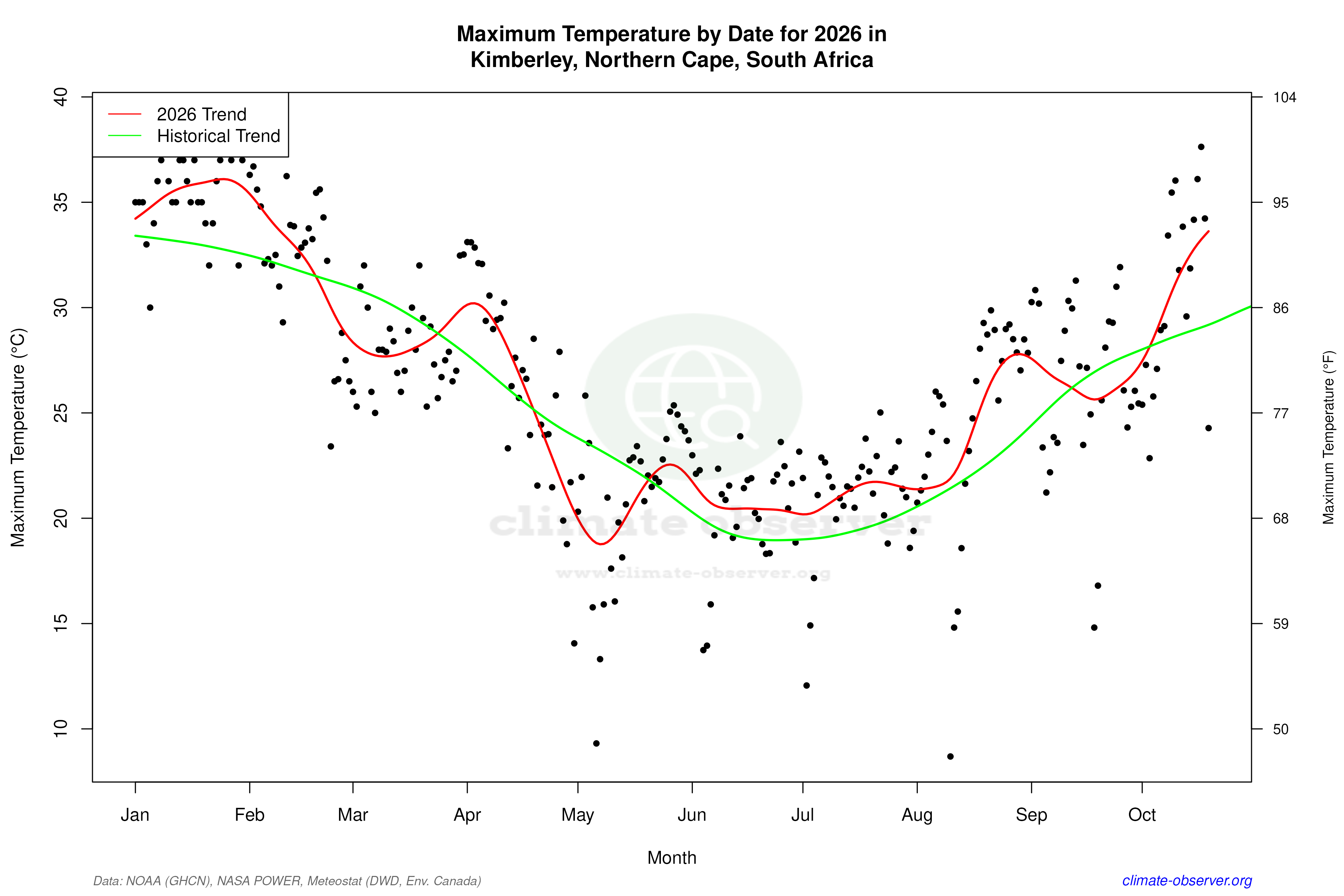
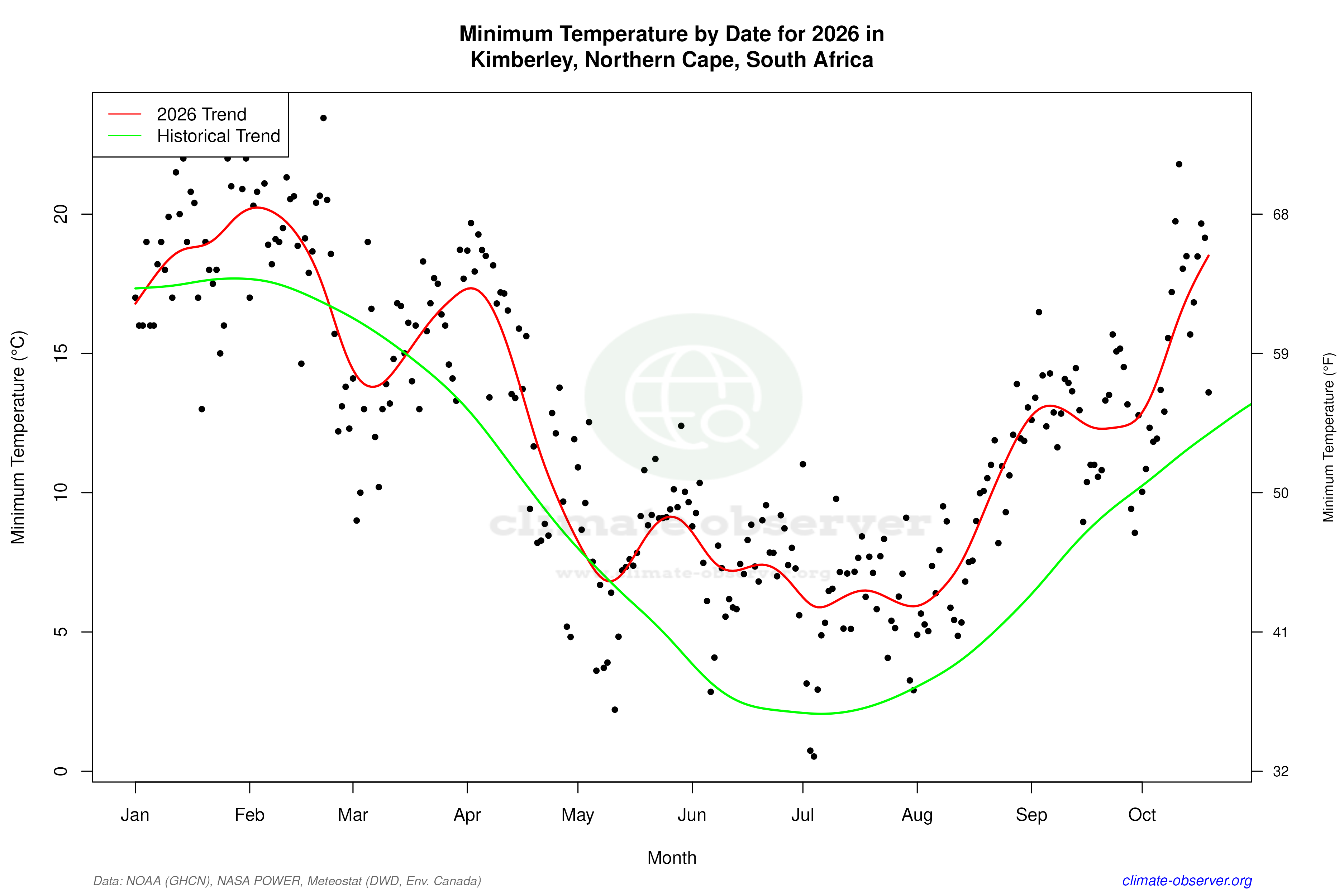
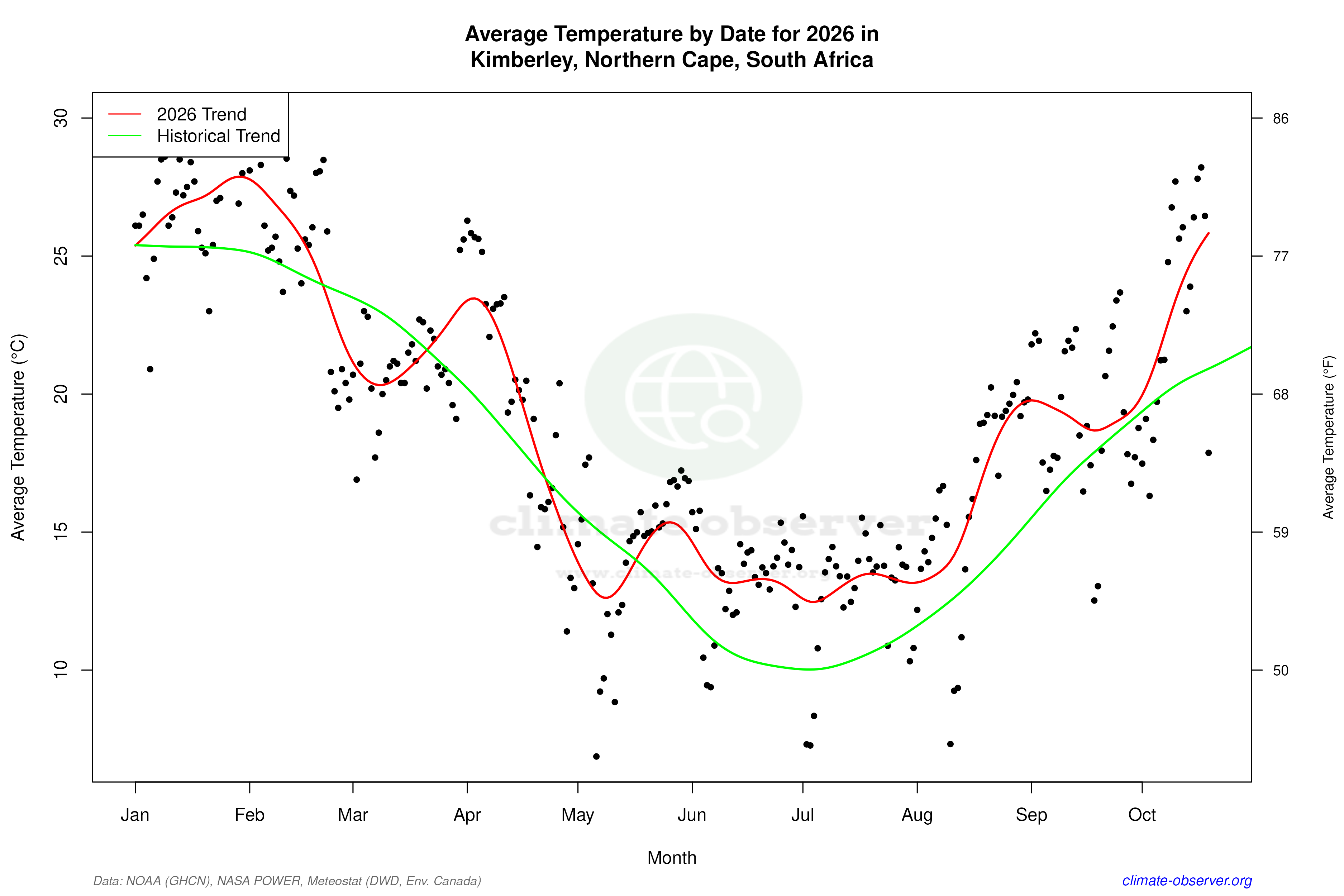
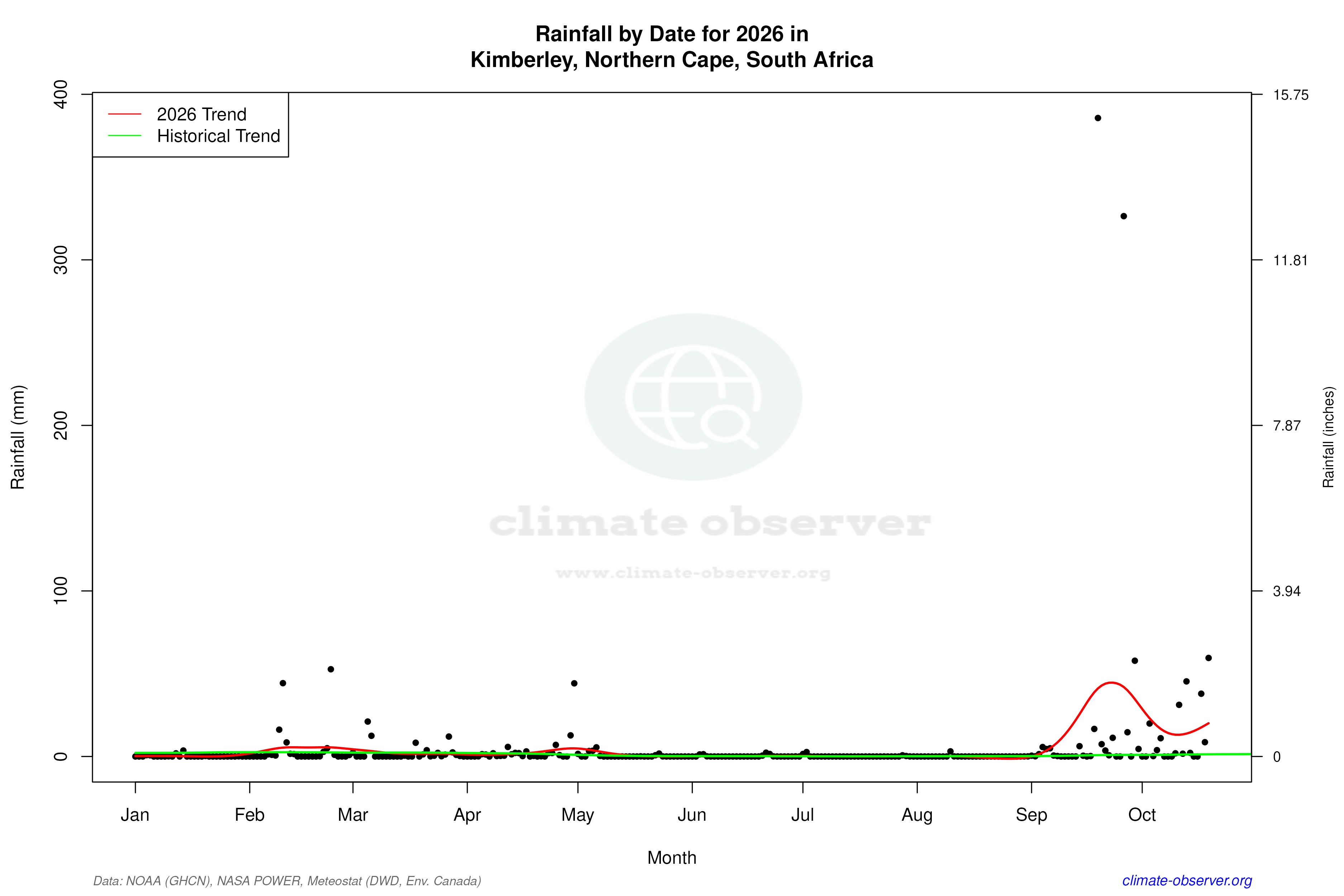
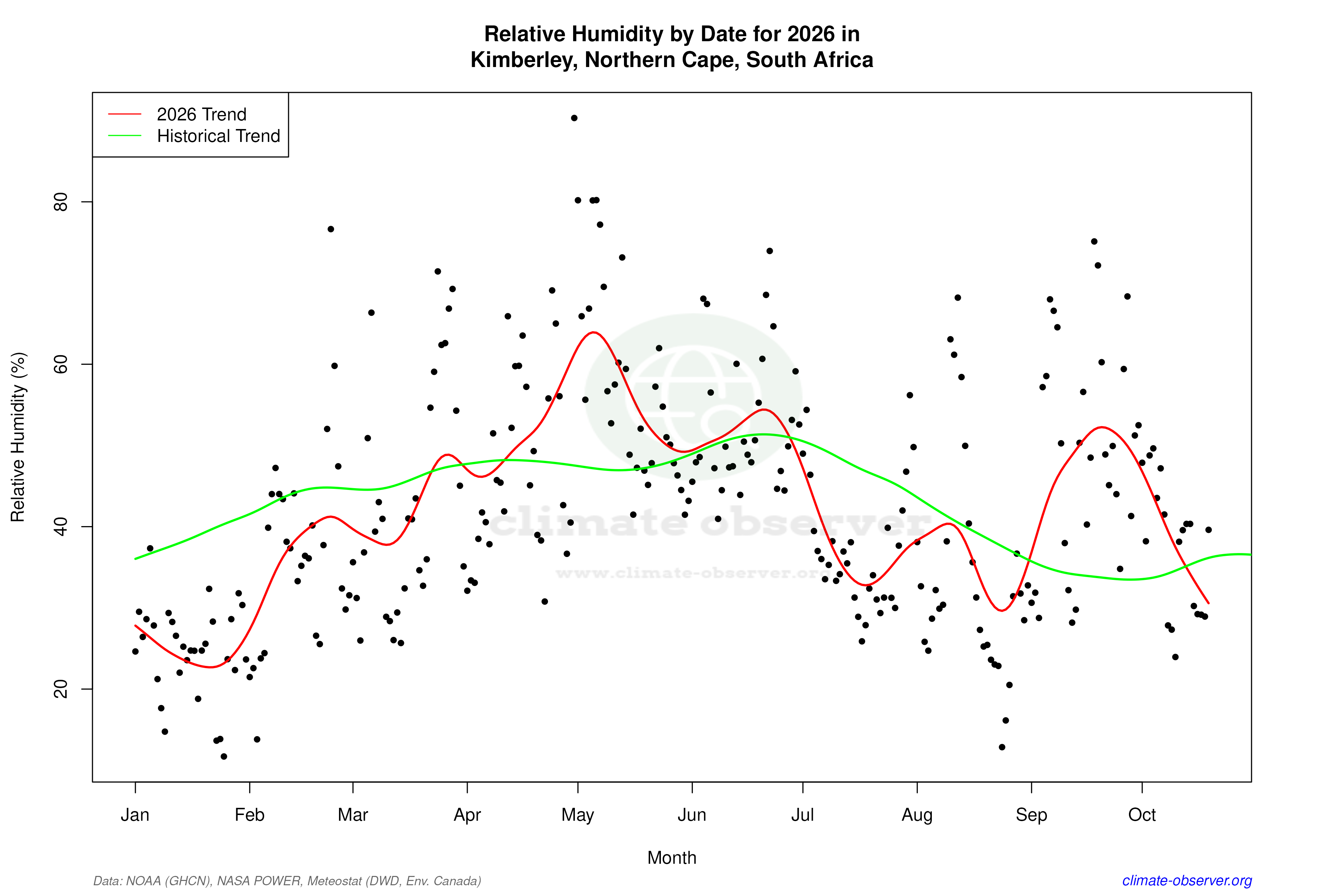

Max Temperature this Year | 1 of 6
Climate 12-Month Moving Averages
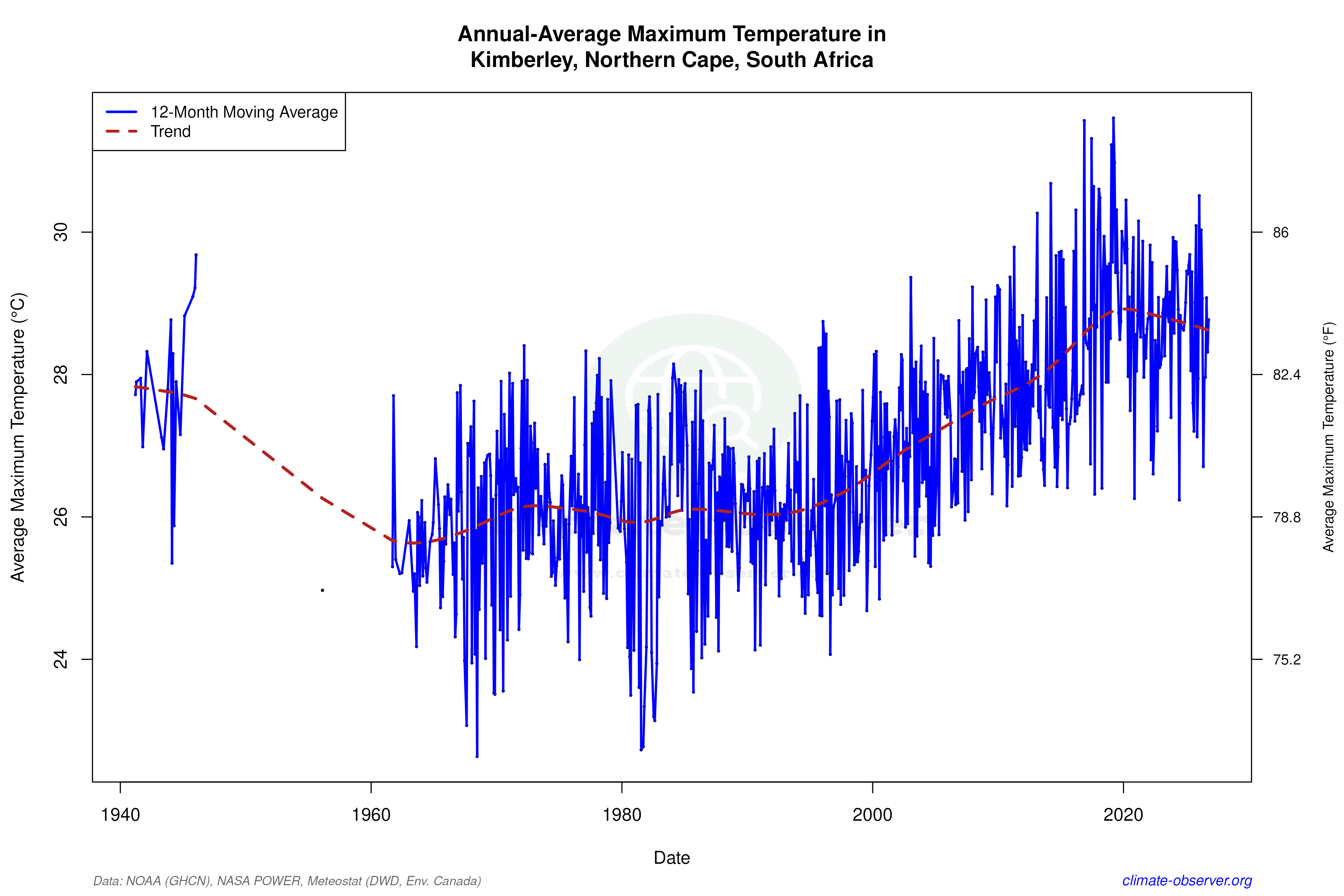
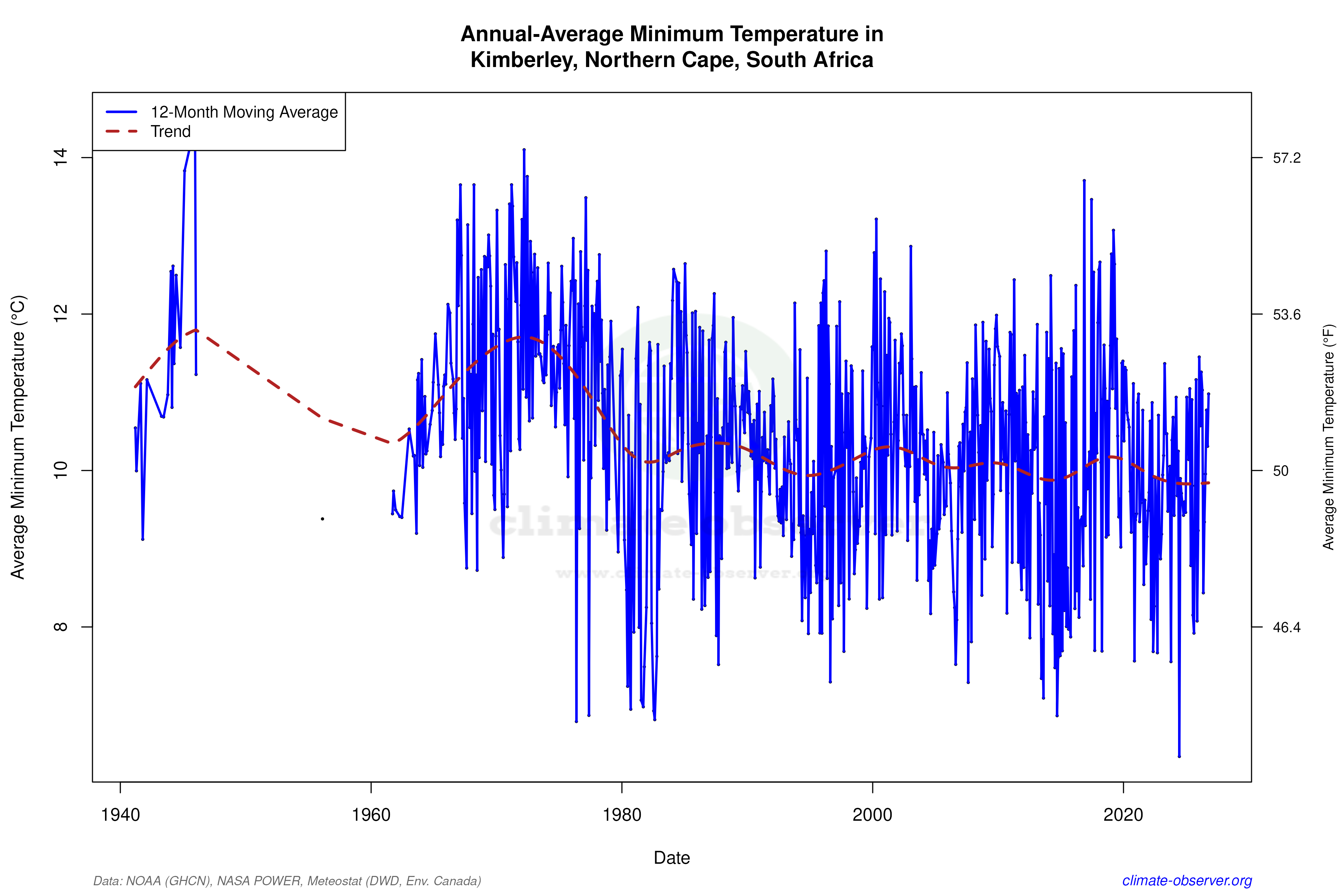
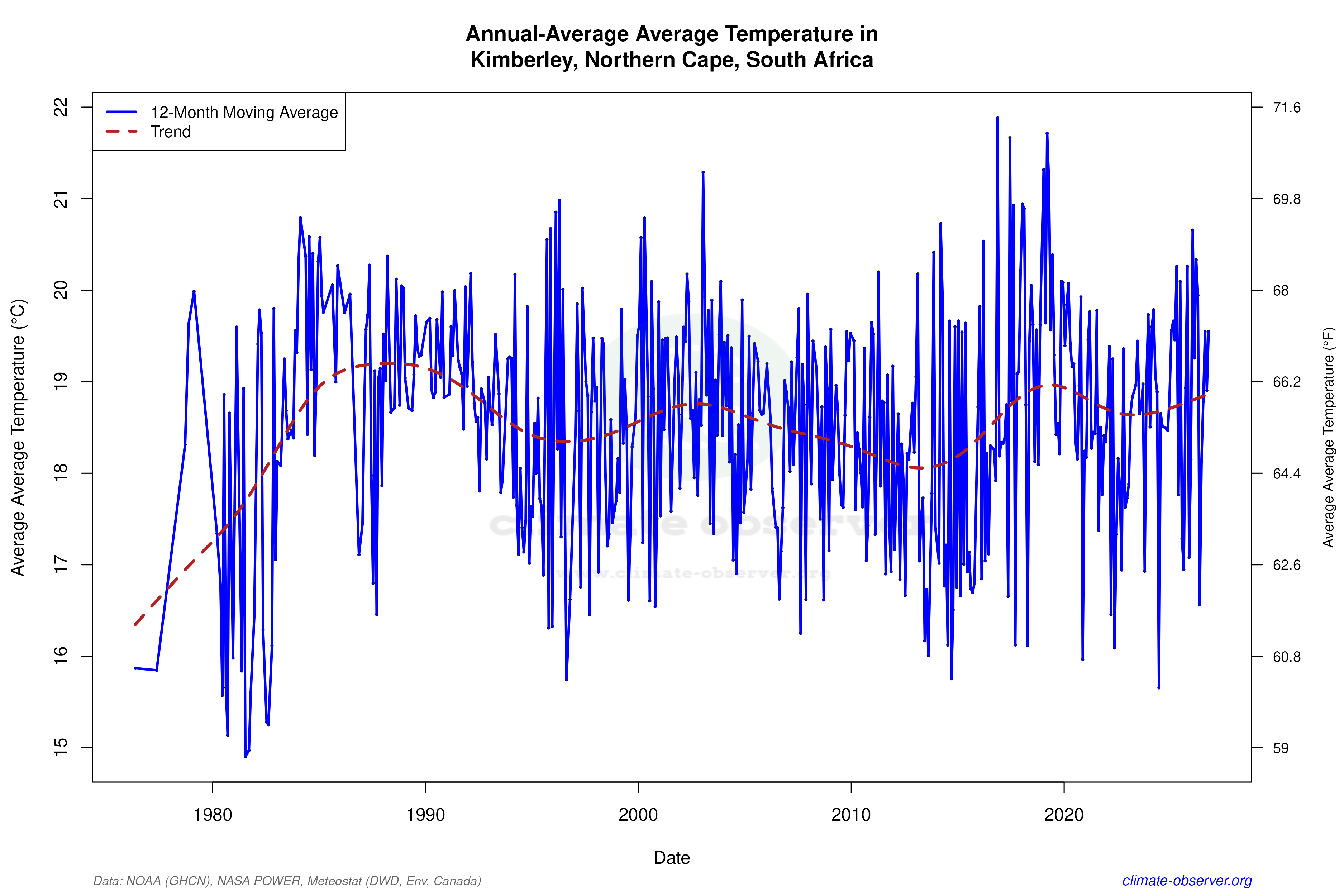
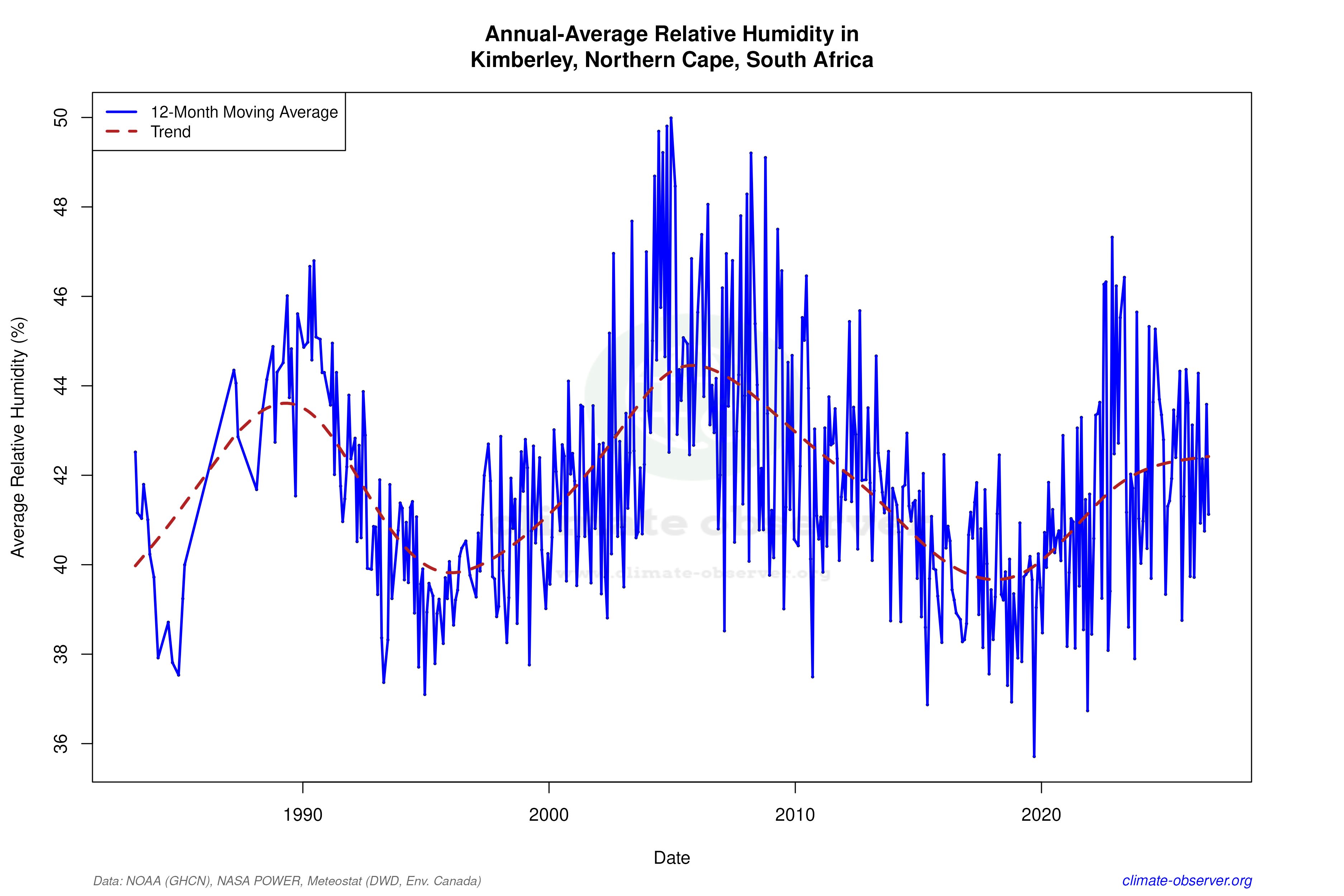

Max Temperature 12-Month MA | 1 of 6
Daily Data Points and Averages Throughout the Year
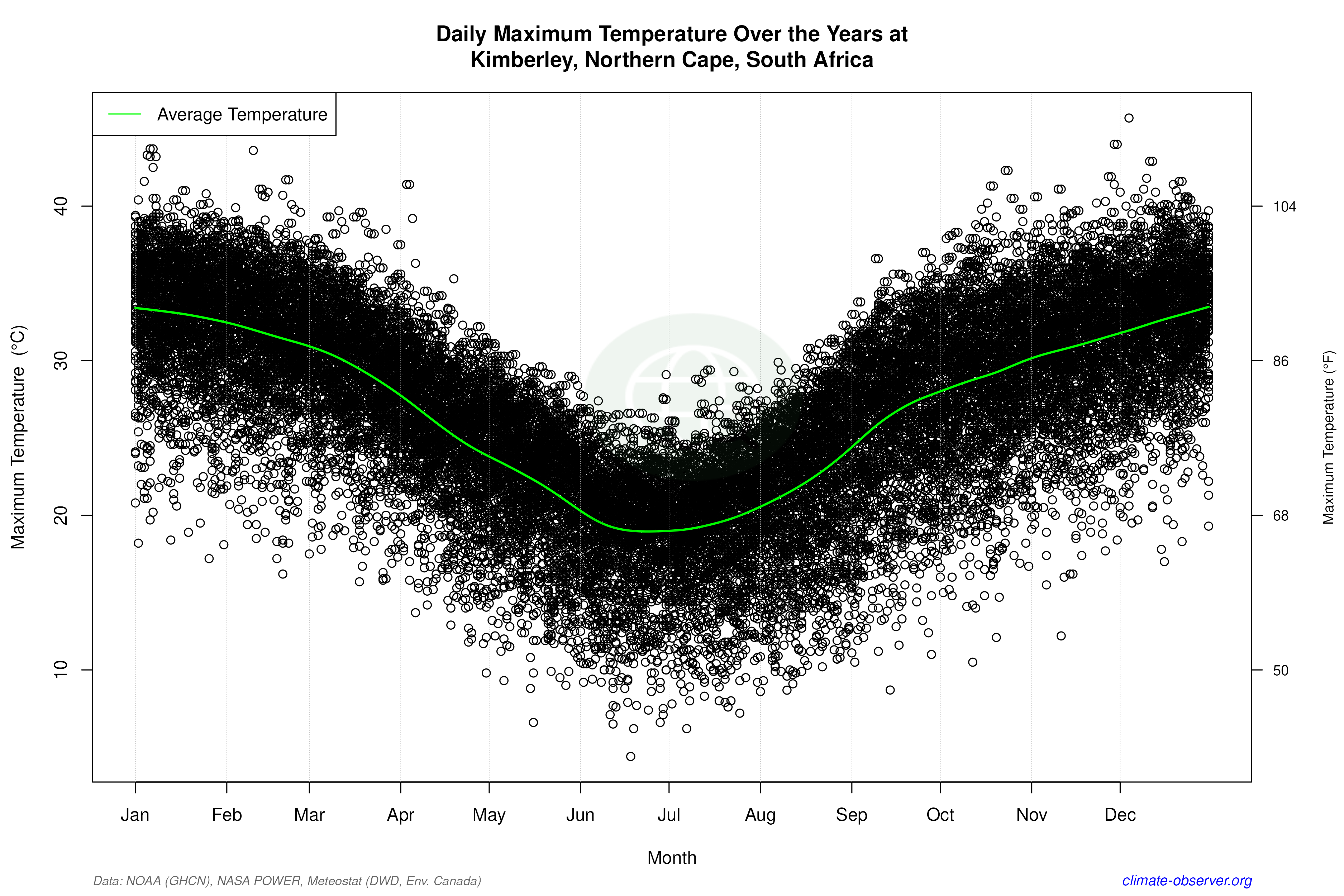
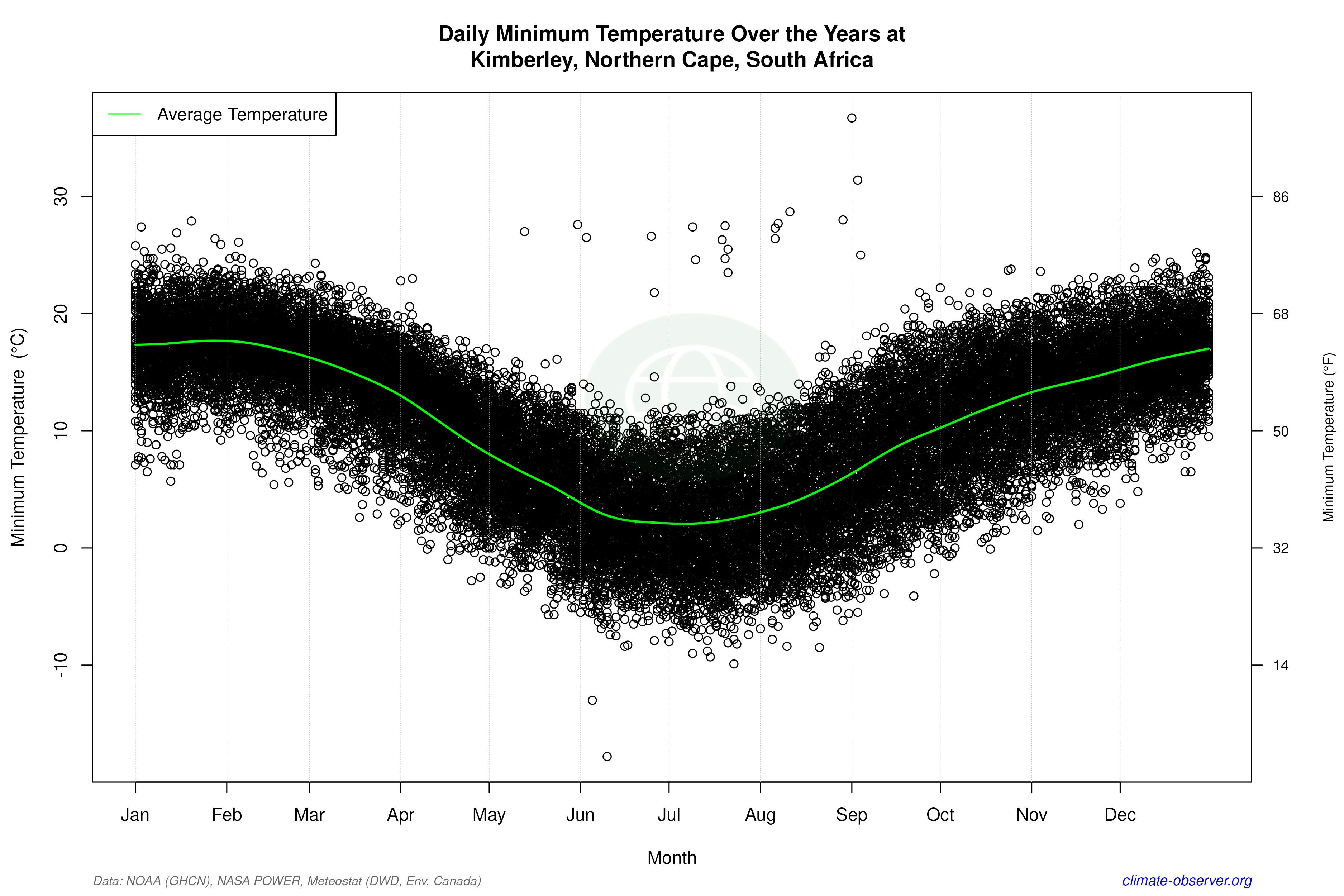
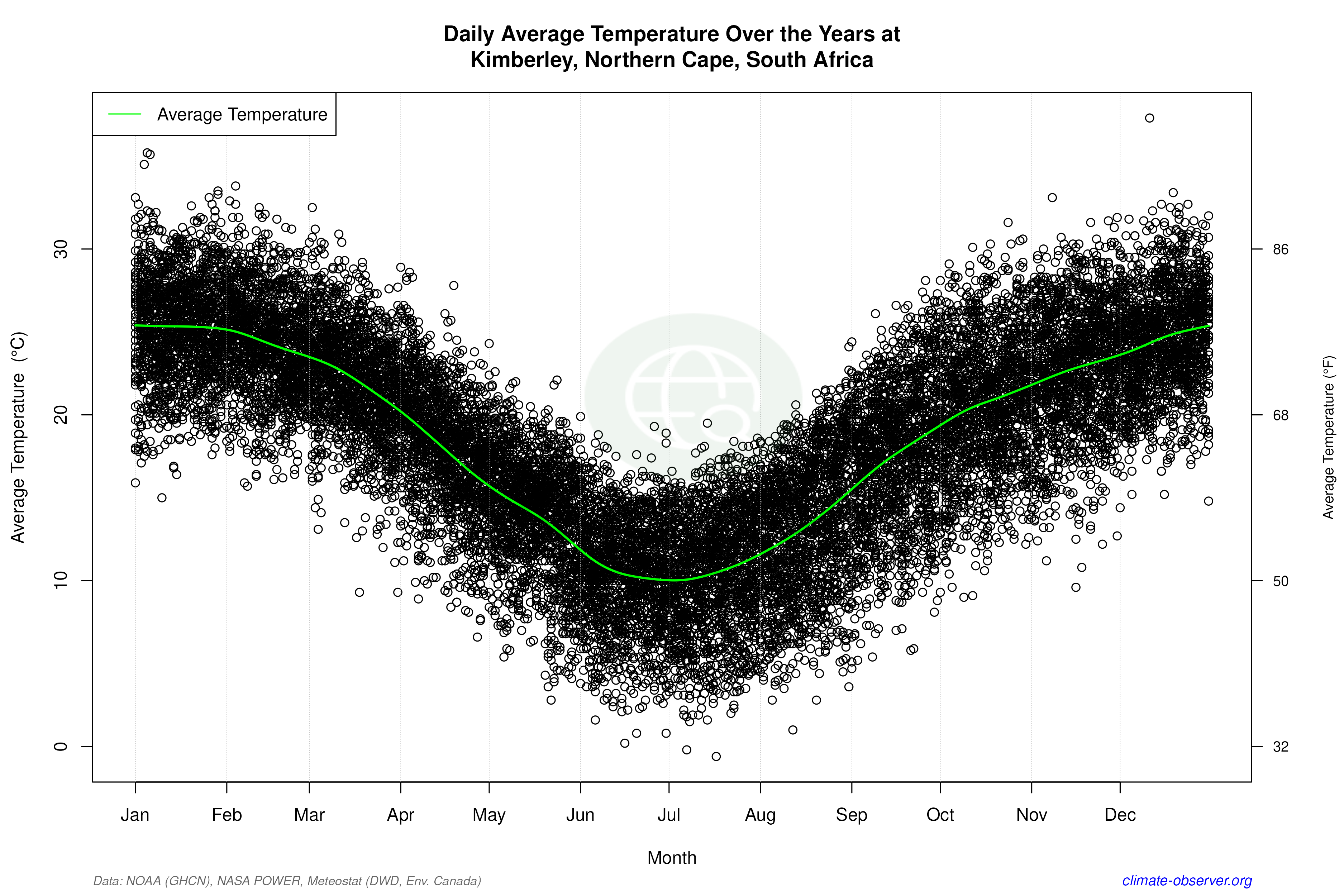
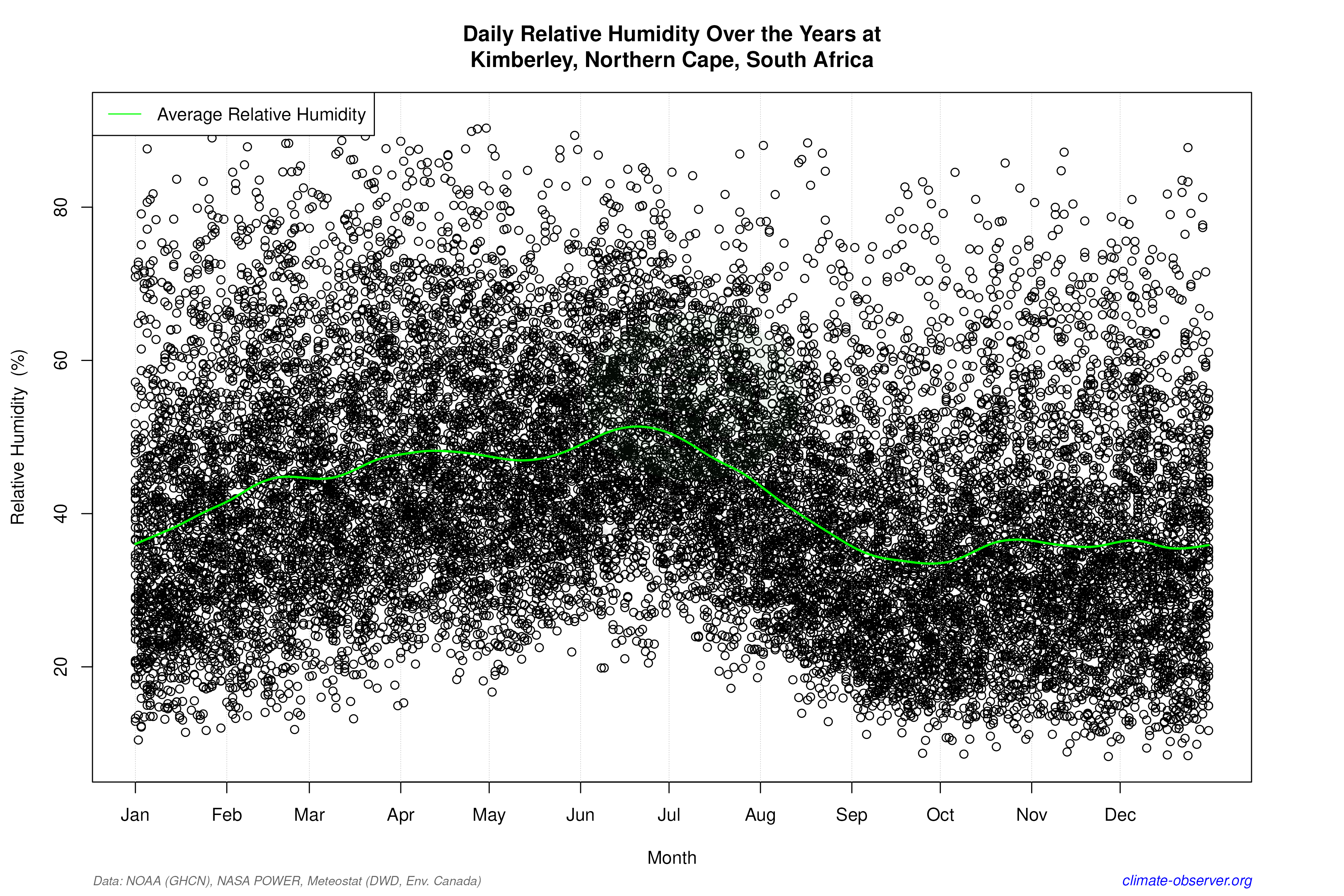

Average Max Temperature Throughout Year | 1 of 5


