Climate for Station: Aleppo, Aleppo Governorate, Syria
Loading live weather...
Climate Analysis & Overview
Aleppo is experiencing a gradual warming trend, with notable increases in both high and low temperatures over the past decade. The precipitation pattern shows a slight increase in concentration, indicating more intense rainfall events. These changes align with Syria's broader climate challenges and goals.
Desert Heat Dynamics
Aleppo, located at 36.18°N, 37.22°E, experiences a hot desert climate (BWh) according to the Köppen classification. The city's climate is heavily influenced by its geographical position, surrounded by arid landscapes and distant from significant water bodies, which contributes to its extreme temperature variations. The all-time temperature trends indicate a warming, with high temperatures rising by 0.17°C (0.31°F) and lows increasing by 0.19°C (0.34°F). This is consistent with global warming patterns observed across the region, where heatwaves are becoming more frequent and intense.
Rising Temperature Trends
Over the past decade, Aleppo has seen a more pronounced warming trend in its low temperatures, with an increase of 0.39°C (0.70°F). Highs have risen by 0.08°C (0.14°F) during the same period. These trends suggest that nights are warming faster than days, a pattern that could affect local agriculture and water resources. The record high temperature in Aleppo stands at 48.3°C (118.9°F), while the record low is -11.3°C (11.7°F). These extremes highlight the city's vulnerability to both heatwaves and cold snaps.
Precipitation Patterns and Implications
The Precipitation Concentration Index (PCI) for Aleppo has seen a marginal increase from a baseline of 17.37 to a current value of 17.50. The PCI measures how rainfall is distributed over time; a higher value indicates more precipitation falling in fewer events. This slight increase suggests that while the overall amount of rainfall may not have changed significantly, it is now more likely to occur in intense bursts. This can lead to challenges such as flash flooding and soil erosion, complicating efforts to manage water resources effectively.
Regional Climate Context
Syria's climate goals include adapting to these changing patterns by improving water management and increasing the resilience of agricultural systems. Recent weather events, such as prolonged droughts and sudden heavy rains, have underscored the need for such measures. The warming trends in Aleppo, particularly the rapid rise in nighttime temperatures, could exacerbate these challenges by increasing evaporation rates and reducing water availability.
Impacts on Local Life
The warming climate in Aleppo has far-reaching implications for its residents. Increased temperatures, especially at night, can affect energy consumption patterns as the demand for cooling rises. The shift in precipitation patterns may also impact agricultural productivity, which is a crucial component of the local economy. These factors necessitate adaptive strategies to mitigate the adverse effects of climate change on both urban and rural communities in Aleppo.
Station Statistics
10-Year Trend
High: +1.21 °C/decade
Low: +1.41 °C/decade
Rain: -0.47 mm/decade
25-Year Trend
High: +0.76 °C/decade
Low: +0.68 °C/decade
Rain: +0.07 mm/decade
50-Year Trend
High: +0.23 °C/decade
Low: +0.21 °C/decade
Rain: +0.11 mm/decade
All-Time Trend
High: +0.12 °C/decade
Low: +0.14 °C/decade
Rain: +0.04 mm/decade
Percentage Above-Average Days
Last 12 Months: 55.9%
This Year: 63.0%
Precipitation Concentration Index (PCI) ℹ️
Last 12 Months: 23.9
Historical Average: 17.7
Percentile Rank of Last 12 Months ℹ️
High: 75th percentile
Low: 73rd percentile
Rain: 49th percentile
Change in Variance ℹ️
High: -0.3%
Low: -5.6%
Intraday: +14.2%
Data Coverage
92.6%
First Year of Data
1976
Station Location
Historical Weather Records
| Max High | Avg High | Min High | Max Avg | Avg Avg | Min Avg | Max Low | Avg Low | Min Low | Max Precipitation | Avg Precipitation | Max Snow | Avg Snow | |
|---|---|---|---|---|---|---|---|---|---|---|---|---|---|
| Record | 48.3 °C | — | -1.3 °C | 38.0 °C | — | -5.3 °C | 31.0 °C | — | -11.3 °C | 184.3 mm | — | — | — |
| January | 22.2 °C | 10.8 °C | -1.3 °C | 14.8 °C | 6.0 °C | -5.3 °C | 10.8 °C | 1.8 °C | -11.3 °C | 59.8 mm | 1.9 mm | — | — |
| February | 24.9 °C | 12.9 °C | 0.0 °C | 17.8 °C | 7.7 °C | -2.8 °C | 11.5 °C | 2.7 °C | -8.3 °C | 39.7 mm | 1.6 mm | — | — |
| March | 30.0 °C | 17.3 °C | 4.5 °C | 26.2 °C | 11.4 °C | -1.8 °C | 14.0 °C | 5.4 °C | -7.5 °C | 79.3 mm | 1.3 mm | — | — |
| April | 38.4 °C | 23.0 °C | 9.4 °C | 29.3 °C | 16.4 °C | 3.7 °C | 24.4 °C | 9.4 °C | -4.0 °C | 49.9 mm | 1.0 mm | — | — |
| May | 42.0 °C | 29.0 °C | 14.8 °C | 34.5 °C | 21.8 °C | 11.8 °C | 25.5 °C | 13.9 °C | 2.4 °C | 37.0 mm | 0.5 mm | — | — |
| June | 44.3 °C | 33.9 °C | 19.5 °C | 38.0 °C | 26.4 °C | 15.2 °C | 28.2 °C | 18.5 °C | 10.2 °C | 12.0 mm | 0.1 mm | — | — |
| July | 45.7 °C | 36.7 °C | 27.0 °C | 36.9 °C | 29.1 °C | 22.0 °C | 29.9 °C | 21.4 °C | 11.9 °C | 4.3 mm | 0.0 mm | — | — |
| August | 47.4 °C | 36.7 °C | 27.3 °C | 37.3 °C | 29.0 °C | 22.0 °C | 31.0 °C | 21.4 °C | 11.6 °C | 15.5 mm | 0.1 mm | — | — |
| September | 48.3 °C | 33.4 °C | 23.1 °C | 34.7 °C | 25.8 °C | 17.6 °C | 26.5 °C | 18.1 °C | 8.0 °C | 174.7 mm | 0.3 mm | — | — |
| October | 38.1 °C | 27.3 °C | 13.3 °C | 30.0 °C | 20.2 °C | 8.5 °C | 24.1 °C | 13.2 °C | 1.0 °C | 48.5 mm | 0.7 mm | — | — |
| November | 29.7 °C | 18.9 °C | 5.2 °C | 23.6 °C | 12.7 °C | 1.2 °C | 17.4 °C | 6.9 °C | -5.0 °C | 32.4 mm | 1.1 mm | — | — |
| December | 24.9 °C | 12.4 °C | 0.6 °C | 15.6 °C | 7.5 °C | -1.7 °C | 11.3 °C | 3.3 °C | -10.8 °C | 184.3 mm | 1.8 mm | — | — |
Data Visualisations
Remove WatermarksCurrent Year Climate Trends vs Historical
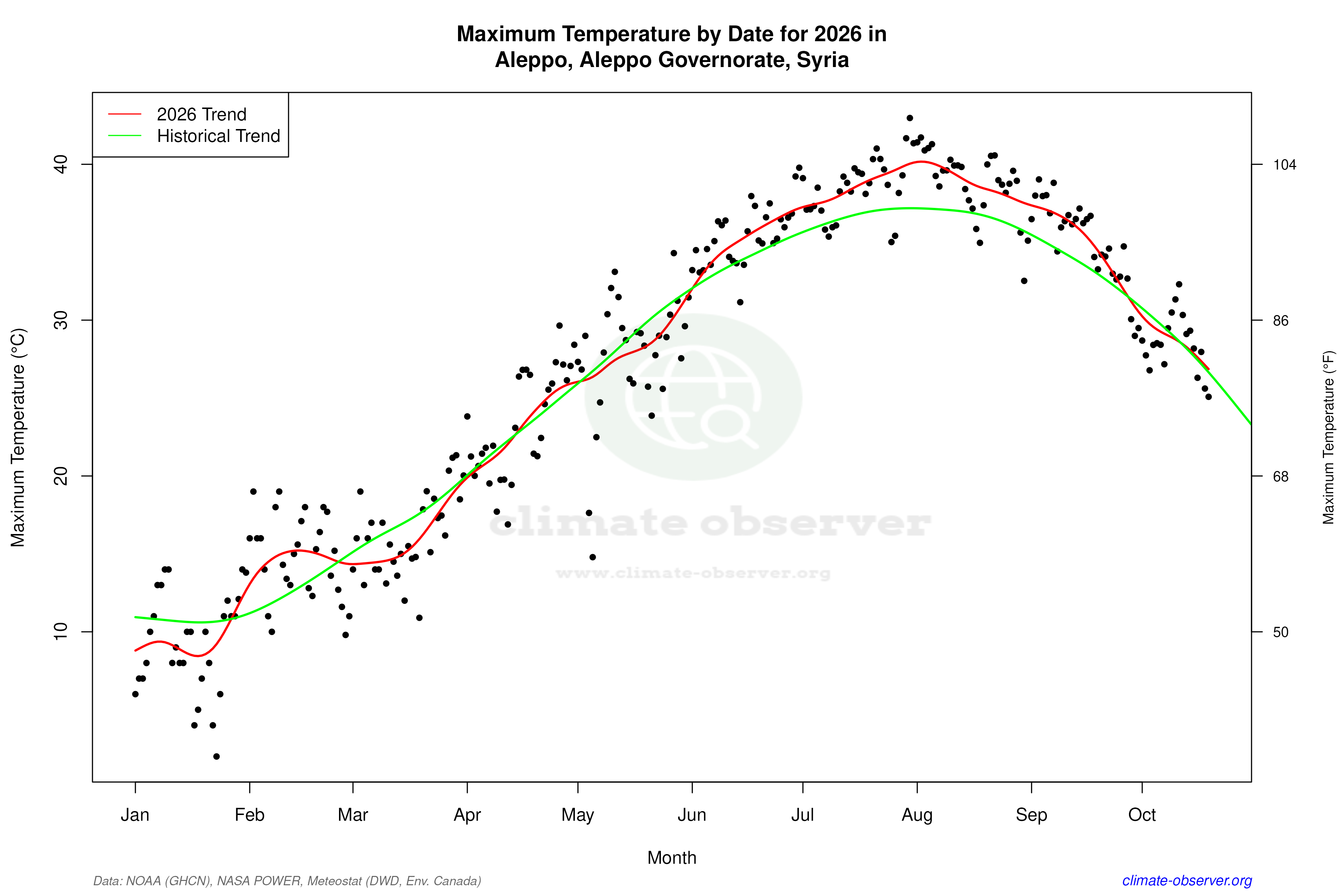
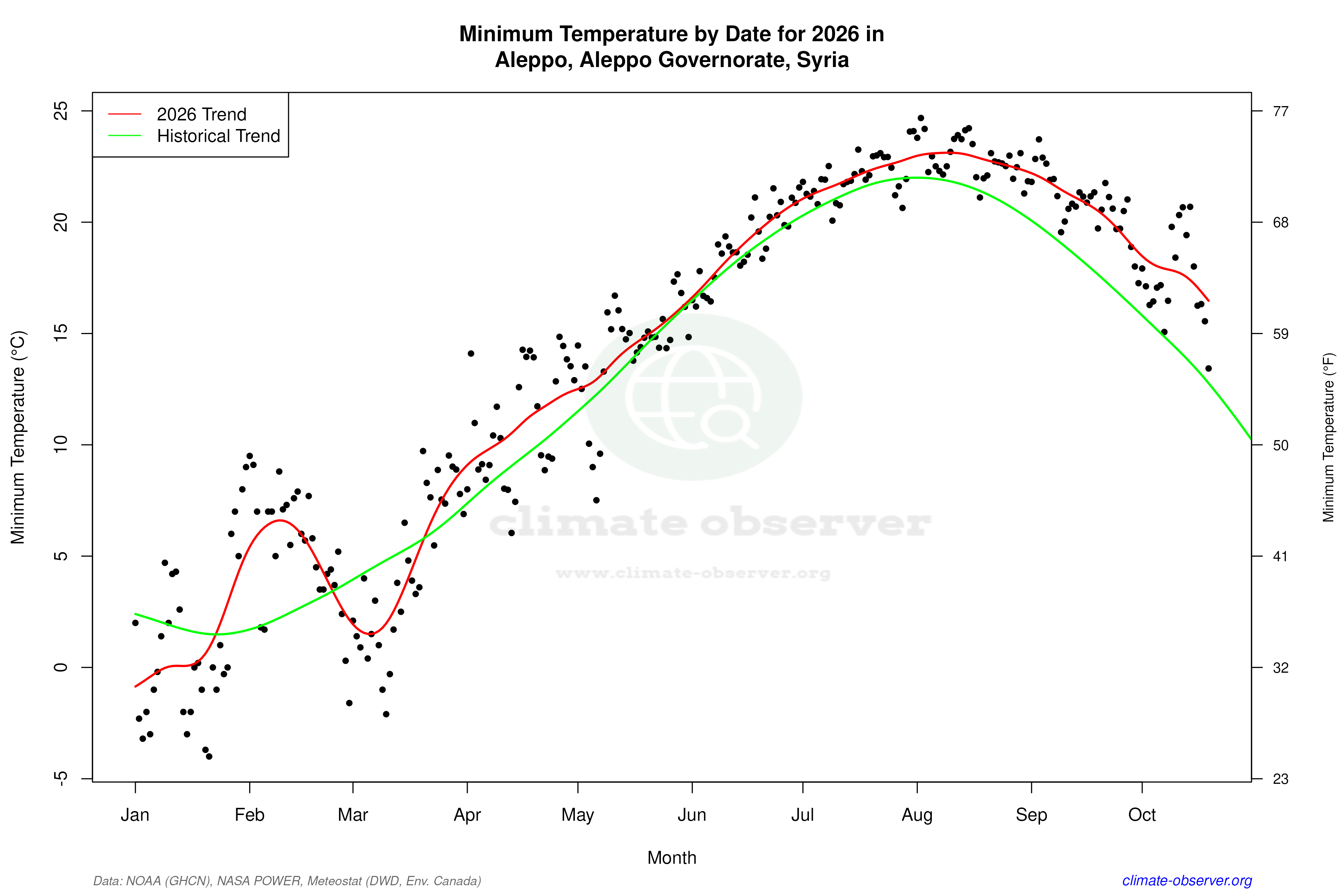
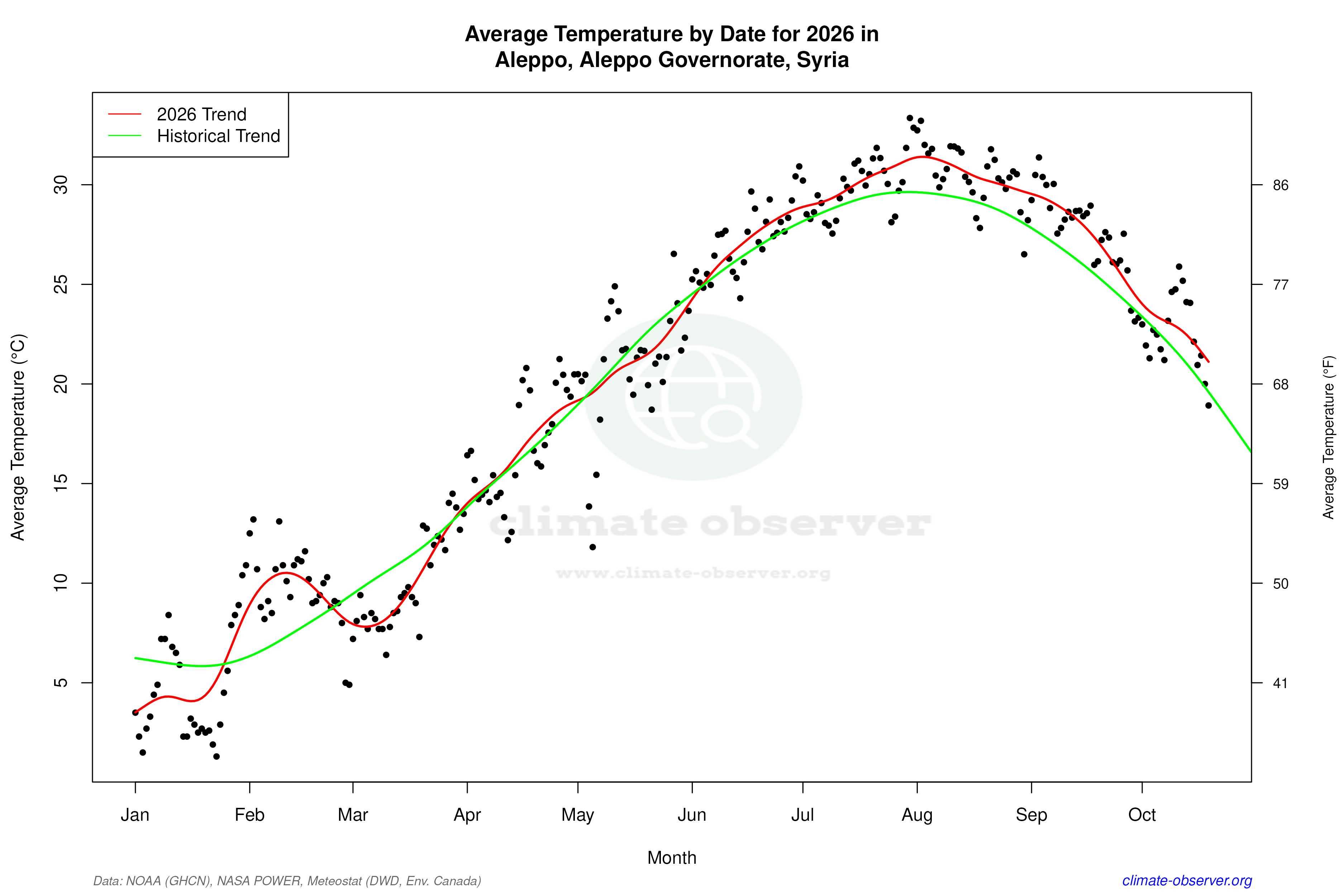
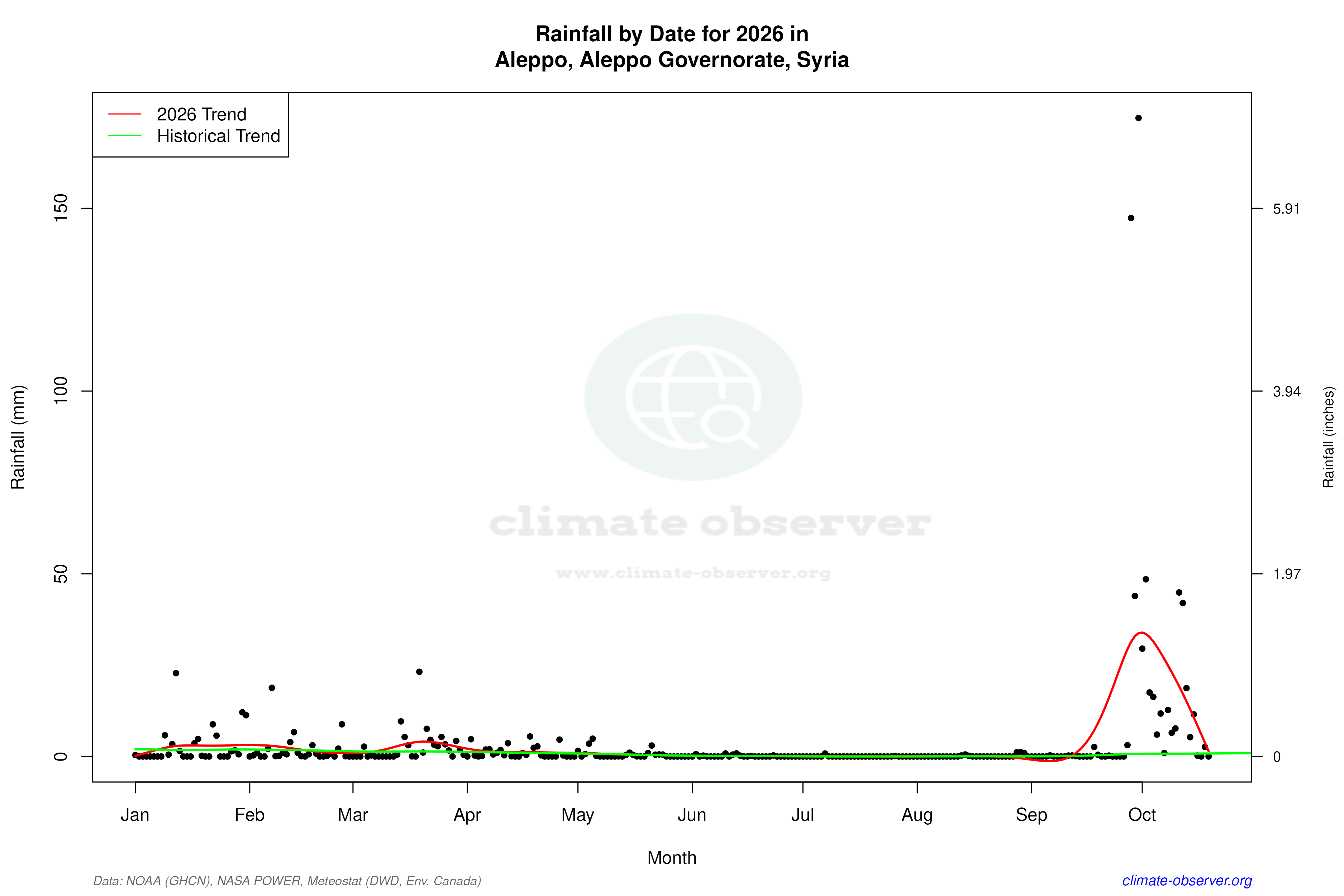
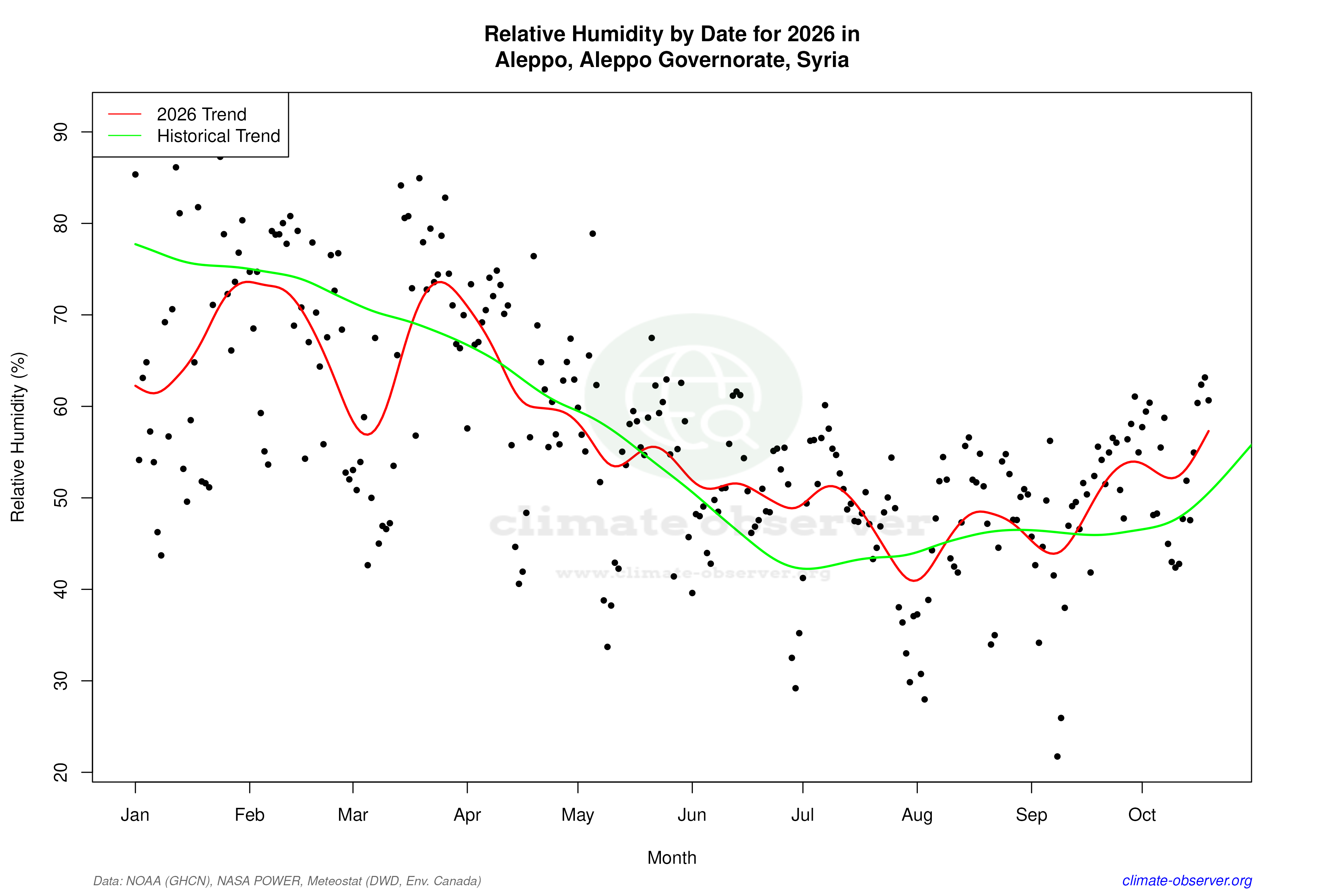

Max Temperature this Year | 1 of 6
Climate 12-Month Moving Averages
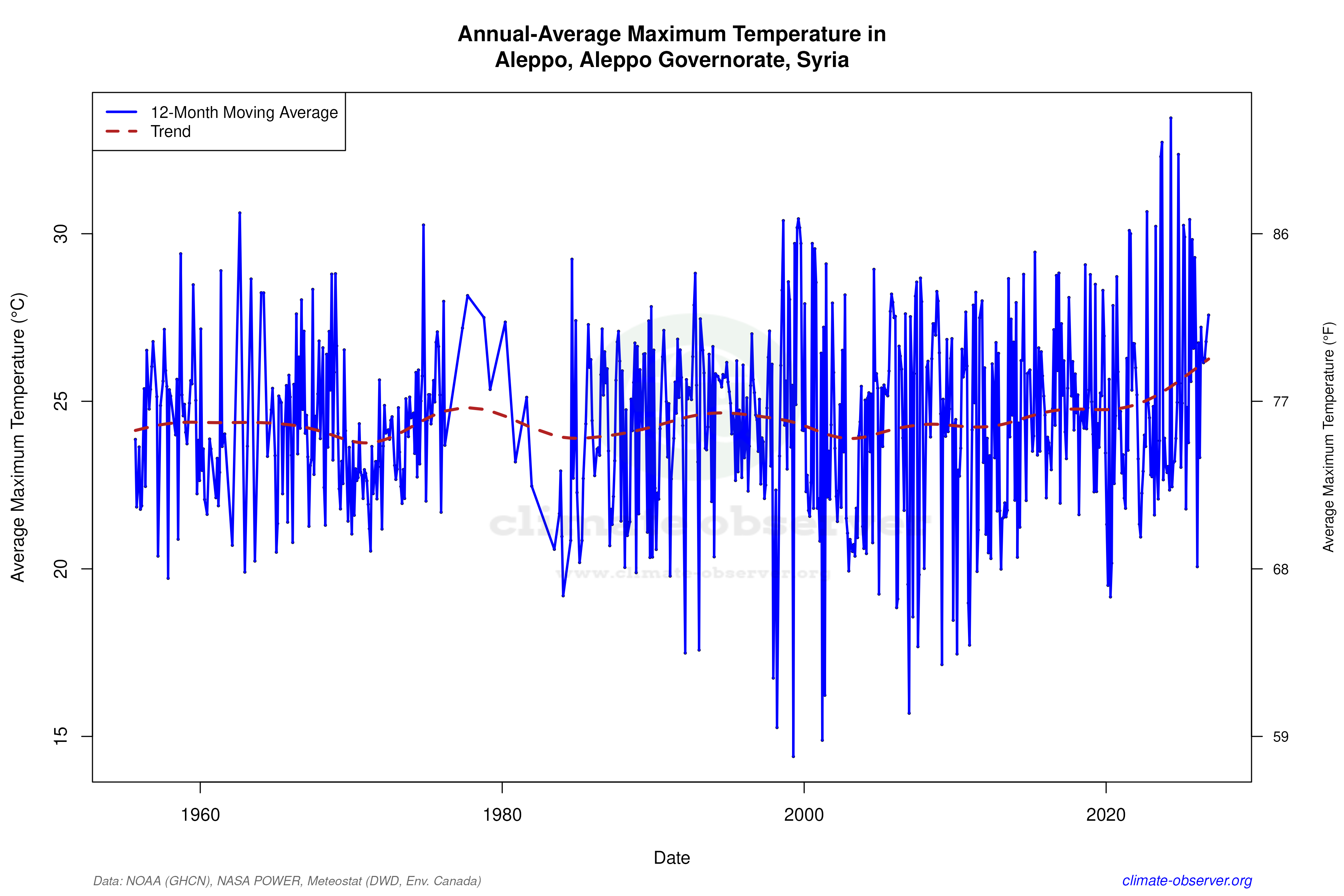
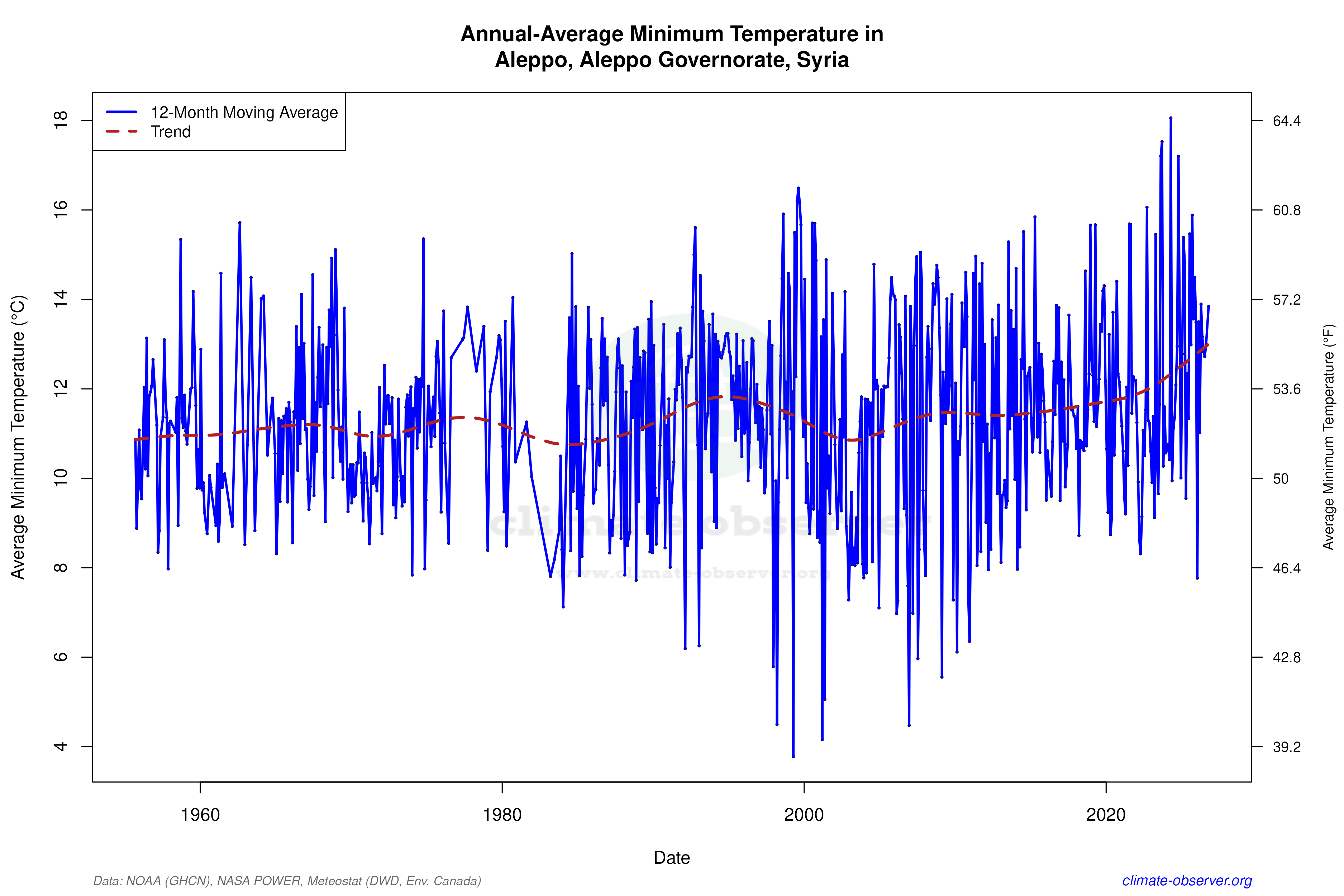
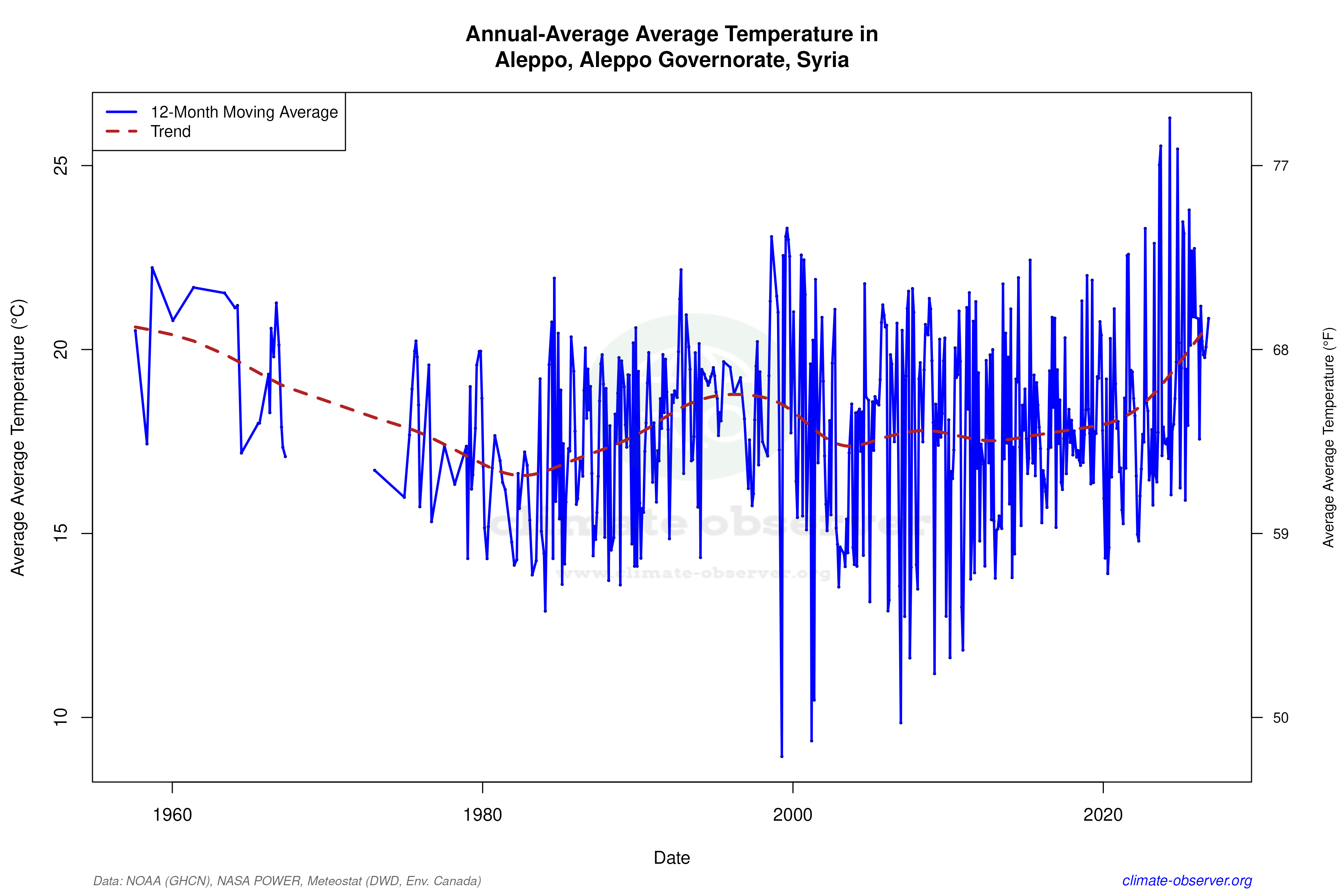
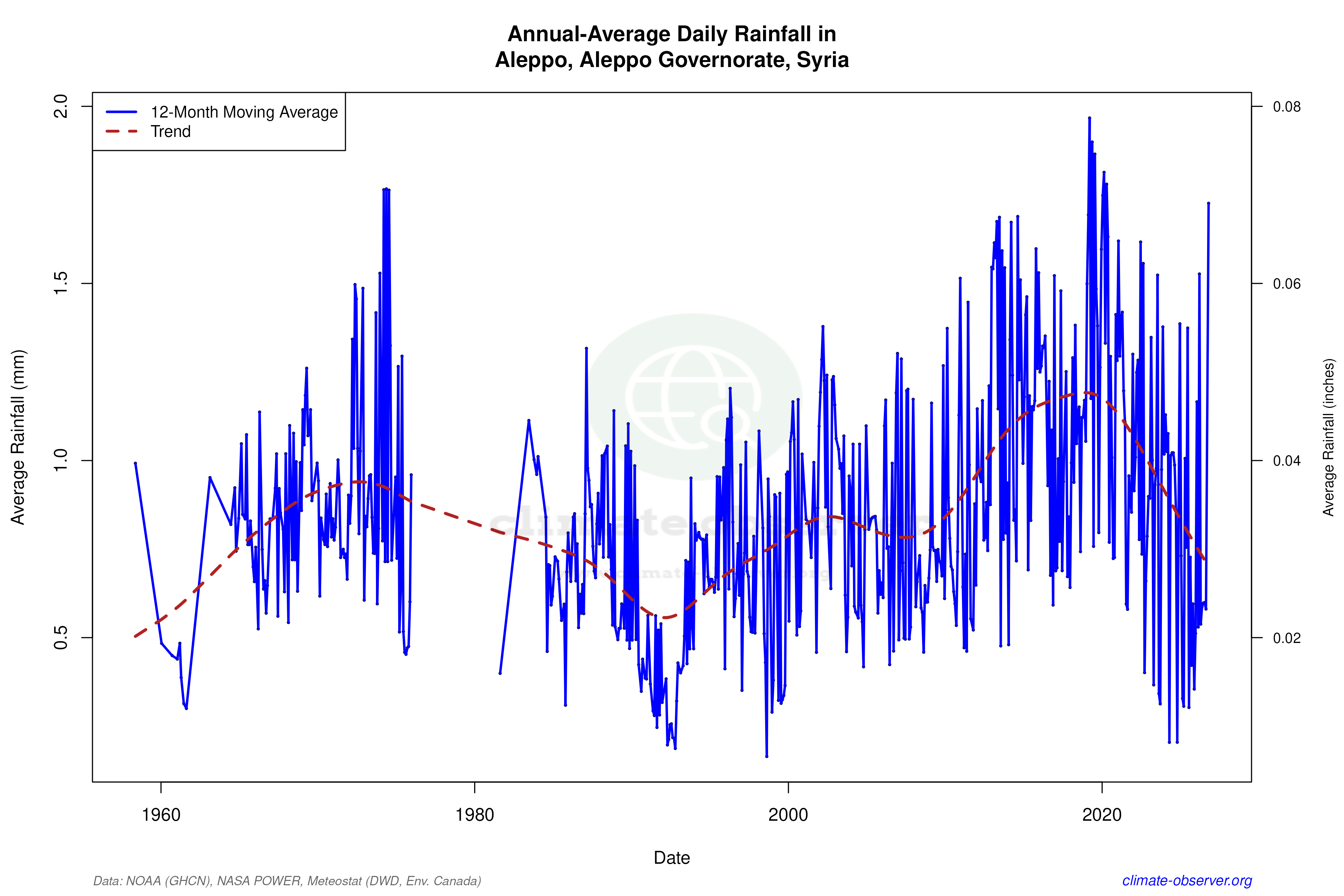
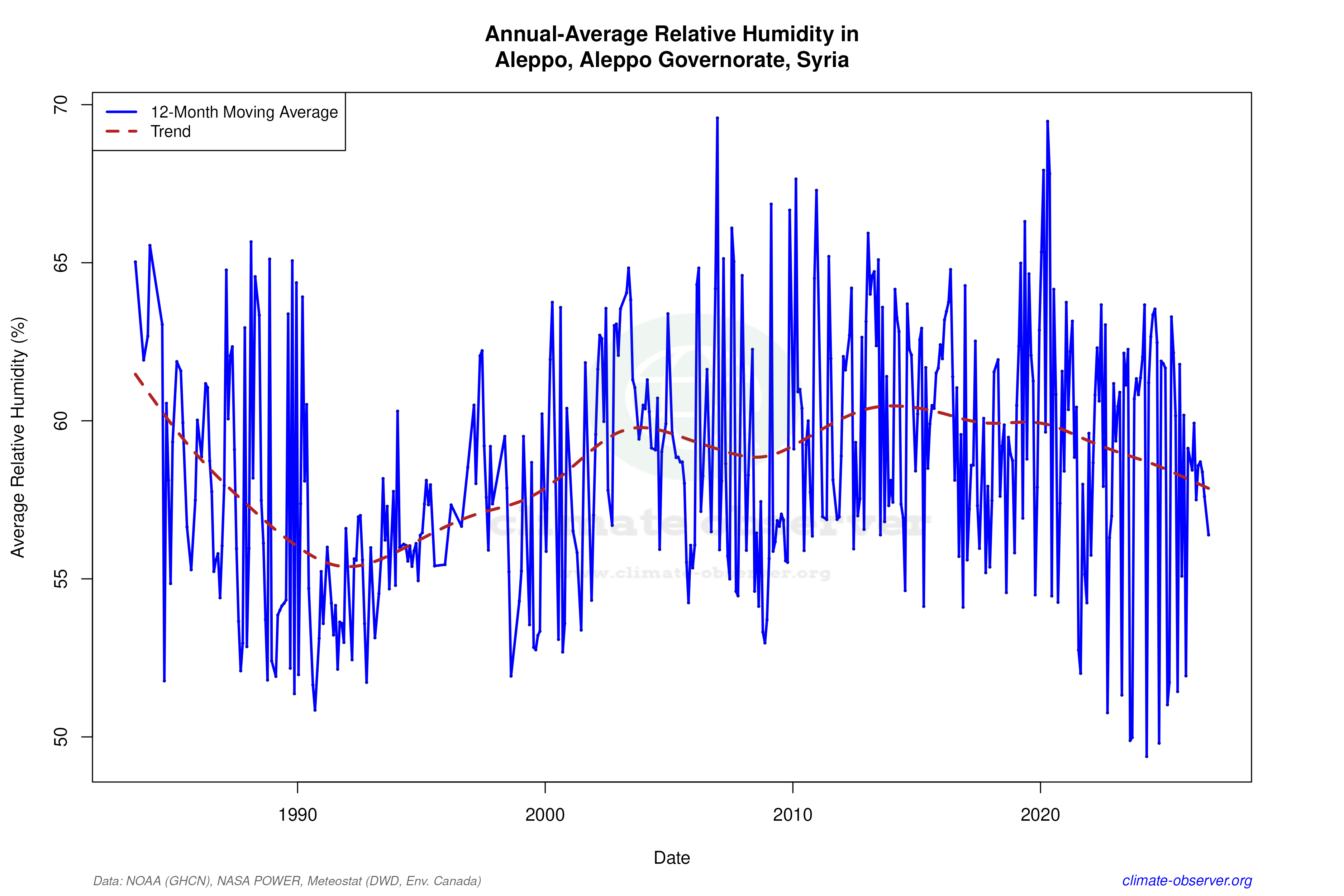

Max Temperature 12-Month MA | 1 of 6
Daily Data Points and Averages Throughout the Year
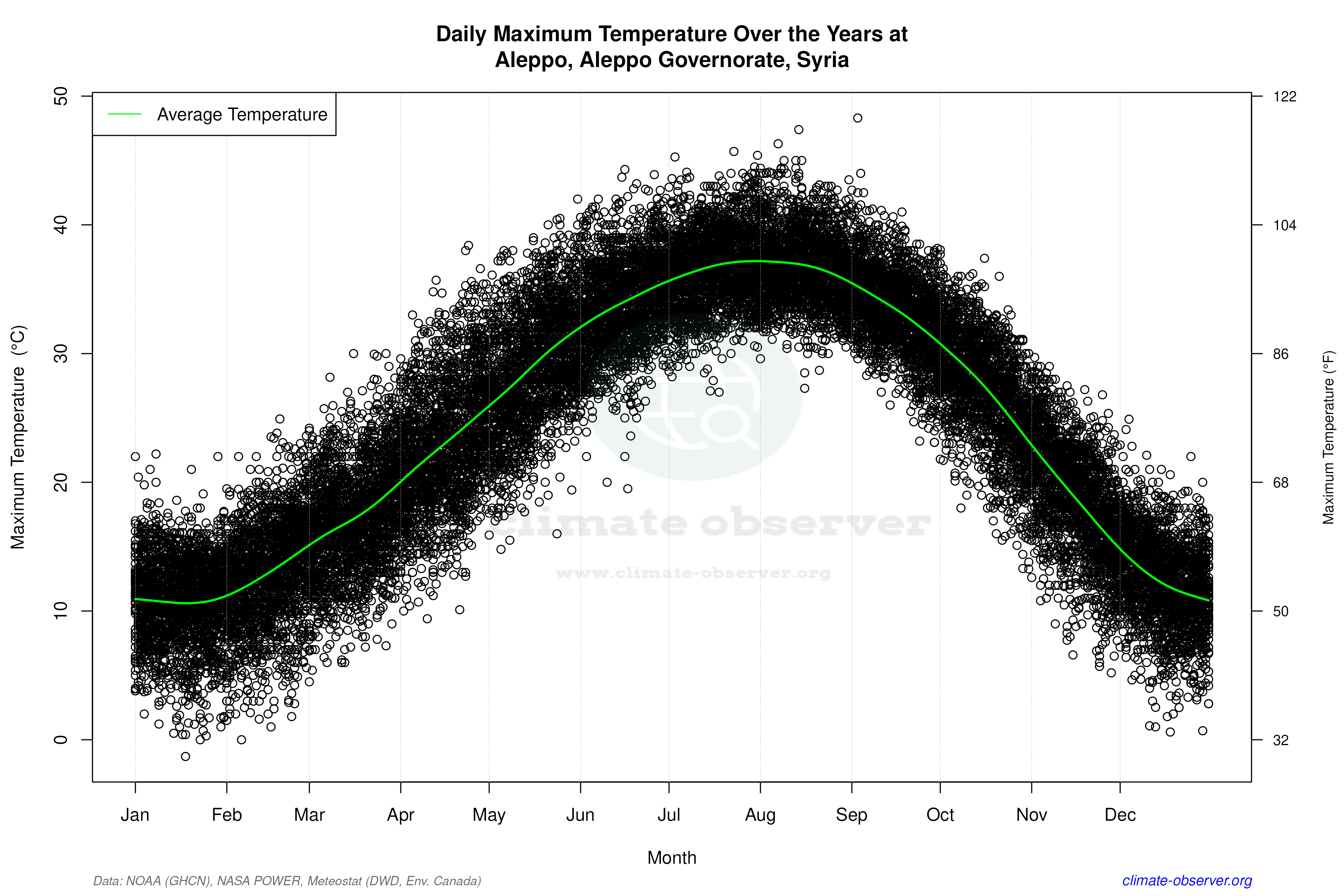
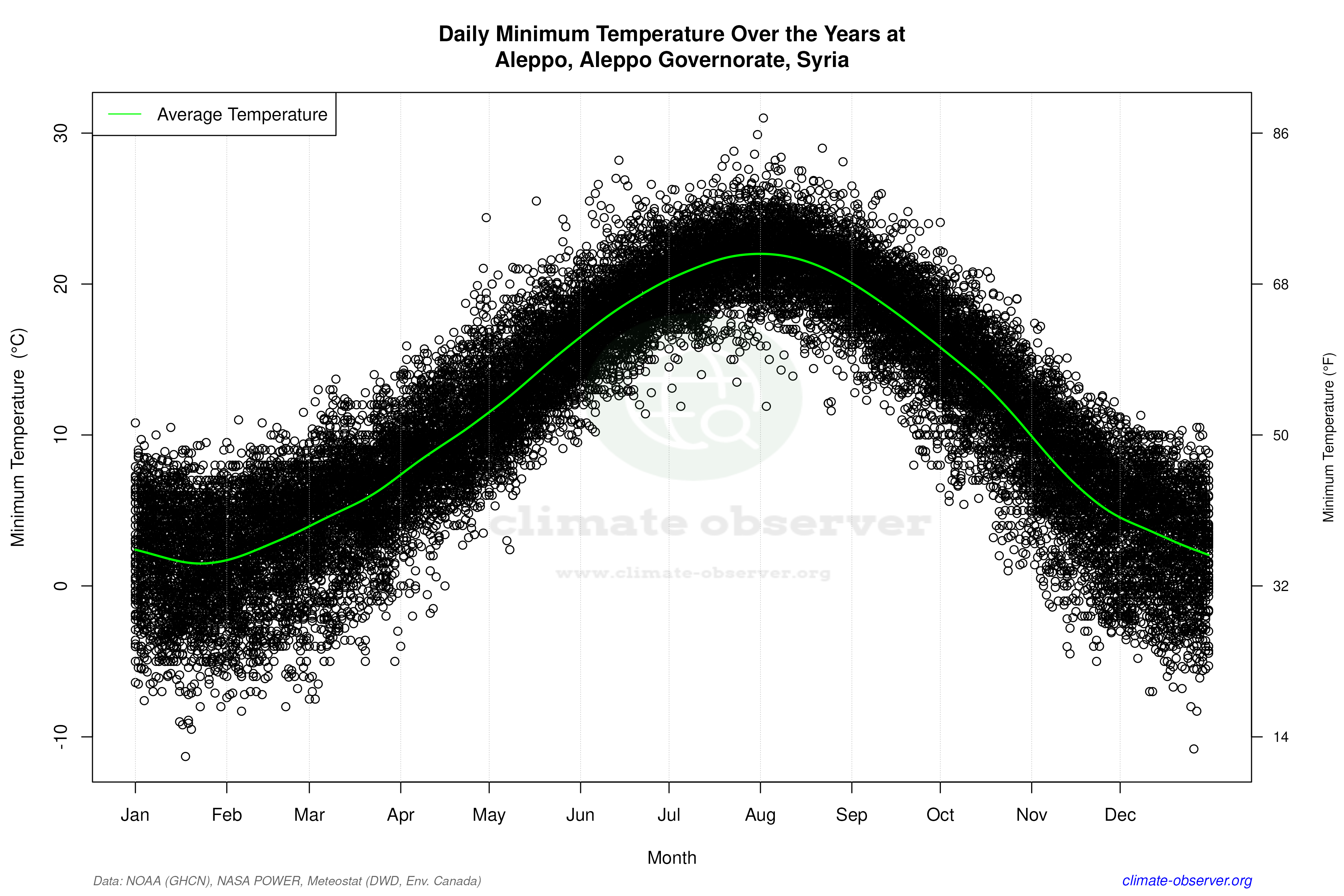
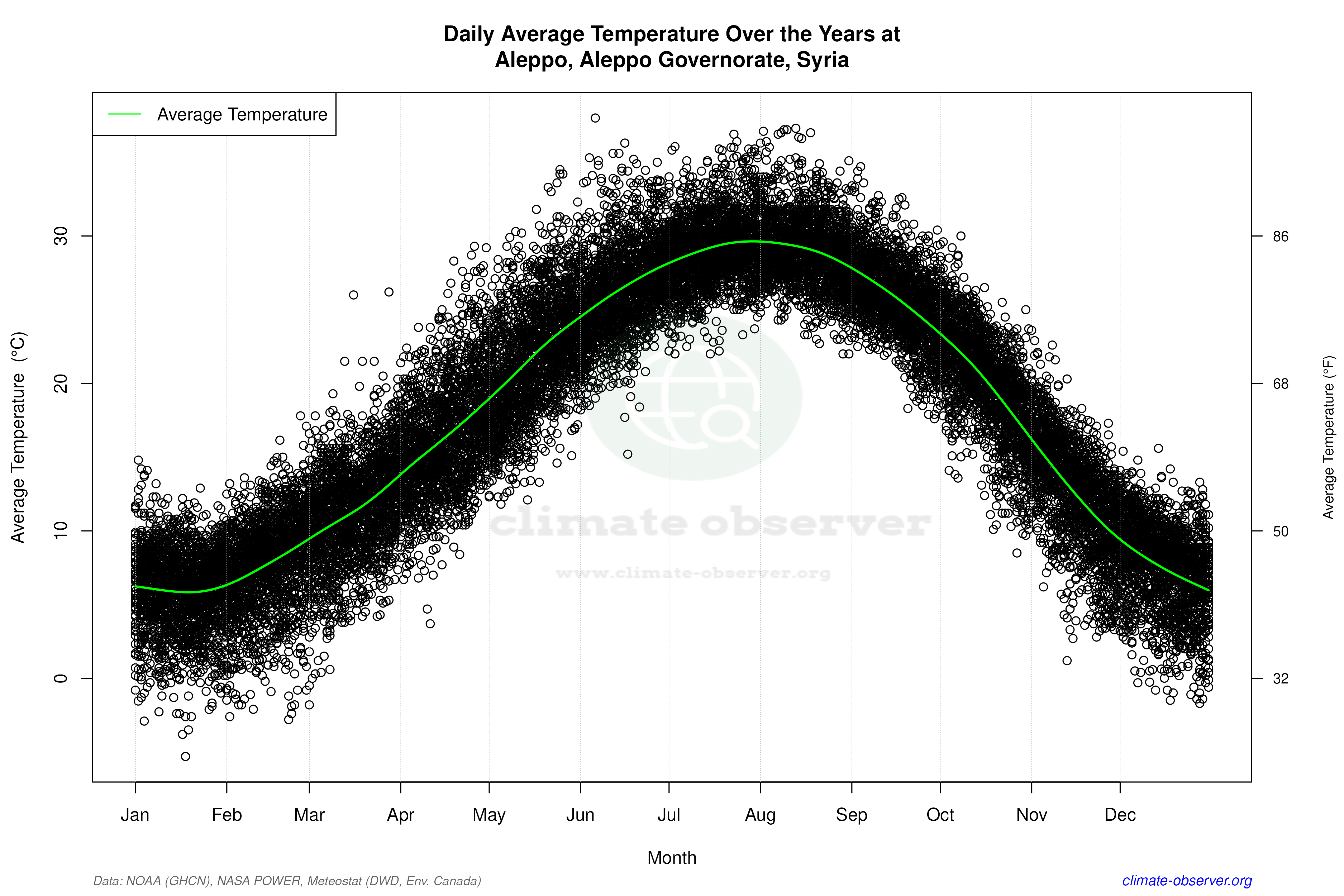
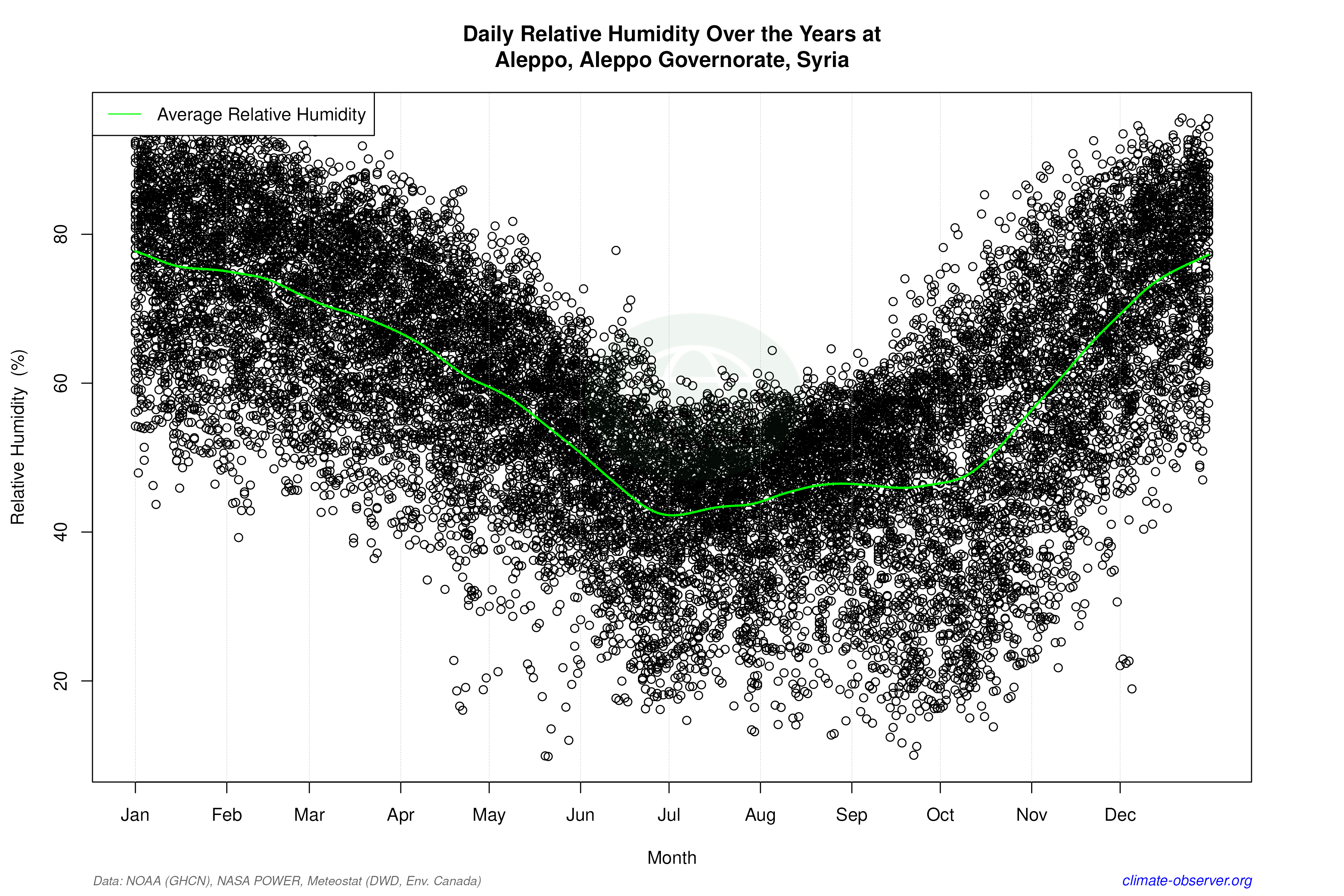

Average Max Temperature Throughout Year | 1 of 5


