Climate for Station: Carthage, Tunis, Tunisia
Loading live weather...
Climate Analysis & Overview
Carthage is experiencing a notable warming trend, with both high and low temperatures rising significantly over the past decade. The region's precipitation is becoming more evenly distributed, suggesting a shift in rainfall patterns. These changes align with Tunisia's broader climate goals to adapt to evolving weather conditions.
Warming Trends in Carthage
Carthage, located near the Mediterranean coast, falls under the hot-summer Mediterranean climate classification (Csa) according to the Köppen system. This region is experiencing a significant warming trend, particularly over the past decade. The 10-year trend shows an increase in high temperatures by 1.64°C (2.95°F) and low temperatures by 1.54°C (2.76°F). These changes are more pronounced than the all-time trends, which indicate a warming of 0.36°C (0.65°F) for highs and 0.50°C (0.90°F) for lows. This suggests an acceleration in temperature rise, potentially influenced by both local factors and broader climatic shifts.
Record Extremes and Temperature Variability
Carthage has recorded extreme temperatures, with the highest reaching 49.0°C (120.2°F) and the lowest plummeting to -6.5°C (20.3°F). These extremes highlight the region's susceptibility to temperature variability, which can impact local ecosystems and human activities. The warming trends observed may increase the frequency and intensity of such extremes, posing challenges to adaptation efforts.
Shifts in Precipitation Patterns
The Precipitation Concentration Index (PCI) has decreased from a baseline of 14.2 to a current value of 11.0, indicating a more even distribution of rainfall events. This shift suggests that precipitation is becoming less concentrated in intense, sporadic events and more evenly spread throughout the year. Such changes can have significant implications for water resource management and agricultural planning in Tunisia, aligning with national efforts to enhance climate resilience.
Geographical Influences and Regional Impacts
Carthage's coastal location influences its climate, with the Mediterranean Sea moderating temperature extremes and affecting precipitation patterns. The warming trends and changes in precipitation distribution may impact the region's biodiversity and agricultural productivity. These climatic shifts are occurring within the context of Tunisia's regional climate goals, which aim to adapt to and mitigate the impacts of climate change through sustainable practices and policies.
Implications for Tunisia's Climate Goals
Tunisia has set ambitious climate goals to address the challenges posed by global warming. The observed trends in Carthage underscore the urgency of these efforts, as rising temperatures and changing precipitation patterns could have profound effects on the country's environment and economy. By understanding and adapting to these changes, Tunisia can better position itself to meet its climate objectives and ensure a sustainable future for its communities.
Station Statistics
10-Year Trend
High: +3.64 °F/decade
Low: +3.62 °F/decade
Rain: -0.011 in/decade
25-Year Trend
High: +0.98 °F/decade
Low: +0.86 °F/decade
Rain: -0.007 in/decade
50-Year Trend
High: +0.76 °F/decade
Low: +1.18 °F/decade
Rain: -0.001 in/decade
All-Time Trend
High: +0.65 °F/decade
Low: +0.88 °F/decade
Rain: -0.001 in/decade
Percentage Above-Average Days
Last 12 Months: 52.3%
This Year: 69.4%
Precipitation Concentration Index (PCI) ℹ️
Last 12 Months: 15.7
Historical Average: 14.9
Percentile Rank of Last 12 Months ℹ️
High: 95th percentile
Low: 99th percentile
Rain: 38th percentile
Change in Variance ℹ️
High: +4.4%
Low: +10.3%
Intraday: -5.3%
Data Coverage
68.9%
First Year of Data
1946
Station Location
Historical Weather Records
| Max High | Avg High | Min High | Max Avg | Avg Avg | Min Avg | Max Low | Avg Low | Min Low | Max Precipitation | Avg Precipitation | Max Snow | Avg Snow | |
|---|---|---|---|---|---|---|---|---|---|---|---|---|---|
| Record | 120.20 °F | — | 40.28 °F | 101.25 °F | — | 36.14 °F | 88.07 °F | — | 20.30 °F | 6.14 in | — | — | — |
| January | 78.08 °F | 61.00 °F | 40.28 °F | 67.82 °F | 52.85 °F | 36.14 °F | 60.08 °F | 45.92 °F | 23.36 °F | 1.89 in | 0.07 in | — | — |
| February | 83.30 °F | 62.45 °F | 45.86 °F | 69.08 °F | 53.73 °F | 37.76 °F | 60.80 °F | 46.14 °F | 20.30 °F | 1.42 in | 0.07 in | — | — |
| March | 97.70 °F | 65.98 °F | 48.20 °F | 75.56 °F | 56.79 °F | 42.44 °F | 62.24 °F | 48.66 °F | 31.82 °F | 1.28 in | 0.05 in | — | — |
| April | 91.58 °F | 70.96 °F | 50.00 °F | 77.00 °F | 61.13 °F | 47.48 °F | 68.00 °F | 52.52 °F | 33.26 °F | 1.43 in | 0.05 in | — | — |
| May | 106.52 °F | 78.64 °F | 59.00 °F | 91.04 °F | 68.08 °F | 53.42 °F | 75.20 °F | 58.56 °F | 32.00 °F | 2.32 in | 0.03 in | — | — |
| June | 114.98 °F | 86.86 °F | 66.38 °F | 95.36 °F | 75.61 °F | 62.24 °F | 80.60 °F | 65.60 °F | 40.64 °F | 1.45 in | 0.01 in | — | — |
| July | 120.20 °F | 92.82 °F | 74.84 °F | 101.25 °F | 81.00 °F | 69.08 °F | 88.07 °F | 70.52 °F | 55.40 °F | 0.64 in | 0.00 in | — | — |
| August | 120.20 °F | 93.10 °F | 77.00 °F | 99.50 °F | 81.65 °F | 67.82 °F | 86.00 °F | 71.89 °F | 50.00 °F | 0.46 in | 0.01 in | — | — |
| September | 111.92 °F | 86.75 °F | 65.30 °F | 93.38 °F | 76.68 °F | 60.62 °F | 82.40 °F | 68.39 °F | 41.00 °F | 1.50 in | 0.05 in | — | — |
| October | 104.00 °F | 79.44 °F | 59.54 °F | 85.82 °F | 69.79 °F | 49.82 °F | 78.80 °F | 62.15 °F | 42.80 °F | 6.14 in | 0.07 in | — | — |
| November | 88.70 °F | 69.79 °F | 46.40 °F | 75.74 °F | 61.04 °F | 40.46 °F | 71.42 °F | 53.88 °F | 33.44 °F | 1.82 in | 0.07 in | — | — |
| December | 85.28 °F | 63.15 °F | 46.40 °F | 69.62 °F | 54.99 °F | 42.26 °F | 63.32 °F | 48.15 °F | 23.36 °F | 2.05 in | 0.09 in | — | — |
Data Visualisations
Remove WatermarksCurrent Year Climate Trends vs Historical
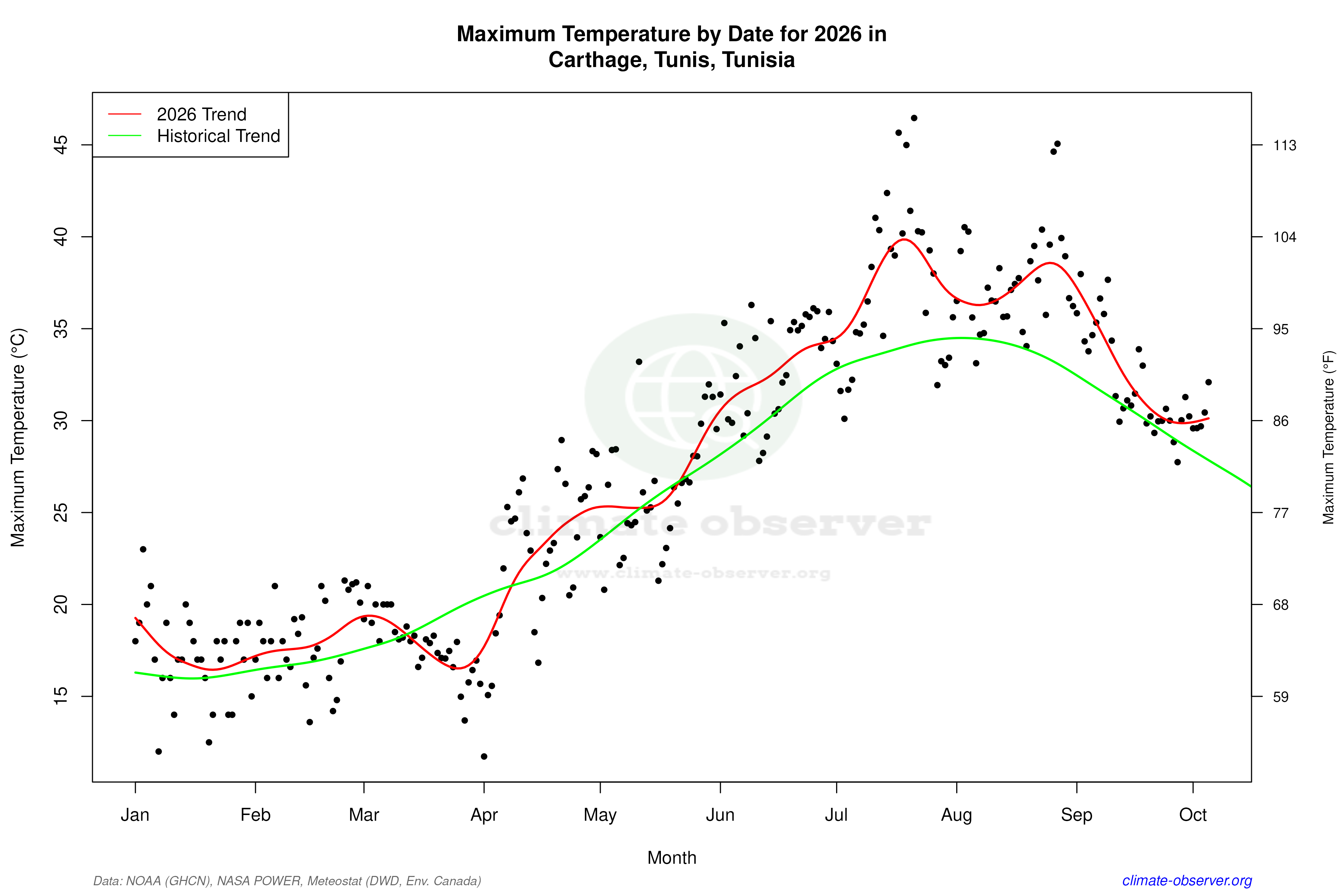
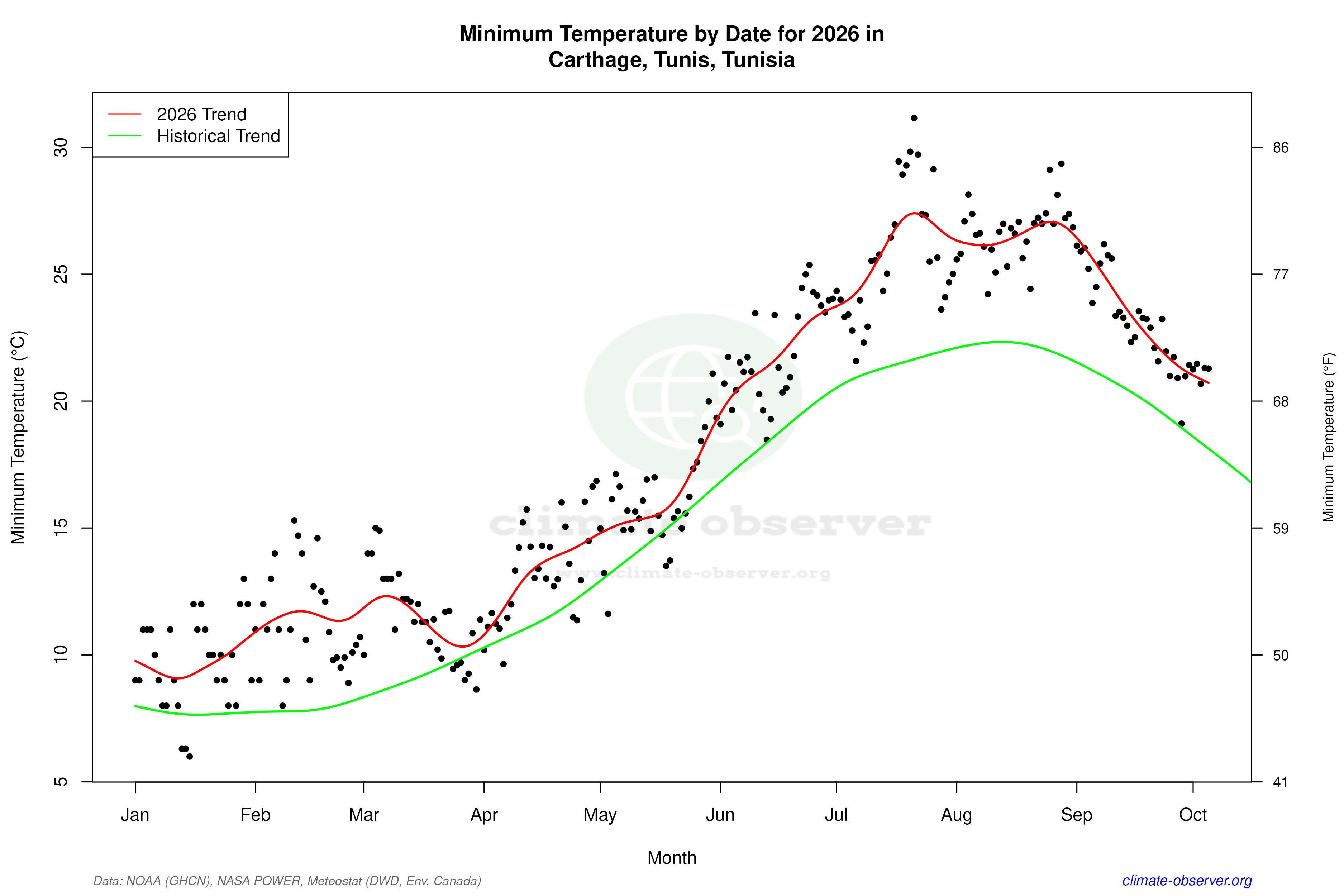
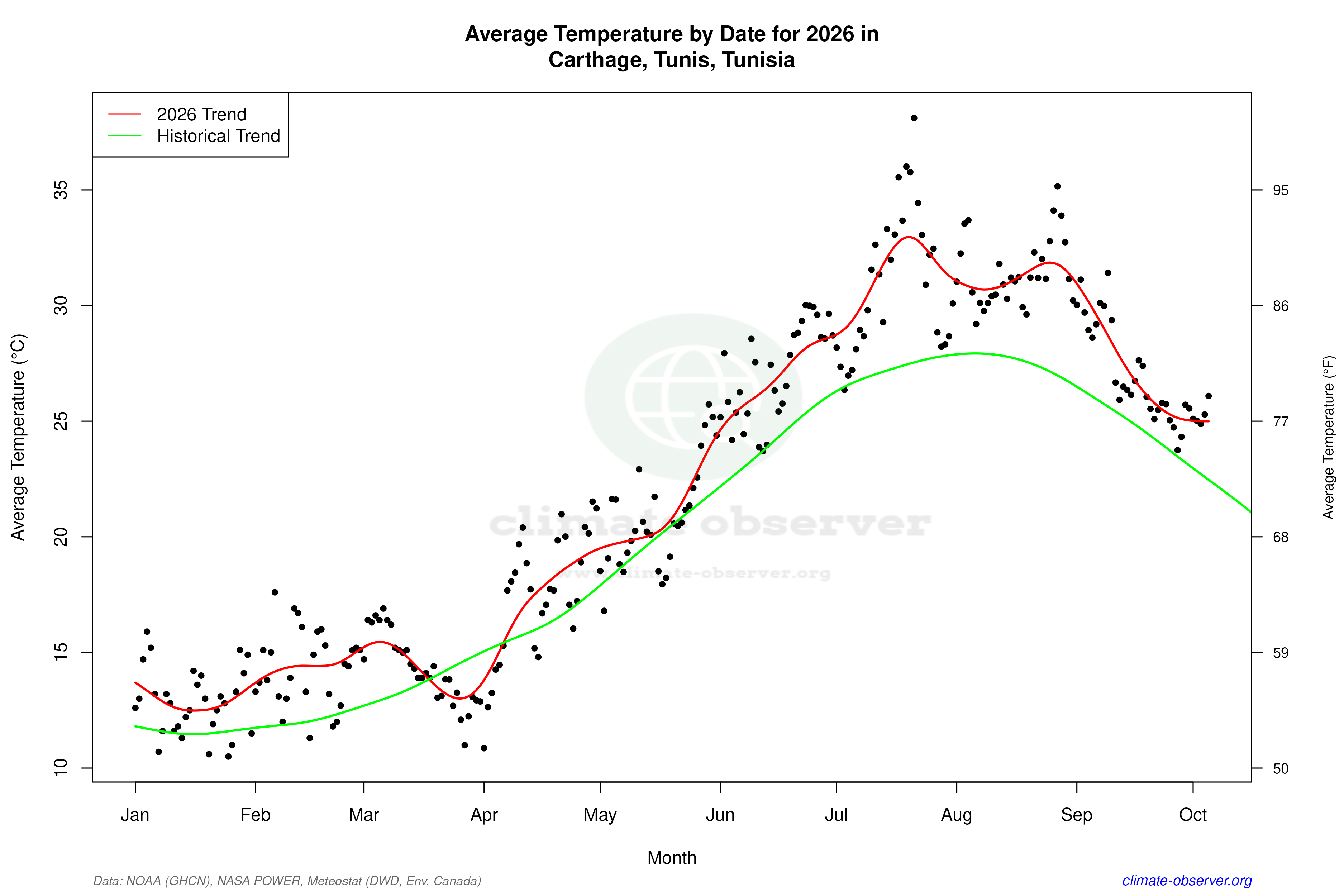
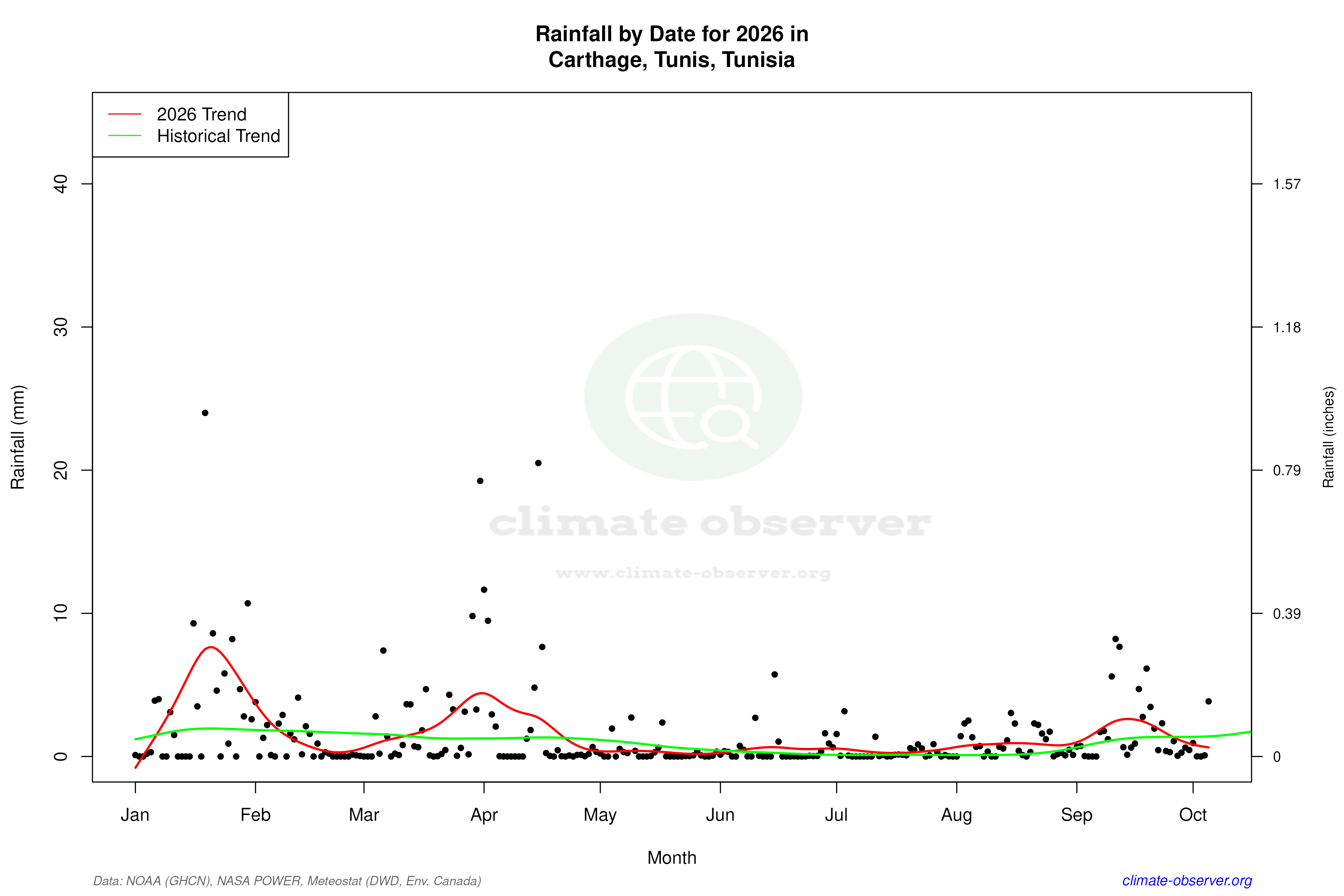
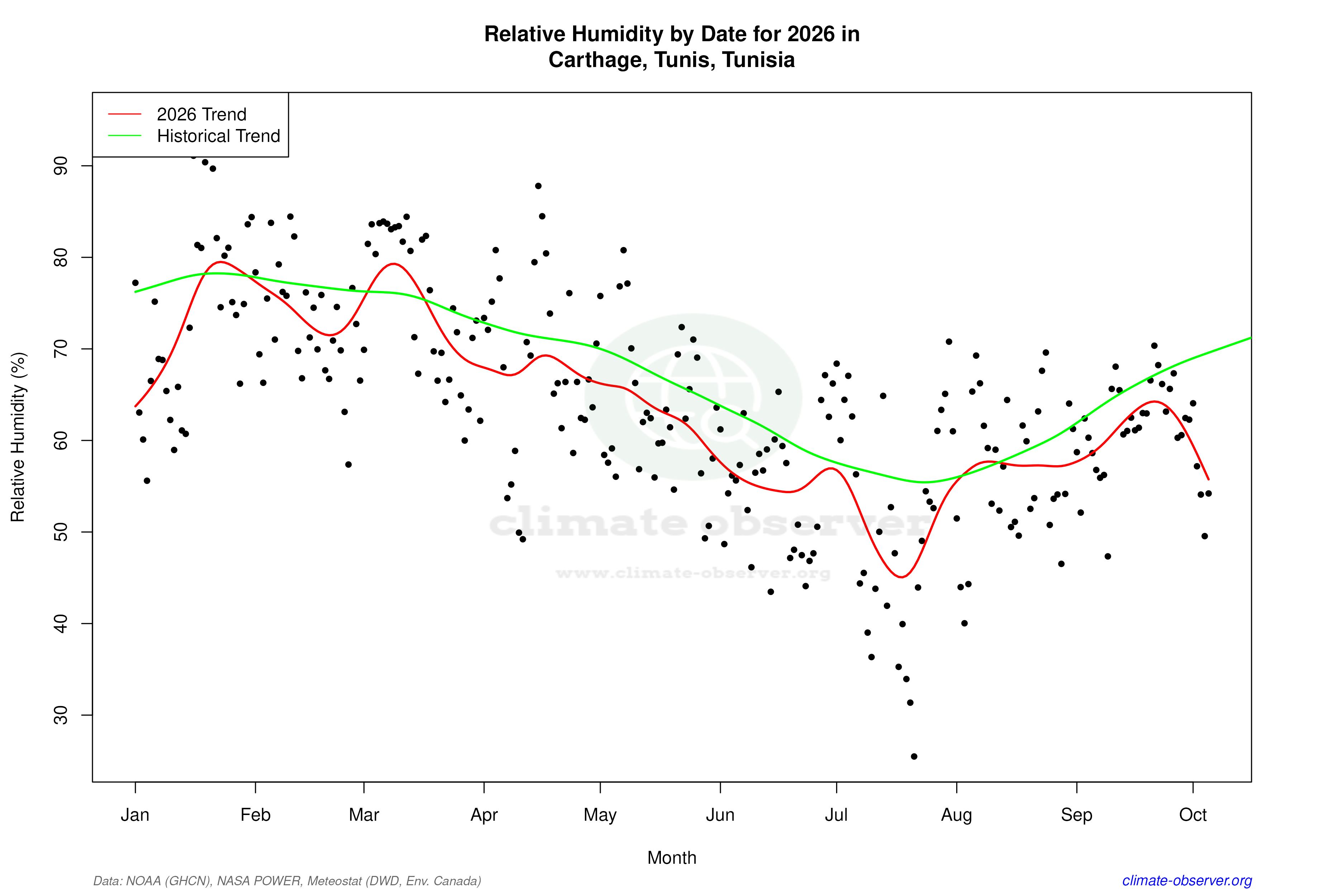

Max Temperature this Year | 1 of 6
Climate 12-Month Moving Averages
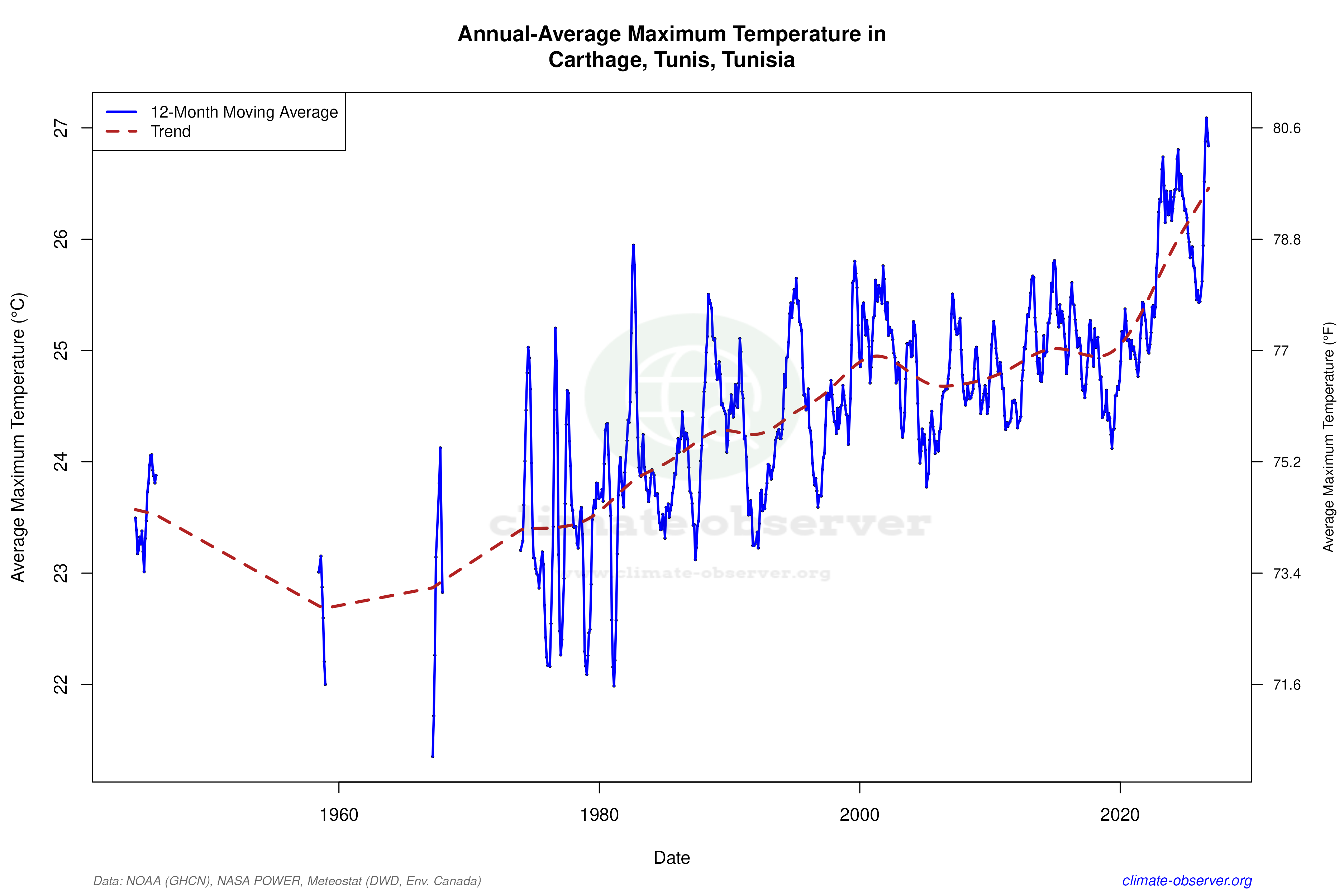
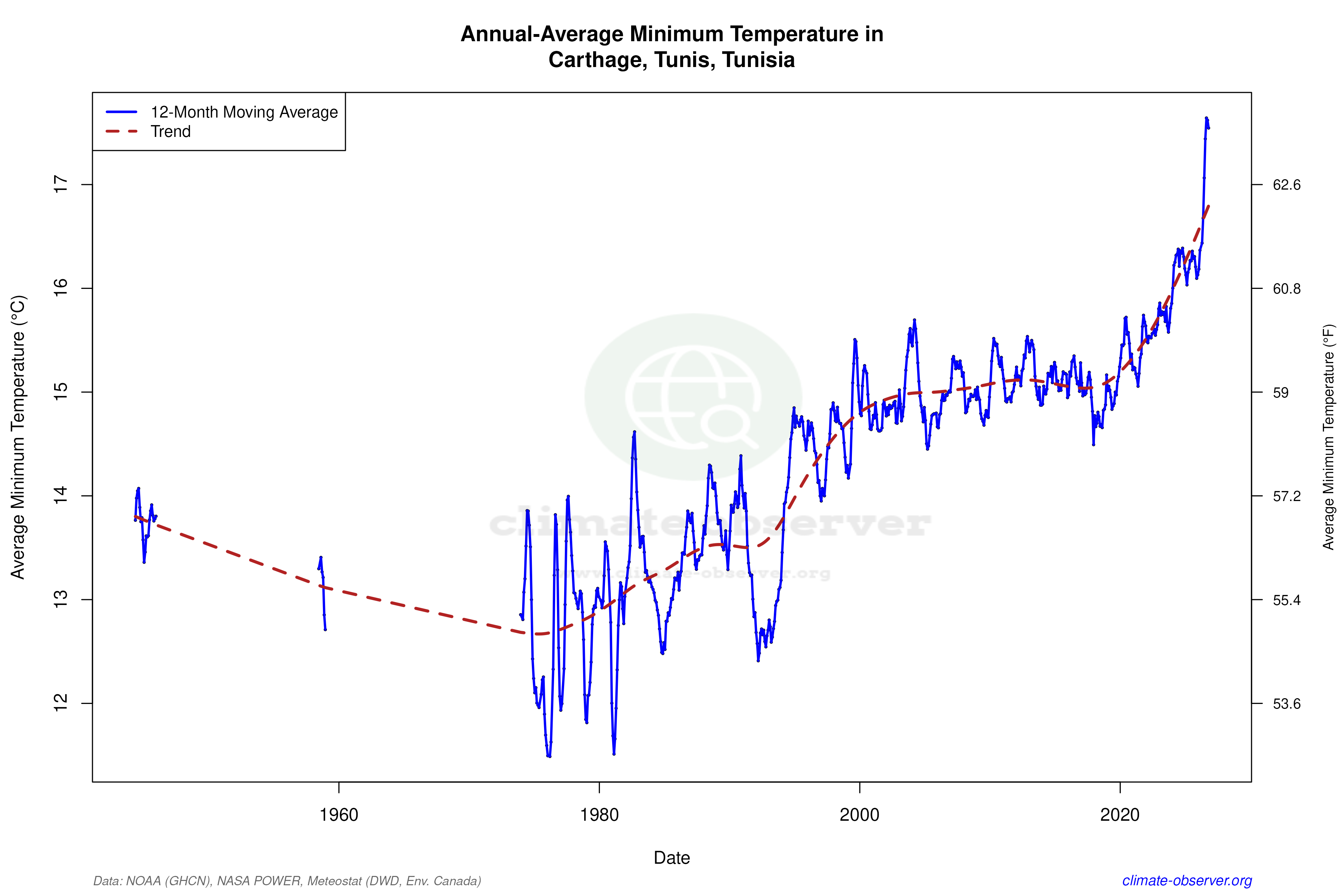
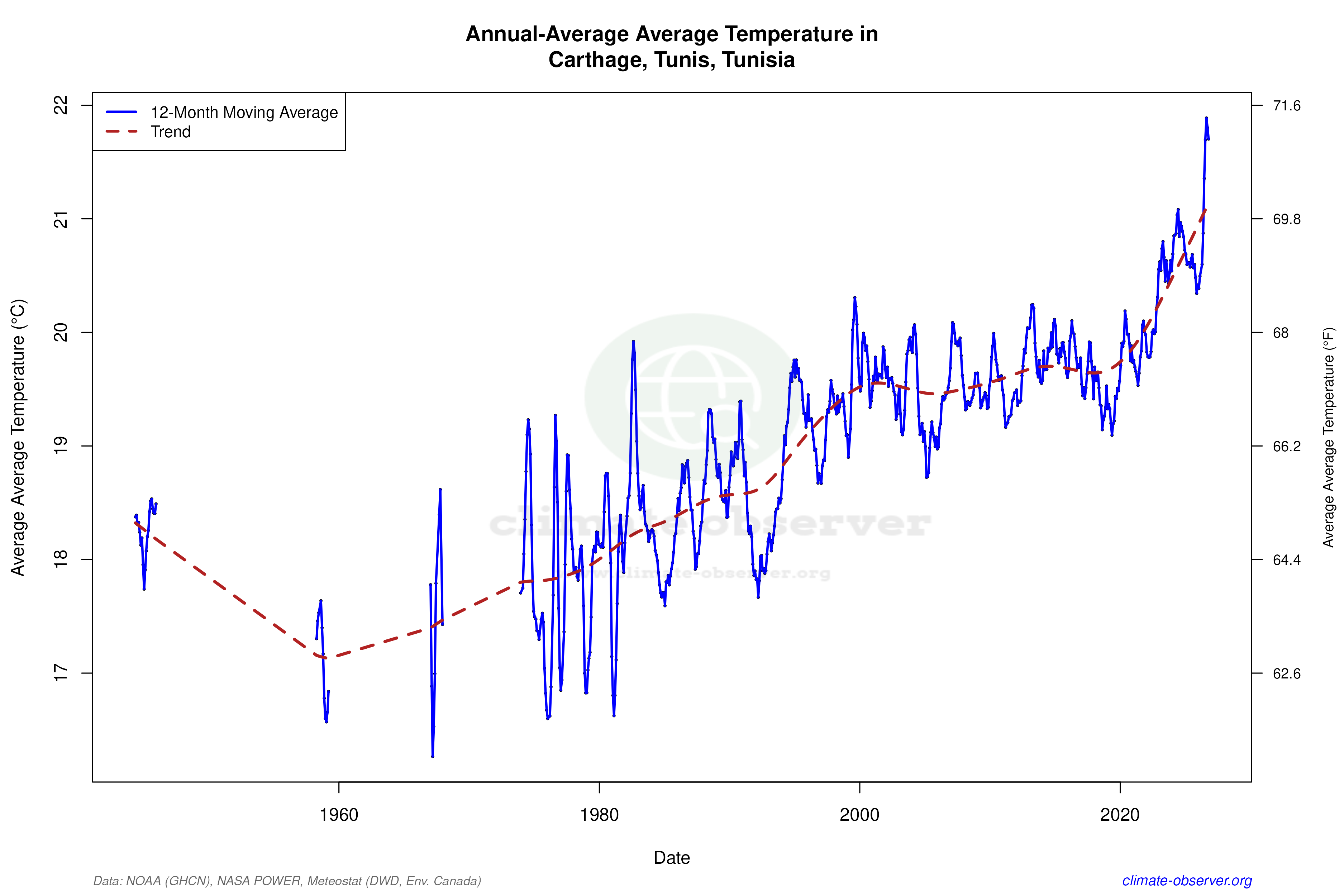
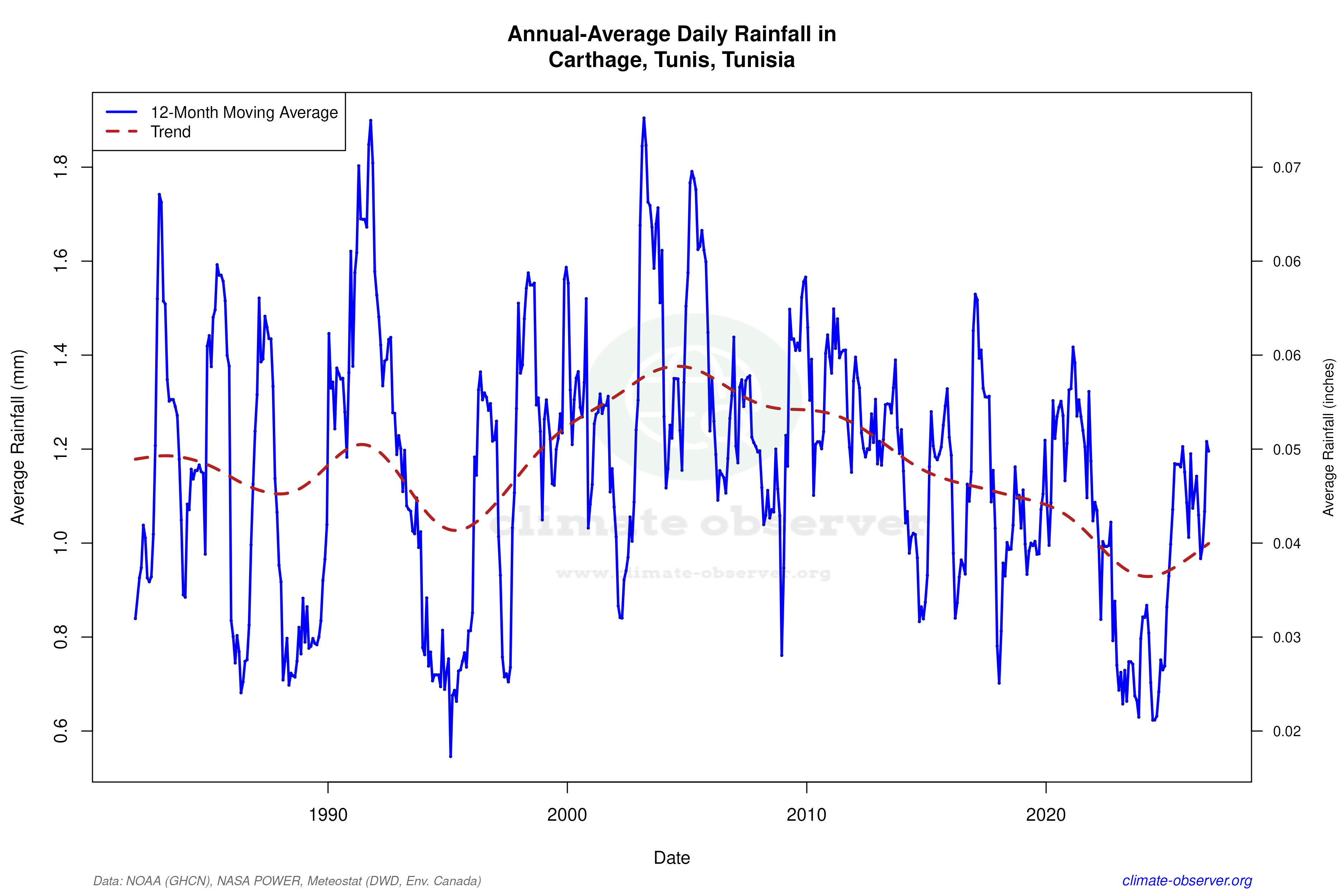
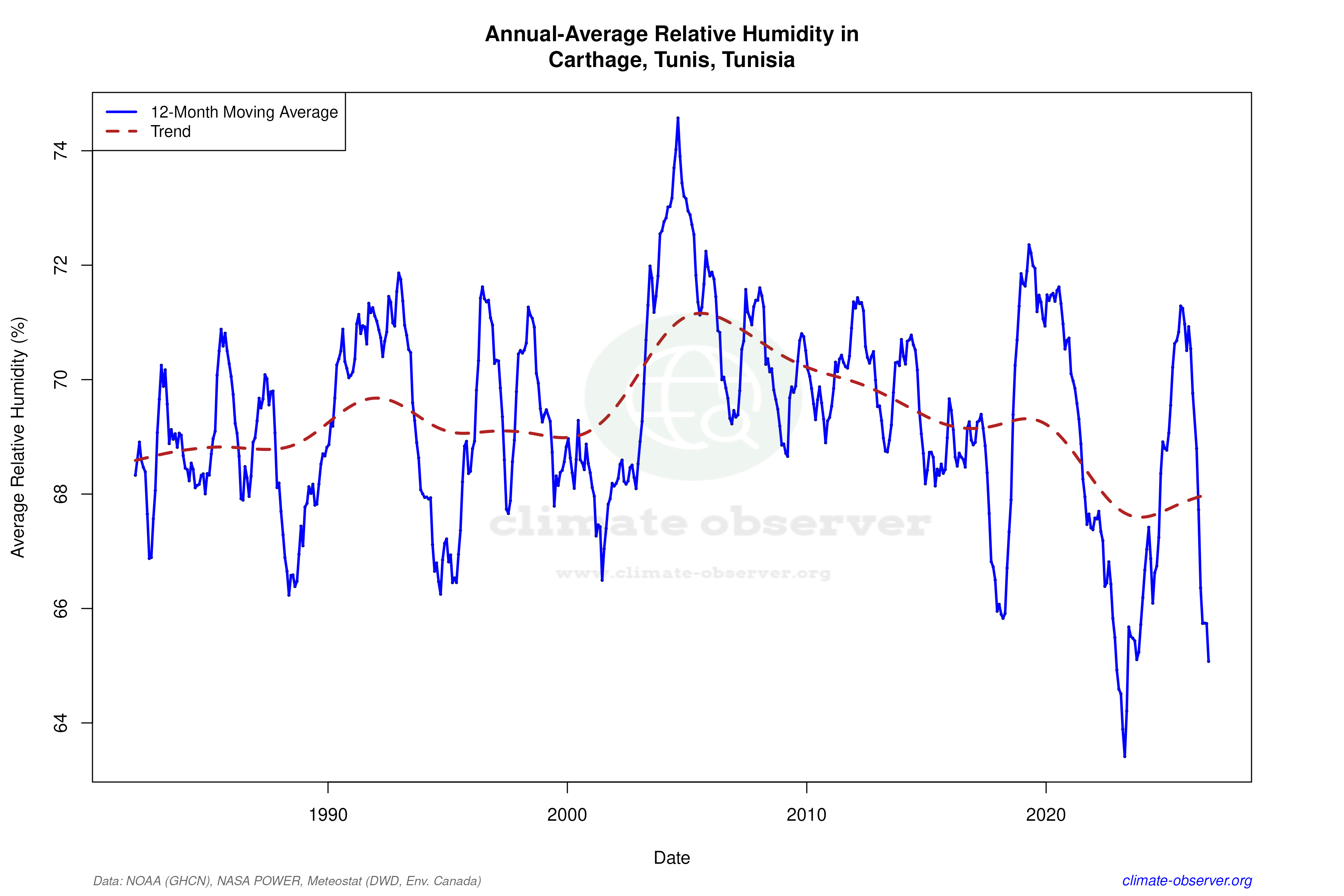

Max Temperature 12-Month MA | 1 of 6
Daily Data Points and Averages Throughout the Year
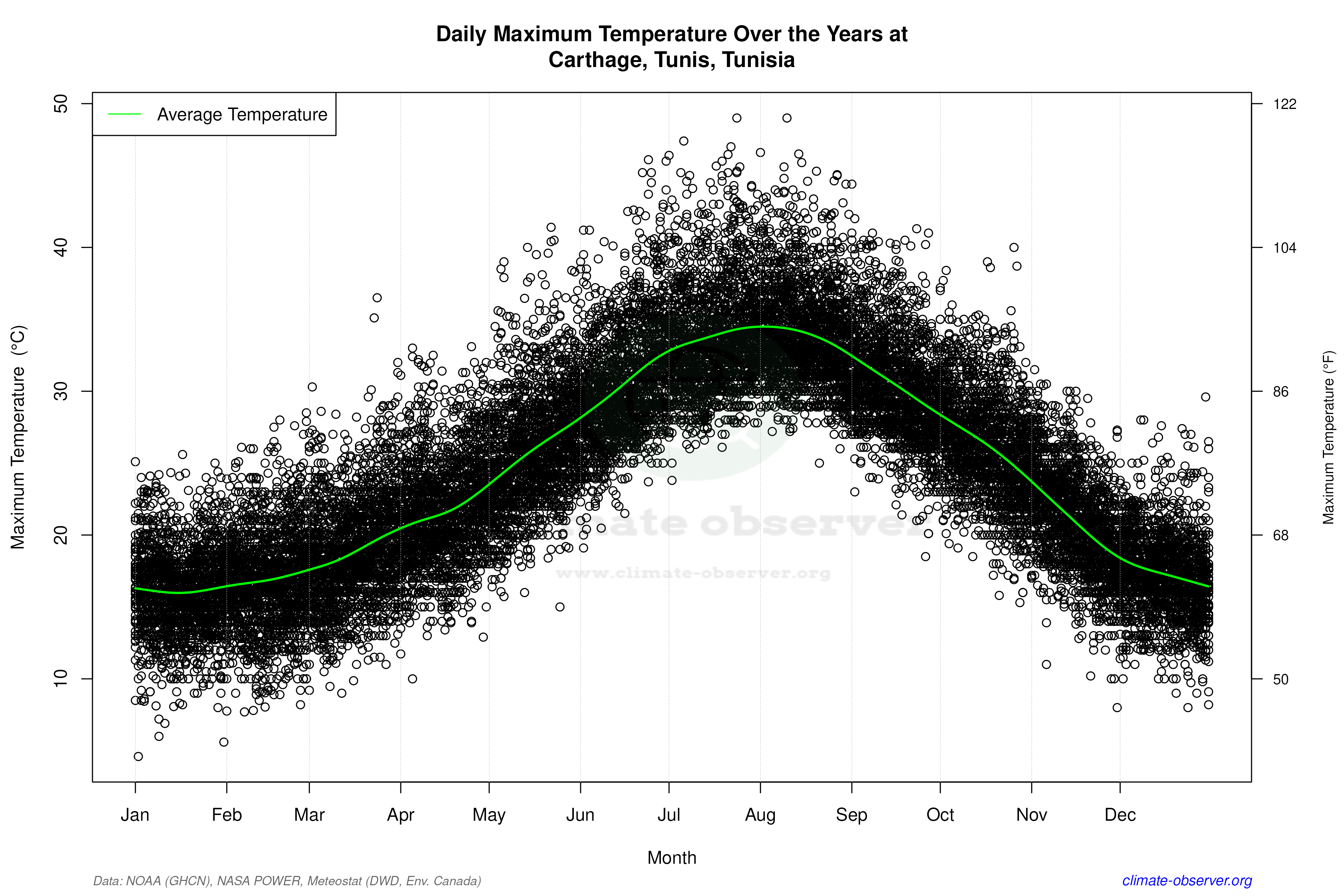
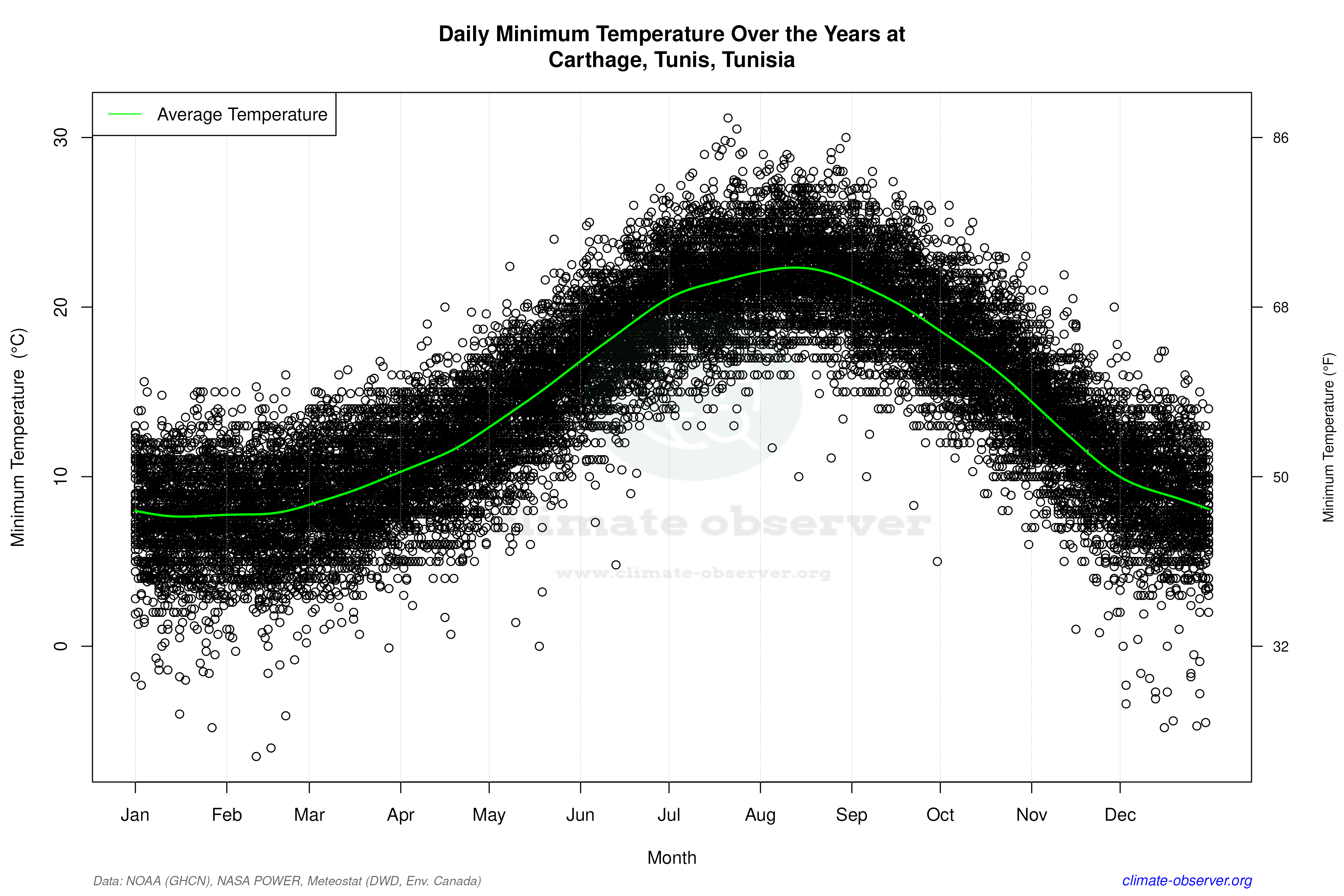
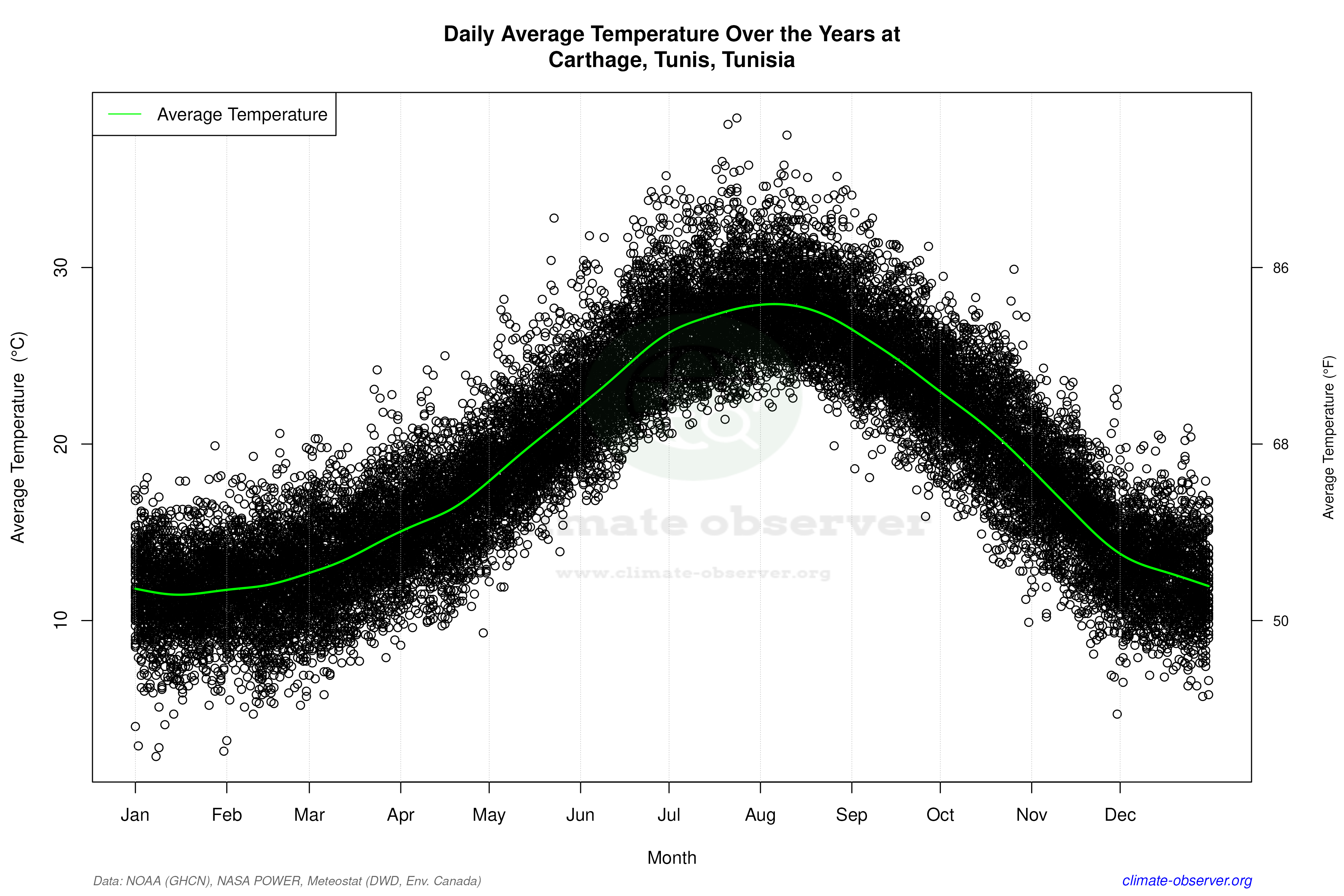
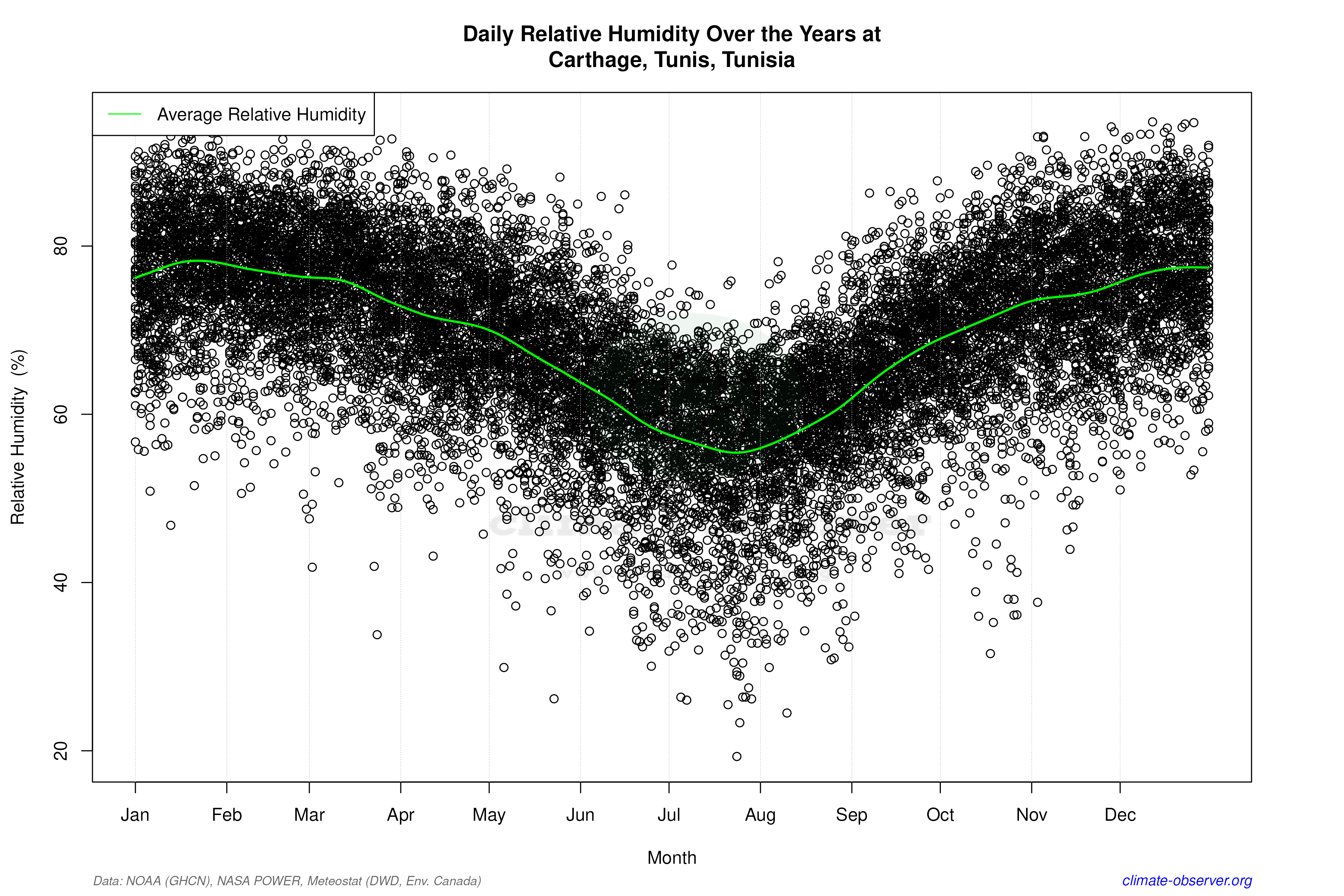

Average Max Temperature Throughout Year | 1 of 5


