Climate for Station: Salem Ap (Mcnary Field), Oregon, United States
Loading live weather...
Climate Analysis & Overview
Salem's climate is experiencing a gradual warming trend, with both high and low temperatures rising over the past decade. The slight decrease in the Precipitation Concentration Index suggests a more even distribution of rainfall, aligning with regional goals for climate resilience.
Warming Trends in Salem
Salem, located in the heart of Oregon's Willamette Valley, is characterised by a Mediterranean climate (Köppen classification Csb), typified by warm, dry summers and mild, wet winters. Over the past decade, this region has experienced a warming trend, with average high temperatures rising by 0.32°C (0.58°F) and lows by 0.28°C (0.50°F). These figures are more pronounced than the all-time trends, which show a more modest increase of 0.09°C (0.16°F) for highs and 0.03°C (0.05°F) for lows. This suggests a recent acceleration in warming, a pattern that echoes broader national concerns about climate change and its impacts on weather patterns.
Temperature Extremes and Records
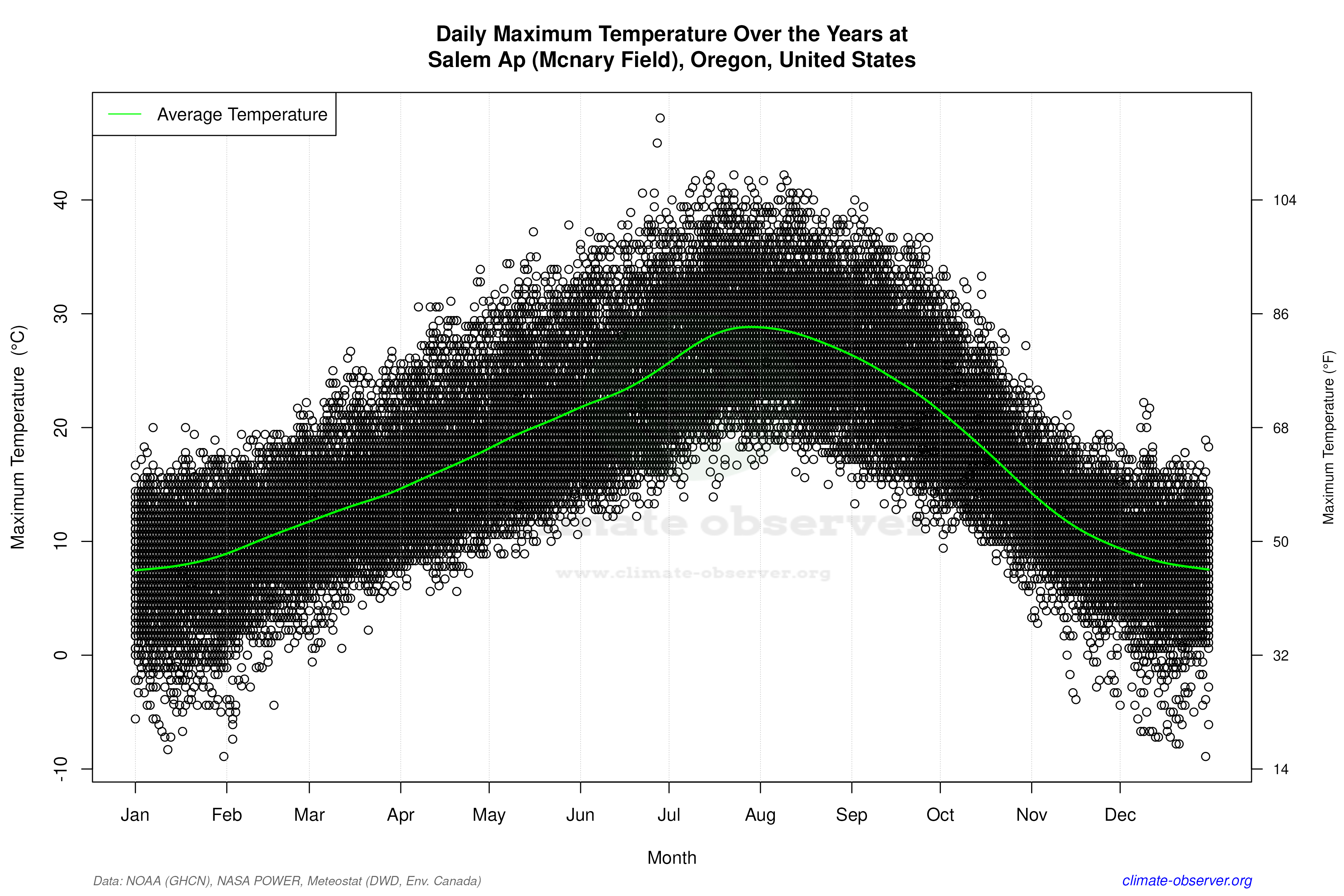
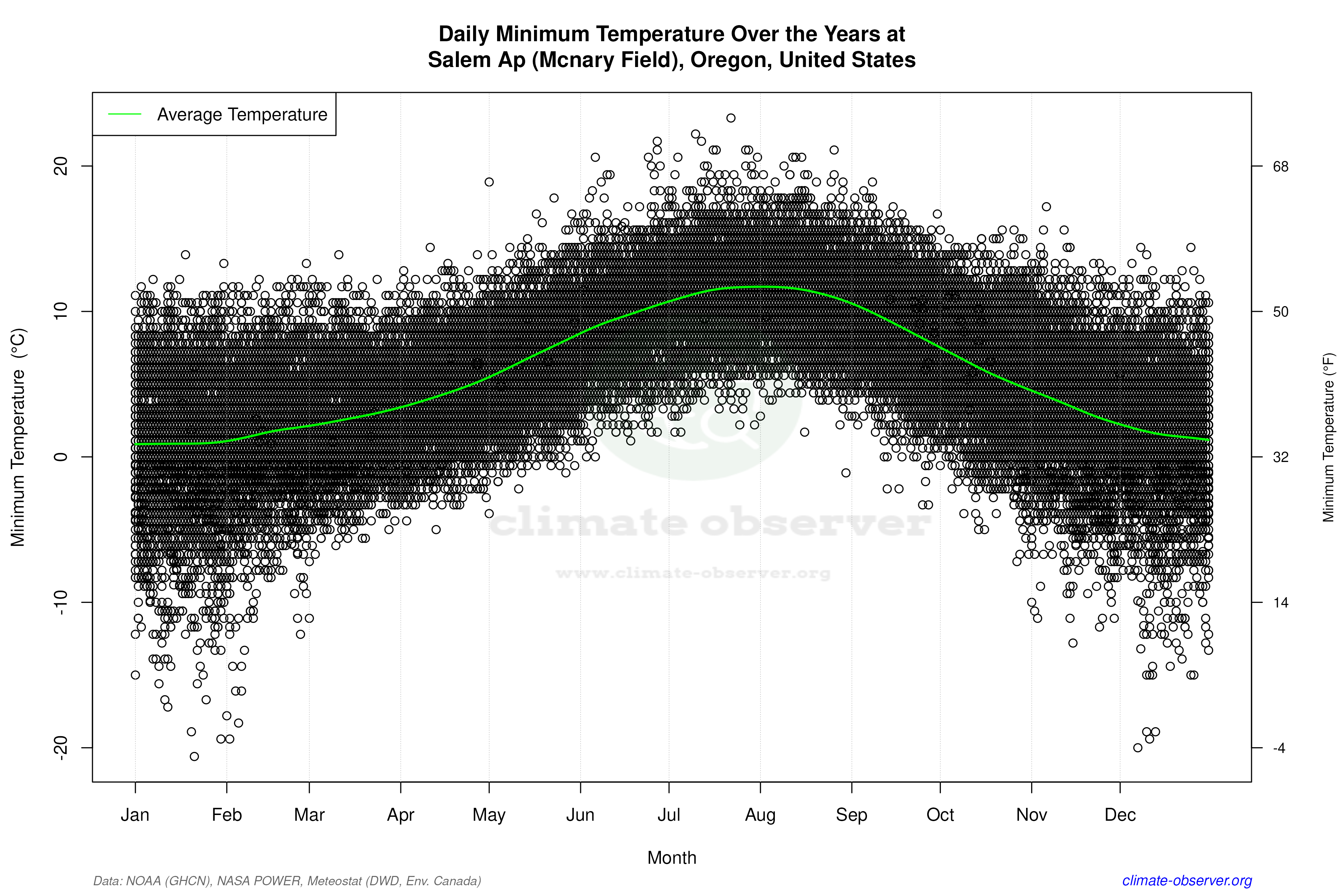
The temperature extremes recorded at Salem McNary Field provide a glimpse into the variability of its climate. The highest temperature on record is 47.2°C (117°F), while the lowest is -20.6°C (-5.1°F). These extremes highlight the potential for significant thermal oscillations, influenced by the region's geography, including the Cascade Range to the east and the Pacific Ocean to the west. Such variations are crucial for understanding the potential impacts on agriculture and urban planning in the region.
Precipitation Patterns and Distribution
The Precipitation Concentration Index (PCI) for Salem has seen a slight decrease from a baseline of 14.2 to a current value of 13.4. The PCI measures how concentrated precipitation is over time, with lower values indicating a more even distribution. This marginal change suggests that rainfall in Salem is becoming more evenly distributed throughout the year, which could reduce the risk of flooding and drought cycles. This trend is consistent with regional climate adaptation strategies aimed at enhancing water resource management.
Regional Climate Implications
The warming trends observed in Salem are reflective of broader climatic shifts across the Pacific Northwest. These changes have implications for regional climate goals, particularly in terms of reducing greenhouse gas emissions and enhancing community resilience to climate impacts. Recent weather events, such as heatwaves and unseasonal rainfall, underscore the urgency of these efforts. The data from Salem McNary Field serves as a critical input for policymakers and scientists working to mitigate the effects of climate change and adapt to its inevitable impacts.
Station Statistics
10-Year Trend
High: +3.96 °F/decade
Low: +2.85 °F/decade
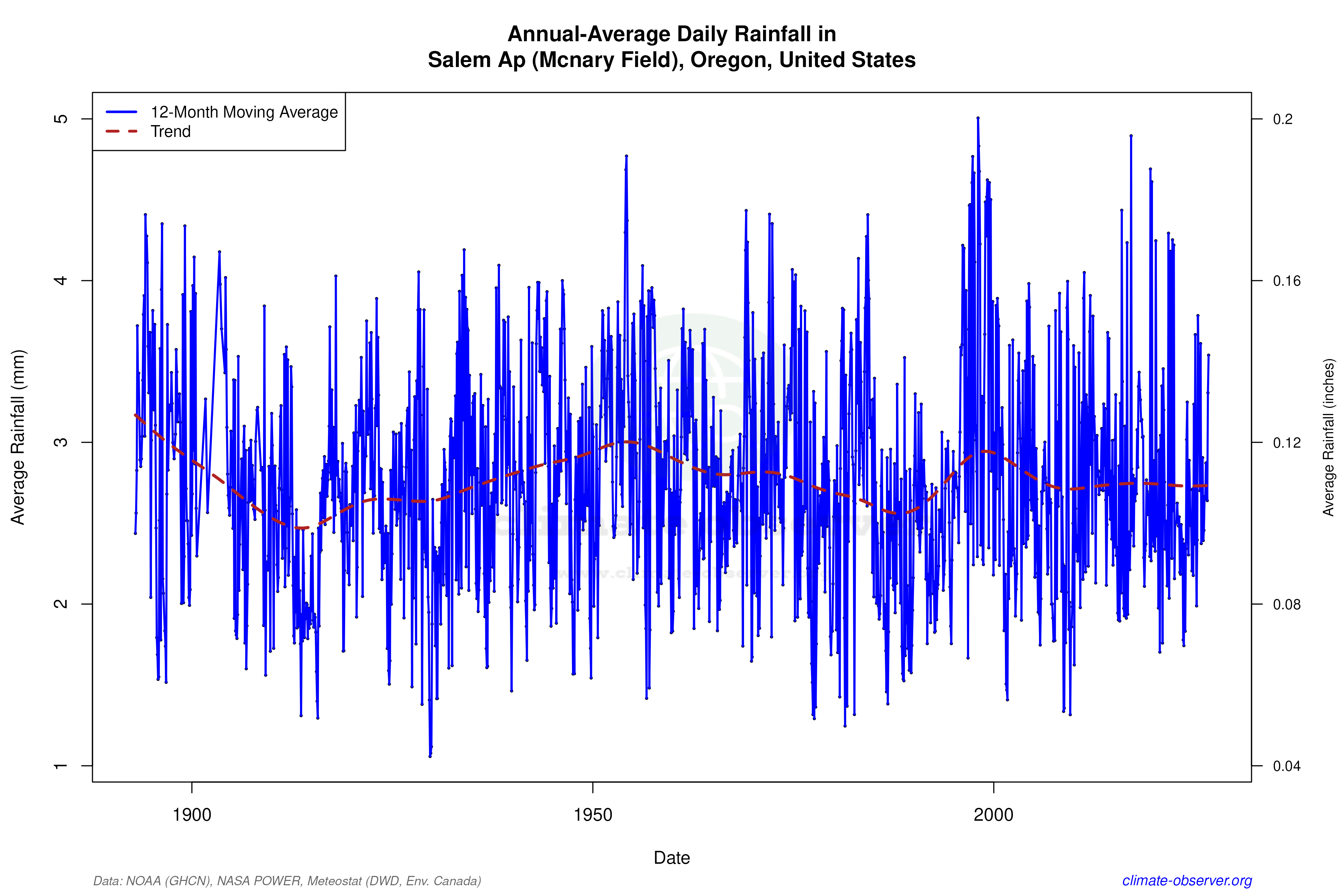
Rain: -0.005 in/decade
25-Year Trend
High: +1.27 °F/decade
Low: +1.22 °F/decade
Rain: +0.002 in/decade
50-Year Trend
High: +0.38 °F/decade
Low: +0.86 °F/decade
Rain: +0.002 in/decade
All-Time Trend
High: +0.16 °F/decade
Low: +0.04 °F/decade
Rain: +0.000 in/decade
Percentage Above-Average Days
Last 12 Months: 49.3%
This Year: 55.8%
Precipitation Concentration Index (PCI) ℹ️
Last 12 Months: 14.2
Historical Average: 14.6
Percentile Rank of Last 12 Months ℹ️
High: 91st percentile
Low: 97th percentile
Rain: 55th percentile
Change in Variance ℹ️
High: +10.5%
Low: +13.9%
Intraday: -14.2%
Data Coverage
84.3%
First Year of Data
1897
Station Location
Historical Weather Records
| Max High | Avg High | Min High | Max Avg | Avg Avg | Min Avg | Max Low | Avg Low | Min Low | Max Precipitation | Avg Precipitation | Max Snow | Avg Snow | |
|---|---|---|---|---|---|---|---|---|---|---|---|---|---|
| Record | 116.96 °F | — | 15.98 °F | 89.42 °F | — | 10.72 °F | 73.94 °F | — | -5.08 °F | 8.09 in | — | 25.00 in | — |
| January | 68.00 °F | 46.33 °F | 15.98 °F | 60.98 °F | 41.05 °F | 15.80 °F | 57.02 °F | 33.65 °F | -5.08 °F | 3.86 in | 0.19 in | 10.98 in | 0.10 in |
| February | 71.96 °F | 50.63 °F | 18.72 °F | 60.08 °F | 43.00 °F | 10.72 °F | 55.94 °F | 34.96 °F | -2.92 °F | 2.99 in | 0.17 in | 25.00 in | 0.06 in |
| March | 80.06 °F | 55.58 °F | 30.92 °F | 63.14 °F | 46.64 °F | 32.90 °F | 57.02 °F | 36.88 °F | 12.02 °F | 2.55 in | 0.14 in | 6.69 in | 0.01 in |
| April | 93.02 °F | 61.36 °F | 42.08 °F | 69.26 °F | 50.55 °F | 37.40 °F | 57.92 °F | 39.73 °F | 23.00 °F | 2.21 in | 0.09 in | 0.12 in | 0.00 in |
| May | 100.04 °F | 67.91 °F | 48.02 °F | 83.48 °F | 56.59 °F | 44.06 °F | 66.02 °F | 44.51 °F | 24.98 °F | 1.76 in | 0.07 in | 0.00 in | 0.00 in |
| June | 116.96 °F | 74.18 °F | 53.06 °F | 89.42 °F | 62.16 °F | 48.56 °F | 71.06 °F | 49.38 °F | 32.00 °F | 1.92 in | 0.04 in | 0.00 in | 0.00 in |
| July | 107.96 °F | 82.19 °F | 57.02 °F | 88.34 °F | 68.05 °F | 55.40 °F | 73.94 °F | 52.43 °F | 35.06 °F | 1.12 in | 0.01 in | 0.00 in | 0.00 in |
| August | 107.96 °F | 82.10 °F | 59.00 °F | 85.82 °F | 67.94 °F | 53.60 °F | 69.98 °F | 52.48 °F | 30.02 °F | 1.14 in | 0.02 in | 0.00 in | 0.00 in |
| September | 104.00 °F | 75.65 °F | 51.98 °F | 78.44 °F | 62.69 °F | 46.76 °F | 66.02 °F | 48.45 °F | 26.06 °F | 8.09 in | 0.06 in | 0.00 in | 0.00 in |
| October | 93.02 °F | 64.39 °F | 42.08 °F | 70.16 °F | 53.43 °F | 37.04 °F | 60.08 °F | 42.77 °F | 19.04 °F | 2.71 in | 0.11 in | 5.00 in | 0.00 in |
| November | 73.94 °F | 52.75 °F | 24.98 °F | 64.76 °F | 45.53 °F | 18.32 °F | 62.96 °F | 38.07 °F | 8.96 °F | 3.60 in | 0.20 in | 6.10 in | 0.01 in |
| December | 71.96 °F | 46.86 °F | 15.98 °F | 60.62 °F | 40.88 °F | 13.10 °F | 57.92 °F | 34.91 °F | -4.00 °F | 4.30 in | 0.22 in | 17.52 in | 0.06 in |
Data Visualisations
Remove WatermarksCurrent Year Climate Trends vs Historical
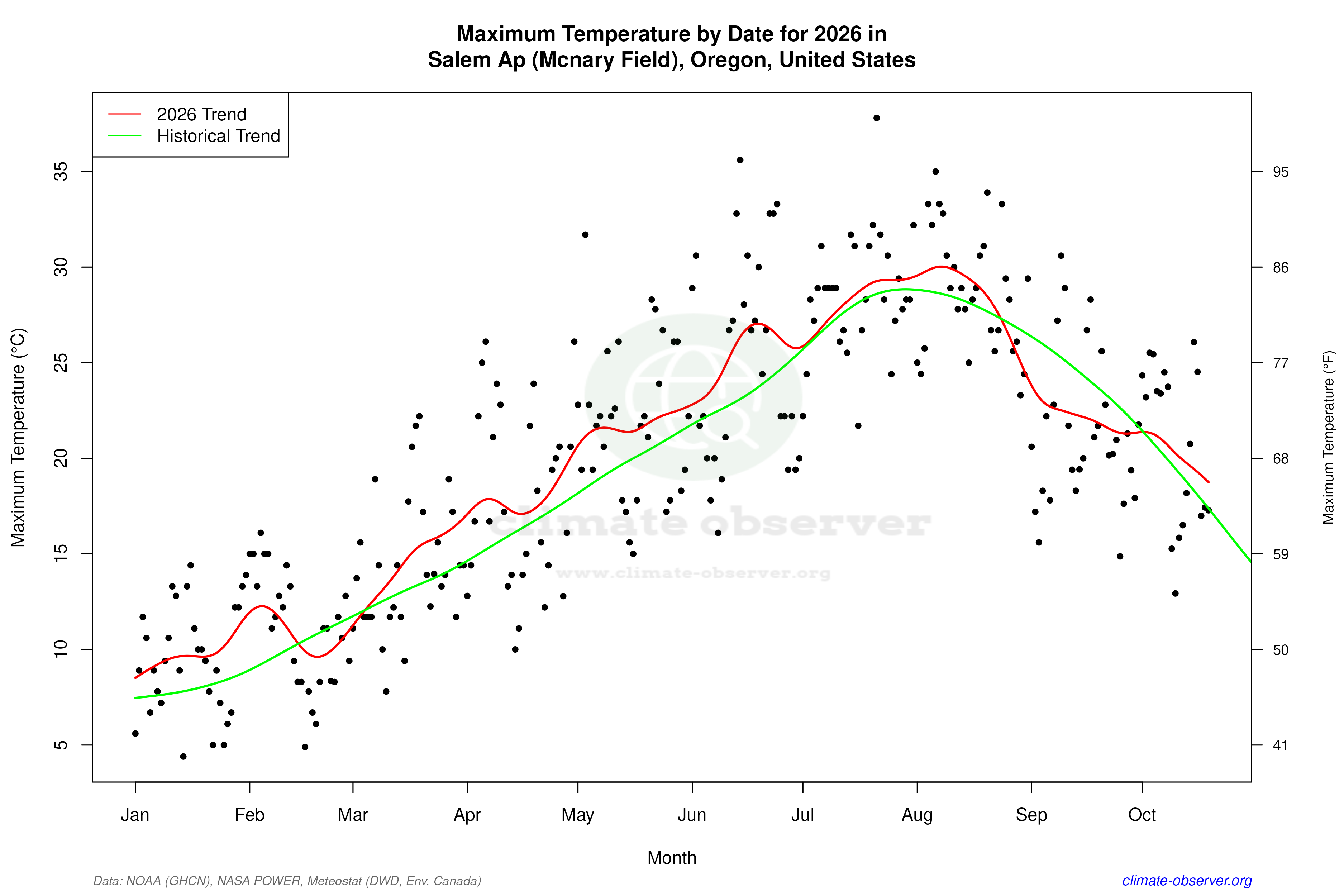
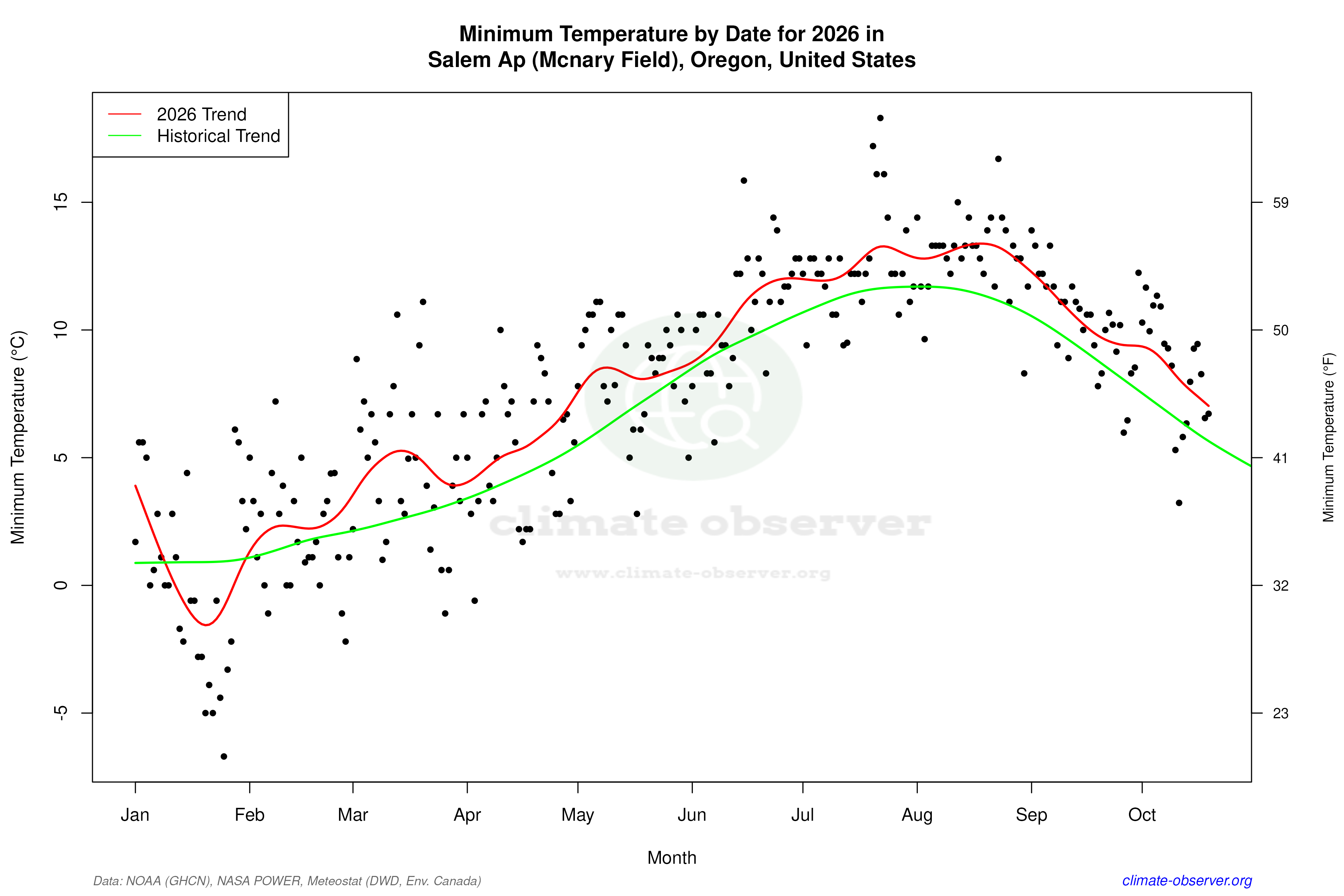
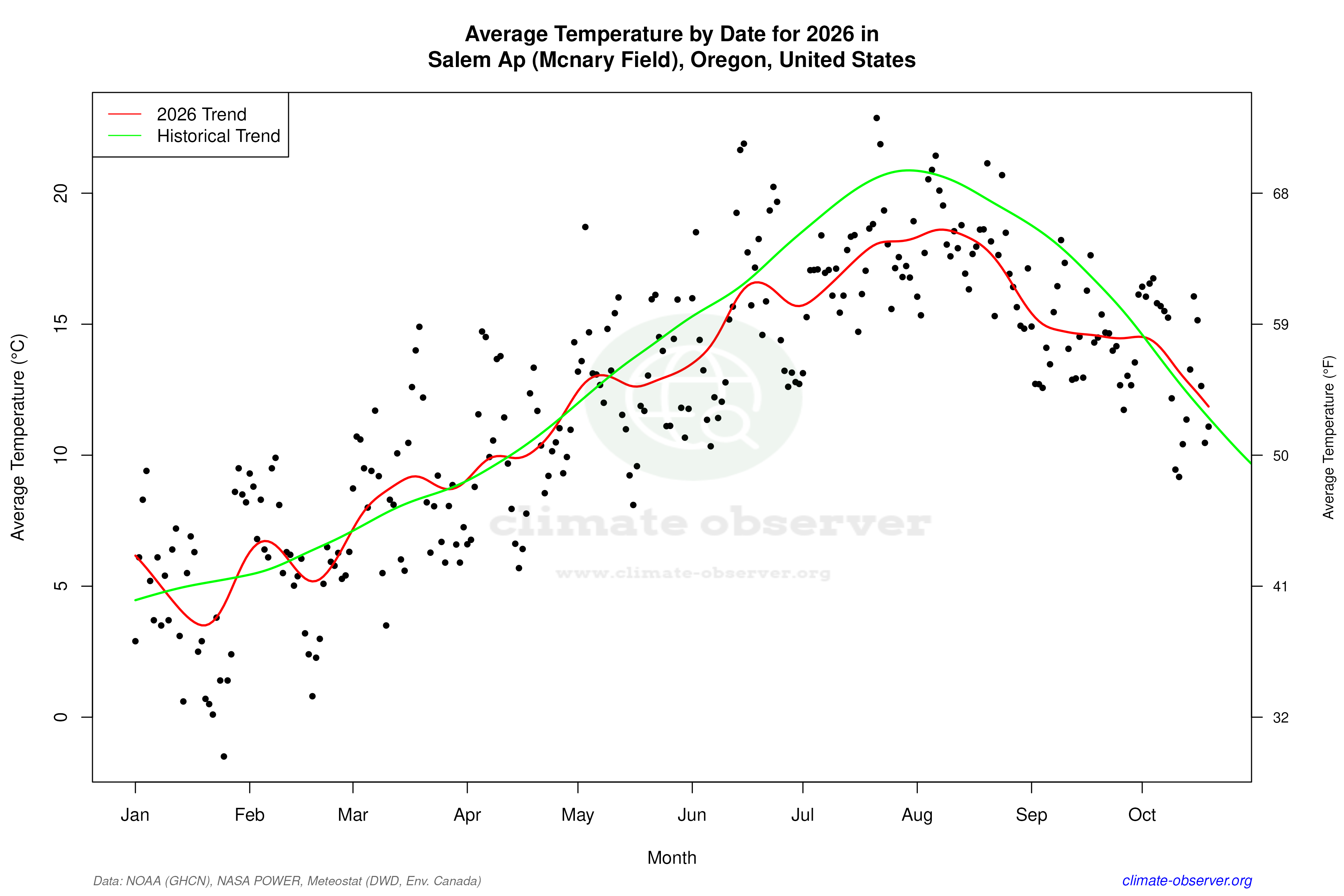
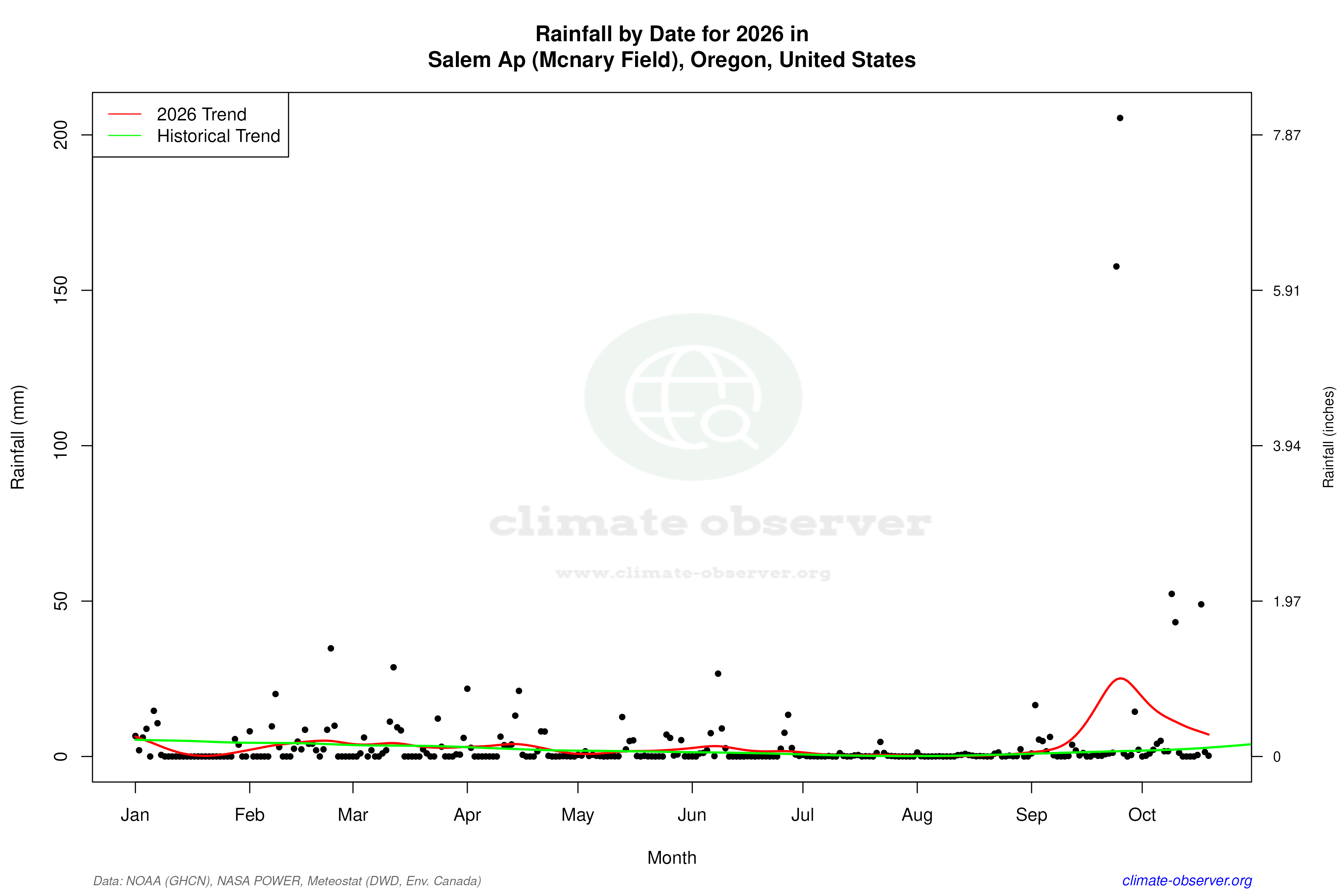
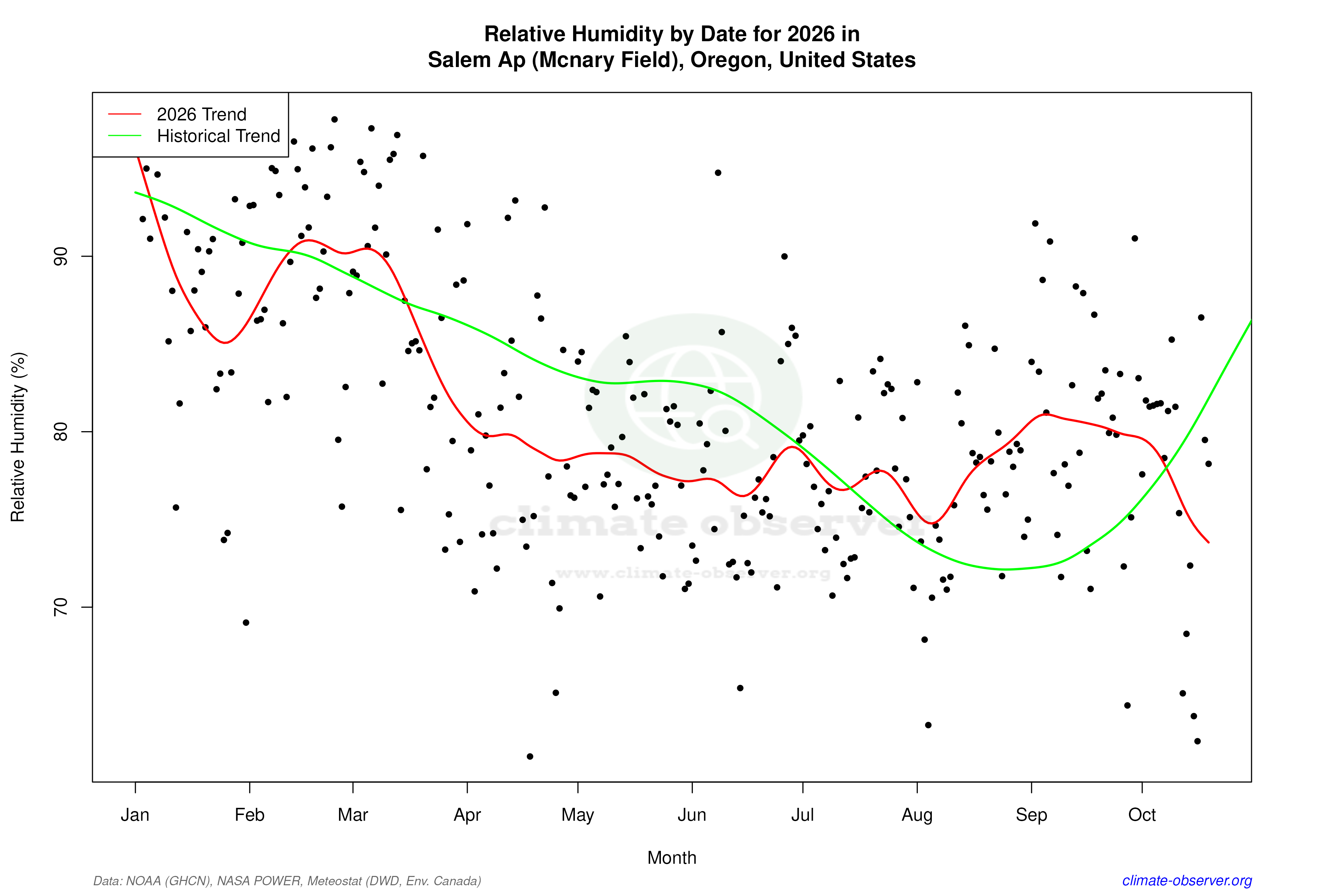

Max Temperature this Year | 1 of 6
Climate 12-Month Moving Averages
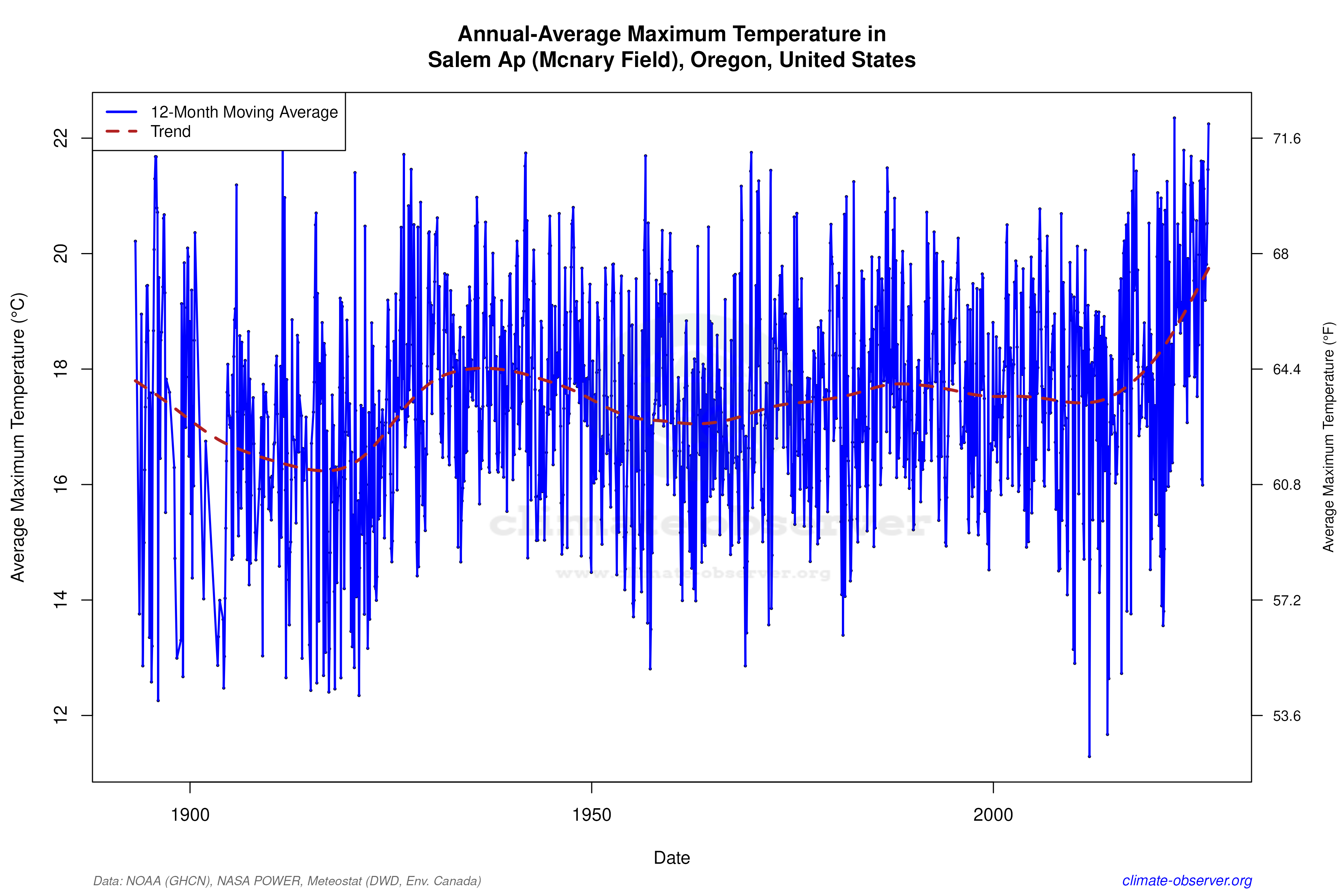
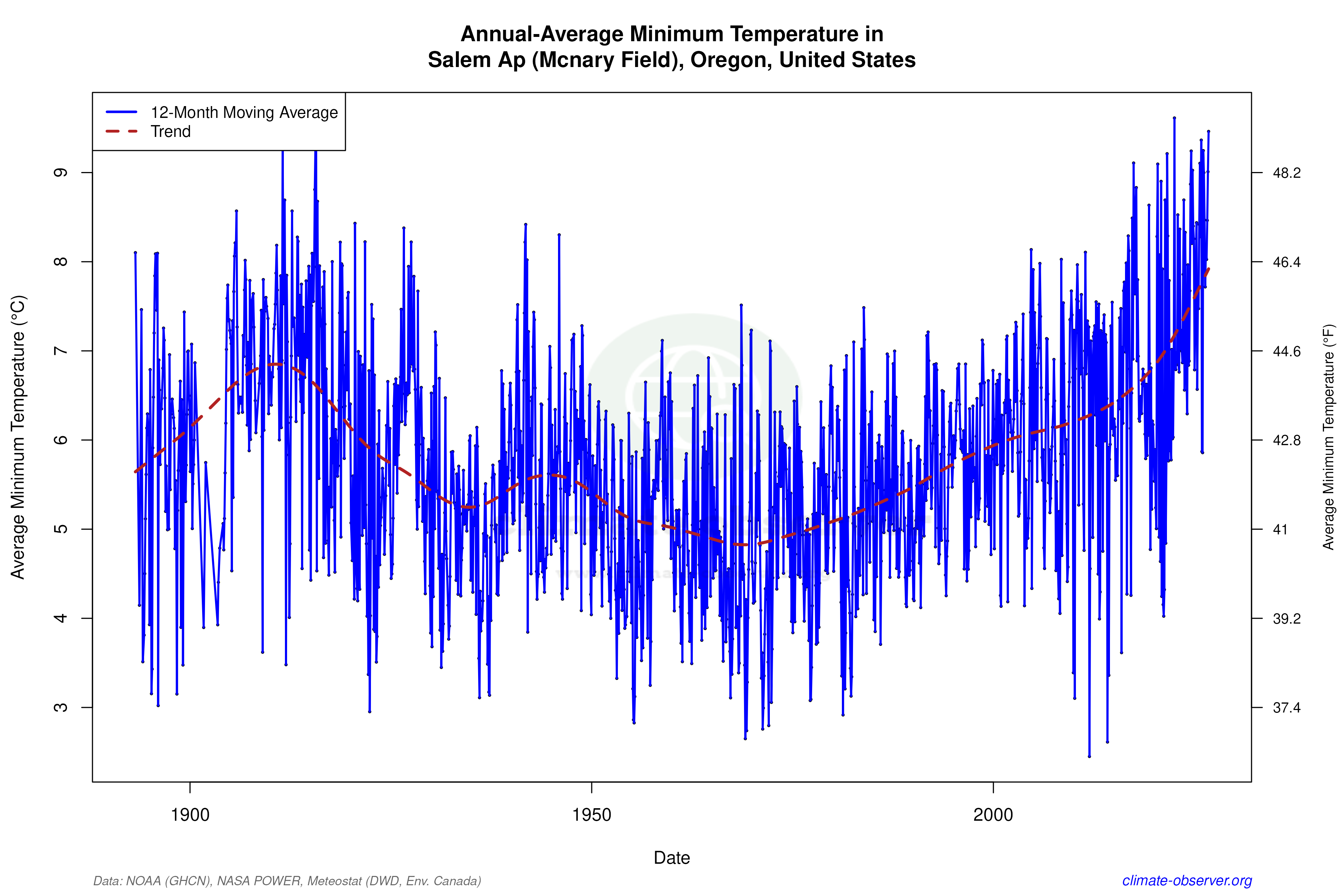
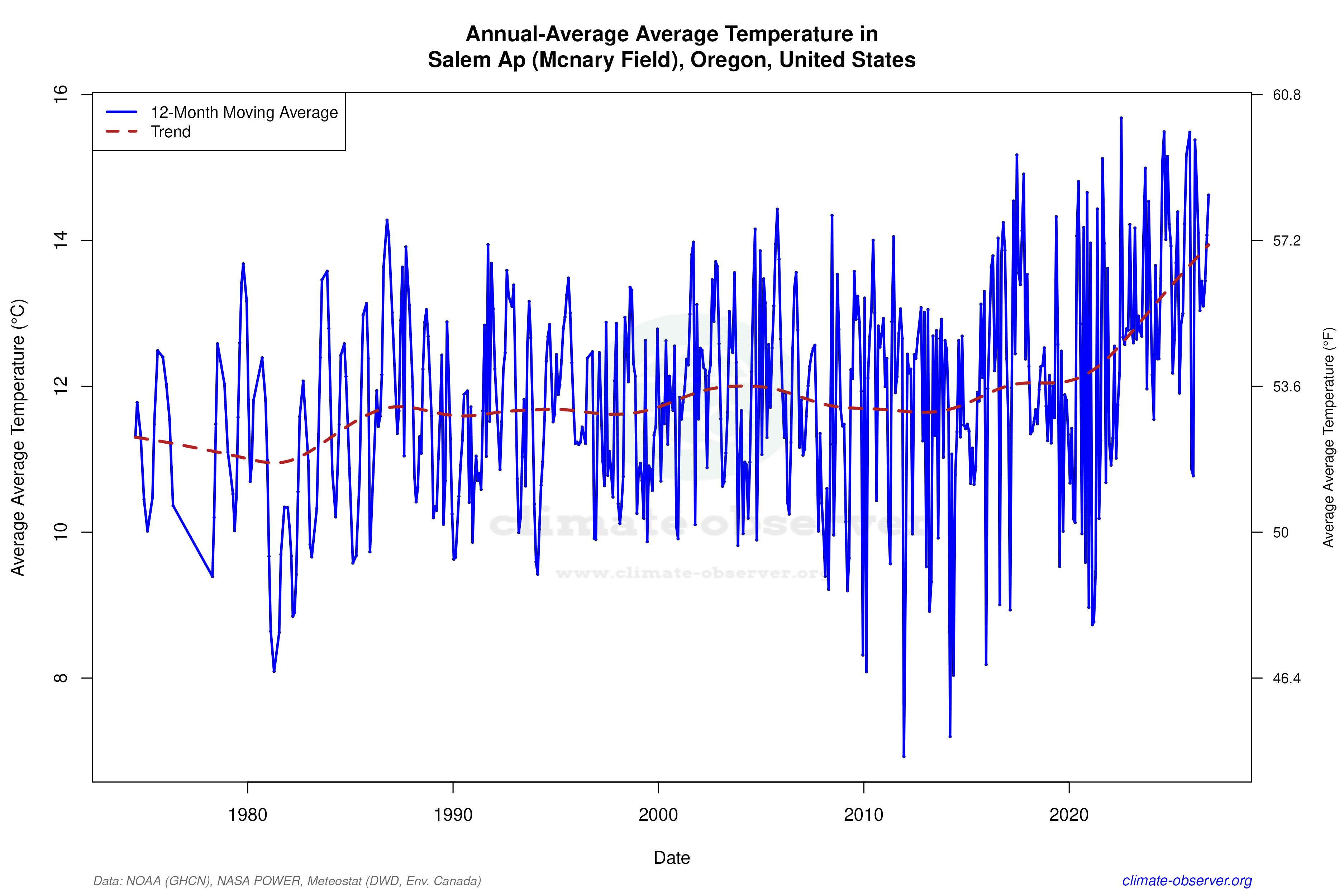

Max Temperature 12-Month MA | 1 of 6
Daily Data Points and Averages Throughout the Year
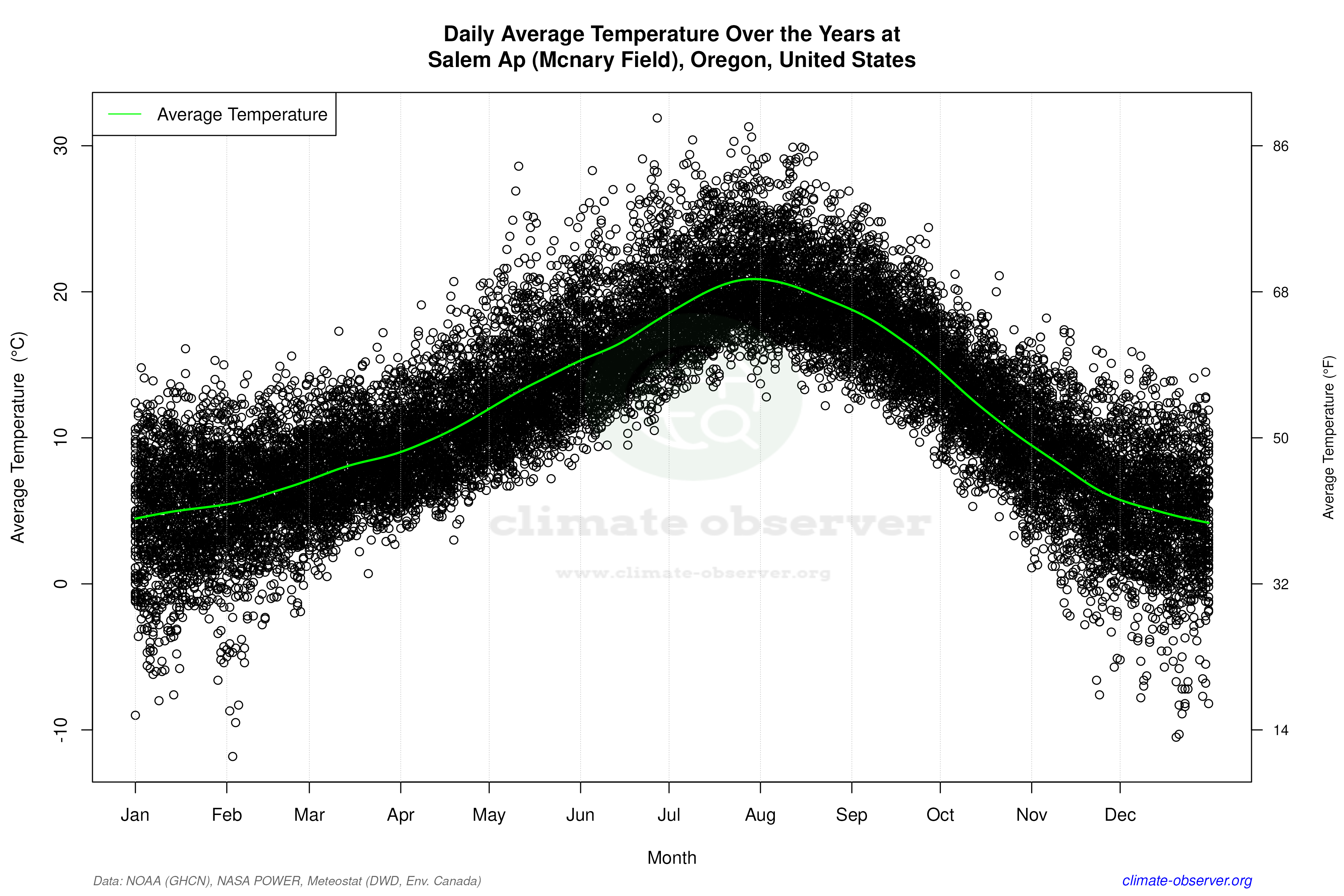
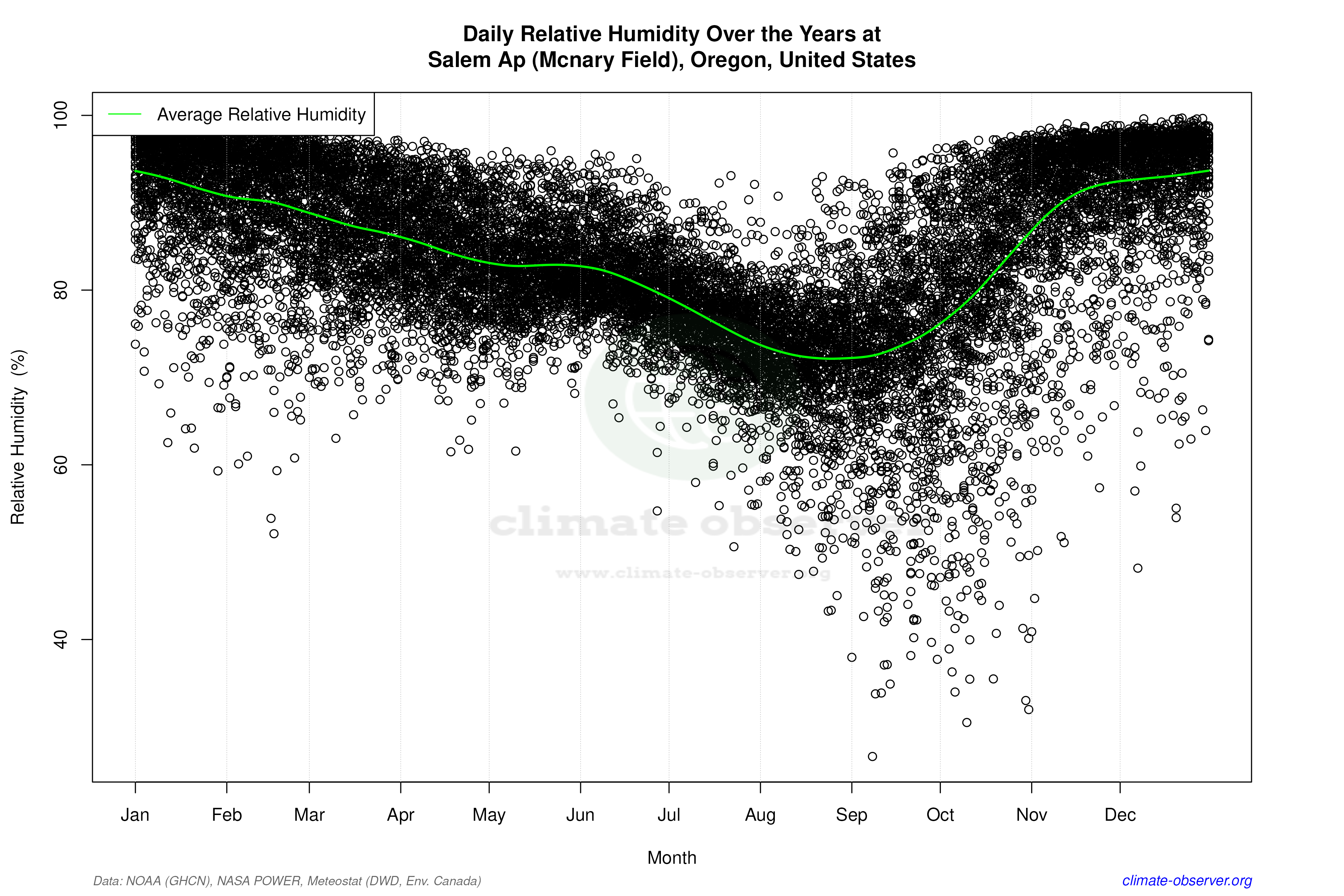

Average Max Temperature Throughout Year | 1 of 5


