Climate for Station: Sambusu, Cuando Cubango, Namibia
Loading live weather...
Climate Analysis & Overview
Sambusu, located in the heart of Cuando Cubango, Angola, exhibits a highly concentrated precipitation pattern with a slight increase in concentration over time. Despite the absence of discernible temperature trends, the region's climate remains influenced by its geographical setting and broader regional climate goals, such as those of neighbouring Namibia.
Geographical Influence and Climate Classification
Sambusu, situated at coordinates -17.85, 19.35, falls under the Köppen climate classification of tropical savanna (Aw). This classification is characterised by distinct wet and dry seasons, influenced by the Intertropical Convergence Zone (ITCZ). The region's proximity to the Okavango River Basin enhances its susceptibility to seasonal flooding, impacting local weather patterns. The absence of significant elevation changes in the area contributes to the stable temperature profile observed over the past decade.
Temperature Trends: A Stable Climate
Over the last decade, Sambusu has shown no significant temperature trends, with both highs and lows remaining unchanged. This stability is mirrored in the all-time temperature records, which also show no discernible trend. Such stability is notable in a region where climate variability is often expected due to shifting global patterns. The lack of change in temperature trends suggests a resilience in Sambusu's local climate, potentially buffered by its geographical setting.
Precipitation Patterns: A Slight Increase in Concentration
The Precipitation Concentration Index (PCI) for Sambusu indicates a baseline of 23.09 and a current value of 23.16. This slight increase suggests that precipitation events have become marginally more concentrated, occurring in fewer, more intense events. A PCI value above 20 denotes a highly concentrated precipitation pattern, typical of regions experiencing intense seasonal rainfall. This trend aligns with broader regional observations where climate change is leading to more extreme weather events.
Regional Climate Context and Implications
Sambusu's climate story cannot be isolated from the broader regional efforts to address climate change impacts. Namibia, sharing a border with Angola, has set ambitious climate goals focusing on sustainable water management and adaptation strategies to cope with changing precipitation patterns. These efforts are crucial, given the slight increase in precipitation concentration observed in Sambusu, which could exacerbate flooding risks and water resource management challenges.
Data Gaps and Monitoring Needs
While the temperature data for Sambusu remains stable, the absence of specific temperature records or trends highlights a potential gap in long-term monitoring. Enhanced data collection efforts could provide a more comprehensive understanding of the region's climate dynamics, particularly in light of the increasing precipitation concentration. Improved monitoring would aid in developing targeted adaptation strategies, supporting both local and regional climate resilience initiatives.
Station Statistics
10-Year Trend
High: N/A
Low: N/A
Rain: -0.039 in/decade
25-Year Trend
High: N/A
Low: N/A
Rain: -0.014 in/decade
50-Year Trend
High: N/A
Low: N/A
Rain: -0.014 in/decade
All-Time Trend
High: N/A
Low: N/A
Rain: -0.014 in/decade
Percentage Above-Average Days
Last 12 Months: 0.0%
This Year: N/A%
Precipitation Concentration Index (PCI) ℹ️
Last 12 Months: 23.2
Historical Average: 23.1
Percentile Rank of Last 12 Months ℹ️
High: N/A
Low: N/A
Rain: 43rd percentile
Change in Variance ℹ️
High: N/A
Low: N/A
Intraday: N/A
Data Coverage
25.0%
First Year of Data
1975
Station Location
Historical Weather Records
| Max High | Avg High | Min High | Max Avg | Avg Avg | Min Avg | Max Low | Avg Low | Min Low | Max Precipitation | Avg Precipitation | Max Snow | Avg Snow | |
|---|---|---|---|---|---|---|---|---|---|---|---|---|---|
| Record | — | — | — | — | — | — | — | — | — | 3.03 in | — | — | — |
| January | — | — | — | — | — | — | — | — | — | 3.03 in | 0.22 in | — | — |
| February | — | — | — | — | — | — | — | — | — | 2.62 in | 0.19 in | — | — |
| March | — | — | — | — | — | — | — | — | — | 2.44 in | 0.14 in | — | — |
| April | — | — | — | — | — | — | — | — | — | 2.56 in | 0.04 in | — | — |
| May | — | — | — | — | — | — | — | — | — | 1.32 in | 0.01 in | — | — |
| June | — | — | — | — | — | — | — | — | — | 0.01 in | 0.00 in | — | — |
| July | — | — | — | — | — | — | — | — | — | 0.43 in | 0.00 in | — | — |
| August | — | — | — | — | — | — | — | — | — | 0.00 in | 0.00 in | — | — |
| September | — | — | — | — | — | — | — | — | — | 0.47 in | 0.00 in | — | — |
| October | — | — | — | — | — | — | — | — | — | 2.40 in | 0.02 in | — | — |
| November | — | — | — | — | — | — | — | — | — | 1.50 in | 0.06 in | — | — |
| December | — | — | — | — | — | — | — | — | — | 2.22 in | 0.09 in | — | — |
Data Visualisations
Remove WatermarksCurrent Year Climate Trends vs Historical


Max Temperature this Year | 1 of 6
Climate 12-Month Moving Averages


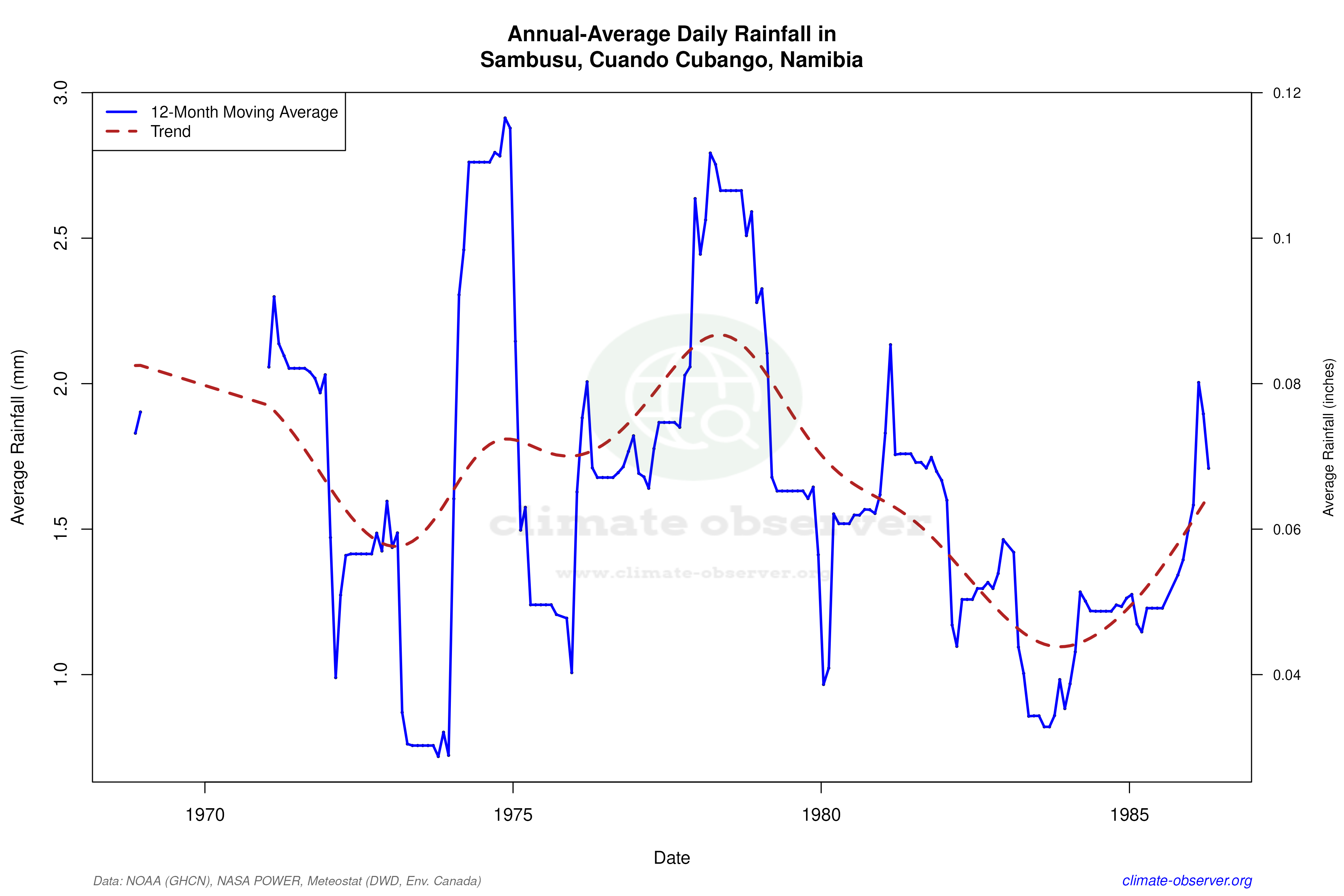


Max Temperature 12-Month MA | 1 of 6
Daily Data Points and Averages Throughout the Year


Average Max Temperature Throughout Year | 1 of 5


