Climate for Station: Ochopee Florida, Florida, United States
Loading live weather...
Climate Analysis & Overview
Ochopee, Florida is experiencing a subtle yet notable warming trend, with all-time high temperatures rising by 0.24°C (0.43°F) and lows by 0.34°C (0.61°F). Despite a recent cooling in low temperatures over the past decade, the overall pattern suggests a warming climate. Precipitation patterns remain unmonitored, indicating a gap in data collection.
Subtropical Climate Dynamics
Ochopee, located in Collier County, Florida, falls under the Köppen climate classification of Af, indicating a tropical rainforest climate. This classification is characterised by high temperatures and significant rainfall throughout the year. The proximity to the Gulf of Mexico influences the climate, bringing moist, warm air that contributes to the area's humidity and precipitation levels. The region's flat terrain and coastal location make it susceptible to tropical storms and hurricanes, which can bring abrupt changes in weather patterns.
Temperature Trends: A Warming Trajectory
Over the long term, Ochopee has experienced a warming trend. The all-time high temperatures have risen by 0.24°C (0.43°F), and the lows have increased by 0.34°C (0.61°F). This warming is consistent with broader patterns observed across the southeastern United States, where climate change is contributing to increased temperatures. Interestingly, the past decade shows a different pattern for low temperatures, with a slight cooling of 0.07°C (0.13°F). This divergence highlights the complexity of local climate dynamics, where short-term trends can differ from long-term patterns.
Record Extremes: Heat and Cold
Ochopee's climate is marked by extreme temperature records, with a maximum of 41.1°C (106.0°F) and a minimum of -3.3°C (26.1°F). These records illustrate the variability and potential for extreme weather events in the region. Such extremes are critical for understanding the potential impacts of climate change, particularly in terms of heatwaves and cold snaps that can affect both human and ecological systems.
Precipitation Data Gaps
The Precipitation Concentration Index (PCI) for Ochopee is currently unmonitored, indicating a significant gap in data collection. The PCI is a measure of how precipitation is distributed over time, with higher values indicating more concentrated rainfall events. Without this data, it is challenging to assess changes in rainfall patterns, which are crucial for water resource management and understanding the impacts of climate change on local ecosystems.
Implications for Regional Climate Goals
The warming trends observed in Ochopee align with broader regional climate goals aimed at understanding and mitigating the impacts of climate change. The United States has set targets to reduce greenhouse gas emissions and adapt to changing climate conditions. Understanding local climate trends, like those in Ochopee, is essential for developing effective adaptation strategies and ensuring resilience against future climate-related challenges.
Station Statistics
10-Year Trend
High: +0.72 °F/decade
Low: +0.01 °F/decade
Rain: N/A
25-Year Trend
High: +0.19 °F/decade
Low: +1.47 °F/decade
Rain: N/A
50-Year Trend
High: +0.40 °F/decade
Low: +0.53 °F/decade
Rain: N/A
All-Time Trend
High: +0.40 °F/decade
Low: +0.53 °F/decade
Rain: N/A
Percentage Above-Average Days
Last 12 Months: 64.8%
This Year: 72.2%
Precipitation Concentration Index (PCI) ℹ️
Last 12 Months: N/A
Historical Average: N/A
Percentile Rank of Last 12 Months ℹ️
High: 94th percentile
Low: 57th percentile
Rain: N/A
Change in Variance ℹ️
High: -17.7%
Low: -9.2%
Intraday: -5.0%
Data Coverage
74.7%
First Year of Data
2007
Station Location
Historical Weather Records
| Max High | Avg High | Min High | Max Avg | Avg Avg | Min Avg | Max Low | Avg Low | Min Low | Max Precipitation | Avg Precipitation | Max Snow | Avg Snow | |
|---|---|---|---|---|---|---|---|---|---|---|---|---|---|
| Record | 105.98 °F | — | 44.96 °F | 99.32 °F | — | 35.96 °F | 98.96 °F | — | 26.06 °F | — | — | — | — |
| January | 105.98 °F | 76.81 °F | 44.96 °F | 78.62 °F | 64.70 °F | 38.84 °F | 71.96 °F | 54.50 °F | 28.04 °F | — | — | — | — |
| February | 89.96 °F | 79.47 °F | 53.06 °F | 78.26 °F | 67.04 °F | 42.44 °F | 71.96 °F | 56.43 °F | 28.94 °F | — | — | — | — |
| March | 91.94 °F | 81.97 °F | 57.02 °F | 81.68 °F | 69.74 °F | 50.72 °F | 77.00 °F | 58.63 °F | 33.98 °F | — | — | — | — |
| April | 95.00 °F | 85.57 °F | 66.92 °F | 84.02 °F | 73.59 °F | 57.92 °F | 84.02 °F | 62.41 °F | 39.92 °F | — | — | — | — |
| May | 98.96 °F | 89.06 °F | 73.94 °F | 86.72 °F | 77.53 °F | 64.22 °F | 82.04 °F | 67.12 °F | 48.92 °F | — | — | — | — |
| June | 100.94 °F | 90.92 °F | 75.92 °F | 93.38 °F | 80.64 °F | 72.14 °F | 87.98 °F | 72.92 °F | 59.00 °F | — | — | — | — |
| July | 100.94 °F | 92.10 °F | 77.00 °F | 91.94 °F | 82.21 °F | 73.04 °F | 87.98 °F | 75.15 °F | 60.08 °F | — | — | — | — |
| August | 100.94 °F | 92.55 °F | 78.08 °F | 91.94 °F | 82.46 °F | 73.76 °F | 82.94 °F | 75.80 °F | 66.02 °F | — | — | — | — |
| September | 98.96 °F | 90.97 °F | 75.92 °F | 88.16 °F | 81.50 °F | 69.80 °F | 82.04 °F | 75.26 °F | 64.04 °F | — | — | — | — |
| October | 98.06 °F | 87.39 °F | 68.00 °F | 87.08 °F | 77.82 °F | 59.90 °F | 82.04 °F | 70.28 °F | 44.06 °F | — | — | — | — |
| November | 105.98 °F | 82.40 °F | 60.98 °F | 99.32 °F | 71.50 °F | 46.94 °F | 98.96 °F | 62.86 °F | 41.00 °F | — | — | — | — |
| December | 100.94 °F | 79.01 °F | 48.02 °F | 99.32 °F | 67.45 °F | 35.96 °F | 93.92 °F | 58.14 °F | 26.06 °F | — | — | — | — |
Data Visualisations
Remove WatermarksCurrent Year Climate Trends vs Historical
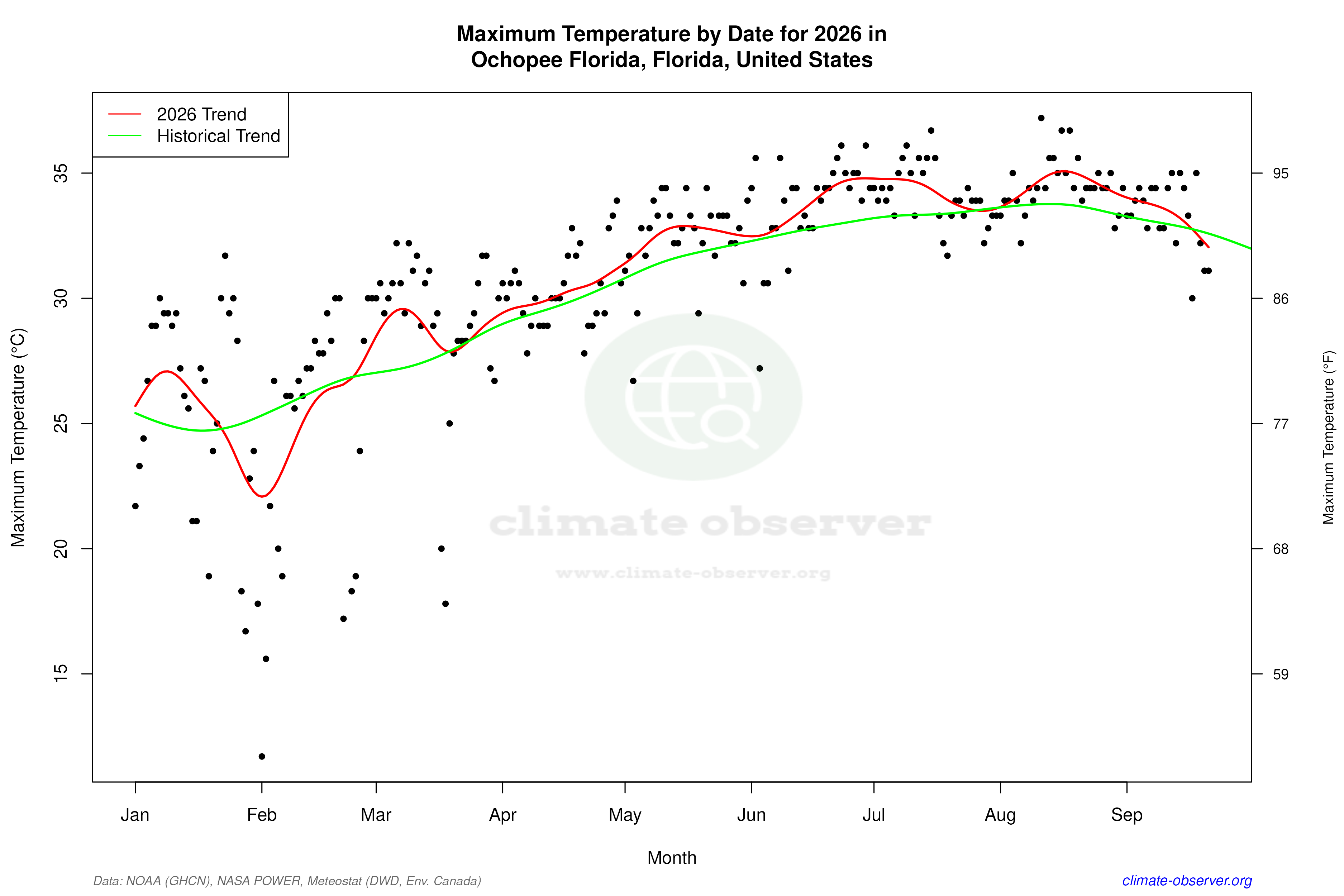
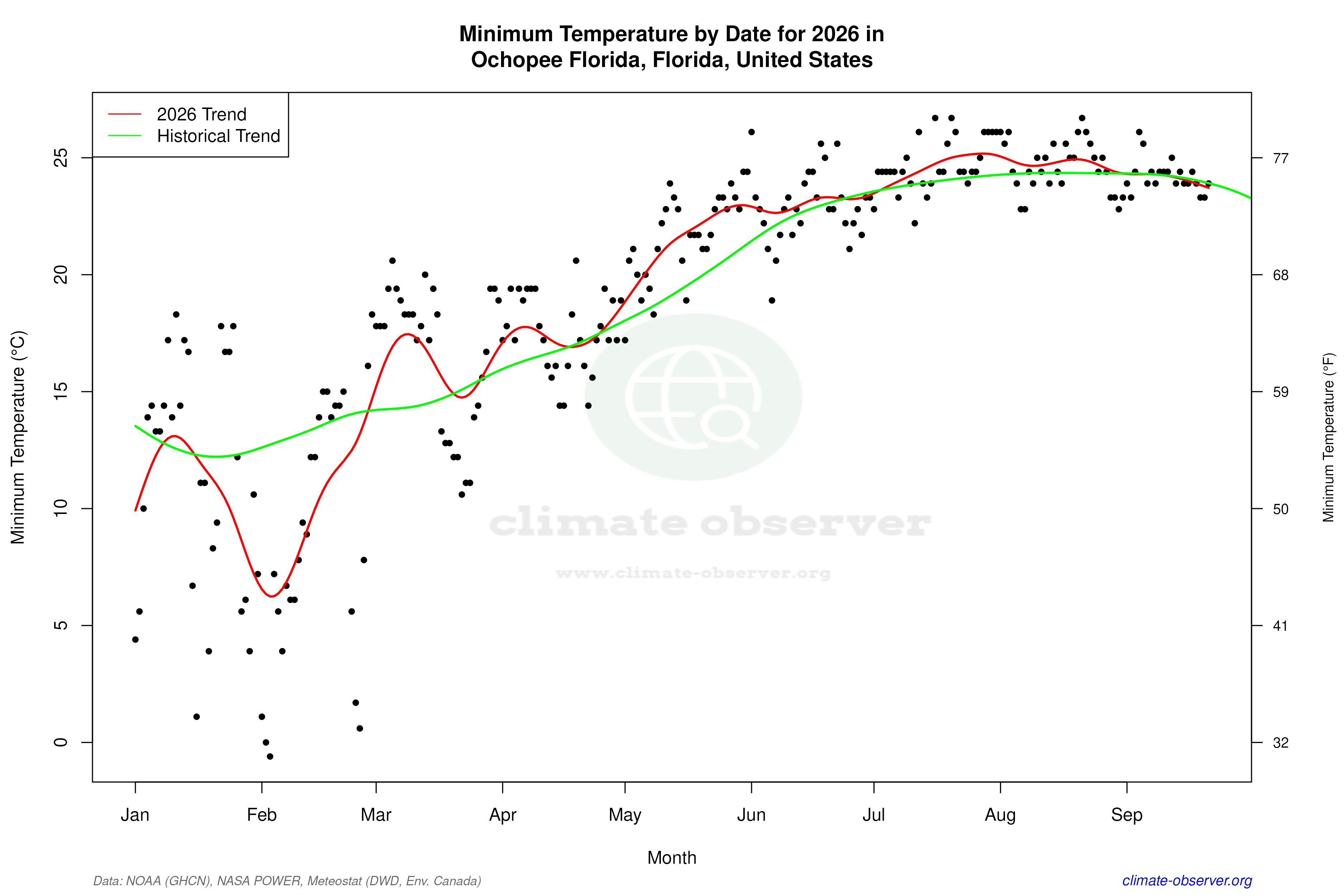
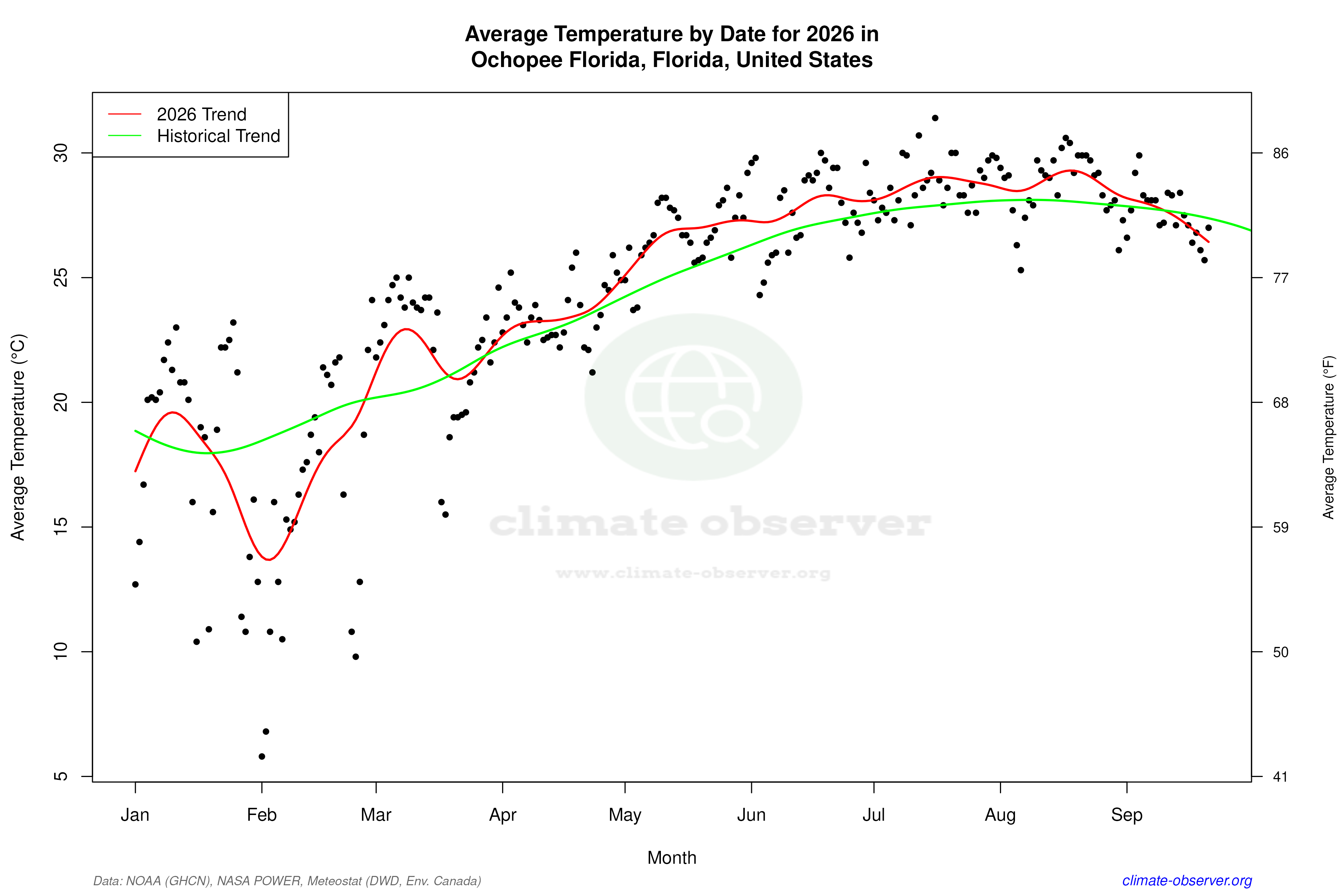


Max Temperature this Year | 1 of 6
Climate 12-Month Moving Averages
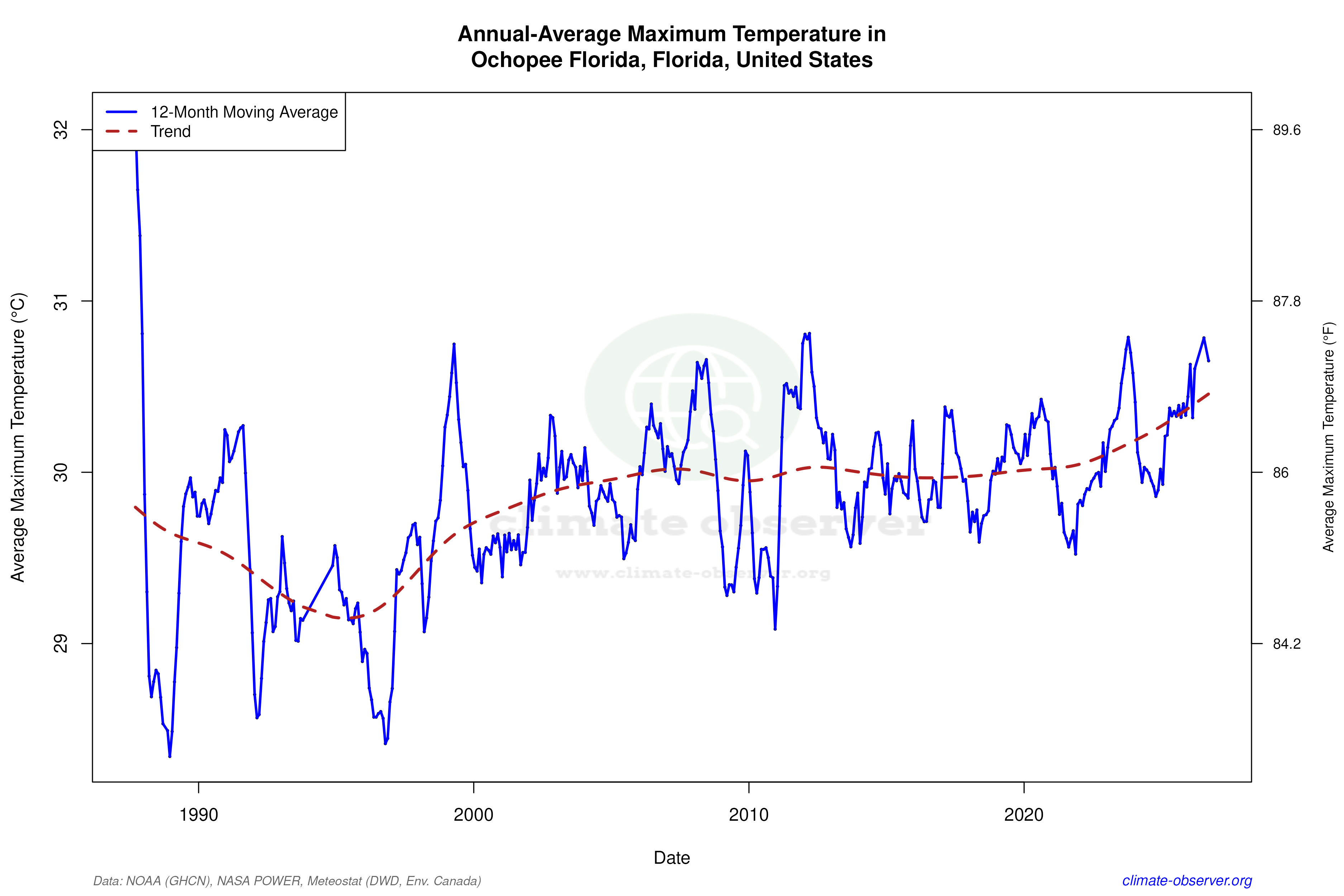
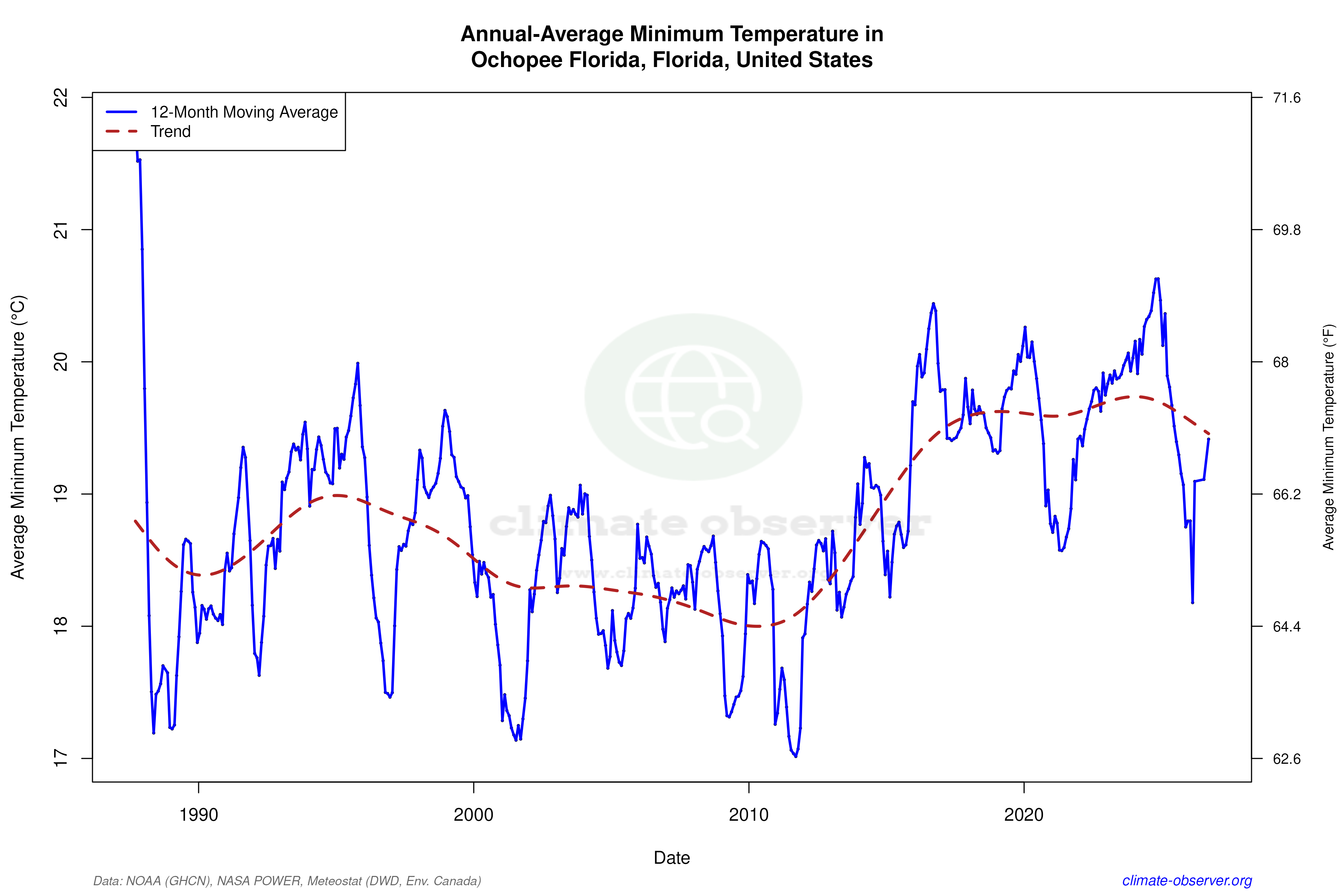
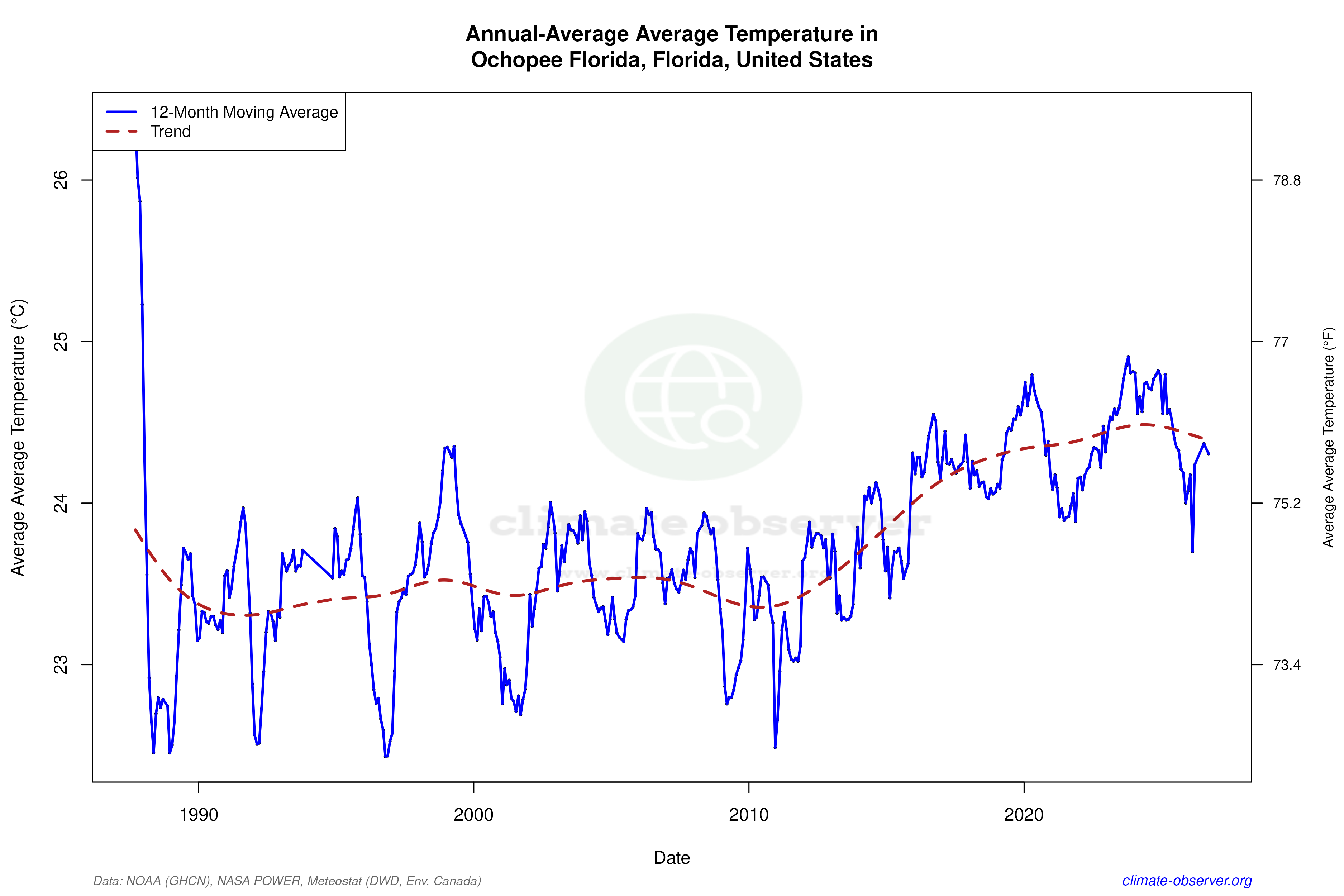


Max Temperature 12-Month MA | 1 of 6
Daily Data Points and Averages Throughout the Year
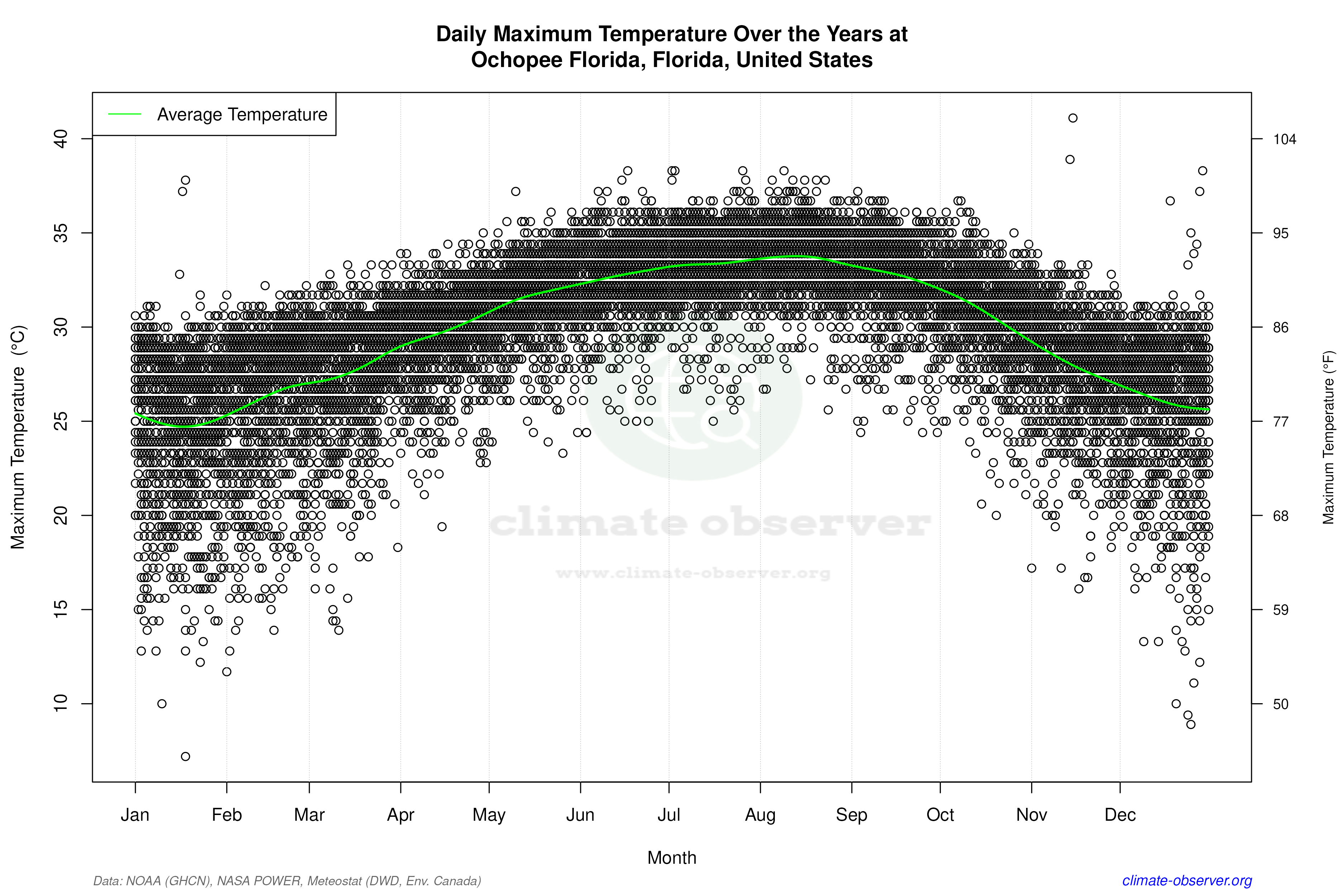
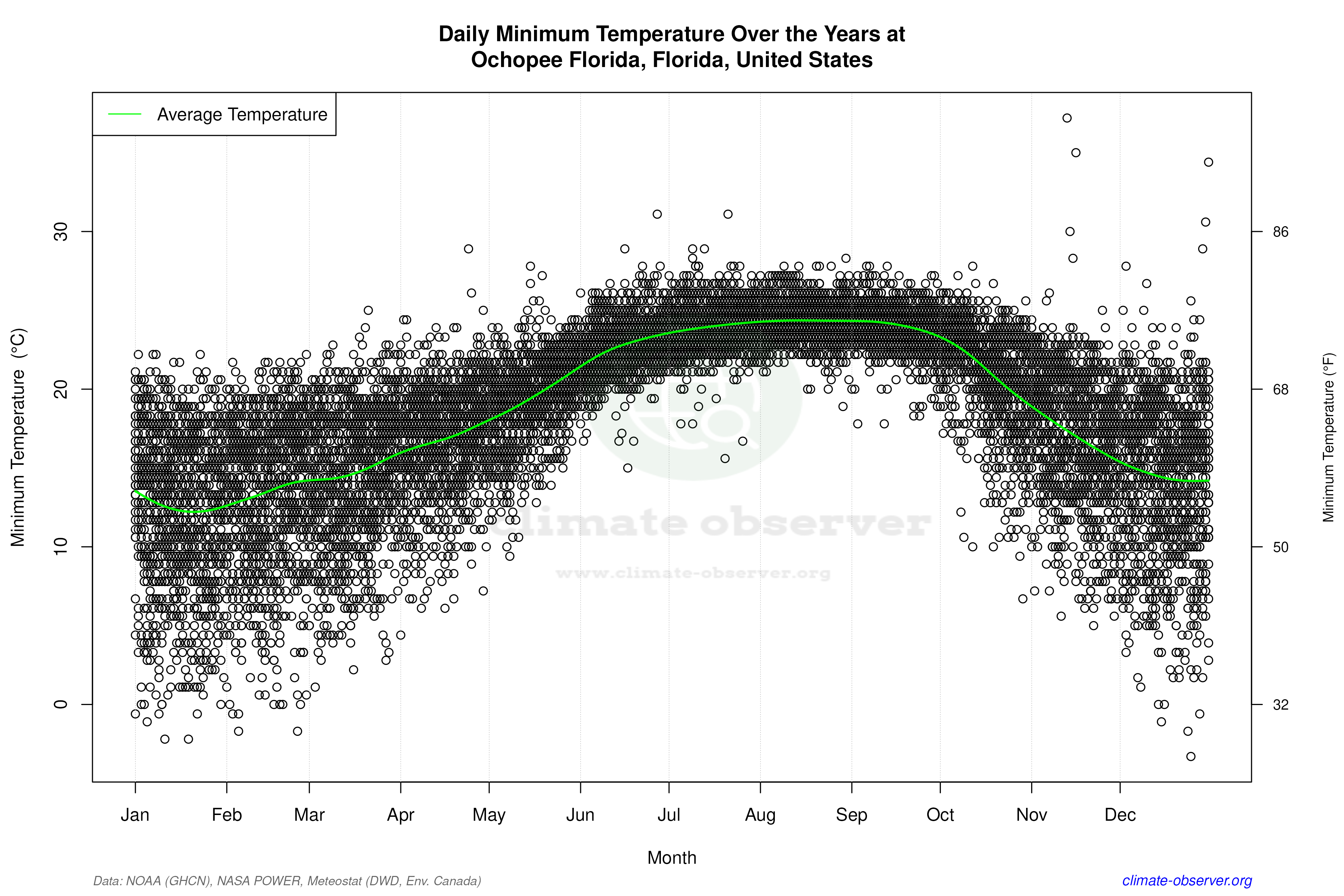
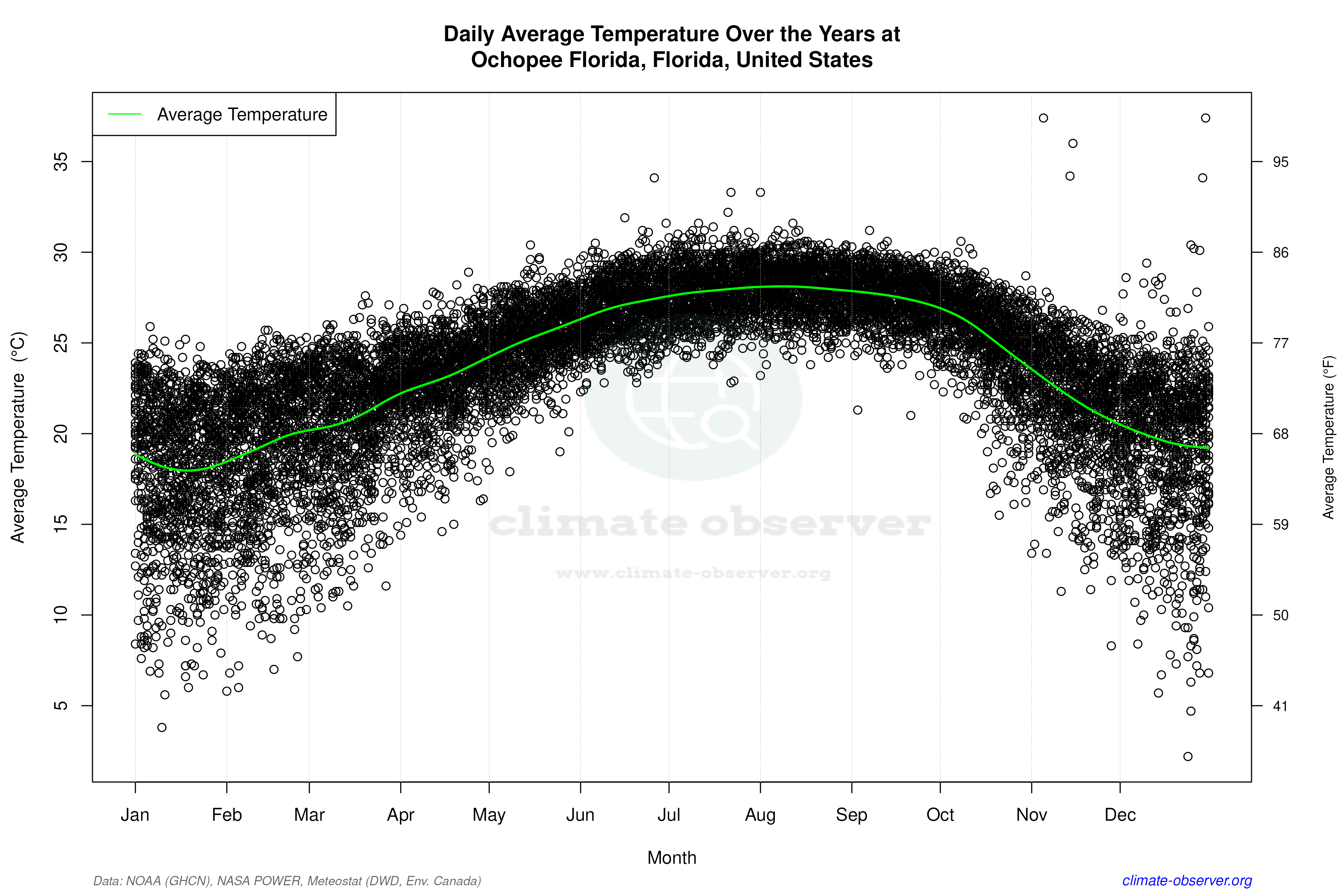


Average Max Temperature Throughout Year | 1 of 5


